2027 Transferring Surgical Technology Credits Into Healthcare Administration

Co-Founder and Chief Data Scientist
If you work in surgical technology and want to move into healthcare administration, your previous coursework may shorten the path - but only if it meets the new school's transfer rules and degree requirements. The distinction matters: accepted credits do not always replace required administration courses.
This guide explains which credits are most likely to count, how to compare bachelor's and graduate pathways, and what to verify before enrolling. You can use it to find a route that builds on your operating room experience without paying to repeat coursework unnecessarily.
Key Things You Should Know
- Surgical technology credits may satisfy general education, health science, or elective requirements; the receiving school decides whether any replace healthcare administration major courses.
- An associate-to-bachelor's transfer is usually the most relevant route for someone without a bachelor's degree. An MHA or MBA generally requires a completed bachelor's degree and does not use undergraduate credits to replace graduate coursework.
- Compare a written degree audit, not just the number of credits accepted: credits that do not fulfill requirements may save little time or tuition.
How Do Surgical Technology Credits Transfer Into Healthcare Administration Degrees?
The receiving institution evaluates your transcript course by course. It first decides whether a course is eligible for transfer, then determines how it applies to the healthcare administration degree: as an equivalent required course, a general education requirement, an elective, or credit that does not fit the program. A course can transfer without reducing the number of classes you still need.
Ask for a program-specific degree audit showing both accepted credits and remaining requirements. Submit transcripts from every college attended, and keep syllabi for courses whose titles do not clearly show their content. If your goal is managing health data rather than healthcare operations, compare healthcare administration and HIM career preparation before choosing a major; the programs may apply your prior courses differently.
Which Surgical Technology Courses Typically Count Toward Degree Requirements?
General education courses often have the clearest equivalents. Anatomy, medical terminology, and other health science courses may fit support requirements or electives. Operating room techniques and clinical practice are valuable background, but they are less likely to replace courses in budgeting, health policy, or organizational management.
The table shows common possibilities, not guaranteed equivalencies. The receiving school's catalog and evaluation control the result.
| Previous coursework | Possible application | What to check |
| English composition, mathematics, or social science | General education | Course level and required subject match |
| Anatomy, medical terminology, or microbiology | Health science support course or elective | Whether the administration major requires it |
| Surgical procedures, sterile technique, or clinical rotations | Health-related elective, if accepted | Limits on technical or clinical transfer credit |
Accelerated terms do not change these equivalency rules. If speed matters, use the audit to compare remaining courses and scheduling in undergraduate healthcare administration programs with compressed terms.

What Healthcare Administration Degree Pathways Accept Surgical Technology Credits?
For a surgical technologist whose highest credential is a certificate or associate degree, a bachelor's completion program is usually the direct transfer pathway. Schools may offer majors named healthcare administration, health services administration, or healthcare management; the curriculum matters more than the label. An associate degree in healthcare administration is another option, but it may duplicate coursework if you already hold an associate degree.
A master of health administration (MHA) or healthcare-focused MBA is a different decision after completing a bachelor's degree. Your surgical technology experience can strengthen your perspective and application, but undergraduate surgical technology credits ordinarily do not replace graduate degree requirements. An MHA emphasizes healthcare organizations and systems; an MBA typically provides a broader business core, sometimes with healthcare electives or a formal concentration. If you already have a bachelor's degree, online MHA programs for advancing healthcare administration education may be more relevant than earning a second bachelor's.
Yes, but accreditation does not guarantee transfer. Check the recognition of both institutions and ask the receiving school whether it accepts credits from your surgical technology program's institution. Also ask about minimum course grades, age-of-credit rules, and limits on technical coursework. Programmatic accreditation of a surgical technology program speaks to that program's standards; it is not an agreement requiring another college to accept its courses.
Evaluate the new institution separately before paying a deposit. Confirm its institutional accreditation and, if a specialized accreditation matters to your goals, verify the specific degree rather than assuming every program at the school holds it. This distinction also applies if you later review online healthcare management doctorate programs: accreditation and transfer policies must be checked for the actual institution and program under consideration.
Yes. Online delivery does not, by itself, prevent a healthcare administration program from accepting prior college credit. The same institution may apply the same academic transfer rules across delivery formats, but you should confirm that the online version offers every course still needed for graduation.
Before enrolling, check whether required classes run every term, whether there are live sessions or campus visits, and whether a capstone or internship can be completed near your workplace. A short published schedule is useful only if your remaining requirements are available in sequence. That caution applies to graduate options too, including healthcare-focused MBAs with accelerated schedules; online and accelerated do not necessarily mean self-paced.
Requirements vary by institution and degree level. Bachelor's transfer applicants commonly need an application and official college transcripts; a school may also set a minimum GPA or require particular general education courses before entry to the major. Some programs admit students to the university first and evaluate admission to the major separately. Ask whether unfinished prerequisites can be completed after enrollment.
For an MHA or MBA, expect the school to evaluate a completed bachelor's degree rather than surgical technology transfer credits. Professional experience, recommendations, essays, and testing policies differ, so check the current requirements for each program. Clinical experience can be an asset without automatically satisfying a management-experience expectation. Applicants concerned about that distinction can explore MHA applications without a prior healthcare job while confirming each school's own policy.
There is no reliable completion-time or price estimate based on your surgical technology credential alone. Both depend on how credits apply, how many required courses remain, course availability, enrollment pace, tuition, and fees. A school that accepts more credits may still take longer if key administration courses have prerequisites or limited start dates.
Request a written plan showing remaining credits and a term-by-term schedule, then calculate tuition using the school's current rate and add mandatory fees, materials, and any travel or placement costs. Compare the total remaining cost rather than advertised tuition per credit. If a master's is the appropriate next step, affordable MHA and healthcare administration master's options can provide a starting point, but verify each program's current full cost and whether your employer offers education assistance.
Bachelor's programs generally move beyond clinical processes into healthcare finance, management, policy, quality improvement, ethics, and information systems. Some include a capstone or supervised experience. Your knowledge of surgical workflow may make assignments on patient safety or operating room efficiency more concrete, but it does not replace learning to manage budgets, staff, or organization-wide decisions.
Graduate study goes further in management and analysis, though emphasis varies. An MBA normally includes general business subjects such as accounting, finance, operations, and organizational behavior; a healthcare concentration, when formally offered, adds field-specific study. Review the required course list before assuming that an MBA with one healthcare elective provides the same preparation as an MHA. If cost is a concern, compare curriculum as well as tuition among lower-tuition online MBAs in healthcare management.
A surgical technologist may be able to build toward roles in surgical services coordination, practice operations, quality improvement, or department administration. Operating room experience provides insight into workflows and clinical teams; employers may still expect budgeting, supervision, analytics, or broader operational experience for management posts. Projects at your current workplace can help demonstrate those skills while you study.
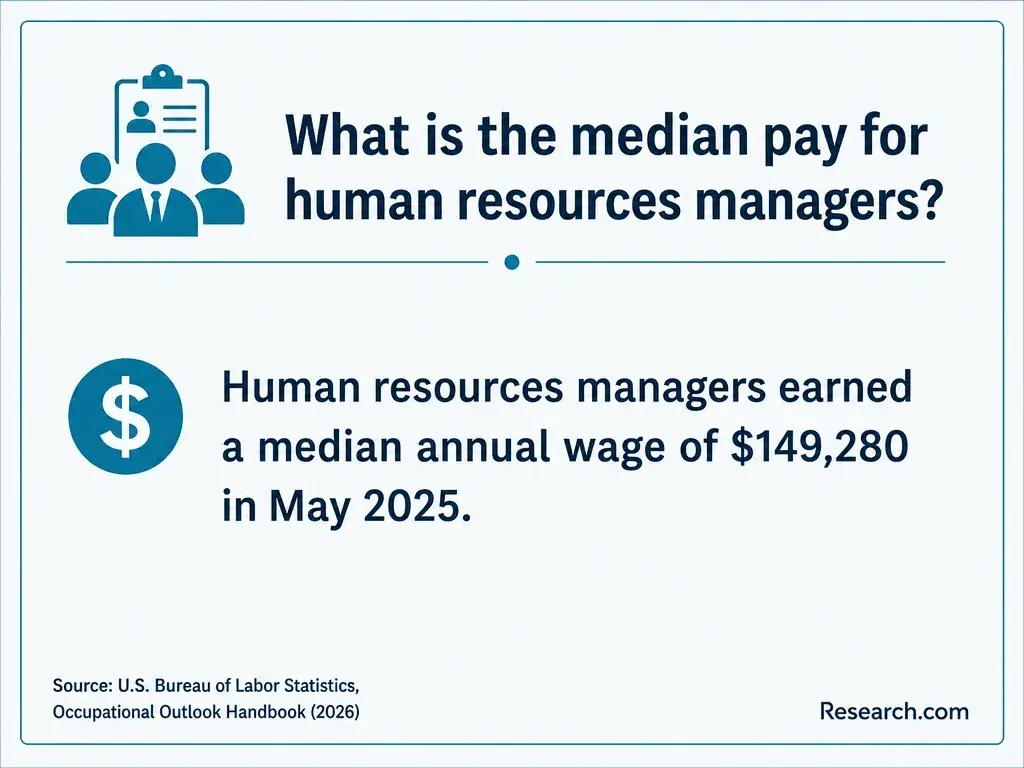
For salary context, the U.S. Bureau of Labor Statistics reports a $126,520 median annual wage for management occupations in May 2025. That figure covers management occupations broadly - not healthcare administration graduates, surgical services managers, or new entrants - and should not be used as an expected starting salary. Compare local job postings for the specific role you want, including their experience and education requirements. Senior leadership may take years of progressive responsibility; planning an accelerated healthcare leadership doctoral pathway is a separate decision, not a prerequisite for most entry-level administration roles.
Do Healthcare Administration Careers Require Licensure or Certification?
Many healthcare administration roles do not require a general administrator license, though a particular job may call for a professional credential or specialized background. Requirements change by occupation and state: for example, nursing home administrator positions are subject to state licensure rules. Read the requirements for your intended job before choosing a degree on the assumption that it qualifies you for a regulated role.
A surgical technology credential and a healthcare administration qualification serve different purposes; neither automatically substitutes for the other. Likewise, a doctorate is an academic credential, not a general license to manage healthcare organizations. If considering one later, assess the role's actual hiring requirements before using an online healthcare administration doctorate duration guide to compare timelines.
Other Things You Should Know About Healthcare Administration
Possibly. Some colleges assess prior learning through approved portfolios, examinations, or other processes. Ask whether that option applies to your degree and whether awarded credit will fulfill a requirement rather than count only as an elective.
You may be eligible for some federal aid, but eligibility differs by aid type and individual circumstances. Ask the school's financial aid office to review your situation before relying on aid to cover the program.
If you plan to keep working in surgical technology, check your credential's renewal rules and your employer's requirements. Maintaining it may preserve clinical job options during a gradual career transition.
Some employers offer tuition assistance or reimbursement. Ask about eligible programs, grade requirements, payment timing, and any obligation to remain employed after receiving the benefit.
- Accreditation in the U.S. | ed.gov http://www.ed.gov/laws-and-policy/higher-education-laws-and-policy/college-accreditation/accreditation-in-the-us
- .14 Evaluation and Review Process for Transfer of Courses and Credits. | Library of Maryland Regulations https://regs.maryland.gov/us/md/exec/comar/13B.06.02.14
- Transfer Students and Remaining Eligibility | ed.gov https://fsapartners.ed.gov/knowledge-center/fsa-handbook/2025-2026/vol7/ch6-transfer-students-and-remaining-eligibility
- Online Healthcare Administration Degree | Adelphi University https://onlineprograms.adelphi.edu/programs/bs-bachelor-healthcare-administration/
- Surgical Technologist - Explore Healthcare Careers | Mayo Clinic College of Medicine and Science https://college.mayo.edu/academics/explore-health-care-careers/careers-a-z/surgical-technologist/
- Program: Health Administration, MHA - National University https://catalog.ncu.edu/preview_program.php
- Graduate Credit Transfer Policy - Campus Offices https://campus.collegeforcreativestudies.edu/policy/transfer-credits-graduate/
- How to Get College Credit for Work Experience | post.edu https://post.edu/blog/pla-101-can-a-prior-learning-assessment-get-me-college-credit-for-work-experience/
- Surgical Technologist Application Guide | LBCC https://www.linnbenton.edu/future-students/explore-lb/programs/application-guides/surgical-technologist.php
- Transfer Credit Evaluations - Office of the Registrar - Cal Poly https://registrar.calpoly.edu/Transf_credit_eval