2027 An MHA After a Bachelor's in Health Education

Co-Founder and Chief Data Scientist
A bachelor's in health education can prepare you to improve community health, but moving into healthcare management calls for different skills. A Master of Healthcare Administration (MHA) may help you build them without starting another bachelor's degree.
This guide explains how your background fits MHA admissions, what you would study, and how to compare formats and costs. It also puts career and salary claims in context so you can decide whether an MHA or experience or a different credential is the better next step.
Key Things You Should Know
- A bachelor's in health education can qualify you to apply for an MHA. Individual programs set their own experience, prerequisite, and admissions requirements.
- An MHA develops healthcare management skills, not clinical licensure. Seek internships or applied projects if you have limited experience managing budgets, staff, or operations.
- The U.S. Bureau of Labor Statistics projects about 1.1 million openings annually across all management occupations from 2025 to 2035. That is not a forecast of MHA jobs; weigh your target roles and local employers before enrolling.
What Is an MHA After a Bachelor's in Health Education?
An MHA is a graduate degree focused on leading healthcare organizations and services. Health education typically emphasizes health behavior, communication, program planning, and community needs. An MHA adds organizational finance, operations, policy, and leadership.
Together, those perspectives can be useful in a community health organization, health system, insurer, or public health agency, but the degree does not itself confer a management position.
It also helps to distinguish administration from adjacent fields. If you want to direct services, people, and budgets, an MHA may fit. If you would rather manage clinical data, coding systems, or health records, start by understanding healthcare administration and HIM degree distinctions.
An MBA with healthcare coursework may suit someone seeking broader, cross-industry business training; an MHA generally keeps healthcare organizations at the center of study.
Can You Get an MHA With a Health Education Degree?
MHA programs do not universally require an undergraduate major in healthcare administration. Your experience assessing health needs, communicating with stakeholders, and evaluating programs can strengthen an application, particularly when you can show how those skills relate to a management goal.
The likely preparation gap is not a lack of healthcare knowledge; it is limited exposure to accounting, budgeting, quantitative analysis, or supervising teams. Compare each school's prerequisites and introductory courses rather than assuming every health education graduate needs the same preparation.
If you have not yet finished your bachelor's, complete that requirement first. Planning a healthcare administration bachelor's transfer is one possible route, although a completed health education bachelor's need not be replaced.
What Are the Admission Requirements for an MHA Program?
Requirements vary by school and by whether a program is designed for early-career applicants or experienced professionals. Common application materials include transcripts, a résumé, a statement of purpose, and recommendations.
Some programs request an interview, test scores, relevant work experience, or prerequisite coursework; others do not. Do not treat a waived test or optional prerequisite at one school as a policy at another.
Before applying, check the current admissions page for the required degree, academic standards, work-experience expectations, and any statistics or accounting preparation. Ask whether an internship is available if your experience is mainly in health education rather than administration.
In your statement, connect a specific target role to evidence of your work, such as coordinating a health program or evaluating its results, instead of relying on a general wish to "lead in healthcare."
If your bachelor's is still in progress, confirm when the MHA requires proof of completion. Rolling enrollment options for healthcare administration undergraduates address bachelor's scheduling, not MHA admission or start dates.
U.S. Master's Degrees in Health and Medical Administrative Services by Specialty, 2021-22

MHA curricula commonly cover healthcare finance, organizational leadership, operations, quality improvement, policy, law and ethics, and the use of data in management decisions. Courses may culminate in a capstone, field experience, or applied project.
Titles alone are not enough to judge depth: compare syllabi and ask whether students actually build budgets, analyze service performance, or work with healthcare organizations.
For a health education graduate, a strong program should help translate population-level knowledge into decisions about staffing, resources, and service delivery. If you want to manage community programs, look for opportunities to work across clinical and community teams. If your goal is hospital operations, prioritize operational projects and access to relevant employers.
When comparing schools, consider whether programmatic accreditation matters to your target employers and review healthcare administration master's choices with CAHME accreditation; also verify each program's current accreditation status directly before applying.
Choose the format that gives you the experience you need, not simply the one that is easiest to access. Online study may let you keep working in health education and apply coursework at your employer. Campus study may make local recruiting, peer contact, and a career-changing internship easier to arrange. Neither format guarantees those opportunities.
Before choosing an online MHA, ask for the actual live-session schedule, group-project expectations, residency requirements, internship rules, and career-service access. If you need to enter administration from a role with little operational exposure, find out how the program helps online students secure relevant projects or placements.
If you want broader business training instead, planning a fast-track healthcare management MBA may be worth comparing, but a shorter MBA is not automatically a better route to a healthcare-specific role.
Completion time depends on required credits, enrollment pace, course availability, and any internship or capstone. Full-time study can shorten the calendar time; part-time study may preserve your income and allow immediate application at work. Ask each school for a course sequence that matches your intended pace, including whether required courses run every term.
There is no reliable single price for an MHA. To compare offers, calculate tuition from the program's current required credits and published rate, then add mandatory fees, materials, and any travel or placement costs. Check whether tuition differs by residency or enrollment status and whether your employer offers education assistance. Borrowing also adds financing costs. A lower advertised tuition figure may not mean a lower total cost.
A doctorate is not a necessary next step for most MHA applicants and should not be folded into an MHA budget. If your eventual goal specifically requires doctoral study, comparing tuition and duration for healthcare administration doctorates is a separate financial decision.
Your most realistic first move depends on what you have already done. Experience coordinating health education programs could support a move into program management or community health operations.
Hospital department management may require additional experience with clinical workflows, staffing, and budgets. Employers often evaluate that experience alongside the degree.
The distinctions below can help you identify a transition that builds on your current work rather than assuming an MHA qualifies you immediately for senior leadership.
| Target direction | Relevant health education experience | Experience to build |
| Community health program management | Program planning, outreach, evaluation | Budget ownership, contracts, staff supervision |
| Health system operations | Patient education, cross-team communication | Clinical workflows, scheduling, quality measures |
| Population health or payer programs | Behavior-change initiatives, needs assessment | Performance analysis, payment and service operations |
For applicants with limited management experience, a role that owns a project or budget may be a more useful near-term goal than an executive title. Some professionals later consider accelerated doctoral education for healthcare leadership roles, but a doctorate is not a substitute for progressively responsible work experience.
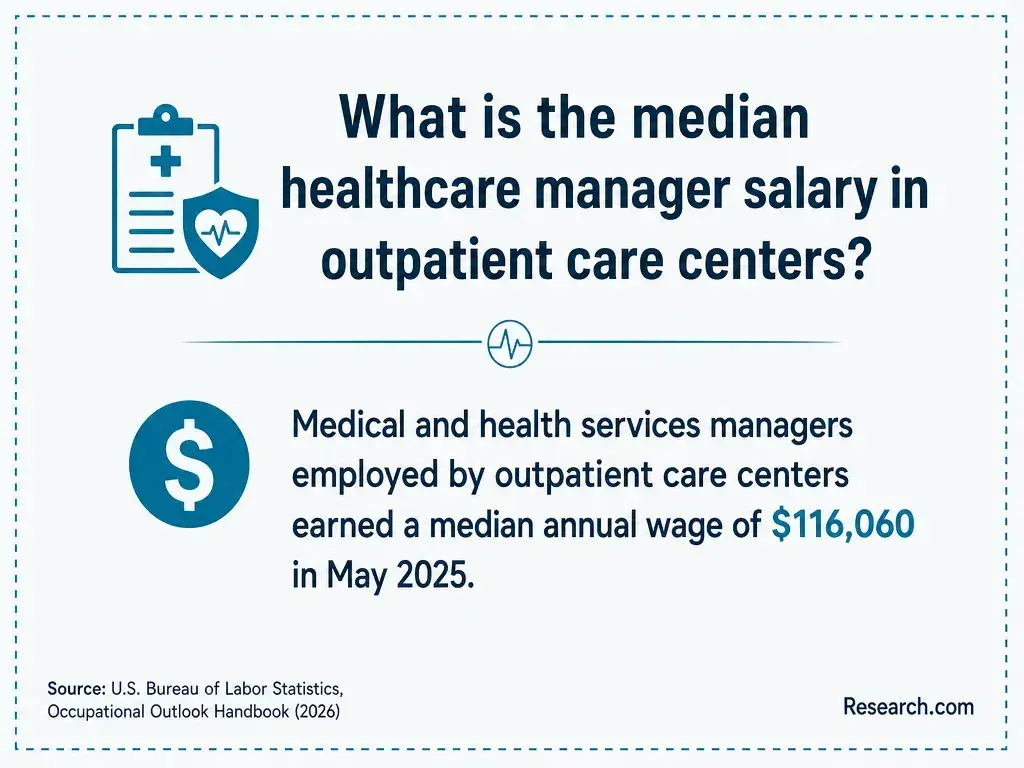
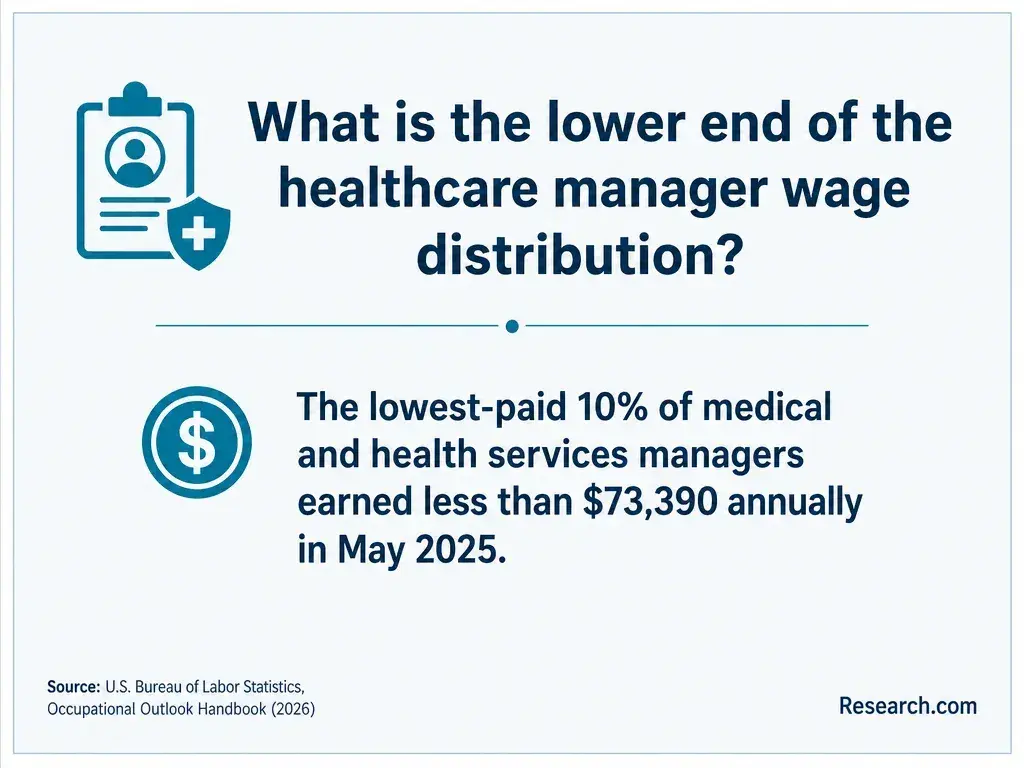
There is no single "MHA salary." Pay depends on the occupation, employer, location, responsibilities, and your prior experience. The U.S. Bureau of Labor Statistics reports a $126,520 median annual wage in May 2025 for management occupations as a whole. That broad figure includes many industries and is not the median salary for MHA graduates or a prediction of what a new healthcare manager will earn.
For a useful personal comparison, look at posted pay for the specific jobs you could plausibly pursue now and after gaining management experience. Compare those amounts with your current compensation and the full cost of study; do not attribute an experienced manager's salary to the degree alone.
Explore potential career destinations for healthcare administration students, then check local postings for their actual experience requirements and pay ranges.
Healthcare administrators work across hospitals, outpatient services, insurers, and community organizations, so demand varies by role and location. For context, the Bureau of Labor Statistics projects about 1.1 million openings per year across all management occupations from 2025 to 2035, reflecting growth and workers leaving occupations. That figure cannot tell you how many healthcare administration openings will suit a new MHA graduate.
Use a local job search to test the outlook that matters to you: identify employers, compare job titles, and note recurring requirements for supervisory experience, finance, analytics, or clinical operations. An MHA can help you develop some of those skills, but openings for senior leaders typically call for substantial experience.
If your longer-term interests involve research, teaching, or an advanced leadership credential, compare doctoral pathways in healthcare management separately rather than assuming projected management openings require a doctorate.
Do Healthcare Administrators Need Licensure or Certification?
Many healthcare administration roles do not require a general administrator's license, but requirements depend on the position and jurisdiction. Nursing home administrators, for example, face state-specific licensure requirements.
An MHA does not replace a clinical license or automatically satisfy the requirements of a regulated role. Check the relevant state board and the exact job description before choosing a program around a licensing goal.
Voluntary professional certifications can demonstrate particular expertise, but they may require experience or an examination and are not equivalent to an MHA.
If your preferred work centers on health records and information systems rather than organizational administration, investigate health information management degrees with CAHIIM accreditation and the qualifications employers request for those roles.
Other Things You Should Know About Healthcare Administration Programs
Possibly, but never assume it will. Ask the program whether your current position meets its fieldwork objectives and whether a new administrative project is required.
Many students do, particularly in part-time programs. Confirm live classes, group meetings, placement hours, and course sequencing before committing to a workload.
No. It prepares students for organizational and service management, not clinical practice or a clinical license.
Ask how students with health education backgrounds gain budgeting and operations experience, where they complete applied work, and what the total cost will be at your planned enrollment pace.
- Master of Health Administration: How to Apply: Admissions | Richard M. Fairbanks School of Public Health https://fairbanks.indianapolis.iu.edu/admissions/apply/mha.html
- Cost and Aid: Master of Health Administration | Health Systems and Population Health https://hspop.uw.edu/mha/cost-aid/
- MHA Admissions | charlotte.edu https://hmp.charlotte.edu/degrees-and-programs/phs-graduate-programs/master-health-administration-mha/admissions/
- Admissions - Master of Healthcare Administration (MHA) | University of Minnesota School of Public Health https://www.sph.umn.edu/academics/graduate/mha/master-healthcare-administration/admissions/
- Master of Health Administration - Online | UNT Health Fort Worth https://www.unthealth.edu/tcom/public-health/online-master-of-health-administration.html
- Tuition and Financial Aid | Master of Healthcare Administration | Master of Science in Financial Technology https://eccles.utah.edu/programs/master-of-healthcare-administration/finances/
- How An MHA Prepares You for Healthcare Leadership | Mary Baldwin University https://online.marybaldwin.edu/healthcare-leadership-mha/
- Admission Requirements - MHA | Des Moines University https://www.dmu.edu/mha/admission-requirements/
- Is the Executive Master of Health Administration a CAHME accredited program? | Ohio State Online https://online.osu.edu/content-hub/blogs/is-the-executive-master-of-health-administration-a-cahme-accredited-program/