2027 Modeling a Payer Mix Change Without Confusing Patient Complexity

Co-Founder and Chief Data Scientist
A shift toward Medicare, Medicaid, or a different commercial insurer can change a healthcare organization's revenue. So can a shift toward patients who need more intensive care. Treating those changes as the same thing can lead to poor budgets and misleading performance reviews. This guide shows healthcare administrators and aspiring analysts how to separate payer, reimbursement, utilization, and patient-complexity effects. It also helps readers decide whether they need a targeted course, an MHA, an MBA, or more hands-on experience to do the work confidently.
Key Things You Should Know
- Compare payers within comparable services and patient-risk groups; an overall revenue-per-patient change alone cannot identify a payer mix effect.
- Build a bridge from the prior period to the current period that isolates volume, service and patient complexity, payer share, and payment-rate effects, then reconcile it to actual net revenue.
- For career preparation, prioritize reimbursement rules, healthcare data, and applied modeling projects over a degree title alone; the appropriate credential depends on your existing experience.
What is payer mix modeling in healthcare administration?
Payer mix is the distribution of patients or services across payment sources, such as Medicare, Medicaid, commercial insurance, and self-pay. Payer mix modeling estimates how changes in that distribution affect expected net revenue. The denominator matters: a hospital might report payer share by discharges, encounters, covered lives, or weighted service volume, and those measures are not interchangeable.
Administrators use the model for budgeting, contract evaluation, service-line planning, and explaining differences between expected and actual revenue. A useful model starts with the unit being analyzed - such as a discharge or outpatient visit - and applies the relevant payment rules. It does not assume that every patient within a payer category earns the same amount.
For someone entering the field, undergraduate healthcare administration options at accredited universities can provide a foundation in healthcare operations and finance. They do not, by themselves, replace experience working with claims, contracts, and clinical data.
How can payer mix analysis separate reimbursement changes from patient complexity?
Use a revenue bridge: hold selected factors constant while changing others, then compare each modeled result with the next. This prevents a sicker patient population or a different mix of procedures from being mislabeled as a payer effect. Choose the order of calculations in advance and document it; interactions between factors mean that changing the order can change how much effect is assigned to each factor.
The following bridge shows what each comparison holds constant. It is a framework, not a substitute for the payment rules in an organization's actual contracts.
| Effect to isolate | Comparison | Question answered |
| Volume | Change encounter or service volume while holding the prior mix and payment assumptions fixed. | How much revenue changed because activity changed? |
| Service and complexity mix | Apply the current distribution of services and comparable patient-risk groups while holding payer shares and rates fixed. | Did the organization treat a different set of patients or services? |
| Payer mix | Apply current payer shares within comparable service and risk groups while holding payment terms fixed. | What changed because comparable activity moved among payers? |
| Payment terms | Apply current contract rates, fee schedules, and relevant payment policies. | What changed because reimbursement for comparable activity changed? |
Finally, reconcile the bridge to actual net patient revenue. Investigate any residual, including denials, collection changes, outliers, coding changes, or timing differences. Analysts who still need a healthcare foundation may consider accelerated healthcare management undergraduate programs, but a faster degree does not eliminate the need to practice this reconciliation with real or appropriately de-identified data.
Why does risk adjustment matter when evaluating payer mix changes?
Risk adjustment accounts for differences in patient health status or expected resource needs. Without it, a payer whose members have more complex conditions may appear to pay more per encounter simply because those patients receive more intensive services. Conversely, a lower average payment may reflect a less intensive case mix rather than an unfavorable contract.
Use a risk measure suited to the setting and payment question. Inpatient case-mix measures, outpatient procedure groupings, and population-based risk scores answer different questions. Compare patients within clinically meaningful groups, and check whether coding intensity changed: a higher recorded risk score is not proof that patients became sicker. Where risk adjustment is part of the payment formula itself, document that relationship so the model does not count its effect twice.
Advanced study can deepen these methods, but most operational payer mix analyses do not require a doctorate. Readers considering research or senior academic roles can inspect healthcare management doctorate curricula and study formats; they should look for quantitative methods rather than assume a leadership-focused curriculum teaches claims-level risk modeling.
The minimum workable dataset links an encounter or service to its payer, payment arrangement, clinical grouping, and financial outcome. Before modeling, align dates and definitions across systems: an encounter-date report and a cash-receipt report will not reconcile without adjustments.
Request these inputs with a clear definition of each field and its source:
- Encounter dates, setting, service line, volume, and a stable unit of analysis.
- Payer, product, plan, and contract identifiers - not just broad labels such as "commercial."
- Diagnosis and procedure information, relevant severity or risk measures, and documented coding changes.
- Contract terms or payment methodology, allowed amounts, contractual adjustments, denials, and net revenue.
- Eligibility, authorization, and claims-runout information needed to identify incomplete periods.
Validate the payer mapping and completeness of claims before interpreting results. A plan reclassified in the reporting system can create an apparent payer shift without any change in patients. For a working analyst seeking structured study rather than another full degree, review shorter online graduate healthcare management pathways against the actual gap: data analysis, reimbursement, or both.
Look for courses in healthcare finance, reimbursement and payment systems, health economics, managerial accounting, and healthcare analytics. Course titles alone are weak evidence. Ask for a syllabus or assignment example showing whether students model net revenue using payer-specific rules, compare like-for-like patient groups, and explain a variance to a decision-maker.
A strong applied project should require students to define the denominator, segment services and patient complexity, build a transparent revenue bridge, and test assumptions about claims completion or contract changes. Spreadsheet and SQL skills are useful, but interpreting payment rules and data limitations is equally important.
If speed is important, one-year master's options in healthcare administration may be worth comparing. Verify whether the schedule leaves room for applied work and whether the relevant reimbursement courses are required or merely optional; a shorter timeline is not evidence of greater analytical depth.
The best pathway depends on the work you already know and the role you want next. A clinician or operations manager may need finance and data skills; a financial analyst moving into healthcare may instead need payment-system knowledge. Neither should assume that another degree alone will provide the missing work experience.
This comparison distinguishes broad management preparation from specialized healthcare training. Programs vary, so inspect actual course lists and applied projects before enrolling.
| Pathway | Best fit | Key limitation to check |
| Targeted courses or employer training | Professionals who need a specific reimbursement or analytics skill. | May offer limited supervised practice or career-transition support. |
| Healthcare administration bachelor's degree | Entrants building a foundation in healthcare systems and management. | Advanced contract and risk modeling may require further training. |
| MHA or healthcare management master's degree | Professionals seeking broader healthcare leadership and finance preparation. | Analytics depth and experiential opportunities differ by program. |
| MBA with relevant healthcare coursework | Professionals seeking general management, accounting, and strategic decision-making skills alongside healthcare exposure. | A healthcare elective or concentration may not teach detailed reimbursement modeling. |
| Specialized analytics or health informatics master's degree | Analysts seeking deeper data and quantitative training. | May devote less time to contracting and organizational leadership. |
Compare online MHA programs and degree requirements if healthcare leadership is the goal. If the immediate task is building a payer mix model, a course plus a supervised project may be a more direct investment than a full MBA or MHA.
Online study can let an employed analyst apply coursework to current budgeting or reporting problems. Campus study may make in-person collaboration or locally arranged projects easier. Neither format guarantees access to claims data, an internship, or a healthcare employer network.
Ask whether classes are asynchronous, when live meetings occur, how group projects are scheduled, and whether any residency is required. Also ask who secures the applied project and what data students may use. For payer mix training, access to a realistic dataset and feedback on the model usually matters more than the delivery format.
These questions become especially important at advanced levels. Readers comparing fast-track claims for healthcare administration doctorates should verify research, residency, and completion requirements rather than infer flexibility from the word "online." A doctorate is generally unnecessary for an operational analyst role.
First, verify that the institution holds recognized institutional accreditation. Then check any programmatic accreditation that matters to your intended program or employer. CAHME accredits eligible graduate healthcare management programs; its status applies to a specific program, not automatically to every degree offered by the institution. Business-school accreditation is a separate consideration for an MBA.
Students comparing healthcare administration master's choices with CAHME accreditation should confirm the specific program and delivery option in the accreditor's current directory. Accreditation is a quality check, not proof that a curriculum includes payer mix modeling. Examine the relevant courses and projects as a separate step.
Payer mix work may sit with a revenue cycle analyst, reimbursement or contract analyst, healthcare financial analyst, service-line finance manager, or revenue cycle leader. Analysts typically validate data and explain variances; managers also make budget, staffing, contract, and operational decisions. Advancement depends on demonstrated judgment and relevant experience, not simply on holding an MBA or MHA.
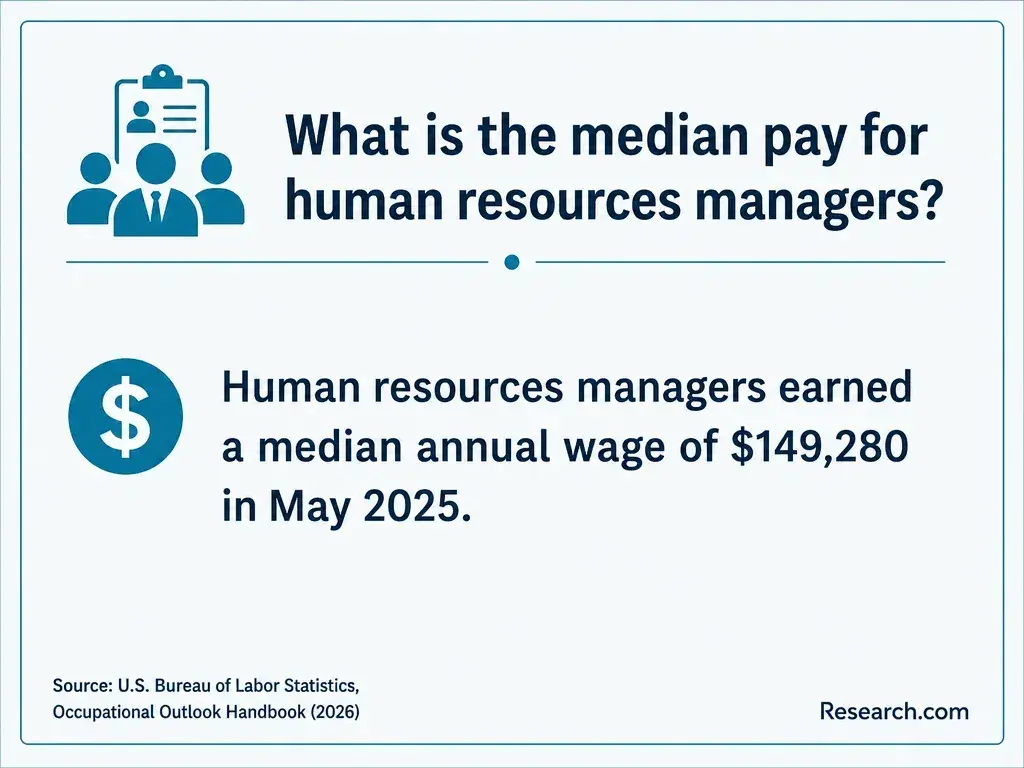
For salary context, the U.S. Bureau of Labor Statistics reports a $126,520 median annual wage for management occupations in May 2025. That broad figure is not the median for payer mix analysts, healthcare finance managers, or MBA graduates. Use pay ranges for the exact occupation, location, and experience level when assessing a job offer or education investment.
A doctorate usually has a weaker financial case for someone focused solely on operational payer mix analysis. If a research or executive-education goal makes one relevant, examine healthcare administration doctorate fees and completion costs alongside the time away from work; neither a degree title nor an occupational median establishes a personal return.
What job outlook and certifications apply to healthcare administration analysts?
The Bureau of Labor Statistics projects that management occupations overall will grow faster than the average for all occupations from 2025 to 2035, with about 1.1 million openings annually on average from growth and replacement needs. That is an economy-wide management outlook, not a forecast for payer mix analyst openings. Local health systems, insurers, and consulting employers may use different titles and seek different combinations of finance, claims, and clinical knowledge.
Certifications in healthcare financial management, revenue cycle, coding, or analytics can help demonstrate a specific skill set, but they are not universal requirements for payer mix roles. Check the issuing organization's eligibility rules and compare them with actual job postings. An applied portfolio project that documents assumptions, reconciles results, and explains limitations can provide more direct evidence of modeling ability.
For experienced professionals considering an eventual doctorate, healthcare leadership doctorate transfer credit considerations belong to a separate education decision. Transfer credit is not a substitute for the reimbursement expertise an analyst needs now.
Other Things You Should Know About Healthcare Administration
Not automatically. "Self-pay" may describe the account's billing status rather than a patient's coverage status. Confirm the organization's definitions and keep categories consistent across periods.
Flag incomplete periods and use a documented completion method or wait for more mature data. Comparing a recent, unfinished period with a fully settled one can create a false revenue decline.
Only with appropriate authorization and privacy safeguards. Ask whether the program supplies de-identified, synthetic, or otherwise approved data; workplace access does not automatically permit academic use.
Update it when contracts, payment rules, services, or patient populations materially change, and validate it during routine reporting. The useful cadence depends on the organization's decision cycle and claims lag.
- Definition of patient complexity in adults: A narrative review | nih.gov https://pmc.ncbi.nlm.nih.gov/articles/PMC9106317/
- Integrated Care Plans for Dual Eligible New Yorkers | ny.gov https://www.health.ny.gov/health_care/medicaid/redesign/duals/
- Obtaining Data From Electronic Health Records - - NCBI - NIH https://www.ncbi.nlm.nih.gov/books/NBK551878/
- Glossary - Health IT Playbook - HealthIT.gov https://playbook.healthit.gov/playbook/glossary/
- Net Patient Revenue, Discharges, and Outpatient Visits... - HCAI https://hcai.ca.gov/visualizations/net-patient-revenue-discharges-and-outpatient-visits-by-payer-and-facility/
- Exploring Episode-Based Approaches for Medicare Performance Measurement, Accountability and Payment Final Report | ASPE https://aspe.hhs.gov/reports/exploring-episode-based-approaches-medicare-performance-measurement-accountability-payment-final
- Difference-in-Difference Estimation | Columbia University Mailman School of Public Health https://www.publichealth.columbia.edu/research/population-health-methods/difference-difference-estimation
- How do payer mix and technical inefficiency affect hospital profit? A weighted DEA approach - ScienceDirect https://www.sciencedirect.com/science/article/abs/pii/S2211692314000411
- Spending by Payer - Key Facts About Hospitals | KFF https://www.kff.org/health-costs/key-facts-about-hospitals/
- Understanding Hospital Payor Mixes Across the U.S | Definitive Healthcare https://www.definitivehc.com/resources/healthcare-insights/breaking-down-us-hospital-payor-mixes