2027 Value-Based Care Program Manager: What Graduate Study Should Add

Co-Founder and Chief Data Scientist
Value-based care program managers must connect patient outcomes, contract performance, and the work of clinical and operational teams. If you already work in healthcare, graduate study is worth considering only if it adds capabilities you cannot readily build on the job. If you are entering the field, a degree also needs to help you gain credible healthcare experience. This guide explains what the role involves, how an MHA and a healthcare-focused MBA differ, and what to check before committing time and money to a program.
Key Things You Should Know
- Prioritize graduate study that lets you apply healthcare finance, quality measurement, analytics, and change management to a real value-based contract - not just learn the terminology.
- An MHA may fit healthcare operations and policy goals; an MBA may fit broader financial and organizational leadership. Neither replaces relevant healthcare experience.
- The Bureau of Labor Statistics reports a $126,520 median annual wage for all management occupations in May 2025; that is not a salary estimate for value-based care program managers or degree graduates.
What does a value-based care program manager do?
Value-based care refers to payment and delivery arrangements that reward defined quality, patient-experience, or cost results rather than simply paying for each service. A program manager turns an organization's obligations under those arrangements into coordinated work. Depending on the employer, that may mean tracking quality measures, organizing outreach to patients with unmet care needs, monitoring spending, preparing performance reports, or helping clinical teams change workflows.
The job sits between clinicians, analysts, finance staff, contracting teams, and executives. A manager needs to understand what a measure means, whether the underlying data is reliable, and which team can act on a result. Someone building toward this role without a bachelor's degree can first explore online bachelor's programs in health services administration, while seeking hands-on experience in care coordination, quality improvement, revenue operations, or healthcare analytics.
What degree is needed to become a value-based care program manager?
There is no single degree or universal license for this job title. Employers may seek a bachelor's degree and relevant healthcare experience; some prefer graduate preparation for roles with substantial budget, contract, or organizational responsibility. Read the qualifications for the positions you want rather than treating a master's degree as an automatic entry requirement.
An MHA generally concentrates on managing healthcare organizations. An MBA provides a broader business core; healthcare coursework may be a formal concentration, an elective group, or just one class. An MPH can be useful when a role emphasizes population health and program evaluation, while a health informatics or analytics degree may better serve someone whose intended work is primarily technical. For professionals still completing an undergraduate credential, comparing associate-to-bachelor's health administration routes can be a more immediate step than choosing a graduate program.
How can graduate study prepare you for value-based care management?
Useful graduate study should help you make decisions across functions, not merely recognize healthcare acronyms. An employed care coordinator might use a project to test why patients miss follow-up visits; an analyst might learn to explain a performance finding to clinicians and budget owners. In either case, the strongest learning connects a measure to an intervention, its operational cost, and a way to assess whether it worked.
Choose the degree around your principal gap. An MHA may be the closer fit if you need healthcare governance, operations, and payment-system context. A healthcare-focused MBA may be more valuable if you already know the care environment but need managerial accounting, resource allocation, negotiation, and organizational leadership. If you mainly need to build data architecture or advanced analytical methods, consider healthcare administration versus health information management degrees before paying for a broad management curriculum. None of these paths substitutes for access to actual projects and experienced colleagues.
Check institutional accreditation first, then examine whether the particular graduate program holds relevant specialized accreditation. The Commission on Accreditation of Healthcare Management Education (CAHME) accredits eligible graduate healthcare management programs; institutional accreditation and CAHME accreditation are different claims. Verify the specific program and delivery option rather than assuming every degree offered by a university shares the same status. For a starting point, review healthcare administration master's choices with CAHME accreditation.
Accreditation alone cannot tell you whether a curriculum fits value-based care. Ask for current course descriptions and an example of an applied assignment. Look for opportunities to work with quality measures, payment models, healthcare financial decisions, and organizational change. Also ask who teaches those subjects, whether working students can use projects from their employers, and what career support online students can actually access.
There is no standard "value-based care management" graduate curriculum. In an MHA, relevant subjects may appear in healthcare finance, policy, quality improvement, population health, and operations courses. In an MBA, accounting, finance, analytics, and organizational behavior usually form part of the business core; healthcare-specific payment or delivery topics depend on the school's verified electives or concentration.
The most informative assignment is one that requires students to connect disciplines - for example, evaluate a quality measure, identify a workflow change, estimate its resource needs, and explain how to monitor unintended effects. A course that teaches dashboard interpretation at a management level is not necessarily advanced training in data engineering. If your intended role requires responsibility for health data systems rather than management of a care program, examine HIM degree selection and CAHIIM accreditation as a distinct educational route.
They can be, particularly when you can apply coursework at a healthcare employer while studying. Online delivery does not, by itself, guarantee a manageable schedule or practical experience. Before enrolling, ask whether classes meet live, when group projects occur, whether a residency or internship is required, and whether you can complete an applied project using appropriately approved workplace information.
Compare the published sequence, not just the advertised fastest completion time. Accelerated online master's options for faster healthcare management study may compress demanding finance and analytics work into fewer terms. That can suit an experienced professional with protected study time; a newer healthcare employee may benefit more from a pace that leaves room to gain relevant responsibility.
Requirements vary by school and degree. Programs commonly request evidence of a completed bachelor's degree, transcripts, a résumé, and written statements or recommendations, but testing policies, prerequisite courses, and work-experience expectations must be checked program by program. A nonbusiness bachelor's degree is not automatically disqualifying; it may, however, make accounting or quantitative preparation especially useful before an MBA.
If you have limited healthcare experience, ask admissions staff how the program helps students obtain applied experience and whether its career services support entrants to the field. Some MHA programs that consider applicants without healthcare experience may be accessible academically, but admission does not remove employers' preference for job-relevant experience. A healthcare project, internship, or adjacent role may be as important to your transition as the credential itself.
Completion time depends on required credits, course sequencing, enrollment pace, and any fieldwork or residency. Compare an MHA and an MBA using the total requirements you would actually complete, including foundation courses. A school's advertised accelerated pathway may assume a heavier course load than you can sustain while working.
Likewise, a tuition figure is not the full cost of a degree. The following components help you compare offers without mistaking a per-credit rate for a total bill.
| Cost component | What to verify |
| Tuition | Required credits and whether the published rate is per credit, course, or term |
| Mandatory expenses | Program fees, technology charges, materials, and any required travel |
| Financing and work | Loan costs, employer assistance rules, and income affected by changing work hours |
For an affordability comparison, request a written estimate for your planned pace and check when employer reimbursement becomes available. If speed is a priority, use online healthcare management MBA program duration as one comparison point, then assess whether the schedule leaves enough time for meaningful healthcare projects. A shorter degree is not necessarily the lower-cost choice if fees, lost work time, or financing differ.
Value-based care program management is not generally a separately licensed profession. Relevant certifications may help demonstrate particular skills in healthcare quality, project management, analytics, or health information, but eligibility rules and employer preferences differ. A clinical license can be valuable for a role involving clinical oversight; a management degree or certification does not authorize clinical practice.
Start with the tasks in target job postings. If employers want demonstrated quality-improvement work, a documented project may carry more weight than an unrelated credential. If your gap is broad healthcare leadership rather than a discrete skill, compare certification costs and scope with online master's options for faster healthcare management study - but do not assume the faster degree will deliver the experience the job requires.
What salary and job outlook can value-based care managers expect?
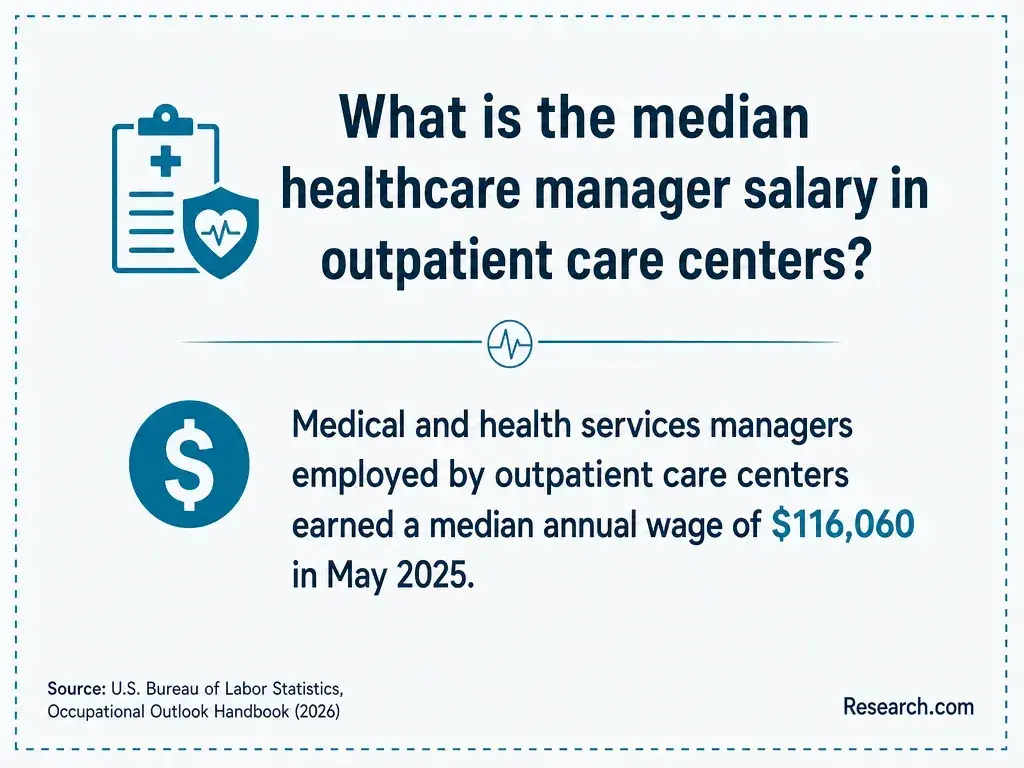
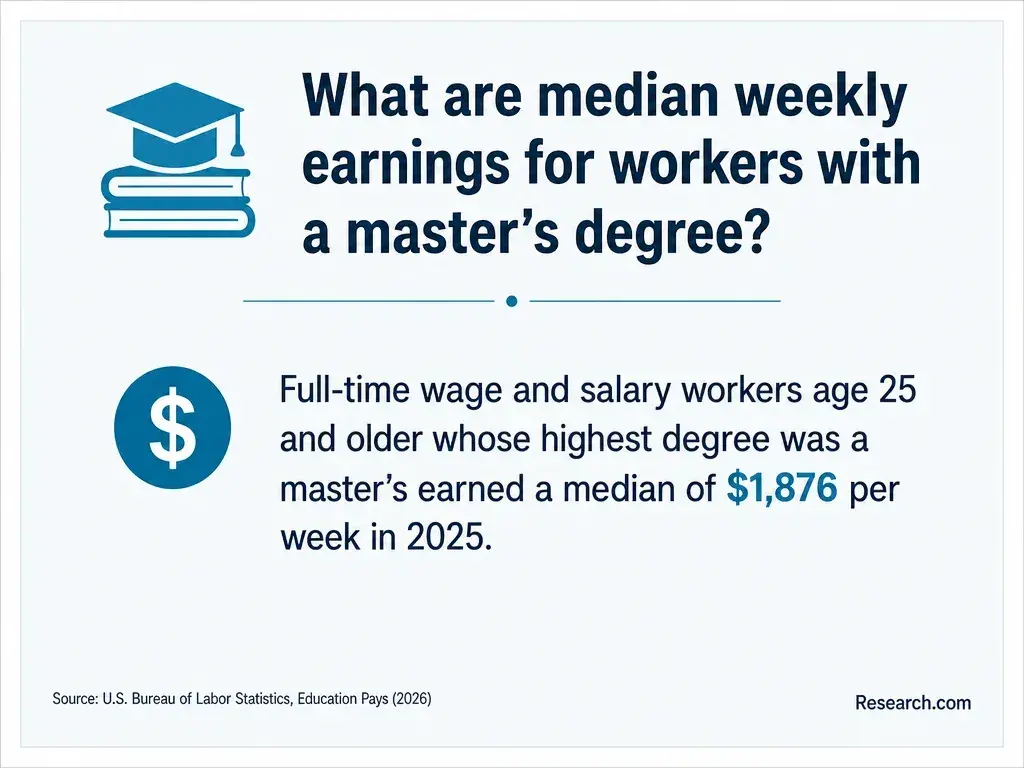
There is no dependable national salary figure for the exact title "value-based care program manager." Pay can vary substantially with employer type, location, clinical or technical responsibilities, and whether the position manages people or a portfolio of contracts. The Bureau of Labor Statistics reports a May 2025 median annual wage of $126,520 across all management occupations. That broad figure is useful context, not a forecast of what this particular role - or an MHA or MBA graduate - will earn.
The Bureau projects that management occupations overall will grow faster than the average for all occupations from 2025 to 2035. That outlook does not establish demand for any one value-based care title. For a realistic pay comparison, collect current postings for the responsibilities you want, separate manager roles from coordinator and director roles, and weigh the value of your existing healthcare experience. If you are comparing adjacent career paths, roles to explore after healthcare administration study can help frame the options without treating every role's salary as interchangeable.
Graduate study is most defensible when a program closes a specific leadership or analytical gap, fits your work schedule, and has a manageable net cost. If you lack healthcare experience, build it alongside - or before - the degree. If you already perform the target work, first test whether an employer-supported project or focused training would advance you without the cost of another degree.
Other Things You Should Know About Healthcare Administration
Attribution is the method a contract uses to assign patients to a provider or organization for performance measurement. Because methods differ, managers need to confirm which patients count before interpreting results.
Claims submission, data validation, and reporting schedules can create a delay. Managers should distinguish early operational indicators from final contract performance results.
No. Risk adjustment accounts for specified differences in patient characteristics when comparing results; it does not replace care-quality obligations. Its rules depend on the measure and contract.
Not without the appropriate organizational approval and safeguards. Ask your employer and school whether a de-identified, aggregated, or simulated dataset can meet the assignment's requirements.
- Quality requirements under Medicaid managed care | MACPAC https://www.macpac.gov/subtopic/quality-requirements-under-medicaid-managed-care/
- General Schedule Qualification Policies | U.S. Office of Personnel Management https://www.opm.gov/policy-data-oversight/classification-qualifications/general-schedule-qualification-policies/
- The use of Big Data Analytics in healthcare - PMC https://pmc.ncbi.nlm.nih.gov/articles/PMC8733917/
- Accountable Care and Accountable Care Organizations | cms.gov https://www.cms.gov/priorities-innovation-key-concepts-accountable-care-accountable-care-organizations
- 42 CFR Part 425 -- Medicare Shared Savings Program | ecfr.gov https://www.ecfr.gov/current/title-42/chapter-IV/subchapter-B/part-425
- The Core Competencies Needed for Health Care Professionals | nih.gov https://www.ncbi.nlm.nih.gov/books/NBK221519/
- Practicum Projects | UC Davis Graduate School of Management https://gsm.ucdavis.edu/master-science-business-analytics/academics/practicum-projects
- Master's in Business Analytics Practicum Capstone | Emory University Goizueta Business School https://goizueta.emory.edu/msba/academics/capstone
- Experts on the Future of Work, Jobs Training and Skills | Pew Research Center https://www.pewresearch.org/internet/2017/05/03/the-future-of-jobs-and-jobs-training/
- ACO Planning Guide: Strategies For Value-based Health Care | AAFP https://www.aafp.org/practice-operations/practice-and-payment-models/value-based-care-and-payment-models/acos/aco-planning-guide