
2027 Hospital Foundation Operations Director: MHA vs Nonprofit Management

Co-Founder and Chief Data Scientist
A hospital foundation operations director works where healthcare priorities, donor commitments, and nonprofit finances meet. That makes the choice between a Master of Healthcare Administration (MHA) and a nonprofit management degree unusually consequential: each develops useful skills, but neither covers the whole job. This guide is for foundation staff, hospital employees, and career changers weighing an online graduate program. It explains what the role requires, where each degree has an advantage, and how to choose a program without assuming that another credential alone will secure a director position.
Key Things You Should Know
- Choose an MHA if you need deeper knowledge of hospital strategy, finance, and clinical operations; choose nonprofit management if your larger gap is fundraising operations, governance, or restricted-gift stewardship.
- Employers may value a record of managing budgets, donor systems, teams, and cross-functional projects more than a particular graduate-degree title.
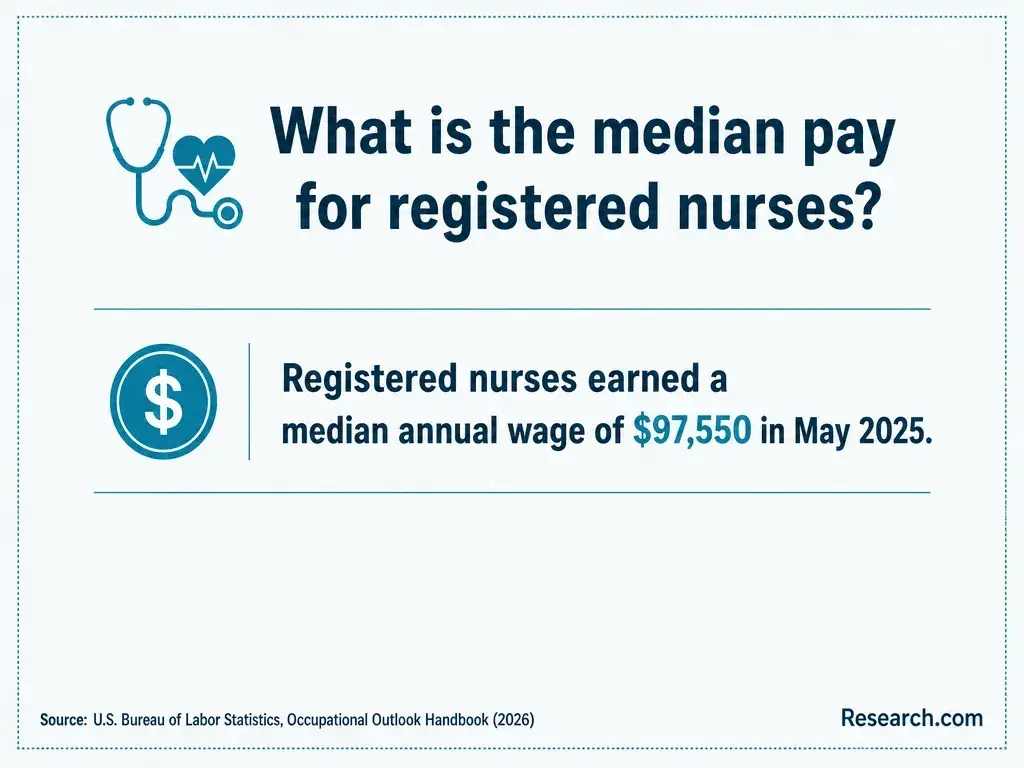
- The U.S. Bureau of Labor Statistics reports a $126,520 median annual wage for management occupations in May 2025, not a salary specific to hospital foundation operations directors.
What does a hospital foundation operations director do?
A hospital foundation raises and stewards charitable support for a hospital or health system. Its operations director typically builds the processes that let fundraisers, finance staff, executives, and board members use that support responsibly. Depending on the foundation, the role may oversee gift processing, donor records, budgeting, reporting, staff, vendors, and the handoff of funds to hospital programs.
The central challenge is coordination. A donor may fund a specific service, while the hospital must document how money was received, restricted, spent, and reported. An operations director needs to understand both the foundation's obligations and the hospital's decision-making process. At a smaller foundation, the job may include hands-on database and accounting work; at a larger one, it may focus on supervising specialists and improving systems.
For someone entering this work without a bachelor's degree, the first step is usually undergraduate preparation and relevant experience rather than a graduate program. Healthcare administration bachelor's programs with flexible starts can be one route, although a nonprofit, accounting, or business degree may also fit the intended role.
Is an MHA or nonprofit management degree better for hospital foundation leadership?
Neither is universally better. An MHA is the stronger complement to substantial fundraising or nonprofit experience when the missing skill is navigating a hospital. A nonprofit management degree is often the stronger complement to hospital experience when the missing skill is running a philanthropic organization. Compare the curriculum with your existing work, not just the degree name.
The table shows how common degree paths address different parts of the job. These are program-level tendencies, not promises about every school's coursework.
| Degree path | Most useful when your gap is | Important limitation to check |
| MHA | Healthcare finance, hospital operations, strategy, and health-system leadership | May offer little instruction in gifts, donor systems, or nonprofit fundraising |
| Nonprofit management master's | Governance, fundraising, grants, donor stewardship, and mission-driven management | May provide limited exposure to hospital finance and clinical stakeholders |
| MBA with relevant coursework | Broad finance, people management, analytics, and operational leadership | A healthcare or nonprofit elective is not necessarily a formal concentration or deep sector preparation |
| MPA | Public accountability, budgeting, and work across public and nonprofit institutions | Coursework may not address hospital foundation operations directly |
Before paying for a full degree, identify the responsibilities you cannot yet demonstrate. If one or two courses and a stretch assignment would close the gap, a shorter option may have better value. Compare the full cost - including fees and any required travel - with cost-conscious choices for a healthcare administration degree; a lower tuition figure is useful only if the program teaches what you need.
What education is required to become a hospital foundation operations director?
There is no single degree legally required for this job. Employers set their own qualifications, commonly looking for a bachelor's degree and progressively responsible experience in development operations, healthcare administration, nonprofit finance, or a related field. Some prefer a master's degree, particularly for roles with substantial budget, staff, or systemwide responsibilities.
Relevant work can begin in gift processing, advancement services, hospital finance, grants administration, or foundation program coordination. A candidate with strong donor-operations experience may need healthcare exposure; a hospital manager may need direct experience with gifts, board reporting, and donor restrictions.
For applicants building from an associate degree, healthcare administration transfer pathways explained can help clarify the undergraduate step before considering graduate study.
Read several actual director postings before applying to school. Note which qualifications are required, which are preferred, and whether the job emphasizes fundraising infrastructure or hospital-wide operations. That comparison is more reliable than assuming every foundation uses the same hiring standard.
Look for an MHA, nonprofit management master's, MPA, or MBA whose courses and applied work match the foundation responsibilities you want. For an operations-focused role, useful evidence includes projects involving budgets, data governance, organizational change, healthcare partners, or nonprofit financial controls. A program's title alone does not establish that it covers gift administration.
If you are still choosing an undergraduate path, compare university options for a healthcare administration bachelor's alongside nonprofit and business programs.
At the graduate level, ask for the current course list and confirm which electives are regularly available online, whether a practicum can be completed with a foundation, and whether the total tuition and fees fit your budget. An applied project with a hospital foundation may be more relevant than a concentration label that appears only in marketing materials.
An online degree can be credible when the institution is appropriately accredited and the program develops demonstrable skills. Employers can still differ in how they weigh schools, experience, and delivery format. For a director applicant, evidence of improving a gift-processing workflow or managing a complex budget is likely to be more persuasive than saying the program was online or on campus.
Online delivery also does not guarantee scheduling freedom. Before enrolling, verify live-session times, group-project expectations, any campus visits, and access to career services or applied projects.
Career changers should pay particular attention to opportunities to build healthcare contacts: coursework alone may not replace experience with a hospital. Applicants without a prior healthcare job can explore MHA applications without a prior healthcare job, then check each program's current admissions rules and experiential options directly.
MHA coursework generally approaches organizations from the health-system side: healthcare finance, policy, operations, quality, leadership, and strategy. Nonprofit management coursework approaches them from the mission and funding side: governance, fundraising, nonprofit accounting, grants, evaluation, and stakeholder relationships. Actual requirements vary by school.
For foundation operations, the most valuable combination may be healthcare financial literacy plus the ability to account for gifts and explain results to donors and hospital leaders.
An MBA can add a broad management core - such as accounting, operations, and organizational behavior - but an individual nonprofit elective does not make it a specialized nonprofit degree. Similarly, neither an MHA nor an MBA automatically teaches the technical details of a particular donor database.
Duration affects what a student can practice while enrolled. Healthcare administration master's programs with one-year schedules may appeal to experienced professionals, but compare course sequencing and applied opportunities before treating faster completion as better preparation.
Start by confirming that the university holds recognized institutional accreditation. That is distinct from specialized accreditation of a particular school or degree. For an MHA, the Commission on Accreditation of Healthcare Management Education (CAHME) accredits eligible healthcare management graduate programs; verify the specific program and delivery option rather than assuming a university-wide designation covers every offering.
For an MBA, business-school accreditation may be relevant, but it does not establish that the curriculum includes hospital foundation work. Nonprofit management programs may be housed in public affairs, business, or other schools with different specialized accreditation arrangements. Compare CAHME-accredited online healthcare administration study if that distinction matters to you, while still evaluating costs, courses, and employer connections.
There is no reliable national wage figure here for the exact title "hospital foundation operations director." Compensation varies with foundation size, location, reporting level, and whether the job primarily manages fundraising operations or broader health-system functions. Avoid treating a general healthcare administrator salary as a quote for this position.
For context, the U.S. Bureau of Labor Statistics reports a $126,520 median annual wage for all management occupations in May 2025. That broad group includes many jobs unrelated to foundations, so it is not a director salary estimate or an expected return from an MHA.
Compare posted pay ranges for similar foundations in your area and, where available, public nonprofit compensation disclosures for comparable senior roles. If compensation is your main goal, examine healthcare administration positions with higher earning potential separately; they may require different experience.
A foundation operations specialist might progress into advancement services or finance management before directing operations. A hospital operations manager could move toward foundation leadership after gaining exposure to fundraising, donor stewardship, and nonprofit governance.
Later paths may include broader foundation leadership or health-system development operations, but advancement depends on openings and a record of managing people and resources - not degree completion alone.
The practical next move is to seek responsibility for a cross-functional project: for example, improving how gift restrictions are documented and communicated to hospital finance.
That produces evidence of the exact coordination a director must handle. A doctorate is usually unnecessary for this route; if a later executive or academic goal leads you to consider one, review healthcare administration doctorate completion timelines against the opportunity cost of additional study.
Do hospital foundation operations directors need certification or licensing?
Hospital foundation operations directors generally do not need a profession-specific license. A role may nevertheless call for knowledge of charitable-gift rules, privacy practices, accounting controls, and employer policies; those obligations depend on the work and organization.
A fundraising, project-management, or other professional certification may help demonstrate a particular skill, but it does not replace relevant experience or become mandatory simply because a job is in healthcare. Check job postings before purchasing a credential.
If employers you target consistently ask for donor-database expertise, budget ownership, or staff supervision instead, prioritize opportunities to demonstrate those abilities. The same test applies to more extensive education: compare healthcare administration doctorate fees and completion costs with the qualifications actually requested before treating a doctorate as a substitute for a license or a shortcut to promotion.
Other Things You Should Know About Healthcare Administration
Not simply because the organization needs the money. The foundation must follow the gift agreement and applicable law. Staff should confirm the restriction and obtain appropriate legal or financial guidance before changing a gift's use.
No. Donor information is not automatically protected health information. If fundraising uses patient information held by a covered healthcare entity, HIPAA rules and organizational privacy policies may apply; staff should follow approved procedures.
Possibly, but the arrangement depends on the employer. Secure systems can support remote administrative work, while board meetings, hospital coordination, events, or team supervision may require on-site time.
Ask how the foundation measures results, handles restricted gifts, staffs its finance and data functions, and works with hospital leadership. Those answers reveal the scope of the job and the support available to the director.
- Charitable contribution deductions | Internal Revenue Service https://www.irs.gov/charities-non-profits/charitable-organizations/charitable-contribution-deductions
- Improving Patient Outcomes Through Effective Hospital... - PMC https://pmc.ncbi.nlm.nih.gov/articles/PMC10676194/
- MPH vs. MHA vs. MBA: Choosing the Right Path for Your Career in Healthcare - Purdue Online https://www.purdue.edu/online/mph-vs-mha-vs-mba-choosing-the-right-path-for-your-career-in-healthcare/
- 26 U.S. Code § 170 - Charitable, etc., contributions and gifts | LII / Legal Information Institute https://www.law.cornell.edu/uscode/text/26/170
- MBA vs. MHA: Which Degree Is Right for You? | SIUE https://online.siue.edu/degrees/business/mba/healthcare-administration/administrator-salary/
- Job Standard for Grants Management | Boise State Online https://www.boisestate.edu/hrs-job-levels-job-standards/job-standard-for-grants-management/
- What is an MHA Degree and Who Should Pursue One? | Cornell Brooks Public Policy https://publicpolicy.cornell.edu/masters-blog/what-is-an-mha-degree-and-who-should-pursue-one/
- 11 Best Degrees for a Career in Nonprofit | University of San Diego Online Degrees https://onlinedegrees.sandiego.edu/best-nonprofit-degrees/
- Full article: The meaning of higher education credentials in graduate occupations: the view of recruitment consultants https://www.tandfonline.com/doi/full/10.1080/13639080.2022.2162019
- Director of the Foundation | applicantpro.com https://jeffersonhealthcare.applicantpro.com/jobs/job_description_files.php


