2027 Infection Prevention Administration Without a Clinical License

Co-Founder and Chief Data Scientist
You can help run an infection prevention program without being a nurse or holding another clinical license. The distinction is between coordinating surveillance, reporting, training, and improvement efforts - and performing clinical work reserved for licensed professionals. For healthcare workers and career changers weighing a certificate, public health degree, MHA, or MBA, that distinction can prevent an expensive educational detour.
This guide explains which roles may be open to you, where employers expect specialized experience, and how to compare programs against the work you actually want to do.
Key Things You Should Know
- A nursing license is not a universal requirement for infection prevention work, but job duties, employer policies, and setting-specific rules can limit which positions a nonclinician can hold.
- For a direct move into infection prevention, epidemiology, microbiology, surveillance, or healthcare quality preparation is often more relevant than a general MBA alone.
- The U.S. Bureau of Labor Statistics reports a May 2025 median wage of $126,520 across all management occupations; it is not an infection prevention salary or a realistic entry-level pay estimate.
What does infection prevention administration involve without a clinical license?
Infection prevention administration is the organizational work of reducing infection risks in healthcare settings. Depending on the position, it can include maintaining policies, coordinating staff education, tracking healthcare-associated infection data, preparing reports, supporting audits, and helping teams act on findings. A nonclinician might manage a surveillance database or improvement project while a qualified clinician handles patient assessment and treatment decisions.
Job titles do not reliably define the boundary. A "coordinator" at one hospital may organize meetings; another may be expected to interpret clinical records and advise care teams. Read the essential duties and required qualifications, not just the title. If you are entering healthcare from another industry, a background in operations, analytics, education, or compliance may transfer well, but you will still need to learn healthcare terminology and infection prevention practices. A healthcare administration bachelor's degree can provide broader entry preparation; compare healthcare administration bachelor's degree choices at U.S. institutions against openings in your local market.
Can you become an infection preventionist without a nursing license?
Yes, potentially. Infection preventionist is not synonymous with registered nurse. Employers may consider applicants with backgrounds such as epidemiology, microbiology, public health, or medical technology, provided they meet the position's education and experience requirements. Some roles, however, specifically require an RN license or clinical experience. A degree or certificate cannot override that requirement.
Setting matters as well. For example, federal nursing-home rules require a designated infection preventionist with specialized infection prevention training and primary professional training in nursing, medical technology, microbiology, epidemiology, or another related field. That rule does not say every infection preventionist must be a nurse, but a facility must determine whether an applicant's background meets the applicable standard.
If your experience is mainly in administration, look first for surveillance support, quality improvement, data, or program-coordination openings. Ask employers what experience they accept before enrolling in graduate school. An MHA may help with a broader transition into healthcare leadership; MHA degree options for applicants changing sectors are worth comparing, but an MHA alone will not supply hands-on infection prevention experience.
What education is required for infection prevention administration careers?
There is no single degree required for every infection prevention administration job. Requirements depend on whether the employer needs an administrative assistant, a surveillance analyst, a designated infection preventionist, or a department leader. Entry-level support positions may accept relevant undergraduate education, while positions responsible for interpreting infection data and directing interventions commonly seek substantial subject knowledge and experience.
For applicants without a bachelor's degree, healthcare administration can build a foundation in healthcare systems, records, quality, and management. It is less specialized in infection science than microbiology or epidemiology, so check whether the jobs you want accept that major. If getting started soon matters, finding a healthcare administration bachelor's with a suitable start date may help - but a convenient start should not outweigh relevant coursework or opportunities to gain healthcare experience.
The best degree depends on the gap between your current experience and your target job. These paths serve different purposes; none automatically qualifies a graduate for every infection preventionist position.
| Degree path | Strongest fit | Important limitation |
| Microbiology, epidemiology, or public health | Surveillance, infection science, and population-level analysis | May provide less preparation for budgets and staff management |
| Healthcare administration bachelor's degree | Healthcare operations, quality support, and administrative entry roles | May need additional infection prevention coursework and experience |
| MPH | Epidemiology, data interpretation, and public health practice | Coursework and practical placements vary by program |
| MHA | Managing healthcare services, quality, and organizational change | Does not substitute for specialized infection prevention training |
| MBA with healthcare coursework | Budgeting, operations, and broader management advancement | A healthcare elective is not an infection prevention specialization |
If you already work in infection prevention and want to manage a team or budget, an MHA or healthcare-focused MBA may fill a useful management gap. If you are trying to qualify for your first technical infection prevention role, relevant science, epidemiology, and practical experience deserve more weight. Compare the cost of affordable healthcare administration degrees online only after confirming that the degree's coursework matches employers' requirements.
The Certification Board of Infection Control and Epidemiology's Certification in Infection Prevention and Control (CIC) is a recognized credential for experienced infection prevention professionals. Its eligibility rules concern qualifying infection prevention responsibilities and other current requirements; it should not be treated as an introductory course or as proof of clinical licensure. The board also offers the Associate - Infection Prevention and Control (a-IPC) credential, aimed at people earlier in their infection prevention development. Check the certifying body's current handbook before paying for preparation or an exam.
A certificate of course completion, a professional certification, and an academic degree are different credentials. Ask which one a target employer names in its posting. A doctorate is generally a poor substitute for missing practical experience or certification eligibility; comparing shorter doctoral pathways in healthcare administration makes sense only if your longer-term goal calls for advanced research or executive-level study.
Relevant coursework can cover how infections spread, surveillance methods, healthcare-associated infection reporting, outbreak response, quality improvement, staff education, and the policies that govern healthcare organizations. Administrative programs may emphasize budgeting, operations, data dashboards, communication, and leading change. Strong preparation connects the two: for example, students should be able to explain a surveillance finding accurately and organize an appropriate improvement effort with clinical colleagues.
Inspect required courses rather than relying on a program name. An MBA's management core may teach finance and operations without teaching infection surveillance; an MPH may develop epidemiology skills without much budget management. A short graduate path can be appealing to working professionals, but compare online graduate pathways with shorter healthcare management schedules for relevant coursework and applied learning, not completion time alone.
Online delivery does not, by itself, make a credential less credible. What matters is institutional accreditation, the program's actual curriculum, access to qualified instructors, and whether its practical requirements can be completed where you live or work. An online course may teach surveillance concepts effectively, but screen-based assignments cannot automatically replace supervised experience in a healthcare facility.
Ask whether classes are asynchronous, when live sessions occur, and whether a practicum, residency, or local site agreement is required. Those details matter more to a working applicant than the "online" label. They matter at advanced levels too: online healthcare leadership doctorate pacing options illustrate why advertised flexibility and actual completion requirements must be checked separately.
Requirements vary substantially. Undergraduate programs generally assess prior schooling and transfer credit; graduate programs usually require a bachelor's degree and may ask for a résumé, references, or a statement of purpose. Some programs expect healthcare experience, while others welcome career changers. A professional certification has separate eligibility rules and is not admission to a degree program.
Program length depends on credits, transfer policies, enrollment pace, and applied requirements. For a useful cost comparison, request the total credits needed after any transfer review and account for tuition, mandatory fees, materials, and required travel or placement costs. Then compare what you would pay after confirmed employer assistance - not an advertised tuition figure alone. If an MBA fits your management goal, healthcare-focused online MBA cost planning can help frame that comparison. Do not assume a faster schedule reduces the total bill or leaves enough time to gain relevant work experience.
Possible targets include infection prevention program coordinator, surveillance or quality analyst, healthcare quality specialist, and - in settings that accept the applicant's qualifications - infection preventionist. Experienced professionals may move toward quality or infection prevention management. Administrative applicants are usually more competitive when they can demonstrate healthcare data work, policy implementation, staff training, or project results rather than management coursework alone.
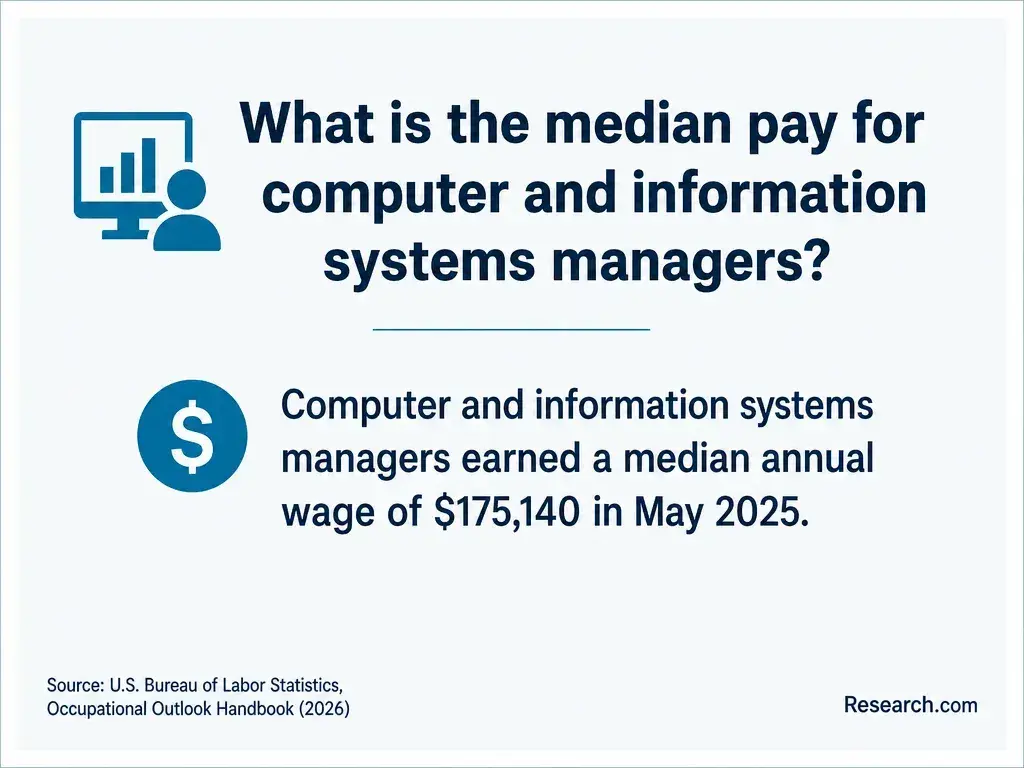
There is no reliable single salary for "nonclinical infection prevention administration": titles, duties, employers, and locations differ. The U.S. Bureau of Labor Statistics reports a $126,520 median annual wage in May 2025 for management occupations overall, not for infection prevention managers specifically. It should not be used as a starting-salary expectation. Compare local postings that accept your qualifications and note whether their pay ranges cover analyst work, program management, or licensed clinical duties.
A doctorate may support a later research or senior leadership goal, but it is not a routine prerequisite for these jobs. If considering that investment, compare the cost and career context of healthcare administration doctorates with the advancement available through experience, focused training, or a master's degree.
How do you choose an accredited infection prevention program?
Start with two or three job postings for the role and setting you want. Separate qualifications marked "required" from those marked "preferred," especially clinical licenses, science preparation, infection prevention experience, and certification. Then use this checklist to test whether a program closes your specific gaps.
- Confirm the institution's recognized accreditation and check whether any relevant program-specific accreditation applies; neither one guarantees eligibility for a particular job or certification.
- Match required courses and applied work to the duties in your target postings, including surveillance, data interpretation, and healthcare quality.
- Ask who arranges practicums, whether local placements are permitted, and whether online students have access to the same relevant career support.
- Get a written estimate of remaining credits, total required costs, attendance obligations, and the completion schedule you can realistically maintain.
Choose an MBA if you already have, or can build, the infection prevention foundation and primarily need broader management skills. An MPH, relevant science program, or focused training may be the more direct route into surveillance or technical practice. If an MBA is under consideration, compare online healthcare MBA options with compressed terms against your work schedule and the actual healthcare content - not just the advertised finish date.
Other Things You Should Know About Healthcare Administration
Often, if the employer assigns the task and provides appropriate training and system access. The facility remains responsible for its reporting processes; data entry authority does not grant authority to make clinical diagnoses.
It may help demonstrate interest, but an employer or certifying body may require specific paid or unpaid responsibilities. Document the work you actually performed and check how the organization defines qualifying experience.
Yes. Long-term care facilities and other healthcare organizations also operate infection prevention programs. Their staffing rules, resources, and expected duties may differ, so compare positions by setting.
Ask the hiring employer which duties and qualifications are mandatory. For questions about legally restricted professional activities, consult the relevant state licensing board rather than relying on a degree program's marketing.
- Infection Prevention Control Program | texas.gov https://apps.hhs.texas.gov/training/cbt/NFA-Infection-Control/module-1/Infection_Prevention_Control_Program_print.html
- Certified in Infection Control (CIC) | osd.mil https://www.cool.osd.mil/dciv/credential/index.html
- Infection Prevention Director | Career Path Navigator https://careernavigator.umich.edu/job_detail/100691/infection-prevention-director
- Certificate in Healthcare Infection Prevention and Control | University of Miami https://uonline.miami.edu/online-certificates/healthcare-infection-prevention-control/
- Key Questions About Nursing Home Regulation and Oversight in the Wake of COVID-19 | KFF https://www.kff.org/covid-19/key-questions-about-nursing-home-regulation-and-oversight-in-the-wake-of-covid-19/
- Preventing and Controlling Infection | jointcommission.org https://www.jointcommission.org/en-us/standards/national-performance-goals/preventing-and-controlling-infection