2027 Transferring an Associate Degree in Business Into a Healthcare Administration BS

Co-Founder and Chief Data Scientist
An associate degree in business can be a starting point for a healthcare administration bachelor's degree, but the credits a school accepts may not all count toward graduation. That distinction affects your cost, timeline, and choice of program. This guide is for business graduates considering a move into healthcare organizations. It explains how to evaluate transfer policies, identify healthcare coursework you may still need, compare online options, and set realistic career expectations before you enroll.
Key Things You Should Know
- A business associate degree can qualify you to apply as a transfer student; the receiving school decides which courses satisfy its healthcare administration degree requirements.
- Many bachelor's degrees require about 120 credits. If 60 accepted credits apply to the degree, about 60 remain - but accepted credits and credits applied are not always the same.
- A healthcare administration bachelor's degree can support a move into healthcare operations, but supervisory roles commonly require relevant experience as well as education.
Can you transfer an associate degree in business into a healthcare administration bachelor's degree?
Yes. A business associate degree does not need to have "healthcare" in its title for you to apply to a healthcare administration bachelor's program. Healthcare organizations use accounting, finance, human resources, and operations skills. Your likely gap is sector knowledge: how care is delivered, financed, regulated, and measured.
Schools evaluate individual courses, not just the degree name. An associate of arts or science built for transfer may satisfy more general education requirements than a career-oriented associate of applied science, although a transfer agreement can change that result. Ask for a degree audit showing which courses fulfill specific requirements and which count only as electives.
For someone entering the field, a bachelor's degree may provide a more direct foundation than immediately pursuing graduate study. If you already hold a bachelor's degree, however, it may be worth checking whether you meet the requirements to compare online MHA degree programs instead of earning another undergraduate degree.
How many credits can transfer from a business associate degree?
There is no universal number. A school may accept a course as college-level credit yet apply it only as a free elective, leaving a required course unfinished. The following categories show why a transfer-credit total alone cannot tell you how close you are to graduation.
| Credit category | Likely treatment | What to check |
| General education | May fulfill writing, mathematics, or other breadth requirements | Whether the school accepts individual courses or an approved general education block |
| Business courses | May satisfy lower-division business requirements or electives | Whether accounting, statistics, and management courses match required equivalents |
| Healthcare-specific courses | Usually remain to be completed if the associate degree was solely in business | Prerequisites and the order in which courses are offered |
| Unrestricted electives | May transfer without replacing a required course | Whether the degree has room for additional electives |
As a planning example, a 120-credit bachelor's degree with 60 accepted and applicable credits would leave 60 credits. A residency rule, upper-division requirement, missing prerequisite, or excess electives could change that calculation. Request a written, program-specific evaluation before committing, and confirm whether its results depend on your final transcript.
Transfer rules also change at later degree levels. Do not assume undergraduate credits will carry into future doctoral study; healthcare leadership doctorate transfer credit considerations involve different eligibility rules.
What courses are required in a healthcare administration bachelor's degree?
Curricula vary, but a healthcare administration major generally combines business fundamentals with the organization and oversight of healthcare services. Your associate degree may cover introductory accounting, economics, statistics, or management. A bachelor's program may then add healthcare finance, health policy, healthcare law and ethics, quality improvement, information systems, and organizational leadership. Some programs include an internship or capstone.
Look beyond course titles when comparing programs. A healthcare finance course, for example, should help you understand decisions made in healthcare organizations; it does not replace clinical training or preparation for a licensed profession. Check prerequisites, upper-division course availability, and whether a required internship can be completed near you.
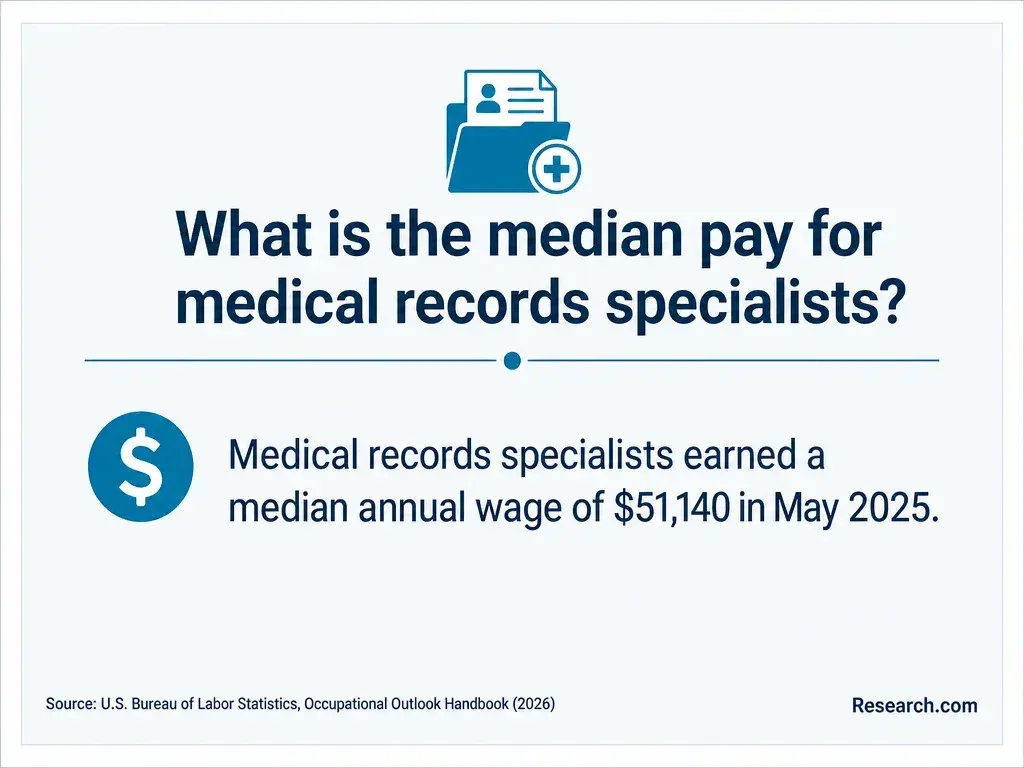
If your goal is primarily medical records, health data governance, or health information systems rather than broader organizational administration, compare the curriculum with online CAHIIM-accredited programs for health information careers. Those are related but distinct educational paths.
Requirements vary by institution and major. Typically, applicants submit transcripts from every college attended and must meet the school's transfer admission standards. A program may also specify a minimum GPA, prerequisite courses, a minimum number of transferable credits, or separate admission to the major. Do not assume that holding an associate degree waives any of these conditions.
Before applying, ask admissions and the department to confirm the requirements that could delay your start:
- Whether your prior institution and coursework meet the school's transfer policies.
- Whether any major prerequisites must be completed before admission or before upper-division courses.
- Whether a transfer agreement or guaranteed-admission pathway applies to your associate degree.
- When you will receive a program-specific credit evaluation and whether it can be appealed.
Healthcare experience is not necessarily required for undergraduate admission, but policies differ. Later, if you consider graduate study, MHA admissions for career changers without healthcare experience is a separate question with its own program requirements.
An online program can be a credible choice when the institution is appropriately accredited and the degree's curriculum, assessments, and support services meet your needs. Delivery mode alone does not establish quality. Confirm the exact degree awarded, who teaches the courses, whether classes require live attendance, and how students complete any internship or capstone.
For a working transfer student, "online" should also be tested against your schedule. Ask about fixed meeting times, group projects, exam arrangements, course rotation, and access to advising and career services. An otherwise suitable program may be impractical if a required course or field experience cannot fit your location or work hours.
Do not use graduate-program accreditation as a shortcut for judging a bachelor's degree. For example, searches for online CAHME-accredited health administration master's programs concern master's-level education, not a blanket credential for online bachelor's programs.
Your timeline depends chiefly on credits that apply to the degree, your course load, and the sequence of remaining requirements. If roughly half of a 120-credit degree is fulfilled, full-time study may take about two academic years. Part-time enrollment usually takes longer, and a course offered only once a year can extend either schedule.
An accelerated calendar is useful only if the courses you need are available in the right order and you can sustain the workload. When you review accelerated online healthcare management degrees, compare a personalized degree audit and course schedule - not an advertised fastest completion time.
Ask an advisor to map your remaining prerequisites, major courses, and any field experience term by term. That plan is more reliable than dividing remaining credits by the number you hope to take each semester.
There is no single transfer-student price. Your total depends on applicable credits remaining, tuition rates, required fees, materials, and how long you enroll. Online students should also check for distance-learning fees and costs associated with an internship or campus visit. A lower per-credit price may not be cheaper if fewer of your previous courses apply.
To compare offers, obtain an estimated remaining-credit count from each school. Then calculate tuition using that school's published rate and add mandatory fees and foreseeable materials or travel costs. Keep that tuition estimate separate from your full cost of attendance, which may include living expenses and borrowing costs. Ask about transfer scholarships, employer education assistance, and your eligibility for federal aid rather than assuming an associate degree determines it.
If graduate school is a possible next step, do not roll its expense into the bachelor's estimate. Use separate healthcare administration master's tuition planning to decide whether that later investment fits your career goals.
Start with institutional accreditation recognized by the U.S. Department of Education. Verify the institution and the status of its accreditation through official government or accreditor records, then confirm that the degree and delivery arrangement you intend to use are covered. Accreditation matters for educational quality review and can affect aid eligibility and how other schools evaluate credits; it does not guarantee that every credit will transfer.
Specialized accreditation serves a different purpose and varies by program type. CAHIIM is relevant to certain health information programs, while CAHME focuses on graduate healthcare management education. Neither should be presented as a universal requirement for a healthcare administration bachelor's degree. If you later consider advanced study, choosing between healthcare management doctoral study routes requires a new check of the institution, degree type, and any applicable program-level standards.
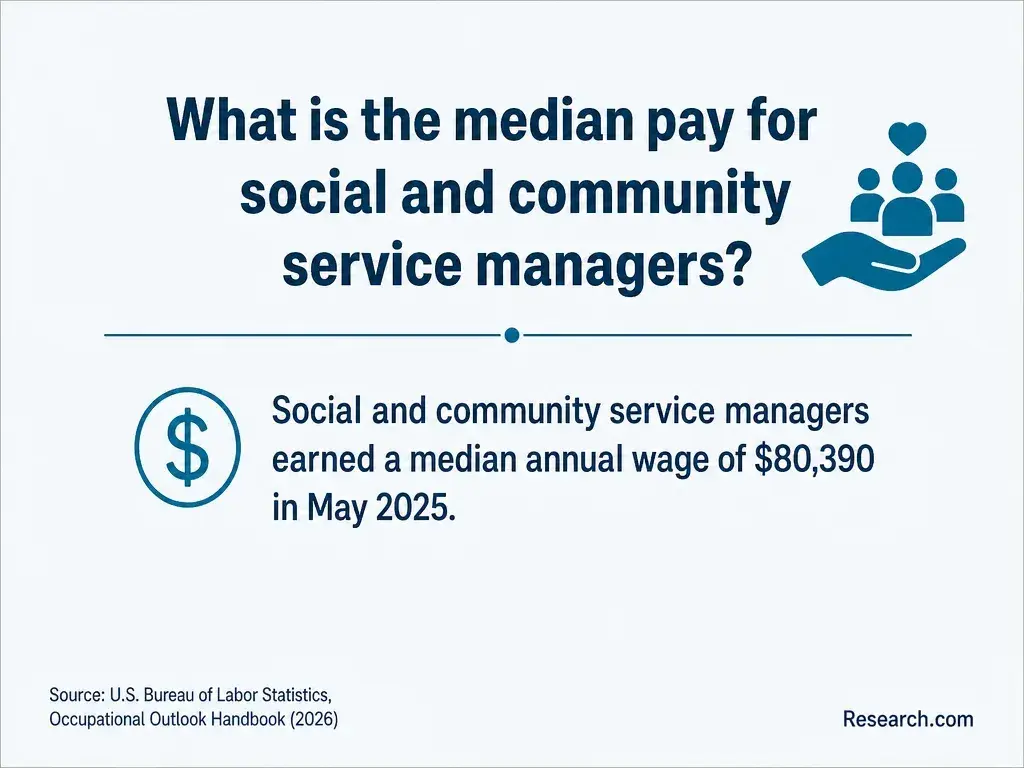
The degree can help a business graduate pursue administrative work in hospitals, clinics, long-term care organizations, insurers, and other healthcare settings. Plausible entry points include operations coordinator, patient services supervisor, practice administrator assistant, or administrative analyst. Duties may involve scheduling, budgets, staffing support, process improvement, or reporting rather than clinical care.
Your previous experience changes the target role. Someone who has managed budgets or teams outside healthcare may be able to seek roles that use those skills, while someone new to both management and healthcare may need a coordinator position first. Larger management roles often require demonstrated healthcare operations experience; a bachelor's degree alone does not confer it.
As you start planning a career in healthcare administration, compare job postings for the responsibilities and experience they actually request. If possible, seek healthcare-facing projects, internships, or employer training that address gaps your business courses did not cover.
What salary and job outlook can healthcare administrators expect?
"Healthcare administrator" covers jobs at different levels, so a broad management figure should not be treated as a starting salary. The U.S. Bureau of Labor Statistics reports a $126,520 median annual wage for all management occupations in May 2025. That figure includes managers across industries and experience levels; it is not the median for new healthcare administration bachelor's graduates.
BLS projects overall management employment to grow faster than the average for all occupations from 2025 to 2035. That broad outlook does not predict openings in a particular healthcare setting or guarantee a management job after graduation. For a personal salary comparison, use current local postings for roles you could realistically qualify for, accounting for your prior experience and the cost of changing fields.
More education may be useful for some later leadership goals, but it is not automatically the best route to higher pay. Before considering one, compare healthcare administration doctoral program costs with the qualifications employers actually seek for your intended role.
Other Things You Should Know About Healthcare Administration
Most nonclinical administrative roles do not require a nursing or other clinical license. Some positions, such as nursing home administrator, have state-specific licensing requirements; check the rules for the exact job and state.
Yes, if you qualify for an available role. Administrative support or patient-facing office work can help you learn healthcare workflows while you study, though schedules and hiring requirements vary.
Schools often record transferred credits without including the previous institution's grades in their own GPA calculation. Policies vary, and employers or graduate schools may still request all college transcripts.
Yes, but a move between settings may require new knowledge of their payment systems, regulations, and operations. When assessing a job, compare those setting-specific requirements with the work you have already done.
- .14 Evaluation and Review Process for Transfer of Courses and Credits. | Library of Maryland Regulations https://regs.maryland.gov/us/md/exec/comar/13B.06.02.14
- School-Determined Requirements | 2024-2025 Federal Student Aid Handbook https://fsapartners.ed.gov/knowledge-center/fsa-handbook/2024-2025/vol1/ch1-school-determined-requirements
- Accreditation in the U.S. | ed.gov http://www.ed.gov/laws-and-policy/higher-education-laws-and-policy/college-accreditation/accreditation-in-the-us
- Transfer Credits | Cabarrus College of Health Sciences https://cabarruscollege.edu/current-students/student-records-information-management/transfer-credits
- Internship Requirements - Health Care Management Program https://hcm.appstate.edu/academic-programs/bachelor-science-health-care-management/internship-requirements
- Transfer Credit Evaluation - TXST Admissions https://www.admissions.txst.edu/future-students/transfer-credit-evaluation.html
- Academic Policies and Procedures | buffalo.edu https://catalogs.buffalo.edu/content.php
- How College Transfer Credits Work | Lackawanna College https://www.lackawanna.edu/college-transfer-credits-guide/
- How to Go from an Associate's Degree to a Bachelor's Degree | George Fox University https://www.georgefox.edu/adult-degree/articles/associate-to-bachelor-degree.html
- Academic and graduation requirements | Metro State University https://www.metrostate.edu/academics/requirements