2027 From Medical Receptionist to Healthcare Administration Student

Co-Founder and Chief Data Scientist
Medical receptionists already see how scheduling, insurance, records, and patient communication affect a healthcare organization. Moving into administration means building on that experience, not necessarily starting over or immediately pursuing an MBA.
This guide explains which education paths fit different career goals, what programs may require, and how to weigh cost, format, accreditation, and job prospects. Use it to choose a realistic next step while continuing to work.
Key Things You Should Know
- Start with your target job: an associate or bachelor's degree may fit an initial move into administrative coordination, while management roles often require broader education and relevant experience.
- Check institutional accreditation first, then evaluate any specialized accreditation relevant to the degree; a healthcare administration degree does not itself grant a clinical license.
- The U.S. Bureau of Labor Statistics reports a $126,520 median annual wage for management occupations in May 2025, but that broad figure is not an expected starting salary for a former receptionist.
How can medical receptionists transition into healthcare administration careers?
The most direct transition usually starts with greater responsibility in a familiar setting. A receptionist who understands appointment flow and patient questions might seek work coordinating referrals, supporting a practice manager, training front-desk staff, or helping improve scheduling processes. These assignments provide evidence of administrative ability before a degree is complete.
Healthcare administration concerns the operation of care organizations: staffing, budgets, compliance, service delivery, and improvement. Reception experience is valuable, but it may not include responsibility for those decisions.
Ask a supervisor which qualifications the next role requires and whether you can assist with a measurable project, such as reducing registration errors.
If you have college credit but no bachelor's degree, compare how an associate degree would transfer before enrolling. A planning a healthcare administration bachelor's transfer resource can help you frame questions about accepted credits and remaining coursework.
Get the receiving school's transfer evaluation in writing; an associate degree does not automatically shorten every bachelor's program by the same amount.
What healthcare administration degree or training options are available?
Choose the smallest qualification that credibly supports your next role, while considering whether you will later need a bachelor's degree. The comparison below separates entry preparation from graduate management study:
| Option | Potential fit | Main limitation to check |
| Short course or certificate | Building a specific skill, such as medical billing, spreadsheets, or supervisory communication | May not meet an employer's degree requirement |
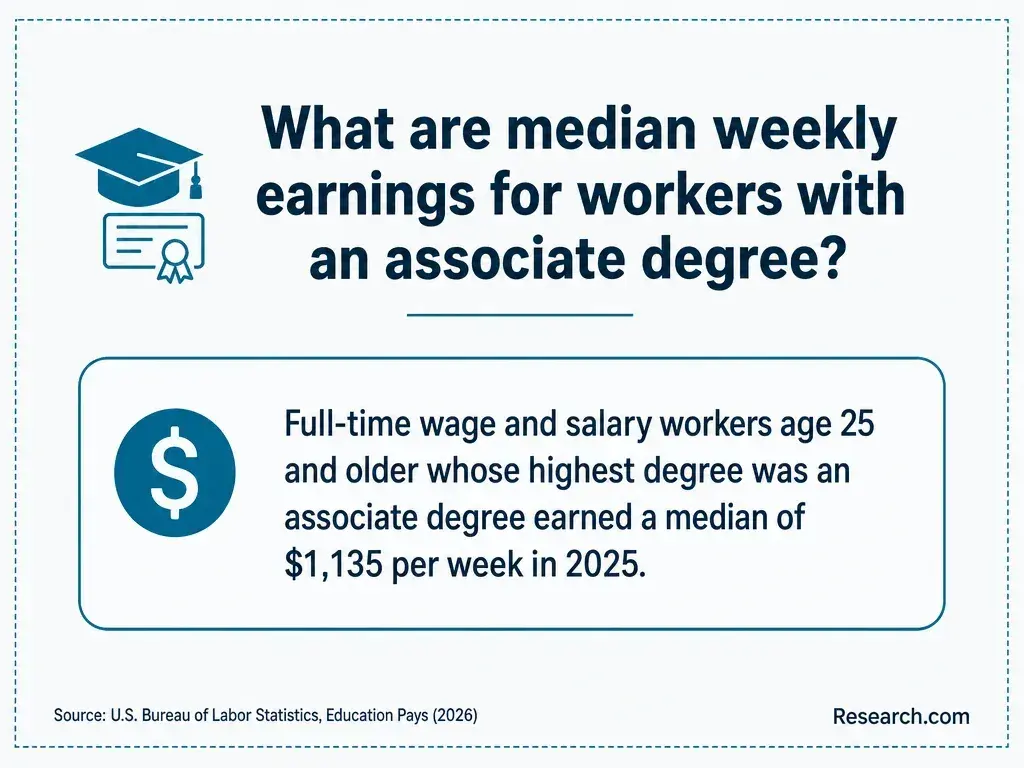
| Associate degree | Establishing a college foundation for administrative support roles | Transferability and advancement options vary |
| Bachelor's in healthcare administration or a related field | Preparing for broader operational responsibilities | A degree alone rarely replaces supervisory experience |
| Master of health administration (MHA) or related master's | Developing specialized healthcare management knowledge, often after a bachelor's degree | May be premature without a clear career goal or relevant experience |
| MBA with healthcare coursework | Building general business leadership skills alongside healthcare knowledge | Healthcare depth depends on the actual curriculum |
An MHA generally emphasizes managing healthcare organizations; an MBA has a broader business core. Neither is automatically the better choice for someone moving out of reception. If graduate study matches your goals, explore online graduate health administration programs and compare their required courses rather than relying on degree titles alone.
Do healthcare administrators need a license or certification?
Most general administrative jobs do not require a universal healthcare administrator license. Requirements depend on the position and jurisdiction: for example, nursing home administrator roles can require state licensure. Check the state board and each job posting before assuming a degree satisfies a regulated role's requirements.
Voluntary certifications may help demonstrate skills in areas such as practice management, coding, or health information, but eligibility rules and employer preferences differ.
Health information management (HIM) is a distinct path focused on health data and records; if that is your goal, compare accredited online HIM degree program choices and verify whether a particular program meets the eligibility rules for the credential you want. Do not treat an administrative degree, certification, and professional license as interchangeable.
First, confirm that the institution holds recognized accreditation and that the status applies to the school awarding your degree. Then ask whether specialized program accreditation matters for your goal.
CAHME accredits eligible graduate healthcare management programs; it is not a blanket accreditation for every healthcare administration degree or every online offering at a university.
If a prospective employer or your own graduate-study plans make specialized recognition important, consider comparing CAHME-accredited online healthcare administration study.
Confirm the specific program's current status directly with the accreditor and school. For an MBA, business-school accreditation is a separate question; it does not make an MBA equivalent to a CAHME-accredited MHA.
Neither format is inherently better. Online study can make it easier to keep a reception job, but "online" may still mean scheduled live classes, group meetings, fieldwork, or campus visits.
Campus study may suit students who want in-person discussion and nearby employer connections, provided travel and class times are workable.
Compare the actual weekly schedule, course sequencing, placement expectations, and access to instructors and career services. If you need to finish sooner, graduate health management programs with accelerated pacing are worth examining, but a shorter calendar may require a heavier course load. Ask whether you can slow down without losing your place in the program.
Coursework varies by degree level. An associate program may introduce healthcare terminology, office systems, and general education. A bachelor's program may add healthcare finance, human resources, quality improvement, ethics, policy, and data-informed decision-making.
Graduate programs typically examine organizational strategy and leadership in greater depth; an MBA also includes broader business subjects such as accounting, finance, and operations.
For a receptionist, the most useful curriculum connects familiar patient-facing problems to system-level decisions. Look for projects that require you to analyze a workflow, interpret a budget, or propose a service improvement.
Doctoral study serves a different purpose and is not a routine prerequisite for practice management; an online doctoral degree comparison for healthcare leaders is more relevant if your eventual goal calls for advanced research or executive-level study.
Requirements depend on the school and degree. Associate and bachelor's applicants generally need prior academic records; transfer applicants need a review of earlier coursework.
Master's applicants typically need a bachelor's degree, while programs set their own rules for work experience, recommendations, essays, and any testing. Healthcare experience may strengthen an application without being a universal admission requirement.
Before applying, ask admissions staff whether your reception work meets any experience expectation, whether prerequisites or foundation courses apply, and how transfer credit is evaluated.
For graduate applicants concerned that front-desk work will not count, comparing MHA entry options for first-time healthcare professionals can provide context; the individual program's published policy remains decisive. In your application, describe specific responsibilities and improvements rather than relying on your job title alone.
An associate degree is commonly planned around two years of full-time study and a bachelor's around four, but transfer credit and part-time enrollment can change either timeline.
Master's length varies substantially by required credits and pace. Request a degree audit or program plan showing what you would still need to complete.
There is no reliable single price for healthcare administration education. Compare total required credits, tuition charged per credit or term, mandatory fees, books and software, and any travel or fieldwork costs. Ask whether tuition changes with enrollment intensity and whether your employer offers education assistance.
If a master's is appropriate, comparing health administration master's programs by tuition cost is a starting point, not a substitute for a personalized total-cost estimate. Borrowing costs and time away from paid work also matter.
The most realistic next job depends on your degree, responsibilities, and local employer requirements. A receptionist might first move into patient access coordination, referral coordination, office supervision, or support for a practice manager.
With broader operational experience, roles such as practice manager or department administrator may become more plausible. Senior leadership positions generally call for a stronger record of managing people, resources, or services - not just an additional credential.
Use job postings to test your plan: compare required education with the tasks you have already performed, then identify one experience gap you can address at work.
A doctorate is not the default next step after a bachelor's or master's. If your long-term goal does call for that level of study, review healthcare leadership doctoral completion paths and requirements only after clarifying the roles it would support.
What salaries and job outlook can healthcare administration careers offer?
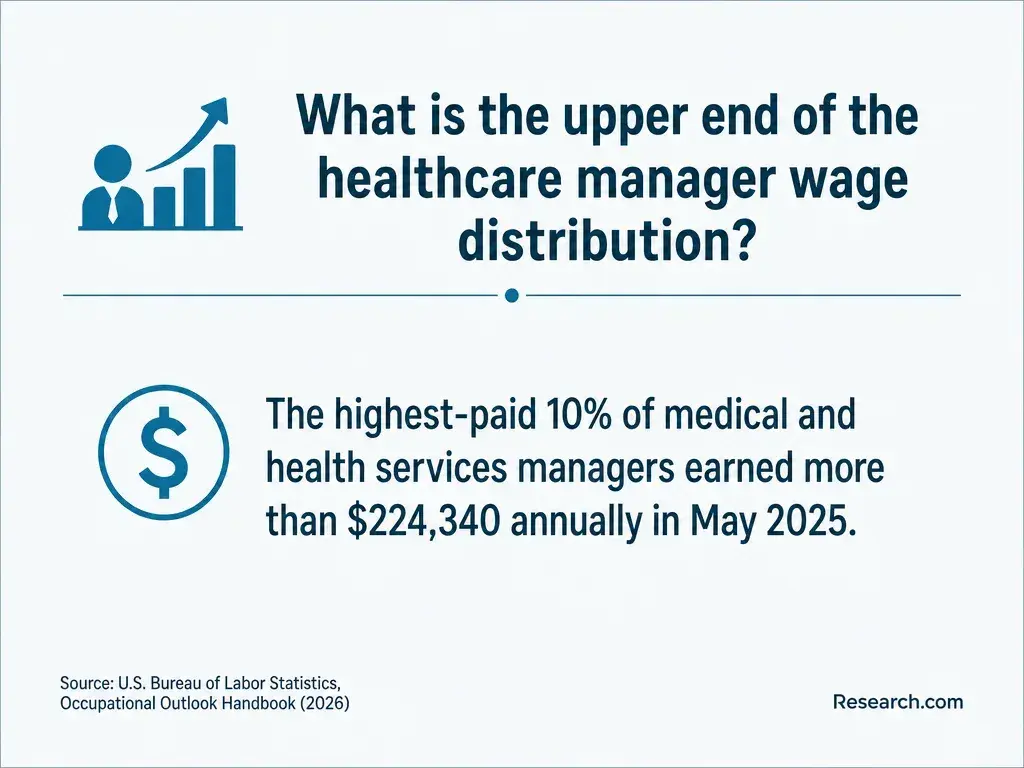
Pay varies sharply between entry-level administrative work and established management. The U.S. Bureau of Labor Statistics reports that management occupations had a median annual wage of $126,520 in May 2025.
That figure covers management across industries and experience levels; it is not a forecast of what a new healthcare administration graduate - or a receptionist's first promotion - will earn.
BLS projects management employment overall to grow faster than the average for all occupations from 2025 to 2035, with about 1.1 million openings annually across the group from growth and replacement needs. Those openings are not all in healthcare or available to new graduates.
For a useful local comparison, check pay ranges and qualifications on postings for the specific job you want, then weigh any likely pay change against education costs. Explore healthcare administration job options beyond a single role without assuming that the highest-paid titles are immediate entry points.
Other Things You Should Know About Healthcare Administration
Yes. Ask permission to help with a defined scheduling, registration, or communication problem. Record what you did and how the team assessed the result, while protecting patient information.
Compare the daily work, not just the setting. Administration centers on coordinating people, processes, and resources; clinical care requires a separate professional education and, for regulated roles, licensure.
Not necessarily. Discuss schedule changes and any placement requirements before enrolling. Get approval for work-based projects or fieldwork rather than assuming your current job will qualify.
Choose a target job, review local postings, and ask a manager for a relevant responsibility. That can clarify whether a degree, a targeted course, or more workplace experience should come first.
- Employer-offered educational assistance programs can help pay for college | Internal Revenue Service https://www.irs.gov/newsroom/employer-offered-educational-assistance-programs-can-help-pay-for-college
- Accreditation in the U.S. | ed.gov http://www.ed.gov/laws-and-policy/higher-education-laws-and-policy/college-accreditation/accreditation-in-the-us
- Medical Receptionist Career Pathway | Healthcare | My Career NJ https://mycareer.nj.gov/career-pathways/healthcare/medical-receptionist
- Master of Health Administration Admissions | mssm.edu https://icahn.mssm.edu/education/admissions/graduate-education/ms-healthcare-administration
- Is a Master's in Healthcare Administration Worth It? | UMass Global https://www.umassglobal.edu/blog-news/a-masters-healthcare-administration-worth
- Credit for Prior Learning | University of Arizona Catalog https://catalog.arizona.edu/policy/courses-credit/credit/credit-prior-learning
- Transfer & Credit for Prior Learning | morgan.edu https://www.morgan.edu/college-of-interdisciplinary-and-continuing-studies/new-students/transfer-and-credit-for-prior-learning
- Online Healthcare Administration Degree: What to Look for in a Program | CSP Global Concordia University, ST. Paul https://online.csp.edu/resources/article/online-healthcare-administration-degree/
- Healthcare Administrator Career Guide & Degree Paths | News & Updates from the Antioch University Community https://commonthread.antioch.edu/healthcare-administrator-career-guide-degree-paths/
- Online Healthcare Administration Degree | Adelphi University https://onlineprograms.adelphi.edu/programs/bs-bachelor-healthcare-administration/