2027 Quality Improvement vs Research: What BS Students Must Clarify

Co-Founder and Chief Data Scientist
A healthcare project can look like quality improvement and research at the same time, but the distinction affects its design, data permissions, oversight, and the skills a student needs. For BS students considering healthcare administration, this guide explains how to classify a project without assuming its label settles the matter. It also compares coursework, online programs, and early-career paths so you can choose a degree and practical experience that fit the work you want to do.
Key Things You Should Know
- Purpose matters more than the project label: Quality improvement (QI) primarily improves a local process; research is designed to produce knowledge applicable beyond that setting.
- A project can have both aims. Do not decide IRB status yourself: Ask your institution's designated office before accessing patient data or starting a project. Publication plans alone do not determine whether a project is research.
- Match the BS to the intended role: Healthcare administration can prepare students for operational QI, but research-intensive roles may require stronger methods training or further study. The $126,520 May 2025 median for all management occupations is not a starting salary for BS graduates.
What Is the Difference Between Quality Improvement and Healthcare Research?
QI aims to improve care or operations in a particular setting; healthcare research uses a systematic investigation designed to develop or contribute to generalizable knowledge. A hospital might test a new discharge checklist to reduce delays on one unit. A researcher might study whether a discharge intervention works across different hospitals and patient populations.
The comparison below shows what to clarify when choosing a project. Neither the setting nor the method alone determines its classification.
| Question | Quality improvement | Healthcare research |
| Primary aim | Improve a defined local process or outcome | Answer a question intended to inform settings beyond the project site |
| Typical approach | Measure a baseline, test a change, and monitor results | Use a study design and analysis suited to the research question |
| Main limitation to recognize | Local results may not establish that the change caused an improvement elsewhere | Findings depend on the study's design, data quality, and applicability |
A project may combine local improvement with a research question. Students interested in data stewardship or health records should also compare health information management versus administration program fit: the degrees can lead to different coursework even when both use healthcare data.
Which Skills Do BS Students Need for Quality Improvement or Research Careers?
Both paths require data literacy, ethical judgment, and the ability to explain findings to people who make decisions. The emphasis differs: QI staff must understand workflows and help teams implement changes; research staff must follow protocols and document methods precisely.
For operational QI, practice defining a measure, checking whether the data are reliable, mapping a process, and discussing unintended consequences with frontline staff. For research, add study-design fundamentals, sampling, basic statistics, secure data handling, and clear records of what was planned versus what was done. A class project or supervised internship can demonstrate these abilities more convincingly than a course title alone.
If your goal is to lead improvement across a health system rather than enter an analyst role, compare work experience with one-year graduate pathways in healthcare administration. A faster graduate degree can build management knowledge, but it does not replace experience managing healthcare operations.
What Courses Prepare Healthcare Administration Students for Quality Improvement?
Look for coursework that connects healthcare operations to measurement and change, rather than relying on a program's claim that it teaches "quality." Useful subjects include healthcare systems, quality and patient safety, operations management, statistics, health informatics, finance, and organizational behavior. An applied course should require students to define a problem, select meaningful measures, interpret results, and explain a feasible change.
Compare syllabi and assignments before choosing a program. A simulated dashboard teaches interpretation; an employer-sponsored project may also teach stakeholder negotiation and the limits of messy operational data. Ask whether students can complete a supervised QI project and what happens if their proposed site cannot provide data access.
Students balancing time and cost can compare faster online study routes in healthcare administration. Check the actual course sequence: a shorter schedule is less useful if it leaves no room for a relevant internship or project.
Methods coverage varies by school. A BS program may introduce research questions, literature review, study designs, descriptive statistics, surveys, qualitative interviews, and the interpretation of published findings. Students may also learn to distinguish an association from evidence that an intervention caused an outcome. Do not assume every healthcare administration bachelor's degree teaches advanced statistics or independent clinical research design.
Examine the catalog for required methods courses and inspect a capstone description if one is available. If you want to work in research, seek supervised opportunities to develop a data dictionary, follow a protocol, or present the limits of an analysis. If you hope to design independent studies later, compare graduate preparation and doctoral-level healthcare management education options against the methods depth your target role actually requires.
Not every QI project requires IRB review, but students should not make that determination on their own. Under US federal human-subjects rules, the key research question is whether an activity is a systematic investigation designed to develop or contribute to generalizable knowledge. Whether human-subjects protections apply also depends on how information about living individuals is obtained or used. Institutional rules, funder conditions, privacy obligations, and other regulations may impose additional requirements.
Before collecting data, give your instructor and the institution's IRB or designated QI review office a short description of the purpose, participants, intervention, data fields, and plans to share results. Follow the institution's determination and retain its documentation. Calling a project "QI" does not create an exemption; intending to publish its results does not, by itself, make it research.
The same distinction matters when evaluating faster healthcare leadership doctorate pathways. Ask how a program supervises practice-based projects and handles required institutional determinations before assuming an accelerated timeline will accommodate your proposed work.
First, verify that the institution holds accreditation from an accreditor recognized by the US Department of Education. Institutional accreditation matters for educational quality review, federal student-aid eligibility, and potential credit transfer, although a receiving school makes its own transfer decisions.
Then distinguish institutional accreditation from recognition specific to a field or degree level. The Commission on Accreditation of Healthcare Management Education (CAHME) accredits graduate healthcare management programs, not every healthcare administration bachelor's program. Do not reject an otherwise suitable BS solely because it lacks CAHME accreditation, or assume its undergraduate program is CAHME-accredited because the university has an accredited graduate program.
If a master's is part of your longer-term plan, you can separately investigate CAHME-accredited education for aspiring healthcare administrators. For the bachelor's decision, also inspect the actual QI curriculum, applied-learning access, and outcomes the school can substantiate.
They can be, if the program gives students credible ways to practice working with healthcare processes and data. Online delivery can make a BS feasible alongside employment, but it does not automatically provide access to a hospital project, patient data, or a QI mentor. An online simulation may teach measurement; an approved workplace or community-based project can additionally expose students to implementation constraints.
Ask how projects are assigned, whether students must find their own site, what live meetings or group work are required, and how faculty assess practical skills. Working students should confirm whether a project can be completed at their employer without assuming employer permission or institutional data approval.
If timing is the main obstacle, compare finding a healthcare administration bachelor's with a suitable start date with the availability of required courses and placements. A convenient start date matters less if the courses you need are offered infrequently.
Requirements depend on the school and whether you apply as a first-year or transfer student. Schools commonly request prior academic records and an application; individual programs may set course prerequisites, minimum grades, or separate requirements for an internship. Confirm current rules directly with admissions rather than assuming that healthcare work experience or a clinical license is universally required.
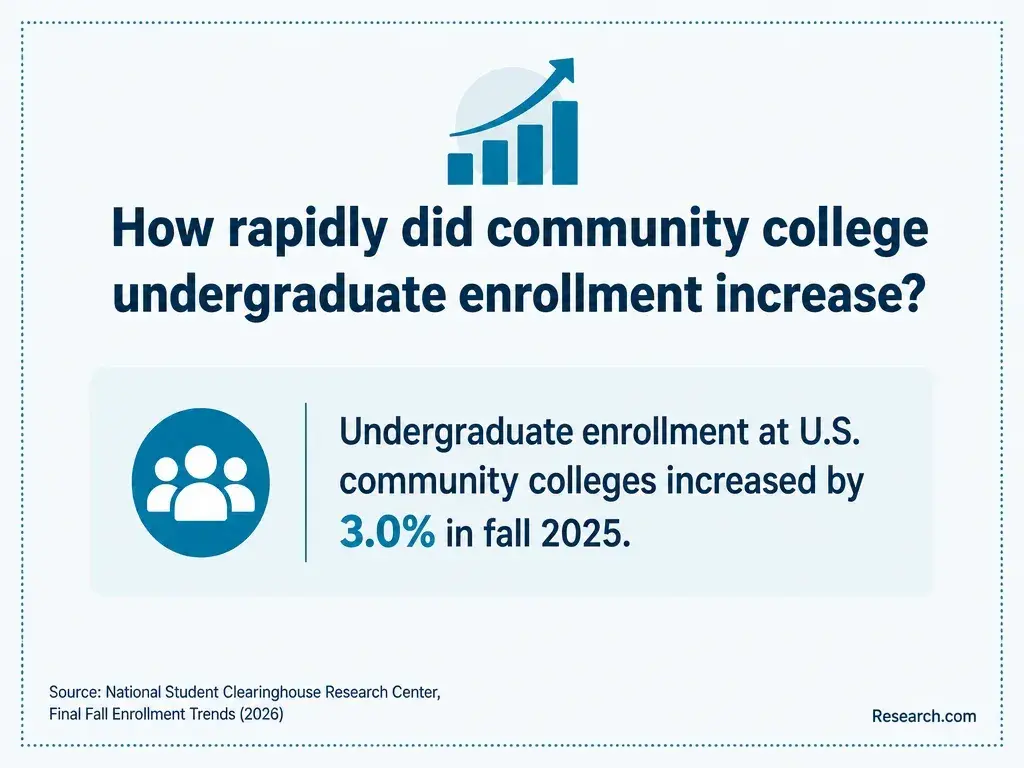
Transfer applicants should request a written evaluation showing how previous courses apply to the major, not just how many credits transfer as electives. The distinction can change the remaining time and tuition substantially. Compare community college pathways into healthcare administration bachelor's programs while checking each receiving school's residency and upper-level course requirements.
Before enrolling, ask for the total credits still required, tuition and mandatory fees, any placement-related costs, and the expected course schedule. Those figures provide a more useful affordability comparison than an advertised per-credit price alone.
A new BS graduate may pursue roles such as QI assistant, quality data coordinator, patient-safety program assistant, or healthcare operations analyst, depending on the employer and prior experience. Responsibilities can include preparing reports, tracking measures, coordinating meetings, and helping document process changes. A research coordinator role may instead emphasize protocol adherence, study records, and participant-related procedures.
The following distinction helps prevent a common salary mistake: a management-occupation median describes established workers across many jobs, not the pay available immediately after graduation.
| Career stage | Illustrative work | How to evaluate pay |
| Early-career QI support | Data checks, reporting, project coordination | Compare current local postings with the required experience and technical skills |
| Experienced healthcare management | Budget, staff, and service-line responsibility | Use occupation-specific pay data, location, and scope of responsibility |
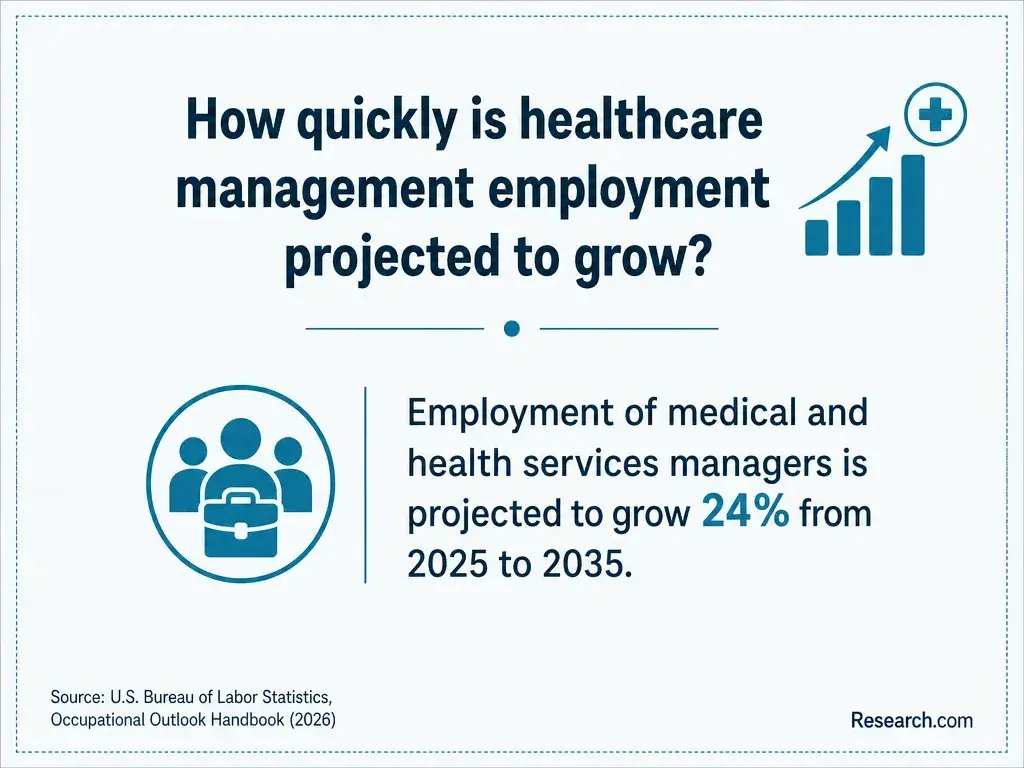
The US Bureau of Labor Statistics reports a $126,520 median annual wage for management occupations in May 2025 and projects that group to grow faster than the average for all occupations from 2025 to 2035. The group spans industries and seniority levels; neither figure predicts QI hiring or pay for a new healthcare administration graduate. For a broader look at role differences, see healthcare administration roles and salary considerations.
What Certifications Advance Healthcare Quality Improvement Careers?
Certification may help demonstrate focused knowledge after you have relevant experience, but it is not a substitute for project results or a job's required qualifications. Options to investigate include the Certified Professional in Healthcare Quality (CPHQ) credential and improvement-method training such as Lean Six Sigma. Check each credential provider's current eligibility rules, exam content, fees, and renewal requirements before paying.
Choose preparation according to the work you want: measurement and patient-safety knowledge for healthcare QI roles, or process-mapping and change methods for operational projects. Ask prospective employers which credentials they value; an inexpensive course tied to a real project may be more useful early on than collecting certificates without applied experience.
For a substantial move into healthcare leadership, compare certification and experience with programs to consider for an MHA career change. An MHA offers broader management education, while a QI credential addresses a narrower skill set; neither automatically qualifies someone to lead a department.
Other Things You Should Know About Healthcare Administration
No. Healthcare administration prepares students for organizational and operational work. Clinical licensure follows separate education, examination, and state requirements.
Usually, you can describe your role and methods, but obtain permission before sharing employer materials. Remove protected or confidential information and follow your organization's disclosure rules.
An MHA generally concentrates on healthcare organizations; an MBA offers broader business management study. Compare specific curricula and your target roles, especially if you already have substantial healthcare experience.
Eligible students may be able to use federal aid at eligible institutions and programs. Confirm the school's aid eligibility, your own eligibility, and the full cost of attendance with its financial-aid office before enrolling.
- IRBs | ORI https://ori.hhs.gov/content/chapter-3-The-Protection-of-Human-Subjects-IRBs
- eCFR:: 45 CFR Part 46 -- Protection of Human Subjects https://www.ecfr.gov/current/title-45/subtitle-A/subchapter-A/part-46
- Federal Policy for the Protection of Human Subjects ('Common Rule') | HHS.gov https://www.hhs.gov/ohrp/regulations-and-policy/regulations/common-rule/index.html
- Ways to Approach the Quality Improvement Process | Agency for Healthcare Research and Quality https://www.ahrq.gov/cahps/quality-improvement/improvement-guide/4-approach-qi-process/index.html
- Research vs. Quality Assurance/Improvement | Enterprise for Research, Innovation and Knowledge at Ohio State https://research.osu.edu/research-responsibilities-and-compliance/human-subjects/research-vs-quality-assuranceimprovement
- Review Process - Human Research Protection Program https://hrpp.umich.edu/irb-health-sciences-and-behavioral-sciences-hsbs/irb-review-process/
- Evidence-Based Practice, Quality Improvement, and Research | mssm.edu https://researchroadmap.mssm.edu/other-research/cnri/ebp-qi-research/
- Guidance: Data Security and Privacy | lehigh.edu https://research.lehigh.edu/policies-guidance-forms/guidance-data-security-and-privacy
- QI Project vs Resesarch - OU Office of Compliance https://compliance.ouhsc.edu/offices/human-research-participant-protection/ouhsc-institutional-review-board/researcher-toolkit/qi-project-vs-research
- Quality Improvement | Georgetown Research Services https://researchservices.georgetown.edu/irb-knowledge-center/quality-improvement/