2027 Evaluating a Healthcare Leadership Development Program

Co-Founder and Chief Data Scientist
A healthcare leadership program can help you manage teams, budgets, and organizational change, but the right choice depends on the job you want and the experience you already have. A short employer course, graduate certificate, MHA, and MBA can serve different goals, even when their descriptions sound similar.
This guide helps US healthcare professionals compare admissions, cost, learning format, credentials, and career value so they can choose a program that addresses a real skills gap rather than paying for a qualification they may not need.
Key Things You Should Know
- Start with the target role: a short course may suit an experienced clinician moving into supervision, while broader administrative roles may call for substantial management experience or a graduate degree.
- Compare the full price, required live sessions, applied projects, and credential awarded, not the words "online" or "leadership" alone.
- The US Bureau of Labor Statistics reports a $126,520 median annual wage for all management occupations in May 2025. It is not a healthcare leadership program graduate salary or a forecast of your pay.
What Is a Healthcare Leadership Development Program?
A healthcare leadership development program teaches people to guide teams and improve organizational performance in settings such as hospitals, clinics, health systems, and insurers.
The label does not identify a single credential: it may describe employer training, executive education, a certificate, or part of a degree. Check what the provider actually awards and whether the learning can count toward another qualification.
The most useful distinction is between leadership development and preparation for a specific occupation. A clinician supervising a unit may need coaching and budgeting practice; someone seeking responsibility for health records or information systems may need different preparation.
You can compare healthcare administration and HIM career preparation before choosing a broadly titled program.
These options differ in scope. Use the comparison to identify the smallest credential that adequately serves your goal.
| Option | Typical emphasis | Potential limitation |
| Employer course or executive program | Immediate leadership application | May award no academic credit |
| Graduate certificate | Focused, assessed coursework | May not provide a broad management foundation |
| MHA or healthcare management master's | Healthcare administration and systems | Requires a larger time and financial commitment |
| MBA with relevant healthcare study | General business management plus healthcare content | Healthcare depth varies by program |
What Are the Admission Requirements for Healthcare Leadership Programs?
Requirements depend on the credential. An employer-sponsored course may be open to nominated staff, while a graduate certificate, MHA, or MBA generally calls for a bachelor's degree and an application.
Schools set their own rules for experience, transcripts, recommendations, tests, and prerequisite work; do not treat a program's preferred applicant profile as a universal requirement.
If you are still completing undergraduate study, planning a healthcare administration bachelor's transfer can help you assess the earlier step. If you already hold a nonbusiness degree, ask whether the graduate program offers accounting or quantitative foundations. Clinical experience can strengthen an application, but it does not automatically replace academic prerequisites.
How Much Does a Healthcare Leadership Development Program Cost?
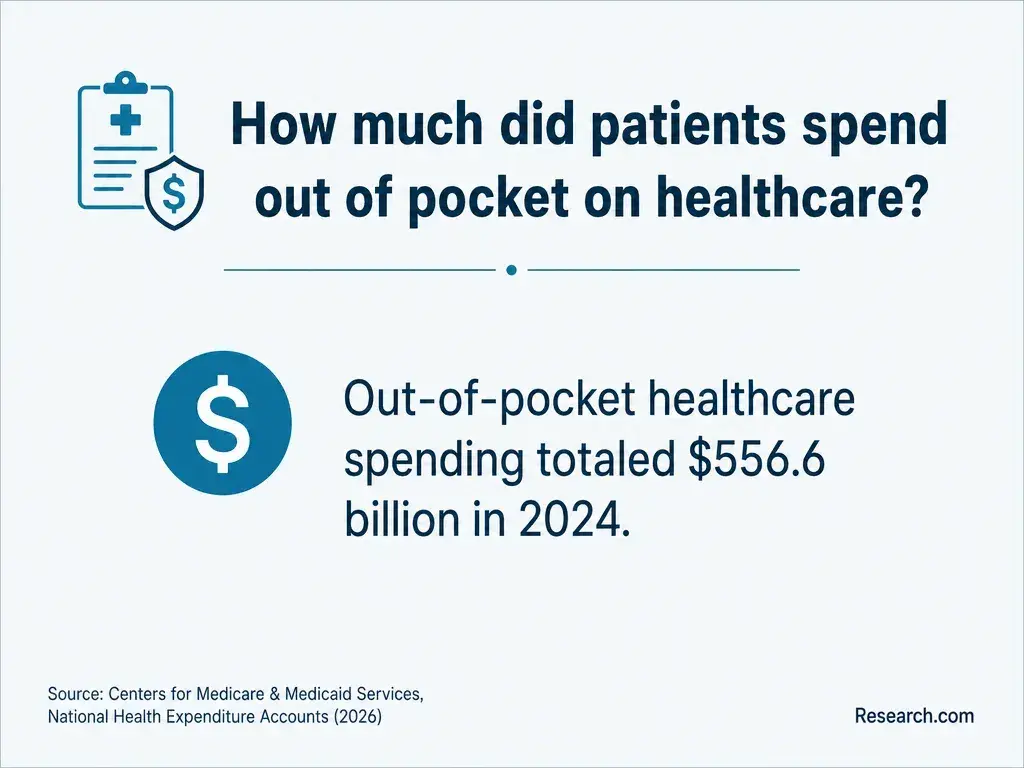
There is no meaningful single price for this category. Before comparing offers, establish whether the quoted amount covers a noncredit course, one certificate, or an entire degree.
For credit-bearing study, calculate tuition using the published rate and required credits, then add mandatory fees, materials, technology, and any travel for required in-person activities. Ask whether employer reimbursement requires a passing grade or continued employment.
Compare the investment with the qualification your target role actually requires. Someone who first needs a bachelor's degree can examine online bachelor's programs in healthcare administration by cost; someone who needs only supervisory practice may find employer training more economical than another degree. Borrowing costs and time away from work also matter, even when advertised tuition looks manageable.
Strong programs connect people management with healthcare operating decisions: staffing, budgets, quality improvement, patient safety, ethics, and change management. Look for assignments that require you to diagnose a problem, weigh constraints, and explain a workable response, not just watch lectures about leadership styles.
Depth should match your objective. An MBA usually combines a broad business core with any healthcare electives or concentration; it is not automatically a clinically focused degree. An MHA typically centers healthcare administration, while a short course may concentrate on one immediate management challenge.
If you need undergraduate foundations first, explore online bachelor's programs in health services administration and compare their coursework with the skills your intended role requires.
Online delivery can support effective leadership learning when students receive feedback, practice decisions, collaborate with peers, and apply concepts at work. Delivery mode alone cannot establish equivalence: a self-paced lecture series and a program with coached projects offer different experiences. Campus study may provide easier face-to-face interaction, but it can require travel or time away from work.
Ask for the actual live-session schedule, group-project expectations, faculty access, and any required visits. An online label does not guarantee that a rotating-shift worker can attend. If start-date flexibility is important at the undergraduate level, examine a guide on finding a healthcare administration bachelor's with a suitable start date. Then verify the timetable after enrollment, not just the application calendar.
Completion time varies with credential size, course sequencing, enrollment intensity, and whether the program accepts prior credit. A short course may fit around current duties; a graduate degree requires substantially more sustained work. An advertised accelerated route may also concentrate assignments into a demanding schedule.
Request a term-by-term plan showing when required courses run, whether breaks are permitted, and when any project or residency occurs. If speed is essential, compare healthcare management graduate degrees with compressed timelines against the hours you can reliably protect each week. The shortest advertised finish is useful only if you can maintain that pace.
For a degree, verify that the university has recognized institutional accreditation. Then check whether specialized accreditation matters for your chosen credential: CAHME accredits eligible healthcare management graduate programs, while business-school accreditation such as AACSB, ACBSP, or IACBE concerns business education. These are different signals; neither turns a short noncredit course into an accredited degree.
If an MHA is under consideration, review CAHME-accredited MHA universities and program options and confirm the accreditation status of the particular program and delivery option with the accreditor and school. For a certificate or employer course, focus on the issuing organization, assessment, faculty expertise, and whether any promised academic credit is formally recognized.
For an experienced nurse, therapist, analyst, or administrator, leadership study may support a move toward team supervision, service-line operations, quality improvement, or practice management.
The strongest pathway usually builds on existing clinical or operational knowledge. Someone changing industries may need hands-on healthcare experience before competing for comparable roles.
Review job postings for the responsibilities and experience employers request, then ask whether a program's projects help you demonstrate those abilities. A course does not confer a clinical license or make a graduate immediately eligible for an executive position.
Established leaders considering teaching, research, or more advanced organizational study can also investigate online doctoral leadership study for healthcare professionals, but should first confirm that a doctorate serves their specific goal.
Pay depends on the actual occupation, employer, location, and scope of responsibility, not on a program's title. The Bureau of Labor Statistics reports a May 2025 median annual wage of $126,520 across all US management occupations. That broad figure includes managers outside healthcare and does not measure earnings attributable to leadership education.
For a personal return-on-investment estimate, use compensation from local postings for roles you could realistically qualify for, subtract your current compensation, and compare the potential difference with your full education cost.
Account for uncertainty: a credential may improve your qualifications without producing an immediate promotion. Before you compare one-year healthcare administration master's programs, check whether your target employers require a master's degree at all.
What Certifications Strengthen a Healthcare Leadership Career?
A relevant certification can demonstrate focused knowledge, but its value depends on the role.
Healthcare quality, project management, health information, and healthcare executive credentials address different responsibilities; eligibility may require experience, an exam, or continuing education. Check the issuing body's current rules and whether employers in your target market actually request the credential.
Choose certification to close a defined skills gap, not as a substitute for management experience or a required degree. Conversely, if your goal genuinely calls for doctoral-level study, review healthcare administration doctorate schedules before applying rather than assuming a brief certificate will serve the same purpose.
Other Things You Should Know About Healthcare Administration Programs
Not automatically. Ask the degree-granting school for written confirmation of whether it accepts the course for academic credit before enrolling.
Some providers offer employer cohorts. Confirm who selects participants, whether instruction can address your organization's needs, and who receives any resulting credential.
No. Access is controlled by the employer's policies, your job duties, and applicable privacy requirements - not by completion of leadership training.
Ask which participants were counted, when outcomes were measured, and whether reported promotions occurred with their existing employers. Be cautious when a provider cannot explain its method.
- Leadership training in healthcare: a systematic umbrella review | nih.gov https://pmc.ncbi.nlm.nih.gov/articles/PMC12772614/
- Evaluate Training: Measuring Effectiveness | cdc.gov https://www.cdc.gov/training-development/php/about/evaluate-training-measuring-effectiveness.html
- MAKING EVALUATIONS USEFUL FOR HEALTHCARE | ox.ac.uk https://ora.ox.ac.uk/objects/uuid:a38676c0-69ba-4d0d-9fee-f2a3ac8cf3f7/files/rww72bc912
- How to Build a Healthcare Leadership Development Program | Creative Health Care Management https://chcm.com/how-to-build-a-healthcare-leadership-development-program-that-works/
- How to Assess Leadership Skills for a Leadership Development Program - Harvard Business Impact https://www.harvardbusiness.org/insight/how-to-assess-leadership-skills-for-a-leadership-development-program/
- Action Learning Program for Healthcare Leaders | LSA Global https://lsaglobal.com/action-learning-program-for-healthcare-leaders-2/