2027 How to Become a Hospice Administrative Coordinator With a Healthcare Administration BS

Co-Founder and Chief Data Scientist
A healthcare administration bachelor's degree can prepare you for the operational side of hospice care, but it does not automatically qualify you for every coordinator opening. Employers also need people who can handle sensitive records, coordinate across clinical teams, and communicate with families under difficult circumstances.
This guide explains what the job involves, how to choose a degree and gain relevant experience, and when further education is or is not worth pursuing. It is designed to help you choose a practical route into hospice administration rather than pay for credentials you may not need.
Key Things You Should Know
- A healthcare administration BS is a relevant route into hospice administrative coordination; clinical licensure is generally not required for a nonclinical position, but individual job descriptions control.
- Pair coursework with experience in scheduling, patient intake, health records, or healthcare customer service. A degree alone may not establish readiness for a coordinator role.
- There is no reliable national salary figure for this exact job title. The BLS median of $126,520 for all management occupations in May 2025 is not a hospice coordinator salary.
What Does a Hospice Administrative Coordinator Do?
A hospice administrative coordinator helps keep nonclinical operations organized so the care team can serve patients and families. Depending on the employer, the job may involve receiving referrals, arranging intake paperwork, scheduling staff or meetings, maintaining records, responding to calls, tracking supplies, and supporting billing or quality-reporting workflows.
Some coordinators support volunteers or bereavement services. The title is not standardized, so compare actual duties when reviewing openings.
Hospice work requires particular care with confidential information, time-sensitive referrals, and communication among nurses, social workers, chaplains, patients, and families. Coordinators should know when to route a clinical question to a licensed professional rather than answer it themselves.
If you are choosing an academic path, health information management versus administration program fit is worth examining: records-focused training and broader operations training can lead to different daily work.
What Degree Do You Need to Become a Hospice Administrative Coordinator?
There is no universal degree requirement for this job title. A healthcare administration BS is a strong match for positions involving office operations, compliance support, budgets, and team coordination.
Some employers may accept an associate degree plus relevant experience; others may prefer a bachelor's degree or require prior hospice or home-health experience. Read local postings before deciding how much education to buy.
If you already hold a bachelor's in another field, an additional BS may be unnecessary. Look first at your transferable experience and the gaps in hospice operations, then consider targeted training or an entry-level healthcare role.
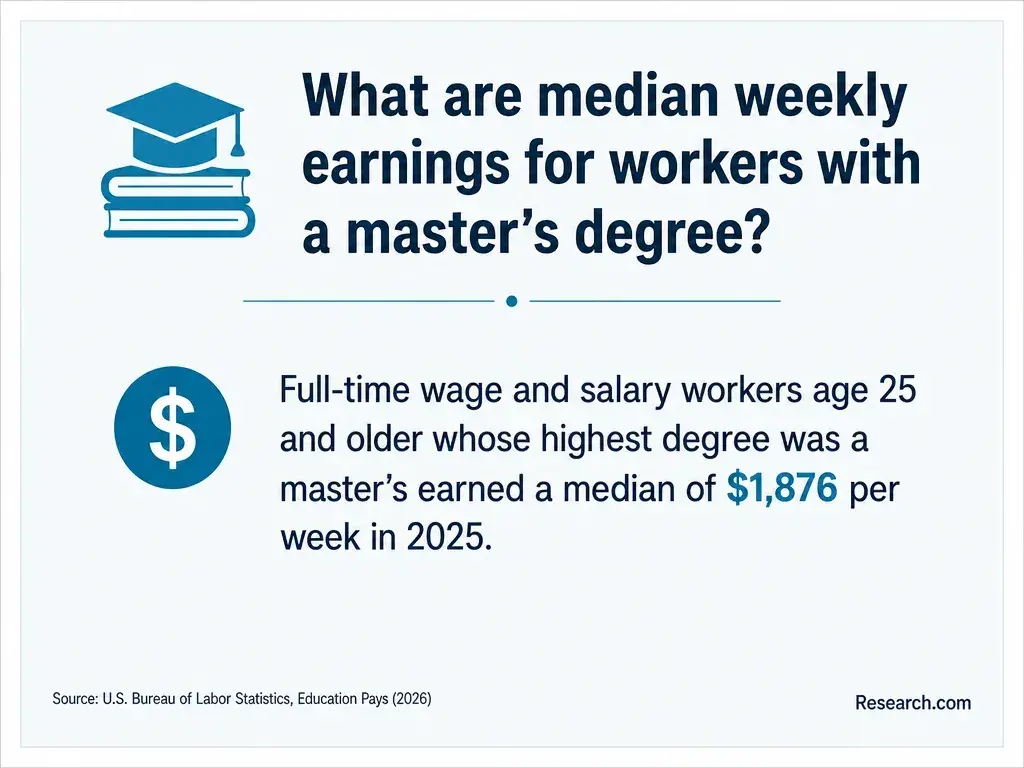
A master's is usually a later decision for broader leadership goals, not a standard entry ticket; prospective career changers can separately investigate MHA applications without a prior healthcare job. An MHA does not replace the practical experience a coordinator employer may want.
Do Hospice Administrative Coordinators Need Licensure or Certification?
A nonclinical hospice administrative coordinator generally does not need a nursing, social work, or other clinical license. Requirements change if a position includes regulated clinical duties, and employers may set their own training, background-check, or driving requirements. Check the role and your state's rules rather than assuming that "hospice" creates a single administrative license.
Optional training in medical terminology, privacy, records, or healthcare operations may strengthen an application, but do not purchase a certification without checking whether local employers value it. Also distinguish degree accreditation from professional certification.
CAHIIM accreditation applies to eligible health information education programs, not to every healthcare administration BS. Comparing online HIM degrees and accreditation status is useful if your target work centers on health information rather than general operations.
A healthcare administration BS typically combines general education with healthcare finance, organizational management, law and ethics, quality improvement, information systems, and human resources.
For hospice work, look especially for assignments involving reimbursement, privacy, workflow design, and communication across disciplines. A course about managing care is not clinical training: the degree prepares you to support services, not diagnose patients or make treatment decisions.
Compare course descriptions, not just degree names. A program with an applied project or internship at a hospice, home-health agency, or other care provider may give you more directly usable experience than one with only general management exercises.
If you later need deeper leadership training, comparing one-year healthcare administration master's programs can clarify what graduate study adds, but it need not be part of your initial route into coordination.
A full-time student entering without college credit may plan on roughly four academic years, while part-time study can take longer. Transfer credit, prior learning accepted by the school, course availability, and internship requirements can change the timeline. An advertised accelerated format is useful only if the courses you need are offered in the sequence you can actually attend.
Before enrolling, request a written evaluation showing which credits apply to the major, not merely which count as electives. For students starting with an associate degree, associate-to-bachelor's credit planning in healthcare administration can help identify transfer questions to resolve before paying a deposit.
Requirements vary by institution and by whether you apply as a first-year or transfer student. Schools commonly ask for an application and prior academic transcripts; some programs have separate entry standards for the major, while internships may carry additional screening requirements. Do not assume a particular GPA, test policy, or healthcare-experience prerequisite without checking the school's current requirements.
Ask admissions staff when you can begin major courses, which prerequisites must come first, and when placement or internship eligibility is determined. If your schedule depends on entering soon, comparing admission cycles for rolling-start healthcare administration degrees is useful, but a frequent start date does not necessarily mean every required course starts each term.
Healthcare administration degrees are suitable for hospice careers if the institution is appropriately accredited, the curriculum covers relevant operations, and you have a realistic way to gain workplace experience.
Online delivery can accommodate employment, but verify live classes, group projects, exams, and any in-person internship. Ask whether the school helps arrange placements near you or expects you to find one independently.
For an initial hospice role, local employer access and practical training usually matter more than whether the classroom is online. The same test applies to later degrees: an online healthcare administration doctoral program comparison may be relevant if you eventually pursue advanced leadership, but online study at any level should not be mistaken for automatic access to local experience or promotion.
There is no single reliable price for a healthcare administration BS. Total cost depends on residency status, public versus private tuition, credits accepted in transfer, fees, books, technology, and any travel or reduced work hours associated with an internship. Compare the remaining cost to completion, not the advertised price per credit in isolation.
Request a school-specific cost estimate based on your transfer evaluation and intended course load, then check institutional aid, employer tuition assistance, and federal aid eligibility before borrowing.
When reviewing low-cost healthcare administration bachelor's programs, confirm that the quoted tuition applies to your situation and add mandatory fees. A cheaper program that accepts fewer of your credits may cost more overall.
With demonstrated performance, a coordinator may move into hospice office management, intake supervision, scheduling leadership, quality-support work, or broader home-health and healthcare operations.
The next step depends on the work you have actually handled: supervising staff, improving referral workflows, managing budgets, and documenting results make a stronger case for advancement than a job title alone.
Senior administrative leadership usually calls for substantially more experience and may favor graduate education. Even accelerated doctoral education for healthcare leadership roles is a long-term option, not a shortcut from coordinator to executive. For a nearer-term move, seek projects and mentorship that build responsibility in the function you want to lead.
How Much Do Hospice Administrative Coordinators Earn and What Is the Job Outlook?
The BLS does not publish a national wage or employment projection for the exact title "hospice administrative coordinator." Pay depends on location, employer, experience, and whether the job is primarily clerical, supervisory, or managerial. Use local postings with comparable duties and stated pay ranges to set expectations; do not substitute a healthcare executive salary for a coordinator offer.
For context only, the BLS reports a May 2025 median annual wage of $126,520 for all management occupations and projects that broad group to grow faster than average from 2025 to 2035. Neither figure describes hospice coordinators specifically or predicts what a BS graduate will earn.
If advancement eventually requires broader financial and strategic management skills, finding a healthcare management MBA within your budget may be worthwhile. First verify that the positions you want value the MBA more than additional hospice experience or an alternative credential.
Other Things You Should Know About Healthcare Administration Programs
It can help you understand the setting and demonstrate commitment. Ask whether a volunteer role includes appropriate exposure to office workflows, but do not expect volunteering alone to replace paid administrative experience.
It can be. Even nonclinical staff may speak with distressed families and work around loss. Ask prospective employers about training, escalation procedures, and staff support.
Sometimes, particularly during intake or by phone, but contact varies by role. Clarify how much of the position involves families, records, scheduling, or staff coordination before accepting an offer.
Ask which tasks are most urgent, how clinical questions are escalated, what software the team uses, and how success is measured. The answers reveal both the scope of the job and the support available to learn it.
- Chapter 3701-19 - Ohio Administrative Code https://codes.ohio.gov/ohio-administrative-code/chapter-3701-19
- Knowledge and Skills Needed for Future Health Administrators | nih.gov https://pmc.ncbi.nlm.nih.gov/articles/PMC11188648/
- What Degrees Do You Need to Become a Hospice Manager or VP of Hospice? | Stetson University https://lawblog.law.stetson.edu/what-degrees-do-you-need-to-become-a-hospice-manager-or-vp-of-hospice
- Health Information Management Job Titles | Charter Oak State College https://www.charteroak.edu/health-information-management/job-titles.php
- Healthcare Administration Certifications That Matter - Campus https://campus.edu/blog/healthcare/healthcare-administration-certifications
- What Are the Conditions of Participation in Home Health & Hospice? | The Home Health Consultant https://thehomehealthconsultant.com/blog/what-are-conditions-of-participation-in-home-health-hospice