2027 Analyzing a Rural Access Problem Using Public Data

Co-Founder and Chief Data Scientist
A rural county can have a hospital and still leave residents struggling to reach primary care, behavioral health services, or follow-up appointments. Public data can help students and aspiring healthcare administrators identify where access breaks down - and which responses deserve closer study.
This guide explains how to define a rural access problem, combine federal datasets without overstating their findings, and turn an analysis into a practical management proposal. It also helps you decide whether healthcare administration training, an MBA, or a more focused credential fits your career goal.
Key Things You Should Know
- Start with a specific service and population, then compare provider supply, travel barriers, coverage, and health outcomes; no single public dataset measures access completely.
- Use consistent geography and years, check small-area uncertainty, and treat a shortage designation as evidence to investigate - not proof that every resident lacks care.
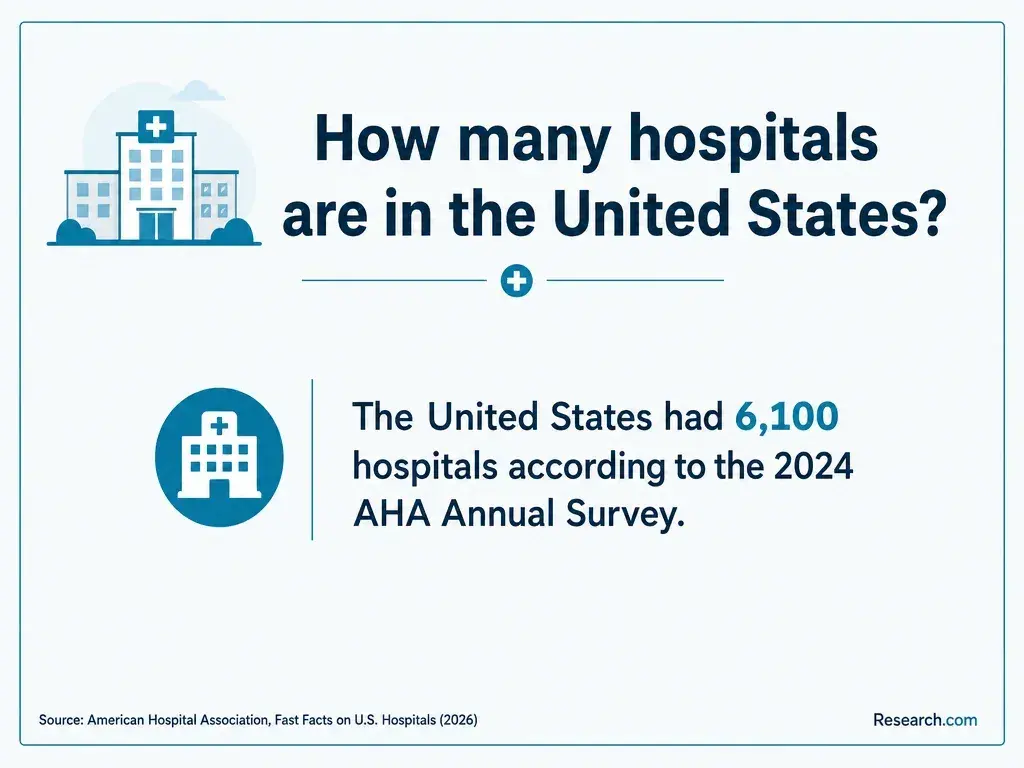
- For pay context, the U.S. Bureau of Labor Statistics reports a $126,520 median annual wage for all management occupations in May 2025; it is not a salary estimate for rural healthcare administrators or new graduates.
What Is the Rural Healthcare Access Problem?
Rural healthcare access is the ability to obtain appropriate care when it is needed, at a usable location and cost. The problem is not simply whether a clinic exists. A patient may face a long trip, limited appointment availability, inadequate insurance coverage, unreliable transportation, or difficulty getting a specialist referral.
A useful analysis defines who faces which barrier to which service in which place. For example, examining primary care access for older adults in a group of neighboring counties is more actionable than declaring that an entire state lacks healthcare. Distinguish access from outcomes: a high rate of avoidable hospital use can signal a problem, but it does not, by itself, establish the cause.
Rural access work may involve staffing, scheduling, finance, and patient data. Those responsibilities differ from building or maintaining health information systems; a comparison of healthcare administration versus HIM curriculum and career options can help students choose the discipline that matches the problem they want to solve.
Which Public Data Sources Measure Rural Healthcare Access?
Start with a small group of sources that answer different parts of the question. The table shows what each source can contribute - and the limitation to record before drawing a conclusion.
| Public source | Useful measure | Important limitation |
| Health Resources and Services Administration (HRSA) Area Health Resources Files and shortage-area data | County-level health resources and designated Health Professional Shortage Areas | County averages can hide local gaps; designation rules differ from a direct count of patients unable to get care. |
| U.S. Census Bureau American Community Survey | Population, age, income, insurance, vehicle access, and commuting context | Small-area estimates have margins of error; measures may cover different time periods. |
| Centers for Medicare & Medicaid Services provider and facility data | Locations and characteristics of participating providers or facilities | A listed facility does not establish appointment availability or eligibility for every patient. |
| Centers for Disease Control and Prevention health datasets | Selected health outcomes and risk measures | Outcome patterns alone cannot identify the service barrier that caused them. |
Use a consistent rural definition, such as USDA Rural-Urban Commuting Area classifications when the geographic detail permits. Then record each dataset's release date, geographic unit, and population. Provider files and administrative records are also career-relevant: students interested in data quality, coding, or records operations can explore online CAHIIM-accredited health information management programs, rather than assuming an administration degree provides the same preparation.
How Can Students Analyze Rural Healthcare Data?
A strong class project tests a manageable claim rather than producing a map with no decision attached. These steps can support a proposal for a clinic, health system, or county agency.
- Choose a service, population, geography, and decision - for example, where a mobile primary care schedule warrants further investigation.
- Set a consistent rural definition and analysis unit; document how you handle patients crossing county lines for care.
- Combine a supply measure with population need and a barrier measure, such as vehicle access or insurance coverage; align years wherever possible.
- Calculate rates with an appropriate population denominator and display margins of error or suppressed values instead of treating estimates as exact.
- Check competing explanations through local interviews or operational information, then propose an intervention and a measure that could show whether it worked.
A county with few listed clinicians may rely on a neighboring county; a county with more clinicians may still have long waits. Public data narrows the questions to ask, while provider schedules and residents' experiences test the interpretation. For a nonclinical career changer, an applied project can also demonstrate relevant work; guidance for nonclinical career changers applying to an MHA can help distinguish useful preparation from an assumed admissions requirement.
Public datasets are most useful when they reveal overlapping barriers. A shortage designation suggests limited provider capacity under its criteria. Census measures can show whether residents may have difficulty paying for or traveling to care. Facility locations can suggest where a service is absent, while health outcomes can identify populations that merit closer study. Together, these signals support a stronger question than any one measure alone.
They do not reveal every barrier. A provider listing may not capture appointment waits, language support, referral delays, or whether a practice accepts a particular patient's coverage. Broadband availability data cannot show whether an individual can afford a connection or use a telehealth platform. Students should state these gaps in their findings rather than turning a plausible explanation into a measured fact.
Workforce capacity is another possible constraint, but provider counts do not explain the local training pipeline. Someone beginning with an associate degree and seeking a role in clinic operations may find associate-to-bachelor's credit planning in healthcare administration more relevant than immediately pursuing graduate study. That distinction matters when an access proposal includes both near-term staffing changes and longer-term workforce development.
Healthcare administrators turn evidence into operational choices. If the main obstacle is travel, they might assess outreach sites, transportation partnerships, or a different clinic schedule. If appointment capacity is the constraint, they might redesign scheduling and referral workflows or evaluate staffing options. A telehealth proposal must account for connectivity, patient support, clinical suitability, reimbursement, and applicable rules; technology alone is not an access solution.
Each proposal needs a feasible budget and a measure of results. An administrator might track appointment availability, completed visits, referral completion, or patient travel burden, while checking that improvements reach the population originally identified. Public-sector administrators must also consider procurement, accountability, and coordination across agencies; a private clinic and a county health department cannot necessarily use the same implementation route.
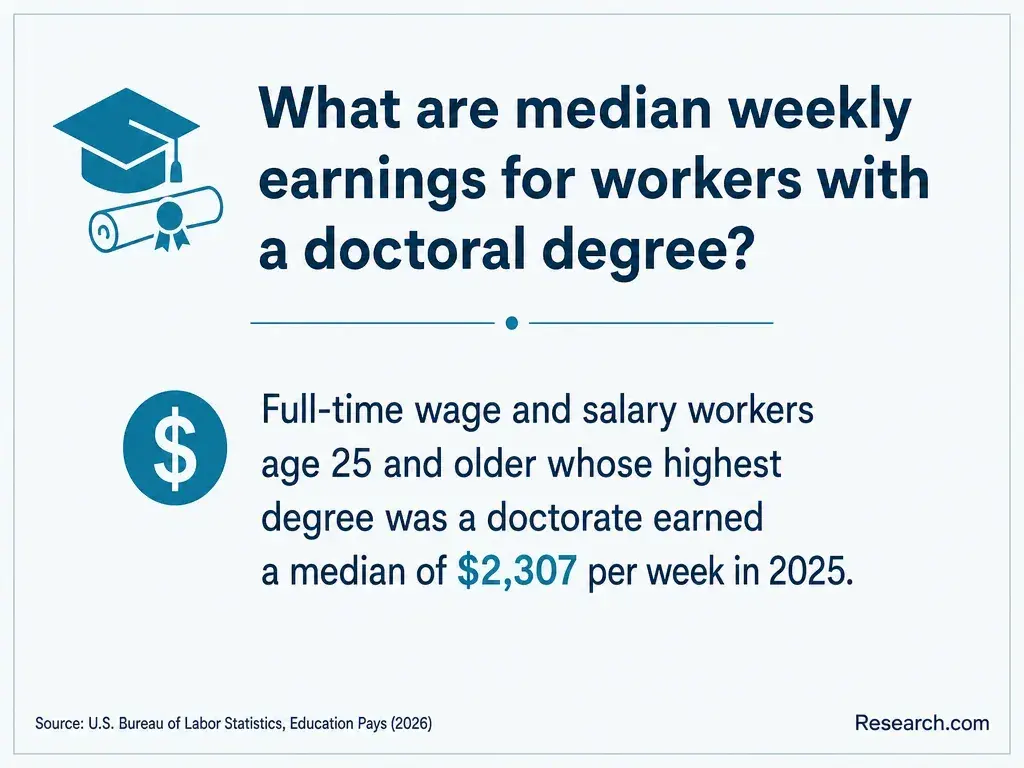
Experienced leaders overseeing systemwide change may later consider doctoral study, but a doctorate is not a prerequisite for managing a rural access project. When comparing advanced options, healthcare leadership doctorate schedules matter chiefly if the reader's goal calls for that depth of leadership or research training.
The right credential depends on the role you want, the experience you already have, and whether your gap is in management or analysis. This comparison describes typical emphasis, not a guarantee about every program's curriculum or hiring outcomes.
| Education path | Best fit for a rural access goal | Key limitation to check |
| Bachelor's in healthcare administration | Building foundations for operations, coordination, and entry-level administrative work | Coursework alone does not confer managerial authority. |
| Master of Health Administration (MHA) | Developing health-system finance, operations, policy, and leadership knowledge | Experiential requirements and employer expectations vary. |
| MBA with relevant healthcare coursework | Adding broad business management skills, particularly for someone already working in healthcare | A general MBA or one healthcare elective is not necessarily a formal healthcare concentration. |
| Public health or focused analytics study | Deepening population-health, policy, or quantitative skills for a primarily analytical goal | It may provide less preparation for running an organization's day-to-day operations. |
If an MHA fits your target role, check institutional recognition and the accreditation status of the specific program rather than assuming all online offerings share the same status. A comparison of online graduate health administration programs with CAHME accreditation is one starting point; verify current accreditation and program requirements directly before applying.
Look beyond a course title for assignments that connect evidence to an operating decision. Relevant study may include healthcare finance and budgeting, population health, health policy, quality improvement, operations, and applied statistics or geographic analysis. A useful capstone might require students to define a service area, evaluate data limitations, estimate implementation resources, and select an outcome measure.
An MBA generally supplies a broad management core; its healthcare depth depends on the actual concentration, electives, and projects offered. If you already understand rural care delivery but need stronger budgeting and resource-allocation skills, budget-friendly MBA study with a healthcare management focus may be worth comparing with individual courses. If your main gap is advanced epidemiology or statistical modeling, a specialized program may be more direct.
Online study can let a rural employee remain near their workplace and apply course projects to local problems. Suitability still depends on the program's actual design: live sessions, group meetings, field placements, campus visits, and access to local project partners can affect whether a working student can participate.
Ask whether you can use a rural employer or community organization for applied work, how placements are arranged, and what career support online students receive. Also compare total tuition and mandatory fees with the time needed to finish; a shorter calendar is not automatically a lighter workload. Accelerated online healthcare administration degree programs may suit someone with available study time, but pacing flexibility deserves as much scrutiny as speed.
There is no single reliable salary for "rural healthcare administrator." That label can cover a clinic operations manager, hospital department manager, or senior executive, with substantially different responsibilities and employers. The Bureau of Labor Statistics reports a $126,520 median annual wage for all U.S. management occupations in May 2025. This broad benchmark includes many industries and locations; it should not be treated as rural healthcare pay or an expected return on a degree.
For a personal decision, compare posted compensation for the specific role and region you seek with your current earnings, then account for tuition, fees, financing, and time away from work. Employer assistance may change that calculation. An affordable healthcare administration master's program comparison can help narrow options, but confirm each school's current total cost and whether the credential advances your intended role before borrowing.
What Is the Job Outlook for Rural Healthcare Administration?
The outlook depends more on the specific occupation and local employer than on a degree title. The Bureau of Labor Statistics projects about 1.1 million openings annually across all U.S. management occupations from 2025 to 2035, including openings that replace departing workers. That figure is not a projection for rural hospitals or healthcare administration; it provides broad labor-market context, not a count of jobs available to a graduate.
To judge a local path, review openings at the kinds of organizations where you want to work and note their requirements for healthcare experience, budgeting, supervision, and data use. An experienced clinic employee may be able to seek greater operational responsibility while studying. Someone entering healthcare from another sector may first need an adjacent role or a strong applied project. Research or teaching careers follow a different path; healthcare administration doctorate timeline planning is relevant to that goal, not a default step toward an administrative opening.
Other Things You Should Know About Healthcare Administration
Not without appropriate authorization and safeguards. Public aggregate datasets are usually the practical starting point; follow your institution's privacy and research rules before requesting restricted records.
No. A designation describes a facility's status under a particular program, not its current appointments, specialties, or capacity. Confirm services with the facility.
Not necessarily, but regular contact with patients, staff, and local partners is important. Check the employer's on-site expectations rather than assuming the role can be done entirely remotely.
It can provide context and sometimes show longer-term patterns, but local operational measures are often needed to assess a specific intervention. Define the outcome before implementation and consider other changes that could affect it.
- Rural-Urban Commuting Area Codes | usda.gov http://www.ers.usda.gov/data-products/rural-urban-commuting-area-codes
- Urban and Rural | Census.gov https://www.census.gov/programs-surveys/geography/guidance/geo-areas/urban-rural.html
- How We Define Rural | hrsa.gov https://www.hrsa.gov/rural-health/about-us/what-is-rural
- Rural Research Needs and Data Sources for Selected Human Services Topics | ASPE https://aspe.hhs.gov/reports/rural-research-needs-data-sources-selected-human-services-topics
- Transportation Patterns of Adults With Travel-Limiting... - PMC https://pmc.ncbi.nlm.nih.gov/articles/PMC9397779/
- Population Health Datasets and Resources | Duke Clinical and Translational Science Institute https://ctsi.duke.edu/research-support/discoverdataduke/population-health-datasets-and-resources