2027 Double Majoring in Healthcare Administration and Economics

Co-Founder and Chief Data Scientist
A healthcare administration and economics double major can connect the day-to-day decisions of healthcare organizations with the incentives and policies that shape the wider system. It can also add coursework, cost, or time if the two majors do not fit neatly into one degree plan.
This guide is for students deciding whether that trade-off serves their goals. You will learn what the combination involves, which careers it can support, and how to check a school's requirements before committing.
Key Things You Should Know
- A double major usually means completing both sets of major requirements within one bachelor's degree; whether courses count toward both majors depends on university policy.
- The combination is useful for healthcare finance, operations, insurance, and policy interests, but an entry-level graduate should not expect to move directly into a senior management role.
- Compare a term-by-term degree plan and total net cost before enrolling; an extra term can matter more financially than the number of additional courses alone.
What Is a Double Major in Healthcare Administration and Economics?
A double major combines two fields of study in one undergraduate degree. Healthcare administration examines how organizations deliver, finance, and manage services. Economics examines how people, organizations, and governments make choices when resources are limited. Together, they help students analyze both an organization's operating decisions and the market or policy conditions behind them.
A double major is not necessarily a dual degree. A dual degree typically requires meeting the requirements for two separate degrees; a double major usually produces one degree with both majors recorded according to school policy. Schools may call the first field healthcare administration, health services administration, or healthcare management, but the names do not guarantee identical curricula.
Healthcare administration is also distinct from health information management, which generally places more emphasis on health records, information systems, and data governance. Students drawn to records and informatics can start by comparing healthcare administration coursework with HIM coursework.
Why Double Major in Healthcare Administration and Economics?
The strongest reason is a specific career interest that needs both organizational and analytical knowledge. A student interested in hospital budgeting, for example, would benefit from understanding service-line operations as well as incentives, costs, and quantitative analysis. Someone interested primarily in leading a clinical department may get more value from healthcare administration plus relevant work experience than from a second major.
The combination can also help students test whether they prefer organizational management, research, or policy work before choosing graduate study. An MBA emphasizes broad business management; an MHA focuses more directly on health-sector administration. Neither is an automatic next step after graduation. If an MBA later fits the goal, comparing healthcare management MBA programs by tuition cost is more useful than assuming the undergraduate double major makes graduate business study necessary.
The main trade-off is depth versus flexibility. Economics may add valuable econometrics and policy analysis, but it can leave less room for internships, accounting electives, or a lighter course load. Students should choose the second major for the work they want to do, not simply because two majors appear more impressive than one.
What Careers Can You Pursue With Both Majors?
Early-career opportunities may include healthcare operations coordinator, financial or budget analyst, insurance analyst, research assistant, and policy-program assistant. The right fit depends on internships, software and statistical skills, and the employer's requirements - not just the majors listed on a diploma. For a broader view of possible progression, explore career options in healthcare administration and management.
The table separates plausible starting directions from responsibilities that usually require further experience or training.
| Interest | Possible early-career work | What strengthens the application |
| Healthcare operations | Supporting scheduling, process improvement, or departmental reporting | Provider internship and spreadsheet or reporting experience |
| Finance and insurance | Analyzing budgets, claims trends, or reimbursement information | Accounting, statistics, and data-analysis coursework |
| Policy and research | Collecting data and supporting program or economic analysis | Econometrics, research projects, and strong writing skills |
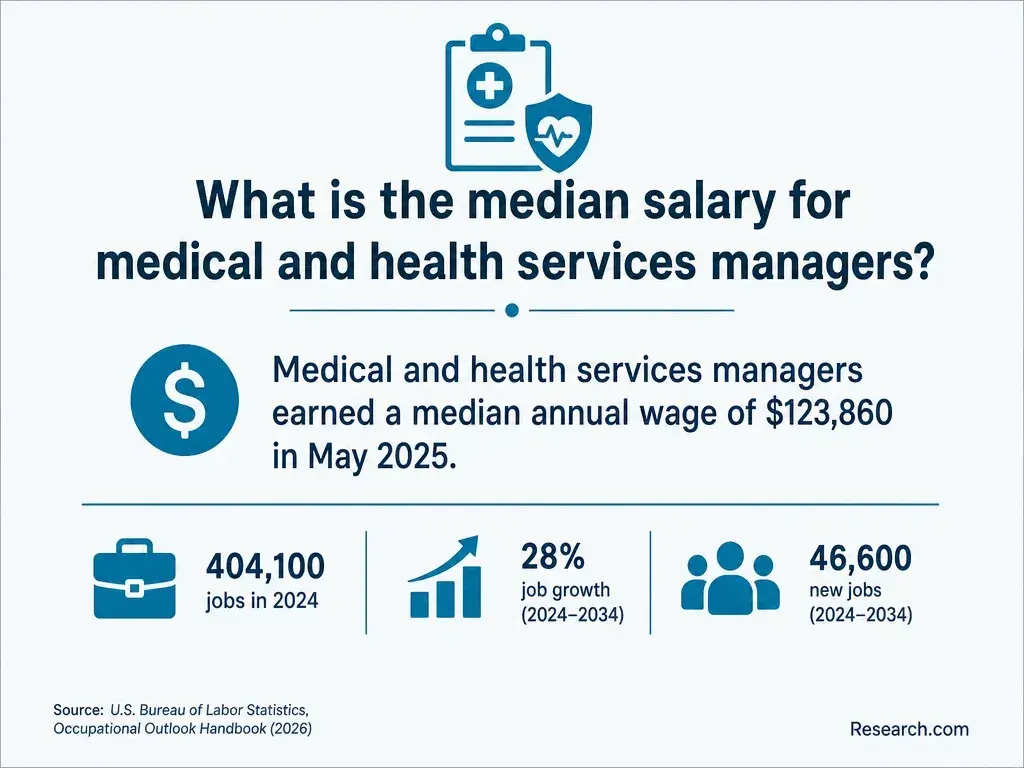
Senior administrator and healthcare economist are different targets from these entry-level roles. Management jobs generally require relevant experience, while research economist positions commonly require graduate-level training. The U.S. Bureau of Labor Statistics reports a May 2025 median annual wage of $126,520 for all management occupations; that broad figure is not an expected salary for a new graduate or a specific healthcare job.
Exact requirements vary by institution. Healthcare administration coursework may cover healthcare systems, organizational management, finance, law and ethics, quality improvement, and health policy. Economics commonly includes microeconomics, macroeconomics, statistics, and econometrics, with electives such as public finance or health economics where offered.
The most useful overlap is not just a course that counts twice. It is the chance to apply economic methods to healthcare questions - for example, evaluating how a payment change affects an organization's budget and patients' access to care. Ask whether the economics major offers applied research and whether the administration major includes an internship or capstone with a real organization.
Students seeking deeper graduate-level preparation in health-sector leadership can later compare online MHA degree programs. An undergraduate double major provides a different level of study and should not be treated as equivalent to an MHA.
A bachelor's degree is commonly planned around four years of full-time study, but a double major can take longer. The determining factors are course sequencing, credit overlap, transfer-credit acceptance, internship timing, and how many courses a student can reasonably take each term. Economics sequences may depend on completing mathematics and statistics prerequisites first.
Before declaring both majors, request a term-by-term plan showing every required course and when it is offered. Compare that plan with a healthcare administration major plus an economics minor. Students with prior credits may also consider accelerated online healthcare administration degree programs, but should confirm whether an accelerated schedule still allows the full economics major.
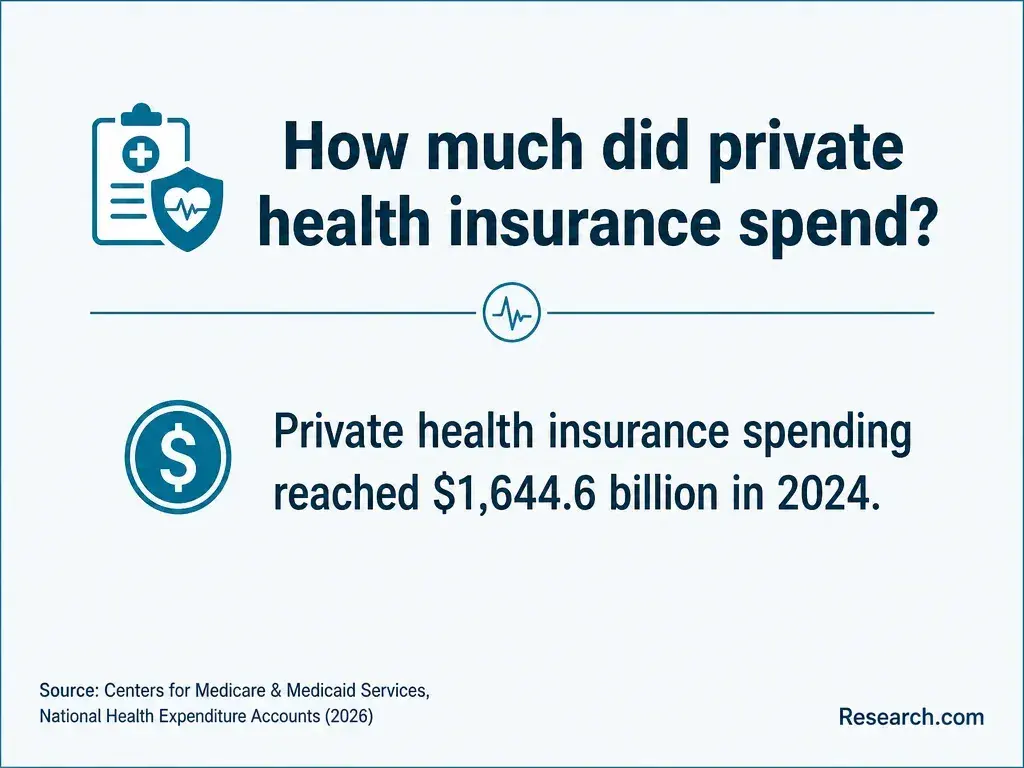
There is no reliable single price for this combination. Tuition depends on the institution, residency classification, enrollment level, and aid package. The second major may add little tuition if every course fits within the original degree schedule; it can cost substantially more if it requires another term, additional fees, or foregone employment.
To compare offers, estimate the net cost of completing each proposed degree plan, not just the school's advertised annual tuition. Include mandatory fees, books and software, housing or commuting, and any internship-related travel. Confirm how scholarships and financial aid apply if the double major delays graduation.
Graduate education is a separate budget decision. Students who may later pursue an MHA can review affordable master's programs in healthcare administration rather than assume they must budget for one now.
Potentially, but the availability of two online majors at one school does not prove that the school permits the combination entirely online. Required economics electives, mathematics courses, internships, or capstones may have different delivery rules. Campus programs may offer easier access to local internships or research, although opportunities vary by institution.
Ask the registrar or both departments whether all required courses are available in the format you need and how often they run. Online students should also check for scheduled live classes, examinations, and placements in their location. If enrollment timing is important, information on choosing a healthcare administration program around its start dates can help frame the question, but confirm the economics major follows the same calendar.
For undergraduate study, students generally apply to the institution first. A school may then require a separate major declaration, prerequisite courses, a minimum grade in certain subjects, or departmental approval for one or both majors. Transfer students need an evaluation showing which economics, mathematics, and healthcare courses will satisfy major requirements; general transfer credit alone may not shorten the critical course sequence.
Ask admissions and both departments whether the combination is permitted, when each major can be declared, and whether either department limits course sharing. If you already hold a bachelor's degree, starting a second undergraduate major may be less direct than a targeted graduate program. Admission to the affordable master's programs in healthcare administration discussed earlier is a separate process with school-specific requirements.
Doctoral study is another, more distant option; healthcare administration doctoral costs beyond advertised tuition illustrate why long-range plans should account for time and expenses as well as tuition.
There is no universal professional license required simply to hold a healthcare administration bachelor's degree or work in a typical administrative role. Requirements depend on the job. For example, administrators of certain long-term-care facilities face state-specific licensure rules, while clinical professions require their own qualifications. A double major does not replace any of those requirements.
Voluntary credentials may become useful after gaining experience, but eligibility and value vary by credential and employer. Check job postings for the role you want before paying for a certification. A doctorate is an academic qualification, not an alternative to a required state license; its completion timeline is likewise unrelated to eligibility for an entry-level administrative job.
Keep undergraduate and future graduate timelines separate. Even for students considering research or senior academic roles, healthcare administration doctorate completion timelines describe a later, distinct commitment - not time required to finish this double major.
How Do You Choose an Accredited Double-Major Program?
First, verify that the institution holds recognized institutional accreditation. Then confirm in writing that students can complete both majors within the same degree and ask for a degree audit showing credit-sharing limits. Compare required courses, internship support, course availability, transfer policies, and your estimated net cost through graduation.
Do not confuse institutional accreditation with accreditation of a particular graduate program. CAHME accreditation applies to qualifying healthcare management graduate programs, not automatically to an undergraduate double major. If an MHA is part of a later plan, you can separately investigate online healthcare management master's programs accredited by CAHME.
The best choice is the program that lets you complete both fields without sacrificing the experience needed for your target role. If the second major delays graduation or crowds out a strong internship, compare the economics minor, carefully chosen electives, or a research project before committing.
Other Things You Should Know About Healthcare Administration
No. Healthcare administration focuses primarily on managing organizations and services; public health focuses more broadly on population health, prevention, and community-level interventions. Programs can overlap in policy and data analysis.
It can be part of a premedical path, but neither major automatically covers every medical school prerequisite. Students should plan laboratory science courses and check each school's requirements separately.
Yes. Faculty projects, research assistant roles, and policy internships may offer opportunities. Statistics, econometrics, and clear writing are especially useful preparation.
No. Hospitals employ people with backgrounds in business, economics, information systems, clinical fields, and other subjects. The requirements depend on the position and its responsibilities.
- Economic Measurement and Research Internship (EMRI) Program | Census.gov https://www.census.gov/about/census-careers/jobs/internships-fellowships/emri.html
- Accreditation in the U.S. | ed.gov http://www.ed.gov/laws-and-policy/higher-education-laws-and-policy/college-accreditation/accreditation-in-the-us
- Pathways for Students and Graduates | Student Internships and Jobs | Working at CDC | Careers at CDC https://jobs.cdc.gov/working-at-cdc/student-intern-jobs/pathways.html
- What is Healthcare Administration? | snhu.edu https://www.snhu.edu/about-us/newsroom/health/what-is-healthcare-administration
- Health Care Management vs. Health Care Administration | App State Online https://onlineprograms.appstate.edu/blog/healthcare-management-vs-healthcare-administration/
- Dual Degree: BSHS in Clinical Operations and Healthcare Management/MSHS in Health Care Quality https://cohm.smhs.gwu.edu/dual-degree-bshs-clinical-operations-and-healthcare-managementmshs-health-care-quality
- Online Healthcare Administration Degree: What to Look for in a Program | CSP Global Concordia University, ST. Paul https://online.csp.edu/resources/article/online-healthcare-administration-degree/
- Health Administration | Edward J. Bloustein School of Planning & Public Policy https://bloustein.rutgers.edu/undergraduate/healthadministration/
- Majors, Dual and Composite | Utah State University Catalog https://catalog.usu.edu/pages/i3evoGn65tyEPdmHUw2y
- Double Majors & Combined Degrees - Current Students | Tippie College of Business https://students.tippie.uiowa.edu/undergraduates/academics-undergraduate/undergraduate-advising/double-majors-combined-degrees