2027 Choosing Healthcare Administration BS Coursework for Work in Tribal Health Organizations

Co-Founder and Chief Data Scientist
A healthcare administration bachelor's degree can teach budgeting and operations, but those skills alone do not prepare someone to work effectively in a tribally governed health organization. Students also need to understand tribal sovereignty, community priorities, funding relationships, and the limits of what a classroom can teach.
This guide helps prospective students and current healthcare workers compare coursework, program formats, costs, and career paths so they can choose a degree—and practical experience—that fits their goals in tribal health.
Key Things You Should Know
- Prioritize healthcare finance, operations, data, and policy courses alongside substantive learning about tribal sovereignty and Indian health systems; a generic healthcare administration curriculum may need to be supplemented.
- Verify institutional accreditation, transfer-credit rules, and access to relevant fieldwork before enrolling. A conventional bachelor's pathway takes about four years of full-time study, but accepted prior credits can change the timeline.
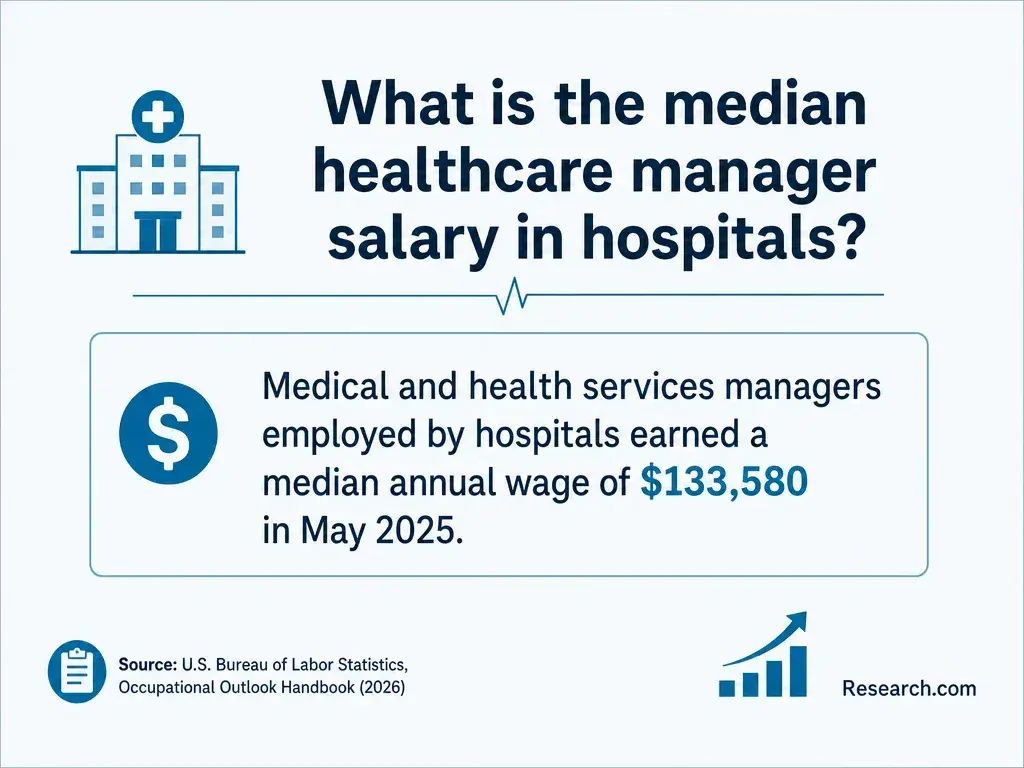
- A bachelor's degree can support entry into tribal health administration, but senior management usually requires experience. The $126,520 median annual wage for all US management occupations in May 2025 is not a tribal health administrator starting salary.
What Is a Healthcare Administration BS for Tribal Health Careers?
A Bachelor of Science in healthcare administration is an undergraduate degree focused on how health organizations plan services, manage people and budgets, use information, and meet legal and ethical responsibilities. For tribal health careers, its value depends on whether students can apply those skills in organizations accountable to tribal governments and the communities they serve.
Tribal health organizations do not all operate the same way. A student may encounter a tribally operated clinic, an Indian Health Service facility, or another organization serving American Indian and Alaska Native communities. Governance, employment rules, funding, and day-to-day authority differ across those settings. The degree is preparation for administrative work, not a credential that grants clinical authority or expertise in a particular tribe's governance.
Students interested mainly in medical records, coding, or health data stewardship should compare this degree with health information management; understanding healthcare administration and HIM degree distinctions can clarify which curriculum better fits the intended role.
What Coursework Prepares Students for Administration in Tribal Health Organizations?
Choose courses by the work they prepare you to do, not by the program title alone. The strongest foundation combines general healthcare management with opportunities to examine how decisions affect access, accountability, and relationships in tribal communities.
The following coursework areas are worth checking in a degree plan. Look at required courses first: an appealing elective may not be offered when you need it.
- Healthcare finance and accounting: Reading budgets, interpreting costs, and explaining trade-offs without treating revenue as the sole measure of success.
- Operations and quality improvement: Improving scheduling, referrals, staffing workflows, and patient experience while adapting changes to local priorities.
- Healthcare policy, law, and ethics: Understanding the US health system, privacy responsibilities, and how organizational authority affects decisions.
- Data and population health: Assessing service needs and program results while recognizing that communities have interests in how their data is collected, interpreted, and shared.
- Leadership and communication: Working with clinical teams, administrators, tribal leaders, and community members rather than relying on a single management perspective.
An internship or capstone can make these courses more useful if the host organization defines a project it actually needs. Students considering accelerated graduate business study for healthcare management should first distinguish the bachelor's operational foundation from an MBA's broader, graduate-level management focus. Neither substitutes for learning a tribal organization's specific context.
How Can You Choose an Accredited Healthcare Administration Bachelor's Program?
Start by confirming that the college or university holds institutional accreditation recognized by the US Department of Education. Check its current status in the department's accreditation database, then confirm that the specific bachelor's program and delivery format are offered as described. Institutional accreditation is a baseline quality and aid consideration; it does not establish that the curriculum is strong in tribal health.
Next, compare required courses, instructor expertise, field-placement support, transfer policies, and outcomes the school can substantiate. Ask whether students may complete an approved project with a tribal health organization and whether the school helps arrange placements or expects students to find them independently. An existing relationship with a tribal partner is more meaningful than a general promise of "community engagement"; ask what that relationship permits students to do.
Do not assume an accreditation claim for a graduate business or health administration program also applies as specialized accreditation to the bachelor's degree. If you may pursue graduate study later, evaluate that credential separately. A healthcare administration graduate program affordability guide can help frame the later cost comparison, but it should not determine which undergraduate curriculum you choose now.
Few general healthcare administration degrees cover tribal health comprehensively. Look for courses, faculty-led projects, or approved independent study that address tribal sovereignty and self-determination, the organization of Indian health services, and the practical differences among federal, tribal, and other healthcare entities. Students should also examine how funding, workforce capacity, geography, and referral networks shape service delivery in the community where they hope to work.
Equally important is how the subject is taught. A useful program treats tribes as distinct governments and communities, not as a single patient population. It should address community-defined priorities, respectful consultation, and data governance without suggesting that students can speak for a tribe after one course. Ask who developed the material and whether tribal professionals or partner organizations contribute on terms they have agreed to.
If undergraduate options are limited, a relevant placement may be more valuable than choosing a school because it lists one loosely related elective. Later, a specialized graduate program may offer greater depth; review one-year healthcare administration master's choices only after checking whether their accelerated pace leaves room for the particular tribal health learning you need.
Choose the format that lets you complete the coursework and build credible local experience. Online study may let a current clinic employee remain in their community, while campus study may make it easier to use a school's established field-placement relationships. Neither format automatically provides access to a tribal health organization.
This comparison highlights the questions that usually matter more than the delivery label:
| Consideration | Online program | Campus-based program |
| Scheduling | May reduce travel, but live classes, group work, and deadlines can still be fixed. | Requires attendance at set times and may involve commuting or relocation. |
| Field experience | May support a placement near home if the school approves the site and supervision. | May provide access to nearby partners, but availability is not guaranteed. |
| Local relationships | Can help students maintain existing employment and community connections. | Can support in-person contact where the campus has relevant partnerships. |
Ask each program about required visits, placement approval, supervision, and whether remote students receive the same advising access. If speed matters, accelerated healthcare management undergraduate programs are worth comparing—but a shorter schedule is a poor trade if it leaves no workable time for field experience.
Requirements vary by school and by whether you apply as a first-year or transfer student. Programs commonly request proof of secondary-school completion or prior college coursework, transcripts, and an application; some set additional academic or transfer-credit conditions. A background check or health documentation may be required for a field placement even when it is not required for admission to the degree.
Before applying, ask for a written evaluation of how prior coursework will count toward general education, major requirements, and electives. A course that transfers as credit may not replace a required healthcare administration course. Students with an associate degree can use planning a healthcare administration bachelor's transfer to identify questions to resolve before committing to a school.
Relevant work experience can strengthen a student's understanding of the material, but do not assume it replaces formal prerequisites or guarantees admission. If a placement with a tribal organization is central to your plan, ask about eligibility and approval requirements before enrolling—not just before the internship term.
A conventional full-time bachelor's pathway takes about four years. Transfer credit, part-time enrollment, course sequencing, and internship availability can shorten or extend an individual student's timeline. Ask for a degree audit or sample plan based on your credits rather than relying on an advertised completion time.
There is no reliable single tuition figure for this degree across US schools. Compare the total amount you would pay for remaining credits, mandatory fees, books and technology, and any travel or unpaid time tied to fieldwork. Check eligibility for federal aid and school-specific assistance, and ask an employer whether education benefits apply to the proposed program. An online option may save commuting costs without being cheaper overall.
For students already employed in healthcare, the relevant choice may be finishing a bachelor's degree now versus planning for graduate management study later. Low-cost healthcare management MBA options online provide a separate graduate-level cost comparison; an MBA is not a substitute for completing a bachelor's degree when that credential is required for admission or advancement.
A graduate's realistic starting point depends on prior work, the organization's hiring rules, and the responsibilities of the position. Someone already working in a tribal clinic may use the degree to pursue expanded administrative responsibility. Someone new to healthcare may need an entry-level coordinator or support role before managing a department.
The table distinguishes plausible pathways from roles that generally call for deeper experience. Job titles and qualifications vary by employer.
| Career direction | Typical administrative work | What else may matter? |
| Program or operations coordinator | Coordinate schedules, reports, referrals, or service improvement projects. | Healthcare workflow knowledge and strong relationships with staff and patients. |
| Finance or grants support | Track spending, documentation, and program reporting. | Accounting skills and familiarity with the employer's funding requirements. |
| Department or clinic manager | Supervise staff, oversee budgets, and improve operations. | Demonstrated supervisory and healthcare experience. |
| Senior administrator | Lead organization-wide planning and work within governing structures. | Substantial leadership experience and knowledge of the specific organization. |
For most applicants, relevant work and trust built through accountable partnerships matter more than collecting credentials quickly. Senior roles may justify further study, but even comparing tuition and duration for healthcare administration doctorates should come after checking actual job requirements; a doctorate is not a standard prerequisite for entry into tribal health administration.
Pay varies substantially by role, experience, employer, location, and funding. The US Bureau of Labor Statistics reports a $126,520 median annual wage for all management occupations in May 2025 and projects that employment across that broad group will grow faster than the average for all occupations from 2025 to 2035. Those figures describe managers across many industries; they do not estimate earnings or job growth specifically for tribal health administrators or new bachelor's graduates.
For a useful salary comparison, identify the duties and qualifications of the exact position you want, then review current postings from relevant tribal organizations and other local healthcare employers. Compare benefits, location, advancement opportunities, and the organization's mission alongside pay. Lists that explore higher-paying healthcare administration careers can suggest longer-term possibilities, but a high-paying senior title is not an expected outcome immediately after graduation.
Do Tribal Health Administrators Need Licenses or Professional Certifications?
There is generally no single license for healthcare administration across tribal health organizations. Requirements attach to particular jobs and jurisdictions: for example, a position involving regulated clinical practice or certain facility-administrator duties may have separate licensing rules. A healthcare administration BS does not qualify its holder to practice medicine, nursing, or another licensed clinical profession.
Professional certifications may help demonstrate skills in areas such as project management, coding, or healthcare finance, but their value depends on the job and may require experience or an examination. Read the employer's posting and the applicable licensing authority's rules before paying for a credential.
Likewise, an advanced degree is not a license. When evaluating advertised fast healthcare administration doctorates, distinguish academic advancement from the separate legal qualifications required for any regulated role.
Other Things You Should Know About Healthcare Administration
Not for every position. Eligibility and hiring preferences vary by organization and job, so read the specific posting rather than assuming one rule applies everywhere.
A degree can provide context, but it cannot substitute for learning from that tribe's own government, health organization, and approved community resources. Avoid treating practices from one community as universal.
Only with the appropriate organizational and, where applicable, tribal approvals. Classroom access to a dataset does not itself authorize its use, publication, or sharing.
It depends on the work you want to do. Public health may fit community health assessment or prevention work; healthcare administration is usually the more direct preparation for budgets, staffing, and service operations. Compare actual courses and placement opportunities.
- Purchased/Referred Care (PRC) | Fact Sheets https://www.ihs.gov/newsroom/factsheets/purchasedreferredcare/
- The Indian Health Service (IHS): An Overview | congress.gov https://www.congress.gov/crs-product/R43330
- Indigenous and Tribal Peoples Data Governance in Health Research: A Systematic Review - PMC https://pmc.ncbi.nlm.nih.gov/articles/PMC8508308/
- Cultural safety in health care for Indigenous Australians | aihw.gov.au https://www.aihw.gov.au/reports/indigenous-australians/cultural-safety-health-care-framework/contents/background-material
- Accreditation in the U.S. | ed.gov http://www.ed.gov/laws-and-policy/higher-education-laws-and-policy/college-accreditation/accreditation-in-the-us
- Self-Determination | Indian Affairs https://www.bia.gov/regional-offices/great-plains/self-determination
- Practicum and Capstone: COPHP MPH | Health Systems and Population Health https://hspop.uw.edu/cophpmph/program-experience/practicum-capstone/
- Bachelor of Science in Healthcare Administration | NU.edu https://www.nu.edu/degrees/healthcare-leadership/programs/bachelor-science-healthcare-administration/