2027 From Patient Transporter to Healthcare Administration

Co-Founder and Chief Data Scientist
Patient transporters see how staffing, scheduling, communication, and delays affect care. Moving from that frontline perspective into healthcare administration takes more than a new degree: employers also look for administrative skills and evidence that you can improve operations.
This guide explains realistic first roles, compares education paths - including when an MBA makes sense - and shows how to assess time, cost, and career prospects before enrolling.
Key Things You Should Know
- Start by seeking scheduling, patient access, or department coordination work; transporter experience is valuable, but it does not by itself qualify someone to manage a facility.
- A bachelor's degree is a common route into healthcare management, while an MHA or healthcare-focused MBA may be more useful after you have administrative or supervisory experience.
- The Bureau of Labor Statistics reports a $126,520 median annual wage for management occupations in May 2025, but that broad figure is not an entry-level healthcare administrator salary.
How can patient transporters become healthcare administrators?
The most practical path is usually a series of adjacent moves, not a jump from transporting patients to directing a hospital. Transporters already understand patient flow, handoffs, accessibility needs, and the consequences of missed or delayed pickups. Administration adds responsibility for processes, people, budgets, and compliance.
Use the following steps to turn that operational knowledge into evidence an employer can evaluate:
- Ask your supervisor about cross-training in dispatch, scheduling, patient access, or departmental coordination.
- Document a specific improvement you helped make, such as a clearer handoff procedure, without disclosing protected patient information.
- Apply for coordinator or lead roles that add reporting, training, scheduling, or workflow responsibilities.
- Choose education based on the requirements of those target jobs and your current degree, rather than assuming a graduate degree is the first step.
If you do not yet have a bachelor's degree, compare undergraduate healthcare administration options at accredited universities against internal promotion requirements and any employer tuition assistance.
What degree do you need to become a healthcare administrator?
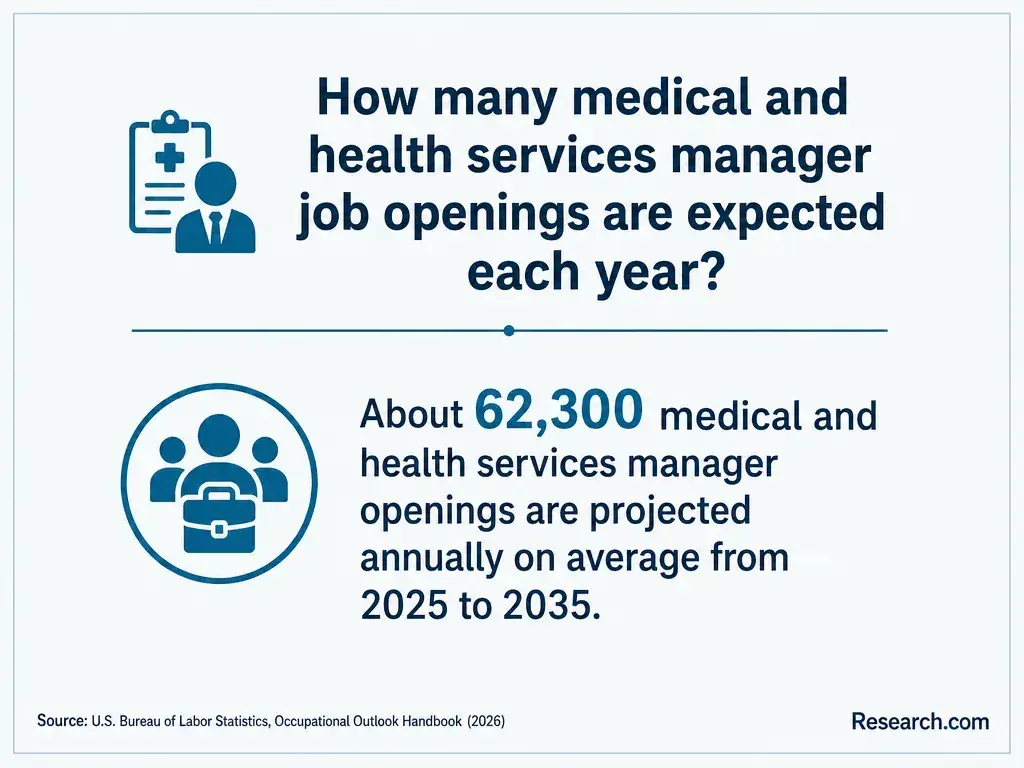
There is no single degree required for every healthcare administration job. Entry-level administrative and coordinator positions may accept different combinations of education and experience. The Bureau of Labor Statistics identifies a bachelor's degree as typical entry-level education for medical and health services managers, although employers may prefer a master's degree for some positions and commonly expect relevant healthcare work experience.
A bachelor's in healthcare administration or business can build a foundation for operations roles. An MHA focuses more directly on managing healthcare organizations; an MBA provides a broader business core and may offer healthcare coursework. For a transporter seeking a first administrative job, neither graduate degree substitutes for experience handling budgets, staff, or projects. A doctorate is generally unnecessary for this transition; financial planning for a healthcare administration doctoral degree is more relevant if your eventual goal is research, teaching, or another role that calls for advanced study.
How long does it take to earn a healthcare administration degree?
A bachelor's degree commonly takes about four years of full-time study from the beginning, while a master's program often takes one to three years, depending on its credit requirements and enrollment pace. Transfer credits, an existing bachelor's degree, part-time enrollment, and course availability can change your timeline substantially. "Accelerated" does not necessarily mean compatible with rotating hospital shifts.
When comparing fast-paced online healthcare administration degree options, ask how often required courses run and whether the advertised completion time assumes full-time study or previously earned credits. The fastest route to your next job may be an internal coordinator opening alongside part-time coursework, rather than waiting to finish a degree before applying.
Healthcare administration programs generally address organizational operations, finance, quality improvement, policy, ethics, and management. Coursework can help a transporter connect familiar problems - such as discharge delays or uneven transport demand - to staffing decisions, performance measures, and service design. An MBA typically adds a broader management core, including accounting, strategy, and organizational behavior; healthcare-specific courses vary by program.
Check whether assignments involve realistic healthcare workflows and whether you can build a project around your workplace. Also distinguish administration from health information management (HIM): the latter focuses more on health data, records, and information systems. If records and data governance interest you more than department operations, consider selecting between an administration degree and an HIM program before committing.
An online program can be effective, but delivery mode alone does not establish quality or career value. Compare institutional accreditation, relevant coursework, instructor access, applied projects, and career support. Ask whether group meetings, exams, or required visits conflict with your shifts. A fully online degree may still have scheduled live sessions, and its students may not have the same recruiting access as students in a campus-based program.
For a transporter who must keep working, the deciding factor may be whether courses can accommodate changing shifts without repeatedly delaying graduation. If you are considering an MBA, compare healthcare-focused MBA scheduling and completion options rather than treating "online" and "flexible" as synonyms. A campus program may be preferable if its local employer relationships and in-person projects directly support the jobs you want.
Requirements vary by school and degree level. Bachelor's programs typically review prior schooling and transfer credits; graduate programs generally require a completed bachelor's degree and may request a résumé, statement, recommendations, or an interview. Test policies, prerequisites, GPA thresholds, and professional-experience expectations are program-specific - not universal requirements for healthcare administration.
Your transporter work is relevant healthcare experience, but a school may distinguish it from management experience. Ask admissions staff whether the program expects applicants to have supervised staff or managed projects, and whether foundation courses are available if your prior degree was outside business. Comparing MHA degree options for applicants changing sectors can also help you identify programs designed for varied backgrounds; confirm how each school evaluates your particular experience before applying.
There is no dependable single price for a healthcare administration degree. Tuition depends on the institution, credential, residency classification, and credits required; mandatory fees, books, technology, and any travel add to the bill. An apparently inexpensive per-credit price may not remain inexpensive if few of your existing credits transfer.
Compare programs by calculating required credits multiplied by the applicable tuition rate, then adding mandatory fees and any required travel or materials. Ask your employer whether tuition assistance covers your chosen school, whether grades or continued employment are conditions, and when reimbursement arrives. Compare the resulting cost with the administrative jobs you could realistically pursue, not only senior leadership salaries. If a bachelor's degree is your next step, affordable college options for aspiring healthcare administrators can provide a starting point for that comparison.
The most accessible next jobs often build on a transporter's knowledge of hospital workflow: transport lead, dispatch or scheduling coordinator, patient access representative, and department coordinator. These roles can create opportunities to learn reporting, staff training, process improvement, and cross-department communication. An operations supervisor or practice manager position usually calls for stronger evidence of those responsibilities; a director role typically requires substantial management experience.
Job titles differ across employers, so read duties rather than assuming every "administrator" role has the same scope. If your long-term aim is one of the higher-paying healthcare administration careers, trace its stated experience requirements backward. That exercise can reveal whether your next priority should be a degree, a supervisory assignment, or experience with budgets and performance measures.
Pay varies widely by role, employer, location, and responsibility. The Bureau of Labor Statistics reports a $126,520 median annual wage for management occupations in May 2025. That figure covers management across industries; it is not the median for patient transporters, first-time healthcare administrators, or MBA graduates. Management occupations are projected to grow faster than the average for all occupations from 2025 to 2035, but that broad outlook cannot predict openings at your hospital.
For a useful financial comparison, collect local pay ranges for the specific coordinator and supervisor jobs you could pursue next. Subtract the full education cost and consider whether you can gain qualifying experience while studying. If a master's degree appears necessary later, examine lower-cost graduate options for healthcare administration professionals before taking on debt based on a broad management wage figure.
Does healthcare administration require certification or licensure?
Most healthcare administration positions do not require a general administrator license. Requirements change for certain regulated roles: nursing home administrators, for example, must meet state licensure rules. Clinical licenses are separate from administrative degrees, and an MHA or MBA does not authorize clinical practice.
Voluntary professional credentials may support a specific job goal, but check an employer's requirements before paying for one. If your goal is broader business leadership rather than a regulated occupation, compare affordable universities for a healthcare management MBA alongside MHA programs. Neither degree should be mistaken for a license or an automatic promotion.
Other Things You Should Know About Healthcare Administration
Emphasize coordination, prioritization, communication across departments, training, and documented process improvements. Describe your contribution accurately and omit patient-identifying information.
Yes. Ask HR and department leaders which roles offer cross-training, whether internal applicants can shadow a coordinator, and what qualifications recent hires needed.
Possibly. Check live-session times, deadlines, group-project expectations, and leave policies before enrolling; an online label alone does not answer the scheduling question.
You do not have to leave transport immediately. A lead or training role may add responsibility while keeping you close to patient-facing work; compare its duties with administrative openings before committing to a degree.
- Inpatient Transitions of Care: Challenges and Safety Practices | PSNet https://psnet.ahrq.gov/primer/inpatient-transitions-care-challenges-and-safety-practices
- Healthcare Administration Careers and Salaries | UW Online Collaboratives https://uwex.wisconsin.edu/stories-news/healthcare-administration-careers-and-salaries/
- Healthcare Administration Salary Guide & Career Outlook | SIUE https://online.siue.edu/degrees/business/mba/healthcare-administration/hospital-administrator-salary/
- A guide to a career path in health care administration | Capella University https://www.capella.edu/blog/health-sciences/how-to-start-and-grow-a-career-in-health-care-administration/
- Administrative Manager - NC State Online https://online-distance.ncsu.edu/career/administrative-manager/
- Healthcare Administrator Career Guide & Degree Paths | News & Updates from the Antioch University Community https://commonthread.antioch.edu/healthcare-administrator-career-guide-degree-paths/
- Potential Healthcare Management Career Paths | Colorado Technical University https://www.coloradotech.edu/degrees/studies/healthcare/articles/healthcare-management-career-paths
- Healthcare Administration Career Guide | American College of Education https://ace.edu/student-success/career-guides/healthcare-administration/
- Five Essential Non-Clinical Healthcare Careers | Covelo Group https://www.covelogroup.com/2020/06/15/five-essential-non-clinical-healthcare-careers/
- Administrative Jobs | Houston Methodist Careers https://www.houstonmethodistcareers.org/jobs/administrative/