
2027 Stress-Testing a Fictional Payment Model for Volume Changes

Co-Founder and Chief Data Scientist
A payment model can look profitable at its expected patient volume and fail when visits fall, costs rise, or a facility reaches capacity. Stress-testing a fictional model helps healthcare administration students and working managers see which assumptions drive that result without exposing real patient or contract data. This guide shows how to build and interpret volume scenarios, then explains which education and career paths help you use that analysis responsibly. The goal is a model that supports a decision - not a forecast that looks precise but hides its limits.
Key Things You Should Know
- For a simple fixed-payment model, contribution per encounter is payment minus variable cost; break-even volume is fixed cost divided by that contribution, provided contribution is positive.
- Test lower and higher volume alongside changes in case mix, payment terms, staffing, and capacity. More encounters do not necessarily mean more profit.
- Healthcare administration education can build the financial and operational judgment to interpret a stress test, but a degree alone does not confer clinical authority or guarantee a management role.
What is healthcare administration, and what does a healthcare administrator do?
Healthcare administration is the management of healthcare organizations and services. Administrators may oversee budgets, staffing, contracts, access to care, and operational performance; their responsibilities depend on the employer and role. Stress-testing a payment model is one example of that work: it asks whether an operating plan still holds when patient or service volume differs from expectations.
Start with a deliberately simple fictional model. Let V represent paid encounters, P payment per encounter, C variable cost per encounter, and F fixed costs for the period. Estimated operating margin is V × (P − C) − F. When P exceeds C, break-even volume is F ÷ (P − C). When P does not exceed C, adding encounters cannot cover fixed costs under those assumptions.
This is an administrative decision tool, not a substitute for clinical or billing expertise. If your interest is primarily in records, data governance, or health information systems rather than operating budgets, comparing management and information-focused healthcare degrees can help clarify the better educational fit.
What degree do you need to work in healthcare administration?
There is no single degree required for every healthcare administration job. Entry-level coordinators may qualify through an associate or bachelor's pathway plus relevant experience, while employers often seek a bachelor's or graduate degree and substantial experience for broader management responsibilities. Requirements vary by position; a degree does not replace experience with budgets, operations, or healthcare regulations.
Choose education based on the decision you want to make at work. A bachelor's degree can provide a foundation in healthcare operations and accounting. An MHA typically focuses more directly on managing healthcare organizations; an MBA offers a broader business core and may include healthcare coursework. A focused course in financial modeling may be more efficient than another degree if you already manage a service line and only need to strengthen scenario analysis.
If you are starting with an associate degree, examine credit acceptance before committing to a bachelor's program. Understanding healthcare administration articulation and transfer options can help you avoid paying to repeat coursework.
Are online healthcare administration degrees as credible as campus programs?
An online degree can be credible when the institution is appropriately accredited and the program develops the skills an employer needs. Delivery mode alone does not establish quality. For payment-model work, look for assignments that require you to explain assumptions, test scenarios, communicate uncertainty, and connect financial results to operational and patient-care constraints.
Check the actual schedule before treating "online" as synonymous with flexible. Live meetings, group projects, fieldwork, or campus visits can affect whether a program fits your job. If you need a particular enrollment window, a healthcare administration program start-date comparison is useful - but confirm deadlines and course availability directly with each school.
First, verify the institution's recognized accreditation. Then check whether the specific program holds relevant specialized accreditation, rather than assuming the school's general status applies to every degree. The Commission on Accreditation of Healthcare Management Education (CAHME) accredits eligible graduate healthcare management programs; its status should not be assumed for a bachelor's program, an MBA concentration, or every MHA.
Specialized accreditation can be a useful comparison factor, but curriculum, cost, format, and career fit still matter. If a graduate healthcare management degree is your goal, start by comparing accredited online MHA pathways, then verify each program's current status with the accreditor and school before applying.
Common subjects include healthcare finance, accounting, operations, policy, quality improvement, ethics, and leadership. A strong program should help you connect them: a projected margin is not a sound recommendation if the assumed patient volume exceeds safe staffing or available appointment capacity. Courses and applied requirements differ by school, so inspect syllabi rather than relying on a degree title.
To stress-test a fictional model, hold the payment and cost definitions constant while comparing low-, expected-, and high-volume cases. Then challenge the assumptions separately: Would higher volume require another shift? Does the payer mix change? Are payments tied to visits, episodes, or another contract measure? Is every scheduled encounter actually billable and collected? This separation shows whether the result is driven by volume or by an unacknowledged change in the payment model.
Graduate study can provide more opportunities to connect financial analysis with organizational decisions. When reviewing graduate options leading to an MHA, look for applied projects in which students defend assumptions and explain operational trade-offs, not just calculate an answer.
Requirements depend on the school and degree level. Bachelor's applicants generally need to meet the institution's undergraduate admission or transfer rules. Graduate programs typically require a bachelor's degree and application materials specified by the school; policies on work experience, prerequisite courses, recommendations, and entrance tests vary. Do not treat familiarity with healthcare finance as a universal admission requirement.
Applicants new to healthcare can still prepare for payment-model coursework by reviewing basic accounting, spreadsheets, and how healthcare services are delivered. Their prior experience may be useful - for example, operations or finance work can transfer - but they will need to learn healthcare-specific payment and regulatory context. If this describes you, examine accredited MHA options for applicants new to healthcare and confirm each program's current prerequisites.
Time and cost depend on transfer credits, enrollment pace, required credits, tuition basis, fees, and any fieldwork or travel. Published tuition may exclude materials and other required expenses. Before enrolling, ask for a written estimate based on your accepted credits and intended course load; compare that total with a shorter course or employer-funded training if your immediate goal is only to build a payment-modeling skill.
Time is also a model constraint. A working administrator who studies part-time may be able to apply new techniques immediately but take longer to finish. Accelerated study can reduce elapsed time while increasing weekly demands. A healthcare management graduate study timeline comparison can identify options to investigate, but confirm sequencing and workload with the program.
For the fictional stress test itself, keep educational costs separate from organizational costs. Tuition is part of your training decision; fixed staffing, facilities, and technology costs belong in the service model. Mixing the two produces a break-even figure that answers neither question well.
Possible paths include clinic operations, service-line management, revenue-cycle management, budgeting, and healthcare consulting. Responsibilities and entry points vary: someone with finance experience might move toward contract or margin analysis, while a clinical professional might first take on scheduling, staffing, or department operations. Senior positions generally require a record of managing people, resources, and decisions - not simply a credential.
A practical portfolio example is a fictional payment model with its assumptions stated plainly. The most useful analysis tests several conditions in sequence:
- Define the paid service unit, time period, payment terms, fixed costs, and costs that change with volume.
- Compare lower, expected, and higher volume without changing other assumptions.
- Retest plausible changes in payer mix, collections, staffing, and capacity one at a time, then in combination.
- Explain where the conclusion changes and what operational or clinical review would be needed before acting.
If you want broad management training alongside healthcare coursework, an affordable healthcare MBA degree program comparison may be useful. Check whether healthcare is a formal concentration, an elective option, or simply one application of the MBA core.
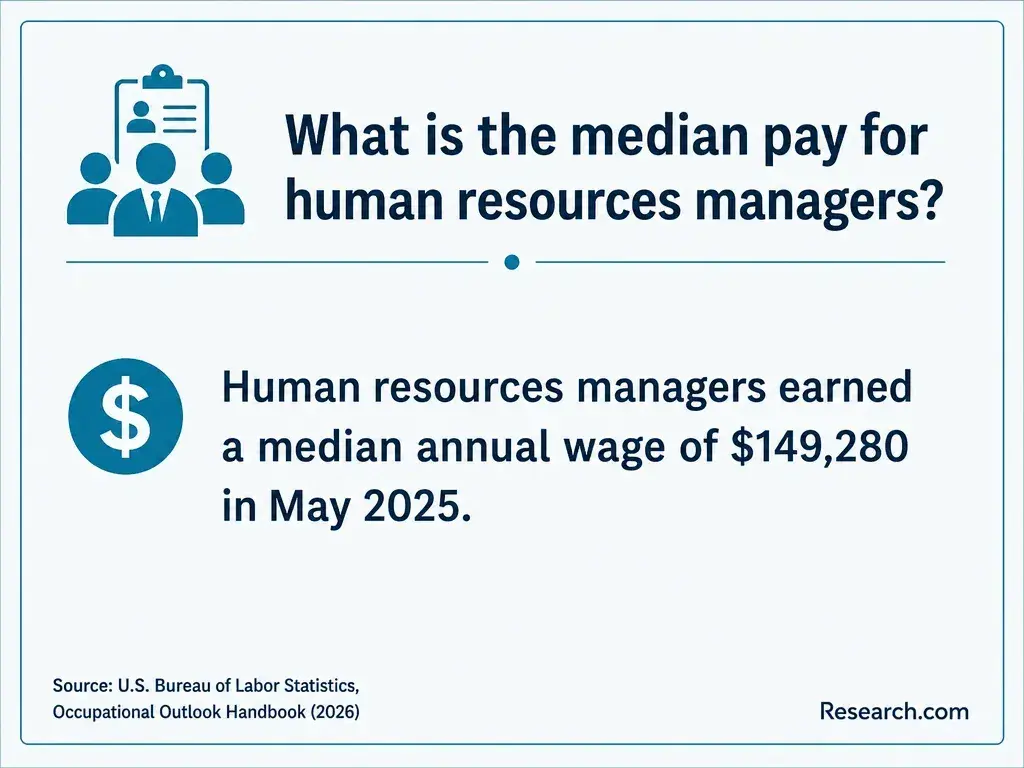
Pay depends on occupation, employer, location, responsibility, and experience; there is no single salary that a healthcare administration degree or a modeling project guarantees. For context, the U.S. Bureau of Labor Statistics reports a $126,520 median annual wage for management occupations in May 2025. That figure covers management occupations broadly. It is not a healthcare administrator salary or an estimate of what a new graduate will earn.
For an education investment, compare the cost against roles you could realistically pursue with your existing experience, not against a broad management median. Advanced study may be worthwhile for a particular leadership or research goal, but a doctorate is not a prerequisite for routine volume analysis. If that path is relevant, compare the cost and career context of healthcare administration doctorates before assuming the additional credential will pay for itself.
What is the job outlook for healthcare administration careers?
Healthcare organizations need people who can reconcile financial sustainability with service capacity, but broad labor-market forecasts should not be mistaken for a prediction about one job title. BLS projects about 1.1 million openings per year in management occupations, on average, from 2025 to 2035, across industries and including openings that replace people leaving those occupations. It is not a count of healthcare administration vacancies.
To judge your own prospects, examine local postings for the specific work you want - such as clinic operations or revenue-cycle analysis - and note their experience, software, and credential requirements. Doctoral study may fit research, teaching, or certain high-level leadership goals; healthcare management doctoral study and program requirements deserve a separate evaluation from the skills needed to build a practical stress test.
A useful next step is to build the fictional model, have a finance or operations professional challenge its assumptions, and revise the recommendation accordingly. If the conclusion changes sharply with a small shift in volume, present a range and a contingency plan rather than a single confident forecast.
Other Things You Should Know About Healthcare Administration
Yes, if you clearly label all data and contract terms as fictional and can explain your assumptions and conclusions. Do not imply that a simulated result reflects an employer's actual finances.
No. Check that it contains no real patient or confidential contract information and that its creation and release comply with your school's or employer's policies.
Keep a data dictionary, payment and cost definitions, scenario assumptions, formulas, and a record of changes. An auditable model makes disagreement about assumptions easier to resolve.
Not without checking its source data, definitions, and performance. If it cannot be validated, label it as an exploratory assumption and test a range of volumes instead.
- Reserve Requirements | Board of Governors of the Federal Reserve System https://www.federalreserve.gov/monetarypolicy/reservereq.htm
- Break-even and profit | Business Queensland https://www.business.qld.gov.au/running-business/finance/essentials/break-even-profit
- Quality Control Standards for Automated Valuation Models | Federal Register https://www.federalregister.gov/documents/2024/08/07/2024-16197/quality-control-standards-for-automated-valuation-models
- Acknowledge Limitations - Working with Quantitative Data https://libguides.law.ucla.edu/c.php
- What Are Statistical Assumptions About? An Answer From Perspectivism · Issue 7.1, Winter 2025 https://hdsr.mitpress.mit.edu/pub/qasl4fza
- How Flat Rate Pricing Works | Charge 1 - https://charge1.com/how-flat-rate-pricing-works/
- The Stripe Model: How Transaction-Based Pricing Built a | Zuplo https://zuplo.com/learning-center/the-stripe-model-transaction-based-api-monetization
- 5.5 Cost-Volume-Profit Analysis In Planning | lumenlearning.com https://courses.lumenlearning.com/suny-managacct/chapter/cost-volume-profit-analysis-in-planning/
- Consumption Models Explained: 5 Types and How They Work | Stigg https://www.stigg.io/blog-posts/consumption-models
- Understanding Margin Pressure: Causes and Impacts on Profitability | investopedia.com https://www.investopedia.com/terms/m/marginpressure.asp


