2027 Can Student Loans Pay for Childcare?

Student Finance & Loan Expert
Balancing childcare costs while pursuing advanced education poses a significant challenge for many prospective graduate students. The financial strain often forces families to reconsider their educational goals or take on additional debt. Understanding whether student loans can legally and practically cover childcare expenses is crucial for informed financial planning.
This article examines the rules and limitations of using student loans for childcare costs and offers clear guidance to help borrowers navigate funding options effectively and avoid unexpected financial pitfalls during their studies.
- Can student loans legally be used to pay for childcare expenses? Using Student Loans for Childcare
- Which federal student loans can cover childcare as part of the cost of attendance? Federal Student Loans that Cover Childcare
- How do schools decide if childcare costs are included in your financial aid budget? How Schools Calculate Childcare Financial Aid
- What steps should you take to request a childcare cost increase to cost of attendance? Requesting A Childcare Cost Increase
- Can private student loans be used for daycare, preschool, or after-school care? Private Student Loans for Childcare
- How much extra you can borrow for childcare without overleveraging your student debt? Maximum Borrowing Amount for Childcare
- Do childcare-related student loan funds affect eligibility for grants, subsidies, or tax credits? Do Childcare Loans Affect Aid Eligibility?
- How do childcare expenses impact monthly payments under income-driven repayment plans? How Childcare Affects IDR Payments
- Are there employer, campus, or state childcare assistance programs that reduce loan needs? Employer, Campus, and State Childcare Aid
- What strategies help balance borrowing for childcare with long-term loan repayment and forgiveness? Strategies for Childcare Borrowing and Loan Relief
Can student loans legally be used to pay for childcare expenses?
Student loans can be used for childcare costs if those costs are necessary for the borrower to attend school or participate in educational activities. Using federal student aid for childcare expenses is allowed when the institution's cost of attendance budget includes childcare as an approved expense. Each school's financial aid office determines whether childcare qualifies, so it's crucial to verify this before allocating loan funds for such expenses.
For example, a single parent attending full-time who must pay for daycare to participate in classes may receive approval. However, private student loans typically do not cover childcare unless explicitly stated in the loan agreement. Parents should carefully document these costs and request their inclusion in the financial aid budget to ensure compliance.
Parents often face higher childcare expenses than their loan payments. A recent survey noted that borrowers pay a median of $493 monthly on student loans, while childcare costs average $750 per month, consuming about 20% of income.
To supplement childcare costs not covered by loans, exploring scholarships, subsidies, or employer benefits is advisable. Professional guidance from financial aid counselors helps ensure proper use of loan funds. For those needing support quickly, options for quick student loans might be available depending on eligibility.
Which federal student loans can cover childcare as part of the cost of attendance?
Federal student loans do not directly pay for childcare expenses, but some can be used if those costs are included in your school's official Cost of Attendance (COA). This COA often covers tuition, fees, room and board, transportation, and, when applicable, childcare expenses for dependent students or those with documented childcare needs.
Only federal student loans originating from FAFSA-based programs may be used to cover childcare indirectly by borrowing up to your COA. These include:
- Direct Subsidized Loans
- Direct Unsubsidized Loans
- Direct PLUS Loans (for graduate students and parents)
Your school must officially recognize childcare costs in its COA for these loans to cover such expenses. Recognition varies; some schools provide a standard childcare allowance, while others require detailed proof of costs. Including childcare in the COA can increase your borrowing eligibility without exceeding federal limits.
Childcare costs are significant-full-time center care for an infant averages $13,752 per year, exceeding average in-state public college tuition and fees by 28%, according to the Federal Reserve Bank of St. Louis. Using federal student aid for childcare costs allows borrowers to address this financial burden within their loan amount.
Direct PLUS Loans offer higher borrowing limits and require a credit check, helping parents cover childcare expenses beyond undergraduate loan caps. Responsible borrowing remains essential because loan limits and repayment still apply regardless of expense use.
Prospective borrowers should confirm with their financial aid office that childcare is factored into the COA to maximize eligibility. For student loans for students with poor credit, understanding these options can be crucial.
How do schools decide if childcare costs are included in your financial aid budget?
Schools vary in how financial aid budgets account for childcare expenses, depending on their policies and definitions of "allowable educational expenses." Childcare is not typically included automatically in the cost of attendance but may be added under specific circumstances. Students often can request additional aid by providing proof of necessary childcare expenses for attendance.
Criteria for including childcare costs in school aid budgets commonly require students to:
- Submit detailed receipts or contracts from childcare providers documenting monthly or yearly expenses.
- Show that paid childcare is essential during classes or study sessions.
- Meet enrollment or income rules set by the financial aid office.
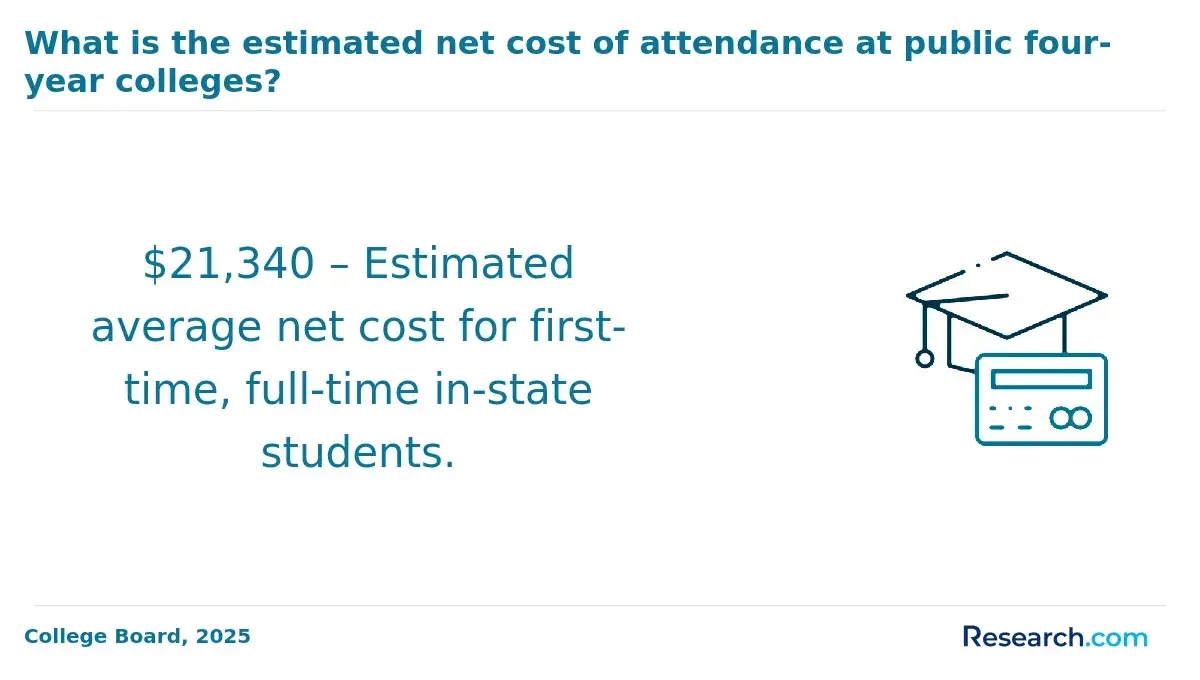
Adjustments may differ based on full-time or part-time enrollment, the child's age, or eligibility for other subsidies. For instance, community colleges might allow around $400 per month, while larger universities could impose stricter requirements or ask for extra documentation.
Timely documentation is critical. Without proper proof, childcare costs usually won't increase financial aid offers. Given the average student debt of $43,333 in the U.S., adding legitimate childcare expenses to the aid budget can help reduce borrowing. For students exploring options, student loan refinance deals may also ease long-term financial burdens.
Policies differ widely, so checking your specific school's guidelines early is important. Financial aid counselors can clarify whether your childcare expenses qualify and assist with the adjustment process.
What steps should you take to request a childcare cost increase to cost of attendance?
To request a childcare cost increase for your Cost of Attendance (COA), begin by contacting your school's financial aid office with clear documentation like signed contracts, invoices, or receipts showing consistent childcare expenses. Providing solid evidence is crucial to justify the adjustment. When applying for a cost of attendance increase due to childcare, submit a formal request outlining why your current budget falls short and specify the additional amount needed. According to the U.S. Department of Education's Federal Student Aid Handbook, schools might include up to $8,000-$10,000 annually per child based on local rates.
Procedures vary by institution: some require online portal submissions, while others prefer written letters or in-person meetings. It's important to follow up and confirm receipt. If denied, ask about the appeals process and consider providing extra supporting documents or a letter from your childcare provider. Keep detailed records of all communications throughout.
Federal student loans do not directly cover childcare, but an increased COA can make you eligible for additional financial aid, including higher loan limits to help cover these costs. For managing overall debt, exploring the best way to refinance student loans may also be beneficial.
Understanding the steps to request a childcare expense increase for cost of attendance and acting proactively can improve your chances of receiving an adjustment that reflects your actual needs.
Can private student loans be used for daycare, preschool, or after-school care?
Private student loans are intended to cover educational expenses such as tuition, fees, books, supplies, and sometimes room and board. These loans generally cannot be used for daycare, preschool, or after-school care costs. Unlike federal student loans with stricter but more defined rules, private lenders typically exclude childcare expenses from allowable uses.
Occasionally, some private lenders may offer personal loans marketed as alternatives to student loans that allow more flexibility, but borrowers should carefully review loan terms to avoid penalties or default from using funds improperly.
Parents seeking help with childcare costs often turn to federal options like Parent PLUS loans. These loans supplement education expenses but also do not explicitly cover childcare. As of late 2025, Parent PLUS borrowers have roughly $111 billion in outstanding debt, averaging $29,343 per borrower, highlighting the financial challenges parents face.
For childcare-specific funding, consider these alternatives:
- State or local childcare assistance programs.
- Personal savings or dependent care flexible spending accounts (FSAs) if available.
- Employer-sponsored childcare subsidies or reimbursement benefits.
Private student loans should remain dedicated to educational costs. Borrowers should evaluate long-term financial impacts before using loans or alternative financing for childcare expenses.
How much extra you can borrow for childcare without overleveraging your student debt?
Students and graduates may borrow additional federal student loans to cover childcare costs, but it's important to stay within manageable debt limits. The maximum federal loan amount hinges on annual caps and existing loan balances. Dependent undergraduates typically can borrow between $5,500 and $7,500 per year through Direct Subsidized and Unsubsidized Loans combined. Independent students may have access to up to $12,500 annually.
Federal regulations do not specify a fixed cap solely for childcare borrowing, but excessive borrowing without repayment capacity can lead to delinquency. About 10.0% of federal student loan dollars were delinquent as of late 2025, underscoring the need for prudent loan decisions (Education Data Initiative, "Student Loan Debt Statistics 2026").
When planning additional borrowing for childcare, calculate your repayment ability by considering your income, living expenses, and childcare costs. For example:
- If you owe $20,000 with a $40,000 expected income, limit childcare loans to under $5,000 to maintain manageable monthly payments.
- Working adults with higher incomes and no other debt might responsibly borrow up to the full $12,500 independent limit.
Remember that capitalized interest on these loans increases long-term costs. Use budgeting tools and consult financial aid officers to set borrowing limits carefully, avoiding financial strain.
Do childcare-related student loan funds affect eligibility for grants, subsidies, or tax credits?
Childcare-related student loan funds generally do not reduce eligibility for federal grants, subsidies, or tax credits. These loans are considered educational aid, not income, so they typically don't affect need-based benefits like Pell Grants or the Child Care and Development Fund (CCDF) subsidies. However, all financial aid, including loans, must be reported on the Free Application for Federal Student Aid (FAFSA), which influences eligibility for need-based assistance.
Tax credits such as the Child and Dependent Care Credit are usually unaffected by student loan balances because eligibility relies more on qualifying expenses and income than on outstanding debts.
Rules vary for state or local childcare assistance programs, so students should verify with aid offices or subsidy programs whether loans impact eligibility.
Childcare providers themselves face significant student debt challenges. According to the RAPID Survey Project, 21% of U.S. childcare providers reported student loan debt. Family, friend, and neighbor providers average $109,000 in debt-over three times higher than other early educators. This financial strain may limit their ability to qualify for subsidies or tax credits if loan repayments push income above qualifying thresholds.
Borrowers financing childcare education should carefully track aid, expenses, and repayment options to optimize eligibility for grants and subsidies while managing debt responsibly.
How do childcare expenses impact monthly payments under income-driven repayment plans?
Childcare expenses can reduce monthly payments under income-driven repayment (IDR) plans by lowering discretionary income. IDR plans like Revised Pay As You Earn (REPAYE) or Income-Based Repayment (IBR) calculate payments based on adjusted gross income minus 150% of the federal poverty guideline for the borrower's family size. Including childcare costs raises the family size count, which decreases discretionary income and monthly payments.
For example, a single parent earning $45,000 with two children generally pays less than one with only one child because the poverty guideline adjustment increases with family size. Childcare expenses themselves are not directly deductible but influence payments through family size in IDR calculations.
The CARES Act's temporary pause on federal student loan payments in 2020 led to an 82% drop in active repayment debt between Q2 and Q3. This pause freed cash flow, allowing many borrowers to allocate more funds toward childcare, showing the financial strain childcare places on borrowers.
Borrowers managing childcare should recertify income and family size annually to ensure payments reflect their current situation. Accurately reporting dependents and family changes during recertification helps maximize savings and avoid increased payments due to outdated family size information.
Are there employer, campus, or state childcare assistance programs that reduce loan needs?
Employer, campus, and state childcare assistance programs can play a crucial role in reducing reliance on student loans for childcare expenses. Many employers offer dependent care flexible spending accounts (FSAs), allowing pre-tax contributions to cover childcare costs and effectively lowering out-of-pocket expenses. Some businesses also provide direct childcare subsidies or on-site childcare centers, which help families save significantly on monthly fees.
Colleges and universities often partner with local providers to offer discounted childcare or run subsidized programs specifically for student-parents. Graduate students may access grants or emergency funds earmarked for children's care, easing financial strain. State programs vary but commonly include vouchers, sliding-scale fee assistance, or in-kind services aimed at low- and middle-income families. For example, the Child Care and Development Fund (CCDF) offers subsidies that help eligible families reduce childcare costs.
These supports address the clear connection between education debt and childcare affordability. According to research by TIAA-MIT AgeLab, about 20% of Americans with student loans report that their education debt restricts their ability to afford childcare, leading them to delay additional children or reduce work hours.
Using employer FSAs, campus supports, and state assistance programs can help families better manage childcare needs while lessening the burden of education debt.
What strategies help balance borrowing for childcare with long-term loan repayment and forgiveness?
Balancing childcare borrowing with long-term loan repayment and forgiveness calls for a strategic approach that limits debt and maximizes repayment options. Borrow only what is essential by accurately estimating childcare costs and exploring lower-cost alternatives like family support or subsidized daycare. Excessive borrowing can increase repayment burdens and limit eligibility for forgiveness programs tied to specific employment or income levels.
Federal student loans should be prioritized, as they offer income-driven repayment plans and public service loan forgiveness (PSLF). In contrast, private loans usually carry higher interest rates and lack these benefits. For example, federal loans cap monthly payments at 10-15% of discretionary income and allow forgiveness after 10-20 years.
Maintain detailed records of childcare expenses to ensure loan disbursements match actual costs, preventing unnecessary debt. Also, utilize grants, scholarships, and work-study opportunities as primary funding sources. In 2020-21, only 38% of first-time, full-time undergraduates relied on loan aid, down from 50% a decade earlier, indicating a shift toward non-loan funding (National Center for Education Statistics, Condition of Education 2024).
Consider employer benefits such as childcare assistance or flexible spending accounts to reduce out-of-pocket expenses and borrowing needs. Combining these options with income-driven repayment plans can minimize financial strain and improve long-term loan management.
Other Things You Should Know About
When including childcare costs in your financial aid budget in 2027, you typically need to provide documentation to your school's financial aid office. This may include receipts or statements verifying childcare expenses. Schools often require this to adjust the cost of attendance and determine appropriate loan amounts.
Adding childcare costs to your student loan balance will increase the total amount you borrow, which affects the interest accrued and monthly repayment amounts. It is important to carefully consider whether including childcare costs in your loan is financially sustainable based on your anticipated income after graduation.
Loan forgiveness programs typically consider the total amount borrowed and your repayment history, not the specific use of loan funds. Borrowing to cover childcare does not disqualify you from forgiveness, but higher loan balances can increase your repayment period before forgiveness applies.