2027 Best Education Graduate School Loans

Student Finance & Loan Expert
Facing the high cost of graduate education can create a significant financial barrier for working professionals seeking advanced degrees in unconnected fields. Many prospective students struggle to identify loan options that offer manageable repayment terms, competitive interest rates, and flexible borrowing limits.
Finding the right graduate school loan is crucial to avoid overwhelming debt and to maintain financial stability during and after the program. This article explores the best education graduate school loans available today, providing detailed comparisons and insights to help readers choose loans that align with their unique financial circumstances and educational goals.
- What are the main types of graduate school student loans and how do they work? Types of Graduate School Loans
- How do federal graduate loans compare with private loans for education degrees? Federal vs. Private Education Graduate School Loans
- How can I choose the best graduate school loan for my education program? Choosing the Best Education Graduate School Loan
- What are the eligibility and credit requirements for federal and private grad loans? Eligibility and Credit Requirements
- How much can I borrow for education graduate school and at what interest rates? Limits & Rates
- How do I apply for graduate school loans using the FAFSA and other applications? How to Apply for Graduate School Loans
- What repayment plans are available for graduate loans and how do they affect payments? Available Repayment Plans
- Which loan forgiveness and cancellation programs apply to education graduate borrowers? Loan Forgiveness and Cancellation Programs
- When does repayment start for graduate loans and what are deferment or forbearance options? Repayment Terms and Deferment Options
- Should I refinance or consolidate my graduate school loans and when does it make sense? Refinancing vs Consolidation Options
What are the main types of graduate school student loans and how do they work?
Graduate school student loans come in three main types: federal Direct Unsubsidized Loans, federal Grad PLUS Loans, and private graduate loans. Each type addresses different borrower needs and has unique features, making it important for students to understand their options.
Federal Direct Unsubsidized Loans carry fixed interest rates without requiring proof of financial need. Borrowers are responsible for interest during school and deferment periods, with annual loan limits up to $20,500. These loans offer relatively flexible repayment plans, including Income-Driven Repayment options.
Federal Grad PLUS Loans fill financial gaps not covered by other aid sources. They involve a credit check and typically have higher interest rates. Borrowers can borrow up to the full cost of attendance minus other aid. While these loans provide deferment and forbearance options, some income-based repayment plans are limited.
Private graduate loans, available through banks and other lenders, vary widely in interest rates, repayment terms, and borrower qualifications. They often require a creditworthy cosigner and generally offer fewer protections and less flexibility than federal loans.
Graduate and professional students received an average of $29,160 in total aid in 2024-25, including about $10,750 in grant aid, with the remainder mainly from loans, according to the College Board's report. Exploring student loans for dental school can provide insight into specific loan products for advanced degrees.
Reviewing the types of graduate student loans and how they work will help you choose the right financing strategies to manage debt efficiently while minimizing costs.
How do federal graduate loans compare with private loans for education degrees?
Federal graduate loans generally offer advantages over private loans for education degrees, including fixed interest rates set by Congress that tend to be lower than private rates. For instance, the 2026 federal Direct Unsubsidized Loan rate is about 6.54%, while private lenders may charge 7% or more depending on credit scores. These federal loans also provide flexible repayment options like income-driven plans, which adjust monthly payments based on income and family size, helping ease the financial burden early in a graduate's career. Moreover, federal loans have fewer eligibility barriers since they do not require credit checks or cosigners, unlike many private loans.
When comparing federal graduate loans vs private loans for education degrees, private loans might be an option for those who have reached federal borrowing limits or qualify for very low private rates due to excellent credit. Nonetheless, private lenders rarely offer income-based repayment or loan forgiveness programs, common in federal lending. They often require strong credit or a cosigner, creating additional qualification challenges.
Graduate students in education programs typically borrow less-about $38,310 on average versus $53,920 for master's students overall, as shown by NCES data summarized by Credible. This lower borrowing need means federal loans often suffice, providing better borrower protections aligned with education students' typical loan amounts.
Key factors in the comparison of federal and private loans for graduate education include:
- Interest rate stability: Federal loans feature fixed rates; private rates may vary.
- Repayment flexibility: Federal loans offer income-driven options; private loans usually lack them.
- Loan forgiveness programs: These are generally available only with federal loans.
- Credit qualifications: Federal loans have minimal credit requirements; private loans require strong credit or a cosigner.
For those interested in alternatives, reviewing options such as ascent student loans for undergraduates may provide additional insight into private lending opportunities with specific terms.
How can I choose the best graduate school loan for my education program?
Graduate students seeking the best graduate school loan options in the United States should carefully evaluate federal and private loan programs based on their field of study, borrowing limits, and repayment flexibility. Recent reforms have ended Grad PLUS loans, establishing clear caps: non-professional graduate students, including many in M.Ed. and Ed.D. programs, are limited to $20,500 annually and $100,000 total in federal loans. Professional students in fields like law or medicine can borrow up to $50,000 annually and $200,000 over their lifetime). These limits affect how much federal funding is accessible and whether private loans are necessary.
When comparing education loan rates for graduate programs, consider these key steps:
- Determine your program's classification to understand federal loan limits.
- Maximize federal loans first due to generally lower interest rates and income-driven repayment options.
- Look into private loans only if federal limits don't cover all expenses; compare fixed and variable interest rates.
- Assess loan fees, deferment possibilities, and borrower protections carefully.
- Calculate your realistic borrowing needs considering tuition, living costs, and scholarships.
For instance, an M.Ed. student borrowing beyond the $20,500 federal cap must seek private loans or alternative funding after exhausting federal options, while a medical student may rely more heavily on federal loans within the $50,000 limit. To navigate these complexities, reviewing guidance on how to pay for MBA program funding can provide useful insights.
Creating an effective loan strategy helps minimize debt and leverages borrower benefits, but always consult your school's financial aid office for tailored advice and the latest loans available.
What are the eligibility and credit requirements for federal and private grad loans?
Federal graduate student loans have straightforward eligibility criteria, requiring borrowers to be enrolled at least half-time in an eligible graduate or professional program at a U.S. institution certified by the Department of Education. These loans do not require a credit check or co-signer, except for Grad PLUS loans, which do involve a credit review though not necessarily a perfect credit history. Applicants with adverse credit history may still qualify by providing an endorser or documenting extenuating circumstances, reflecting the relatively flexible credit criteria for federal loans.
In contrast, private graduate loans often have stricter credit conditions and differ significantly in eligibility requirements. Lenders typically require proof of enrollment in an accredited graduate program, a creditworthy borrower, or a qualified co-signer. Approval chances and loan terms heavily depend on credit scores and income levels. For instance, a credit score above 650, stable income, or a strong co-signer history is preferred. Borrowers with lower credit scores might face higher interest rates or mandatory co-signers.
Federal loans promote wider participation by being more accessible to most enrolled graduate students regardless of income or credit background, whereas private loans mainly address gaps when federal loan limits are insufficient. Annual borrowing from both federal and private loans rose to $102.6 billion in 2024-25, indicating a growing reliance and the need to understand these eligibility nuances.
For those researching specific options like nursing school loans, knowing the graduate school loan eligibility requirements and credit criteria for federal and private grad loans is essential to make informed borrowing decisions.
How much can I borrow for education graduate school and at what interest rates?
Graduate students in the U.S. can borrow up to $20,500 annually through federal Direct Unsubsidized Loans, with a total limit of $138,500 that includes undergraduate debt. For professional programs like law or medical school, graduate PLUS loans may cover the full cost of attendance after other aid is applied. Interest rates on these federal loans are fixed, with Direct Unsubsidized Loans near 7.05% and PLUS loans around 8.05%. Private loans vary widely in rates, depending on creditworthiness and lender, often ranging from 6% to over 13%.
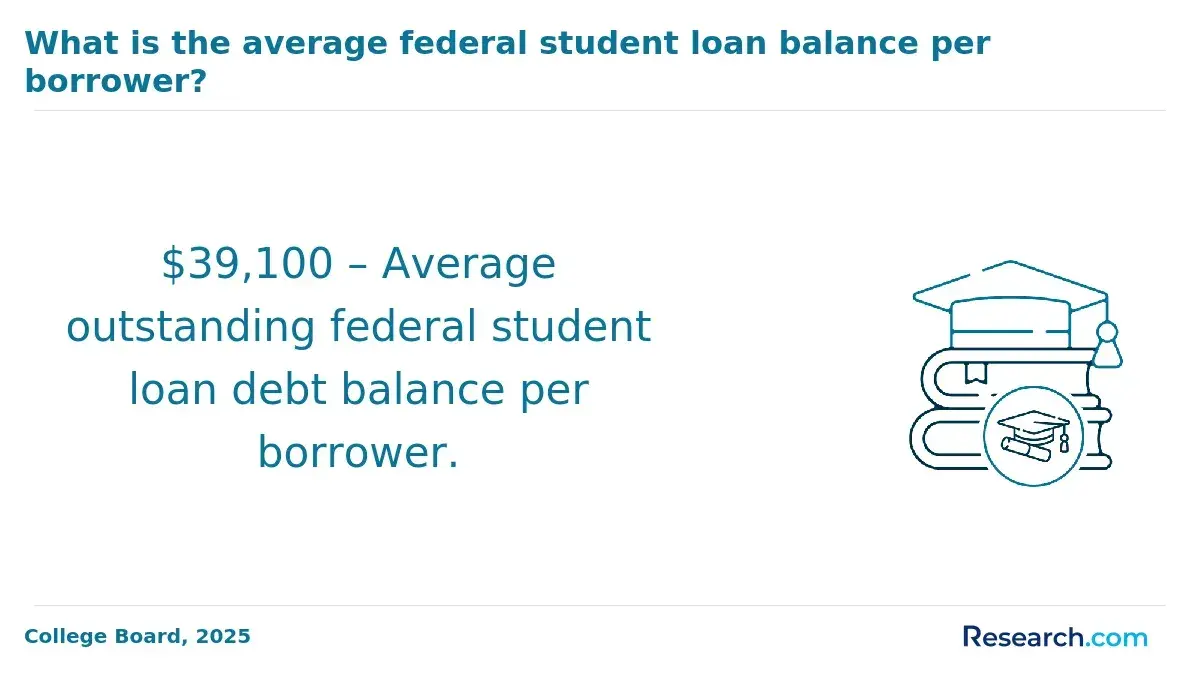
The average student loan debt at graduation rose to $39,457 for the Class of 2025, a 41% increase after adjusting for inflation since 2007. Graduate programs frequently cost much more than undergraduate ones, sometimes between $30,000 and $70,000 per year, which can push borrowing beyond federal limits.
Key factors to consider when evaluating loan options include:
- Federal loans offer protections like income-driven repayment plans and loan forgiveness but have borrowing caps.
- Private loans can cover full costs but often come with higher, variable interest rates and fewer borrower protections.
- Estimating total costs-including tuition, living expenses, and fees-helps avoid excessive borrowing.
- Comparing loan terms and interest rates from multiple lenders is essential to minimizing repayment costs.
How do I apply for graduate school loans using the FAFSA and other applications?
Complete the Free Application for Federal Student Aid (FAFSA) at fafsa.gov to determine your eligibility for federal loans, grants, and work-study programs. Submit as soon as possible after October 1 to maximize aid opportunities, which are often awarded on a first-come, first-served basis. Use the IRS Data Retrieval Tool to simplify the process and minimize errors.
Explore institutional and private loan options beyond federal aid. Many graduate programs offer school-specific loans-contact your financial aid office directly for details. Private loans typically require a credit check and may need a cosigner, so compare interest rates, repayment terms, and borrower protections carefully before borrowing.
Graduate students are eligible for federal Direct Unsubsidized Loans up to $20,500 per year and may also qualify for Graduate PLUS Loans to cover additional costs. FAFSA must be renewed annually, and you should be prepared to submit proof of enrollment and maintain satisfactory academic progress throughout your studies.
Loan funds can cover tuition, housing, and supplies, though disbursement timing varies by institution. Check your school's loan processing schedule to avoid delays.
Median earnings for education master's degree holders stand near $74,000, reflecting a 23% wage premium compared to bachelor's degree holders, according to the U.S. Bureau of Labor Statistics. This underscores the value of graduate education when managing student debt responsibly.
What repayment plans are available for graduate loans and how do they affect payments?
Graduate loan repayment plans differ mainly in payment amount, term length, and eligibility for forgiveness or income-driven adjustments. Standard plans fix monthly payments over 10 years, allowing quicker payoff but higher monthly costs. For lower payments, extended plans span up to 25 years, though this increases total interest.
Income-driven repayment (IDR) plans adjust payments based on income and family size. Popular options include Income-Based Repayment (IBR), Pay As You Earn (PAYE), and Revised Pay As You Earn (REPAYE). These cap payments at 10-15% of discretionary income, easing financial pressure during early careers or hardship. However, longer terms often lead to more accrued interest and higher total debt.
Key points to consider:
- The median graduate loan balance in year six often exceeds the original loan due to interest accrual and extended repayment.
- Graduate debt makes up 89.6% of total education debt among borrowers.
- Standard plans reduce interest but may strain budgets with higher payments.
- Extended plans offer flexibility but increase total repayment costs.
- Refinancing can lower rates after employment stabilization but may sacrifice federal protections.
Graduates with variable income should consider IDR plans to avoid default and payment stagnation. These plans provide adaptability but can increase long-term costs.
Which loan forgiveness and cancellation programs apply to education graduate borrowers?
Education graduate borrowers can access several loan forgiveness and cancellation programs aimed at reducing or eliminating their debt. The Public Service Loan Forgiveness (PSLF) program offers forgiveness of federal Direct Loan balances after 120 qualifying payments when employed full-time in a public service role, such as teaching at Title I schools or nonprofit educational organizations.
Teacher Loan Forgiveness provides up to $17,500 in forgiveness for educators working full-time for five consecutive years in low-income schools, benefiting those pursuing education careers. Income-Driven Repayment (IDR) plans adjust monthly payments based on income and family size, with loan forgiveness after 20 or 25 years of qualifying payments, helping manage debt early in a career.
Although Federal Perkins Loans have been phased out, they still offer cancellation options for education professionals working in special education or serving as school nurses, librarians, or teaching disadvantaged students.
Non-loan financial aid also plays a critical role. Graduate students in education receive an average of $10,750 in grant aid, even though only 30% borrow, representing 46% of education debt at repayment start. Assistantships, scholarships, and employer tuition benefits are essential to minimize borrowing and ease repayment stresses.
Maintaining detailed records of employment and payments ensures eligibility for forgiveness programs, significantly influencing long-term financial well-being.
When does repayment start for graduate loans and what are deferment or forbearance options?
Most federal graduate student loans require repayment to begin six months after graduation, leaving school, or dropping below half-time enrollment. This grace period gives borrowers time to find employment before payments start. Private loans vary significantly; many demand repayment immediately or within 60 days of disbursement. Checking your lender's specific repayment terms is crucial to avoid unexpected due dates.
Temporary relief options like deferment and forbearance are available for borrowers facing financial hardship but differ in eligibility and interest treatment:
- Federal Deferment: Granted for students enrolled at least half-time, unemployment, economic hardship, or active military service. Most federal deferments stop principal and interest accrual on subsidized loans, while unsubsidized loans continue accruing interest.
- Federal Forbearance: Allowed for financial difficulties or medical expenses, permitting payment pauses or reductions. Interest, however, accrues on all loan types during forbearance, raising total repayment costs.
- Private Lenders: Policies vary widely and often require hardship documentation. Interest usually continues accruing regardless of deferment or forbearance status.
With an average debt-to-income ratio of 58% for new graduates, managing repayment responsibly is vital. Communicate early with loan servicers if you encounter job loss, illness, or other qualifying hardships to explore deferment or forbearance options. Reviewing your loan terms promptly helps plan your finances and protect your credit during repayment challenges.
Should I refinance or consolidate my graduate school loans and when does it make sense?
Refinancing graduate school loans replaces multiple loans with a new one at a lower interest rate, which can reduce monthly payments or total interest costs. This option is ideal for borrowers with strong credit and steady income. For instance, refinancing a $66,000 loan-the average debt for graduate borrowers in 2016-might lead to significant savings if interest rates drop by even one percentage point. It's important to note that refinancing federal loans with a private lender results in the loss of federal benefits, including income-driven repayment plans and loan forgiveness programs.
Consolidation, on the other hand, merges multiple federal loans into a single Direct Consolidation Loan without changing the interest rates, simplifying payments. This works well for borrowers managing several federal loans who want one monthly payment and access to alternative repayment options. Consolidation also allows some borrowers who missed earlier deadlines to regain eligibility for certain federal benefits.
Consider these points when choosing between refinancing and consolidation:
- Refinance if you have stable income, good credit, and want to lower interest rates or monthly payments, especially on private loans.
- Consolidate if you have multiple federal loans and prefer payment simplification or need to maintain federal protections.
- Avoid refinancing federal loans unless giving up federal benefits is a calculated trade-off for immediate savings.
- Graduate borrowers' average debt in 2016 was $66,000, a 25% rise since 2000, so making strategic loan decisions is crucial (Arnold Ventures).
Often, borrowers with both federal and private loans consolidate only the federal portion while refinancing private loans. This combined approach can effectively reduce overall debt burdens.
Other Things You Should Know About
Yes, graduate school loans can typically be used to cover a range of education-related expenses beyond tuition. This includes fees, books, supplies, equipment required for courses, living expenses, and sometimes even dependent care costs. It's important to check the specific loan terms, as some private loans may have restrictions on allowable expenses.
In 2027, graduate school loans offer various flexible repayment options, including income-driven repayment plans. These plans adjust monthly payments based on your income and family size, potentially extending the repayment term but easing immediate financial burdens. It's advisable to explore options like PAYE, REPAYE, and IBR for tailored assistance.
Yes, interest paid on graduate student loans is often tax-deductible, subject to income limits and filing status. Borrowers can deduct up to $2,500 annually of paid interest on qualified student loans, which can reduce their taxable income. It is advisable to consult IRS guidelines or a tax professional to understand eligibility and how to claim this deduction.
If you withdraw from graduate school, you are still responsible for repaying any borrowed loan amounts. Federal loans generally offer a grace period before repayment begins, but this varies by loan type. Additionally, dropping below half-time enrollment status typically triggers the start of repayment obligations. Communicating with your loan servicer is essential to understand repayment timelines and options.