2027 Online PharmD Programs With Strong Professional Communication Training

Co-Founder and Chief Data Scientist
Choosing an online PharmD program is not just about convenience; it is about whether the program can prepare you to communicate safely with patients, physicians, insurers, and care teams. The U. S. Bureau of Labor Statistics reported a May 2024 median pharmacist wage of $137,480, but licensure and practice readiness still depend on accredited training and state requirements. This guide is for prospective pharmacy students comparing online options, communication-focused curricula, costs, admissions, licensure steps, and career outcomes before making a high-stakes education decision.
Key Things You Should Know
- Online PharmD programs can meet the same pharmacist licensure pathway as campus programs when they hold ACPE accreditation and include required experiential education, including IPPE and APPE rotations.
- Professional communication training matters because pharmacists regularly counsel patients, document medication decisions, coordinate with prescribers, and manage sensitive conversations about adherence, safety, cost, and access.
- The BLS reported a May 2024 median pharmacist wage of $137,480 and projected 5% employment growth from 2023 to 2033, so program quality, licensure fit, and practice setting should drive ROI expectations.
What is an online PharmD program and how does it differ from campus options?
An online PharmD program is a Doctor of Pharmacy degree that delivers substantial didactic coursework through distance learning while still requiring in-person clinical experiences. It is designed for students pursuing pharmacist licensure, not for students who only want a general healthcare management credential or a short certificate.
The key difference is format, not the professional endpoint. A reputable online pharmacy school still has to prepare students for the same clinical reasoning, patient safety, medication therapy, and licensure expectations as a campus-based PharmD program.
The table below summarizes the practical differences that matter most when deciding whether an online or campus PharmD format fits your learning style, schedule, and licensure goals.
| Comparison point | Online PharmD programs | Campus PharmD programs |
| Course delivery | Lectures, discussions, simulations, and assessments are often delivered through a learning platform, sometimes with live sessions. | Most classroom learning happens in person on a fixed campus schedule. |
| Clinical requirements | Students still complete in-person pharmacy practice experiences at approved sites. | Students complete in-person pharmacy practice experiences, often near the campus or affiliated health systems. |
| Communication training | Often uses video counseling, recorded role-play, telehealth-style encounters, discussion boards, and virtual interprofessional activities. | Often uses in-person labs, standardized patients, group projects, and live simulation suites. |
| Best fit | Students who need geographic flexibility but can travel for residencies, labs, assessments, or clinical rotations when required. | Students who prefer daily face-to-face instruction, campus services, and local peer interaction. |
| Main risk to check | Whether rotations, state authorization, and licensure preparation align with the student's state. | Whether relocation, commuting, and campus schedule demands are realistic. |
Online learning is not automatically easier. In many PharmD programs, students must manage a heavy science curriculum, live skills assessments, team-based assignments, and clinical placements while staying highly organized outside a traditional classroom environment.
How do online PharmD programs prepare students for pharmacist licensure in the United States?
Online PharmD programs prepare students for U.S. pharmacist licensure by combining accredited professional coursework with supervised pharmacy practice experiences. Licensure is granted by state boards of pharmacy, so students should treat national program quality and state-specific rules as separate but connected requirements.
Most students should expect the licensure pathway to include the following steps. The exact sequence and documentation can vary by state, so prospective students should confirm details before enrolling.
- Complete an ACPE-accredited PharmD program that satisfies professional degree requirements.
- Complete required introductory and advanced pharmacy practice experiences under approved supervision.
- Apply to the state board of pharmacy where you plan to practice and submit required documentation.
- Pass the North American Pharmacist Licensure Examination, commonly called the NAPLEX.
- Pass the Multistate Pharmacy Jurisprudence Examination or another state-required pharmacy law exam when applicable.
- Complete any additional state requirements, such as background checks, intern hours, age requirements, or state-specific training.
For online students, the most important licensure question is not whether the lectures are online. It is whether the program is approved to enroll students in your state, can support required experiential placements, and has a clear history of preparing students for board exams.
Prospective students should be cautious if a program makes broad national promises without explaining state authorization, rotation availability, or board eligibility. A strong program will tell you where students may enroll, where rotations can be completed, and what licensure disclosures apply to each state.
Which accreditation and quality standards should online PharmD programs meet?
The essential accreditation standard for a U.S. PharmD program is accreditation by the Accreditation Council for Pharmacy Education, commonly known as ACPE. ACPE accreditation signals that the professional program has been reviewed against pharmacy education standards related to curriculum, faculty, experiential learning, assessment, resources, and student outcomes.
Accreditation is a practical requirement, not just a quality label. Without the right professional accreditation, graduates may not be eligible for pharmacist licensure in many circumstances, even if the school is otherwise legitimate or regionally accredited.
The table below separates the quality checks that matter before applying. Use it to avoid confusing institutional approval, program accreditation, and licensure eligibility.
| Quality standard | What it tells you | Why it matters for online PharmD students |
| ACPE accreditation | The PharmD program meets professional pharmacy education standards. | This is the most important accreditation check for pharmacist licensure preparation. |
| Institutional accreditation | The college or university is recognized by an approved institutional accreditor. | This affects federal financial aid eligibility, credit recognition, and institutional oversight. |
| State authorization | The school is allowed to deliver distance education to students in specific states. | Online students may be unable to enroll or complete required activities from some states. |
| Experiential site approval | The program has approved pharmacy practice placements and supervision processes. | Students need real-world practice experiences to complete the degree and prepare for licensure. |
| Outcome transparency | The program reports indicators such as board pass rates, graduation trends, residency placement, or employment context. | Transparent outcomes help students compare risk, support, and readiness without relying only on marketing claims. |
A common mistake is checking only whether the university is accredited. For pharmacy, you also need to confirm that the PharmD program itself has the correct professional accreditation and that it supports your intended licensure state.
How do online PharmD programs build strong professional communication skills for pharmacists?
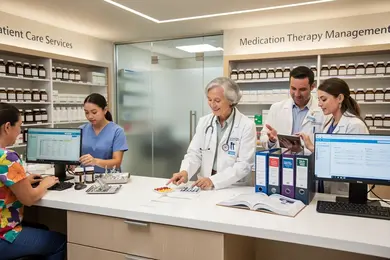
Professional communication is a core pharmacist skill because medication safety depends on what patients understand, what prescribers receive, and what care teams document. In online PharmD programs, strong communication training should be visible across the curriculum, not limited to one public speaking course.
Good programs build communication skills through repeated practice, feedback, and assessment. The strongest models usually combine patient counseling, interprofessional collaboration, documentation, conflict management, cultural humility, and digital communication.
The table below shows how communication-focused PharmD programs commonly connect learning activities to real pharmacy responsibilities.
| Communication skill | How online PharmD programs may teach it | Why it matters in practice |
| Patient counseling | Recorded counseling sessions, live video role-play, standardized patient simulations, and faculty feedback. | Pharmacists must explain dosage, side effects, adherence strategies, and warning signs in understandable language. |
| Interprofessional communication | Team-based cases with nursing, medical, public health, or physician assistant students. | Medication therapy decisions often require collaboration with prescribers and care teams. |
| Documentation | SOAP notes, medication therapy management records, care plans, and electronic health record-style assignments. | Clear documentation supports continuity of care and reduces medication-related risk. |
| Difficult conversations | Simulated discussions about medication cost, vaccine hesitancy, controlled substances, errors, and nonadherence. | Pharmacists often need to manage trust, safety, and legal responsibilities at the same time. |
| Telepharmacy communication | Virtual counseling, remote verification scenarios, digital etiquette, and privacy-aware communication exercises. | Technology-enabled pharmacy services increasingly require clear communication without a traditional counter interaction. |
Current pharmacy practice is also being shaped by automation, e-prescribing, clinical decision support, and AI-enabled workflow tools. These technologies can support dispensing and documentation, but they do not replace the pharmacist's responsibility to explain risks, verify understanding, resolve conflicts, and communicate clinical judgment.
When comparing programs, look for evidence that communication is assessed over time. Strong signs include structured rubrics, objective structured clinical examinations, standardized patient encounters, team-based care simulations, and feedback from preceptors during rotations.
What core courses and experiential learning are included in online PharmD curricula?
Online PharmD curricula usually combine biomedical science, pharmaceutical science, clinical pharmacy, population health, law and ethics, and supervised practice. The degree is intensive because students must learn how medications work, how to evaluate therapy, and how to communicate recommendations safely.
Most programs organize learning into classroom-based coursework and experiential education. These components are connected: students first build knowledge and simulated skills, then apply them in pharmacy practice settings.
The table below summarizes common curriculum areas and what students should expect to practice in each area.
| Curriculum area | Typical content | Decision value for applicants |
| Foundational sciences | Biochemistry, physiology, microbiology, immunology, pharmacology, and medicinal chemistry. | Students with weaker science preparation should ask about tutoring, bridge resources, and early academic support. |
| Clinical therapeutics | Medication therapy for cardiovascular, infectious disease, endocrine, psychiatric, oncology, and other conditions. | This is central to clinical decision-making and board exam preparation. |
| Pharmacy practice skills | Patient assessment, medication dispensing, compounding basics, drug information, immunization, and medication safety. | Applicants should confirm which skills require in-person labs or campus visits. |
| Communication and professionalism | Patient counseling, ethics, cultural humility, documentation, health literacy, and interprofessional teamwork. | Students seeking strong communication training should look for repeated, assessed practice rather than isolated lectures. |
| Experiential education | Introductory Pharmacy Practice Experiences and Advanced Pharmacy Practice Experiences. | Rotation availability is one of the most important online-program fit factors. |
Experiential learning is where online PharmD students must pay close attention to logistics. A program may deliver lectures remotely but still require students to complete rotations in community pharmacies, hospitals, ambulatory care clinics, health systems, managed care organizations, or other approved settings.
Before enrolling, ask how rotation sites are assigned, whether students may propose sites, how far students typically travel, and what happens if a planned site becomes unavailable. These details can affect your timeline, budget, and stress level as much as tuition does.
What admissions requirements and prerequisites do online PharmD programs typically have?
Admissions requirements vary by school, but online PharmD applicants are typically evaluated on academic readiness, prerequisite science coursework, communication ability, professionalism, and motivation for pharmacy practice. Some programs admit students after undergraduate prerequisites, while others prefer or require a bachelor's degree.
Applicants should review requirements early because missing one lab science or transcript deadline can delay entry by an entire cycle. Common requirements include the following items.
- Prerequisite coursework in areas such as general chemistry, organic chemistry, biology, microbiology, anatomy or physiology, calculus, statistics, economics, psychology, or communication, depending on the program.
- Official transcripts from all colleges attended, including transfer, dual-enrollment, and postbaccalaureate coursework.
- A minimum GPA requirement or competitive GPA expectation, often with separate attention to science grades.
- Letters of recommendation from faculty, pharmacists, supervisors, or healthcare professionals who can speak to readiness and professionalism.
- A personal statement or application essays explaining career goals, pharmacy exposure, resilience, and patient-care motivation.
- Interview participation, often using behavioral, situational judgment, or multiple mini-interview formats.
- Pharmacy or healthcare experience, which may be recommended or strongly valued even when not formally required.
The Pharmacy College Admission Test has become less central than it once was, and many schools no longer require it. However, applicants should not assume test-optional admissions means low selectivity; programs may place more weight on grades, interviews, essays, and evidence of maturity.
Students who are still exploring healthcare careers should compare the PharmD with adjacent paths before committing. Pharmacy is a licensed clinical profession with substantial science requirements, while management-oriented options focus more on operations, finance, policy, and leadership.
How long do online PharmD programs take, and what do they cost to complete?
Online PharmD programs commonly take about four professional years after prerequisites, though some pathways are accelerated and others are designed for students who need a slower pace. The total timeline depends on prerequisite completion, transfer credit, academic calendar, experiential scheduling, remediation policies, and whether the student studies full time.
Cost is more complicated than tuition alone. Students should compare the full cost of attendance, including fees, technology, books, immunization and background-check requirements, travel for labs or rotations, housing during away rotations, exam fees, and lost income if full-time study reduces work hours.
The following federal aid figures are useful because many PharmD students finance at least part of the degree through graduate or professional student loans. These are not program prices, but they help you understand borrowing limits while comparing schools.
- Direct Unsubsidized Loans for graduate or professional students: up to $20,500 per academic year under 2024-25 federal limits.
- Graduate PLUS Loans: may cover remaining school-certified cost of attendance after other aid, subject to eligibility and credit requirements.
The table below shows the main cost drivers to request from each program. Comparing these items side by side is more reliable than comparing tuition headlines alone.
| Cost factor | Why it matters | Question to ask the school |
| Tuition model | Programs may charge per credit, per term, or by professional year. | What is the estimated total tuition through graduation if I progress on time? |
| Professional fees | Pharmacy programs may add lab, assessment, technology, simulation, or experiential fees. | Which fees are mandatory, and can they increase after enrollment? |
| Travel and residency costs | Online students may need to travel for skills labs, orientations, exams, or rotations. | How often must students appear in person, and where? |
| Rotation expenses | Advanced rotations can require commuting, temporary housing, parking, or schedule changes. | Are rotations available near my location, or should I budget for relocation? |
| Board and licensing costs | Graduates must budget for exams, applications, background checks, and state requirements. | What licensing-related expenses do students typically face near graduation? |
Students comparing healthcare education costs should also consider whether PharmD is the right credential for their goal. If you want healthcare operations or executive leadership rather than pharmacist licensure, a cheapest master's in healthcare administration search may be more relevant than a professional pharmacy doctorate.
A practical ROI approach is to calculate total borrowing, interest, time out of the workforce, and likely practice setting. Community, hospital, residency, industry, and managed care paths may have different compensation patterns and advancement timelines, so the same tuition can feel very different depending on your career plan.
What pharmacy career paths and practice settings can graduates of online PharmD programs pursue?
Graduates of accredited online PharmD programs can pursue the same broad pharmacist practice settings as graduates of campus programs, assuming they meet licensure requirements. The degree prepares students for medication-related patient care, but the work environment can look very different depending on the path.
The table below compares common pharmacist career paths so readers can connect program features, communication training, and experiential choices to likely job settings.
| Career path | Typical responsibilities | Communication demands |
| Community pharmacist | Dispense prescriptions, counsel patients, administer vaccines, screen for interactions, and coordinate refills. | High-volume patient counseling, health literacy, conflict resolution, and communication with prescribers. |
| Hospital or health-system pharmacist | Review medication orders, support inpatient therapy, monitor safety, and collaborate with clinical teams. | Clear interdisciplinary communication, documentation, and rapid clarification of medication orders. |
| Ambulatory care pharmacist | Manage chronic disease therapy, adjust medications under protocols, and support long-term patient outcomes. | Motivational interviewing, shared decision-making, and longitudinal patient education. |
| Managed care pharmacist | Evaluate formularies, prior authorizations, utilization patterns, and medication policy. | Written communication, evidence summaries, payer-provider communication, and policy explanation. |
| Industry or medical affairs pharmacist | Work in drug information, pharmacovigilance, regulatory affairs, medical science liaison roles, or clinical development support. | Scientific communication, compliance-aware messaging, and audience-specific explanation of evidence. |
Some graduates also pursue postgraduate residencies, fellowships, board certification, academic roles, informatics, pharmacogenomics, or specialty pharmacy. These paths may be competitive and often require strong clinical performance, networking, references, and communication evidence from rotations.
If your long-term goal is healthcare leadership rather than medication therapy, a degree in healthcare administration may be a better fit. PharmD programs are best for students who want the authority and responsibility of pharmacist practice, not simply a broad role in healthcare organizations.
What salary ranges and job outlook can online PharmD graduates expect in today's market?
Online PharmD graduates should evaluate salary expectations using the same labor-market data as other pharmacist graduates, because employers usually focus on licensure, experience, setting, and skills rather than whether didactic coursework was online. However, salary can vary by state, practice setting, residency completion, work schedule, and local demand.
The BLS reported a May 2024 median annual wage of $137,480 for pharmacists. That median is useful as a national benchmark, but it should not be treated as a guaranteed first job salary because new graduates, residents, part-time pharmacists, and pharmacists in different regions may see different compensation.
The table below explains how to interpret salary and job outlook factors without assuming one number applies to every graduate.
| Factor | How it can affect earnings or opportunity | What students should do |
| Practice setting | Community, hospital, managed care, industry, and specialty roles can differ in pay structure and advancement. | Compare rotation opportunities and alumni outcomes in the settings you want. |
| Geography | State licensing rules, cost of living, rural access needs, and employer concentration can affect openings. | Check state labor data and speak with pharmacists in your target market. |
| Residency or fellowship | Postgraduate training may be important for clinical specialties, academia, industry, or competitive health-system roles. | Ask programs about residency match support, faculty mentoring, and APPE quality. |
| Communication strengths | Patient counseling, documentation, and interprofessional communication can influence readiness for clinical and leadership roles. | Build a portfolio of simulations, presentations, care plans, and preceptor feedback. |
| Technology fluency | Pharmacy workflows increasingly use e-prescribing, automation, analytics, and clinical decision tools. | Choose electives or rotations that expose you to informatics and digital pharmacy practice. |
The BLS projected 5% employment growth for pharmacists from 2023 to 2033, which is close to the overall labor-market growth rate. For students, that means career planning should be targeted: choose rotations, electives, and networking opportunities that align with the setting where you want to compete.
How can prospective students evaluate and choose a reputable online PharmD program?
Choosing a reputable online PharmD program requires more than scanning rankings or picking the lowest advertised tuition. The safest approach is to verify licensure fit first, then compare communication training, experiential support, student outcomes, total cost, and academic support.
Use the following steps before applying or paying a deposit. These actions can help you avoid programs that look convenient but do not match your state, budget, or career plan.
- Confirm ACPE accreditation status for the PharmD program, not just the university.
- Check whether the program is authorized to enroll students from your state and whether it meets your state board's licensure education expectations.
- Ask for written details about in-person requirements, including orientations, labs, assessments, and rotation travel.
- Review NAPLEX preparation support, board pass transparency, remediation policies, and academic advising.
- Evaluate communication training by asking how often students complete observed counseling, interprofessional simulations, presentations, and documentation assignments.
- Request a full cost-of-attendance estimate, including fees, travel, rotation expenses, and licensing-related costs.
- Speak with current students or recent graduates about workload, faculty responsiveness, rotation placement, and technology reliability.
The table below highlights common mistakes applicants make and the better alternative. Use it as a final checklist before you commit.
| Common mistake | Why it is risky | Better alternative |
| Assuming online means fully remote | PharmD programs still require in-person experiential education and may require campus visits. | Ask for a calendar of all required in-person activities. |
| Checking only institutional accreditation | Institutional accreditation alone does not confirm PharmD professional accreditation. | Verify ACPE status for the specific PharmD program. |
| Focusing only on tuition | Fees, travel, rotations, and lost work time can change total cost substantially. | Compare full cost of attendance and likely borrowing. |
| Ignoring state licensure disclosures | A program may not support licensure eligibility in every state. | Contact your target state board and request written school disclosures. |
| Overlooking communication training | Weak counseling and documentation preparation can hurt clinical readiness. | Look for repeated assessed simulations, feedback, and interprofessional learning. |
Students who are comparing multiple healthcare paths should step back before choosing pharmacy by default. For example, people drawn to patient care but not pharmacy may want to compare nursing pathways, including cheapest direct entry MSN programs, while students drawn to operations may prefer healthcare administration.
The best online PharmD program is the one that is accredited, licensure-aligned, financially realistic, clinically rigorous, and strong in communication training. If one of those pieces is missing, convenience alone is not enough reason to enroll.
Other Things You Should Know About PharmD
2027 online PharmD programs often offer flexible scheduling, allowing students to balance work and studies. Many programs provide asynchronous coursework, enabling students to complete assignments at their own pace, which is beneficial for those who are employed.
Residencies are not required for pharmacist licensure in general, but they are often important for competitive clinical, hospital, specialty, academic, or postgraduate training paths. Students interested in those settings should ask about residency advising and match preparation.
Employers usually care most about licensure, accreditation, clinical readiness, communication skills, references, and relevant experience. The program's reputation, rotation quality, and your performance often matter more than the delivery format alone.
Yes. Many online PharmD programs include synchronous sessions with live case presentations, telehealth role-play, and recorded patient-counseling assignments. Students usually need a webcam, microphone, and stable broadband for these activities, along with access to the school’s learning platform and video-conferencing tools.
References
- Pharmacist Earning Potential https://pharmddegree.com/careers/pharmacist-earning-potential
- Start Your Future at the Only Online Pharmacy School in Ohio https://pharmdonline.findlay.edu/
- Unlocking the Perfect Fit: Your Ultimate Guide to Selecting the Ideal Pharmacy School https://pharmacyforme.org/2024/02/29/unlocking-the-perfect-fit-your-ultimate-guide-to-selecting-the-ideal-pharmacy-school
- Career options for MPharm graduates https://pharmacistsupport.org/i-need-help-managing-my/work-life/careers-advice-and-options-for-pharmacy-graduates/
- PSA Community https://my.psa.org.au/s/training-plan/a11GB00000LgcAKYAZ/unlocking-the-power-of-effective-communication-in-medicines-reviews
- PDF.js viewer https://actamedica.org/plugins/generic/pdfJsViewer/pdf.js/web/viewer.html
- Digital Pharmacy Accreditation | National Association of Boards of Pharmacy https://nabp.pharmacy/programs/accreditations/digital-pharmacy/
- Online PharmD Pathway https://pharmacy.howard.edu/academic-programs/online-pharmd-pathway
- Pharmacy Career Outlook: Is a Career in Pharmacy Worth It? - Roseman University https://www.roseman.edu/student-experience/news/pharmacy-career-outlook-is-a-career-in-pharmacy-worth-it/
- YFP 205: Current State of the Pharmacy Job Market - YFP Wealth https://yfpwealth.com/yfp-205-current-state-of-the-pharmacy-job-market/