2027 What Can You Do With a Marketing Degree?

Co-Founder and Chief Data Scientist
Choosing a marketing degree means deciding whether creative, analytical, and business-focused work can lead to the career you want. The field matters because employers increasingly need people who can interpret customer data, manage digital channels, and adapt to AI-driven marketing tools.
The U. S. Bureau of Labor Statistics reports that market research analyst roles are projected to grow 8% from 2023 to 2033, faster than the average for all occupations. This guide explains career options, salary context, degree levels, costs, online formats, and how to choose a program with a strong return on investment.
Key Things You Should Know
- A marketing degree can lead to roles in brand management, digital marketing, market research, sales, advertising, public relations, product marketing, customer experience, and marketing analytics.
- Salary potential varies widely by role and experience; BLS May 2024 data lists median annual pay of $76,950 for market research analysts and $159,660 for advertising, promotions, and marketing managers.
- A bachelor's degree is the standard entry point for many professional marketing jobs, while certificates, internships, analytics portfolios, and graduate study can help with specialization or advancement.
What can you do with a marketing degree, and what career paths are available?
A marketing degree prepares students to understand customers, communicate value, analyze markets, and help organizations sell products, services, or ideas. In practical terms, marketing sits between business strategy, consumer psychology, data analysis, creative communication, and revenue growth.
The career path you choose should depend on whether you prefer creative campaigns, quantitative analysis, client-facing work, technology platforms, or long-term brand strategy. The table below summarizes common paths so you can compare how different marketing careers actually feel day to day.
| Career path | Best fit for | Common responsibilities | Typical entry point |
| Digital marketing | People who like online channels, testing, and performance metrics | Manage search, email, paid ads, social media, landing pages, and campaign reporting | Digital marketing assistant, SEO coordinator, paid media associate |
| Market research and analytics | People who like data, surveys, customer behavior, and decision support | Analyze consumer data, build reports, conduct research, and translate findings for business teams | Market research assistant, marketing analyst, insights coordinator |
| Brand and product marketing | People who like strategy, positioning, messaging, and cross-functional work | Define target audiences, shape product messaging, support launches, and track brand performance | Marketing coordinator, associate product marketing manager |
| Advertising and creative strategy | People who like campaign ideas, storytelling, and agency or media environments | Plan campaigns, coordinate creative teams, manage media briefs, and evaluate campaign impact | Account coordinator, advertising assistant, media planner assistant |
| Sales and business development | People who enjoy persuasion, relationship-building, and revenue goals | Prospect customers, present solutions, manage accounts, and support sales strategy | Sales development representative, account coordinator |
| Public relations and communications | People who like writing, reputation management, and media relations | Write press materials, manage stakeholder messaging, monitor public sentiment, and support events | PR assistant, communications coordinator |
A marketing degree is often worth considering if you want a flexible business credential rather than a narrow occupational track. It is less ideal if you dislike measurable performance goals, frequent changes in technology, or work that depends on customer behavior and business results.
What marketing jobs, roles, and specializations can you pursue at different experience levels?
Marketing careers usually progress from execution to analysis, then to strategy and leadership. Entry-level professionals often coordinate campaigns and reports, while senior professionals make budget, positioning, and growth decisions.
The table below shows how marketing roles commonly develop across experience levels. Use it to identify what skills you need now and what responsibilities you may grow into later.
| Experience level | Sample roles | Main focus | Skills that matter most |
| Entry level | Marketing coordinator, social media assistant, email marketing associate, sales development representative | Campaign support, content scheduling, basic reporting, customer outreach | Writing, organization, spreadsheets, CRM basics, platform familiarity |
| Early career | Digital marketing specialist, SEO specialist, marketing analyst, content strategist | Channel ownership, performance tracking, audience segmentation, campaign optimization | Analytics, testing, search tools, paid media platforms, customer research |
| Mid career | Marketing manager, brand manager, product marketing manager, demand generation manager | Strategy, campaign planning, budget management, cross-functional leadership | Positioning, project management, data interpretation, stakeholder communication |
| Senior level | Director of marketing, growth director, VP of marketing, chief marketing officer | Revenue strategy, team leadership, market expansion, executive decision-making | Leadership, forecasting, financial literacy, go-to-market strategy, vendor management |
Specialization can help you stand out, especially in competitive metropolitan markets. Rather than trying to learn every platform at once, focus on one marketable cluster first.
- Analytics track: market research, dashboards, SQL basics, customer segmentation, attribution, and campaign measurement.
- Performance marketing track: paid search, paid social, conversion optimization, email automation, and budget pacing.
- Content and brand track: copywriting, storytelling, SEO content, brand voice, creative briefs, and campaign messaging.
- Product marketing track: competitive research, launch planning, sales enablement, positioning, and buyer personas.
A common mistake is assuming that "marketing" means only social media. Social platforms are one channel, but many higher-paying roles require analytics, business strategy, customer research, or revenue accountability.
What is the typical salary range and earning potential for marketing degree graduates?
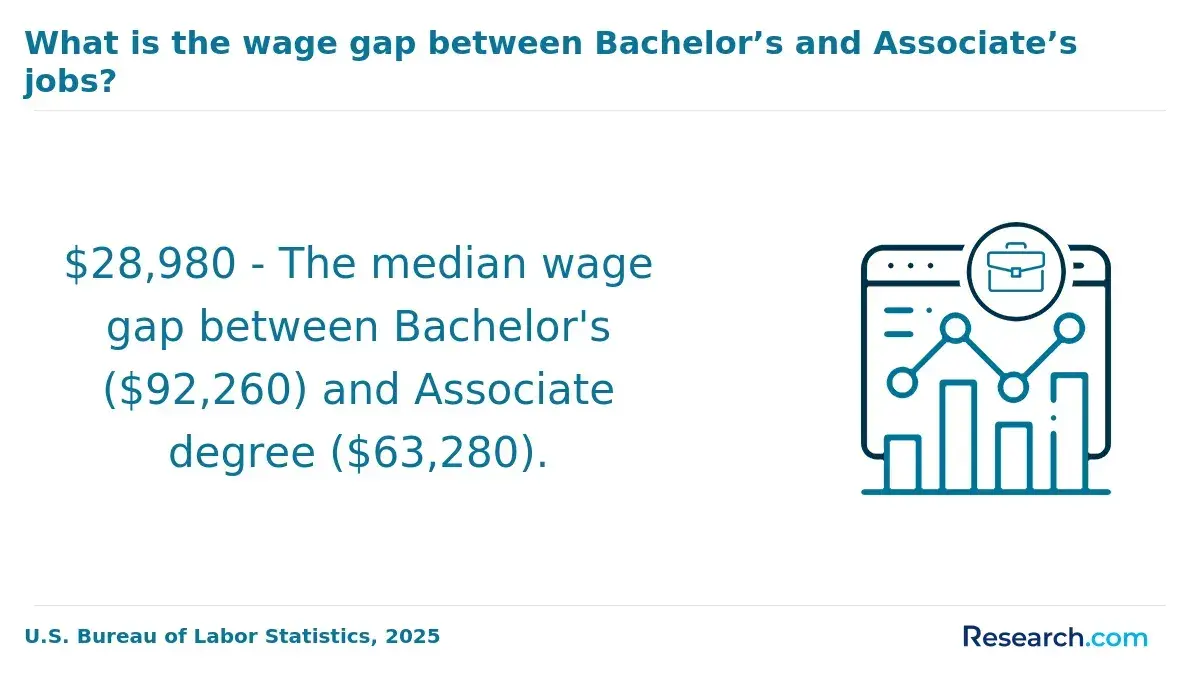
Marketing salaries depend on the role, industry, location, employer size, and how directly the position connects to revenue. BLS May 2024 wage data is useful because it separates broad marketing occupations instead of treating the field as one job.
The table below provides national salary context for common marketing-related occupations. These figures are medians, not starting salaries or guaranteed outcomes.
| Occupation | Median annual pay | How to interpret it |
| Market research analysts and marketing specialists | $76,950 | A realistic benchmark for research, insights, and analytics-focused roles that often require a bachelor's degree. |
| Public relations specialists | $69,780 | Relevant for graduates who move into communications, media relations, and reputation management. |
| Sales managers | $138,060 | Applies more to experienced professionals who supervise sales teams rather than new graduates. |
| Advertising, promotions, and marketing managers | $159,660 | Reflects management-level responsibility and should not be read as an entry-level marketing salary. |
The highest earning potential usually appears after a graduate combines marketing knowledge with measurable business impact. Employers often value candidates who can show campaign results, revenue influence, customer acquisition improvements, or strong analytics work.
To evaluate earning potential realistically, compare job postings in your target city and industry rather than relying only on national medians. Technology, finance, healthcare, consulting, and business-to-business software employers may pay differently from nonprofits, small agencies, local businesses, or entry-level retail marketing teams.
What types of marketing degree programs exist, and how do they differ by level?
Marketing programs exist at several academic levels, and each serves a different purpose. A shorter credential may help you learn a tool or skill quickly, while a degree can provide broader business, communication, and analytical preparation.
The table below compares the main types of marketing education options. It can help you decide whether you need a full degree, a graduate credential, or a more targeted upskilling path.
| Program type | Typical length | Best for | Key trade-off |
| Certificate or professional credential | A few weeks to several months | Learners who need a focused skill such as SEO, analytics, email marketing, or paid media | Fast and targeted, but may not replace a degree for roles requiring a bachelor's credential |
| Associate degree in marketing | About 2 years full time | Students seeking lower-cost entry into business education or transfer to a bachelor's program | Affordable starting point, but fewer professional marketing roles list it as the preferred credential |
| Bachelor's degree in marketing | About 4 years full time | Students seeking entry-level professional roles and a broad business foundation | Most versatile option, but it requires a larger time and cost commitment |
| Master's in marketing, MBA with marketing concentration, or related graduate degree | About 1 to 2 years full time | Professionals aiming for specialization, career change, or leadership roles | Can strengthen advancement prospects, but ROI depends heavily on cost, employer value, and prior experience |
A bachelor's degree is usually the safest academic foundation for students who want broad access to marketing roles. A certificate may make more sense if you already have a degree and need a specific skill, while a master's degree is better suited to professionals who know exactly how graduate study supports their next step.
If you are comparing graduate routes, remember that the easiest master's degree is not automatically the best one for marketing advancement; the better choice is a program with relevant coursework, employer recognition, and strong career alignment.
How do online marketing degree programs compare with campus-based options?
Online and campus-based marketing degrees can both be legitimate if the school is accredited and the curriculum matches your goals. The better format depends on your schedule, learning style, need for networking, and access to internships or employer partnerships.
The table below compares the practical differences between online and campus marketing programs. Use it to decide which format fits your life rather than assuming one format is always superior.
| Factor | Online marketing degree | Campus-based marketing degree |
| Flexibility | Usually better for working adults, caregivers, military students, and students far from campus | Usually better for students who want structured schedules and in-person routines |
| Networking | Depends on virtual events, group projects, alumni access, and career services quality | Often easier through campus clubs, employer visits, faculty office hours, and local internships |
| Skill practice | Can be strong when courses use real campaigns, analytics tools, and portfolio projects | Can be strong when students access labs, case competitions, student agencies, or campus media |
| Cost structure | May reduce relocation and commuting costs, but tuition varies widely | May include added housing, transportation, and campus fees |
| Best fit | Self-directed students who can manage deadlines and communicate proactively | Students who benefit from face-to-face support and campus immersion |
Online programs can be especially useful for adults who already work in sales, communications, retail management, customer service, or entrepreneurship and want to move into marketing without leaving the workforce. However, online learners should confirm that the program includes career support, access to faculty, project-based coursework, and opportunities to build a portfolio.
When comparing online schools, prioritize accreditation and institutional transparency. Researching non profit colleges can be a useful starting point, but do not treat nonprofit status alone as a guarantee of quality or affordability.
What courses, skills, and learning outcomes are included in a marketing major curriculum?
A marketing major usually combines business fundamentals with consumer behavior, communication, research, and analytics. The strongest programs do not only teach promotion; they teach students how to understand markets, make evidence-based decisions, and communicate persuasively.
The table below shows common curriculum areas and the learning outcomes they support. This helps you evaluate whether a program is broad enough for entry-level roles and specialized enough for your interests.
| Curriculum area | Common courses | What students should be able to do |
| Marketing foundations | Principles of marketing, consumer behavior, branding, retail marketing | Explain how customers make decisions and how organizations position products or services |
| Business core | Accounting, economics, management, finance, business law | Understand how marketing decisions connect to budgets, operations, pricing, and strategy |
| Research and analytics | Market research, statistics, marketing analytics, data visualization | Collect, interpret, and present customer and campaign data |
| Digital marketing | SEO, social media marketing, email marketing, paid media, e-commerce | Plan and evaluate digital campaigns across channels |
| Communication and strategy | Integrated marketing communications, public relations, advertising, strategic planning | Create messaging, campaign plans, and recommendations for specific audiences |
AI is changing what employers expect from marketing graduates. Students should learn how to use AI tools for research, content ideation, segmentation, and reporting while also understanding privacy, accuracy, bias, brand safety, and human review.
To become more employable, build evidence of what you can do before graduation. Helpful portfolio items include campaign briefs, SEO audits, dashboard screenshots with anonymized data, market research reports, email sequences, brand positioning projects, and paid media simulations.
If you need targeted upskilling alongside a degree, reputable certificate programs online can help you document practical skills in analytics, digital advertising, project management, or other marketable areas.
What are the usual admission requirements and prerequisites for marketing degree programs?
Admission requirements vary by school and degree level, but marketing programs usually follow standard business school expectations. Undergraduate programs focus on high school preparation or transfer credits, while graduate programs evaluate academic history, work experience, and career goals.
The table below outlines typical admissions requirements by program level. Always confirm details with the specific school because GPA standards, test policies, and prerequisite rules can differ.
| Program level | Common requirements | What to check before applying |
| Associate degree | High school diploma or GED, placement tests or transcripts, basic application | Transfer agreements with four-year schools and whether credits apply to a bachelor's degree |
| Bachelor's degree | High school transcripts, GPA review, application essay at some schools, possible test-optional policy | Business school admission rules, math prerequisites, internship access, and transfer credit limits |
| Graduate certificate | Bachelor's degree, resume, statement of purpose, sometimes professional experience | Whether credits can later apply to a master's degree |
| Master's degree | Bachelor's degree, transcripts, resume, recommendations, statement of goals, possible GMAT or GRE waiver | Prerequisite business courses, work experience expectations, and career outcomes for your target role |
Students who are missing prerequisites should ask whether the school offers bridge courses, transfer options, or accelerated terms. Short formats such as 5 week college courses online may help some learners complete general education or prerequisite work faster, but credit transfer must be verified before enrolling.
Avoid applying only to programs with the easiest admissions process. A program that is easy to enter but weak in accreditation, career services, employer connections, or curriculum relevance may cost more in the long run.
How long does it take to earn a marketing degree, and what does it cost?
The time and cost of a marketing degree depend on the credential level, enrollment pace, school type, residency status, transfer credits, and whether you study online or on campus. Tuition is only part of the total cost; fees, books, software, transportation, housing, and lost work hours can also affect affordability.
For a current cost benchmark, College Board's 2024 pricing data lists average published tuition and fees for 2024-25 at $11,610 for in-state students at public four-year institutions and $43,350 at private nonprofit four-year institutions. These are sticker prices, so grants, scholarships, employer tuition assistance, and transfer credits can substantially change the amount a student actually pays.
The table below summarizes typical timelines and cost considerations by degree level. Use it as a planning tool, not as a quote from any one school.
| Credential | Typical completion time | Major cost drivers | Best cost-control strategy |
| Certificate | Weeks to months | Provider, course length, exam fees, software access | Choose a credential tied to a specific job skill or platform you will actually use |
| Associate degree | About 2 years full time | Community college tuition, fees, books, transfer planning | Confirm transfer pathways before starting |
| Bachelor's degree | About 4 years full time | Tuition, fees, housing, residency status, transfer credit limits | Maximize transfer credits, compare net price, and seek internships early |
| Master's degree | About 1 to 2 years full time | Graduate tuition, program format, employer reimbursement, opportunity cost | Enroll only when the degree supports a clear advancement, pivot, or specialization goal |
To estimate ROI, compare total net cost with realistic salary ranges for the roles you want. Do not use manager-level wages to justify an entry-level degree decision unless you have a credible path to management.
Adult learners should also consider pace and support services. Flexible programs, transfer-friendly policies, and career advising can be especially important for working adults, including those comparing degrees for seniors or returning to school after a long break.
How is the marketing job outlook, and which industries hire marketing graduates?
The marketing job outlook is strongest for roles tied to data, customer insight, digital channels, and measurable business performance. BLS projects 8% growth for market research analysts from 2023 to 2033, which suggests steady demand for professionals who can interpret customer and market data.
The table below shows industries that commonly hire marketing graduates and what they usually need from marketing teams. This can help you choose electives, internships, and portfolio projects that match your preferred industry.
| Industry | Why marketing graduates are hired | Useful preparation |
| Technology and software | Product launches, demand generation, customer acquisition, competitive positioning | Product marketing, analytics, content strategy, CRM tools |
| Healthcare | Patient communication, service line promotion, community outreach, reputation management | Ethical communication, research, compliance awareness, local market analysis |
| Retail and e-commerce | Customer retention, promotions, merchandising support, digital sales growth | E-commerce analytics, email marketing, consumer behavior, pricing strategy |
| Financial services | Customer education, trust-building, segmentation, product promotion | Data literacy, regulatory awareness, clear writing, audience targeting |
| Agencies and consulting firms | Client campaigns, media planning, branding, research, and performance reporting | Portfolio work, presentation skills, project management, campaign analysis |
| Nonprofits, education, and government-related organizations | Public engagement, fundraising, enrollment marketing, awareness campaigns | Storytelling, community outreach, grant or donor communication, budget-conscious campaign planning |
AI and automation are reshaping tasks such as ad testing, keyword research, content drafting, customer segmentation, and reporting. This does not remove the need for marketers, but it raises the value of judgment, strategy, ethical review, audience insight, and the ability to connect data to decisions.
Graduates can improve their outlook by completing internships, building a project portfolio, learning analytics tools, and documenting results. Employers often respond better to concrete examples than to a transcript alone.
How do you choose an accredited, reputable marketing program aligned with your career goals?
Choosing a marketing program should start with your career goal, not with a ranking or advertisement. A strong program should be accredited, transparent about cost, realistic about outcomes, and aligned with the skills employers expect.
Use the following steps to compare programs before you apply. This process helps reduce the risk of choosing a school that looks convenient but does not support your career plans.
- Confirm institutional accreditation through recognized accrediting bodies and verify any business school accreditation if the program advertises it.
- Compare the curriculum against your target role, making sure it includes analytics, digital marketing, consumer behavior, research, communication, and applied projects.
- Review total net cost, not just tuition, including fees, books, software, travel, housing, and the value of transfer credits.
- Ask about internships, employer partnerships, portfolio requirements, career coaching, alumni networks, and job-search support.
- Check whether online students receive the same faculty access, advising, library resources, and career services as campus students.
- Request outcome information, but treat salary and placement claims carefully because results can vary by student background, region, labor market, and job-search effort.
The table below highlights common mistakes and better alternatives. These red flags are especially important because marketing programs can sound similar in brochures while offering very different levels of practical preparation.
| Common mistake | Why it is risky | Better approach |
| Choosing based only on the lowest tuition | A cheaper program may still be costly if credits do not transfer or career support is weak | Compare net price, completion time, transfer credit, and career services together |
| Ignoring accreditation | Credits, graduate admission, and employer recognition may be affected | Verify accreditation before applying or paying deposits |
| Assuming online means easier | Online courses often require strong time management and independent work | Ask about weekly workload, deadlines, faculty access, and tutoring |
| Picking a program without portfolio opportunities | Marketing employers often want evidence of applied skills | Prioritize courses with campaigns, analytics projects, research reports, or client-style assignments |
| Using manager salaries to justify immediate ROI | Management pay usually reflects years of experience and leadership responsibility | Compare costs with entry-level and early-career roles in your target market |
The best marketing program for you is the one that fits your budget, schedule, learning style, and target role while helping you graduate with both a credential and proof of skill. If a school cannot clearly explain outcomes, costs, accreditation, or student support, treat that as a warning sign.
Other Things You Should Know About
A marketing degree can be worth it if you want a flexible business career in digital marketing, analytics, branding, sales, communications, or product strategy. Its value depends on program cost, internships, portfolio quality, location, and how well the degree matches your target role.
Yes, some people enter marketing through communications, business, psychology, design, sales, or self-taught digital skills. However, a marketing degree can help with structured business knowledge, internships, employer screening, and advancement into roles that prefer a bachelor's credential.
The best specialization depends on your strengths. Analytics and performance marketing are strong choices for data-oriented students, while brand, content, public relations, and product marketing may fit students who prefer strategy, writing, research, and cross-functional communication.
Most marketing roles do not require advanced coding, but basic technical comfort is valuable. Familiarity with spreadsheets, analytics dashboards, CRM systems, website platforms, SEO tools, and basic HTML or data concepts can make a graduate more competitive.
References
- What do you learn in a bachelor's in marketing? | edX https://www.edx.org/resources/what-do-you-learn-in-a-bachelors-in-marketing
- What marketing courses are available? - Sup de Pub https://www.supdepub.com/en/guide/what-marketing-courses-are-available/
- Best Marketing Jobs for Every Experience Level | Michael Page CA https://www.michaelpage.ca/advice/career-advice/making-your-next-career-move/best-marketing-jobs-every-experience-level
- Major Required Courses https://fbm.bnbu.edu.cn/mkt_en/students/undergraduate_studies/curriculum.htm
- Most Popular Online Marketing Degrees https://www.onlineu.com/degrees/marketing
- Introduction to Marketing https://www.savvas.com/solutions/career-and-technical-education/career-clusters/marketing-and-sales/introduction-to-marketing
- Marketing Degree Entry Requirements https://universitycompare.com/advice/student/marketing-degree-entry-requirements
- The Ultimate Guide to Choosing the Right Business or Marketing Degree: A Pathway to Success https://urbeuniversity.edu/blog/the-ultimate-guide-to-choosing-the-right-business-or-marketing-degree-a-pathway-to-success
- Choosing the Right MBA Program for Your Career Goals https://ameerkhatri.com/choosing-the-right-mba-program-for-your-career-goals/
- Careers in Marketing: What Can You Do with a Marketing Degree? https://www.mastersincommunications.com/faqs/careers-in-marketing