2027 Best Jobs for Students Who Want High Salaries

Co-Founder and Chief Data Scientist
Choosing a student job is no longer just about covering books or food; it can shape your first full-time offer. The U. S. Bureau of Labor Statistics projects about 356,700 computer and information technology openings each year from 2023 to 2033, showing why skill-building student work now matters.
This guide is for college, university, online, and hybrid students who want stronger earnings without derailing school. You will learn which jobs are realistic, how they compare, what skills they require, and how to choose work that supports both income and long-term career growth.
Key Things You Should Know
- The most realistic high-paying student jobs usually combine flexible scheduling with marketable skills: tutoring, test prep, coding, data work, campus IT, design, healthcare support, sales, and specialized freelancing.
- BLS May 2024 wage data shows why career-aligned student work can matter: software developers, quality assurance analysts, and testers had a median annual wage of $133,080, while data scientists had a median annual wage of $112,590.
- Higher student earnings can affect taxes, aid planning, and workload; for 2024, a single dependent generally had to file a federal return if earned income exceeded $14,600.
What high-paying jobs are most realistic for current college and university students?
For students, a "high-paying job" does not always mean a full professional role. It usually means work that pays above common campus wages, builds specialized experience, offers tips or commissions, or leads to a stronger internship or entry-level job after graduation.
The most realistic options are jobs where employers can evaluate your skills quickly: can you tutor calculus, troubleshoot laptops, write clean code, analyze spreadsheets, manage paid social campaigns, or support a lab? Students who want a faster route into skill-based work can also compare short degrees that pay well, especially if they want a practical credential alongside college coursework.
The table below compares student-friendly jobs by fit, not by promised income. Local pay varies by city, employer, experience, schedule, and whether the work is hourly, project-based, tipped, or commission-based.
| Job type | Why it can be realistic for students | Best fit | Main caution |
| Private tutor or test-prep tutor | Uses coursework the student already knows and can often be scheduled evenings or weekends | Strong students in math, science, writing, languages, or standardized tests | Income may be inconsistent without repeat clients or a tutoring company |
| Campus IT or help desk technician | Many colleges hire students to support labs, devices, learning platforms, and networks | Computer science, information systems, cybersecurity, and technically skilled students | Pay may be lower on campus than in private-sector internships |
| Freelance web developer or no-code site builder | Small businesses often need practical websites, landing pages, forms, and basic automation | Students with portfolios, GitHub projects, or design-development skills | Client work requires contracts, scope control, and deadline discipline |
| Research assistant or data assistant | Faculty, labs, nonprofits, and companies may need survey, coding, spreadsheet, or reporting help | STEM, economics, psychology, public health, business, and social science majors | Some roles require software skills or prior methods coursework |
| Medical scribe, EMT, CNA, or phlebotomy role | These roles can provide paid clinical exposure before nursing, PA, medical, or allied health programs | Pre-health students who can handle shift work and patient-facing responsibilities | Certification, vaccination, background checks, or state rules may apply |
| Sales development representative or campus brand ambassador | Some roles offer bonuses, commissions, or performance-based pay | Business, communications, marketing, and entrepreneurial students | Students should verify compensation terms and avoid unpaid "commission-only" traps |
BLS projections for computer and information technology occupations suggest strong demand for technical talent, but that does not mean every student needs to major in computer science. Even basic data, automation, cybersecurity awareness, and software skills can make nontechnical students more competitive for higher-paying part-time work.
Which student jobs offer the highest hourly pay or income potential?
The highest income potential usually comes from jobs where the student brings a scarce skill, solves an urgent problem, or can earn variable pay. A job with a lower posted hourly rate may still be valuable if it leads to a paid internship, portfolio, or full-time offer.
The table below groups common high-paying student jobs by income model. This helps you compare not only what might pay well today, but also how predictable that income is while you are in school.
| Income model | Student jobs that often fit | Why pay can be higher | Best decision rule |
| Specialized hourly work | Tutoring, test prep, lab assistant, IT support, CAD technician, audio or video editor | The work requires subject knowledge, software ability, or technical accuracy | Choose this if you need predictable income and can prove a specific skill |
| Project-based work | Web design, app prototypes, analytics dashboards, copywriting, graphic design, social media setup | Clients pay for completed outcomes rather than time alone | Choose this if you can manage deadlines, contracts, revisions, and taxes |
| Performance-based work | Sales development, lead generation, campus ambassador roles, event promotion | Bonuses or commissions may raise earnings above base pay | Choose this only after reading the pay formula and minimum compensation terms |
| Shift-differential work | Hospital unit clerk, EMT, security, hotel front desk, warehouse operations | Evening, weekend, overnight, or urgent-coverage shifts may pay more | Choose this only if the schedule will not damage sleep or academic performance |
| Career-track internships | Software, finance, engineering, analytics, accounting, cybersecurity, operations | Employers pay for early professional skills and may use internships as hiring pipelines | Choose this when the role aligns with your target career, even if another job pays slightly more short term |
BLS May 2024 data places the median annual wage for data scientists at $112,590, which helps explain why students with statistics, Python, SQL, visualization, or research-methods experience can command stronger internship and project opportunities. For students, the practical takeaway is to build evidence: a portfolio, dataset project, published dashboard, lab contribution, or supervisor recommendation.
Be cautious with online "high-income" offers that advertise unusually high pay for easy work. Legitimate employers explain the work, pay method, schedule, required tools, tax status, and supervisor contact information before asking you to start.
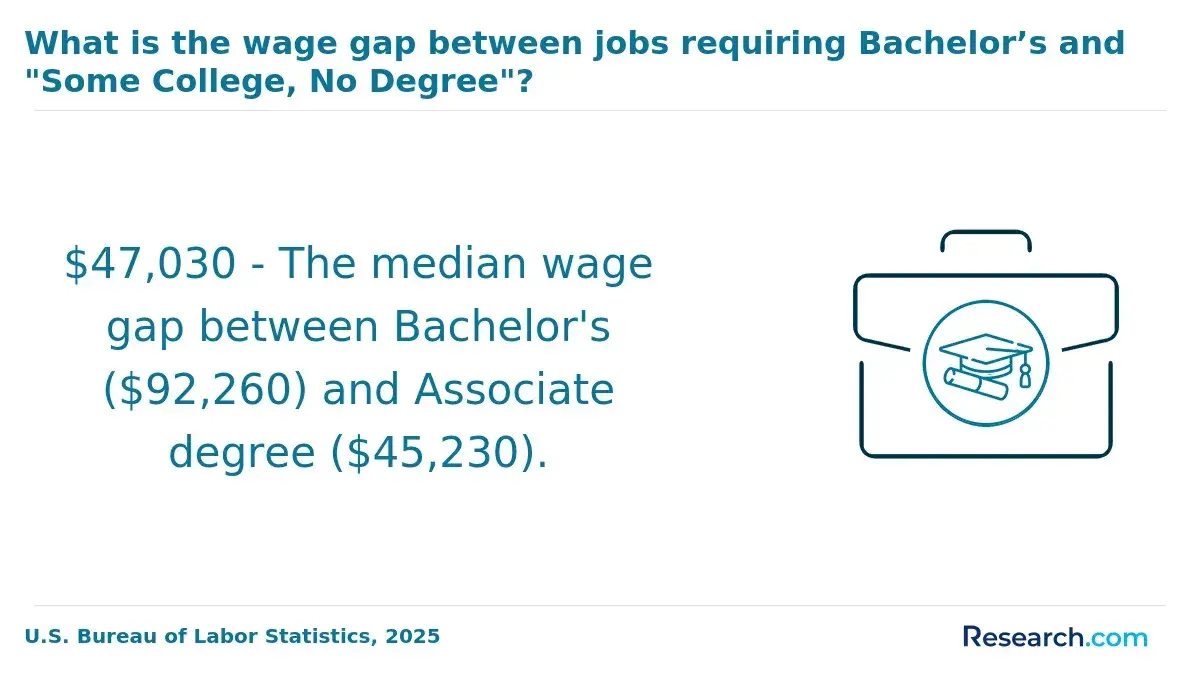
How can working in high-paying student jobs impact long-term career and salary growth?
High-paying student work can improve long-term salary growth when it creates proof of ability. Employers hiring new graduates often need more than a transcript; they want evidence that a candidate can communicate, meet deadlines, learn tools, and solve problems in a workplace.
This is where the best student jobs act like a bridge. A paid research assistantship can lead to a data internship. A campus IT job can support a cybersecurity path. Tutoring can strengthen communication skills for teaching, consulting, healthcare, or management. Students comparing majors can also review bachelor's degrees job outlook to see how field choice and labor demand may affect long-term earnings.
The career value of a job depends on what it helps you document. Before accepting demanding work, ask whether it will give you at least one of the following outcomes.
- A supervisor who can provide a specific reference about your reliability, communication, and technical ability.
- A portfolio artifact, such as a dashboard, website, writing sample, research poster, design file, code repository, or campaign report.
- Experience with tools used in your target field, such as Excel, SQL, Python, CAD, electronic health records, CRM platforms, lab equipment, or accounting software.
- Client-facing or patient-facing experience that proves professionalism under pressure.
- A clearer decision about whether a career path fits your strengths before you invest in graduate school or additional credentials.
BLS May 2024 data reported a median annual wage of $105,990 for computer and information technology occupations. Students should not treat that as an expected starting salary, but it does show why early technical experience can have a strong return if it helps them enter a high-demand field after graduation.
What education, skills, or experience do high-paying student jobs typically require?
High-paying student jobs usually require one of three things: academic strength, technical skill, or trust-based responsibility. Some jobs can be learned through coursework and practice, while others require a license, background check, certification, or documented training.
The table below summarizes common requirements. Use it to choose jobs that fit your current qualifications and to identify the fastest skill gap to close.
| Job category | Typical requirement | Skills that raise earning potential | Good first step |
| Tutoring and test prep | Strong grades, subject mastery, test scores, or instructor recommendation | Explaining concepts clearly, lesson planning, patience, diagnostic questioning | Start with campus tutoring, then move to private clients after building references |
| Technology support | Basic troubleshooting ability; some roles prefer coursework or certifications | Networking basics, operating systems, cybersecurity hygiene, ticket documentation | Volunteer for help desk, lab, or device-support work to build experience |
| Programming and web work | Portfolio projects, coding coursework, or demonstrated ability | JavaScript, Python, SQL, APIs, accessibility, version control, testing | Build a small portfolio that solves real problems for clubs or local organizations |
| Healthcare support | Role-specific training; certification or state requirements may apply | Patient communication, documentation, infection control, medical terminology | Check state and employer requirements before paying for any program |
| Finance, accounting, or bookkeeping | Coursework in accounting, Excel, or business systems | Excel modeling, QuickBooks, reconciliation, attention to detail | Seek campus department, nonprofit, or small-business bookkeeping experience |
| Creative and marketing work | Portfolio samples and tool proficiency | Design software, analytics, copywriting, short-form video, ad platforms | Create measurable samples, such as campaign reports or before-and-after redesigns |
Certificates can help when they are targeted and recognized by employers, but they are not all equal. If you need a fast credential, compare outcomes, cost, accreditation or provider reputation, and employer demand before enrolling in 6-month certificate programs that pay well.
AI is also changing student work. Employers increasingly value students who can use AI tools responsibly for research, drafting, coding support, spreadsheet cleanup, or customer-service workflows, but they still expect judgment, privacy awareness, and original work. Do not submit AI-generated code, designs, or writing as your own unless the employer or instructor clearly permits it.
Which high-paying jobs are best for students taking online or hybrid degree programs?
Online and hybrid students often need jobs that do not depend on being near campus. The best options are remote-friendly, portfolio-based, or scheduled outside live class sessions.
Students in online programs should prioritize jobs that match their weekly rhythm. If your classes are asynchronous, project-based work may fit well; if you have required live sessions, predictable shifts may be safer. Students planning to continue into graduate study while working can also compare affordable online master's programs to understand how future tuition, workload, and career goals may interact.
The table below compares high-paying options that can fit online or hybrid study. It focuses on flexibility and career value rather than assuming every remote job is automatically better.
| Job | Why it fits online or hybrid students | Career value | Watch out for |
| Virtual tutor | Sessions can often be scheduled around classes and delivered from home | Builds teaching, communication, and subject-matter authority | Platform fees, cancellation policies, and inconsistent demand |
| Remote technical support | Some employers offer evening or weekend support shifts | Builds troubleshooting, documentation, and customer-service experience | Rigid shift coverage and performance metrics |
| Freelance web, design, or content work | Work can be completed asynchronously if deadlines are clear | Creates portfolio samples and client communication experience | Scope creep, unpaid revisions, and delayed payment |
| Data annotation or AI evaluation | Some projects are remote and task-based | Can expose students to AI workflows and quality control | Low-quality platforms, unclear pay, and confidentiality issues |
| Research or data assistant | Many tasks, such as coding interviews or cleaning datasets, can be remote | Builds analytical, academic, or industry research experience | May require software, privacy training, or strict deadlines |
BLS projects employment for data scientists to grow much faster than average from 2023 to 2033, reflecting continued demand for analytics skills. Online students who can document statistics, coding, or visualization work may be able to compete for remote projects, but they should still expect portfolio review and skill testing.
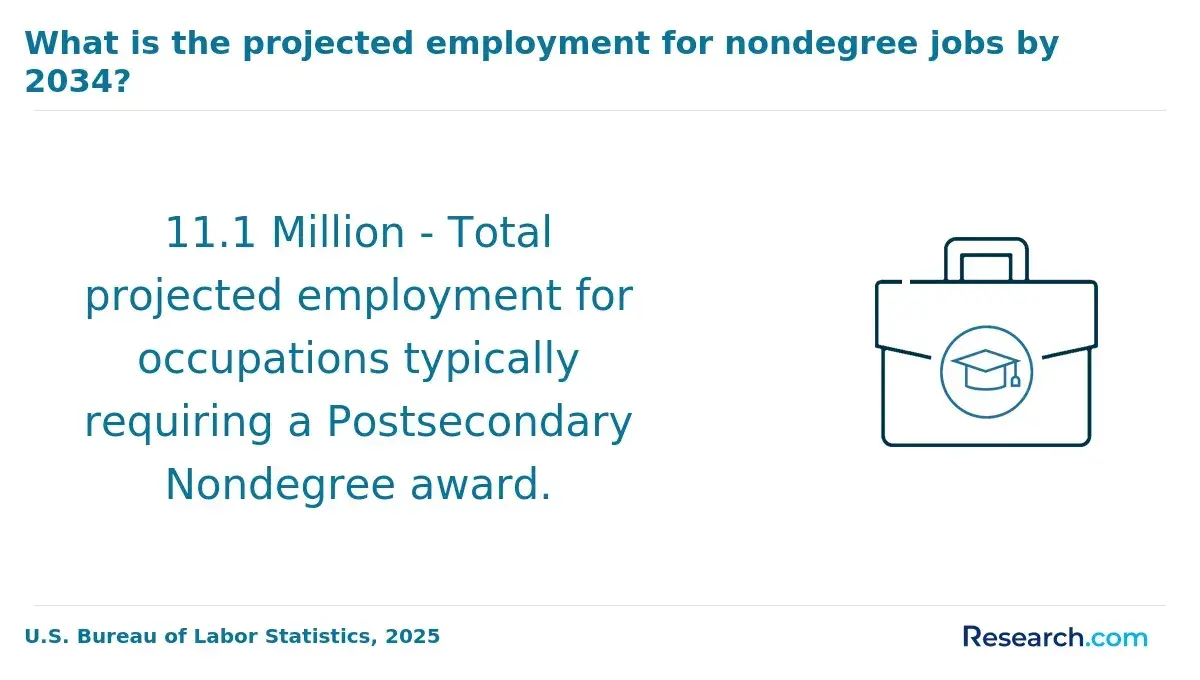
How do on-campus, off-campus, and remote high-paying jobs compare for students?
On-campus, off-campus, and remote jobs can all be good choices, but they solve different problems. The right choice depends on commute time, schedule control, supervision, safety, taxes, networking, and how closely the work connects to your career goal.
The comparison below can help you decide which setting is most practical. Students who are still choosing a school may also want to compare universities with no application fee, especially if they are trying to reduce upfront costs while evaluating flexible or work-friendly programs.
| Work setting | Best advantages | Possible drawbacks | Best for |
| On-campus | Short commute, school-aware supervisors, easier networking with faculty and departments | May offer lower pay or limited hours compared with private employers | Students who need convenience, academic references, or work-study eligibility |
| Off-campus | Potentially higher pay, industry exposure, broader employer network | Commute, less academic flexibility, more risk of schedule conflicts | Students seeking internships, healthcare shifts, sales roles, or specialized local work |
| Remote | No commute, access to national clients or employers, easier fit for online students | Scam risk, isolation, self-management demands, tax complexity for contractors | Students with strong communication, digital skills, and reliable home workspaces |
On-campus work is often underrated because it may lead to faculty references, research opportunities, and leadership roles. Remote work can pay well, but students should be especially careful with identity theft, fake-check scams, unpaid "trial projects," and employers who communicate only through informal messaging apps.
What are the best high-paying student jobs that align with specific majors or fields?
The best high-paying job is often the one that overlaps with your major. Career-aligned work makes your résumé easier to understand and helps you test whether your chosen field is actually a good fit.
The table below maps common fields of study to student jobs that can produce income and career evidence. Use it as a starting point, then check local employer requirements, state rules, and your school's policies.
| Major or field | High-paying student job options | Skills to highlight | Long-term career connection |
| Computer science and IT | Help desk technician, junior web developer, QA tester, cybersecurity lab assistant | Programming, troubleshooting, documentation, security basics | Software development, cybersecurity, cloud support, systems administration |
| Business, finance, and accounting | Bookkeeping assistant, finance intern, sales development representative, operations assistant | Excel, CRM tools, financial analysis, communication | Accounting, consulting, finance, sales leadership, operations management |
| Engineering | CAD technician, lab assistant, manufacturing intern, math tutor | CAD, measurement, technical writing, problem solving | Design engineering, quality assurance, project engineering |
| Health sciences and pre-health | Medical scribe, CNA, EMT, phlebotomy technician, patient care technician | Patient communication, documentation, anatomy, professionalism | Nursing, PA, medical school, allied health, healthcare administration |
| Education and humanities | Tutor, writing consultant, editor, language instructor, museum or library assistant | Writing, instruction, research, public communication | Teaching, publishing, law, communications, instructional design |
| Marketing, design, and communications | Social media coordinator, content creator, graphic designer, campus brand ambassador | Analytics, design tools, copywriting, campaign reporting | Digital marketing, public relations, UX, brand strategy |
| Science and social science | Research assistant, survey coder, lab technician, data assistant | Research methods, statistics, ethics, data cleaning | Graduate research, public health, policy, analytics, lab science |
BLS May 2024 data shows registered nurses had a median annual wage of $93,600, which helps explain why paid clinical support roles can be valuable for pre-nursing and pre-health students. Those student roles do not pay like licensed RN jobs, but they can build patient-care experience and clarify whether clinical work is the right path.
A common mistake is choosing a job only because it pays slightly more per hour. If one job pays a little less but directly supports your target career, helps you secure a reference, or gives you supervised experience required for a future program, it may have stronger long-term value.
How can students find reputable, legal, and safe high-paying jobs while in school?
Students should treat job searching as a safety and due-diligence process, especially for remote, freelance, healthcare, sales, and commission-based roles. A reputable job should clearly explain the employer, duties, pay method, schedule, supervisor, and legal work status.
Use the steps below before accepting a high-paying student job. They are designed to help you avoid scams, unpaid labor, unsafe workplaces, and roles that interfere with school.
- Verify the employer through an official website, campus career office, public business registration, or a direct phone number listed outside the job post.
- Ask for the pay structure in writing, including hourly wage, stipend, commission formula, bonus rules, overtime eligibility, pay dates, and whether you are an employee or independent contractor.
- Decline jobs that require you to pay upfront for equipment, training, background checks, software, inventory, or "starter kits" unless the requirement is clearly legitimate and independently verifiable.
- Never deposit a check from an employer and send money back for supplies, gift cards, refunds, or third-party payments.
- Review safety expectations before taking late-night, delivery, home-visit, event, or patient-facing work.
- For freelance work, use a written scope that defines deliverables, deadlines, revision limits, payment milestones, and ownership of the final work.
- Check whether the role conflicts with campus policies, visa rules, clinical program requirements, athletic eligibility, or financial aid conditions.
Red flags include vague job descriptions, interviews conducted only by text, pay that seems unrealistic for simple tasks, pressure to decide immediately, requests for Social Security or banking details before a formal offer, and promises that you can earn large sums with little effort. High pay is possible, but legitimate employers do not need secrecy or pressure tactics.
What tax, financial aid, and scheduling considerations come with higher student earnings?
Higher earnings can create new responsibilities. Students should understand taxes, financial aid reporting, payroll status, and schedule limits before increasing work hours or accepting freelance income.
For 2024, a single dependent generally had to file a federal tax return if earned income exceeded $14,600. This threshold is a useful planning marker, but tax filing depends on your full situation, including unearned income, self-employment income, withholding, credits, and state rules.
Before taking a higher-income role, review these financial considerations.
- Employee vs. contractor status matters because W-2 jobs usually withhold payroll taxes, while 1099 or freelance work may require estimated taxes and self-employment tax planning.
- Financial aid formulas can consider student income and assets, so students should check school aid policies before assuming extra earnings have no effect.
- Federal Work-Study income is treated differently in aid calculations than many other earnings, but students should confirm current FAFSA and school-specific treatment with the financial aid office.
- More hours can increase transportation, meals, clothing, licensing, equipment, software, childcare, or exam-prep costs, reducing the real value of higher pay.
- Students paid in tips, commissions, stipends, or project fees should keep records instead of relying only on bank deposits.
- International students should confirm work authorization rules before accepting off-campus, freelance, or remote work for a U.S. or foreign employer.
Scheduling is a financial issue too. If a job causes you to drop a course, lose a scholarship, delay graduation, or retake a class, the apparent wage may not be worth the total cost. When in doubt, ask your financial aid office, tax professional, academic advisor, or international student office before making a major work change.
How should students balance academic workload with demanding, high-income job roles?
The highest-paying student job is not the best job if it damages grades, health, scholarships, licensure progress, or graduation timing. Students should build a work plan that protects their academic baseline first.
A practical balance starts with estimating the real weekly load, not just scheduled hours. Include commute time, client messages, prep work, documentation, recovery after late shifts, and peak academic weeks such as exams or clinical rotations.
Use this sequence to decide how much demanding work you can handle.
- Identify nonnegotiable academic commitments, including labs, clinicals, studio time, group projects, exams, and required live sessions.
- Calculate your minimum income need before accepting extra hours, so you do not overwork for money you do not actually need that term.
- Start with fewer hours than you think you can handle, then increase only after two to three stable weeks.
- Protect sleep and class attendance before optimizing for extra shifts, bonuses, or clients.
- Tell supervisors your class schedule early and renegotiate before problems become absences or missed deadlines.
- Use semester breaks, summer terms, and lighter course loads for more intensive internships, clinical work, sales roles, or freelance projects.
- Track whether the job is improving your résumé, skills, references, or savings; if it is only adding stress, reconsider the fit.
Common mistakes include accepting too many client projects at once, choosing overnight shifts before exam-heavy weeks, ignoring commute time, relying on variable commissions for essential bills, and staying in a job that no longer supports your goals. A strong student job should help you graduate with more options, not fewer.
Other Things You Should Know About
The best option is usually a career-aligned job that pays well and builds proof of skill. For many students, that means tutoring, IT support, coding, data work, healthcare support, sales, bookkeeping, design, or a paid internship in their major.
Yes, but they usually need a demonstrable skill, certification, portfolio, or strong academic record. Examples include tutoring, freelance web work, tech support, phlebotomy, EMT work, bookkeeping, and sales roles.
Some are legitimate, especially tutoring, technical support, design, programming, research, and data work. Students should avoid jobs that require upfront payments, fake-check deposits, vague duties, or pressure to provide personal information before a formal offer.
There is no single number that fits everyone. Students should base work hours on course difficulty, financial need, commute time, sleep, scholarship rules, and academic performance. Starting conservatively and increasing hours after a stable routine is usually safer.
References
- 4 Best Summer Jobs for College Students — Lilley Consulting https://lilleyconsulting.com/articles-10/2026/3/1/5-best-summer-jobs-for-college-students
- 10 highest paying part-time jobs for students in Ireland 2025 https://www.instarem.com/blog/10-highest-paying-part-time-jobs-for-students-in-ireland/
- Tax-Smart Strategies for Higher-Income Families Navigating Financial Aid | Carr, Riggs & Ingram https://www.criadv.com/insight/strategies-for-higher-income-families-financial-aid/
- Maximizing Your Aid Eligibility - Finaid https://finaid.org/financial-aid-applications/maximize/
- Earning and Learning: Undergraduate Student Employment ... https://digitalcommons.hamline.edu/cgi/viewcontent.cgi
- A Comprehensive Guide to the Best Jobs for College Students https://www.collegeninja.com/blog/jobs-for-college-students
- How does a college degree improve graduates’ employment and earnings potential? - APLU https://www.aplu.org/our-work/4-policy-and-advocacy/publicuvalues/employment-earnings/
- Job requirements: education or experience? - Blue Lynx https://bluelynx.com/blog/job-requirements-education-or-experience/
- 60+ Part-Time Job Ideas for High School and College Students https://www.citizensbank.com/student/articles/part-time-jobs-for-high-school-college-students.aspx
- Tax Implications for College Financial Aid https://www.portebrown.com/newsblog-archive/certain-college-financial-aid-payments-may-result-in-taxes