2027 How to Choose a Career Based on Your Interests

Co-Founder and Chief Data Scientist
Choosing a career based on your interests is not just about "following your passion"; it is about matching what energizes you with realistic education, cost, salary, and job-market evidence. The U.S. Bureau of Labor Statistics reports that the median annual wage for all occupations was $49,500 in May 2024, which gives you a useful benchmark when comparing paths.
This guide is for students, career changers, parents, and working adults who want a practical way to connect interests with degrees, training programs, credentials, and jobs that fit their goals.
Key Things You Should Know
- Start with a three-way match: interests tell you what work may feel meaningful, strengths show where you can perform well, and labor-market data shows whether the path is financially and professionally realistic.
- College Board reported average 2024-25 published tuition and fees of $11,610 for in-state public four-year colleges, $30,780 for out-of-state public four-year colleges, and $43,350 for private nonprofit four-year colleges.
- Do not choose a career from salary alone; BLS 2023-2033 projections show very different growth patterns across fields, such as faster-than-average growth for software developers and registered nurses compared with slower growth in some arts and administrative roles.
How do I match my personal interests and strengths to potential career paths?
The smartest way to choose a career based on your interests is to separate interest, strength, and work environment. Interest is what you enjoy learning or doing. Strength is what you can do well with practice. Work environment is the setting that affects your daily satisfaction, such as remote work, teamwork, travel, routine, deadlines, or public interaction.
A practical career match should answer three questions: What topics keep your attention? What tasks do people already rely on you for? What kind of workday would you not quickly resent? This matters because two people can love the same subject but need very different careers.
For example, someone interested in health may prefer nursing, health informatics, medical billing, public health, counseling, or biomedical research depending on whether they enjoy patient care, data, administration, advocacy, or lab work.
Use the following framework to translate interests into possible career families. The table is not a final answer; it helps you narrow the field before comparing education requirements, costs, and job outlook:
| Interest pattern | Possible career families | Best fit if you enjoy | Potential mismatch if you dislike |
| Helping and advising people | Healthcare, counseling, social work, education, human services | Listening, explaining, supporting people through problems | Emotional intensity, documentation, regulated settings |
| Solving technical problems | Information technology, engineering, cybersecurity, data analytics | Systems, troubleshooting, logic, continuous learning | Abstract problem-solving, rapid tool changes, screen-heavy work |
| Creating and communicating | Design, marketing, writing, media, user experience | Storytelling, visual ideas, audience behavior, feedback cycles | Portfolio pressure, subjective reviews, project-based income variation |
| Organizing people and operations | Business, project management, logistics, public administration | Planning, budgets, coordination, process improvement | Meetings, competing priorities, responsibility without full control |
| Investigating and analyzing | Accounting, research, law, data science, forensic fields | Evidence, accuracy, patterns, structured thinking | Detail-heavy work, deadlines, compliance requirements |
Once you identify two or three likely career families, test them against your strengths. A good match usually has several of these signals:
- You are willing to practice the hard parts of the field, not only the enjoyable parts.
- Your natural strengths overlap with the daily tasks of the job, such as writing, analysis, persuasion, empathy, precision, or hands-on troubleshooting.
- The education pathway is realistic for your time, budget, and responsibilities.
- The career has entry-level roles that let you build experience before committing to advanced credentials.
- The work setting fits your life, including schedule, mobility, remote-work needs, and tolerance for stress.
A common mistake is confusing a hobby with a career. Loving fitness does not automatically mean you should become a physical therapist, personal trainer, dietitian, or sports marketer. Each option has different science requirements, licensure rules, income patterns, and daily responsibilities. Treat interests as clues, then verify them with real job descriptions and education requirements.
What career assessments and tools can help me identify interest-based careers?
Career assessments can help you see patterns, but they should not make the decision for you. The best tools organize your preferences into themes, then point you toward occupations to research. They are most useful when you compare results from more than one tool and look for repeated themes rather than one "perfect" job title.
Several assessment types can support career exploration. Each one answers a different question, so using them together gives you a more balanced view:
| Tool type | What it helps identify | Best use | Limitation |
| Interest inventories | Work themes such as realistic, investigative, artistic, social, enterprising, or conventional interests | Narrowing broad fields before researching careers | May suggest jobs you enjoy thinking about but would not enjoy doing daily |
| Skills assessments | Current abilities in areas such as math, writing, leadership, technology, or communication | Finding careers where you already have momentum | Can undervalue skills you could develop with training |
| Values assessments | Priorities such as income, stability, flexibility, mission, autonomy, or prestige | Avoiding careers that conflict with your lifestyle goals | Values can shift as your life circumstances change |
| Personality-based tools | Work preferences such as structure, collaboration, independence, or novelty | Understanding work environments that may fit you | Should not be treated as scientific proof of career destiny |
| Labor-market tools | Education requirements, wages, job outlook, and common employers | Checking whether a career idea is realistic in your region | National data may not reflect local opportunities |
After taking an assessment, use a simple validation process before choosing a major or training program. This prevents you from overreacting to a quiz result that may be too broad or too idealized:
- Write down the top five career suggestions that appear across multiple tools.
- Read real job postings for those careers and highlight repeated duties, required skills, credentials, and software tools.
- Compare the daily responsibilities with your interests, not just the job title.
- Look up the education path and whether the role requires licensure, certification, a portfolio, clinical hours, or supervised experience.
- Interview or shadow someone in the field before enrolling in an expensive program.
One important trend is the rise of skills-based hiring in some industries, especially technology, operations, marketing, and business services. This does not mean degrees no longer matter. It means employers may look for evidence such as portfolios, projects, certifications, internships, and practical software experience alongside formal education.
How do I research degree programs that align with my career interests?
Start with the career outcome, then work backward to the credential. Many students make the mistake of choosing a major first and asking about jobs later. A better approach is to identify the occupation or career family, confirm its requirements, and then compare programs that build the right skills.
For each career you are considering, review the program's curriculum, experiential learning options, faculty background, transfer policies, and career support. If you need a flexible starting point, comparing easiest online degrees can help you identify programs that may be more manageable for working adults, but you should still verify whether the major leads to the career you want.
The table below shows how degree fields often connect to interest-driven career goals. Use it to see whether a program's coursework matches the type of work you want to do after graduation:
| Career interest | Relevant degree areas | Courses to look for | Experience that strengthens the path |
| Technology and systems | Computer science, information technology, cybersecurity, data analytics | Programming, networks, databases, cloud systems, security | Projects, certifications, internships, GitHub or portfolio work |
| Healthcare and patient support | Nursing, allied health, healthcare administration, public health | Anatomy, clinical practice, health policy, patient care, medical terminology | Clinical placements, simulation labs, licensure preparation |
| Business and leadership | Business administration, accounting, finance, management, marketing | Accounting, economics, analytics, operations, strategy | Internships, case competitions, software tools, student consulting |
| Education and human development | Education, psychology, child development, special education | Learning theory, classroom management, assessment, developmental psychology | Student teaching, practicum hours, state licensure alignment |
| Creative communication | Graphic design, communications, digital media, journalism, UX design | Design principles, writing, audience research, media production | Portfolio, freelance projects, internships, published work |
When researching programs, check whether the school publishes outcomes that matter to you. Helpful signals include graduation rates, retention rates, licensure exam pass rates, internship access, job placement methods, and alumni career examples. Be cautious if a program uses vague phrases like "many career opportunities" without showing how graduates are prepared for specific roles.
What should I consider when choosing between online and campus programs for my career goals?
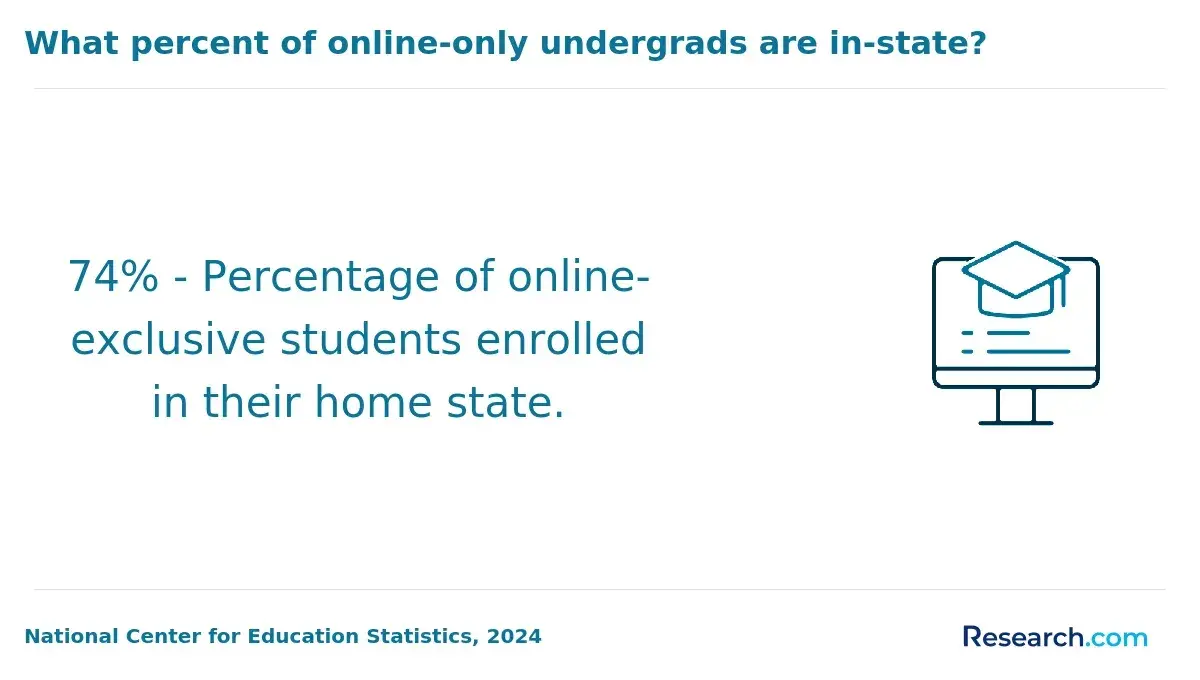
Online and campus programs can both be strong choices, but the better format depends on your career target, schedule, learning style, and need for hands-on training. The decision is not just about convenience. It is about whether the format gives you the practice, supervision, networking, and credentials your field expects.
Online programs often work well for business, IT, analytics, communication, education theory, and some healthcare administration paths. Campus or hybrid programs may be better when you need labs, studios, clinical rotations, teaching placements, or equipment-heavy training. For students balancing family responsibilities, guides to degrees for stay at home moms can be useful when comparing flexibility, scheduling, and support services.
This comparison can help you decide which format fits your career interests and constraints:
| Factor | Online program may fit better when | Campus program may fit better when |
| Schedule | You work, care for family, or need asynchronous coursework | You can attend classes at fixed times and benefit from routine |
| Career field | The field values digital projects, writing, analysis, or independent work | The field requires labs, studios, clinical practice, or in-person demonstrations |
| Learning style | You are self-directed and comfortable asking for help online | You learn best through face-to-face discussion and immediate feedback |
| Networking | You can use virtual events, LinkedIn, internships, and local professional groups | You want campus clubs, career fairs, faculty interaction, and peer networks |
| Licensure | The program is authorized for your state and meets required field placements | Your state or field expects in-person supervised training through local partners |
Before enrolling in an online program, ask direct questions about student support. You should know whether tutoring, advising, library access, career coaching, disability services, and technical help are available outside normal business hours. Also ask whether online students have the same access to internships, faculty office hours, and alumni networks as campus students.
A major red flag is an online program that sounds convenient but cannot explain how you will complete required fieldwork. This is especially important in nursing, counseling, social work, education, and allied health. State authorization and placement rules can vary, so confirm requirements with the school and, when relevant, your state licensing board.
How do I evaluate accredited colleges and universities for interest-related career training?
Accreditation is one of the first things to verify because it affects credit transfer, financial aid eligibility, graduate school admission, employer recognition, and licensure pathways.
In the U.S., institutional accreditation means an approved accrediting agency has reviewed the college as a whole. Programmatic accreditation applies to specific fields such as nursing, counseling, education, business, engineering, public health, and allied health.
If you want flexible pacing, compare best accredited self-paced online colleges carefully rather than assuming all self-paced options carry the same recognition. The key is to confirm both institutional accreditation and any field-specific accreditation required for your intended career.
Use this checklist when evaluating schools. It focuses on evidence you can verify before you apply or pay a deposit:
- Confirm institutional accreditation through the U.S. Department of Education or the Council for Higher Education Accreditation databases.
- Check whether your specific program has programmatic accreditation if your field expects it.
- Ask whether the program meets licensure or certification requirements in your state.
- Review graduation, retention, licensure pass, and job placement information when available.
- Compare total cost of attendance, not only tuition per credit.
- Ask how transfer credits, prior learning, military training, or professional certifications are evaluated.
- Look for real career services, including resume help, interview preparation, employer connections, and internship support.
Do not rely only on rankings, advertisements, or a school's general reputation. A well-known university can still have a program that does not fit your career goal, while a less famous accredited college may offer stronger scheduling, transfer credit, or licensure alignment for your situation.
What types of degrees, certificates, or training programs fit careers based on my interests?
The right credential depends on how regulated, technical, or competitive your target career is. Some careers require a degree and licensure. Others allow entry through certificates, apprenticeships, bootcamps, portfolios, military training, or employer-sponsored training. Your goal is to choose the shortest credible path that still keeps future advancement open.
Graduate study can make sense when your interest points toward leadership, counseling, advanced healthcare, analytics, education administration, or specialized business roles. If you need a manageable graduate option, researching an easiest online master's degree may help you compare workload and flexibility, but "easiest" should never override accreditation, career fit, or employer expectations.
The table below compares common credential levels and when they tend to make sense. Program length and value vary by school, transfer credits, enrollment intensity, and field requirements:
| Credential type | Typical fit | Often useful for | Watch out for |
| Short certificate | Testing a field or adding a specific skill | IT support, bookkeeping, project tools, medical coding, digital marketing | Certificates that lack employer recognition or do not stack into a degree |
| Associate degree | Entering technical or applied fields with lower cost | Nursing pathways, radiologic technology, paralegal studies, web development, business support | Credits that may not transfer cleanly to a bachelor's program |
| Bachelor's degree | Building broad career access and advancement potential | Business, education, engineering, IT, social sciences, communication, healthcare management | Choosing a major without internships, projects, or clear job targets |
| Master's degree | Specializing, advancing, or meeting professional requirements | Counseling, social work, data analytics, education leadership, public health, business leadership | Taking on graduate debt without a realistic salary or promotion plan |
| Apprenticeship or trade training | Learning through paid or hands-on technical preparation | Skilled trades, manufacturing, electrical work, HVAC, some healthcare support roles | Physical demands, local licensing rules, and variable employer sponsorship |
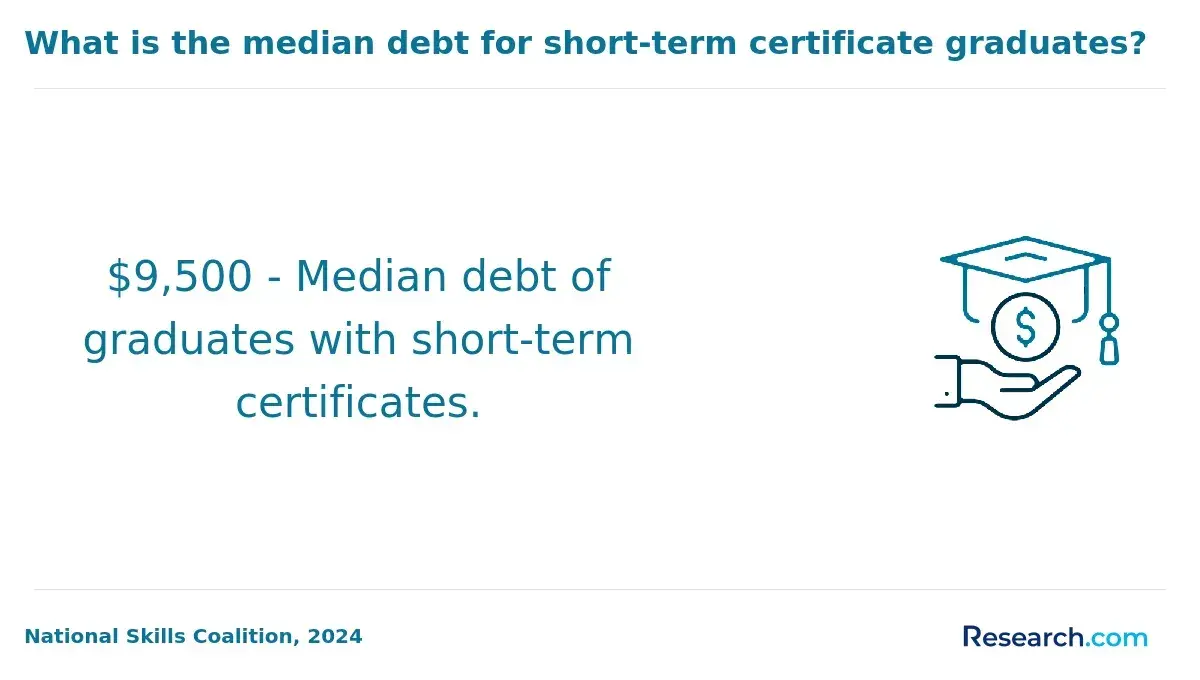
Certificates are often best when you already have a degree or work experience and need a targeted skill. A degree is usually stronger when the career has formal education requirements, long-term advancement depends on broad knowledge, or you may want graduate school later. Bootcamps can be useful for intensive technical skills, but they require careful employer research because outcomes vary widely.
How can I compare program length, tuition costs, and financial aid for different career options?
Cost should be evaluated against the credential's purpose, not just the sticker price. A cheaper program is not always better if it lacks accreditation, transferability, required clinical placements, or employer recognition. A more expensive program is not automatically better either; the question is whether it gives you access to the career outcome you need.
College Board's 2024 pricing data shows why total cost matters: average published tuition and fees for 2024-25 were $4,050 at public two-year colleges, $11,610 for in-state students at public four-year colleges, and $43,350 at private nonprofit four-year colleges. These are published prices, not necessarily what every student pays after grants and scholarships, but they provide a useful benchmark for comparing program types.
The table below summarizes major cost and time trade-offs. Use it to identify which pathway deserves deeper research before you apply:
| Pathway | Common time frame | Cost considerations | Best financial use case |
| Certificate | A few months to about one year | Lower tuition, but fewer aid options in some programs | You need a specific skill or entry credential quickly |
| Associate degree | About two years full time | Often lower tuition, especially at community colleges | You want a lower-cost start or a technical career path |
| Bachelor's degree | About four years full time | Higher total cost but broader eligibility for many professional roles | Your target field commonly requires a bachelor's degree |
| Master's degree | About one to three years | Can be expensive; employer tuition assistance may help | The credential is required or strongly rewarded in your field |
| Part-time or self-paced study | Varies widely | Can reduce short-term financial pressure but may extend time to completion | You need to keep working while studying |
To compare programs fairly, calculate the full cost of completion. Include tuition, fees, books, software, equipment, commuting, childcare, lost work hours, exam fees, background checks, uniforms, and licensure or certification costs. Then compare that total with realistic entry-level salaries, not only mid-career salaries.
Follow these steps before deciding how much to borrow:
- Estimate total program cost through graduation, including fees and living expenses if applicable.
- Subtract grants, scholarships, employer tuition assistance, military benefits, and savings.
- Review federal student aid options before considering private loans.
- Compare expected monthly loan payments with conservative entry-level earnings in your target field.
- Ask the school what percentage of students complete the program and how many complete on time.
A common mistake is comparing tuition per credit without checking credit requirements. One program may charge less per credit but require more credits, extra fees, or nontransferable prerequisites. Always compare the total credential cost.
What entry requirements and application criteria do programs have for interest-driven careers?
Program entry requirements vary by credential level and field. Open-admission community college programs may only require a high school diploma or equivalent, while selective nursing, engineering, education, counseling, or graduate programs may require prerequisites, minimum GPA, entrance exams, background checks, interviews, essays, or documented experience.
The most important thing is to identify hidden requirements early. Some programs let you enroll in the college but require a separate competitive application for the major, clinical sequence, teacher preparation track, or internship placement. That distinction can affect your timeline and costs.
This table summarizes common admissions requirements by program type so you can prepare before deadlines arrive:
| Program type | Common entry requirements | Why it matters |
| Certificate programs | High school diploma or equivalent, placement tests, basic technology skills | Some programs move quickly and assume readiness in math, writing, or software |
| Associate degree programs | High school transcript, placement assessment, prerequisites for selective majors | Healthcare and technical programs may have limited seats |
| Bachelor's programs | Transcripts, GPA review, essays, recommendations, test scores at some schools | Competitive majors may require separate admission after general acceptance |
| Graduate programs | Bachelor's degree, GPA, statement of purpose, recommendations, resume, prerequisites | Some fields require relevant work, volunteer, research, or clinical experience |
| Licensure-focused programs | Background check, immunizations, field placement eligibility, state-specific requirements | Admission does not always guarantee eligibility for licensing or placement |
Before applying, gather evidence that supports both your interest and readiness. Strong applications often show that you understand the field and have taken steps to test your fit:
- Complete prerequisite courses early, especially math, science, writing, or statistics requirements.
- Build relevant experience through volunteering, job shadowing, internships, part-time work, or projects.
- Prepare a short explanation of why the field fits your interests, strengths, and career goals.
- Ask recommenders who can speak to your reliability, communication, problem-solving, and work ethic.
- Check whether prior college credits, industry certifications, or military training can reduce your time to completion.
One red flag is an admissions process that pressures you to enroll immediately without giving clear information about requirements, costs, transfer credit, accreditation, or career outcomes. A reputable program should be able to explain exactly what it takes to enter, progress, graduate, and qualify for the next step.
What job roles, salary ranges, and growth outlook can I expect in careers tied to my interests?
Career outcomes depend on your field, location, experience, credentials, employer type, and economic conditions. Salary data is useful, but it should be treated as a planning benchmark rather than a promise. For context, BLS reported a May 2024 median annual wage of $49,500 across all U.S. occupations, so careers above or below that level should be evaluated in relation to education cost, job stability, schedule, and advancement potential.
If your interests include flexibility and location independence, compare programs that lead to degrees for remote jobs, especially in fields such as technology, analytics, digital marketing, accounting, technical writing, and business operations. Remote-friendly work still requires marketable skills, proof of performance, and strong communication habits.
The table below gives examples of interest-based careers using BLS May 2024 wage data and 2023-2033 outlook categories. Use it to compare possibilities, not to predict an individual outcome:
| Interest area | Example role | Typical education path | May 2024 median annual wage | 2023-2033 outlook |
| Technology | Software developer | Bachelor's degree or strong portfolio plus technical experience | $133,080 | Much faster than average growth |
| Healthcare | Registered nurse | Associate or bachelor's nursing degree plus RN licensure | $93,600 | Faster than average growth |
| Business and finance | Accountant or auditor | Bachelor's degree; CPA may be needed for some advancement paths | $81,680 | Faster than average growth |
| Creative communication | Graphic designer | Bachelor's degree or strong portfolio depending on employer | $61,300 | Slower than average growth |
| Helping professions | Social worker | Bachelor's or master's degree depending on role and licensure | $61,330 | Faster than average growth |
AI and automation are changing how many jobs are performed. In technology, business, marketing, design, and administrative fields, employers increasingly expect workers to use AI-supported tools for drafting, analysis, coding assistance, scheduling, research, or workflow automation. This does not remove the need for human judgment; it raises the value of critical thinking, domain knowledge, ethics, communication, and the ability to verify AI-generated output.
When comparing job roles, look beyond median salary. Ask whether the role offers entry-level openings, promotion paths, geographic mobility, remote options, predictable hours, benefits, union protection, licensure portability, or opportunities for self-employment.
A lower-paying path may still be right if it fits your life and has manageable education costs. A higher-paying path may be wrong if you dislike the daily tasks or cannot complete the required training.
How do licensing, certification, and professional standards affect interest-based career choices?
Licensing and certification can strongly affect your career choice because they determine whether you are legally allowed to work in certain roles or whether employers will consider you competitive. A license is usually issued by a state authority and may be legally required. A certification is typically awarded by a professional organization or vendor and may be required, preferred, or optional depending on the job.
Fields such as nursing, teaching, counseling, social work, real estate, accounting, and many allied health careers may have state-specific rules. This means an online or out-of-state program might be accredited but still not meet every requirement where you plan to work. Always verify with the licensing board before enrolling.
The table below shows how credential rules can affect common interest-based paths:
| Career area | Common requirement type | What to verify before enrolling |
| Nursing and allied health | State licensure, clinical hours, national exams | Clinical placement access, board approval, exam eligibility |
| Teaching | State teacher certification or licensure | Student teaching requirements, approved preparation status, subject-area exams |
| Counseling and social work | Graduate degree, supervised hours, state licensure | Accreditation expectations, practicum rules, post-graduate supervision |
| Accounting | CPA requirements for public accounting advancement | Credit-hour rules, accounting coursework, state board requirements |
| Information technology | Vendor or industry certifications often preferred | Whether certifications match job postings in your target area |
Use this process to avoid credential mistakes:
- Identify the exact job title you want, not just the general field.
- Check whether that job requires a state license, national exam, supervised experience, certification, or background clearance.
- Confirm that your program meets requirements in the state where you plan to work.
- Ask whether graduates are eligible to sit for required exams immediately after completion.
- Budget for exam fees, renewal fees, continuing education, and supervision costs when applicable.
A frequent mistake is assuming that any degree with the right name qualifies you for licensure. For example, not every psychology degree leads to counseling licensure, and not every education program leads to teacher certification. Requirements vary, so verify before committing your time and money.
Other Things You Should Know About
A career likely fits when you enjoy the subject, can tolerate the difficult parts of the work, have or can build the required skills, and can accept the education, cost, schedule, and job-market realities. Test the fit through job shadowing, informational interviews, projects, volunteering, or entry-level work before committing to a long program.
Use both, but do not rely on either one alone. Passion can fade if the work environment, pay, or training path is a poor fit. Salary can be motivating, but it may not compensate for work you strongly dislike. The best choice balances interest, ability, financial practicality, and long-term opportunity.
Yes. Many skills transfer across fields, including communication, data analysis, leadership, writing, customer service, project management, and technical problem-solving. If you are unsure, choose programs with transferable credits, broad skill development, internships, and electives that let you explore more than one path.
An online degree can be a good option if it is accredited, fits your schedule, and matches the requirements of your target career. It is especially useful for working adults, parents, and students who need flexibility. For licensure-focused fields, confirm state authorization, clinical or field placement rules, and exam eligibility before enrolling.
References
- College vs. Trade School: Compare Costs and Funding Options https://www.fastweb.com/college-search/articles/college-vs-trade-school-compare-costs-and-funding-options
- Skills Matcher | Careers | CareerOneStop https://www.careeronestop.org/Toolkit/Skills/skills-matcher.aspx
- 10 in-demand careers for the future https://www.vu.edu.au/about-vu/news-events/vu-blog/10-in-demand-careers-for-the-future
- Training for Job Entry and Career Development | Infobase https://infobase.com/blog/facts-on-file/fergusons-career-guidance-center/training-for-job-entry-and-career-development/
- How Occupational Licensing Requirements Affect Access to Middle-Skills Pathways - R Street Institute https://www.rstreet.org/
- Choosing the Right Education and Training Program: A Step-by-Step Guide https://educationtraining.uk/choosing-the-right-education-and-training-program-a-step-by-step-guide/
- Students & Recent Graduates https://www.opm.gov/policy-data-oversight/hiring-information/students-recent-graduates/
- How to Choose the Right Degree for Your Career Goals https://www.odljain.com/blog/how-to-choose-the-right-degree-program-for-your-career-goals.html
- Finding Your Path: How to Align Studies with Career Goals https://www.alfabetaglobal.com/blogs/finding-your-path-how-to-align-your-studies-with-your-career-goals