2027 Career Success Checklist for New Graduates

Co-Founder and Chief Data Scientist
New graduates face a crowded job market, faster hiring technology, and rising pressure to make early career choices count. According to BLS 2024 data, workers with a bachelor's degree had median weekly earnings of $1,543 and a 2.5% unemployment rate, showing why post-graduation planning still matters.
This guide is for recent graduates, soon-to-be graduates, and early-career job seekers who want a practical checklist for choosing roles, improving applications, comparing offers, and deciding whether more education is worth it.
Key Things You Should Know
- Start with a 30-day plan: clarify target roles, update your résumé and LinkedIn profile, contact 10 to 15 people in your network, and apply only to jobs that match your skills, location, salary needs, and growth goals.
- Use labor market data before committing to a path; BLS projects total U.S. employment to grow by about 5.2 million jobs from 2024 to 2034, but demand varies widely by industry, credential, and region.
- Do not judge job offers by salary alone; compare health insurance, retirement match, training, manager quality, promotion path, location costs, work flexibility, and whether the role builds transferable skills.
What essential career planning steps should new graduates take immediately after college?
The first weeks after graduation are not just about sending out applications. They are about turning a broad degree, campus experience, internships, projects, and personal interests into a focused employment strategy that employers can understand quickly.
A good immediate plan should help you avoid two common mistakes: applying to hundreds of unrelated jobs or delaying the search because you feel underqualified. Use the steps below to create momentum without locking yourself into the wrong path.
- Choose two or three target job families, such as marketing coordinator, financial analyst, software support specialist, lab technician, paralegal assistant, teacher assistant, operations associate, or human resources coordinator.
- Translate your college experience into employer language by listing projects, tools, research, leadership roles, internships, part-time work, volunteer work, presentations, and measurable outcomes.
- Set a weekly job-search schedule that includes applications, networking messages, interview practice, skill building, and follow-up so the process does not depend on motivation alone.
- Create a simple tracking sheet with job title, company, date applied, contact person, salary range, interview stage, and follow-up date.
- Identify one skill gap that blocks you from your target role, then decide whether you need self-study, a short course, a certification, a portfolio project, or more formal education.
If your target role requires a credential you do not yet have, compare short, career-focused options before assuming that a full graduate degree is necessary. Some graduates use fast online degrees or accelerated completion pathways when they need a structured credential and already know the career direction they want.
Use this table to separate urgent job-search actions from longer-term career-building work. The distinction matters because new graduates often spend too much time perfecting materials and too little time testing their assumptions in the market.
| Timeframe | Primary focus | What success looks like | Common mistake to avoid |
| First week | Define target roles and update core materials | You can explain the roles you want and why your background fits them | Using one generic résumé for every job |
| First 30 days | Apply, network, and interview practice | You have a repeatable weekly search routine and active conversations | Only applying through job boards |
| First 90 days | Evaluate traction and close skill gaps | You know which roles respond to your profile and what needs improvement | Assuming silence means you are not employable |
| First year | Build experience and direction | You gain transferable skills, references, and evidence of performance | Staying in a poor-fit role without a learning plan |
How can new graduates assess their skills, interests, and values to choose a career path?
Choosing a career path starts with self-assessment, but that does not mean taking one personality quiz and accepting the result. A useful assessment compares three things: what you can do well, what you are willing to do repeatedly, and what work conditions support your values.
Start by writing evidence-based answers to the questions below. The goal is to find patterns, not a perfect lifelong calling.
- Skills: What tasks have professors, supervisors, classmates, or teammates consistently trusted you to handle?
- Interests: Which assignments, internships, clubs, jobs, or projects made you curious enough to keep learning without being forced?
- Values: Do you care most about income stability, mission-driven work, autonomy, creativity, prestige, flexibility, leadership, technical mastery, or geographic mobility?
- Work style: Do you prefer independent analysis, client-facing communication, hands-on problem solving, structured procedures, team coordination, or rapid experimentation?
- Constraints: What salary floor, commute, relocation limit, family responsibility, health need, or visa requirement affects your options?
If you are a recent associate-degree graduate or a career changer who needs a bachelor's credential but wants a manageable academic path, reviewing an easiest bachelor's degree resource can help you compare flexible majors. Still, "easy" should never be the only criterion; the best option is the one that fits your career goal, transfer credits, schedule, and employer expectations.
This comparison can help you turn self-assessment into practical career direction. Use it to identify which roles deserve research, informational interviews, and trial projects.
| If you are strongest in... | Career areas to explore | Evidence employers may value | Potential mismatch to watch |
| Writing, analysis, and research | Communications, policy, market research, grant writing, legal support | Writing samples, research projects, editing experience, data summaries | Roles that require heavy sales activity if you dislike persuasion |
| Quantitative problem solving | Finance, data analysis, operations, supply chain, actuarial support | Excel models, analytics projects, statistics coursework, dashboards | Highly ambiguous roles if you need clear problem definitions |
| People support and coordination | Human resources, customer success, recruiting, advising, healthcare administration | Service work, leadership roles, conflict resolution examples | High-emotion environments without training or support |
| Technical building or troubleshooting | IT support, software quality assurance, cybersecurity support, engineering technician roles | Certifications, labs, GitHub projects, help desk experience | Jobs that require advanced credentials you do not yet hold |
| Hands-on service and applied care | Healthcare, education, social services, public safety, skilled technical roles | Clinical hours, fieldwork, volunteer experience, licensure preparation | Roles with state-specific licensing rules you have not checked |
What education, certifications, or licensing might be required for common entry-level careers?
Education requirements vary sharply across entry-level careers. Some employers hire bachelor's graduates into generalist roles and train them on the job, while regulated fields require specific degrees, exams, supervised hours, or state licenses before you can practice independently.
The table below summarizes common entry-level paths and the type of credential often expected. Requirements can change by state, employer, and industry, so always confirm details with the relevant licensing board, school, or hiring organization.
| Career area | Common entry-level role | Typical requirement | What to verify before applying |
| Business and operations | Operations associate, analyst, project coordinator | Bachelor's degree often preferred; Excel, data, and communication skills matter | Whether the role requires specific software, analytics tools, or industry experience |
| Accounting and finance | Staff accountant, financial analyst, audit associate | Bachelor's degree in accounting, finance, economics, or related field; CPA path may require additional credits | State CPA education requirements and whether the employer supports exam preparation |
| Information technology | Help desk analyst, junior systems support, QA tester | Degree, portfolio, experience, or certifications may qualify depending on employer | Whether certifications such as CompTIA, Cisco, AWS, or Microsoft credentials are expected |
| Healthcare | Medical assistant, lab technician, nursing pathway, health administration assistant | Varies from certificate to associate degree, bachelor's degree, clinical training, or license | Accreditation, clinical placement, exam eligibility, and state licensure rules |
| Education | Teacher assistant, substitute teacher, early childhood educator, teacher preparation candidate | Requirements vary by state and school setting; licensed teaching usually requires approved preparation | State certification rules, student teaching requirements, and background checks |
| Social services | Case aide, community outreach coordinator, behavioral health technician | Bachelor's degree may be enough for support roles; counseling and clinical roles need graduate education and licensure | Supervision requirements, safety training, and advancement limits without graduate study |
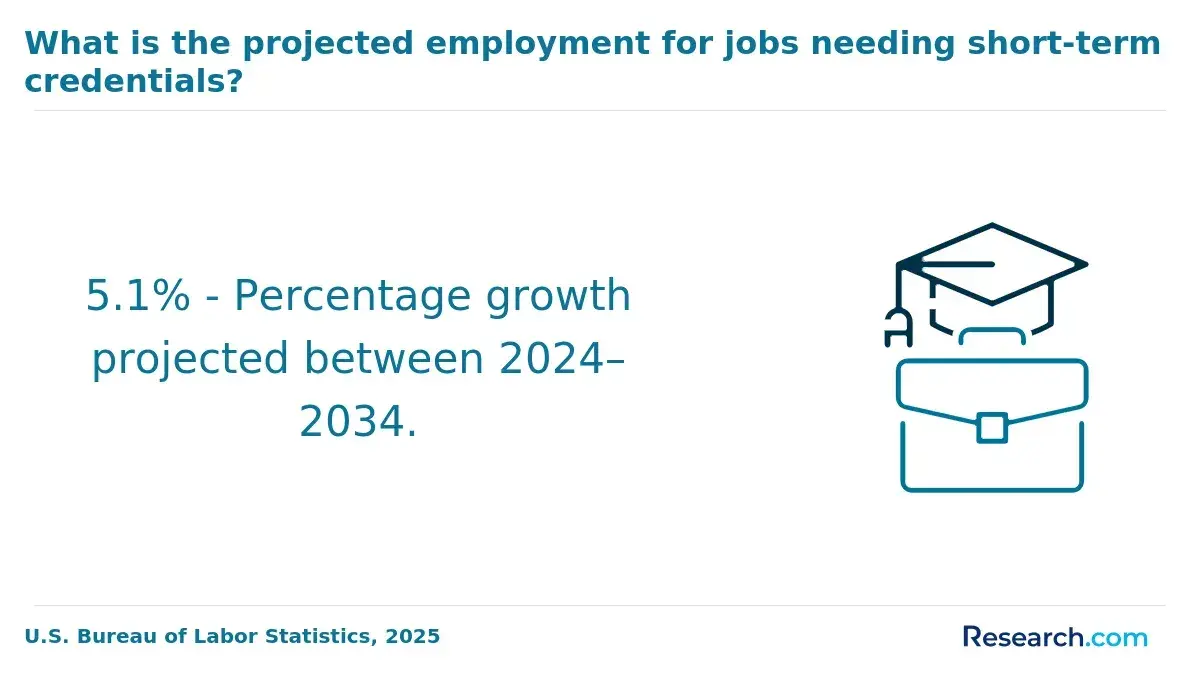
For graduates who do not want another degree right away, certificates can be useful when they build a specific job skill that employers recognize. Compare certificate programs online by employer recognition, assessment rigor, time commitment, cost, and whether the certificate leads to a portfolio, exam eligibility, or practical work sample.
Be careful with credentials that sound impressive but do not map to jobs. A good credential should pass three tests: employers request it, the training teaches a skill you can demonstrate, and the cost makes sense relative to the salary range of your target role.
How should new graduates evaluate job offers, benefits, and long-term growth potential?
A job offer is a career investment, not just a paycheck. The best offer for a new graduate is usually the one that balances sustainable compensation with learning, good supervision, skill development, and a credible path to better roles.
Use a total compensation lens before accepting. The salary number matters, but benefits and working conditions can change the real value of an offer.
- Base pay: Compare the salary or hourly rate with the role, city, industry, and your minimum budget.
- Health insurance: Review premiums, deductibles, provider network, mental health coverage, and whether dependents are covered.
- Retirement benefits: Check whether the employer offers a 401(k), match, vesting schedule, and automatic enrollment.
- Paid time off: Compare vacation, sick leave, holidays, parental leave, and whether time off is realistic in practice.
- Training and advancement: Ask about onboarding, certifications, mentorship, promotion criteria, internal mobility, and performance reviews.
- Work model: Consider commute costs, remote-work policy, relocation support, schedule flexibility, travel, and overtime expectations.
BLS 2024 wage data shows that compensation varies substantially across occupations, which means new graduates should compare offers against the specific role rather than against a general idea of "good pay." A lower starting salary may be reasonable if the job builds scarce skills, but it is riskier if the role has limited training, unclear promotion criteria, or high turnover.
This table can help you compare offers side by side without focusing only on salary. It is especially useful when one offer pays more but another has stronger training or long-term growth.
| Offer factor | Why it matters | Stronger sign | Red flag |
| Manager quality | Your first supervisor can shape your confidence, references, and skill growth | Clear expectations, regular feedback, and realistic workload discussion | Vague answers about training or high-pressure language during interviews |
| Role clarity | New graduates need enough structure to learn and show progress | Defined responsibilities, success metrics, and onboarding plan | "Wear many hats" without priorities or support |
| Learning value | Early roles should build transferable skills | Exposure to tools, clients, projects, or regulated processes | Repetitive tasks with no path to more complex work |
| Financial fit | A job should support basic stability | Pay and benefits cover realistic living costs | Salary depends heavily on uncertain bonuses or unpaid overtime |
| Growth path | Promotion potential affects long-term earnings and satisfaction | Examples of past entry-level employees advancing | No clear next step after the first year |
What strategies help new graduates build a strong professional network and find mentors?
Networking is not asking strangers for jobs. It is building professional relationships that help you understand roles, learn what employers value, and become easier to refer when a relevant opportunity appears.
New graduates often have more network access than they realize. Start with warmer contacts, then expand gradually.
- List alumni, professors, internship supervisors, classmates, family friends, campus staff, club advisors, volunteer coordinators, and former managers who know your work ethic or interests.
- Send short, specific messages asking for 15 to 20 minutes of advice about a role, industry, company, or transition they understand.
- Prepare three questions before each conversation, such as what skills matter most, what entry-level titles to search, and what mistakes candidates make.
- After the conversation, send a thank-you note and mention one insight you will act on.
- Follow up later with a brief update so the relationship does not end after one request.
Mentors can play different roles, and one person does not need to meet every need. A career mentor may help you understand advancement, a technical mentor may review your portfolio, and a peer mentor may keep you accountable during the search.
Use this table to decide what kind of relationship you need before reaching out. Being specific makes your request easier to say yes to.
| Relationship type | Best for | What to ask for | What not to ask too early |
| Informational contact | Learning about a role or industry | Role expectations, hiring process, useful skills | A job referral before they know you |
| Alumni connection | Understanding how your degree maps to work | Career path, first-job advice, company culture insight | Extensive résumé editing without context |
| Skill mentor | Improving technical or professional ability | Feedback on a project, portfolio, writing sample, or practice case | Free long-term tutoring without mutual agreement |
| Sponsor | Being recommended for opportunities | Usually develops after trust and performance are visible | Immediate endorsement without evidence |
A common mistake is making networking too broad. "I'm open to anything" is hard to help with; "I'm exploring entry-level data analyst roles in healthcare and would value your perspective on the first skills to build" gives the other person a clear way to respond.
How can new graduates optimize their résumé, cover letters, and LinkedIn profile for hiring?
Your résumé, cover letter, and LinkedIn profile should tell the same story: what role you want, what evidence shows you can do the work, and why your background is credible for an entry-level hire. Employers do not expect decades of experience, but they do expect relevance and clarity.
Applicant tracking systems can screen for keywords, but humans still make hiring decisions. Optimize for both by using job posting language naturally and backing it with evidence.
- Use a clear headline or summary that names your target role, strongest skills, and relevant experience without exaggeration.
- Put education, internships, projects, certifications, technical skills, and work experience in the order that best supports the target job.
- Replace task-only bullets with outcome-focused bullets, such as what you improved, analyzed, organized, built, supported, or measured.
- Mirror important job-posting terms only when they honestly match your experience.
- Create a master résumé, then tailor a one-page version for each role family.
- Keep your LinkedIn profile consistent with your résumé, but use it to add projects, media, recommendations, volunteer work, and a more conversational summary.
Generative AI has made application materials easier to draft, but it has also made generic writing easier to spot. Use AI tools for structure, proofreading, and keyword comparison, but add your own examples, metrics, decisions, and lessons learned.
The table below highlights common new-graduate résumé problems and better alternatives. Use it as a quality check before applying.
| Weak approach | Why it hurts | Better alternative |
| Listing coursework without context | Employers cannot see what you can do | Describe a project, method, tool, or deliverable from the course |
| Using vague skills such as "hardworking" | Traits are hard to verify | Show evidence through leadership, deadlines, service, or measurable work |
| Sending the same cover letter to every employer | It signals low effort and weak fit | Connect two or three qualifications to the specific role and organization |
| Overdesigning the résumé | Formatting can distract or parse poorly | Use clean headings, consistent dates, and readable spacing |
| Hiding part-time or service work | You may lose evidence of reliability and communication | Translate service experience into customer support, teamwork, scheduling, or problem-solving skills |
What interview preparation and follow-up practices increase hiring chances for new graduates?
Interview preparation is where new graduates can outperform more experienced candidates who prepare poorly. Employers usually want to know whether you understand the role, can learn quickly, communicate clearly, and handle real workplace situations responsibly.
Prepare for interviews in a structured way instead of memorizing perfect answers. The steps below help you sound specific without sounding scripted.
- Analyze the job description and identify the top five capabilities the employer is likely testing.
- Prepare stories using the situation, task, action, and result format for teamwork, conflict, leadership, learning, problem solving, and failure.
- Research the employer's products, services, clients, mission, competitors, and recent changes so you can ask informed questions.
- Practice a concise answer to "Tell me about yourself" that connects your background to the role.
- Prepare questions about onboarding, team structure, success metrics, manager expectations, and growth opportunities.
- Send a thank-you message within 24 hours that confirms interest and references a specific point from the conversation.
For technical, case, teaching, clinical, design, or writing roles, interview preparation may also include work samples or assessments. Do not assume every take-home assignment is reasonable; a fair assessment should have clear instructions, a limited time expectation, and a direct connection to the role.
Use this table to match interview formats with the preparation they require. Knowing the format helps you practice the right skill instead of overpreparing the wrong material.
| Interview type | What it usually tests | Best preparation focus | Risk to manage |
| Phone screen | Basic fit, salary range, availability, communication | Short career pitch and role alignment | Sounding unfocused or unsure about logistics |
| Behavioral interview | Judgment, teamwork, adaptability, professionalism | Specific examples from school, work, internships, or volunteering | Giving general answers without actions or results |
| Technical interview | Role-specific knowledge or problem solving | Practice problems, tools, concepts, and explaining your thinking | Pretending to know something instead of reasoning honestly |
| Panel interview | Communication with multiple stakeholders | Organized answers and eye contact with all participants | Directing every answer to only one person |
| Final interview | Culture fit, motivation, readiness to accept | Offer questions, growth goals, and thoughtful closing statement | Failing to show continued interest |
How can new graduates compare industries, roles, salaries, and job outlook to make decisions?
Career decisions improve when you compare industries and roles using evidence rather than reputation alone. A role that sounds prestigious may have limited entry-level openings, while a less glamorous role may build in-demand skills and strong mobility.
BLS projects U.S. employment to grow by about 5.2 million jobs from 2024 to 2034, but growth is not evenly distributed. Healthcare, technology-enabled services, business operations, education, skilled trades, and public-sector roles can differ significantly by region, funding, regulation, and automation exposure.
Use a comparison framework that includes salary, job outlook, entry requirements, work environment, advancement path, and resilience to AI or automation. This table shows how to think through common trade-offs without assuming one industry is best for everyone.
| Industry or role group | Why new graduates consider it | Key trade-off | Best fit for graduates who... |
| Business operations and analytics | Broad entry points across many employers | Competition can be high for analyst titles | Like problem solving, spreadsheets, processes, and measurable outcomes |
| Healthcare and health administration | Strong societal need and many regulated pathways | Clinical roles may require specific credentials or licensure | Want mission-driven work and can handle structure, compliance, and service pressure |
| Technology and IT support | Skills can be demonstrated through projects and certifications | Entry-level openings may require proof of practical ability | Enjoy troubleshooting, continuous learning, and tool-based work |
| Education and public service | Clear mission and community impact | Pay, licensure, and workload vary widely by state and employer | Value service, communication, patience, and long-term relationship building |
| Sales and customer success | Often open to many majors and can build business skills quickly | Compensation may depend on performance targets | Are comfortable with persuasion, rejection, client needs, and measurable goals |
| Creative and communications roles | Allow portfolio-based proof of ability | Early roles may be competitive and project-based | Can show strong writing, design, media, storytelling, or campaign results |
AI is changing entry-level work by automating some routine writing, coding, data cleaning, scheduling, and customer support tasks. The safer strategy is not to avoid technology; it is to pair human strengths such as judgment, relationship-building, ethics, domain knowledge, and communication with AI-fluent workflows.
Before choosing a path, compare at least three job postings in each target role. Look for repeated tools, credentials, salary ranges, experience expectations, and responsibilities. If the requirements are consistently above your current level, search for feeder roles that build toward the position.
What options exist for further education, online programs, or graduate school after graduation?
Further education can be a smart move when it is required for licensure, unlocks a specific career path, or provides a strong return relative to cost and time. It can also be an expensive delay if you enroll mainly because the job search feels uncertain.
New graduates typically compare four options: short certificates, nondegree courses, second bachelor's or degree-completion pathways, and graduate school. The right choice depends on your target role, current credential, budget, timeline, and whether employers require the additional education.
| Education option | When it makes sense | When to be cautious | What to verify |
| Short certificate or bootcamp-style training | You need a specific job skill, software tool, or portfolio project | The provider promises outcomes without transparent completion or placement information | Employer recognition, cost, refund policy, project quality, and support |
| Nondegree online course | You want low-cost skill building or to test interest before committing | You need formal credit, licensure eligibility, or a recognized credential | Whether the course creates a usable work sample or prepares you for an exam |
| Degree completion or second bachelor's | You need a bachelor's credential or a major switch for a defined role | You already have a degree and the target field values experience more than another bachelor's | Transfer credits, accreditation, total cost, timeline, and career services |
| Graduate school | The career requires it or the advanced credential has clear labor-market value | You are using school to avoid making a career decision | Licensure alignment, assistantships, debt, completion rates, alumni outcomes, and employer demand |
Cost should be part of the decision from the beginning. If you need a flexible bachelor's completion route while working, compare most affordable online colleges for working adults by total tuition, fees, transfer-credit policy, financial aid eligibility, and support services rather than tuition per credit alone.
Ask admissions or program advisors direct questions before enrolling. You should understand how the program connects to your target job and what happens if your plans change.
- Is the institution accredited by an agency recognized for federal financial aid purposes?
- Does the program meet licensure or certification requirements in the state where I plan to work?
- How many of my credits transfer, and will they apply to requirements or only electives?
- What is the total estimated cost including fees, books, equipment, exams, travel, and lost work time?
- What career services are available to online, part-time, or working students?
- What outcomes data is available for graduates in my intended field?
How can new graduates create a realistic career roadmap with short- and long-term goals?
A career roadmap turns uncertainty into a sequence of decisions you can test and revise. It should include near-term income needs, skill development, professional relationships, education decisions, and advancement milestones.
Build your roadmap in stages so you can learn from real feedback. The goal is progress, not predicting your entire career perfectly.
- Set a 30-day goal focused on job-search activity, such as completing targeted materials, applying to a defined number of relevant roles, and scheduling informational interviews.
- Set a 90-day goal focused on market feedback, such as identifying which roles respond to your profile and what skill gaps appear repeatedly.
- Set a one-year goal focused on experience, such as mastering core tools, earning strong references, documenting achievements, or moving from support work to more complex assignments.
- Set a three-year goal focused on direction, such as promotion, lateral move, licensure progress, graduate school decision, relocation, or specialization.
- Review your plan every quarter and update it based on interviews, performance feedback, salary realities, personal circumstances, and industry changes.
If your roadmap includes additional education, prioritize accredited institutions, transparent costs, and programs aligned with your career goal. Comparing non profit schools can be useful, but remember that institutional category alone does not determine value; program quality, support, accreditation, affordability, and outcomes matter more.
This roadmap table shows how short-term actions connect to longer-term career outcomes. Use it as a planning template, then customize it to your industry and financial situation.
| Career stage | Main question | Decision marker | Evidence to collect |
| 0 to 3 months | Which roles fit my current profile? | You receive interviews or useful feedback from target roles | Application response patterns, recruiter comments, network advice |
| 3 to 12 months | What skills should I deepen? | You identify tasks that appear repeatedly in strong opportunities | Job postings, manager feedback, project results, portfolio gaps |
| 1 to 2 years | Should I specialize, switch, or advance? | You understand what work energizes you and what advancement requires | Performance reviews, salary ranges, mentor input, internal mobility options |
| 2 to 5 years | Do I need another credential? | You can connect the credential to a specific role, license, or pay band | Program costs, licensure rules, employer requirements, alumni outcomes |
Common roadmap mistakes include choosing goals that are too vague, ignoring money, copying someone else's timeline, and treating the first job as a final identity. A stronger plan gives you direction while leaving room to adapt as you learn more about the work and yourself.
Other Things You Should Know About
Start by choosing two or three target roles, updating your résumé and LinkedIn profile for those roles, and setting a weekly job-search routine. Then contact alumni, professors, former supervisors, and peers for informational conversations that can clarify opportunities and lead to referrals.
It depends on your finances, field, and options. If you need income, a role that builds transferable skills can be worthwhile even if it is not perfect. Be cautious with jobs that offer little training, unclear responsibilities, unsafe conditions, or no path to better opportunities.
Graduate school makes sense when it is required for your target profession or clearly improves your career options. It is riskier if you enroll mainly to avoid the job search. Compare cost, licensure alignment, employer demand, funding, and opportunity cost before committing.
Timelines vary by major, location, industry, experience, economy, and job-search strategy. A focused search with tailored applications, networking, interview practice, and skill-building usually performs better than sending many generic applications without feedback or follow-up.
References
- Career Planning After Graduation – Steps & Tips For Success https://homeshiksha.com/career-planning-after-graduation/
- Career Advice, Resume & LinkedIn Tips - PrepHires Blog | PrepHires https://www.prephires.com/blog
- Top Interview Preparation Tips for Fresh Graduates - RKY Careers Blog https://rkycareers.com/blog/top-interview-preparation-tips-for-fresh-graduates/
- What New Graduates Look For In An Employer https://www.criteriacorp.com/blog/what-new-graduates-look-for-in-an-employer
- Career Development 101: A Complete Guide to Professional Growth https://www.nsls.org/what-is-career-development
- Build Your Career with a Goal-Oriented Development Plan – Step by Step https://sundancecollege.com/blog/goal-oriented-career-development-plan-guide/
- How mentorship can expand your professional network | Together Mentoring Software https://www.togetherplatform.com/blog/how-mentorship-can-expand-your-network
- How to choose a career https://www.graduatetalent.com/news-events/how-to-choose-a-career
- Annual Grad Report — ZipRecruiter Economic Research https://www.ziprecruiter-research.org/annual-grad-report
- Crafting an Effective Career Plan: A Guide for Fresh Graduates and Final Year Students - RecruitFirst https://www.recruitfirst.co/crafting-an-effective-career-plan-a-guide-for-fresh-graduates-and-final-year-students/