2027 Best Jobs for Students Who Want Flexible Career Paths

Co-Founder and Chief Data Scientist
Students choosing a career path need options that can survive class schedules, life changes, and new technology. Flexible careers include remote-friendly, shift-based, freelance, hybrid, and stackable-credential roles that let workers change industries or advance over time. The U. S. Bureau of Labor Statistics reported a $49,500 median annual wage for all occupations in 2024, but several flexible fields exceed that benchmark.
This guide compares career paths, training routes, salaries, timelines, credentials, and program-selection steps so you can choose a practical path without locking yourself into one narrow job.
Key Things You Should Know
- The strongest flexible paths for students are usually in technology, healthcare, business, education support, skilled trades, and creative services because they offer multiple entry points, part-time options, and advancement routes.
- Several flexible occupations exceed the 2024 BLS all-occupation median wage of $49,500, including software development, data science, registered nursing, accounting, and medical and health services management.
- The smartest education path depends on the role: certificates can work for fast entry, associate degrees can support technical or healthcare jobs, and bachelor's or graduate degrees are often needed for licensed, managerial, or advanced analytical roles.
What are the best flexible career paths for students?
The best flexible career paths for students are not just jobs with loose schedules. They are roles that allow movement across employers, industries, work formats, and credential levels. A flexible path should give you more than one way to start, earn, specialize, or pivot later.
The table below compares strong options by fit, flexibility, and typical responsibilities. Use it to narrow choices based on how you prefer to work, not just on salary.
| Career path | Why it can be flexible | Common student-friendly entry roles | Best fit |
| Technology and software | Remote, hybrid, contract, startup, corporate, and freelance options are common in many roles. | Help desk technician, junior web developer, QA tester, technical support specialist | Students who like problem-solving, continuous learning, and project-based work |
| Data and analytics | Analysts can work in healthcare, finance, retail, education, government, and technology. | Data assistant, reporting analyst, business intelligence intern | Students who enjoy patterns, spreadsheets, statistics, and decision support |
| Healthcare support and nursing | Shift work, per diem schedules, travel roles, clinics, hospitals, telehealth, and advancement ladders create scheduling variety. | Medical assistant, CNA, pharmacy technician, patient care technician | Students who want stable demand and can handle patient-facing responsibility |
| Business, accounting, and operations | Every industry needs budgeting, compliance, payroll, logistics, and process improvement skills. | Bookkeeping assistant, payroll clerk, operations coordinator, administrative assistant | Students who want transferable skills and a broad employer base |
| Education, tutoring, and training | Part-time, online tutoring, test prep, instructional design, and corporate training roles can grow into long-term careers. | Tutor, teaching assistant, learning support aide, training coordinator | Students who communicate well and like helping others learn |
| Creative, marketing, and communications | Freelance, agency, in-house, creator economy, nonprofit, and remote project work are common. | Social media assistant, content writer, design assistant, marketing coordinator | Students with portfolio-building discipline and strong communication skills |
| Skilled trades and technical services | Apprenticeships, licensing ladders, self-employment, evening service work, and regional demand can create flexibility. | Apprentice electrician, HVAC helper, automotive service assistant, drafting technician | Students who prefer hands-on work and clear skill progression |
A good flexible path should also protect you from over-specializing too early. For example, learning Python, Excel, patient care documentation, bookkeeping, or digital marketing analytics can apply across multiple roles instead of preparing you for only one employer's system.
Which jobs offer the highest pay with flexible hours?
The highest-paying flexible jobs usually require either technical depth, licensure, advanced credentials, or responsibility for business outcomes. Flexible hours are more common after you build experience, so students should evaluate both entry-level access and long-term autonomy.
The table below uses recent BLS wage and outlook categories where available. Median pay is not a promise; it is a national benchmark that varies by state, employer, experience, industry, and work arrangement.
| Flexible occupation | 2024 median annual pay | Why the hours may be flexible | Important trade-off |
| Software developer | $133,080 | Remote and hybrid teams, project-based work, contract roles, and flexible tech employers | Requires constant skill updates as AI-assisted coding changes entry-level expectations |
| Data scientist | $112,590 | Work can be performed remotely when data access and security rules allow it | Usually requires strong math, coding, and business communication skills |
| Medical and health services manager | $117,960 | Some roles offer hybrid scheduling, especially in administration, analytics, and compliance | Often requires healthcare experience and a bachelor's or master's degree |
| Registered nurse | $93,600 | Shift work, per diem roles, travel nursing, outpatient clinics, and telehealth may offer schedule variety | Licensure, clinical hours, and patient safety responsibilities are nonnegotiable |
| Accountant or auditor | $81,680 | Hybrid, seasonal, freelance bookkeeping, tax work, and corporate accounting options exist | Busy seasons can reduce flexibility, especially in tax and audit roles |
| Market research analyst | $76,950 | Remote-friendly research, analytics, survey, and reporting work is common in many industries | Portfolio evidence and data tools may matter as much as the degree |
For students, the best high-pay flexible path is often the one that lets you gain paid experience while studying. Tech support, bookkeeping, medical assisting, tutoring, and marketing assistant roles may not be the highest-paid starting points, but they can create the work history needed for better-paying flexible roles later.
What degree or training do flexible careers usually require?
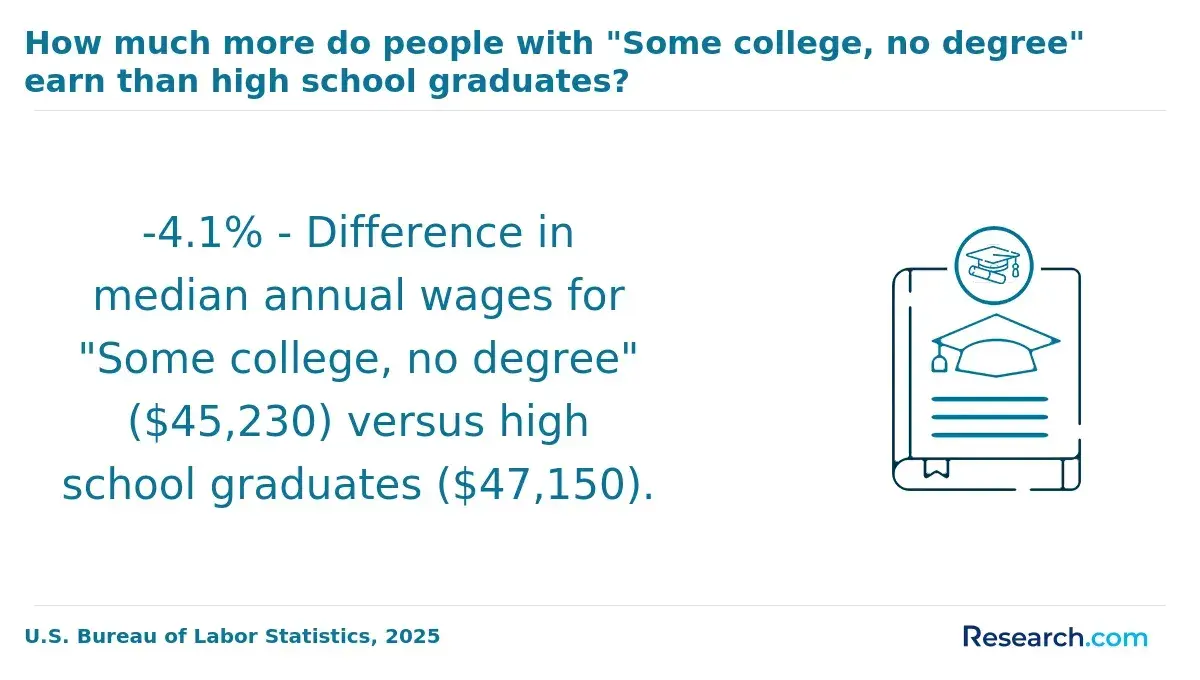
Flexible careers do not all require a four-year degree. The right training level depends on whether the field is regulated, how technical the work is, and how quickly you need to start earning.
Students usually choose among four education routes. Each can be worthwhile when it matches the target role and employer expectations.
| Training route | Typical use | Best for | Limitations |
| Short certificate or bootcamp | Focused skills such as IT support, bookkeeping, digital marketing, coding basics, or medical office work | Fast entry or skill switching | May not replace a degree for licensed or advanced roles |
| Associate degree | Healthcare support, nursing pathways, IT, accounting, paralegal studies, and technical fields | Students who want a lower-cost credential with transfer potential | Some management or professional roles still require a bachelor's degree |
| Bachelor's degree | Business, computer science, healthcare administration, education, data analytics, accounting, and communications | Students seeking broad mobility and long-term advancement | Takes longer and costs more than certificates or associate programs |
| Graduate degree or advanced credential | Nurse practitioner, counseling, analytics leadership, management, education leadership, or specialized healthcare roles | Students targeting licensed, senior, or high-responsibility work | Usually requires prior education, experience, and a larger investment |
If you are unsure about committing to a bachelor's degree, starting with an associates degree can be a practical middle path. It may help you qualify for entry-level work, reduce upfront cost, and preserve transfer options if the credits apply to a later bachelor's program.
Be careful with shortcuts. A short credential can be valuable, but it should lead to a recognizable job title, employer-valued skill, licensure pathway, or transferable credit. If a program cannot explain those outcomes clearly, compare other options before enrolling.
How do online and campus programs compare for flexible careers?
Online and campus programs can both lead to flexible careers, but they support different learning styles and career goals. The better choice depends on whether your field requires labs, clinical hours, hands-on equipment, networking, or supervised practice.
The comparison below shows where each format tends to work best. Use it to match the program format to the career rather than choosing online or campus based only on convenience.
| Program format | Strengths | Challenges | Best match |
| Fully online | Works well for self-paced study, remote learners, working students, and many business, IT, analytics, and communication programs | Requires discipline, reliable technology, and careful accreditation checks | Students balancing work, family, or location limits |
| Hybrid | Combines online coursework with labs, clinicals, simulations, or scheduled campus sessions | May still require travel and fixed scheduling | Healthcare, education, technical, and applied science programs |
| Campus-based | Provides direct access to equipment, labs, faculty, classmates, career fairs, and structured routines | Less flexible for students with jobs or caregiving responsibilities | Hands-on learners and fields requiring frequent in-person practice |
| Competency-based or accelerated online | May let experienced students move faster by demonstrating mastery | Not ideal for students who need frequent deadlines or instructor contact | Motivated adults with prior credits or work experience |
Students who already know they want to finish quickly can compare accelerated bachelor's degrees, but speed should not be the only factor. A faster program is only helpful if you can keep up academically, afford the pace, and still meet licensure or internship requirements.
For fields such as nursing, teaching, counseling, and many allied health roles, confirm that an online or hybrid program is approved for your state. A program can be accredited and still fail to meet a specific state board's requirements.
What courses and skills do flexible career programs teach?
Flexible career programs usually teach a mix of technical skills, communication skills, and career-management habits. The most useful programs do not just teach theory; they require projects, labs, simulations, case studies, portfolios, internships, or supervised practice.
Look for courses and experiences that build portable skills. The following areas matter because they help students move between roles as the labor market changes.
- Digital fluency: spreadsheet tools, databases, collaboration platforms, cybersecurity basics, AI-assisted productivity tools, and industry software.
- Communication: writing, presentation, interviewing, documentation, client communication, and team collaboration.
- Problem-solving: research methods, troubleshooting, process improvement, quality control, and evidence-based decision-making.
- Data literacy: basic statistics, dashboards, reporting, data ethics, and the ability to explain numbers to nontechnical audiences.
- Professional judgment: ethics, privacy, compliance, safety, cultural competence, and workplace responsibility.
- Career readiness: portfolios, resumes, LinkedIn profiles, mock interviews, internships, and employer projects.
AI is changing what "entry level" means in several flexible fields. In tech, marketing, analytics, and business operations, students who can use AI tools responsibly while verifying outputs may have an advantage over students who only know basic software commands. However, AI does not replace fundamentals such as privacy, accuracy, judgment, and clear communication.
What admission requirements apply to flexible career programs?
Admission requirements vary by school and program level, but most flexible career programs evaluate whether you are academically prepared and able to complete any required practical work. Regulated fields usually have stricter requirements than general business or technology programs.
Before applying, check the requirements that affect both admission and career eligibility. Missing one requirement can delay graduation, clinical placement, certification, or licensure.
- Academic records: high school diploma, GED, prior college transcripts, GPA minimums, or prerequisite courses.
- Placement or readiness measures: math, writing, technology, or science placement depending on the program.
- Field-specific prerequisites: anatomy, statistics, programming, accounting, biology, or other foundation courses.
- Background checks and health records: common in nursing, allied health, education, and childcare-related programs.
- Technology access: laptop specifications, webcam requirements, proctored testing, software subscriptions, and reliable internet for online study.
- Licensure disclosures: written confirmation about whether the program meets requirements in the state where you plan to work.
Adult learners and career changers should also ask how prior learning, military training, professional certificates, or old college credits are evaluated. Some students comparing shorter pathways, including one-year degree programs for seniors, should pay close attention to transfer policies because speed often depends on how many credits the school accepts.
A common mistake is applying to the easiest program to enter without checking whether it leads to the intended credential. Admission convenience matters, but career alignment matters more.
How long do flexible career programs take to finish?
Flexible career programs can take a few weeks or several years. The timeline depends on credential level, transfer credits, course load, clinical requirements, licensing exams, and whether you study full time or part time.
The table below gives realistic planning ranges. Use these as broad estimates rather than fixed promises, because schools structure programs differently.
| Credential or pathway | Common completion range | Examples | Best for |
| Short certificate | A few weeks to 12 months | Google-style IT support certificates, bookkeeping, medical billing, digital marketing, CNA, pharmacy technician preparation | Quick skill building or testing a field before a larger commitment |
| Bootcamp or intensive training | 3 to 9 months | Coding, cybersecurity, UX design, data analytics | Students with time for concentrated project work |
| Associate degree | About 2 years full time | IT, nursing pathways, accounting, paralegal studies, applied business | Students who want a recognized college credential with lower initial cost |
| Bachelor's degree | About 4 years full time | Computer science, business, healthcare administration, accounting, education, communication | Students seeking broader advancement options |
| Graduate or professional program | 1 to 3+ years after a bachelor's degree | MBA, MSN, counseling, data science, healthcare management | Students targeting advanced, licensed, or leadership roles |
Part-time study can make education manageable, but it can also delay the point when you qualify for better-paying roles. Full-time study may finish faster, but it can reduce your ability to work. The best timeline is the one you can complete without excessive debt, burnout, or missed licensure requirements.
What certifications or licenses do flexible careers require?
Certifications and licenses matter because they signal job readiness, meet legal requirements, or help employers compare applicants. The key difference is that certifications are usually issued by professional organizations or vendors, while licenses are granted by state boards or government agencies and may be legally required.
Students should identify required credentials before choosing a program. The list below shows common examples by field and why they matter.
- Technology: CompTIA A+, Network+, Security+, Cisco, AWS, Microsoft, and Google credentials can support IT support, networking, cloud, and cybersecurity roles.
- Healthcare: CNA, medical assistant, pharmacy technician, phlebotomy, radiologic technology, RN, and practical nursing credentials may require approved education, exams, clinical hours, or state licensure.
- Business and accounting: bookkeeping certificates, QuickBooks credentials, enrolled agent status, CPA licensure, and payroll certifications can support finance-related flexibility.
- Project and operations work: CAPM, PMP, Lean Six Sigma, and supply chain credentials can help students move across industries.
- Education and care roles: substitute teaching permits, teacher licensure, childcare credentials, and special education support requirements vary by state.
- Skilled trades: electrician, HVAC, plumbing, cosmetology, and real estate licenses usually depend on state rules, supervised hours, and exams.
If you want a fast credential, compare easy licenses and certifications to get, but do not assume "easy" means "high-value." The best short credential is one that employers in your area actually request and that can stack into a higher credential later.
One major red flag is a school advertising certification exam eligibility without clearly stating pass rates, exam costs, required field hours, or state-specific rules. Ask for written details before enrolling.
What salaries and job outlooks can students expect?
Students can expect the strongest salary and job outlooks in flexible fields tied to healthcare demand, software, data, cybersecurity, business compliance, and operational efficiency. Pay varies widely, so it is better to compare occupations by role requirements and advancement potential rather than choosing only the highest national median.
The table below summarizes selected flexible or flexibility-adjacent careers using recent BLS national wage and projection categories. Use these figures as a labor-market starting point, then check local employer postings for your state and city.
| Occupation | 2024 median annual pay | Projected outlook category | What this means for students |
| Software developers, quality assurance analysts, and testers | $131,450 | Much faster than average | Strong long-term opportunity, but portfolios, internships, and AI-aware skills are increasingly important. |
| Data scientists | $112,590 | Much faster than average | Good fit for students who combine statistics, coding, domain knowledge, and communication. |
| Registered nurses | $93,600 | Faster than average | Flexible scheduling is possible, but licensure and clinical readiness are required. |
| Accountants and auditors | $81,680 | About as fast as average | Transferable across industries, with stronger options for students who add tax, audit, analytics, or CPA preparation. |
| Market research analysts | $76,950 | Faster than average | Useful for students interested in consumer behavior, analytics, marketing, and business strategy. |
| Web developers and digital designers | $95,380 | Faster than average | Portfolio quality can matter heavily, especially for freelance and remote roles. |
Salary data has limits. A national median does not show entry-level pay, regional cost of living, overtime, contract instability, benefits, union coverage, or part-time schedules. For a realistic estimate, compare local job postings, internship wages, licensure requirements, and the total cost of your program.
Also consider risk. Freelance creative work may offer excellent schedule control but less income predictability. Nursing may offer stronger demand but less remote work in bedside roles. Tech may offer remote options, but competition for junior roles can be intense without projects or experience.
How do you choose a reputable accredited program?
A reputable program should be accredited, transparent about costs, realistic about outcomes, and aligned with the job you want. Accreditation is especially important if you plan to use federal aid, transfer credits, sit for licensure exams, or continue to graduate school.
Use the following steps before you apply. They can help you avoid programs that are convenient but not credible.
- Confirm institutional accreditation through the U.S. Department of Education or the Council for Higher Education Accreditation databases.
- Check programmatic accreditation when the field requires it, such as nursing, counseling, education, radiologic technology, or other licensed professions.
- Ask whether the program meets licensure requirements in the state where you plan to work.
- Review total cost, including tuition, fees, books, software, equipment, exam fees, background checks, uniforms, travel, and clinical costs.
- Compare graduation, retention, transfer, certification exam, and job-placement disclosures when available.
- Ask how many credits will transfer in and how many must be completed at the school.
- Request examples of internships, clinical placements, employer partners, portfolios, or capstone projects.
- Read the refund policy, withdrawal rules, and financial aid conditions before signing an enrollment agreement.
Cost deserves special attention. College Board reported that published tuition and fees for public two-year in-district colleges were $4,050 for 2024-25, while public four-year in-state tuition and fees were $11,610. Those figures do not include all living costs, but they show why program length, transfer credits, and aid eligibility can change ROI significantly.
If you need federal financial aid, compare an online college that accepts FAFSA and verify the school's accreditation before focusing on price. A low-cost program that lacks proper approval for your career goal can become expensive if credits do not transfer or licensure is blocked.
Common red flags include vague job-placement claims, pressure to enroll immediately, unclear accreditation language, missing state authorization details, unrealistic salary promises, poor transfer policies, and programs that hide required in-person components until after admission.
Other Things You Should Know About
Technology, data analytics, healthcare support, business operations, tutoring, and digital marketing are among the most flexible broad paths. The best choice depends on whether you want remote work, shift flexibility, freelance options, or a credential ladder that lets you advance over time.
Yes. Many students start with certificates, apprenticeships, associate degrees, or entry-level roles in IT support, bookkeeping, healthcare support, trades, tutoring, and administrative work. A bachelor's degree may still be needed for advancement, licensure, or management roles.
Online degrees can be respected when they come from accredited schools and match employer or licensure requirements. For regulated fields, confirm that the program meets state rules for clinical hours, supervised practice, exams, or professional licensing.
Compare total value, not just pay. A higher-paying role may involve fixed shifts, licensing pressure, or busy seasons, while a more flexible role may have variable income. Look at local job postings, required credentials, schedule options, benefits, and long-term advancement before deciding.
References
- Seven Most Versatile Degree Courses for Career Flexibility and Growth https://www.applash.ai/versatile-degree-courses-career-flexibility
- CourseCareers https://coursecareers.com/blog-posts/college-vs-online-career-training
- 80 of the most flexible jobs that also pay well https://www.creditkarma.com/income/i/most-flexible-jobs
- Steps to Finding the Right Accredited Institution https://www.ieac.org.uk/26-Steps-to-Finding-the-Right-Accredited-Institution-blog.php
- CHEA - Find Accredited Higher Education Institutions & Programs https://www.chea.org/directories
- 12 Flexible Learning programs to boost your career https://www.bcit.ca/news/stories/12-flexible-learning-programs/
- The Importance of Business School Accreditation https://www.allbusinessschools.com/how-to-get-into-mba-program/accreditation/
- Institutional vs Program Accreditation: What You Should Look For | Articles | Unimy https://www.unimy.com/article/institutional-vs-program-accreditation-what-you-should-look-for
- Earn an Industry Certification | Your Florida Career https://www.floridashines.org/earn-an-industry-certification
- Advance your career with these flexible, affordable courses https://www.independent.ie/story-plus/advance-your-career-with-these-flexible-affordable-courses/a/131830785.html