2027 How to Choose a Career if You're Still Undecided

Co-Founder and Chief Data Scientist
Choosing a career is harder when college costs are high, AI is changing job tasks, and employers increasingly value both skills and credentials. The U. S. Bureau of Labor Statistics projects total employment to grow by 4% from 2023 to 2033, adding about 6.7 million jobs, but growth varies widely by field.
This guide is for students, career changers, veterans, parents, and adults returning to school. You will learn how to assess your strengths, compare career options, choose training, check accreditation, and test a path before investing time and money.
Key Things You Should Know
- Start with fit, not job titles: compare your interests, values, work style, and constraints before choosing a major, certificate, apprenticeship, or degree.
- Use labor market data carefully: the BLS reported a $49,500 median annual wage for all U.S. occupations in May 2024, so compare careers against both salary and job-growth context.
- Before enrolling, verify accreditation, total cost, transfer policies, licensure alignment, and real-world experience options such as internships, projects, job shadowing, or apprenticeships.
How do you choose a career when you're still undecided?
The best way to choose a career when you are undecided is to treat the decision as a structured experiment, not a one-time personality quiz. A career choice should balance four factors: personal fit, labor market demand, education cost, and the kind of daily work you can realistically see yourself doing.
Use the following sequence to narrow your options without locking yourself in too early. Each step reduces uncertainty before you spend heavily on a degree or training program.
- List 10 possible careers based on subjects you enjoy, problems you like solving, people you want to serve, or work environments that appeal to you.
- Remove careers that conflict with your non-negotiables, such as schedule, physical demands, relocation, travel, public speaking, or years of schooling.
- Group the remaining options by field, such as healthcare, business, technology, education, skilled trades, public service, creative work, or science.
- Compare salary, job outlook, required education, licensing rules, and advancement paths for each option.
- Test your top three choices through informational interviews, short courses, volunteering, job shadowing, or part-time work.
- Choose a flexible first step, such as a transferable associate degree, general education courses, an industry certificate, or an exploratory bachelor's major.
If your main concern is return on investment, salary data can help you prioritize fields, but it should not be the only filter. A helpful next step is comparing what degrees make the most money with your interests and tolerance for the coursework those fields require.
A common mistake is choosing a career because it sounds impressive. A better question is, "Would I be willing to do the entry-level version of this work for one to three years while building experience?" If the answer is no, the long-term title may not be enough to sustain your motivation.
What self-assessment tools help you find the right career?
Self-assessment tools help you identify patterns in your interests, strengths, values, and preferred work environments. They should not "pick" your career for you; their purpose is to generate better questions and a shortlist of careers to investigate.
The table below compares common assessment types and how each one should influence your decision. Use more than one tool because no single assessment captures your whole career fit.
| Tool or assessment type | What it helps clarify | Best use | Limitation |
| Interest inventories, such as Holland Code or RIASEC-style tools | Work activities and environments you may enjoy | Finding career clusters, not final job titles | May overlook salary, location, and education requirements |
| Skills inventories | Tasks you already do well or can build on | Identifying realistic entry points | Can understate careers you could learn with training |
| Values assessments | Motivators such as income, autonomy, service, creativity, or stability | Avoiding careers that look good externally but feel wrong day to day | Values can change as your life circumstances change |
| Personality assessments | Communication style, energy patterns, and team preferences | Understanding work culture fit | Should not be treated as scientific proof that you can or cannot do a job |
| Career aptitude or work-sample tests | Problem-solving ability in specific domains | Testing interest in technical, analytical, or hands-on tasks | Performance may improve significantly with practice |
After taking assessments, look for repeated themes. If several tools point toward investigative, social, or hands-on work, that pattern is more useful than a single suggested occupation.
To turn results into action, write a short career-fit statement. For example: "I want work that combines problem-solving, steady income, and direct service, preferably with less than two years of training." That statement can guide whether you explore nursing, diagnostic medical imaging, IT support, accounting, paralegal studies, or another path.
How do you compare careers by salary and job outlook?
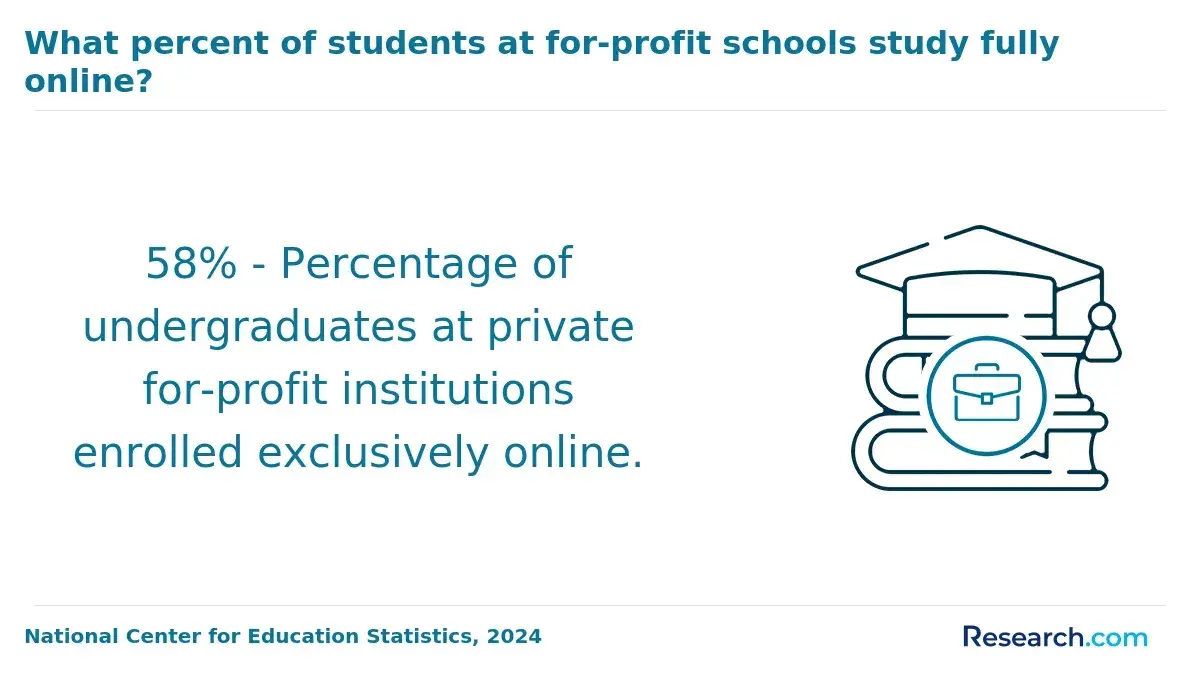
Salary and job outlook matter because they help you judge whether the education required for a career is financially reasonable. However, wage data is a midpoint, not a promise; pay varies by state, metro area, employer, experience, union status, overtime, credentials, and industry.
The BLS reported a $49,500 median annual wage across all U.S. occupations in May 2024. When a career's median wage is much higher than that, it may justify longer training; when it is lower, you should look closely at debt, advancement paths, and whether the work has strong personal value for you.
The table below shows how to compare careers using decision factors instead of focusing only on headline salaries. This can prevent you from overvaluing high pay while ignoring cost, licensing, or fit.
| Comparison factor | What to check | Why it matters |
| Median wage | National and state-level wage data for the occupation | Shows the typical pay range to compare against education cost |
| Job outlook | Projected employment growth and openings | Helps estimate whether demand is expanding, stable, or declining |
| Education requirement | Certificate, associate, bachelor's, master's, apprenticeship, or license | Determines time, cost, and opportunity cost |
| Entry-level access | Whether employers hire beginners or expect experience | Helps you plan internships, projects, clinical hours, or apprenticeships |
| Automation and AI exposure | Whether routine tasks are being automated or augmented | Shows which human skills you may need to strengthen |
| Advancement path | Promotion routes, specializations, supervisory roles, or graduate study | Indicates whether the career can grow with you |
AI is especially important for undecided students because it is reshaping entry-level work. Careers built mainly on routine content production, basic data entry, or repetitive administrative tasks may require stronger technical, analytical, customer-facing, or judgment-based skills than they did in the past. Instead of avoiding AI-affected fields entirely, ask how workers in that field use AI tools and what skills remain difficult to automate.
What degree or training path fits your career goals?
Your training path should match the career's required credential, your budget, and how quickly you need to enter the workforce. The "best" degree is not always the highest degree; it is the one that meets the requirement with the least unnecessary cost and detour.
College Board's 2024 pricing data shows why this choice matters: average published tuition and fees for 2024-25 were about $4,050 at public two-year colleges, $11,610 for in-state students at public four-year colleges, and $43,350 at private nonprofit four-year colleges. Published price is not the same as net price after aid, but it shows why comparing pathways before enrolling can protect your finances.
The table below summarizes common education and training routes for undecided students. Use it to choose a starting point that keeps options open while still moving toward employment.
| Path | Typical length | Best fit | Watch out for |
| Short certificate or bootcamp | Several weeks to one year | Students targeting a specific skill or entry-level technical role | Employer recognition varies, and credits may not transfer |
| Apprenticeship | One to five years, depending on trade | Hands-on learners who want paid training | Availability depends on location, unions, employers, and selection processes |
| Associate degree | About two years full time | Students seeking lower cost, transfer options, or applied career training | Some careers require a bachelor's degree for advancement |
| Bachelor's degree | About four years full time | Careers in business, engineering, education, technology, science, and many professional fields | Changing majors late can add cost and time |
| Graduate or professional degree | One to four or more years after a bachelor's degree | Licensed or advanced careers such as law, medicine, counseling, advanced practice nursing, or research | Debt risk can be high if the career outcome is uncertain |
If you want a low-pressure academic starting point, an associate program can help you complete general education courses while exploring fields. Students who want a simpler first credential can also compare options such as an easiest associate's degree, but "easy" should never replace "useful for my goal."
A practical rule: do not borrow heavily for a path you have not tested. If you are unsure, start with transferable credits, a community college, a low-cost certificate, or part-time study while you confirm the career direction.
How do online and campus programs compare?
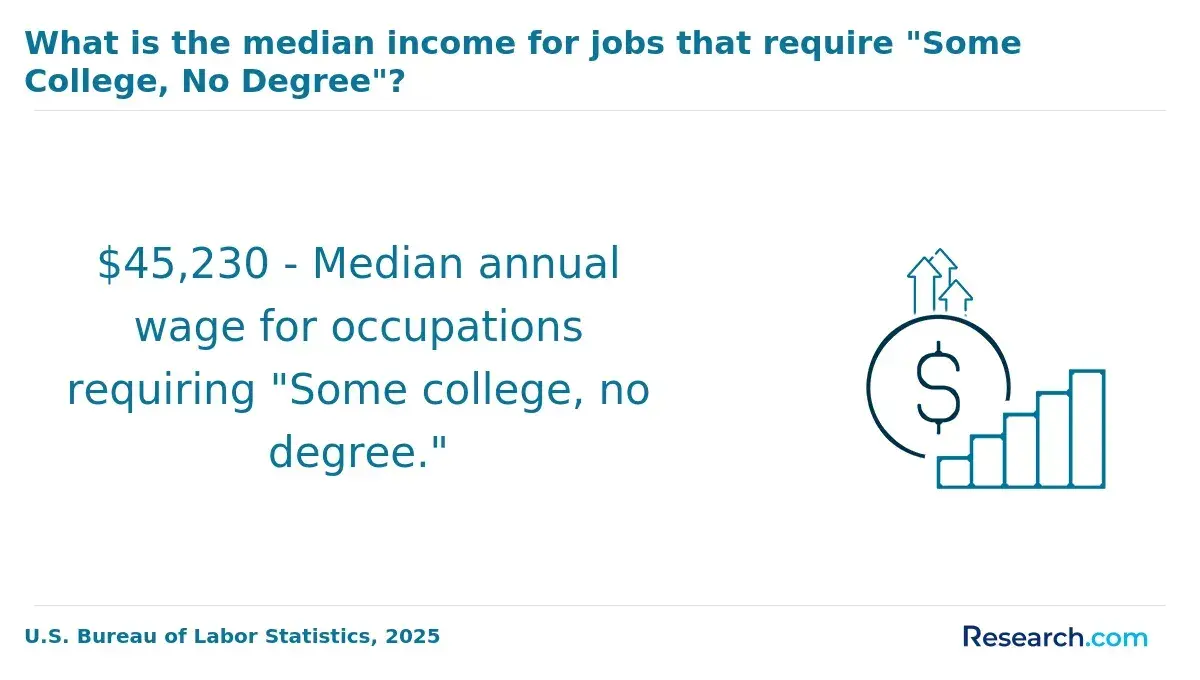
Online and campus programs can both be good choices, but they serve different students. The right format depends on your schedule, learning style, career field, need for hands-on training, and access to local employers.
The table below compares the decision points that matter most. It is especially useful if you are balancing school with work, caregiving, military service, or a career change.
| Factor | Online program | Campus program |
| Schedule flexibility | Often better for working adults and caregivers | More structured class times and campus routines |
| Hands-on learning | May require local labs, practicums, simulations, or clinical placements | Labs, studios, clinics, and equipment may be easier to access |
| Networking | Depends on virtual events, group projects, and career services | Often easier through campus clubs, faculty contact, and local recruiting |
| Self-discipline | Requires strong time management and independent study habits | Provides more built-in structure and face-to-face accountability |
| Licensure alignment | Must be checked carefully by state | Still must be checked, especially if you plan to work in another state |
Online learning can be especially valuable for adults returning to school because it reduces commuting and can make part-time study more realistic. Older learners may also want to review programs designed around flexibility, accessibility, and career change, including online degrees for seniors.
Choose online if you are self-directed, need schedule flexibility, and the program has strong advising, career services, and placement support. Choose campus if you need structure, prefer face-to-face learning, or are entering a field where labs, studios, clinical work, or local employer relationships are central.
What should you look for in an accredited school?
Accreditation is one of the most important checks before enrolling because it affects federal financial aid, transfer credits, graduate school eligibility, employer recognition, and licensure. For most students, the baseline is institutional accreditation from a recognized accrediting agency; some fields also require programmatic accreditation.
The table below shows what to verify before you apply or sign an enrollment agreement. These checks help you avoid schools or programs that look convenient but may not support your career goal.
| What to check | Why it matters | Red flag |
| Institutional accreditation | Supports financial aid eligibility and credit recognition | The school cannot clearly name its recognized accreditor |
| Programmatic accreditation | May be required in fields such as nursing, teaching, counseling, engineering, or allied health | The program says accreditation is "pending" but your licensure timeline depends on it |
| Licensure preparation | Shows whether the curriculum meets state requirements | The school will not confirm whether the program meets requirements in your state |
| Transfer credit policy | Can reduce time and cost if you change schools or continue later | Credits are unlikely to transfer outside the institution |
| Career services and outcomes | Helps connect education to employment | The school gives vague placement claims without explaining methodology |
Students with military experience should also check credit for prior learning, tuition assistance policies, deployment flexibility, and veteran support staff. If that applies to you, comparing military-friendly online colleges can help you identify schools built around those needs.
A common mistake is assuming that "online," "private," "nonprofit," or "well-known" automatically means high quality. Institution type alone does not determine value; accreditation, total cost, student support, completion rates, licensing alignment, and employer recognition matter more.
What admission requirements do most programs have?
Admission requirements vary by school and program level, but most programs look for evidence that you can handle the coursework and complete any required field experience. Selective programs may also require prerequisites, minimum grades, entrance exams, interviews, portfolios, background checks, or proof of immunizations.
Most undecided students should pay attention to requirements because they can affect your timeline. For example, a nursing, education, engineering, or cybersecurity program may require specific math, science, or technical courses before you can enter the major.
The list below covers common admission materials and why each one matters. Use it as a checklist when comparing programs.
- Application form and fee: confirms your intended program, start term, residency status, and basic eligibility.
- Official transcripts: show high school, GED, college, military, or transfer coursework that may satisfy admission or prerequisite requirements.
- Placement tests or test scores: may determine whether you start in college-level math, writing, or science courses.
- Personal statement or essay: helps selective programs understand your goals, preparation, and motivation.
- Letters of recommendation: may be required for competitive healthcare, education, honors, or graduate programs.
- Portfolio, audition, or work sample: common in design, music, writing, media, and some technical fields.
- Background check or health documentation: often required for clinical, teaching, public safety, or human services placements.
- FAFSA and financial aid documents: determine eligibility for grants, loans, work-study, and some school-based aid.
Affordability research can be confusing because some articles use phrases like online colleges that pay you to attend. In practice, this usually means a school's grants, scholarships, and aid can exceed direct charges for some eligible students; always confirm your own net price, refund rules, and borrowing needs.
Before applying, ask admissions advisors whether you can change majors without losing credits, whether prerequisites are offered every term, and whether the program has waitlists. These questions matter more than application speed.
What coursework and skills will you study?
Coursework depends on the career field, but undecided students should think in terms of transferable skills. The safest early courses build communication, quantitative reasoning, digital fluency, critical thinking, and discipline-specific foundations that apply across multiple careers.
The table below connects broad career interests with common coursework and skills. It can help you choose exploratory classes that keep more than one path open.
| Career direction | Common coursework | Skills you build |
| Business and management | Accounting, economics, marketing, business law, statistics | Decision-making, financial literacy, communication, leadership |
| Technology and data | Programming, databases, networking, cybersecurity, analytics | Problem-solving, systems thinking, automation awareness, troubleshooting |
| Healthcare | Anatomy, physiology, medical terminology, ethics, clinical practice | Patient care, accuracy, teamwork, compliance, applied science |
| Education and human services | Psychology, child development, teaching methods, counseling basics | Communication, empathy, documentation, classroom or client support |
| Skilled trades and applied technology | Blueprint reading, safety, electrical systems, machining, HVAC, welding | Hands-on precision, safety judgment, mechanical reasoning |
| Creative and media fields | Design, writing, digital media, portfolio development, user experience | Creative production, audience analysis, storytelling, client feedback |
Current employer expectations are shifting toward demonstrable skills. That means projects, portfolios, internships, clinical hours, labs, apprenticeships, and certifications can matter as much as course titles, especially in technology, design, healthcare, and business operations.
If you are undecided, avoid overspecializing too early unless the career has a strict course sequence. A balanced first year might include a writing course, a math or statistics course, an introductory technology course, one science or social science course, and one career-exploration elective tied to your top field.
Which certifications or licenses may your career require?
Some careers require only a degree or experience, while others require certification, licensure, registration, or a state-approved exam. The distinction matters: a certification is often awarded by an industry or professional organization, while a license is legal permission from a state or board to practice a regulated occupation.
The table below shows examples of fields where credentials may affect employment. Requirements vary, so always verify rules with the relevant state board, employer, union, or professional body before enrolling.
| Field | Possible credential requirement | What to confirm before choosing a program |
| Nursing and many allied health roles | State licensure, national exams, clinical hours, programmatic accreditation | Whether the program qualifies you for licensure in your state |
| Teaching | State teacher certification or licensure | Whether student teaching and testing requirements are included |
| Accounting | CPA eligibility for certain accounting roles | Whether the degree includes the credits your state board requires |
| Information technology | Industry certifications such as networking, cloud, cybersecurity, or support credentials | Whether coursework prepares you for exams and hands-on skills |
| Skilled trades | Apprenticeship completion, state or local licensing, safety credentials | Whether training hours count toward licensure or journeyman status |
| Counseling and social work | Graduate degree, supervised hours, and state license for many roles | Whether the program meets clinical and board requirements |
A red flag is any program that says, "You can become licensed anywhere," without documenting state-specific requirements. Online programs can be excellent, but licensure rules are not automatically portable across states.
If your intended career is regulated, contact the licensing board before enrolling and save the written response. This small step can prevent years of coursework from leading to a credential that does not meet your state's requirements.
How can you test a career before committing?
You can test a career before committing by creating low-cost, real-world experiences that show what the work actually feels like. This is especially important because many people like the idea of a career more than its daily responsibilities.
The following methods help you gather evidence before choosing a major, school, or long training path. Use at least two methods for each serious career option.
- Conduct informational interviews with people who are one, five, and 10 years into the career so you can compare entry-level reality with long-term opportunity.
- Shadow a worker for a day or half-day to observe pace, tools, communication style, stress points, and work environment.
- Take a low-cost introductory course to test whether you enjoy the subject when assignments become difficult.
- Volunteer or work part time in a related setting, such as a clinic, school, nonprofit, repair shop, office, lab, or community program.
- Complete a project that resembles the work, such as building a basic website, creating a budget analysis, tutoring students, designing a portfolio, or writing a case brief.
- Ask employers about entry-level hiring expectations, including software, certifications, experience, background checks, and physical requirements.
After each test, write down what energized you, what drained you, what surprised you, and what skills you would need to build. The goal is not to find a perfect career; it is to find a path with a strong enough match between your motivation, abilities, and the market.
One of the biggest mistakes is waiting for total certainty. A smarter approach is to choose a reversible next step: transferable courses, a short credential, an internship, or an entry-level job that teaches you more about the field while still preserving future options.
Other Things You Should Know About
Start with problems you are willing to solve, skills you can build, and work conditions you can tolerate. Passion often develops after competence, experience, and confidence grow.
Not always. If you are undecided, choose a flexible major or complete transferable general education courses while exploring careers through projects, advising, and job shadowing.
Salary is important, but it should be weighed with cost of education, job outlook, work environment, advancement options, and your ability to stay engaged in the work.
Many skills transfer across careers, especially communication, data analysis, leadership, technology, and customer service. Choose low-cost exploratory steps early so changing direction is easier.
References
- NueCareer: Discover Your Perfect Career https://nuecareer.com/blog/how-to-identify-the-right-career-before-applying
- How to Get Your School Accredited: A Comprehensive Guide for Educational Institutions https://www.qahe.org/article/how-to-get-your-school-accredited-a-comprehensive-guide-for-educational-institutions/
- Expert Tips To Choose A Career If You're Undecided - The Visual Communication Guy https://thevisualcommunicationguy.com/2022/03/23/expert-tips-to-choose-a-career-if-youre-undecided/
- Career Goals: 17 Inspirational Examples for you in 2026 https://www.imd.org/blog/learning-and-development/career-goals/
- What is an assessment? | CareerOnestop https://www.careeronestop.org/ExploreCareers/Assessments/what-is-assessment.aspx
- The Complete Guide to Study Skills - Oxford Learning https://oxfordlearning.com/the-complete-guide-to-study-skills/
- What Do Colleges Look For in Students? https://www.collegedata.com/resources/getting-in/what-do-colleges-look-for-in-students
- What Job Is Right for Me? 1000 Career Paths | Assessment.com https://www.assessment.com/careers
- Admission Requirements | Undergraduate Admissions + Programs https://www.ualberta.ca/en/admissions/how-to-apply/admission-requirements/index.html