2027 What to Do in College if You Want Better Career Options Later

Co-Founder and Chief Data Scientist
Choosing classes, majors, internships, and credentials in college can shape how many career doors stay open later. The stakes are real: BLS data published in 2024 shows bachelor's degree holders had median weekly earnings of $1,493 in 2023, compared with $1,058 for associate degree holders and $899 for high school graduates.
This guide is for students who want options, not just a first job. You'll learn how to choose adaptable academic paths, gain employer-valued experience, avoid costly mistakes, and make college decisions that support long-term mobility.
Key Things You Should Know
- Career flexibility comes from combining a marketable major, hands-on experience, transferable skills, and strong professional networks rather than relying on the degree title alone.
- BLS data published in 2024 shows education still matters economically: bachelor's degree holders had median weekly earnings of $1,493 in 2023, but outcomes vary widely by field, school quality, location, and work experience.
- The biggest avoidable risks are choosing an unaccredited program, ignoring licensure rules, graduating without internships or projects, and selecting a major without checking labor-market demand.
How can your choice of college major expand your long-term career options?
Your major matters because it shapes your first set of technical skills, internship eligibility, faculty networks, and graduate school options. However, a major should not be treated as a permanent job label. The best choice is usually a field that gives you both specific capabilities and room to move across industries.
A flexible major usually does at least one of three things: builds quantitative skills, teaches communication and problem-solving, or prepares you for a regulated profession. Students comparing the best majors in college should look beyond popularity and ask which majors connect to several occupations, not just one narrow role.
The table below compares common major types by the kind of flexibility they tend to provide. Use it to think about your long-term options, not as a guarantee of salary or employment.
| Major category | Career flexibility | Best fit | Potential limitation |
| Computer science, data science, information systems | Strong transferability across technology, finance, healthcare, logistics, education, and government | Students who like problem-solving, systems, data, and building tools | Requires continuous skill updates as AI, cloud tools, and programming practices change |
| Business, accounting, finance, economics | Useful across corporate, nonprofit, public-sector, and entrepreneurial roles | Students who want broad organizational, analytical, or management pathways | General business degrees may need internships or certifications to stand out |
| Engineering and applied sciences | Strong technical credibility for design, operations, manufacturing, energy, and consulting roles | Students who want rigorous quantitative training and project-based work | Some roles require specific engineering disciplines or licensure pathways |
| Health, nursing, allied health, public health | Clear workforce demand and defined career pathways in care delivery and administration | Students who want mission-driven work and structured advancement options | Clinical roles often require state licensure, exams, and supervised training |
| Communications, psychology, English, sociology | Strong foundation for writing, research, people-focused work, marketing, HR, education, and graduate study | Students who want adaptable human-centered skills | Often benefits from a minor, certificate, portfolio, or internship in a marketable specialty |
A smart major decision balances interest, ability, cost, and labor-market evidence. A high-demand field may still be a poor fit if you dislike the daily work, while a less technical major can become more employable when paired with data skills, writing samples, leadership experience, or industry internships.
Which degree paths offer the most flexible and transferable career skills?
The most transferable degree paths teach skills that employers need across many settings: analytical reasoning, writing, digital fluency, research, project management, teamwork, and ethical decision-making. A transferable degree does not mean "easy" or "generic"; it means the knowledge can be applied in more than one industry.
Students who want flexibility should compare degree level as well as major. For some careers, an associate degree can be a fast, affordable starting point; for others, a bachelor's degree or graduate credential is needed to reach higher responsibility.
| Degree path | Typical purpose | Career flexibility | When it makes sense |
| Associate degree | Entry into technical, healthcare support, business support, or transfer pathways | Moderate to strong when tied to in-demand skills or transfer agreements | Best for students seeking lower upfront cost, faster employment, or a pathway into a bachelor's program |
| Bachelor's degree | Broad preparation for professional, analytical, technical, managerial, or graduate-school pathways | Strongest general-purpose credential for many professional roles | Best for students who want long-term mobility and access to roles requiring a four-year degree |
| Certificate | Focused skill development in a specific tool, field, or occupation | Strong as an add-on; limited as a stand-alone credential in some fields | Best for students who need a practical specialization such as cybersecurity, analytics, bookkeeping, GIS, or UX design |
| Graduate degree | Advanced specialization, licensure preparation, leadership, or research training | High in fields where advanced credentials are expected | Best when required for advancement or when the salary and role benefits justify the cost |
If you are cost-conscious or unsure about a four-year path, researching the best associate's degrees to get can help you identify shorter programs that still connect to real labor-market needs. The key is to check transferability, accreditation, employer recognition, and whether credits will apply later if you continue your education.
BLS education data published in 2024 shows associate degree holders had median weekly earnings of $1,058 in 2023. That is lower than the bachelor's median, but it can still be a practical path when the program leads to a licensed, technical, or high-demand role and keeps debt manageable.
How do college internships, co-ops, and part-time jobs improve future employability?
Internships, co-ops, and relevant part-time jobs help employers see evidence of your skills before you graduate. They also help you test whether a career path fits your personality, schedule preferences, income goals, and tolerance for specific work environments.
The National Association of Colleges and Employers reported in its 2024 internship and co-op research that employers use internships as a major early-talent pipeline. For students, that means experience can influence both job readiness and access to full-time recruiting.
Not all work experience has the same career value. The most useful experiences give you measurable responsibilities, supervision, feedback, and work samples you can discuss in interviews.
- Choose internships that build evidence, such as reports, code, designs, client presentations, lab procedures, marketing campaigns, financial models, or case notes.
- Use co-ops when your field values deeper technical practice, especially in engineering, technology, manufacturing, logistics, and applied sciences.
- Turn part-time jobs into career assets by documenting leadership, customer service, scheduling, training, inventory, budgeting, or problem-solving responsibilities.
- Ask supervisors for feedback before the end of the role so you can improve and request a stronger recommendation.
- Keep a simple achievement log with project names, tools used, outcomes, and metrics you are allowed to share.
A common mistake is waiting until senior year to look for experience. Competitive internships often recruit months in advance, and students without experience may have fewer interview stories. Start with campus jobs, volunteer work, research assistant roles, student consulting projects, or micro-internships if formal internships are hard to access.
What should you look for in an accredited college to protect your career prospects?
Accreditation is a quality-review process that helps confirm whether a college or program meets recognized academic standards. It matters because employers, graduate schools, licensing boards, and federal financial aid programs may treat accredited and unaccredited education very differently.
For most students, institutional accreditation should be the baseline. In fields such as nursing, education, social work, counseling, engineering, architecture, and some allied health areas, programmatic accreditation may also be essential.
Before enrolling, use this checklist to reduce career and financial risk. These steps are especially important if a school advertises fast completion, unusually low admissions barriers, or career outcomes that sound too certain.
- Confirm the college's institutional accreditation through the U.S. Department of Education or the Council for Higher Education Accreditation database.
- Check whether your specific program needs programmatic accreditation for licensure, certification, graduate admission, or employer recognition.
- Ask whether credits transfer to public universities, graduate programs, or professional programs you may want later.
- Review graduation rates, retention rates, loan repayment information, and career services support instead of relying only on marketing claims.
- Request the total cost of attendance, including fees, books, technology, transportation, housing, and required clinical or exam costs.
The red flag to avoid is choosing a college only because it is convenient or heavily advertised. A program can be online, flexible, or affordable and still be excellent, but you need evidence that the credential will be recognized by the employers or licensing bodies that matter in your target field.
How do online, hybrid, and campus-based programs differ for career advancement?
Online, hybrid, and campus-based programs can all support strong career outcomes when they are accredited, well-designed, and aligned with your field. The right format depends on your schedule, learning style, need for hands-on training, networking goals, and local employer connections.
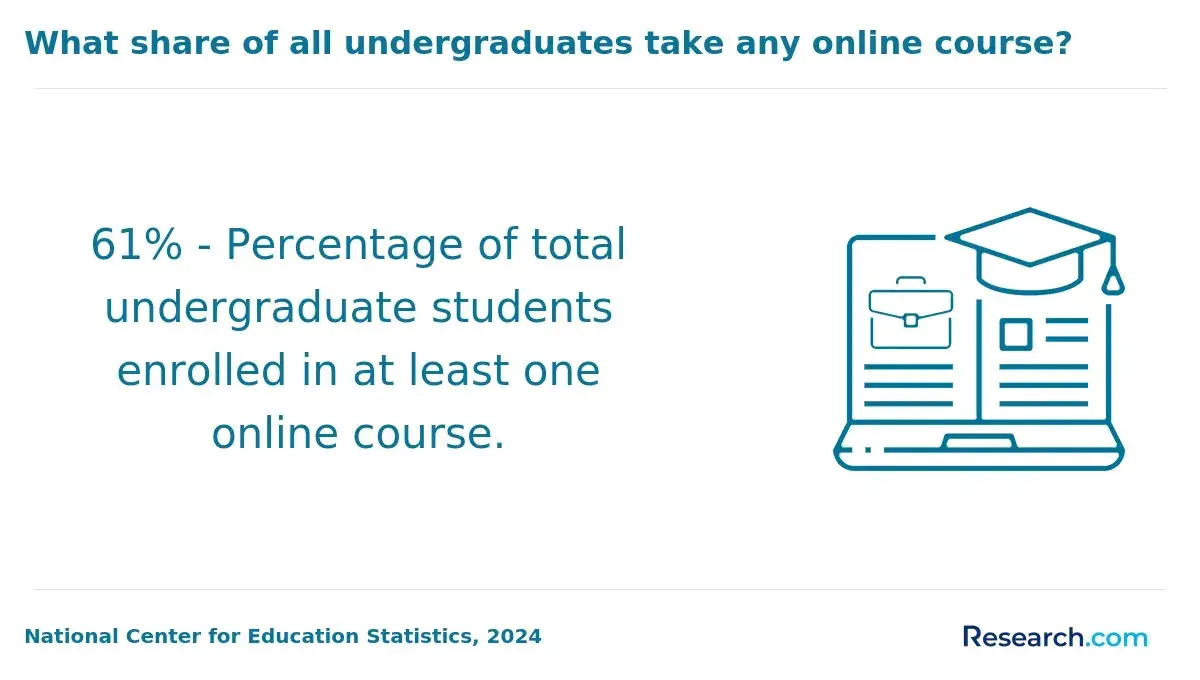
NCES data released in 2024 showed that distance education remains a major part of U.S. higher education after the pandemic-era shift. For students, the practical lesson is that online learning is mainstream, but quality and career support still vary widely by school and program.
The table below compares formats in terms of career planning. Use it to decide which learning environment will help you complete the degree while still building experience and relationships.
| Format | Career advantages | Career trade-offs | Best fit |
| Online | Flexible scheduling, easier to combine with work, access to schools outside your area | May require extra effort to network, find internships, and stay motivated | Working adults, caregivers, military students, rural students, and self-directed learners |
| Hybrid | Combines flexibility with some face-to-face labs, networking, or advising | Campus visits can complicate scheduling or commuting | Students who need hands-on components but cannot attend full time on campus |
| Campus-based | More immediate access to student organizations, labs, faculty, recruiters, and peer networks | Less flexible and often more expensive when housing or commuting is included | Traditional-age students, lab-intensive majors, and students who benefit from structured routines |
If you are comparing online degree programs, ask whether online students receive the same career services, internship support, alumni access, library access, and faculty advising as campus students. The diploma format matters less than whether the program helps you build credible skills and professional relationships.
Which college minors, double majors, or certificates strengthen your career profile?
Minors, double majors, and certificates can make your degree more marketable when they add a clear, useful skill set. They are less helpful when they delay graduation, increase debt, or duplicate what your major already covers.
The best add-on credential usually fills a gap: a humanities student adds analytics, a business student adds coding, a biology student adds public health, or a computer science student adds communication, ethics, or product management.
Consider these combinations when you want a stronger profile without losing focus. The goal is to create a coherent story employers can understand quickly.
- Major in psychology, sociology, or political science plus a minor or certificate in data analytics for research, policy, HR, or user-experience roles.
- Major in business plus accounting, information systems, supply chain, or professional sales for clearer entry-level positioning.
- Major in biology or health sciences plus public health, statistics, health informatics, or Spanish for healthcare, research, and community-facing roles.
- Major in English, communications, or journalism plus digital marketing, technical writing, UX writing, or analytics for content and strategy roles.
- Major in computer science or engineering plus entrepreneurship, design, cybersecurity, or communication for product, consulting, and leadership pathways.
Double majors are worth considering when both fields support a specific goal and the extra credits do not create major cost or time problems. If you are returning to school or pivoting careers, accelerated programs for career changers may be more efficient than adding multiple credentials without a clear target.
How can you build marketable skills through coursework, projects, and extracurriculars?
Marketable skills are abilities you can demonstrate to employers through evidence, not just claim on a resume. In college, you can build them through class projects, labs, research, competitions, student organizations, service learning, campus jobs, and independent portfolios.
Employers increasingly value proof of applied learning because AI tools can generate basic documents, summaries, and code. Your advantage comes from showing judgment: how you define a problem, choose tools, evaluate results, collaborate with people, and explain decisions.
Use the following steps to turn ordinary college activities into career evidence. This process works whether you are in a technical, business, health, education, or liberal arts program.
- Identify five target job postings and highlight repeated skills, tools, certifications, and responsibilities.
- Select courses with major projects, labs, fieldwork, writing assignments, presentations, or client-based work.
- Save polished work samples when allowed, removing confidential or private information.
- Join one organization where you can hold a role, manage a budget, lead an event, train members, or solve a real operational problem.
- Create a portfolio, GitHub profile, writing page, design collection, research poster, or case-study document that shows your work clearly.
- Practice explaining each project using the problem, action, result, and lesson learned.
A common mistake is listing soft skills without evidence. Instead of saying you have leadership skills, describe how you coordinated volunteers, improved a process, resolved a conflict, or delivered a project on time.
What role do networking, career services, and alumni connections play in job outcomes?
Networking is not just asking people for jobs. It is the process of building professional relationships that help you learn about industries, understand hiring expectations, discover opportunities, and get feedback before you apply.
Career services and alumni offices can be especially useful because they already connect students with employers who know the college. However, students often underuse these resources until senior year, when it is harder to build momentum.
Here is a practical way to use campus networks without feeling pushy. The goal is to gather information, build confidence, and become visible to people in your field.
- Meet a career advisor during your first year or transfer semester to map courses, experience, and recruiting timelines.
- Attend employer information sessions even before you are ready to apply so you can learn what recruiters ask for.
- Request short informational conversations with alumni in roles that interest you.
- Ask faculty which student projects, research opportunities, conferences, or professional associations fit your goals.
- Follow up with a brief thank-you message and one specific takeaway from the conversation.
- Return to career services for resume reviews, mock interviews, salary negotiation practice, and graduate school planning.
The most important mindset shift is to start early. A single conversation may not change your career, but repeated conversations help you choose better classes, avoid unrealistic assumptions, and find openings that may not be obvious from job boards alone.
How do salary potential and job outlook vary across common college majors?
Salary potential varies because majors connect to different occupations, industries, regions, credentials, and levels of responsibility. A degree can improve access to opportunities, but it does not guarantee a specific income.
BLS employment projections released in 2024 for the 2023 to 2033 period show that healthcare and social assistance is expected to add the most jobs among major industry sectors. For students, this does not mean everyone should choose healthcare; it means labor-market demand should be one factor alongside fit, licensure requirements, cost, and work environment.
The table below summarizes broad career directions rather than promising outcomes. Use it to compare how common majors tend to connect with salary potential and job outlook considerations.
| Major area | Common career directions | Salary and outlook considerations | Decision note |
| Computer science and data | Software development, data analysis, cybersecurity, systems analysis, AI-related support roles | Often tied to high-demand technical roles, but hiring can be competitive and skills must stay current | Best when paired with projects, internships, and evidence of practical problem-solving |
| Business, finance, and accounting | Accounting, financial analysis, operations, marketing, HR, consulting, sales, entrepreneurship | Broad access across industries; outcomes depend heavily on internships, analytical tools, and professional credentials | Good option for students who want many industry choices and can build applied experience |
| Healthcare and nursing | Nursing, allied health, care coordination, health administration, public health | Strong demand in many regions, but clinical roles often require licensure and demanding schedules | Good fit for students comfortable with responsibility, service, regulation, and patient or community needs |
| Engineering | Design, manufacturing, energy, civil infrastructure, robotics, quality, operations | Technical rigor can support strong entry-level options, but specialization matters | Best for students who enjoy math, systems, design constraints, and applied problem-solving |
| Education, social science, humanities, and communications | Teaching, writing, public service, research support, HR, marketing, nonprofit work, policy, user research | Outcomes vary widely; marketability improves with internships, portfolios, data skills, or graduate credentials | Can be flexible when students build a clear skill story and target specific roles |
Career fit also affects long-term satisfaction. Students who prefer focused, independent, or lower-social-drain work may want to compare work environments as carefully as salaries; resources on introvert jobs can help connect personality fit with realistic career paths.
How can you align college choices with licensing or certification requirements in your field?
Some careers are regulated, meaning you cannot simply graduate and start practicing independently. Licensing rules often vary by state and may include specific coursework, accredited program completion, supervised hours, exams, background checks, or continuing education.
This matters most in fields such as nursing, teaching, counseling, social work, accounting, engineering, architecture, real estate, and many healthcare occupations. If you choose the wrong program, you may need extra coursework or may not qualify for the exam you expected.
Use the following steps before committing to a major or school if your target career may require licensure or certification. These checks can prevent expensive delays later.
- Identify the exact job title you want, not just the general field.
- Find the state licensing board or official certification body for that occupation.
- Confirm required degree level, required accreditation, required courses, exams, supervised hours, and background requirements.
- Ask the college to state in writing whether the program meets requirements in your state.
- If you may move, check whether the credential transfers or whether additional requirements apply in other states.
- Budget for exam fees, prep materials, fingerprinting, clinical costs, liability insurance, or continuing education if applicable.
The biggest mistake is assuming that a degree name automatically qualifies you for a license. For example, a psychology bachelor's degree can be a strong foundation, but it does not qualify someone to work as a licensed psychologist. Similarly, accounting coursework may prepare you for business roles, but CPA eligibility depends on state-specific education and credit-hour rules.
Other Things You Should Know About
The best move is to combine a flexible major with real experience. Choose courses that build marketable skills, complete internships or applied projects, use career services early, and graduate with work samples or achievements you can explain in interviews.
The strongest choice usually sits between interest and employability. A practical major you dislike can lead to burnout, while a passion-based major without a career plan can limit options. Look for a field you can do well in, afford, and connect to multiple realistic careers.
Start during your first year or first transfer semester. You do not need a final career decision immediately, but early planning helps you choose better electives, meet advisors, find internships, and avoid missing recruiting or licensure deadlines.
It depends on the field, but employers commonly look at all three. Major matters for technical or licensed roles, experience shows readiness, and school reputation can help with recruiting access. For many students, internships, skills, and portfolios can make a bigger difference than prestige alone.
References
- Co-Op Programs: Benefits & Co-Op vs Internship | ECE https://www.ece.org/Blogs/co-ops.htm
- Differences in Majors, Minors, Concentrations, and Certificates - Goldey-Beacom College https://www.gbc.edu/academics/differences-in-majors-minors-concentrations-and-certificates/
- How to Choose a Major in College – Tips to Consider https://www.umassglobal.edu/blog-news/choose-a-major-college-tips-consider
- Online and hybrid college programs explained. Flexibility, risk, and the real value equation | CG https://collegegrind.org/posts/online-and-hybrid-college-programs-explained/
- Aligning and Embedding Industry Certifications with Bachelor’s Degrees https://workcred.org/Our-Work/Aligning-and-Embedding-Industry-Certifications-with-Bachelor-Degrees.aspx
- Professional Licensure & Location https://services.css.edu/TDClient/354/Portal/KB/Article/11783/Professional-Licensure-Location
- 7 Proven Strategies to Strengthen Alumni Job Connections and Referral Networks https://www.gospacewalk.com/blog/7-proven-strategies-to-strengthen-alumni-job-connections-and-referral-networks
- Hybrid Programs- Which Students Want Them? https://encoura.org/resources/wake-up-call/hybrid-programs-which-students-want-them/
- How to Make Sure Your Degree Leads to Licensure in Your State — Higher Education Licensure Pros https://www.higheredlicensurepros.com/blog/updated-top-5-things-to-know-about-licensure-before-you-choose
- Your Future Starts Now: 10 College Decisions for a Decade of Career Success https://matchtocollege.com/blog/10-college-decisions-shape-career-decade