2027 Best Majors for Fast-Growing Careers

Co-Founder and Chief Data Scientist
Choosing a major now means weighing interests against a labor market being reshaped by healthcare demand, AI, cybersecurity, and infrastructure investment. The U. S. Bureau of Labor Statistics projects total employment to grow by about 5.2 million jobs from 2024 to 2034, with healthcare and social assistance expected to add the most jobs.
This guide is for students, career changers, parents, and adult learners who want a practical way to compare majors, degree levels, costs, online options, accreditation, and career fit before investing time and money.
Key Things You Should Know
- Majors tied to healthcare, data science, cybersecurity, software, engineering technology, renewable energy, and healthcare management align with some of the strongest U.S. job-growth areas in the 2024-2034 BLS projections.
- Fast-growing careers do not all require the same credential: some start with certificates or associate degrees, many require bachelor's degrees, and clinical or advanced practice roles often require licensure or graduate study.
- Salary potential varies widely by role and location; BLS May 2024 median pay was $112,590 for data scientists, $124,910 for information security analysts, and $129,210 for nurse practitioners, but these figures are not guaranteed outcomes for any graduate.
What are the best majors right now for fast-growing, high-demand careers?
The best majors for fast-growing, high-demand careers are usually those that connect directly to expanding occupations, teach transferable technical skills, and offer more than one career path. A "fast-growing major" is not just a popular field of study; it is a degree area linked to occupations with strong projected demand, resilient employer need, and clear skill requirements.
For many students, the strongest choices fall into a few major clusters. The table below summarizes majors that combine labor-market growth, practical career pathways, and flexibility across employers.
| Major or program area | Common career paths | Why it is high demand | Best fit for |
| Nursing and health sciences | Registered nurse, nurse practitioner pathway, care coordinator, public health specialist | Aging populations, chronic disease management, and healthcare staffing needs support long-term demand | Students comfortable with science, patient care, shift work, and licensure requirements |
| Computer science and software development | Software developer, application engineer, systems developer, cloud developer | Organizations continue to need software talent for automation, AI-enabled tools, cybersecurity, and digital services | Students who enjoy coding, problem-solving, product building, and continuous learning |
| Data science, statistics, or analytics | Data scientist, business intelligence analyst, machine learning analyst, operations analyst | Employers need professionals who can turn large datasets into decisions, forecasts, and measurable business results | Students who like math, programming, visualization, and asking evidence-based questions |
| Cybersecurity or information assurance | Information security analyst, security operations analyst, risk analyst, cloud security specialist | Cyberattacks, regulatory pressure, and cloud adoption have made security a core business function | Students who like systems thinking, investigation, risk management, and technical problem solving |
| Engineering technology and renewable energy technology | Engineering technician, energy systems technician, wind or solar technician, quality specialist | Infrastructure upgrades, manufacturing modernization, and energy transition projects require applied technical talent | Students who prefer hands-on technical work, labs, equipment, and applied math |
| Healthcare administration or health informatics | Medical and health services manager, clinical operations analyst, health information manager | Healthcare systems need managers who understand compliance, staffing, data, reimbursement, and patient operations | Students interested in healthcare but less focused on direct clinical care |
| Accounting, finance, or business analytics | Accountant, financial analyst, audit associate, risk analyst, analytics consultant | Organizations need reliable financial reporting, compliance, budgeting, and data-informed planning | Students who want structured career paths with broad industry transferability |
BLS May 2024 wage data shows why technical and healthcare majors attract attention: the median annual pay for information security analysts was $124,910, while data scientists had a median of $112,590. These numbers should be used as labor-market context, not as a promise; entry-level pay depends on geography, internships, portfolio strength, employer type, and degree level.
Students who want a shorter path should also compare degree routes with industry credentials, especially in IT, healthcare support, skilled trades, and business operations. Some jobs may offer a faster entry point than a four-year degree, although advancement can still require additional education later.
Which industries and job sectors offer the strongest growth for new graduates?
The strongest industries for new graduates are those with durable demand rather than short-term hiring spikes. Healthcare, data-centered technology, cybersecurity, energy, infrastructure, and professional services stand out because they are tied to demographic change, digital transformation, regulation, and operational needs.
The table below compares major job sectors by the type of opportunity they tend to offer new graduates. Use it to think beyond a single job title and identify where a major can remain useful as the labor market changes.
| Industry or sector | Examples of entry points | Growth driver | Important caution |
| Healthcare and social assistance | Nursing, health administration, public health, health informatics, therapy support | Aging populations, expanded care coordination, chronic disease management, and behavioral health needs | Many roles require state licensure, clinical placements, background checks, or shift-based schedules |
| Technology, data, and AI-enabled business | Software development, data analytics, cybersecurity, cloud operations, product analytics | AI adoption, cloud migration, automation, data governance, and cybersecurity risk | Employers often expect portfolios, internships, certifications, or demonstrable technical projects |
| Energy, advanced manufacturing, and infrastructure | Engineering technology, renewable energy technology, logistics, quality assurance | Grid modernization, clean-energy projects, semiconductor investment, and supply-chain resilience | Some jobs are location-dependent and may require travel, fieldwork, or safety training |
| Professional, scientific, and business services | Accounting, consulting, HR analytics, operations analysis, financial planning | Compliance, risk management, outsourcing, analytics, and organizational efficiency | Career growth often depends on professional exams, client experience, and communication skills |
| Education and human services | Special education, instructional design, counseling support, social services coordination | Workforce shortages, student support needs, and demand for digital learning design | Pay and licensure rules vary substantially by state, district, and employer |
The most important trend for students is that "tech" is no longer confined to technology companies. Hospitals hire data analysts, banks hire cybersecurity specialists, manufacturers hire automation technicians, and schools hire instructional technology professionals. That makes majors with a technical foundation and domain knowledge especially valuable.
A common mistake is choosing a major only because an industry is growing. A better approach is to ask whether the major prepares you for tasks employers actually hire for, such as analyzing clinical data, securing networks, managing patient operations, building software, maintaining energy systems, or preparing audited financial reports.
How do I identify fast-growing majors using labor market and salary data?
To identify a fast-growing major, start with labor-market evidence, then test whether the academic program teaches the skills and credentials needed for the jobs you want. A major is stronger when it connects to multiple occupations, has clear employer demand, and gives you work samples, clinical experience, labs, internships, or licensure eligibility.
Use the following process to compare majors with less guesswork. It helps you avoid relying only on rankings, anecdotes, or a single salary number.
- Check BLS Occupational Outlook Handbook data for projected growth, typical entry-level education, and median pay for target occupations.
- Review state workforce dashboards because healthcare shortages, energy projects, and tech hiring differ by region.
- Search job postings in your target city and note repeated requirements such as Python, SQL, clinical licensure, CAD, CompTIA Security+, Excel, Tableau, or bilingual communication.
- Compare curriculum against those requirements and look for labs, practicums, capstones, internships, clinical rotations, or portfolio projects.
- Estimate total cost, time to completion, debt, and likely entry-level opportunities rather than judging the major by headline salary alone.
Cost matters because even a strong major can be a poor fit if the program price creates too much debt for the expected entry-level role. College Board's 2024 Trends in College Pricing reported average published tuition and fees of $11,610 for in-state students at public four-year institutions in 2024-2025, which gives families a useful benchmark before comparing net price, grants, and living expenses.
Red flags include programs that cannot explain job placement support, clinical placement policies, licensure alignment, transfer credit rules, or recent graduate outcomes. Also be cautious when schools advertise broad career possibilities without showing how coursework maps to actual job requirements.
What degree levels and training are required for today's fastest-growing careers?
Today's fastest-growing careers span several education levels. The right choice depends on whether you need quick workforce entry, a licensed profession, a technical bachelor's degree, or an advanced credential for leadership or clinical practice.
The table below shows how degree level often affects access to high-growth fields. Requirements vary by state, employer, and occupation, so always verify the specific credential required for the role you want.
| Education level | Typical timeline | High-growth areas it can support | When it makes sense |
| Certificate or industry certification | A few months to about one year | Cybersecurity support, IT support, medical coding, renewable energy support, project coordination | You need faster entry, lower upfront cost, or a stackable credential before committing to a degree |
| Associate degree | About two years full time | Nursing, radiologic technology, engineering technology, network support, paralegal studies | You want a practical credential, possible transfer pathway, or licensure-eligible technical role |
| Bachelor's degree | About four years full time | Computer science, data analytics, accounting, engineering, health administration, public health | You want broader career mobility, internship access, and eligibility for many professional roles |
| Master's degree | Usually one to three years after a bachelor's degree | Nurse practitioner, data science, cybersecurity leadership, public health, healthcare administration | You need advanced practice authority, leadership preparation, specialization, or career change leverage |
| Doctoral or professional degree | Varies widely by field | Physical therapy, advanced clinical roles, research, higher education, specialized healthcare | Your target occupation legally or professionally requires advanced doctoral preparation |
If you already hold a bachelor's degree and want advancement without an overly complex graduate path, comparing program structure can help. Some learners explore easiest master's options, but "easiest" should mean manageable scheduling and clear requirements, not weak academic quality.
Certificates are useful when they are tied to recognized skills or exams, but they are not substitutes for licensure in regulated fields. For example, a cybersecurity certification may strengthen an IT resume, while a nursing role requires an approved nursing program and state licensure.
How do online programs in fast-growing majors compare to on-campus options?
Online programs can be excellent for fast-growing majors when the field relies on digital tools, asynchronous coursework, or local internships. Campus programs can be better when students need intensive labs, clinical placements, studio equipment, or in-person networking.
The comparison below highlights practical differences that matter more than whether a program is online or on campus. The best format is the one that fits the learning outcomes required by your target career.
| Program feature | Online option | On-campus option | Best choice when |
| Flexibility | Often stronger for working adults, caregivers, and students with location constraints | Often more structured with fixed class times and in-person expectations | Choose online if scheduling flexibility is essential; choose campus if structure helps you stay engaged |
| Labs and clinical work | May use simulations, intensives, local placements, or hybrid labs | Usually offers direct access to campus labs, clinics, and equipment | Choose the format that can actually deliver required hands-on experiences |
| Networking | Depends on virtual events, cohort design, career services, and employer partnerships | Often easier for local employer events, faculty interaction, and peer networking | Choose campus if local employer access is a major priority |
| Career preparation | Can be strong if it includes projects, advising, internships, and portfolio support | Can be strong if it includes labs, clubs, research, and direct recruiting | Compare outcomes and support services, not just delivery mode |
An online degree can be a smart option for majors such as business analytics, cybersecurity, health administration, accounting, and computer science, especially when the program includes applied projects and employer-recognized tools. For clinical fields, verify whether online coursework still leads to required placements and licensure eligibility in your state.
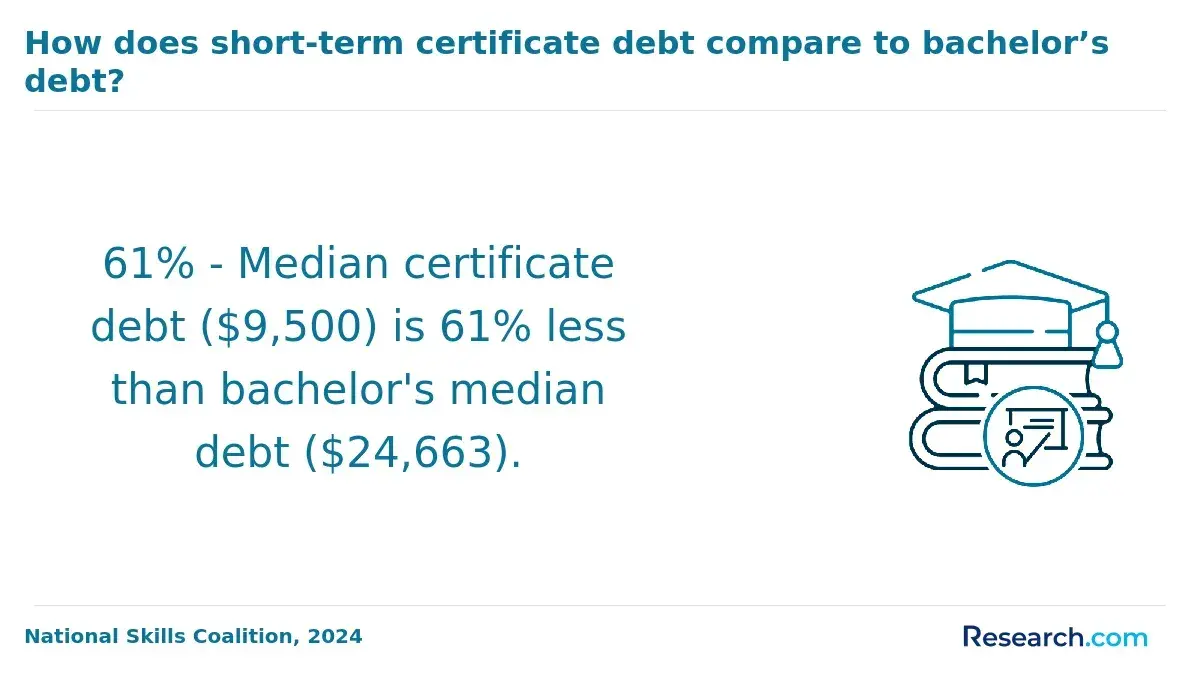
The biggest mistake is assuming online automatically means easier or cheaper. Online students still need time for assignments, group projects, exams, clinical hours, proctored assessments, and internships; they should also check technology fees and whether out-of-state online tuition differs from campus tuition.
What accreditation should programs in high-growth fields have, and why does it matter?
Accreditation matters because it affects financial aid eligibility, credit transfer, employer trust, graduate school admission, and licensure. At minimum, students should look for institutional accreditation from an agency recognized by the U.S. Department of Education or the Council for Higher Education Accreditation.
Programmatic accreditation is especially important in fields where public safety, licensure, or professional standards are involved. The table below summarizes common examples students should know before enrolling.
| Field | Accreditation or approval to check | Why it matters |
| Nursing | State board approval plus ACEN or CCNE accreditation when applicable | Licensure eligibility, graduate study, employer preference, and clinical quality standards |
| Engineering and engineering technology | ABET accreditation for many engineering and technology programs | Professional credibility, licensure pathways, and employer recognition in technical fields |
| Health information management | CAHIIM accreditation for relevant programs | Eligibility for certain health information credentials and alignment with industry standards |
| Healthcare management | CAHME accreditation for some graduate healthcare management programs | Signals that the program meets standards for healthcare leadership preparation |
| Business and accounting | AACSB, ACBSP, or IACBE accreditation, depending on institution and program | May support employer confidence, graduate admission, and CPA-related education planning |
| Teacher preparation | State approval and, in some cases, CAEP accreditation | Teacher licensure depends on state-recognized preparation routes |
Before applying, confirm accreditation directly with the accreditor and the state licensing board when licensure is involved. School websites can be useful, but the authoritative source is the accrediting or licensing body.
Students should be especially careful with programs that promise licensure "nationwide" without explaining state-by-state requirements. Licensure rules for nursing, teaching, counseling, social work, and allied health can vary, and an online program may not meet every state's requirements.
What core courses and skills are emphasized in majors linked to rapid job growth?
Majors connected to rapid job growth tend to emphasize both technical competence and adaptable workplace skills. Employers increasingly value graduates who can use tools, interpret data, communicate findings, and work across teams rather than simply complete isolated coursework.
The table below shows common courses and skill areas by major cluster. Use it to compare whether a program's curriculum matches the real work performed in the field.
| Major cluster | Common core courses | Skills employers commonly expect |
| Computer science and software | Programming, data structures, algorithms, databases, operating systems, software engineering | Coding, debugging, version control, system design, testing, teamwork, documentation |
| Data science and analytics | Statistics, Python or R, SQL, machine learning, data visualization, research methods | Data cleaning, modeling, dashboarding, explaining uncertainty, business problem framing |
| Cybersecurity | Networking, operating systems, risk management, ethical hacking, security operations, digital forensics | Threat analysis, incident response, access control, compliance awareness, technical writing |
| Nursing and health sciences | Anatomy, physiology, pharmacology, pathophysiology, clinical practice, evidence-based care | Patient assessment, clinical judgment, communication, documentation, safety, ethical decision-making |
| Healthcare administration | Healthcare finance, policy, quality improvement, operations, health data systems, compliance | Budgeting, process improvement, leadership, regulatory awareness, analytics, stakeholder communication |
| Engineering technology and energy | Applied math, circuits, CAD, instrumentation, materials, safety, energy systems | Troubleshooting, measurement, equipment operation, quality control, technical reporting |
| Accounting and business analytics | Financial accounting, managerial accounting, auditing, taxation, analytics, information systems | Excel, data interpretation, controls, compliance, reporting, attention to detail |
AI is changing the skill mix rather than removing the need for education. Students in fast-growing majors should learn how to use AI tools responsibly, verify outputs, protect data, and explain decisions to nontechnical audiences.
Strong programs usually include at least one applied experience. Look for capstone projects, clinical rotations, internships, co-ops, simulation labs, undergraduate research, or portfolio assignments that produce evidence you can show employers.
What admission requirements and prerequisites do fast-growing majors typically have?
Admission requirements for fast-growing majors vary because some programs are open-entry while others are selective, sequenced, or limited by clinical and lab capacity. Nursing, engineering, computer science, and allied health programs often have more prerequisites than general business or liberal arts majors.
The table below summarizes common requirements so you can prepare early and avoid delaying graduation because of missing prerequisites.
| Program area | Common admission requirements | Prerequisites to watch | Possible selection factors |
| Nursing and allied health | High school diploma or equivalent, college placement, science prerequisites, background check, immunizations | Anatomy, physiology, microbiology, chemistry, statistics | Prerequisite GPA, entrance exam scores, clinical seat availability, healthcare experience |
| Computer science | Standard undergraduate admission, math readiness, sometimes separate major admission | Precalculus, calculus, discrete math, introductory programming | GPA in gateway courses, portfolio, internal transfer limits at some universities |
| Data science and analytics | Undergraduate admission or graduate admission with quantitative background | Statistics, calculus, programming, databases | Math preparation, prior coding experience, statement of purpose for graduate programs |
| Cybersecurity and IT | Standard admission, placement testing, sometimes prior IT coursework for advanced programs | Networking, operating systems, programming basics | Certifications, technical experience, lab readiness |
| Engineering and engineering technology | Strong math and science preparation, sometimes selective college admission | Calculus, physics, chemistry, CAD or technical drafting for some tracks | Math placement, GPA, capacity in lab-based courses |
| Business, accounting, and analytics | Standard admission, sometimes progression requirements for upper-division business courses | College algebra, statistics, economics, accounting principles | GPA in business foundation courses, internship readiness |
Students who want a lower-cost starting point can complete prerequisites or career-focused coursework through community colleges before transferring. Comparing online associate degrees can be useful for learners who need flexibility while building credits toward nursing, IT, business, or technical transfer pathways.
Before enrolling, take these practical steps to reduce avoidable delays and surprises.
- Ask whether admission to the college also guarantees admission to the major, clinical sequence, or upper-division program.
- Confirm the minimum grade required in prerequisite courses and whether retakes are allowed.
- Check whether transfer credits will count toward the major, not just toward general electives.
- Ask how clinical placements, internships, labs, or practicums are assigned and whether students must find their own sites.
- Review technology, background check, immunization, equipment, uniform, software, and exam costs before estimating affordability.
What are the typical tuition costs, financial aid options, and return on investment?
Tuition is only one part of cost. Students comparing fast-growing majors should also account for fees, books, software, equipment, transportation, clinical expenses, exam fees, lost work time, and the number of credits required to graduate.
The table below provides national tuition benchmarks from College Board's 2024 Trends in College Pricing for 2024-2025. These are published tuition and fee averages, so your net price may be lower after grants and scholarships.
| Institution type | Average published tuition and fees | How to interpret it |
| Public two-year, in-district | $4,050 | Often the lowest-cost route for prerequisites, associate degrees, certificates, and transfer planning |
| Public four-year, in-state | $11,610 | Often a strong value for bachelor's degrees if the program has good completion and career support |
| Public four-year, out-of-state | $30,780 | Can be worthwhile for specialized programs but should be compared carefully against in-state alternatives |
| Private nonprofit four-year | $43,350 | Sticker price can be high, but institutional aid may substantially reduce the net price for some students |
Financial aid can include federal Pell Grants, state grants, institutional scholarships, employer tuition assistance, military education benefits, work-study, and federal student loans. The maximum federal Pell Grant for the 2024-2025 award year was $7,395, which can meaningfully reduce costs for eligible students but usually does not cover the full cost of attendance.
To evaluate return on investment, compare total net cost with realistic entry-level opportunities, not only midcareer salaries. Some learners may find that stackable credentials or high paying certificate jobs provide a better first step before committing to a longer degree.
Use this ROI checklist before making a final decision.
- Compare net price after grants and scholarships, not just advertised tuition.
- Estimate total time to completion, including prerequisites and clinical or internship requirements.
- Review graduate employment data, licensure pass rates, internship access, and employer partnerships.
- Check whether the program prepares you for a specific job family or only provides a broad credential.
- Limit borrowing by using transfer credits, community college pathways, employer assistance, or part-time work when practical.
How can I choose between multiple fast-growing majors that match my interests?
If several fast-growing majors match your interests, choose the one that best fits your strengths, preferred work environment, tolerance for required training, and desired lifestyle. A high-growth field is only a good choice if you can see yourself doing the work long enough to build skill and credibility.
The following decision process can help you narrow your options without relying only on salary rankings.
- Identify your preferred daily tasks: patient care, coding, analysis, troubleshooting, managing people, designing systems, teaching, or financial reporting.
- Match those tasks to majors that build the required skills and credentials.
- Compare the shortest credible path, the most flexible path, and the highest-advancement path for each major.
- Look at local job postings to see whether employers want a degree, certification, license, portfolio, or experience.
- Talk to current students, recent graduates, faculty, and professionals in the field before enrolling.
- Choose the program that gives you the best combination of affordability, completion likelihood, accreditation, practical experience, and career support.
Students with frequent relocations, caregiving responsibilities, or military family obligations should pay extra attention to transfer policies, asynchronous options, and state authorization. Resources on the best online colleges for military spouses can help mobile learners think through flexibility, benefits, and continuity.
The table below highlights common decision mistakes and better alternatives. Use it as a final check before committing to a major or school.
| Common mistake | Why it can hurt | Better approach |
| Choosing the major with the highest median salary | Median pay may reflect experienced workers, advanced degrees, or high-cost regions | Compare entry-level roles, advancement path, and your ability to complete the training |
| Ignoring accreditation or licensure | You may graduate without eligibility for the role you intended to pursue | Verify institutional accreditation, programmatic accreditation, and state requirements |
| Assuming every online program works in every state | Licensure, clinical placement, and state authorization rules may differ | Ask the school and licensing board whether the program meets requirements where you live |
| Overlooking prerequisites | Missing math, science, or gateway courses can delay graduation | Map prerequisites by term before enrolling and confirm transfer equivalencies |
| Relying only on rankings | Rankings may not reflect your cost, support needs, career goal, or local employer market | Compare curriculum, outcomes, advising, internships, net price, and completion support |
A strong final choice should answer three questions: Can I complete this program, can I afford it, and does it lead to roles I would realistically pursue? If the answer is unclear, gather more evidence before enrolling.
Other Things You Should Know About
No single major is best for everyone, but healthcare, data science, cybersecurity, computer science, engineering technology, and healthcare administration are among the strongest options because they connect to occupations with durable demand.
No. Growth and pay are different measures. Some fast-growing roles offer modest entry-level wages, while some high-paying roles require advanced degrees, licensure, experience, or competitive hiring processes.
Sometimes. Certificates can work well for IT support, cybersecurity entry roles, medical coding, project coordination, and skilled technical jobs. Regulated careers such as nursing, teaching, and many allied health roles usually require approved degree programs and licensure.
Compare daily work, required courses, total cost, time to completion, accreditation, internship or clinical access, local job postings, and advancement options. The better major is the one that fits both the labor market and your ability to complete the path.
References
- How to Choose a Major: Balancing Interests and Job Prospects https://www.cialfo.co/blog/how-to-choose-a-major
- Why should I choose an accredited program? - CACREP https://www.cacrep.org/for-students/why-should-i-choose-an-accredited-program/
- HNC, HND, BBA, MBA, DBA & Level 2-8 Management (Online & Blended Courses) https://severnbusinesscollege.com/blog57.php
- Online Degree vs. Traditional: Choosing the Right Path https://beal.edu/online-degree-vs-traditional/
- Top Degrees in Demand for the Future: 2026 & Beyond https://skillifysolutions.com/blogs/career-growth/top-degrees-in-demand-for-the-future/
- How People Pay for College [2026]: Financing Statistics https://educationdata.org/how-do-people-pay-for-college
- 10 in-demand careers for the future https://www.vu.edu.au/about-vu/news-events/vu-blog/10-in-demand-careers-for-the-future
- The fastest growing jobs require a college degree — or more https://jedkolko.com/2024/09/03/the-fastest-growing-jobs-require-a-college-degree-or-more/
- Why Should I Be Applying For Accredited Post-Graduate Programmes? https://www.amba-bga.com/insights/why-should-i-be-applying-for-accredited-post-graduate-programmes
- The Importance of Accreditation - GIEAA https://gieaa.fgjf.org/importance-of-ccreditation/