2027 How to Reposition Your Degree for a Different Industry

Co-Founder and Chief Data Scientist
Changing industries can feel risky when your degree seems tied to one field, but employers are increasingly hiring for skills, adaptability, and evidence of results. The U. S. Bureau of Labor Statistics projects total employment to grow by about 5.2 million jobs from 2024 to 2034, with demand shifting across healthcare, technology, business, and professional services.
This guide is for graduates, career changers, and working adults who want to translate an existing degree into new opportunities. You will learn how to map your education to target roles, close skill gaps, and make a smarter career move.
Key Things You Should Know
- Your degree does not need to match your next industry exactly; employers usually care more about role-relevant skills, work samples, and proof that you can solve the problems their field faces.
- Use current labor-market data before choosing a target path: BLS May 2024 wage data shows wide differences by field, with computer and IT roles reporting a median annual wage of $105,990 and business and financial operations roles reporting $80,920.
- The fastest repositioning plan usually combines three elements: a rewritten career story, 2 to 4 priority transferable skills, and one targeted credential, project, or portfolio piece that reduces employer doubt.
How do you reposition your degree for a new industry?
Repositioning your degree means changing the way you present your academic background so it fits the language, priorities, and hiring criteria of a different industry. You are not pretending your degree is something else; you are showing how the thinking, tools, projects, and outcomes from that degree apply to a new business context.
The best approach is to start with the role, not the degree. A psychology graduate moving into user experience research, for example, should not lead with broad coursework alone. They should connect research methods, survey design, behavioral analysis, and communication skills to product decisions and customer insights.
Use this sequence to reposition your degree without making your career change look random:
- Choose one target industry and 2 to 3 realistic job titles instead of applying broadly across unrelated roles.
- Collect 10 to 15 job postings and highlight repeated skills, software, credentials, and business problems.
- Translate your degree into employer language by matching courses, capstones, internships, research, labs, or projects to those repeated requirements.
- Identify the largest credibility gap, such as industry software, regulatory knowledge, analytics experience, or client-facing experience.
- Fill that gap with a short course, certification, work project, volunteer assignment, portfolio sample, or internal stretch assignment.
- Rewrite your resume, LinkedIn headline, and interview story around the target role rather than your old field.
This strategy works best when your new industry has overlapping responsibilities with your education or work history. It is harder, but still possible, when the new field has strict licensure, technical, or portfolio requirements. In those cases, you may need additional coursework before employers will view you as ready.
| Original degree background | Possible target industry | Bridge to emphasize | Common credibility gap |
| English, communications, or journalism | Marketing, content strategy, public relations | Writing, audience analysis, editing, messaging | Analytics tools, campaign metrics, SEO platforms |
| Psychology or sociology | Human resources, UX research, market research | Behavioral insight, interviewing, survey design | Business metrics, research software, portfolio samples |
| Biology or chemistry | Pharmaceuticals, health tech, quality assurance | Scientific reasoning, lab discipline, compliance mindset | Regulatory knowledge, documentation systems |
| Education | Corporate training, instructional design, customer success | Curriculum design, coaching, learning assessment | LMS tools, adult learning technology, business KPIs |
| History, political science, or philosophy | Policy, consulting, compliance, research analysis | Critical thinking, evidence review, written analysis | Quantitative tools, industry-specific regulations |
The main mistake is trying to convince employers that the degree alone is enough. A stronger strategy is to show a pattern: your education gave you a foundation, your recent choices prove direction, and your portfolio or credential demonstrates readiness.
What transferable skills should you highlight?
Transferable skills are abilities that remain useful across industries, even when job titles, products, customers, or regulations change. They matter because hiring managers often need evidence that you can contribute before you have direct industry experience.
Start with skills that connect to business outcomes. Instead of saying you are "organized," show that you can manage timelines, coordinate stakeholders, reduce errors, or turn complex information into decisions.
The most useful transferable skills to highlight usually fall into these categories:
- Research and analysis: Gathering information, evaluating sources, interpreting data, identifying patterns, and turning findings into recommendations.
- Communication: Writing clearly, presenting to different audiences, explaining technical or complex ideas, and adapting tone to clients, leaders, or users.
- Project coordination: Managing deadlines, tracking deliverables, balancing priorities, documenting progress, and keeping teams aligned.
- Problem-solving: Diagnosing root causes, comparing alternatives, testing solutions, and improving processes based on evidence.
- Technical fluency: Learning software quickly, using spreadsheets or databases, working with dashboards, and understanding how digital tools affect workflows.
- Stakeholder management: Listening to user needs, resolving conflicts, supporting customers, and working across departments.
AI is making this skill translation even more important. Many entry-level tasks now involve automation, dashboards, AI-assisted writing, or data tools, so employers may value candidates who can combine domain knowledge with judgment, communication, and responsible technology use.
| If your degree trained you to... | Describe it to employers as... | Use this evidence |
| Write research papers | Evidence-based analysis and structured communication | Reports, briefs, writing samples, policy memos |
| Complete lab work | Quality control, documentation, safety awareness, process discipline | Lab notebooks, SOP examples, compliance-related projects |
| Lead class projects | Project coordination and cross-functional teamwork | Timelines, deliverables, presentations, peer outcomes |
| Analyze literature or theory | Critical thinking, synthesis, and strategic interpretation | Case analyses, annotated research, executive summaries |
| Use statistics or methods courses | Quantitative reasoning and decision support | Data projects, spreadsheets, dashboards, survey findings |
A common red flag is listing too many soft skills without proof. Replace broad claims with examples that include a tool, audience, decision, or result. Even a class project can be useful if it shows how you approached a real problem.
Which credentials do employers want most?
The most valuable credential is the one that reduces uncertainty for the specific role you want. Employers may not need you to earn another full degree if a recognized certificate, software credential, license, or portfolio can prove that you understand the work.
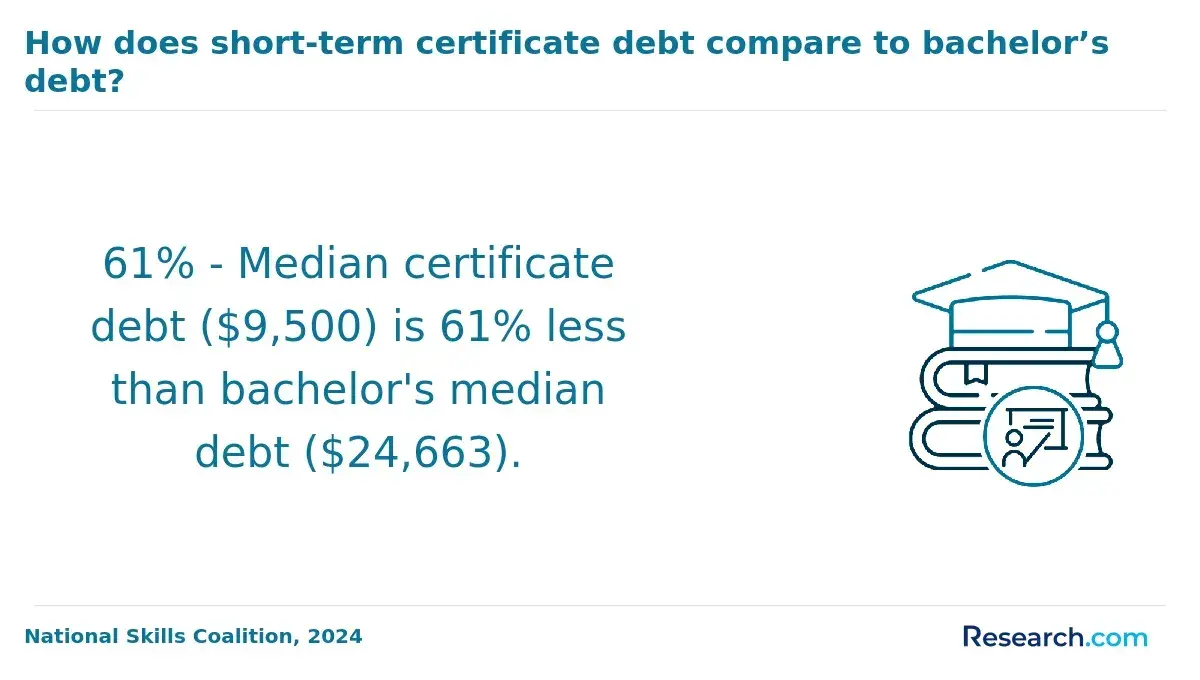
Credential-based hiring is especially common in fields where tools and regulations change quickly. However, credentials vary in value. A certificate from a respected university, industry association, software provider, or licensing body usually carries more weight than a generic badge with unclear assessment standards.
Use the table below to compare credential types before spending money or time. The point is not to collect as many credentials as possible, but to choose the one that best closes the gap between your current degree and your target role.
| Credential type | Best for | Typical signal to employers | Watch out for |
| Industry certification | Project management, HR, cybersecurity, finance, healthcare administration | You understand a recognized body of professional knowledge | Some require work experience before full certification |
| Software certification | Analytics, marketing, cloud, CRM, design, operations | You can use tools that appear in job postings | Tool knowledge alone may not prove strategic judgment |
| Graduate certificate | Career changers who need academic depth without a full degree | You completed structured coursework in a new field | Credits may not always transfer into a later degree |
| License | Teaching, nursing, counseling, accounting, certain legal or clinical roles | You meet regulated practice requirements | Rules vary by state and may require approved programs or exams |
| Portfolio-based credential | UX, data analytics, writing, design, marketing, instructional design | You can produce work similar to the job | Weak projects can hurt more than help if they look generic |
If you are considering graduate school, compare the credential against your target role's requirements first. Some career changers need only a short certificate, while others benefit from a targeted master's program; reviewing the most useful master's degrees can help you think about fields where advanced study may have clearer labor-market value.
A good rule is to avoid any credential that cannot answer one question: "What job requirement will this help me meet?" If the answer is vague, keep researching before enrolling.
How do you match your degree to target roles?
Matching your degree to target roles is a labor-market research task. You are looking for overlap between what you already know, what employers request, and what you can realistically build within a few months.
Start by grouping roles into three levels of fit. This prevents you from wasting time on jobs that require a completely different license or technical foundation while helping you spot roles where your degree is already an asset.
| Fit level | What it looks like | Example | Decision rule |
| Close fit | Your degree already taught several core tasks for the role | Communications degree to content marketing specialist | Apply after tailoring resume and adding role-specific samples |
| Bridge fit | Your degree is relevant, but you need tools, vocabulary, or industry context | Biology degree to clinical research coordinator | Add a credential, project, or informational interviews before applying heavily |
| Long-shift fit | The role requires regulated training, deep technical skills, or a different degree path | History degree to registered nurse | Research formal education, licensure, prerequisites, cost, and timeline first |
For a more accurate match, compare job descriptions line by line. Focus on repeated requirements, not one unusual posting that asks for everything. If 8 out of 10 postings mention SQL, Salesforce, HIPAA, grant writing, or Agile, that is a stronger signal than a single employer's preference.
Use this matching process before you apply:
- Create a spreadsheet with target job titles, industries, required skills, preferred skills, credentials, salary ranges, and recurring keywords.
- Mark each requirement as "already have," "can prove," "can learn quickly," or "major gap."
- Choose one close-fit role and one bridge-fit role so you can test the market without overcommitting to a long retraining path.
- Build one tailored proof point for each major requirement, such as a dashboard, writing sample, process map, case study, or certification.
- Adjust your applications after tracking which resumes receive interviews, recruiter replies, or silence.
If you are still choosing or completing an undergraduate path, it can help to compare flexible and lower-barrier options, including the easiest online degree routes, as long as you evaluate whether the program supports your intended industry and not just whether it is convenient.
The biggest mistake is choosing a target role based only on interest. Interest matters, but your first move into a new industry should also consider hiring volume, entry requirements, competition, and how quickly you can produce credible evidence.
Do you need certifications or additional coursework?
You need certifications or additional coursework only when they solve a specific employability problem. If job postings list a credential as "preferred," you may be able to compete with strong experience and a portfolio. If they list it as "required," especially in licensed or regulated fields, skipping it can prevent your application from being considered.
Think of additional education as a ladder. The right rung depends on your target role, budget, timeline, and existing qualifications. A short course may be enough for an entry-level analytics role, while a clinical, teaching, accounting, or engineering path may require formal prerequisites or state-approved education.
| Option | When it makes sense | When it may not | Typical trade-off |
| Self-paced course | You need basic tool fluency or vocabulary | The role requires assessed competency or official credentials | Low cost and fast, but weaker hiring signal |
| Professional certificate | You need structured proof for a business, tech, HR, or analytics role | The certificate is not recognized by employers in your target field | Moderate time investment with clearer skill signaling |
| Graduate certificate | You need academic depth but are not ready for a full graduate degree | You need broad retraining or licensure eligibility | Focused study, but transfer policies vary |
| Second bachelor's degree | You need undergraduate prerequisites in a new technical or licensed area | A master's bridge program or certificate would meet the same goal faster | Comprehensive, but often longer and more expensive |
| Master's or doctoral program | Your target role requires advanced expertise, research training, or leadership preparation | You only need one tool, portfolio, or entry-level credential | Stronger credential, but higher cost and opportunity cost |
Before enrolling, check whether the program is accredited, whether credits transfer, whether the curriculum aligns with job postings, and whether the credential is recognized by employers or licensing boards. For doctoral-level goals, comparing the cheapest online PhD options can be useful, but affordability should be weighed against faculty fit, research support, accreditation, and career outcomes.
Be cautious about programs that promise fast career transformation without showing employer alignment. No certificate can guarantee a job, and no degree automatically offsets a weak portfolio or unfocused search strategy.
How do you build experience without switching jobs?
You do not always need to quit your job to build experience for a new industry. Many career changers reduce risk by creating adjacent experience inside their current workplace, through volunteer projects, or through part-time freelance work.
This matters because employers often look for proof of applied ability, not just interest. If you can show that you used a target skill in a real setting, your degree becomes part of a broader readiness story.
Good experience-building options include the following:
- Internal stretch projects: Ask to help with reporting, training, documentation, customer research, process improvement, compliance tracking, or cross-department initiatives.
- Volunteer or nonprofit work: Offer skills such as grant writing, social media analytics, event planning, database cleanup, tutoring, research, or operations support.
- Portfolio projects: Create role-specific work samples, such as a market analysis, UX research plan, dashboard, lesson module, policy brief, or content strategy.
- Freelance micro-projects: Take small, clearly scoped assignments that let you practice client communication and produce measurable deliverables.
- Professional association involvement: Join committees, attend webinars, contribute to newsletters, or help with events in the target industry.
If you have a criminal record or other background concern, experience-building can also help you demonstrate reliability and current skills. Some learners compare online colleges that accept felons when planning a more formal education path, but it is still important to check program policies, licensing restrictions, and employer background requirements before enrolling.
When you build experience, document it as if it were a job. Track the problem, your actions, tools used, stakeholders involved, and outcome. Even if the outcome is modest, the structure helps employers see how you work.
How should you tailor your resume and LinkedIn?
Your resume and LinkedIn profile should make your target role obvious within seconds. If your documents still read like they belong to your old industry, employers may miss the connection between your degree and the job they need to fill.
The goal is not to hide your background. The goal is to reorder and translate it. Lead with relevant skills, proof, and direction, then use your degree as supporting evidence.
Use these updates before applying:
- Rewrite your headline around the target role, such as "Aspiring Data Analyst with Biology Research Background" or "Instructional Design Candidate with Classroom Teaching Experience."
- Replace a generic objective with a 3 to 4-line summary that connects your degree, transferable skills, target industry, and strongest proof point.
- Create a skills section using keywords from job postings, but include only skills you can discuss in an interview.
- Move relevant projects, certifications, tools, or coursework near the top if your formal job titles do not match the new industry.
- Rewrite bullet points to show outcomes, audiences, tools, and decisions rather than task lists.
- Add a portfolio, writing samples, GitHub, dashboard, case study, or project link when the field expects work samples.
A strong resume bullet connects old experience to new value. For example, "Wrote weekly department updates" is weaker than "Created weekly stakeholder briefings that translated operational issues into clear action items for managers." The second version shows communication, synthesis, and business usefulness.
If cost is a concern while you are preparing for a degree-supported pivot, reviewing best affordable online colleges can help you compare lower-cost completion options, especially if you need a bachelor's credential to qualify for roles or graduate study.
Avoid overloading your resume with unrelated coursework or every job you have held. A tailored resume is not shorter because it hides information; it is stronger because it gives the most relevant information the best placement.
Which industry research should you do first?
Industry research helps you avoid choosing a path that sounds appealing but has limited entry points, unclear advancement, or hidden credential barriers. Before investing in a course or rewriting your entire career story, learn how the target field hires.
Start with practical questions: Who hires for this role? What job titles are realistic for career changers? What software appears repeatedly? Are there state licensing rules? Are remote roles common, or is hiring concentrated in certain regions?
Prioritize these research sources and activities:
- Job postings: Review multiple postings to find repeated requirements, not just one employer's wish list.
- Labor-market data: Check wage ranges, job outlook, education requirements, and regional concentration for the target occupation.
- Informational interviews: Ask people in the field what entry-level candidates misunderstand and what proof employers value most.
- Professional associations: Look for competency models, certifications, conferences, ethics rules, and employer directories.
- LinkedIn profiles: Study how people with similar degrees entered the field and what credentials or projects helped them transition.
- Licensing boards or state agencies: For regulated fields, confirm requirements directly instead of relying on school marketing pages.
One useful test is to search for people who already made your intended move. If many professionals with your degree hold the target title, your repositioning story may be straightforward. If almost no one does, you may still be able to transition, but you should expect a longer bridge.
| Research question | Why it matters | Decision it supports |
| What job titles are realistic for first entry? | Career changers often apply too high or too broadly | Choosing target roles |
| Which requirements repeat across postings? | Repeated requirements show true market expectations | Selecting courses or credentials |
| Is the role licensed or regulated? | Some paths require approved education or exams | Avoiding invalid programs |
| What work samples are expected? | Portfolio expectations vary by field | Building proof of skill |
| What salary range is realistic for entry? | Median wages may not reflect career changer starting pay | Setting financial expectations |
The common mistake is researching only salary. Pay matters, but the smarter question is whether the path has realistic entry points for someone with your current degree, timeline, and financial constraints.
How do you explain your career change in interviews?
Your interview explanation should be concise, positive, and employer-focused. Hiring managers do not need your full life story; they need to understand why your move makes sense, why you are prepared, and how your background helps them.
A strong answer has three parts: the bridge from your degree, the reason for the target industry, and the proof that you have taken action. This structure reduces the risk that your career change sounds impulsive.
Use this framework to prepare your answer:
- Connect your foundation: Name the skills from your degree or prior work that are relevant to the role.
- Explain your direction: State what drew you to the industry in terms of problems, customers, products, or impact.
- Show preparation: Mention a project, credential, tool, internship, volunteer role, or internal assignment that demonstrates readiness.
- Return to employer value: End by explaining how your combined background can help the team.
For example: "My degree in sociology trained me to analyze behavior, conduct research, and communicate findings clearly. I became interested in customer insights because it applies those skills to product and business decisions."
"Over the past few months, I completed a survey research project, learned basic dashboard reporting, and interviewed professionals in the field. I think that combination of research discipline and customer focus would help your team turn user feedback into clearer recommendations."
Avoid framing the move as an escape from your old field. Employers respond better to candidates who can explain what they are moving toward, not only what they are leaving behind.
What salary and job outlook should you expect?
Salary and job outlook depend on the role you choose, your region, employer type, experience level, and whether your degree aligns closely with the work. Use national data as a starting point, not a promise of what you personally will earn.
BLS May 2024 wage data shows why role choice matters. The median annual wage for computer and information technology occupations was $105,990, while business and financial operations occupations reported $80,920. That gap does not mean every career changer should move into tech; it means you should compare pay against the time, cost, and difficulty of becoming competitive.
The table below summarizes broad U.S. occupational groups that often attract degree repositioning candidates. These are categories, so individual roles can vary substantially.
| Occupational group | Why degree changers consider it | BLS May 2024 median annual wage | What to verify before targeting it |
| Computer and information technology | Strong demand for software, data, security, systems, and support skills | $105,990 | Technical depth, portfolio expectations, competition for entry-level roles |
| Business and financial operations | Many roles value analysis, communication, compliance, and project skills | $80,920 | Preferred credentials, Excel or analytics requirements, industry knowledge |
| Management occupations | Experienced professionals may translate leadership into new sectors | $122,090 | Whether employers require direct industry experience for leadership roles |
| Healthcare practitioners and technical roles | Healthcare has many stable and mission-driven paths | $96,770 | Licensure, clinical training, prerequisites, state rules |
| Educational instruction and library roles | Teaching, training, student support, and learning design attract many changers | $59,940 | Certification requirements, school setting, advancement path |
Job outlook also varies by occupation. The BLS projects total U.S. employment to grow by about 5.2 million jobs from 2024 to 2034, but growth will not be evenly distributed. Healthcare, technology-related work, and roles tied to data, operations, and professional services may offer better opportunities than fields with shrinking employment or high automation exposure.
When estimating return on investment, include tuition, fees, exam costs, lost income, time to complete training, and the likely entry-level salary rather than only the median wage. A lower-cost certificate may produce a better short-term result than a full degree if the role does not require graduate education.
Other Things You Should Know About
Yes, but you need to show a clear bridge. Employers are more likely to consider you when your resume connects your degree to the role's skills, includes relevant projects or credentials, and explains why the move makes sense.
A certificate is often better when you need a specific tool, method, or industry credential. Another degree may make sense when the target role requires formal education, licensure, advanced theory, or a major technical foundation.
A close-fit transition may take a few months of resume tailoring, networking, and portfolio work. A regulated or highly technical transition can take a year or more if prerequisites, supervised experience, exams, or a new degree are required.
The biggest mistake is applying broadly without a focused target role. A stronger plan is to study job postings, identify repeated requirements, fill one or two important gaps, and present a consistent career-change story.
References
- How to Identify and Highlight Your Transferable Skills https://careers.progressive.com/en/posts/transferable-skills/
- How to Make a Career Change with No Experience https://careersatagoda.com/blog/tech/how-to-make-a-career-change-with-no-experience/
- Transferable Skills https://www.skillsyouneed.com/general/transferable-skills.html
- Pre-Approval of Academic Courses_Overview https://www.childlife.org/certification/become-certified/academic-requirements
- Transferable Skills: 17 Examples to Boost Your Resume & Career https://www.betterup.com/blog/transferable-skills
- 10 Reasons to Enroll in a Certificate Program https://www.managementconcepts.com/resource/top-10-reasons-to-consider-a-certification-program-and-why/
- 10 Certifications That Make You a Strong Candidate - United Staffing Solutions https://www.unitedstaffingsolutions.net/2025/12/11/10-certifications-that-make-you-a-strong-candidate/
- The Complete Guide to Industry Research https://www.ibisworld.com/blog/the-complete-guide-to-industry-research/99/1127/