2027 Best Degrees for Long-Term Career Growth

Co-Founder and Chief Data Scientist
Choosing a degree is harder when technology, hiring standards, and tuition costs are all changing at once. The U. S. Bureau of Labor Statistics projects about 356,700 computer and IT job openings each year from 2023 to 2033, showing why career-aligned education matters.
This guide is for students, working adults, and career changers who want a degree with durable value. You will learn which fields offer strong growth, how to compare online and campus programs, what accreditation means, and how to evaluate cost, salary potential, and advancement before enrolling.
Key Things You Should Know
- Degrees tied to healthcare, computing, engineering, data, education, accounting, and business operations tend to offer stronger long-term career growth because they connect to regulated work, infrastructure needs, or measurable employer demand.
- BLS 2024 education data shows workers age 25 and older with a bachelor's degree had median weekly earnings of $1,543 and a 2.5% unemployment rate, making degree choice and program quality important ROI factors.
- The best future-ready degree is not always the highest-paying one; it is the program that matches your target occupation, meets accreditation or licensure rules, controls total cost, and builds transferable skills such as analytics, communication, leadership, and digital fluency.
What are the best degrees for long-term career growth in today's job market?
The best degrees for long-term career growth prepare students for occupations that are difficult to automate completely, needed across many industries, or connected to licensing, infrastructure, public services, cybersecurity, healthcare, and data-driven decision-making. A "future-proof" degree does not mean the job market will never change. It means the degree builds durable skills and opens multiple career paths rather than locking you into one narrow role.
For most students, the strongest choices fall into several broad categories. Computer science, data science, cybersecurity, nursing, healthcare administration, engineering, accounting, finance, supply chain management, education, and business analytics all remain practical options because they combine technical knowledge with real workplace demand.
Readers comparing the best college degrees for the future should focus on how each major connects to specific roles, not just how impressive the major sounds.
The table below compares degree areas by career fit, common roles, and long-term value. Use it as a starting point rather than a final ranking, because the right choice depends on your strengths, budget, location, and willingness to pursue licensure or graduate study.
| Degree area | Common long-term roles | Why it can support career growth | Best fit for |
| Computer science and software development | Software developer, systems analyst, cloud engineer, technical product specialist | Technology skills are used across finance, healthcare, retail, defense, education, and government. | Students who enjoy problem-solving, coding, systems thinking, and continuous learning. |
| Data science, statistics, and analytics | Data analyst, business intelligence analyst, machine learning specialist, operations analyst | Organizations need people who can turn data into decisions, especially as AI tools expand. | Students strong in math, logic, research, and communicating findings clearly. |
| Nursing and allied health | Registered nurse, care coordinator, clinical manager, public health specialist | Healthcare demand is supported by population aging, chronic disease management, and clinical staffing needs. | Students who want patient-facing or healthcare operations work and can meet licensure requirements. |
| Engineering | Civil engineer, electrical engineer, mechanical engineer, industrial engineer | Engineering supports infrastructure, manufacturing, energy, transportation, and technology development. | Students who like applied science, design, math, and structured problem-solving. |
| Accounting and finance | Accountant, auditor, financial analyst, risk analyst, controller | Organizations need financial reporting, compliance, budgeting, and risk management even as tools automate routine work. | Students who value precision, regulation, analysis, and business decision-making. |
| Education and instructional design | Teacher, curriculum specialist, training manager, instructional designer | Education credentials can lead to school, corporate learning, workforce training, and education technology roles. | Students who want people-centered work and are willing to meet state certification rules when needed. |
| Business, operations, and supply chain | Operations manager, logistics analyst, project manager, procurement specialist | Companies need efficient systems, resilient supply chains, and managers who understand data and people. | Students who like organizing resources, improving processes, and leading teams. |
The safest approach is to choose a degree that gives you both a first job and a second move. For example, nursing can lead to clinical practice, case management, administration, informatics, or advanced practice with further education. Computer science can lead to software, cybersecurity, product management, or data engineering. Long-term growth usually comes from this combination of entry-level access and advancement flexibility.
Which industries and majors offer the strongest job security and advancement potential?
Job security is strongest when a field meets a persistent need, has barriers to entry, or requires judgment that cannot be fully delegated to software. Advancement potential is strongest when the degree can lead from individual contributor roles into specialist, supervisory, consulting, or leadership positions.
Healthcare is one of the clearest examples. BLS projections released in 2024 show healthcare occupations are expected to generate about 1.9 million openings each year from 2023 to 2033. For readers, this does not mean every healthcare degree is automatically a good investment; it means programs linked to licensure, clinical demand, care coordination, and health technology deserve close attention.
The most reliable industries tend to share a few characteristics. Before choosing a major, look at whether the field has durable demand drivers rather than relying on short-term hiring headlines.
- Healthcare and life sciences: Nursing, health informatics, public health, respiratory therapy, medical laboratory science, and healthcare administration can support stable career paths, especially when programs meet licensure or certification expectations.
- Technology and cybersecurity: Computer science, information systems, cybersecurity, cloud computing, and data analytics are useful across industries, but students should build portfolios and practical experience rather than relying on coursework alone.
- Engineering and infrastructure: Civil, electrical, mechanical, industrial, and environmental engineering are connected to transportation, utilities, construction, manufacturing, energy, and public works.
- Accounting, finance, and risk: Accounting, actuarial science, finance, and business analytics can lead to compliance, audit, planning, and advisory roles where employers value accuracy and judgment.
- Education, training, and workforce development: Teaching, special education, educational leadership, and instructional design can offer stable pathways, though certification rules and salaries vary significantly by state and employer.
AI is reshaping many of these industries rather than eliminating the need for educated workers. In accounting, AI may automate data entry but increase the value of advisory and compliance skills. In healthcare, AI may support imaging, documentation, and triage, but it does not replace licensed clinical judgment. In technology, AI tools can help write code, but employers still need people who understand architecture, security, testing, and business requirements.
A common mistake is choosing a major only because an industry is "hot." A stronger decision is to identify the role you want, confirm the education required, and then choose a program that builds the technical, communication, and professional skills employers actually request.
How can I evaluate whether a degree will stay in demand over the next decade?
To evaluate whether a degree will stay in demand, look beyond broad claims about growth. A strong degree should connect to identifiable occupations, produce skills that employers repeatedly request, and remain useful if your first career plan changes. The goal is to test the degree against labor market evidence, program quality, and your own risk tolerance.
Start with the occupation, not the major. Some degrees sound flexible but do not lead clearly to entry-level roles without internships, certifications, portfolios, or graduate study. Other degrees may seem narrow but offer strong access to licensed or regulated work. If you are considering a shorter path before committing to a full degree, comparing certificates I can get online can help you test an interest area, build job-ready skills, or add a credential to an existing degree.
Use the following steps to evaluate demand in a practical way. This sequence helps you avoid choosing a program based only on advertising, rankings, or a single salary figure.
- Identify three target job titles connected to the degree and review their typical education requirements, required skills, and preferred experience.
- Check whether the role is projected to grow, remain stable, or decline using U.S. labor market sources such as BLS occupational projections.
- Review real job postings in your region or preferred remote market to see whether employers ask for a degree, certification, portfolio, licensure, or specific software skills.
- Ask whether the degree builds transferable skills such as data analysis, writing, project management, technical troubleshooting, leadership, or regulated professional knowledge.
- Compare total program cost against likely entry-level roles, not only against senior-level salary examples used in marketing materials.
- Confirm whether the program's accreditation, clinical placements, internship support, or exam preparation matches the requirements for your intended career.
One useful benchmark is the overall value of education in the labor market. BLS 2024 education data shows bachelor's degree holders age 25 and older had a 2.5% unemployment rate, compared with 4.2% for workers with only a high school diploma. This does not prove that every bachelor's degree pays off, but it shows why degree level and field of study should be evaluated together.
Red flags include programs that cannot identify common job outcomes, make salary claims without context, lack recognized accreditation, offer limited career support, or push students into borrowing before explaining total cost. A degree is more likely to stay useful when it is connected to a real labor market, not just a broad promise of "career opportunity."
What are the most reliable U.S. degree pathways for long-term career growth?
Reliable degree pathways usually combine a clear credential sequence with work experience. For some careers, an associate degree is enough to enter the field. For others, a bachelor's degree is the standard entry point, while a master's degree supports management, specialization, or licensure advancement. Students should choose the minimum effective credential for their goal, then plan for stackable growth.
The table below summarizes common U.S. pathways by education level and career purpose. It can help you decide whether to start with a shorter credential, transfer into a bachelor's program, or pursue graduate study after gaining experience.
| Pathway | Typical timeline | Common fields | When it makes sense |
| Certificate or industry credential | A few months to one year | Cybersecurity, project management, medical coding, data analytics, cloud platforms | Best for adding a targeted skill, testing a field, or qualifying for entry-level support roles. |
| Associate degree | About two years full time | Nursing, radiologic technology, network administration, paralegal studies, accounting support | Best for cost-conscious students seeking faster workforce entry or transfer credit toward a bachelor's degree. |
| Bachelor's degree | About four years full time | Computer science, business, engineering, education, finance, public health | Best for roles where employers commonly expect a four-year degree and for students seeking broader advancement options. |
| Master's degree | One to three years, depending on format | Data science, nursing, education leadership, public health, business analytics, engineering management | Best when it unlocks licensure, specialization, leadership, or a salary band that is difficult to reach with a bachelor's alone. |
| Professional or licensure pathway | Varies widely | Medicine, law, advanced practice nursing, counseling, teaching, architecture | Best for students committed to a regulated profession with specific state or board requirements. |
Students who already have a bachelor's degree may not need to start over. Depending on the field, a bridge program, post-baccalaureate certificate, second bachelor's, or accelerated graduate option may be more efficient. Working adults exploring fast master's degrees should check whether the accelerated timeline still includes enough faculty access, applied projects, accreditation, and employer recognition.
For long-term growth, the most reliable pathway is often not the shortest or the most prestigious. It is the one that gets you qualified for the next realistic job while preserving options for later advancement. A low-cost associate-to-bachelor's transfer route, for example, may offer stronger ROI than an expensive direct-entry program if both lead to similar opportunities and the transfer agreement is clear.
How do online degree programs compare to campus-based options for career advancement?
Online and campus-based degrees can both support career advancement when they are properly accredited, academically rigorous, and aligned with the target career. Employers usually care more about the institution, accreditation, skills, experience, and credential relevance than whether every class met in person. The better question is whether the format helps you complete the degree while gaining the experience your field requires.
Online programs are especially useful for working adults, caregivers, military learners, and students who cannot relocate. Campus programs may be better for students who need labs, clinical placements, studio work, intensive networking, or a structured residential experience. Hybrid programs can offer a middle ground when a field requires hands-on learning but also benefits from flexible coursework.
The table below compares online and campus formats across decision factors that affect long-term career value. Use it to identify trade-offs before committing to a delivery format.
| Factor | Online degree programs | Campus-based programs | Decision guidance |
| Flexibility | Often better for working students and those balancing family responsibilities. | Usually follows a more fixed weekly schedule. | Choose online if schedule control is essential for completion. |
| Hands-on requirements | May require local labs, practicums, residencies, or clinical placements. | Often easier to access labs, studios, clinics, and campus facilities. | Choose campus or hybrid if the field depends heavily on supervised practice. |
| Networking | Can be strong when programs include live sessions, group projects, alumni access, and career coaching. | Can provide more informal peer, faculty, and employer interaction. | Do not assume online means isolated; ask how the program builds professional connections. |
| Career services | Quality varies; strong programs provide virtual advising, employer events, and portfolio support. | May offer local recruiting pipelines and in-person events. | Ask for services available specifically to online students. |
| Employer perception | Generally stronger when the school is accredited, reputable, and does not label the diploma as a weaker credential. | Often familiar to regional employers. | Prioritize recognized institutions and relevant outcomes over format alone. |
Online learning also fits many digital careers. Students comparing the best degrees for remote work should look for programs that include collaboration tools, asynchronous communication, project portfolios, and internships or simulations that mirror distributed teams.
The main mistake is assuming online automatically means easier or lower quality. Strong online programs can be demanding, especially in fields such as nursing, cybersecurity, engineering management, analytics, and education. Before enrolling, ask how exams are proctored, how group projects work, whether faculty have industry experience, and whether the school helps online students secure internships, practicums, or capstone projects.
How does accreditation affect the long-term value and recognition of a degree?
Accreditation is one of the most important quality checks in higher education. It is a formal review process that evaluates whether a school or program meets accepted academic and administrative standards. For students, accreditation affects credit transfer, financial aid eligibility, employer recognition, graduate school admission, and licensure in regulated fields.
Institutional accreditation applies to the college or university as a whole. Programmatic accreditation applies to specific programs, often in fields such as nursing, engineering, business, social work, counseling, architecture, and education. Some careers only require graduation from an institutionally accredited school, while others require a program accredited by a specific professional body.
Before enrolling in a career-focused degree, verify accreditation through official sources and match it to your target outcome. These checks are especially important when a program is online, accelerated, unusually inexpensive, or marketed heavily to career changers.
- Confirm institutional accreditation: Make sure the college or university is recognized by an accreditor accepted by the U.S. Department of Education or the Council for Higher Education Accreditation.
- Check programmatic accreditation when relevant: For example, engineering students may need ABET-accredited programs, nursing students may need CCNE or ACEN-accredited programs, and business students may value AACSB, ACBSP, or IACBE accreditation depending on goals.
- Match accreditation to licensure rules: Teaching, counseling, nursing, social work, and other licensed careers may have state-specific requirements that go beyond general accreditation.
- Ask about transfer and graduate school acceptance: Credits from unaccredited or poorly recognized institutions may not transfer, even if the coursework sounds similar.
- Be cautious with vague claims: Phrases such as "licensed," "approved," or "internationally recognized" do not always mean the same thing as recognized accreditation.
Accreditation does not guarantee a job, a salary, or a high-quality experience in every classroom. It does, however, reduce the risk that your credential will be rejected by employers, licensing boards, financial aid systems, or graduate schools. For long-term career growth, that recognition can matter as much as the major itself.
What admissions requirements and prerequisites should I expect for high-growth degrees?
Admissions requirements vary by school, degree level, and field, but high-growth programs often expect evidence that you can handle quantitative, scientific, technical, or professional coursework. Competitive programs may also review grades in prerequisite courses, work experience, test scores, essays, recommendations, or interviews.
For bachelor's programs, students commonly submit transcripts, an application, and sometimes standardized test scores, though many schools remain test-optional. Transfer students may need a minimum GPA and completed general education courses. Adult learners should ask whether prior college credit, military training, professional certifications, or work-based learning can reduce time to completion.
The table below shows common prerequisites by degree area. It helps you identify preparation gaps before applying, which can save time and reduce the chance of delayed graduation.
| Degree area | Common prerequisites or preparation | Additional admissions considerations |
| Computer science and data science | Algebra, precalculus or calculus, introductory programming, statistics | Portfolio projects or placement exams may matter for advanced standing. |
| Nursing and allied health | Anatomy and physiology, microbiology, chemistry, psychology, nutrition | Programs may require background checks, immunizations, clinical eligibility, and minimum science grades. |
| Engineering | Calculus, physics, chemistry, computer-aided design or programming depending on discipline | Some programs require direct admission to the major or progression after first-year coursework. |
| Business analytics, finance, and accounting | College algebra, statistics, economics, introductory accounting or business courses | Graduate programs may prefer work experience or quantitative readiness. |
| Education | General education coursework, subject-area preparation, communication skills | Teacher preparation programs may require background checks, field placements, and state testing. |
| Public health and healthcare administration | Statistics, biology, psychology, sociology, writing-intensive coursework | Graduate programs may value healthcare, nonprofit, research, or community experience. |
Applicants to graduate programs should expect more specialized review. Master's programs in data science may require programming and statistics. Nursing graduate programs may require an active RN license and clinical experience. MBA, analytics, and management programs may review professional history, leadership potential, and quantitative readiness.
To prepare efficiently, request a degree audit before enrolling, especially if you have prior credits. Ask admissions advisors which courses are true prerequisites, which can be completed after admission, and which must be finished with a specific grade. A common mistake is enrolling in a program only to discover that missing prerequisites add extra semesters and cost.
How much do future-proof degrees typically cost, and what financial aid is available?
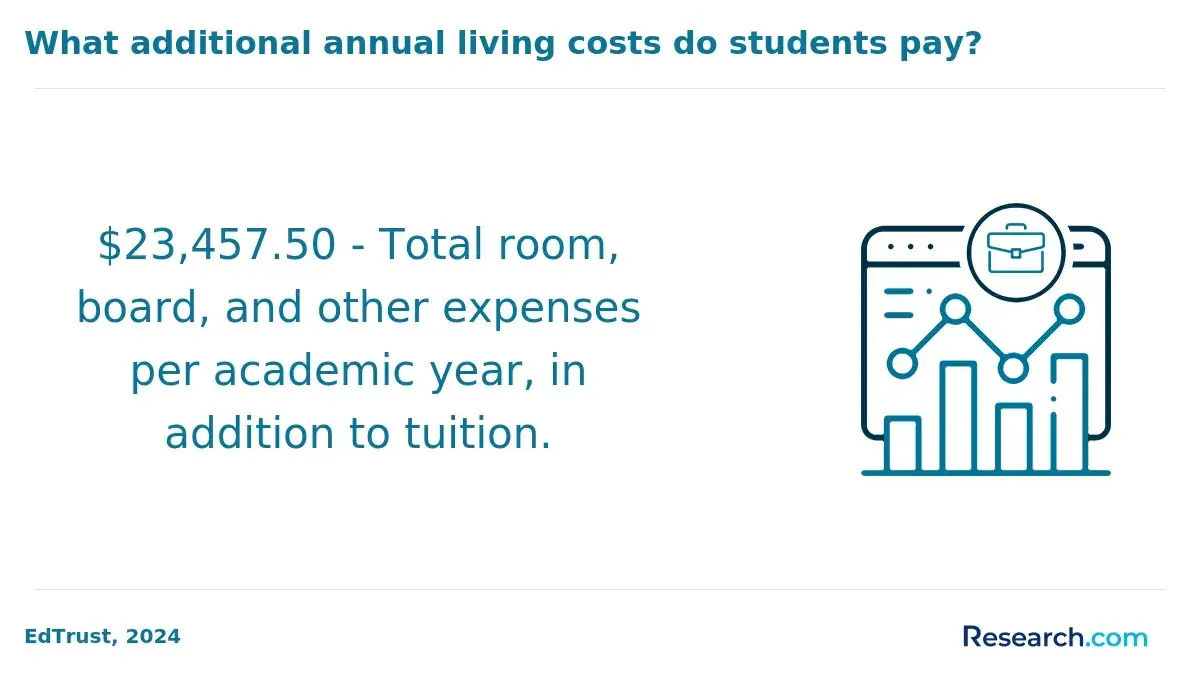
The cost of a future-ready degree depends on institution type, residency status, program length, fees, books, technology, clinical or lab costs, and whether you can transfer credits. Tuition alone can be misleading because the total cost of attendance may include housing, transportation, lost work hours, licensure exam fees, equipment, and interest on borrowed funds.
College Board's 2024 Trends in College Pricing reported that published tuition, fees, housing, and food for full-time undergraduates averaged far less at in-state public four-year institutions than at private nonprofit four-year institutions. For readers, the key takeaway is not that one sector is always better; it is that net price after grants, scholarships, and transfer credits matters more than sticker price.
Most students should compare costs in layers. The following cost categories are the ones most likely to affect ROI and completion.
- Tuition and required fees: Compare per-credit cost, semester fees, online learning fees, lab fees, and clinical placement fees.
- Time to completion: A cheaper annual tuition may cost more overall if transfer credits are rejected or required courses are offered infrequently.
- Living and transportation costs: Online students may save on commuting or relocation, while campus students may gain easier access to facilities and local recruiting.
- Books, software, equipment, and exams: Technology, engineering, nursing, design, and certification-focused programs may require specialized tools or testing fees.
- Opportunity cost: Full-time study may speed completion but reduce income; part-time study may protect income but extend the timeline.
Financial aid can include federal grants, state grants, institutional scholarships, employer tuition assistance, military education benefits, work-study, and federal student loans. Students should complete the FAFSA if eligible, ask schools for a full financial aid estimate, and compare net price across programs before making a deposit.
For cost control, consider community college transfer pathways, in-state public universities, competency-based programs, employer-sponsored education, and credit for prior learning. Be careful with programs that emphasize easy financing but do not clearly explain graduation rates, loan obligations, licensure outcomes, or job placement support. Borrowing can be reasonable for a strong program with clear outcomes, but it should be tied to a realistic repayment plan.
What career outcomes, salaries, and promotion pathways are common for these degrees?
Career outcomes vary by occupation, region, experience, employer, licensure, and economic conditions. A degree can qualify you for a field, but internships, clinical hours, portfolios, certifications, communication skills, and professional networks often determine how quickly you move from entry-level work to higher responsibility.
BLS 2024 education data shows workers age 25 and older with a master's degree had median weekly earnings of $1,840, compared with $1,543 for those with a bachelor's degree. This does not mean every graduate degree is worth the cost, but it helps explain why some professionals pursue advanced credentials when the degree is directly tied to leadership, licensure, or specialization.
Students comparing the most lucrative master's degrees should focus on role alignment rather than degree prestige alone.
The table below summarizes common outcomes for high-growth degree areas. Salary potential should be interpreted as role-dependent, not as a promise attached to the degree itself.
| Degree area | Common entry roles | Common advancement paths | Skills that support promotion |
| Computer science | Junior developer, QA analyst, IT analyst, support engineer | Software engineer, cloud architect, cybersecurity lead, engineering manager | Coding, systems design, security awareness, collaboration, product thinking |
| Data science and analytics | Data analyst, reporting analyst, research assistant | Data scientist, analytics manager, machine learning engineer, strategy analyst | Statistics, SQL, Python or R, visualization, business communication |
| Nursing and healthcare | Registered nurse, care coordinator, health services assistant | Nurse manager, nurse practitioner, informatics specialist, healthcare administrator | Clinical judgment, documentation, patient communication, leadership, quality improvement |
| Engineering | Engineering associate, design engineer, field engineer | Professional engineer, project manager, systems lead, engineering director | Applied math, design tools, safety standards, project management, technical writing |
| Accounting and finance | Staff accountant, audit associate, financial analyst | CPA, controller, finance manager, risk director, CFO track roles | Financial reporting, compliance, forecasting, ethics, advisory communication |
| Education and training | Teacher, training coordinator, instructional assistant, curriculum associate | Lead teacher, instructional designer, curriculum director, principal, learning manager | Instructional planning, assessment, technology integration, coaching, classroom or learner management |
Promotion often requires more than time in the role. Technical workers may need certifications, project leadership, or a portfolio of shipped work. Healthcare workers may need licensure upgrades, specialty certifications, or graduate education. Business and finance professionals may need CPA, CFA, PMP, or analytics credentials depending on the path. Educators may need state certification, endorsements, or administrative credentials.
The best long-term strategy is to plan career moves in stages. First, qualify for an entry role. Second, build evidence of performance through projects, supervised practice, or measurable results. Third, add credentials only when they unlock a specific next step. This avoids the mistake of collecting degrees without a clear occupational payoff.
How can I choose a reputable program that aligns with my long-term career goals?
Choosing a reputable program starts with a clear career target. A school can be well known and still be a poor fit if it lacks the accreditation, prerequisites, career services, or experiential learning required for your goal. Conversely, a less famous public or regional institution may offer excellent value if it has strong employer ties and transparent outcomes.
Use a structured comparison process before applying or enrolling. This helps you separate meaningful quality indicators from marketing language.
- Define your target role, acceptable alternatives, and preferred work setting, such as hospital, remote technology team, public agency, school district, or corporate office.
- Verify institutional and programmatic accreditation, especially for licensure-based careers such as nursing, teaching, counseling, engineering, and social work.
- Request total cost of attendance, estimated net price, transfer credit evaluation, and a sample degree plan showing the fastest realistic completion timeline.
- Review curriculum for current tools, applied projects, internships, clinical placements, labs, capstones, or portfolio work relevant to your field.
- Ask how career services support your format and location, including online students, part-time students, and career changers.
- Compare outcomes carefully, including graduation rates, licensure exam pass rates when applicable, employment support, and alumni career paths.
- Speak with current students, alumni, faculty, or advisors to learn whether the program delivers the support promised during admissions.
Good programs are transparent about both strengths and limitations. They explain who the program is designed for, what prerequisites are needed, what outcomes are realistic, and what additional credentials may be required. They do not imply that a degree alone will guarantee a job or that every student will reach the highest salary examples.
Common mistakes include choosing based only on rankings, ignoring accreditation, underestimating prerequisite time, assuming all credits will transfer, overlooking licensure rules, and borrowing without comparing net price. A strong final choice should answer three questions: Can I complete it? Will employers or licensing boards recognize it? Does it move me toward a specific next career step?
Other Things You Should Know About
There is no single best degree for everyone, but computer science, data analytics, nursing, engineering, accounting, finance, healthcare administration, and education-related fields often offer strong long-term options. The best choice is the one that connects to a specific occupation, fits your strengths, and has a realistic cost-to-outcome balance.
A bachelor's degree can still be worth it when it leads to roles that require or strongly prefer the credential. Its value depends on the major, school quality, total cost, transfer credits, work experience, and whether the program builds skills employers use.
Choose a degree when your target career requires broad education, licensure eligibility, or long-term advancement. Choose a certificate when you need a targeted skill, want to test a field, or already have a degree and need a marketable specialization.
Online degrees can be respected when they come from accredited, reputable institutions and align with the job you want. Employer perception is strongest when the program includes rigorous coursework, practical projects, career support, and recognized credentials.
References
- 10 Best Degrees for the Future: Top Majors in Demand for 2025+ https://pioneeracademics.com/news/future-proof-college-majors/
- How to Choose the Right Program for Your Career Goals | Brighton https://brightoncollege.com/blog/how-to-choose-the-right-program-for-your-career-goals/
- Build Your Career with a Goal-Oriented Development Plan – Step by Step https://sundancecollege.com/blog/goal-oriented-career-development-plan-guide/
- Is a College Degree Worth the Cost in 2024? Financial Aid, Cost Savings, and Outcomes https://walshcollege.edu/admissions-advising/is-a-college-degree-worth-the-cost/
- 5 High School Classes Highly Selective Colleges Expect You to Take https://www.saraharberson.com/blog/high-school-classes-highly-selective-colleges-expect-you-to-take
- Does College Pay Off? A Comprehensive Return On Investment Analysis - FREOPP https://freopp.org/whitepapers/does-college-pay-off-a-comprehensive-return-on-investment-analysis/
- Top Degrees in Demand for the Future: 2026 & Beyond https://skillifysolutions.com/blogs/career-growth/top-degrees-in-demand-for-the-future/
- Top 10 Jobs with High Job Security in 2026 https://www.onlineu.com/resources/college-planning/top-ten-jobs-with-high-job-security
- Graduate degrees pay—but it’s complicated | Brookings https://www.brookings.edu/articles/graduate-degrees-pay-but-its-complicated/
- Long-Term Career Goals: 20 SMART Goal Examples and How to Set Them https://www.qooper.io/blog/long-term-career-goals