2027 What Can You Do With a Social Work Degree?

Co-Founder and Chief Data Scientist
Choosing a social work degree means weighing purpose, licensure rules, fieldwork, and career payoff. The field matters because U. S. demand remains steady: the Bureau of Labor Statistics projects social worker employment to grow 7% from 2023 to 2033, faster than the average for all occupations.
This guide is for prospective students, career changers, and human-services workers comparing BSW, MSW, online, and campus options. You will learn which roles fit each degree level, how licensing works, what salaries look like, and how to choose a program that supports your goals.
Key Things You Should Know
- A bachelor's in social work can lead to entry-level case management, community outreach, child welfare, and human-services roles, while clinical therapy and most independent practice roles usually require an MSW plus state licensure.
- According to the Bureau of Labor Statistics, the median annual wage for social workers was $61,330 in May 2024, but pay varies widely by specialization, employer, state, licensure level, and experience.
- Program accreditation is critical: students who want licensure should prioritize Council on Social Work Education-accredited BSW or MSW programs and verify state-specific licensing requirements before enrolling.
What can you do with a social work degree across different career paths?
A social work degree prepares you to help individuals, families, groups, and communities solve practical problems and navigate systems such as health care, schools, courts, housing, and public benefits. The best path depends on whether you want direct client service, clinical practice, policy work, nonprofit leadership, or community advocacy.
In general, social work career paths fall into three broad categories. The table below compares them so you can see how degree level, work style, and advancement potential differ.
| Career path | Typical responsibilities | Common degree level | Best fit for |
| Direct service and case management | Assess needs, coordinate services, connect clients with housing, benefits, treatment, or community resources | BSW or related bachelor's degree; MSW for advancement | People who want client contact without necessarily becoming therapists |
| Clinical social work | Provide assessment, diagnosis support, psychotherapy, treatment planning, and crisis intervention | MSW plus supervised experience and clinical licensure | Students who want to become licensed therapists or behavioral health providers |
| Macro, policy, and administration | Design programs, evaluate services, manage nonprofits, influence policy, write grants, and lead community initiatives | BSW for entry roles; MSW, MPA, MPH, or related graduate training for leadership | People interested in systems change, management, research, or advocacy |
Social work can be a strong fit if you want mission-driven work and can handle emotionally complex situations. It may be less suitable if you want a role with minimal interpersonal conflict, predictable workloads, or high earnings immediately after graduation. Readers comparing quieter helping careers may also want to review good paying jobs for introverts, since some social work roles are more people-intensive than others.
Common career directions include the following. These examples are not interchangeable, so it helps to match your degree plan to your desired responsibilities early.
- Case manager or care coordinator in hospitals, community agencies, reentry programs, aging services, or behavioral health organizations
- Child, family, or school social worker supporting students, parents, foster families, and at-risk youth
- Healthcare social worker helping patients and families manage illness, discharge planning, disability resources, and care transitions
- Mental health or substance use social worker supporting treatment plans, crisis response, recovery services, and therapy teams
- Policy analyst, program evaluator, community organizer, or nonprofit administrator working on broader social systems
The decision point is not simply "social work or not." It is whether you want a generalist human-services role, a licensed clinical path, or a policy and leadership path. Each choice has different education, supervision, and salary implications.
What jobs can you get with a bachelor's vs. master's in social work?
The difference between a bachelor's in social work and a master's in social work is one of the most important career decisions in this field. A BSW usually prepares students for supervised generalist practice, while an MSW is the standard graduate credential for clinical licensure, advanced casework, supervisory roles, and many specialized positions.
The table below summarizes the practical differences between common BSW and MSW outcomes. Use it as a planning tool, not as a licensing guarantee, because state rules and employer requirements vary.
| Degree level | Common jobs | Typical scope | When it makes sense |
| BSW | Case manager, social services assistant, child welfare worker, community outreach coordinator, family support specialist | Generalist practice, service coordination, advocacy, intake, documentation, and referrals under agency supervision | You want to enter the field sooner, reduce graduate-school debt, or confirm that social work is the right career before pursuing advanced licensure |
| MSW | Clinical social worker, therapist, medical social worker, school social worker, program manager, policy specialist | Advanced practice, clinical assessment, treatment planning, supervision, program design, and specialized intervention | You want clinical licensure, higher-responsibility roles, leadership options, or specialization in healthcare, mental health, schools, or policy |
| Advanced standing MSW | Same as MSW, depending on concentration and licensure path | Accelerated graduate study for eligible BSW graduates from accredited programs | You earned a recent CSWE-accredited BSW and want to shorten the MSW timeline |
A BSW can be worth it if your immediate goal is employment in social services and you want a structured pathway into the profession. However, students who already know they want to provide therapy, diagnose mental health conditions where permitted, or practice independently should plan for an MSW and post-degree supervised experience.
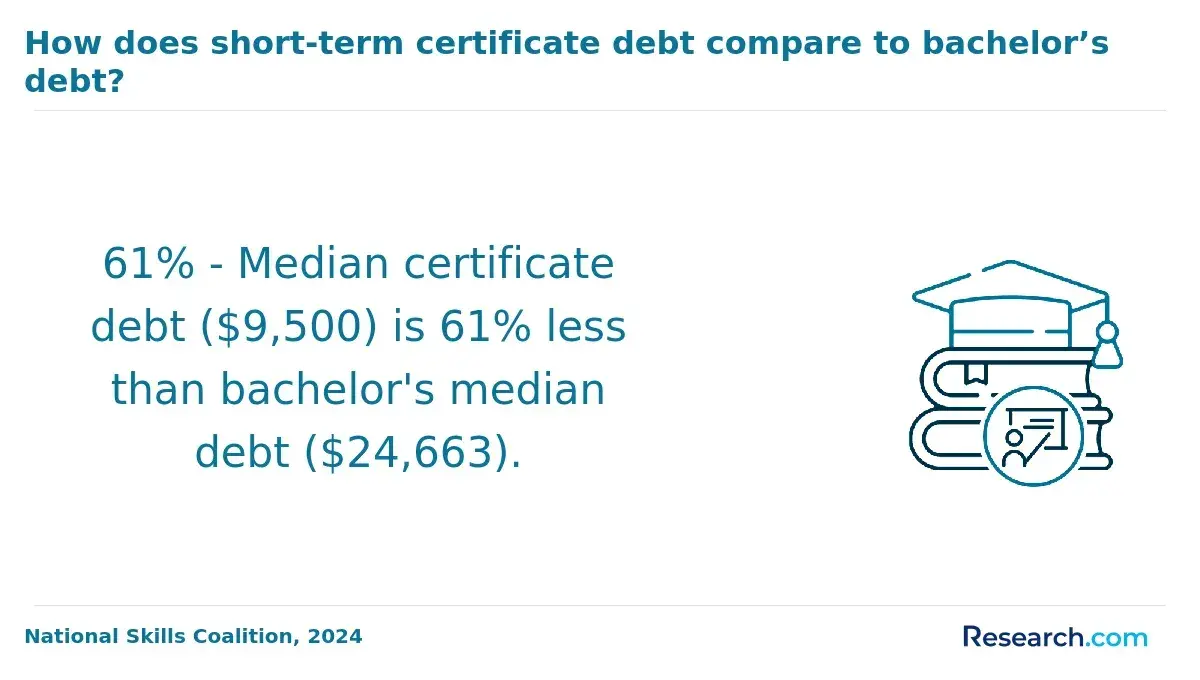
For many students, the smartest sequence is to use the BSW to build experience and then pursue an MSW only when the career goal requires it. Before applying to graduate school, compare total tuition, field placement expectations, employer tuition assistance, and whether part-time study lets you keep working. Students seeking a lower-cost graduate route can start by comparing options similar to the cheapest masters online programs, while still confirming CSWE accreditation and state licensure alignment.
What licensing and certification do social workers need in the United States?
Social work licensure is regulated by individual states, not by colleges or national rankings. That means the same degree may support different licenses depending on where you live, where you complete fieldwork, and which license category you pursue.
Most states use some version of the licensure ladder below. Exact titles vary, but the sequence helps explain why an accredited degree and supervised hours matter.
| Licensure stage | Typical education requirement | Common purpose | Important limitation |
| Bachelor-level license | CSWE-accredited BSW in states that offer this level | Entry-level generalist practice, casework, and supervised services | Not designed for independent clinical therapy |
| Master-level license | CSWE-accredited MSW | Advanced nonclinical or supervised clinical practice | Usually does not allow independent clinical practice without additional supervision |
| Clinical license | MSW plus post-graduate supervised clinical experience and exam requirements | Independent clinical practice, psychotherapy, diagnosis-related work where permitted, and private practice in many states | Requirements differ by state and may include specific supervision hours, exams, background checks, and continuing education |
If you want to become a licensed clinical social worker, do not assume that admission to an MSW program automatically makes you license-eligible. You should verify the licensing pathway before enrollment, especially if you plan to study online from a school located in another state.
A practical licensing checklist should include these steps. Following them early can prevent costly delays after graduation.
- Identify the state where you intend to practice, not just the state where the school is located.
- Confirm that the BSW or MSW program is accredited by the Council on Social Work Education or is in a status accepted by your state board.
- Ask the program whether its curriculum is designed to meet educational requirements for your target license.
- Review state rules for supervised post-degree experience, approved supervisors, exams, background checks, and continuing education.
- If you may move later, ask the state board about license portability or endorsement rules before choosing a program.
Certifications can strengthen a résumé, but they are not the same as a license. Credentials in areas such as school social work, addiction counseling, case management, trauma practice, or gerontology may help with specific roles, but state licensure determines legal scope of practice.
What are the main types of social work roles and practice settings?
Social work is not one job. It is a broad profession with roles across public agencies, hospitals, schools, courts, nonprofits, community organizations, and private practice. Understanding settings matters because daily work, stress level, salary, documentation burden, and licensure expectations can differ sharply.
The table below compares major practice settings and the kind of work students should expect in each one. This can help you choose field placements and electives that match your long-term goals.
| Practice setting | Typical clients or population | Common responsibilities | Career consideration |
| Child and family services | Children, parents, foster families, and caregivers | Safety assessments, family support, permanency planning, referrals, and court-related documentation | Can be meaningful but emotionally demanding and heavily regulated |
| Schools | K-12 students, families, and school teams | Crisis intervention, attendance support, special education collaboration, counseling, and family engagement | May require school-specific certification or state education credentials |
| Healthcare | Patients, caregivers, older adults, and people with chronic or acute conditions | Discharge planning, care coordination, resource navigation, psychosocial assessment, and end-of-life support | Often values MSW training and strong interdisciplinary communication |
| Mental health and substance use | Individuals, families, groups, and communities affected by behavioral health conditions | Assessment, therapy support, crisis planning, relapse prevention, and treatment coordination | Clinical licensure is often important for advancement |
| Community, policy, and nonprofit work | Neighborhoods, advocacy groups, agencies, and public systems | Program planning, grant writing, organizing, evaluation, and policy advocacy | Good fit for students who prefer systems-level work over one-on-one counseling |
Technology is also changing the work. Telehealth, electronic health records, data dashboards, and AI-supported documentation tools are becoming more common, especially in healthcare and behavioral health settings. These tools can improve access and reduce administrative burden, but social workers still need strong judgment, confidentiality practices, cultural humility, and ethical decision-making.
Students should pay close attention to field placement options because field education often shapes first jobs. A hospital placement can make healthcare roles more accessible, while a school placement may strengthen applications for education-based positions.
How do online social work degree programs compare with campus-based programs?
Online social work programs can be a good option for working adults, caregivers, military-connected students, and learners who do not live near a campus. The key question is not whether the classroom is online; it is whether the program is accredited, supports local field placements, and aligns with the state where you plan to seek licensure.
The table below compares online and campus-based formats on decision factors that matter most for social work students. Fieldwork is included because every reputable social work pathway includes supervised practice, even when courses are delivered online.
| Factor | Online social work program | Campus-based social work program | Best choice when |
| Schedule flexibility | Often stronger for working adults, especially asynchronous courses | More structured class times and campus expectations | Choose online if you need flexibility; choose campus if structure helps you stay engaged |
| Field placement | Usually completed in your local area with program approval | Often supported through regional agency relationships | Choose the program with stronger placement support in your target setting |
| Networking | Can be strong if the program offers live sessions, cohorts, and local placements | Often easier for in-person peer, faculty, and agency connections | Choose campus if local professional networking is a priority |
| Licensure alignment | Requires extra verification when school and student are in different states | May align more naturally with the school's home state | Choose only after confirming your state board's requirements |
| Cost and commuting | May reduce relocation and commuting costs | May offer campus resources but can add transportation or housing expenses | Compare total cost, not tuition alone |
Online programs are not automatically easier. Social work courses involve writing, group work, recorded or live discussions, and field hours that can be difficult to balance with full-time employment. Students who need flexible scheduling should ask whether field placements can occur during evenings or weekends, because many agencies operate during standard business hours.
Military-connected students should also check support services, transfer-credit policies, deployment accommodations, and field placement flexibility. Research.com's guide to good online colleges for military students can be a useful starting point before narrowing the search to CSWE-accredited social work programs.
What courses and specializations are typically offered in social work degree programs?
Social work degree programs combine theory, practice skills, ethics, research, policy, and supervised field education. The curriculum is designed to help students understand both individual needs and the larger systems that affect health, safety, poverty, discrimination, housing, education, and justice.
Most BSW and MSW programs include a generalist foundation. Courses commonly cover these areas, although titles and sequencing vary by school.
- Human behavior in the social environment, including lifespan development and the impact of families, groups, communities, and institutions
- Social welfare policy, including how laws, benefits, public programs, and advocacy shape client outcomes
- Practice with individuals, families, groups, organizations, and communities
- Research methods and program evaluation, including how to interpret evidence and measure service effectiveness
- Diversity, equity, ethics, and culturally responsive practice
- Field education or practicum, where students apply classroom learning in supervised agency settings
MSW students usually add a concentration or specialization. Choosing one should be based on your target job, not just on which course sounds interesting.
| Specialization | What it emphasizes | Common career direction |
| Clinical or mental health social work | Assessment, therapy models, diagnosis-related training, crisis intervention, and treatment planning | Behavioral health, therapy, hospitals, community mental health, private practice after licensure |
| Children, youth, and families | Child welfare, family systems, trauma, school collaboration, and prevention services | Child welfare agencies, family service nonprofits, schools, youth programs |
| Healthcare or gerontology | Medical systems, aging, disability, care transitions, palliative care, and caregiver support | Hospitals, long-term care, hospice, rehabilitation, aging services |
| Macro practice, policy, or administration | Leadership, program design, grant writing, evaluation, community organizing, and public policy | Nonprofit management, advocacy organizations, public agencies, policy research |
| Substance use and recovery | Addiction treatment, harm reduction, relapse prevention, co-occurring disorders, and recovery systems | Treatment centers, behavioral health agencies, hospitals, reentry programs |
A common mistake is choosing a specialization without checking whether it supports licensure or field placement access. For example, a clinical concentration is usually more useful for future therapists than a broad policy concentration, while a macro concentration may be better for students who want nonprofit leadership rather than one-on-one counseling.
What are the typical admission requirements and program length for social work degrees?
Admission requirements and program length vary by degree level, school selectivity, transfer credit, enrollment intensity, and whether you qualify for advanced standing. Social work is accessible compared with some licensed professions, but reputable programs still look for academic readiness, communication skills, ethical judgment, and evidence of commitment to human services.
The table below gives a practical timeline comparison. It can help you estimate how long it may take to reach entry-level employment or advanced practice.
| Program type | Typical length | Common admission requirements | Best fit |
| BSW | About 4 years full time; shorter with transfer credits | High school diploma or equivalent, transcripts, general education completion, minimum GPA, and sometimes essays or service experience | First-time college students or transfer students seeking entry-level social work roles |
| Traditional MSW | About 2 years full time; longer part time | Bachelor's degree, transcripts, GPA requirement, recommendations, personal statement, résumé, and human-services experience in some programs | Students without a BSW or those changing careers into social work |
| Advanced standing MSW | Often about 1 year full time, depending on school | Recent CSWE-accredited BSW, strong GPA, field evaluation, recommendations, and prerequisite coursework | BSW graduates who want a faster graduate path |
| Certificate or post-master's option | Varies widely | Usually a bachelor's or master's degree, depending on level | Professionals adding a focused skill area, not replacing a licensure-eligible degree |
Students with previous college credit should ask schools for a written transfer evaluation before enrolling. Transfer credits can shorten a bachelor's degree, but social work major courses and field education may have stricter limits because programs must document competency-based training.
If speed is a priority, compare accelerated formats carefully. A guide to the best accelerated bachelor's degree online options can help you understand pacing trade-offs, but social work students should still verify accreditation, field placement timing, and whether the accelerated calendar is realistic with work and family obligations.
Before applying, prepare these materials early because they often take longer than expected.
- Unofficial transcripts for initial advising and official transcripts for admission.
- A résumé that highlights service, advocacy, volunteer, healthcare, education, nonprofit, or community experience.
- A personal statement explaining why social work fits your goals and how you handle ethical or interpersonal challenges.
- Recommendations from supervisors, faculty, or professionals who can speak to reliability, judgment, and communication skills.
- Questions for admissions advisors about field placements, licensure alignment, transfer credits, and total program cost.
How much do social workers earn, and what factors affect social work salaries?
Social work salaries depend on degree level, licensure, specialization, geography, employer type, union coverage, and years of experience. The Bureau of Labor Statistics reported a median annual wage of $61,330 for social workers in May 2024. This figure is useful as a national midpoint, but it should not be treated as a personal salary forecast.
The table below shows how salary context differs by role type. It is designed to help you think about earning potential in relation to education and licensure requirements.
| Role category | Salary context | Why pay may vary | Decision takeaway |
| Entry-level case management and human services | Often lower than advanced clinical or healthcare roles | Many positions accept bachelor's-level candidates and are funded by public or nonprofit budgets | Good for experience, but compare pay with loan payments and cost of living |
| Healthcare social work | Often among stronger-paying social work settings | Hospitals and medical systems may value MSW training, specialized experience, and interdisciplinary care skills | Consider healthcare placements if you want clinical-adjacent work and stronger advancement options |
| Clinical social work | Can improve with licensure, specialization, and experience | Independent practice, insurance reimbursement, supervision eligibility, and therapy demand can affect income | Plan for the full MSW-to-licensure timeline before estimating return on investment |
| Policy, administration, and nonprofit leadership | Varies widely by organization size and funding source | Grant funding, management scope, public-sector salary scales, and leadership responsibility matter | Strong fit for systems-focused students, but salary research should be employer-specific |
Cost also affects whether a social work degree is worth it. Students should compare tuition, fees, books, technology costs, commuting, fieldwork-related schedule changes, and lost wages if they reduce work hours. A lower-tuition program may not be the best option if it has weak field placement support, while a higher-cost program may not be worth it if it does not improve licensure readiness or access to your target setting.
Financial fit is especially important for MSW students because clinical licensure requires time after graduation. If you plan to borrow, estimate monthly payments under multiple income scenarios rather than assuming immediate advanced earnings.
What is the job outlook and demand for social workers in the coming years?
The job outlook for social workers is positive overall, but demand is not equal across all roles. The Bureau of Labor Statistics projects employment of social workers to grow 7% from 2023 to 2033, which suggests steady need across healthcare, mental health, aging services, child and family services, and community programs.
Several forces support demand. The U.S. population continues to age, behavioral health needs remain high, schools and communities face complex student and family challenges, and hospitals need professionals who can coordinate safe discharges and connect patients with resources. At the same time, budgets, reimbursement rules, and state staffing policies can affect hiring in public and nonprofit agencies.
Current trends that may influence your decision include the following. These are especially important if you are choosing a specialization or field placement.
- Behavioral health integration is increasing the need for social workers who can collaborate with primary care, psychiatry, substance use treatment, and community agencies.
- Telehealth has expanded access in many mental health settings, but students should still learn crisis response, privacy rules, documentation, and boundaries in virtual care.
- AI-supported documentation and scheduling tools may reduce repetitive tasks, but they do not replace ethical judgment, relationship-building, mandated reporting knowledge, or clinical supervision.
- Licensure portability remains a practical concern for students who may relocate, so state-by-state verification is still necessary.
- Employers increasingly value practical experience, trauma-informed practice, cultural responsiveness, and the ability to work across systems.
For career planning, demand should be viewed as a directional signal rather than a promise. A student with a relevant field placement, strong references, licensure progress, and a clear specialization will usually be better positioned than someone who completes a degree without building targeted experience.
How can you choose an accredited, reputable social work program that fits your goals?
Choosing a social work program is a career decision, not just an academic one. The right program should match your target license, preferred population, schedule, budget, field placement needs, and long-term location plans.
Start with accreditation. For BSW and MSW programs, Council on Social Work Education accreditation is the central quality marker because many state licensing boards require graduation from a CSWE-accredited program. If a school says it is "aligned with" social work standards but is not accredited or in an accepted candidacy status, ask your state board whether that degree will meet licensing requirements.
Use the following steps to compare programs in a practical order. This sequence helps you avoid choosing based only on marketing, convenience, or tuition.
- Confirm CSWE accreditation and state licensure alignment for the state where you plan to practice.
- Ask how field placements are arranged, who approves sites, and whether placements are available in your target setting.
- Compare total cost of attendance, including fees, travel, books, technology, and potential lost income during fieldwork.
- Review faculty expertise, concentration options, student support, advising, and licensure exam preparation resources.
- Ask for outcomes data such as graduation rates, field placement completion, licensure exam support, and employment support, while recognizing that schools may report these differently.
- Check whether the program offers part-time, evening, hybrid, or online formats that fit your actual schedule.
- Speak with current students or alumni about workload, field placement quality, responsiveness, and career preparation.
Financial aid should be part of the comparison from the beginning. Students considering flexible programs can review online colleges with financial aid to understand how FAFSA participation and affordability intersect, then narrow the list to accredited social work options that meet licensure goals.
Watch for red flags before enrolling. A program may be a poor fit if it cannot clearly explain accreditation status, field placement support, state licensure alignment, total cost, transfer-credit policies, or how online students receive advising. Another common mistake is assuming that the cheapest or fastest program is automatically the best value; in social work, weak field placement support can create delays that offset tuition savings.
The strongest choice is usually the program that meets three tests at once: it is accredited for your goal, affordable enough to keep debt manageable, and connected to the practice setting where you want to work.
Other Things You Should Know About
A social work degree can be worth it if you want a helping profession with clear pathways into case management, healthcare, mental health, schools, child welfare, or policy work. It is most worthwhile when the program is accredited, the cost is manageable, and the degree level matches your target role.
Yes, but usually not with only a bachelor's degree. Most therapist roles require an MSW, supervised post-graduate clinical experience, successful completion of state licensing requirements, and ongoing continuing education.
Social work often combines individual support with systems-level advocacy, resource coordination, and attention to social conditions such as housing, poverty, healthcare, and family systems. Counseling programs usually focus more narrowly on mental health counseling theory, assessment, and therapy practice.
Yes, many accredited BSW and MSW programs offer online coursework. However, field education is still completed in approved real-world settings, and students should verify accreditation, placement support, and state licensure alignment before enrolling.
References
- The 3 Levels of Social Work: A Short Guide https://www.casebook.net/blog/the-3-levels-of-social-work-a-short-guide/
- Types of Social Workers: Exploring the Many Fields in Which They Serve https://www.umassglobal.edu/blog-news/types-of-social-workers
- How Long Does It Take to Become a Social Worker? Five Steps to Start Your Career https://www.pacificu.edu/blog/five-steps-become-social-worker-start-your-career-today
- What Can You Do with a Social Work Degree? 6 Career Paths https://www.css.edu/about/blog/what-else-can-you-do-with-a-social-work-degree-6-careers-to-consider/
- Social Work Degrees https://socialworklicensemap.com/social-work-degrees/
- Social Work Salaries - How Much Do Social Workers Make? https://www.onlinemswprograms.com/careers/social-worker-salaries/
- MSW Program Length: 1-4 Year Timeline Guide for 2025 https://www.socialworkdegrees.org/faq/how-long-does-it-take-to-complete-a-msw-program
- Social Work Licensing Guide & Requirements | Psychology.org https://www.psychology.org/social-work/licensure/
- Social Work License | Requirements and Resources https://www.publichealthonline.org/human-services/social-work-license/
- MSW Specializations: Clinical, Macro, Advanced Generalist Programs https://www.masterofsocialwork.com/resources/msw-specializations