2027 Career Planning for Students Near Graduation

Co-Founder and Chief Data Scientist
Graduation turns career planning from an idea into a deadline. The choices you make now, job search, graduate school, certification, or a different training path, can affect your first salary, debt, and long-term mobility. BLS data for 2024 shows workers with a bachelor's degree had median usual weekly earnings of $1,543, but outcomes vary widely by major, location, and occupation.
This guide is for students close to finishing college who need a practical plan for comparing careers, strengthening applications, and choosing the next step with fewer expensive guesses.
Key Things You Should Know
- Start with a 90-day action plan; clarify target roles, confirm degree and skill requirements, build proof of experience, and apply before graduation rather than waiting until finals end.
- Use salary data carefully; BLS reported $1,543 in median weekly earnings for bachelor's degree workers in 2024, but entry-level pay depends on major, region, internships, portfolio strength, and licensing rules.
- Check accreditation, licensure, and total cost before adding more school; College Board's 2024 pricing data listed average published in-state tuition and fees at $11,610 for public four-year colleges and $43,350 for private nonprofit four-year colleges.
How should students near graduation create a step-by-step career action plan?
A strong career action plan turns "I need a job after graduation" into weekly decisions you can control. The goal is to move from exploration to evidence: target roles, required skills, proof of ability, employer contacts, and applications submitted on schedule.
Use the following sequence if you are within one academic year of graduating. It keeps you from spending too much time researching and too little time testing your options with real employers:
- Choose two to three target role families, such as data analyst, staff accountant, lab technician, marketing coordinator, registered nurse, software developer, paralegal, teacher, or human resources assistant.
- Collect five to eight real job postings for each target role and highlight repeated requirements, tools, credentials, degree expectations, and years of experience requested.
- Compare those requirements with your transcript, projects, work history, internships, volunteer work, research, and campus leadership to find the gaps that matter most.
- Create one proof asset for each target role, such as a portfolio project, writing sample, GitHub repository, case study, lab summary, lesson plan, design sample, or quantified resume bullet.
- Ask career services, faculty, alumni, and supervisors to review your resume and LinkedIn profile before you begin high-volume applications.
- Set a weekly application rhythm that includes networking messages, employer research, tailored applications, interview practice, and follow-ups.
- Track every application, contact, interview, and rejection reason so you can improve your search rather than repeat the same approach.
The table below shows what a realistic senior-year planning timeline can look like. Use it to check whether you are on pace, not as a rigid rule; students in licensed fields, creative fields, and highly competitive technical roles may need to start earlier:
| Time before graduation | Main focus | What should be ready |
| 9 to 12 months | Career direction | Target roles, graduate school decision, faculty or advisor conversations, and a draft skills gap list |
| 6 to 9 months | Experience proof | Internship search, portfolio projects, research experience, clinical or fieldwork planning, and resume review |
| 3 to 6 months | Employer outreach | Tailored resume, interview stories, alumni contacts, job alerts, and applications to early-cycle employers |
| 0 to 3 months | Conversion | Interview practice, offer comparison, references, relocation planning, and backup options |
A common mistake is treating career planning as a single choice rather than a system. You do not need to predict your entire future, but you do need a near-term strategy that makes your first step useful, affordable, and connected to your long-term goals.
What degree, training, and skills do employers expect from new graduates in my field?
Employer expectations vary by field, but most new graduates are evaluated on four things: relevant education, job-ready skills, evidence of applied experience, and professional reliability. A degree may get you through the first screening, but employers increasingly look for proof that you can use tools, communicate clearly, solve problems, and learn quickly.
The table below summarizes typical expectations by broad field. Requirements can vary by state, employer, and specialty, so treat this as a planning guide and verify details through job postings and professional boards:
| Field | Common minimum education | Skills employers often screen for | When more training may matter |
| Business, finance, and accounting | Bachelor's degree for many analyst and staff roles; associate degree may fit bookkeeping or support roles | Excel, financial analysis, reporting, attention to detail, communication, and data interpretation | CPA eligibility, analytics certificates, or a master's degree may help for specialized accounting, finance, or leadership tracks |
| Technology and data | Bachelor's degree, associate degree plus portfolio, bootcamp plus experience, or strong project-based proof depending on role | Programming, databases, cloud tools, cybersecurity basics, statistics, documentation, and problem solving | Certifications and portfolios can matter when degree title does not match the target role |
| Healthcare | Program-specific degree or diploma, often with required clinical hours | Patient care, documentation, ethics, anatomy, safety, teamwork, and regulatory awareness | Licensure is often mandatory before independent practice |
| Education and social services | Bachelor's degree for many entry roles; state-approved preparation for teaching roles | Communication, case documentation, child or client development, classroom management, cultural competence, and ethics | State certification, supervised hours, or graduate study may be required for advancement |
| Creative, media, and communications | Degree requirements vary; portfolio quality is often central | Writing, design tools, audience analysis, project management, storytelling, editing, and analytics | Certificates can help when they add current technical tools, not when they simply repeat what your portfolio already shows |
If graduate school is on your list, compare the credential with the role you want rather than enrolling because you feel uncertain. Some students look for the easiest master degree, but the better question is whether the program's curriculum, employer recognition, cost, and timeline match your target job.
AI is also changing what "job-ready" means. For many entry-level roles, employers may expect graduates to use AI tools responsibly for drafting, coding support, research, data cleaning, or workflow automation while still showing judgment, originality, and subject-matter understanding.
How can I compare on-campus and online programs to improve my career prospects?
On-campus and online programs can both improve career prospects, but the right choice depends on your field, learning style, schedule, cost, and need for hands-on experience. The format matters less than whether the program is accredited, connected to employers, transparent about outcomes, and designed for the career you want.
The comparison below can help you decide which format fits your situation. Use it especially if you are considering finishing a degree, adding a second credential, or changing fields after graduation:
| Program format | Best fit | Career advantages | Possible trade-offs |
| On-campus | Students who benefit from face-to-face structure, labs, studios, clinicals, campus recruiting, and daily faculty access | More spontaneous networking, easier access to facilities, and stronger fit for hands-on programs | Higher relocation, commuting, housing, or scheduling costs may reduce flexibility |
| Online | Students balancing work, family, relocation limits, or military obligations | Flexible schedule, broader school choice, and easier continuation of paid work | Requires self-discipline and careful review of clinical, internship, or licensure placement rules |
| Hybrid | Students who want flexibility but still need periodic in-person labs, intensives, or networking | Balances access and structure, especially for health, education, business, and technical programs | Travel requirements can create hidden costs if campus visits are frequent |
| Accelerated | Students with transfer credits, clear goals, and enough time for heavier course loads | May shorten time to completion and reduce opportunity cost | Compressed schedules can be difficult for students working full time or managing clinical requirements |
If speed is important, compare curriculum intensity, transfer policies, and weekly workload before choosing among accelerated bachelor degree programs. A faster program is only a career advantage if you can complete it successfully and still build the experience employers expect.
One red flag is a program that emphasizes convenience but provides little information about accreditation, graduation requirements, career services, field placements, or graduate outcomes. Before enrolling, ask whether credits transfer, whether the program meets licensure requirements in your state, and whether students in your intended field receive practical career support.
What accredited programs and schools best align with my long-term career goals?
The best accredited program is not always the most famous or the most selective. It is the program that meets recognized quality standards, fits your budget, supports your target career, and gives you a realistic path to completion.
Start with accreditation because it can affect financial aid eligibility, transfer credit, graduate school admission, and employer acceptance. Institutional accreditation matters for the school as a whole, while programmatic accreditation may be essential in fields such as nursing, teaching, counseling, engineering, social work, public health, and business.
Use these questions when comparing schools and programs. They are designed to uncover hidden risks before you commit time or money:
- Is the institution accredited by an agency recognized by the U.S. Department of Education or the Council for Higher Education Accreditation?
- Does my target occupation require programmatic accreditation, state approval, supervised hours, or exam eligibility?
- What is the full cost after grants, scholarships, fees, books, technology, travel, housing, and lost work hours?
- How many of my credits transfer, and will they count toward major requirements or only electives?
- What career outcomes does the program publish, and are they specific to my major or only schoolwide averages?
- Does the program include internships, capstones, clinicals, portfolios, employer projects, or research opportunities?
- Can I speak with current students, alumni, faculty, or career staff before deciding?
Cost should be evaluated with completion in mind, not just posted tuition. College Board's 2024 data listed average published tuition and fees of $11,610 for in-state students at public four-year institutions and $43,350 at private nonprofit four-year institutions, before grants and scholarships; this difference can significantly affect ROI if two programs lead to similar employment options.
If affordability is your main constraint, searching for the cheapest accredited online college can be useful, but do not stop at tuition. A low-cost program that delays graduation, fails to meet licensure rules, or offers weak career support can become expensive in practice.
How do I research entry-level roles, typical duties, and career pathways after graduation?
Researching entry-level roles means looking beyond job titles. The same title can involve different duties by employer, and different titles can lead to the same career path. Your goal is to understand the work, the skills, the hiring timeline, and the advancement ladder before you invest in applications or more education.
The table below shows examples of common post-graduation roles and how to interpret them. Use it as a starting point, then compare actual postings in your target city or remote market:
| Entry-level role | Typical duties | Possible next steps |
| Data analyst | Clean datasets, build dashboards, write reports, identify trends, and explain findings to teams | Business analyst, analytics engineer, data scientist, product analyst, or operations analyst |
| Staff accountant | Prepare reconciliations, support month-end close, review transactions, and assist with financial reporting | Senior accountant, auditor, tax associate, controller track, or CPA-oriented roles |
| Marketing coordinator | Support campaigns, manage content calendars, analyze performance, coordinate vendors, and prepare reports | Digital marketer, brand specialist, content strategist, marketing analyst, or account manager |
| Lab technician | Prepare samples, maintain equipment, record results, follow safety protocols, and support research or quality testing | Research associate, quality assurance specialist, clinical lab pathway, or graduate study |
| Human services assistant | Support case documentation, coordinate services, communicate with clients, and help with intake processes | Case manager, social worker with further education, program coordinator, or nonprofit operations role |
When researching roles, focus on patterns across multiple postings. One posting may be unrealistic, but repeated requirements show what employers in that market actually value.
- Save job postings from at least three employer types, such as private companies, nonprofits, government agencies, hospitals, schools, startups, or research organizations.
- Separate must-have requirements from preferred qualifications, because many entry-level applicants self-reject when they meet the core requirements but not every preference.
- Look for tools and methods that appear repeatedly, such as SQL, Excel, Salesforce, Python, electronic health records, CAD, AP Style, or grant writing.
- Map each role to a promotion path so you understand whether the first job builds toward your long-term goal or traps you in unrelated work.
- Ask alumni what they actually do each week, what surprised them, and what they wish they had learned before starting.
A common mistake is chasing only prestigious titles. A less glamorous first role with strong training, measurable projects, and internal mobility can be more valuable than a vague role with a better-sounding title.
Students with legal records should also verify occupational licensing rules and employer restrictions early. Some fields remain accessible, but background checks may affect clinical placements, internships, licensing, and hiring; resources on the best associate degrees for felons can help narrow options that may be more realistic depending on the field and state.
What are realistic salary ranges and compensation trends for recent graduates by major?
Salary planning should be realistic, not overly optimistic. Recent graduates often compare offers with national medians, but national medians include experienced workers; starting pay may be lower or higher depending on internships, location, technical skills, licensing, employer size, and labor demand.
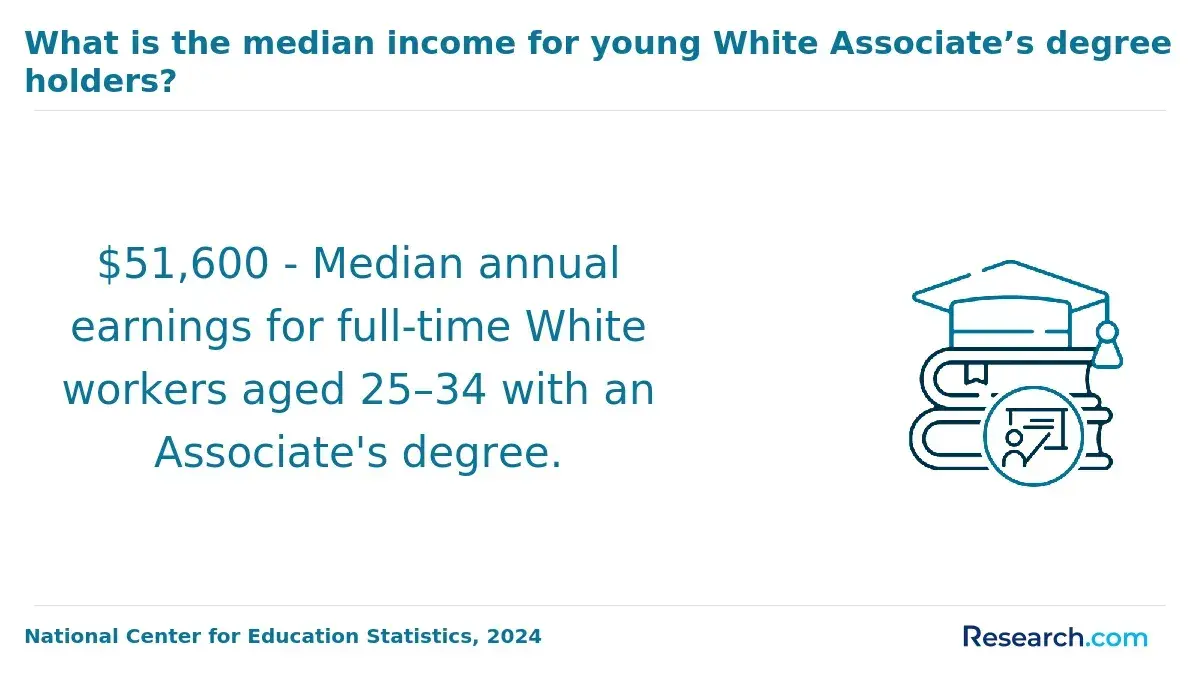
As a baseline, BLS 2024 data reported median usual weekly earnings of $1,543 for workers with a bachelor's degree and $1,099 for workers with an associate degree. This does not predict your first offer, but it helps show why completing a credential and choosing an employable field can matter over time.
The table below explains how salary expectations often differ by major-linked career area. Instead of treating broad averages as promises, use these categories to decide what salary evidence you need from your school, employers, and labor-market tools:
| Major or field family | Common entry pathways | Compensation pattern to expect | What to verify before accepting an offer |
| Engineering and computer science | Software, systems, cybersecurity, product, manufacturing, design, or technical analyst roles | Often stronger early salary potential when students have internships, portfolios, and current tools | Equity, bonus structure, on-call expectations, location adjustment, and training support |
| Business, accounting, and economics | Accounting, finance, operations, sales, consulting, insurance, and analyst roles | Can vary widely by industry, licensing path, commission, and quantitative skill level | Base pay versus variable pay, CPA or certification support, travel requirements, and promotion timeline |
| Health professions | Nursing, allied health, lab, imaging, therapy support, and healthcare administration roles | Licensure and shift differentials can strongly affect total compensation | License requirements, weekend or night premiums, clinical ladder, benefits, and staffing expectations |
| Education and social services | Teaching, advising, case support, nonprofit programs, youth services, and public agencies | Pay may be more structured by district, agency, grant funding, or union contract | State salary schedules, loan forgiveness eligibility, certification support, and caseload expectations |
| Arts, communications, and humanities | Content, design, media, public relations, publishing, UX support, administration, and community roles | Portfolio quality, industry, freelance work, and location can create large differences | Project ownership, benefits for contract roles, portfolio rights, and advancement opportunities |
Compensation is more than salary. Compare health insurance, retirement match, paid time off, relocation help, tuition assistance, training budget, remote-work policy, overtime rules, and whether the role builds marketable experience.
If you are considering graduate school to improve earnings, compare program cost against actual career requirements. A useful starting point is reviewing which masters degrees are worth it for roles where employers clearly reward advanced training.
How do I evaluate job outlook and industry demand when choosing a career direction?
Job outlook helps you decide whether your career direction has room for new workers, but it should not be the only factor. A fast-growing occupation can still be competitive in desirable cities, while a slower-growing field may offer stable opportunities if retirements, licensing barriers, or local demand create openings.
BLS employment projections for 2024 to 2034 estimate total U.S. employment growth of about 5.2 million jobs. For students, the practical takeaway is to compare your target field with broader economic shifts, including healthcare demand, digital transformation, infrastructure needs, public-sector hiring, and automation risk.
Use this process to evaluate demand without overreacting to one headline statistic:
- Check national outlook for the occupation, then compare it with state and metro data because demand can differ sharply by region.
- Look at job postings for the last 30 to 90 days to see whether employers are actively hiring for entry-level candidates or mainly seeking experienced workers.
- Identify whether demand is driven by growth, replacement needs, regulation, technology adoption, or short-term economic cycles.
- Compare required skills with your current profile and decide whether one semester, one certification, one internship, or one portfolio project could close the gap.
- Evaluate automation exposure by asking which tasks are repetitive and which require judgment, care, relationship-building, physical presence, ethical reasoning, or domain expertise.
AI and automation are especially important for entry-level planning because many routine tasks are becoming easier to automate. That does not mean entry-level jobs disappear across the board; it means graduates should show they can use technology to improve work while still contributing analysis, communication, accountability, and context.
A common mistake is choosing a career only because it appears on a "high-growth jobs" list. Demand matters, but so do fit, training cost, licensing barriers, work conditions, salary ceiling, and whether you can build the required skills before graduation.
Which professional licenses or certifications might I need in my chosen career field?
Licenses and certifications can be essential, optional, or unnecessary depending on the field. A license is typically a legal requirement to practice in a regulated occupation, while a certification is usually a credential from a professional organization, vendor, or industry body that signals skill or preparation.
The table below summarizes common credential situations. Always verify requirements with the state licensing board or official credentialing body because rules can change and may differ by state:
| Career field | Credential issue to check | Why it matters before graduation |
| Nursing and allied health | State licensure, accredited program completion, clinical hours, and exam eligibility | You may not be able to practice independently without meeting all requirements |
| Teaching | State-approved educator preparation, student teaching, background checks, and certification exams | A degree alone may not qualify you for classroom licensure |
| Accounting | CPA education hours, accounting coursework, exam eligibility, and state board rules | Students may need additional credits beyond a bachelor's degree for CPA licensure |
| Information technology | Vendor or industry certifications such as cloud, networking, cybersecurity, or data tools | Certifications may strengthen applications, especially when paired with projects and experience |
| Social work and counseling | Accredited degree, supervised hours, exam requirements, and state licensure levels | Independent practice often requires graduate education and supervised experience |
Before paying for a certification, ask whether it is required, preferred, or simply marketed well. The best certification is one that appears repeatedly in job postings and helps you perform the work, not just decorate your resume:
- Check whether the credential is legally required for your target role in your state.
- Confirm whether your degree program meets the education requirement for the license or exam.
- Ask employers or alumni which certifications actually influence hiring for entry-level candidates.
- Compare exam fees, renewal costs, continuing education requirements, and preparation time.
- Avoid credentials that make broad salary promises without transparent employer recognition.
Licensure planning is especially important for online students. A program may be accredited and still not meet every state's requirements for a regulated profession, so ask for written confirmation before enrolling or relocating.
How can internships, research, and campus activities strengthen my post-graduation job search?
Internships, research, and campus activities help employers see how you work before they hire you. They are especially valuable when your major is broad, your GPA is not the strongest part of your application, or your target role requires applied proof.
The strongest experiences produce evidence you can describe in interviews. Instead of listing participation, translate each experience into skills, outcomes, tools, and decisions:
- Internships can show workplace readiness, industry exposure, software skills, client communication, and measurable contributions.
- Research can show analysis, persistence, writing, data collection, lab methods, ethics, and faculty-backed credibility.
- Campus leadership can show budgeting, event planning, conflict resolution, supervision, public speaking, and project ownership.
- Volunteer work can show service orientation, reliability, community knowledge, and experience with real constraints.
- Part-time jobs can show customer service, operations, scheduling discipline, sales, training, and accountability under pressure.
Use a simple formula when writing resume bullets: action, tool or method, audience or problem, and result. For example, "Analyzed survey results in Excel to identify attendance barriers for a campus program, helping staff redesign outreach for first-year students" is stronger than "Helped with survey project."
If you are still short on experience, create a targeted project before graduation. Business students can build a market analysis, computer science students can publish a working application, education students can prepare sample lesson plans, public health students can analyze community data, and communication students can create a campaign portfolio.
A common mistake is assuming unpaid or campus-based experience does not count. Employers care whether the experience is relevant, specific, and credible; your job is to explain the connection clearly.
What strategies help seniors build networks, find mentors, and secure interviews before graduation?
Networking is not asking strangers for jobs. It is building enough informed relationships that you understand the market, improve your applications, and become easier to refer. For seniors, the best networking starts before you need an urgent offer.
Use the following strategies to build momentum without sounding transactional. The goal is to create short, useful conversations that help you make better decisions and become visible to employers:
- Identify 20 people connected to your target field, including alumni, faculty, internship supervisors, classmates, family contacts, guest speakers, and professional association members.
- Send brief messages asking for a 15-minute conversation about their role, career path, and advice for new graduates.
- Prepare three questions before each conversation, such as what skills matter most, what entry-level candidates misunderstand, and how hiring works in that organization.
- After the conversation, send a thank-you note and mention one specific insight you will use.
- Follow up later with progress, such as a completed project, application update, interview, or course you chose because of their advice.
- Ask for referrals only when there is a real fit and the person has enough information to feel comfortable recommending you.
Mentors can come from different places. Faculty may help with graduate school or research, alumni may explain hiring realities, supervisors may validate your work habits, and professional associations may connect you with field-specific opportunities.
For interviews, prepare stories using the situation, task, action, and result structure. Employers want to hear how you handled ambiguity, feedback, conflict, deadlines, data, customers, patients, students, or technical problems-not just that you are motivated.
A common red flag is a one-size-fits-all job search. If every resume, cover letter, and interview answer sounds the same, employers may not see why you fit their specific role. Tailor your materials enough to connect your strongest evidence to the job description.
Other Things You Should Know About
Ideally, start at least two semesters before graduation. If you are closer than that, focus first on target roles, resume proof, employer outreach, and applications rather than trying to explore every possible path.
Graduate school makes sense when it is required for your target profession, clearly improves advancement options, or helps you enter a specialized field. It is riskier when you are enrolling mainly to delay career decisions or without comparing cost, outcomes, and alternatives.
There is no perfect number, but quality and consistency matter. A focused weekly mix of tailored applications, networking conversations, and interview practice is usually stronger than sending many generic applications with no follow-up.
You can still pivot if you build evidence of relevant skills. Use projects, certificates, internships, volunteer work, part-time jobs, and alumni advice to show employers that you understand the role and can do the work.
References
- Explore Careers And Jobs That Require A Professional License https://www.accreditedschoolsonline.org/resources/jobs-requiring-professional-license/
- Career Plan: What It Is, Why It Is Important, and How to Create One in 4 Easy Steps https://shorelight.com/student-stories/career-action-plan-in-4-steps
- How does a college degree improve graduates’ employment and earnings potential? - APLU https://www.aplu.org/our-work/4-policy-and-advocacy/publicuvalues/employment-earnings/
- Discover Your Dream Career with Our Ultimate Industry Guide https://www.internsinasia.com/blog/choosing-the-right-industry-for-you-a-comprehensive-guide-to-career-direction
- College Graduate Salaries: 2025 Projections | Bankrate https://www.bankrate.com/loans/student-loans/average-college-graduate-salary/
- Career Goals: 17 Inspirational Examples for you in 2026 https://www.imd.org/blog/learning-and-development/career-goals/
- How to Align Career Goals with Your Life: 8 Considerations https://blackstone.edu/how-to-align-career-goals-with-your-life/
- Career Pathways for Graduates: The Ultimate Guide https://collegelife.co/magazine/career-pathways-for-graduates