2027 Investment Banker Job Description: Career Guide for Students and Graduates

Co-Founder and Chief Data Scientist
Choosing investment banking means weighing high earnings potential against intense competition, long hours, and a steep learning curve. The U. S. Bureau of Labor Statistics reported a May 2024 median annual wage of $78,490 for securities, commodities, and financial services sales agents, the category that includes many banking roles, but top outcomes depend heavily on school, internships, market cycle, and performance. This guide helps students, graduates, and career changers understand the job, compare education routes, evaluate programs, and decide whether investment banking is a smart fit.
Key Things You Should Know
- Investment bankers advise companies, investors, and institutions on raising capital, mergers and acquisitions, debt financing, equity offerings, valuation, and strategic transactions.
- The most common U.S. entry path is a bachelor's degree in finance, economics, accounting, business, math, or a related field, plus internships and strong technical modeling skills; MBA recruiting is common for associate-level entry.
- BLS May 2024 wage data places the broader securities and financial services sales category at a $78,490 median annual wage, but investment banking compensation is often more bonus-driven and varies sharply by firm size, deal activity, city, and role.
What does an investment banker do and how does this role fit within finance?
An investment banker helps organizations make major financial decisions, especially when those decisions involve raising money, buying or selling companies, restructuring debt, or entering public markets. The role sits within capital markets and corporate finance, not retail banking. Instead of opening checking accounts or approving small-business loans, investment bankers work on large transactions involving companies, private equity firms, governments, and institutional investors.
At the analyst and associate levels, the job is highly execution-focused. Junior bankers build financial models, prepare pitch books, conduct industry research, compare similar companies, and support due diligence. Senior bankers spend more time sourcing clients, negotiating transaction terms, managing relationships, and advising executives or investors.
The table below shows how investment banking differs from nearby finance careers. This distinction matters because students often use "finance" broadly, even though each path rewards different strengths and credentials.
| Finance role | Main focus | Typical early-career work | Best fit for students who enjoy |
| Investment banker | Capital raising, mergers and acquisitions, and strategic transactions | Valuation, financial modeling, deal research, presentations, due diligence | High-pressure deadlines, client work, transaction analysis |
| Corporate finance analyst | Financial planning inside one company | Budgeting, forecasting, variance analysis, business-unit reporting | Internal strategy, operating metrics, steadier schedules |
| Equity research analyst | Public company analysis for investors | Industry reports, earnings models, valuation opinions | Writing, public markets, company research |
| Private equity analyst | Investing in and improving companies | Deal screening, leveraged buyout models, portfolio analysis | Ownership analysis, investing, operational improvement |
Technology is changing the work, but it has not removed the need for judgment. AI tools can speed up research summaries, document review, data extraction, and first-draft materials. However, bankers still need to validate assumptions, understand valuation logic, communicate with clients, and manage risk. Students who combine finance fundamentals with data tools, Excel fluency, and careful reasoning are better positioned than those who rely only on software shortcuts.
What education and skills are required to become an investment banker in the U.S.?
Most U.S. investment banking analyst roles require at least a bachelor's degree. Finance is the most direct major, but economics, accounting, business analytics, mathematics, engineering, statistics, and computer science can also work if the student builds finance knowledge and secures relevant experience. For associate roles, many banks recruit MBA graduates, especially from programs with strong finance placement and alumni networks.
Employers rarely hire on degree title alone. They look for evidence that a candidate can handle analytical work, client-ready communication, and demanding deadlines. The most important preparation areas are listed below because they shape both internship selection and full-time recruiting.
- Technical finance: valuation, discounted cash flow analysis, comparable company analysis, precedent transactions, accounting, debt schedules, and merger models.
- Quantitative ability: comfort with large spreadsheets, formulas, sensitivity analysis, market data, and error checking.
- Communication: concise writing, presentation skills, professional email etiquette, and the ability to explain complex financial logic clearly.
- Commercial awareness: understanding how interest rates, credit conditions, industry cycles, regulation, and investor sentiment affect transactions.
- Resilience and organization: managing long work periods, shifting deadlines, multiple deal teams, and frequent revisions without losing accuracy.
Licensing may also enter the picture after hiring. Many bankers who sell securities or advise on regulated transactions must pass Financial Industry Regulatory Authority exams sponsored by their employer, such as the Securities Industry Essentials exam and role-specific exams. Students usually do not need these licenses before applying, but understanding the compliance environment is useful.
The biggest mistake at this stage is assuming that a high GPA alone is enough. Strong grades help, but banking recruiting often prioritizes internships, networking, demonstrated technical skill, and school-level recruiting pipelines. A student from a less-targeted school can still compete, but usually needs earlier preparation, more outreach, and stronger proof of ability.
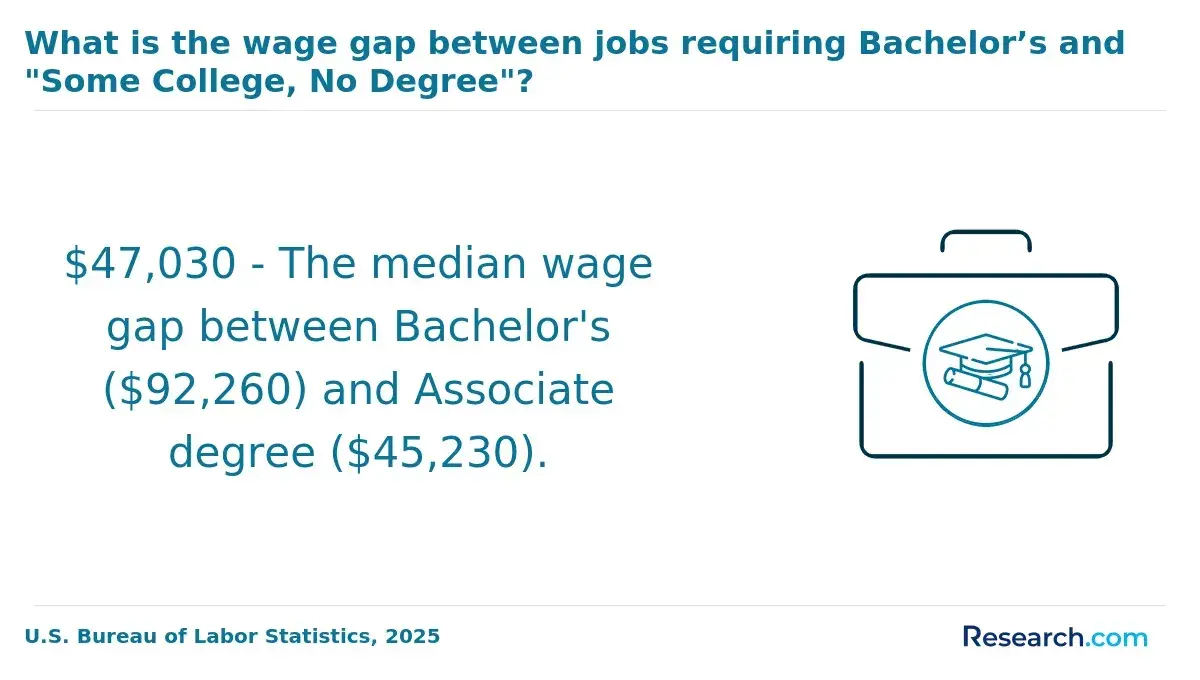
What degrees and training pathways best prepare students for investment banking careers?
There is no single required degree for investment banking, but some pathways reduce friction more than others. The right choice depends on the student's current education level, target role, cost tolerance, and access to recruiting networks. Students comparing graduate options may also look at online 1-year masters programs if they need a faster credential, though speed should not come at the expense of finance rigor or employer recognition.
The table below compares common education routes. Use it to identify which path matches your starting point rather than assuming the most expensive degree is automatically the best option.
| Pathway | Typical duration | Best for | Important trade-off |
| Bachelor's in finance, economics, accounting, or business | Usually 4 years | Students targeting analyst roles after graduation | Recruiting access varies widely by school and internship record |
| Quantitative bachelor's plus finance coursework | Usually 4 years | Students in math, engineering, statistics, or computer science who want banking or capital markets | Requires extra effort to learn accounting, valuation, and deal terminology |
| Master's in finance | Often 1 to 2 years | Recent graduates who missed undergraduate banking recruiting or want deeper finance training | Placement depends heavily on employer relationships and career services |
| MBA with finance concentration | Often 2 years full time, longer part time | Professionals targeting associate roles or career switching | Can be costly, so internship recruiting and post-MBA placement matter |
| Certificates and short courses | Weeks to months | Students filling specific skill gaps in modeling, accounting, Excel, or valuation | Usually not a substitute for a degree or internship pipeline |
Cost should be part of the decision from the beginning. College Board's 2024 pricing data reported average published tuition and fees of $11,610 for in-state students at public four-year institutions and $43,350 at private nonprofit four-year institutions for the 2024-25 academic year. That gap can meaningfully affect return on investment, especially for students who are not certain they want to remain in banking long term.
A practical approach is to choose the least expensive option that still gives you credible coursework, internship access, alumni reach, and employer visibility. If a program lacks banking placement history, students should ask whether the degree is meant for corporate finance, wealth management, accounting, fintech, or general business rather than front-office investment banking.
How do online finance and business programs compare to campus-based options for aspiring bankers?
Online finance and business programs can be useful for students who need flexibility, lower relocation costs, or part-time study while working. Campus-based programs often have an advantage in investment banking because recruiting is relationship-driven: banks visit certain campuses, alumni return for networking events, and student finance clubs can create repeated exposure to employers.
The comparison below highlights where each format tends to help or limit aspiring bankers. The best choice is not simply online versus campus; it is whether the program can produce the experience, network, and technical readiness banks expect.
| Factor | Online program | Campus-based program | Decision point |
| Recruiting access | May rely more on virtual events and student outreach | May include on-campus interviews and alumni events | Ask for recent banking placement examples, not just general business outcomes |
| Flexibility | Stronger for working students and career changers | Less flexible but more immersive | Choose online if you must keep working; choose campus if recruiting access is the priority |
| Networking | Requires intentional outreach and active participation | More informal peer and alumni interaction | Online students need a networking plan before classes begin |
| Cost structure | May reduce relocation and commuting costs | May include higher living or opportunity costs | Compare total cost, not tuition alone |
| Skill development | Can be strong if modeling, cases, and group work are rigorous | Can be strong through clubs, competitions, and faculty access | Review assignments and career outcomes before enrolling |
Online study can make sense for students who already have a strong employer network, are pivoting from accounting or corporate finance, or need to build technical skills without leaving a job. It may be less effective for a first-time student who needs structured internship recruiting and frequent in-person networking. Students exploring shorter or flexible options can also compare what certifications can I get online to determine whether a targeted credential can fill a skills gap before committing to a full degree.
A common mistake is assuming an online program is automatically easier to complete while working. High-quality finance programs still require time for accounting practice, modeling assignments, group projects, interview preparation, and networking. Flexibility helps, but it does not remove the workload.
What should students look for in accredited business schools and finance programs?
Accreditation is a baseline quality check, not a guarantee of investment banking placement. Students should first confirm that the institution holds recognized institutional accreditation. For business schools, programmatic accreditation from organizations such as AACSB, ACBSP, or IACBE can signal additional business-school review, although employers still evaluate the school's brand, alumni network, and placement history.
Students comparing cost-sensitive graduate options may find lists of the cheapest online masters helpful, but affordability should be weighed against finance depth, career support, and recruiting outcomes. A low-cost program can be a smart choice if it supports your target role; it can be a poor investment if it lacks the network or coursework you need.
Before applying, students should evaluate programs across several practical criteria. These questions help reveal whether the school is aligned with investment banking rather than only general business education.
- Accreditation: Is the institution properly accredited, and does the business school hold respected programmatic accreditation?
- Placement evidence: Can the program show recent graduates entering investment banking, valuation, transactions advisory, corporate development, or capital markets roles?
- Employer access: Do banks, advisory firms, private equity firms, accounting transaction teams, or corporate finance employers recruit from the program?
- Technical curriculum: Are valuation, financial statement analysis, accounting, Excel modeling, mergers and acquisitions, and capital markets covered in depth?
- Career services: Does the school offer banking-specific resume reviews, mock technical interviews, alumni introductions, and internship support?
- Student finance ecosystem: Are there investment banking clubs, finance competitions, student funds, case competitions, or alumni mentoring programs?
Red flags include vague employment claims, no transparent career outcomes, weak accounting coverage, limited alumni access, and admissions advisors who cannot explain how students compete for finance internships. Rankings can be useful, but they should not replace direct evidence of placement and employer relationships.
What coursework, internships, and technical training are typical for investment banking preparation?
Investment banking preparation is built through coursework, practice, and work experience. A student who understands valuation theory but has never built a clean model may struggle in interviews. A student who can build models but cannot explain business logic may also struggle. The goal is to connect technical accuracy with clear judgment.
The table below summarizes common preparation areas and why each matters. These are not formal national requirements, but they reflect the skill mix that appears repeatedly in internships and analyst recruiting.
| Preparation area | Typical content | Why it matters for banking |
| Accounting | Financial statements, revenue recognition, working capital, depreciation, debt, deferred taxes | Valuation models depend on accurate accounting interpretation |
| Corporate finance | Capital structure, cost of capital, risk, return, payout policy | Bankers advise companies on financing and strategic decisions |
| Valuation | Discounted cash flow, comparable companies, precedent transactions | Transaction advice requires defensible valuation ranges |
| Financial modeling | Three-statement models, merger models, debt schedules, sensitivity tables | Analysts are expected to produce accurate, flexible spreadsheets |
| Markets and economics | Interest rates, credit markets, equity markets, industry cycles | Deal timing and financing terms depend on market conditions |
| Professional communication | Pitch books, memos, presentations, client-ready summaries | Banking work must be clear, persuasive, and polished |
Internships are often the most important bridge from school to full-time banking. Students should start early because many large banks recruit summer analysts well before the internship begins. The following sequence gives students a practical preparation timeline.
- Build accounting and Excel fundamentals before applying to finance clubs or internships.
- Join finance, investment, consulting, or entrepreneurship organizations that create peer practice and alumni exposure.
- Create a targeted resume that shows valuation, modeling, leadership, transaction-related projects, or measurable analytical work.
- Network with alumni and professionals using specific questions about coverage groups, deal work, and recruiting expectations.
- Practice behavioral and technical interviews, including accounting links, valuation methods, and market discussion.
- Pursue internships in banking, valuation, transaction advisory, corporate finance, private equity search funds, or related analytical roles.
Short technical training can help when it is used correctly. A modeling course or certificate can strengthen interview readiness, but it should not be presented as equivalent to deal experience. Students should save completed models, case projects, and stock pitches as practice materials they can discuss intelligently.
What are typical entry-level roles, promotion timelines, and long-term career paths in investment banking?
Investment banking careers usually begin in structured junior roles. Titles vary by firm, but the analyst-to-associate-to-vice-president path is common. Promotion speed depends on performance, market conditions, firm policies, and whether the banker entered after undergraduate study or after an MBA.
The table below outlines a typical progression. It is a general guide, not a guaranteed timeline, because boutiques, middle-market banks, elite boutiques, and large global banks may structure responsibilities differently.
| Career stage | Typical entry point | Common responsibilities | Possible next step |
| Summer analyst or intern | Undergraduate or master's student | Research, model support, presentation edits, market updates | Full-time analyst offer |
| Analyst | Recent bachelor's or master's graduate | Financial modeling, valuation, pitch books, due diligence, data rooms | Associate, private equity, corporate development, MBA |
| Associate | Promoted analyst or MBA graduate | Review analyst work, manage workstreams, coordinate clients and deal teams | Vice president |
| Vice president | Experienced banker | Manage transactions, supervise teams, interact with clients more directly | Director or executive director |
| Director or managing director | Senior banker | Originate deals, maintain client relationships, lead negotiations | Senior leadership or industry specialization |
Common long-term exits include private equity, corporate development, venture capital, hedge funds, strategy roles, startup finance, and executive finance positions. Not every banker wants to stay until managing director, and that is normal. The early years can build a strong analytical foundation that transfers to many high-level finance and business roles.
Students should also understand the lifestyle trade-off. Junior banking roles can involve unpredictable hours, urgent deadlines, and weekend work when deals are active. The career can be rewarding for people who like transactions, pressure, and steep learning curves, but it may be a poor fit for students who need predictable schedules or prefer slower, research-heavy work.
What are starting salaries, bonuses, and long-term earning potential in investment banking?
Investment banking pay is difficult to summarize with one number because compensation often includes base salary, annual bonus, signing bonus, and sometimes deferred or equity-linked compensation at senior levels. Bonus levels can rise or fall with deal activity, firm performance, group performance, and individual reviews. For a reliable public benchmark, the BLS May 2024 median annual wage for securities, commodities, and financial services sales agents was $78,490, but this broad category includes roles outside investment banking and should be treated as context rather than a banker-specific guarantee.
Students should compare compensation by role type, not just by the phrase "finance job." The table below explains how earning potential and variability usually differ across adjacent career paths.
| Role type | Compensation pattern | What students should understand |
| Investment banking analyst | Base salary plus performance-based bonus | Higher upside is usually tied to longer hours, intense deadlines, and deal cycles |
| Corporate finance analyst | More salary-focused, sometimes with smaller bonus opportunities | Often offers steadier hours and internal company exposure |
| Valuation or transaction advisory analyst | Salary plus bonus, often tied to professional services structure | Can be a strong bridge into banking, private equity support, or corporate development |
| Financial analyst outside banking | Varies by industry, employer, and location | May offer broader entry access but less direct deal execution |
MBA students should pay special attention to return on investment. GMAC's 2024 Corporate Recruiters Survey reported a projected median starting salary of $120,000 for new MBA hires in the U.S., which helps explain why some career switchers consider graduate business school. However, MBA value depends on total cost, scholarships, lost wages, internship conversion, and whether the program has a real investment banking recruiting pipeline.
The smartest way to evaluate earning potential is to model scenarios. Estimate tuition, fees, living costs, loan interest, lost income, expected time to graduation, and realistic job options if banking recruiting does not work out. Avoid programs or advisors that imply a degree automatically leads to a front-office banking offer.
What is the job outlook for investment bankers and how is industry demand changing?
Investment banking demand rises and falls with deal activity, interest rates, equity market conditions, credit availability, and corporate confidence. When mergers, acquisitions, initial public offerings, and debt issuance are active, banks often need more analysts and associates. When markets slow, hiring can become more selective and bonuses may weaken.
Public labor data suggests related finance roles continue to grow, but not all of that growth is investment banking-specific. The BLS employment projections released in 2024 projected financial analyst employment to grow 9% from 2023 to 2033, faster than the average for all occupations. For students, this means strong finance skills can support multiple career options even if investment banking recruiting is highly competitive.
Several trends are changing how students should prepare. These trends do not eliminate the need for traditional finance knowledge, but they change what "prepared" looks like.
- AI-assisted analysis: Banks and advisory firms are using automation to speed up document review, research, screening, and presentation drafting, so students need to verify outputs and understand the underlying finance.
- Higher technical expectations: Recruiters increasingly expect candidates to arrive with Excel, accounting, valuation, and market awareness before training begins.
- Broader entry competition: Candidates from accounting advisory, corporate finance, consulting, data analytics, and engineering backgrounds may compete for banking-related roles.
- Cost-conscious education choices: Students are comparing faster, cheaper, and flexible credentials more carefully because graduate debt can reduce the payoff of a high-earning career.
Students considering accelerated graduate study can compare the shortest masters program options, but they should confirm that speed does not reduce internship access or technical depth. In investment banking, a fast credential is valuable only if it improves recruiting readiness.
How can students evaluate and choose reputable programs for investment banking careers?
Choosing a program for investment banking should be treated like an investment decision. The question is not "Is this school good?" but "Does this program give me a realistic path to the roles I want at a cost I can justify?" That requires checking outcomes, curriculum, networking, and financial fit before enrolling.
Use the steps below to evaluate programs in a practical order. This process helps students avoid being influenced only by rankings, advertising, or a single impressive alumni story.
- Define your target role first: analyst, associate, valuation analyst, corporate development analyst, transaction advisory associate, or another finance path.
- Ask the school for recent placement examples in the exact roles you want, including employer types and internship conversion patterns when available.
- Review the curriculum for accounting, valuation, modeling, mergers and acquisitions, capital markets, and applied finance projects.
- Verify institutional accreditation and, when relevant, business-school accreditation.
- Calculate total cost, including tuition, fees, books, technology, travel, living expenses, loan interest, and lost wages.
- Compare career support, including mock interviews, alumni access, finance clubs, employer visits, and resume coaching for banking roles.
- Speak with current students or alumni and ask what they wish they had known before enrolling.
- Create a backup plan for adjacent finance roles in case investment banking hiring is slow during your recruiting year.
Some students may benefit from flexible formats, especially working professionals who already have finance exposure. Programs at competency-based online colleges may appeal to learners who want to progress by demonstrating mastery, but students targeting banking should still verify employer recognition, quantitative rigor, and career placement.
Common red flags include unclear accreditation, no finance placement data, overly broad claims about "Wall Street careers," weak internship support, limited alumni access, and pressure to enroll before you can compare costs. A reputable program should be able to explain who succeeds, what outcomes vary, and what students must do outside class to be competitive.
Other Things You Should Know About
It can be a strong career for graduates who enjoy finance, high-pressure deadlines, teamwork, and transaction work. It may not be a good fit for those who want predictable hours, slow-paced analysis, or minimal client-facing pressure.
No. Many analysts enter after a bachelor's degree. An MBA is more common for associate-level recruiting, especially for career changers or professionals who did not enter banking directly after college.
Finance, economics, accounting, and business are common choices, but quantitative majors such as math, statistics, engineering, and computer science can also work if the student builds accounting, valuation, and market knowledge.
Yes, but the program must offer rigorous finance training, credible accreditation, strong career support, and networking access. Online students usually need to be more proactive about internships, alumni outreach, and technical interview preparation.
References
- The Best Business Schools for Finance https://www.clearadmit.com/best-business-schools/finance/
- Investment Banker Salary and Bonus Report: 2026 Update https://mergersandinquisitions.com/investment-banker-salary/
- Investment Banking Career Path: Roles, Promotions, and Growth Explained? https://meritshot.com/blog/investment-banking-career-path-roles-growth
- Investment banking career paths in the United Kingdom https://amplifyme.com/blog/how-to-best-prepare-for-an-investment-banking-interview
- The Recruiter’s Guide to Hiring Investment Banking Graduates https://www.assesscandidates.com/pre-employment-assessments-for-investment-banking-graduates/
- Leading Investment Banking Internship Programs - Financial Edge Training https://www.fe.training/free-resources/investment-banking/leading-investment-banking-internship-programs/
- Career Paths in Investment Banking - Capital City Training Ltd https://www.capitalcitytraining.com/knowledge/investment-banking-careers/
- The Ultimate Investment Bank Internship Prep Guide (2026 Edition) - Investment Bank Academy https://investmentbankacademy.com/investment-bank-internship-preparation/
- Bank of 2030: The Future of Investment Banking https://www.deloitte.com/global/en/industries/financial-services/perspectives/bank-of-2030-future-of-investment-banking.html
- How to Prepare for Investment Banking Internship – A Complete Guide - 10X EBITDA https://www.10xebitda.com/how-to-prepare-for-investment-banking-internship-a-complete-guide/