2027 Best Entry-Level Jobs for New Graduates

Co-Founder and Chief Data Scientist
Choosing a first job after graduation is a high-stakes decision because the role you start in can shape your salary growth, skill base, and future mobility. The National Association of Colleges and Employers reported continued employer demand for new college graduates in its recent hiring outlook, while BLS data shows faster growth in fields tied to technology, healthcare, analytics, and infrastructure.
This guide is for associate, bachelor's, and master's graduates comparing realistic entry-level paths. You will learn which jobs fit different majors, what they pay, what employers expect, and how to choose the smartest next step.
Key Things You Should Know
- Strong entry-level options cluster in technology, healthcare, business, engineering, education, public service, and skilled operations, with many requiring a bachelor's degree but some open to associate degrees, certificates, apprenticeships, or licensure pathways.
- BLS May 2024 wage data shows high long-term earning potential in roles such as software developer, information security analyst, data scientist, financial analyst, registered nurse, and engineer, though entry-level pay varies by region, employer, and experience.
- The best first job is not always the highest-paying one; graduates should compare salary, credential requirements, job growth, advancement paths, work environment, and whether the role builds transferable skills.
What are the best entry-level jobs for new graduates across major U.S. industries?
The best entry-level jobs for new graduates are roles that combine accessible hiring requirements, strong skill development, clear advancement paths, and stable labor demand. "Entry-level" usually means the employer expects limited full-time professional experience, but it does not always mean no experience at all; internships, clinical hours, co-ops, student teaching, portfolio projects, lab work, military experience, and campus jobs can all matter.
The table below compares strong entry-level career paths across major U.S. industries. Use it to identify roles that match your degree, preferred work style, and tolerance for licensing, technical training, or client-facing responsibilities.
| Industry | Strong entry-level jobs | Common first responsibilities | Best fit for graduates who want |
| Technology | Junior software developer, IT support specialist, cybersecurity analyst, data analyst | Build features, troubleshoot systems, analyze data, monitor security tools, document workflows | Problem-solving work, technical skill growth, portfolio-based hiring opportunities |
| Healthcare | Registered nurse, medical laboratory technician, radiologic technologist, health information specialist | Provide patient care, run tests, maintain records, operate clinical technology, follow compliance procedures | Stable demand, direct service work, licensed or credentialed career paths |
| Business and finance | Staff accountant, financial analyst, operations analyst, human resources coordinator | Prepare reports, analyze budgets, reconcile accounts, support hiring, improve processes | Office-based roles with advancement into management, consulting, finance, or compliance |
| Engineering and infrastructure | Civil engineer, mechanical engineer, manufacturing engineer, project coordinator | Assist with designs, test systems, review specifications, coordinate timelines, support field teams | Applied technical work, licensure potential, infrastructure and manufacturing careers |
| Education and social services | Teacher, case manager, community outreach coordinator, behavioral health technician | Teach, support clients, coordinate services, document outcomes, communicate with families or agencies | Mission-driven work, public-sector options, direct community impact |
| Marketing, media, and communications | Marketing coordinator, content specialist, public relations assistant, UX research assistant | Plan campaigns, write content, track engagement, conduct user research, support brand communications | Creative work combined with analytics, writing, and audience strategy |
| Government and public administration | Program assistant, policy analyst assistant, budget technician, public safety analyst | Track grants, prepare memos, support public programs, analyze data, manage records | Stability, benefits, civic impact, and structured promotion systems |
A strong entry-level role should help you build marketable evidence: projects, measurable results, licenses, software proficiency, client experience, or leadership examples. If a job pays well but teaches little, it may be less valuable than a slightly lower-paying role that builds experience employers consistently request.
What education, skills, and experience do top entry-level roles typically require from new graduates?
Top entry-level roles usually require a mix of formal education, practical experience, technical ability, and workplace skills. Employers often hire new graduates when they can show readiness through coursework, internships, labs, clinical rotations, portfolios, research, certifications, or part-time work related to the field.
The table below summarizes the most common requirements by career cluster. It is meant to help you separate roles that are realistically accessible now from roles that may require more training, licensure, or experience.
| Career cluster | Typical education | Skills employers expect | Experience that helps |
| Software, data, and IT | Bachelor's degree, associate degree, bootcamp, certificate, or portfolio depending on employer | Programming, databases, cloud tools, troubleshooting, statistics, cybersecurity fundamentals | GitHub projects, help desk work, internships, hackathons, analytics dashboards |
| Accounting and finance | Bachelor's degree in accounting, finance, economics, business, or related field | Excel, financial modeling, accounting systems, data interpretation, attention to detail | Tax internships, campus finance roles, case competitions, bookkeeping work |
| Healthcare | Associate or bachelor's degree plus state license or clinical credential for many roles | Patient communication, clinical procedures, documentation, safety protocols, medical terminology | Clinical rotations, lab work, CNA or EMT work, hospital volunteering |
| Engineering | Bachelor's degree in an ABET-aligned engineering field for many licensed paths | CAD, testing, math, design documentation, project coordination, safety standards | Co-ops, design projects, undergraduate research, manufacturing or field experience |
| Education | Bachelor's degree plus state teacher preparation and licensure for public school roles | Lesson planning, classroom management, assessment, communication, subject expertise | Student teaching, tutoring, substitute teaching, youth program work |
| Marketing and communications | Bachelor's degree often preferred, but portfolio evidence can be decisive | Writing, campaign analytics, SEO basics, design tools, social media strategy, presentation | Published work, internships, campus media, freelance projects, nonprofit campaigns |
New graduates should pay close attention to job descriptions. Some postings labeled "entry-level" still ask for one to two years of experience, but that experience may include internships, academic projects, or part-time work. If you meet most of the core requirements and can show evidence of learning quickly, applying is usually reasonable.
Before applying, graduates should build a clear proof package that connects their education to employer needs. The most useful materials are:
- A resume that translates coursework, projects, jobs, and internships into measurable outcomes instead of listing duties only.
- A tailored cover letter for roles where motivation, writing, public service, or client communication matters.
- A portfolio, GitHub profile, writing sample, design sample, lesson plan, lab summary, or case study when the role depends on demonstrable work.
- References who can speak to reliability, teamwork, learning ability, and follow-through.
- A short explanation of how your degree, projects, or experience prepare you for the specific job, not just the industry in general.
Which entry-level jobs offer the highest starting salaries and strongest long-term earning potential?
The highest-paying entry-level jobs for new graduates tend to be in fields where employers pay for scarce technical skills, licensure, quantitative ability, regulated responsibilities, or revenue impact.
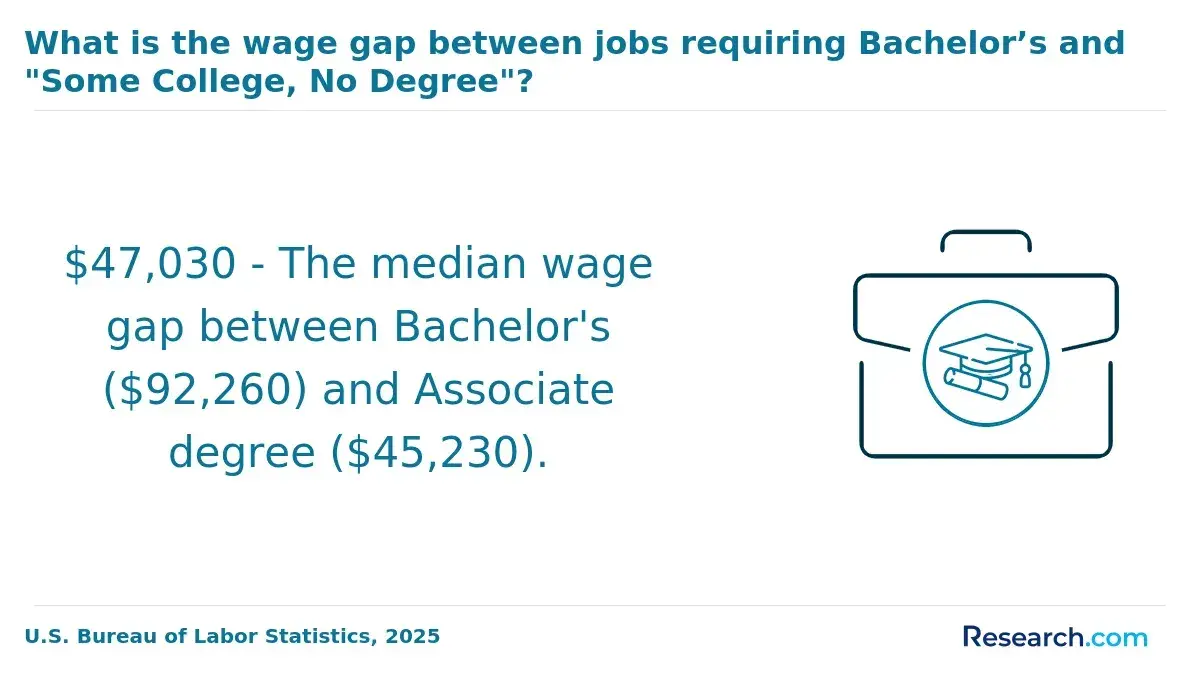
However, BLS wage figures are occupational medians, not guaranteed starting salaries; a new graduate's first offer may be lower or higher depending on location, industry, employer size, internships, and specialized skills.
The table below uses BLS May 2024 occupational wage data and current long-term projection categories to show roles with strong earning potential after graduates gain experience. Use it to compare long-term opportunity, not as a promise of a first-year salary.
| Career path | Why it can pay well over time | BLS May 2024 median annual wage | Long-term outlook context |
| Software developer | Employers pay for product-building, automation, cloud, and systems skills | $133,080 | Projected growth is much faster than average as organizations continue investing in software and digital services |
| Information security analyst | Cybersecurity risk affects finance, healthcare, government, education, and nearly every large employer | $124,910 | Projected growth is much faster than average because organizations need stronger defenses and compliance controls |
| Data scientist | Advanced analytics supports pricing, operations, healthcare, marketing, fraud detection, and AI systems | $112,590 | Projected growth is much faster than average as employers expand data-driven decision-making |
| Financial analyst | Analysts influence investment, budgeting, forecasting, and business strategy | $101,910 | Projected growth is faster than average, especially for graduates with modeling, data, and industry knowledge |
| Civil engineer | Infrastructure, construction, transportation, and environmental systems require technical design expertise | $99,590 | Demand is supported by infrastructure, population, and maintenance needs, though local construction cycles matter |
| Registered nurse | Licensure, patient care responsibility, shift needs, and healthcare demand support strong employment options | $93,600 | Growth is steady, with demand varying by state, specialty, and care setting |
| Accountant or auditor | Financial reporting, tax, compliance, and advisory work remain essential across industries | $81,680 | Growth is near average, but CPA eligibility, analytics skills, and audit experience can improve mobility |
| Market research analyst | Companies need evidence on customers, pricing, competitors, and campaign performance | $76,950 | Growth is faster than average as marketing becomes more data-driven |
If your first job is below the median for the occupation, focus on whether it builds a path to higher-value responsibilities. For example, a help desk role can lead to systems administration or cybersecurity, a staff accountant role can lead to audit or financial planning, and an operations coordinator role can lead to supply chain analytics or project management.
Graduates considering graduate school should be cautious about borrowing heavily before testing the labor market. A focused graduate credential can make sense when job postings repeatedly ask for advanced training, licensure eligibility, or specialized technical depth; accelerated options such as 1-year master's programs online may be worth comparing when time out of the workforce is a major cost.
How do different majors and degree types connect to in-demand entry-level career paths?
Different majors connect to different entry-level career paths, but the connection is not always one-to-one. Some degrees prepare students for specific licensed roles, while others build transferable skills that can lead to multiple industries. The smartest path is to connect your major to a job family, then add projects, internships, software skills, or credentials that make your application credible.
The table below shows common degree-to-career connections and when each path tends to make sense. It can help students choose a first role without assuming their major limits them to only one occupation.
| Major or degree type | Common entry-level paths | When this path makes sense | What to add before graduation |
| Computer science, information systems, data analytics | Software developer, data analyst, QA analyst, IT analyst, cybersecurity analyst | You enjoy technical problem-solving and can show work through projects or internships | Portfolio projects, SQL, Python, cloud basics, version control, security fundamentals |
| Business, finance, accounting, economics | Staff accountant, financial analyst, sales analyst, operations coordinator, HR coordinator | You want broad corporate options and are comfortable with data, reporting, and communication | Excel, accounting software, internships, case competitions, business writing samples |
| Nursing, allied health, health sciences | Registered nurse, lab technician, health information specialist, clinical research assistant | You want patient care, healthcare operations, or regulated clinical work | Clinical hours, licensure preparation, patient communication, compliance knowledge |
| Engineering, construction management, applied sciences | Engineer I, field engineer, manufacturing analyst, quality specialist, project coordinator | You want applied technical work and can handle math, design, systems, and safety requirements | Co-ops, CAD, lab projects, field experience, FE exam planning where relevant |
| Education, psychology, sociology, social work | Teacher, case manager, behavioral technician, program coordinator, admissions counselor | You want people-centered work and are prepared for documentation, ethics, and service delivery | Practicums, tutoring, volunteer work, crisis communication training, state licensure checks |
| Communications, English, marketing, design | Content specialist, marketing coordinator, PR assistant, UX writing assistant, social media coordinator | You can combine writing or creative ability with analytics and audience strategy | Portfolio, campaign metrics, SEO basics, design tools, internship samples |
Associate degrees and certificates can also lead to strong first jobs in healthcare technology, IT support, drafting, paralegal work, advanced manufacturing, and logistics. Bachelor's degrees tend to offer broader mobility, while master's degrees are most useful when the field requires advanced preparation or the graduate needs a specialized pivot.
Students who want flexibility, speed, or lower academic difficulty should still choose strategically. Comparing easy degrees to get online can be helpful only if the program also leads to credible skills, recognized accreditation, and realistic job targets.
What certifications or licenses help new graduates qualify for competitive entry-level positions?
Certifications and licenses can help new graduates stand out, but they serve different purposes. A license is usually a legal requirement to practice in a regulated role, while a certification is often a voluntary credential that signals skill, knowledge, or readiness. Requirements vary by state, employer, and professional board, so graduates should verify rules before enrolling in a program or paying for an exam.
The table below compares credentials that commonly matter for competitive entry-level roles. It is not a complete list, but it shows how credentials can change employability in different fields.
| Credential | Best for | Why it helps | Important limitation |
| Registered Nurse license | Nursing graduates | Required for RN practice after completing an approved program and passing the licensing exam | State board requirements, clinical hours, and background checks vary |
| Teacher certification or licensure | Education graduates pursuing public school teaching | Required for many K-12 public school roles and tied to subject or grade level | Requirements vary by state and may include exams, student teaching, and background screening |
| CPA eligibility pathway | Accounting graduates | Supports advancement in audit, tax, public accounting, and financial reporting | Full CPA licensure usually requires education credits, exams, and experience beyond the first job |
| CompTIA A+, Network+, or Security+ | IT support, networking, and cybersecurity beginners | Helps validate practical IT knowledge when experience is limited | Certification alone rarely replaces hands-on troubleshooting or security practice |
| Engineer-in-Training or Fundamentals of Engineering exam | Engineering graduates on a professional engineer track | Starts the pathway toward professional engineering licensure in many disciplines | Not every engineering job requires PE licensure, but it can matter in civil and public-facing work |
| SHRM-CP or aPHR | Human resources graduates | Signals knowledge of HR practices, compliance, and employee relations | Entry-level HR roles still value internships and communication skills heavily |
| Google Analytics, HubSpot, or platform-based marketing credentials | Marketing and communications graduates | Shows familiarity with tools used in digital campaigns and reporting | Platform credentials should be paired with real campaign samples or analytics results |
Be careful with credentials that promise quick access to high-paying jobs without transparent employer demand. Before paying for a certification, check whether real job postings in your target city list it as required or preferred, whether it expires, whether continuing education is needed, and whether the credential provider is recognized in the field.
Licensure-heavy fields may also involve background checks, professional conduct rules, or placement restrictions. Applicants with criminal records should research state rules early and may benefit from exploring education options designed around realistic career access, including guides to degrees felons can get.
How can students use internships, co-ops, and campus jobs to improve entry-level prospects?
Internships, co-ops, and campus jobs are often the bridge between "student" and "entry-level professional." They help employers evaluate reliability, communication, technical skills, and whether a graduate understands workplace expectations. For students with limited work history, these experiences can be the difference between a generic application and a credible one.
Use these experiences strategically instead of treating them as resume filler. The goal is to create proof that you can solve problems, work with others, and deliver results in a professional setting.
- Choose experiences tied to a job family, such as analytics, patient care, software, public service, finance, communications, or operations.
- Ask for assignments that produce measurable outcomes, such as reducing errors, improving response time, creating a dashboard, assisting patients, supporting audits, or increasing engagement.
- Document your work while it is fresh by saving approved samples, metrics, supervisor feedback, tools used, and project descriptions.
- Build relationships with supervisors, faculty, alumni, and coworkers before you need references or referrals.
- Convert experience into interview stories using the situation, task, action, and result format.
Co-ops can be especially valuable in engineering, manufacturing, technology, and business operations because they often provide longer work periods than traditional internships. Campus jobs can also count when they involve leadership, customer service, tutoring, research, technology support, budgeting, event planning, or resident advising.
A common mistake is accepting any internship without asking what you will learn. A brand-name organization can help, but a smaller employer that lets you build reports, manage systems, support clients, or complete projects may provide stronger evidence for entry-level hiring.
What is the job outlook for popular entry-level careers based on current labor market trends?
The job outlook for entry-level careers is being shaped by three major U.S. labor market forces: continued demand for healthcare and care services, technology adoption across nearly every industry, and employer preference for graduates who can work with data and digital tools. AI is changing some entry-level tasks, but it is also increasing demand for people who can validate outputs, manage systems, protect data, and apply judgment.
The table below highlights popular career paths with favorable or stable outlooks. Use it to compare the direction of demand, while remembering that local hiring conditions can differ by state, metro area, employer, and economic cycle.
| Career path | Outlook signal | What the trend means for new graduates |
| Cybersecurity | BLS projections show much faster-than-average growth for information security analysts | Graduates with networking, security tools, scripting, and compliance awareness may find multiple entry routes through IT support, SOC analyst, or risk roles |
| Data analytics and data science | Data scientist roles remain among the faster-growing professional occupations in BLS projections | Students should pair statistics or analytics coursework with business context and portfolio projects |
| Healthcare and nursing | Healthcare demand remains supported by aging populations, chronic care needs, and staffing turnover | Licensure and clinical placement quality matter as much as the degree name |
| Accounting and audit | Demand is steady, but automation is changing routine bookkeeping and reconciliation tasks | Graduates should strengthen analytics, advisory, tax, audit, and systems skills instead of relying only on basic accounting knowledge |
| Engineering and infrastructure | Infrastructure investment and maintenance needs support demand in civil, environmental, and industrial roles | Co-op experience, field readiness, CAD, and project documentation can improve competitiveness |
| Marketing and communications | Digital measurement and content automation are changing entry-level work | Graduates need writing judgment, analytics, platform fluency, and the ability to evaluate AI-generated content |
| Education and human services | Demand varies by subject, state, district, funding, and turnover | Licensure, classroom experience, bilingual ability, special education preparation, and resilience can influence opportunity |
For graduates, the safest interpretation is not "choose the fastest-growing field no matter what." Instead, choose a field where demand is solid, the required training is realistic, and the day-to-day work fits your strengths. A role with moderate growth but strong fit and clear advancement can outperform a hot field where you lack interest or preparation.
How do online degrees and campus-based programs compare in preparing graduates for entry-level work?
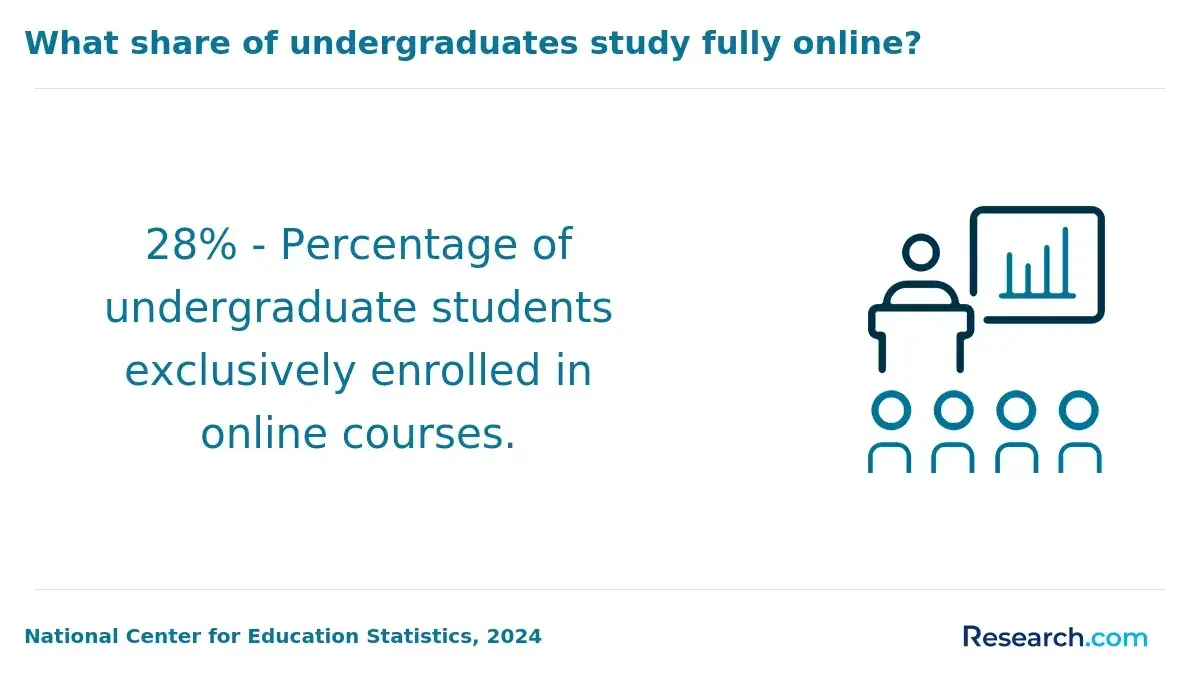
Online degrees and campus-based programs can both prepare graduates for entry-level work when they are accredited, appropriately rigorous, and aligned with employer expectations. The stronger choice depends on the field, the student's schedule, the need for labs or clinical placements, and how much career support the program provides.
The table below compares online and campus formats for job preparation. It can help students avoid assuming that one format is automatically better for every career.
| Factor | Online programs | Campus-based programs | Best decision rule |
| Flexibility | Often better for working adults, caregivers, military students, and commuters | Better for students who want a structured schedule and in-person routine | Choose the format you can complete consistently without sacrificing required experience |
| Hands-on learning | Strong in fields that use digital tools, but clinicals, labs, or practicums may require local placements | Often easier for lab, studio, clinical, and equipment-heavy programs | Check how the program handles required in-person components before enrolling |
| Networking | Can be strong if the program offers live sessions, alumni access, employer events, and active faculty support | Often easier through campus clubs, career fairs, labs, and faculty contact | Do not assume networking happens automatically in either format |
| Employer perception | Generally strongest when the school is accredited, recognized, and transparent about outcomes | Generally strongest when the institution has employer relationships and strong placement support | Accreditation, reputation, skills, and experience matter more than format alone |
| Cost control | May reduce commuting, housing, and relocation costs | May offer on-campus jobs, local internships, labs, and scholarships | Compare total cost, not tuition alone |
Online programs can be a smart option for students who need flexibility, but they require self-management. Students should ask about internship support, career coaching, faculty access, licensure preparation, and whether online learners receive the same employer connections as campus students.
Applicants comparing flexible schools can also review online universities with no application fee, especially if they want to reduce upfront costs while still focusing on accreditation and career fit.
What should new graduates look for when choosing accredited programs aligned with entry-level careers?
Choosing an accredited program aligned with entry-level careers is one of the most important decisions students can make before graduation. Accreditation helps signal that a school or program meets recognized quality standards, and in some fields it can affect licensure, transfer credits, graduate school eligibility, employer acceptance, and financial aid access.
Before enrolling, students should verify the program's fit for their target job rather than relying only on rankings, advertising, or convenience. The most important checks are:
- Confirm institutional accreditation through recognized U.S. accrediting bodies and check whether your field also requires programmatic accreditation.
- For licensed careers, verify that the program meets the requirements of the state where you plan to work.
- Compare total cost, including tuition, fees, books, technology, commuting, housing, clinical fees, exam fees, and lost work time.
- Ask for career outcome data that is specific to the program, not only broad schoolwide employment claims.
- Review internship, clinical, practicum, co-op, or field placement support before assuming the school will arrange it.
- Check transfer credit rules, prior learning credit, course sequencing, and whether part-time study changes the graduation timeline.
- Evaluate employer relationships, alumni networks, career coaching, resume support, and interview preparation.
Cost deserves special attention because the cheapest program is not always the best value, and the most expensive program does not automatically produce better outcomes. Students considering graduate credentials should compare tuition against realistic career benefits, including options such as affordable master's degrees online when an advanced degree is useful but debt control is a priority.
Common red flags include vague accreditation language, pressure to enroll immediately, unclear licensure disclosures, limited access to faculty, no transparent placement information, and programs that advertise high salaries without explaining role, location, experience level, or data source. If a school cannot clearly explain how its curriculum connects to your target entry-level job, keep comparing options.
How can recent graduates effectively search, apply, and interview for entry-level jobs?
Recent graduates should treat the entry-level job search as a focused campaign, not a volume contest. Applying to hundreds of jobs with the same resume is usually less effective than targeting roles where your education, experience, and evidence match the employer's needs.
A practical job-search process helps you stay organized and improve with each application. Follow these steps to make your search more targeted:
- Choose two or three job titles to target first, such as data analyst, staff accountant, marketing coordinator, lab technician, junior developer, or HR coordinator.
- Collect 15 to 20 job postings for each title and identify repeated requirements, software tools, credentials, and keywords.
- Revise your resume so the top third clearly matches the role, including relevant projects, internships, tools, and measurable outcomes.
- Use alumni networks, faculty contacts, internship supervisors, professional associations, and campus career offices to find referrals.
- Prepare interview stories that prove problem-solving, teamwork, conflict handling, learning speed, and accountability.
- Track applications, contacts, interview dates, follow-ups, and feedback in a simple spreadsheet.
- After rejections or silence, adjust your resume, portfolio, target titles, or networking strategy rather than only increasing application volume.
Graduates should also be realistic about first-job trade-offs. A lower starting salary may be acceptable if the role offers training, supervision, advancement, credential support, or a respected employer name. A higher salary may be less attractive if the job has limited learning, high turnover, poor supervision, or weak alignment with your target career.
In interviews, strong candidates do more than say they are hardworking. They explain how coursework, work experience, projects, or internships prepared them to solve the employer's problems. They also ask practical questions about training, performance expectations, promotion timelines, tools used, team structure, and what successful first-year employees do differently.
Other Things You Should Know About Career Planning
The best entry-level job is the one that matches your degree, skills, work style, and long-term goals while building transferable experience. Strong options often include software developer, data analyst, registered nurse, staff accountant, financial analyst, engineer, marketing coordinator, and HR coordinator.
Yes, but you need other proof of readiness. Class projects, campus jobs, volunteer work, research, portfolios, certifications, clinical hours, leadership roles, and part-time work can help show employers that you can perform in a professional setting.
Sometimes. A lower-paying job can be a smart move if it provides training, mentorship, respected experience, licensure support, or a clear path to higher-level roles. Avoid roles that offer low pay and little skill development.
Quality matters more than volume. A realistic target is several well-tailored applications per week, combined with networking, resume revisions, interview practice, and follow-up. If you are not getting responses, improve targeting before simply applying to more jobs.
References
- Putting your major to work: Career paths after college | Brookings https://www.brookings.edu/articles/putting-your-major-to-work-career-paths-after-college/
- Selecting Your Career After College https://collegegrad.com/blog/selecting-your-career-after-college
- Best Paying Entry Level Jobs 2025 https://www.newgrad-jobs.com/blog/best-paying-entry-level-jobs
- Why Certifications are the New Must-Have for Entry-Level Jobs https://protrain.edu/why-certifications-are-the-new-must-have-for-entry-level-jobs/
- 12 Top Entry Level Jobs for New Graduates in 2026 https://www.gainrep.com/resources/entry-level-jobs-for-new-graduates/
- Online Degree vs. Traditional: Choosing the Right Path https://beal.edu/online-degree-vs-traditional/
- What New Graduates Look For In An Employer https://www.criteriacorp.com/blog/what-new-graduates-look-for-in-an-employer