2027 How to Choose a Career That Matches Your Major

Co-Founder and Chief Data Scientist
Choosing a career from your major is really a question of fit: what work you want, what credentials employers require, and what return you can reasonably expect. BLS data show the median annual wage for all U. S. workers was $49,500 in May 2024, but pay varies widely by field, credential, location, and experience.
This guide is for students, transfer applicants, and adults reconsidering their path. You will learn how to connect majors to jobs, compare program formats, check licensing rules, estimate costs, and avoid choosing a degree that does not support your goal.
Key Things You Should Know
- Your major should be chosen backward from a target career, not forward from a favorite subject; start with job duties, required credentials, and whether state licensure applies.
- Cost and timeline matter: College Board data for 2024-25 list average published tuition and fees at $11,610 for in-state public four-year colleges and $43,350 for private nonprofit four-year colleges.
- Salary should be compared by occupation, not by major name; BLS May 2024 data show the median wage for all workers was $49,500, which is a useful baseline for judging potential return on investment.
How do you match your major to a career path?
To match your major to a career path, define the job first and then test whether the major gives you the required knowledge, credentials, experience, and proof of skill. A major is an academic field of study; a career path is the sequence of roles, training, licenses, and promotions that can turn that study into paid work.
Use the steps below to move from a broad interest to a realistic career plan. The goal is not to find a perfect match immediately, but to reduce uncertainty before you spend time and money on credits that may not transfer or qualify you for the role you want.
- Choose two or three target job titles, such as financial analyst, registered nurse, UX designer, teacher, software developer, forensic accountant, or policy analyst.
- Read job postings for those roles and note repeated requirements, including degree level, major, technical tools, internships, certifications, and soft skills.
- Check whether the role requires state licensure, programmatic accreditation, supervised hours, or a board exam.
- Compare your major's required courses with the skills listed in job postings and identify missing coursework, minors, certificates, or electives.
- Ask the program for placement data, internship access, transfer credit policies, and graduate school outcomes before enrolling.
If you are still building a school shortlist, choosing a university with free application fee can help you compare options without adding avoidable upfront costs, but you should still verify accreditation, tuition, and career services before applying.
The table below highlights common matching mistakes and better alternatives. Use it as a quick diagnostic if you already like a major but are unsure whether it leads to the career you want.
| Common mistake | Why it creates risk | Better approach |
| Choosing a major only because you enjoyed one class | A single course may not reflect the day-to-day work of related careers | Compare job duties, internships, and required skills before deciding |
| Assuming any bachelor's degree qualifies you for a licensed profession | Teaching, nursing, counseling, engineering, and accounting may have strict state or board rules | Check licensing requirements before selecting a program |
| Focusing only on salary | Higher-paying fields may require advanced math, long hours, relocation, graduate school, or competitive internships | Compare salary, workload, interests, and required training together |
| Ignoring experience requirements | Many entry-level postings still expect portfolios, clinical hours, projects, or internships | Choose programs with built-in fieldwork, labs, projects, or employer partnerships |
What careers can you get with your major?
You can get many careers with the same major, but the strongest options usually depend on how you use electives, internships, projects, and credentials. For example, a psychology major can point toward counseling, human resources, research, user experience, social services, or graduate study, but each route requires a different preparation plan.
The table below summarizes common major families and the types of career paths they often support. It is not a guarantee of eligibility; use it to identify job families worth researching in more detail.
| Major area | Common career paths | Typical responsibilities | Preparation that strengthens employability |
| Business, finance, or accounting | Accountant, financial analyst, operations analyst, auditor, marketing analyst | Analyze budgets, prepare reports, evaluate performance, manage records, support business decisions | Excel, data analytics, accounting systems, internships, CPA-ready coursework if relevant |
| Computer science or information technology | Software developer, cybersecurity analyst, data analyst, systems administrator, cloud support specialist | Build systems, secure networks, analyze data, troubleshoot infrastructure, automate workflows | Programming projects, GitHub portfolio, cloud tools, cybersecurity labs, certifications when useful |
| Health sciences or biology | Registered nurse, clinical lab technologist, physician assistant track, public health analyst, health educator | Support patient care, perform lab work, analyze health data, educate communities, coordinate services | Prerequisite sciences, clinical hours, accredited programs, licensure planning, patient-care exposure |
| Education | Teacher, instructional coordinator, school support specialist, curriculum designer, education technology specialist | Teach students, assess learning, design lessons, manage classrooms, support school programs | State-approved teacher preparation, student teaching, classroom observation, licensure exams |
| Social sciences or humanities | Policy analyst, communications specialist, paralegal, nonprofit coordinator, researcher, writer | Research issues, write reports, communicate with stakeholders, analyze social trends, manage programs | Writing samples, research methods, internships, foreign language, statistics, public-facing projects |
| Engineering or applied sciences | Mechanical engineer, civil engineer, quality engineer, project engineer, manufacturing specialist | Design systems, test products, manage technical projects, improve processes, ensure safety and compliance | ABET-accredited coursework when needed, labs, CAD tools, internships, FE exam planning |
AI and automation are changing how many of these careers work, but they are not eliminating the need for strong judgment. Majors that combine domain knowledge with data literacy, communication, ethical reasoning, and hands-on experience tend to give students more flexibility as tools change.
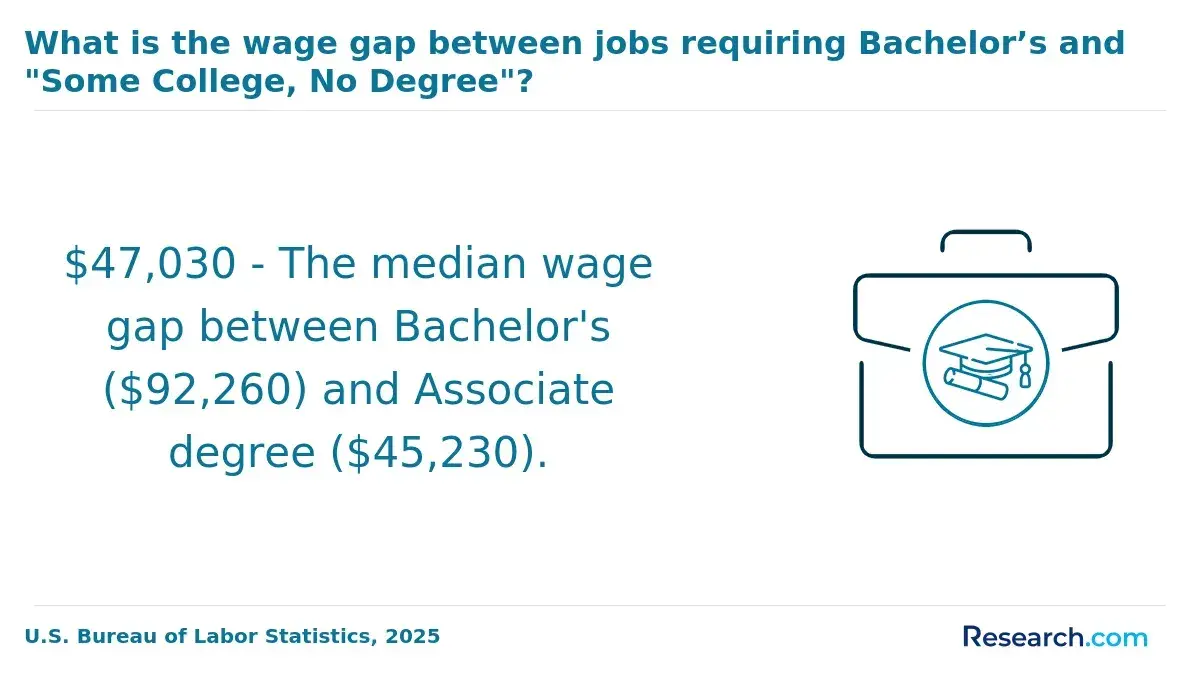
Which major best fits your career goals?
The best major for your career goals is the one that meets three tests: it qualifies you for the next credential, teaches marketable skills, and fits your cost and timeline. A high-interest major with weak career alignment can still be valuable, but you may need a minor, certificate, internship, or graduate plan to make it work.
Students who already have transfer credits or a clear career target may benefit from an accelerated pathway. If speed is a priority, compare whether a best 1-year bachelor degree online option accepts your previous credits and still supports your target career rather than simply offering the fastest completion time.
The table below compares common career goals with major-selection priorities. Use it to decide whether you need a highly specific major or a flexible major plus targeted experience.
| Career goal | Major strategy that usually fits | When to consider another option |
| Become licensed in a regulated profession | Choose a program explicitly designed for that license, such as nursing, teacher preparation, social work, or engineering | If the program is not approved by the relevant state board or accreditor |
| Enter a technical field quickly | Choose computer science, information technology, data analytics, cybersecurity, or applied technology with project-based coursework | If you dislike troubleshooting, math, coding logic, or continuous tool learning |
| Keep graduate school options open | Choose a major with strong prerequisites, research methods, writing, and faculty advising | If the major lacks required science, math, or clinical prerequisites for your intended graduate program |
| Work in business or management | Choose business administration, finance, accounting, supply chain, or economics with internships and analytics coursework | If you want a licensed role such as CPA and the curriculum does not meet exam eligibility rules |
| Pursue mission-driven work | Choose public health, social work, education, environmental studies, public policy, or nonprofit management | If expected pay, emotional demands, or graduate degree requirements do not fit your long-term plan |
A practical rule is to choose the more specific major when the career requires a specific credential, and choose the more flexible major when your target field values skills, experience, and portfolios more than a single degree title.
What skills and coursework should your major include?
Your major should include both technical coursework and transferable skills. Technical skills help you qualify for the first job; transferable skills help you adapt when your role, tools, or industry changes.
Look for evidence that the program teaches the following skill categories through graded work, labs, projects, placements, or portfolios. These are especially important because employers increasingly expect graduates to show proof of competence, not just list courses on a resume.
- Role-specific technical skills, such as coding, financial modeling, lab methods, lesson planning, CAD, statistical analysis, clinical procedures, or case documentation.
- Communication skills, including professional writing, presentations, client communication, documentation, and explaining complex information to non-specialists.
- Quantitative and data skills, including spreadsheet analysis, statistics, dashboards, research methods, and evidence-based decision-making.
- Workplace judgment, including ethics, compliance, teamwork, project management, cultural competence, and responsible use of AI tools.
- Career evidence, such as internships, capstone projects, portfolios, clinical hours, student teaching, undergraduate research, or employer-reviewed projects.
The table below shows how to connect coursework to career evidence. This matters because a transcript alone may not show an employer that you can perform the work.
| Course or experience | What it can prove to employers | Best-fit majors |
| Capstone project | Ability to solve a complex problem from start to finish | Business, engineering, IT, public policy, health administration |
| Internship or field placement | Workplace readiness and exposure to real job duties | Business, communications, social work, education, criminal justice |
| Lab or clinical course | Hands-on technical accuracy and safety awareness | Nursing, biology, chemistry, health sciences, engineering |
| Research methods course | Ability to evaluate evidence and interpret data | Psychology, sociology, economics, public health, political science |
| Portfolio-based course | Visible proof of writing, design, coding, analysis, or media production | Computer science, design, journalism, marketing, English |
A common red flag is a program that lists broad outcomes but cannot show how students build work samples, complete supervised practice, or connect with employers. If a school cannot explain how coursework turns into career evidence, ask more questions before enrolling.
Do you need accreditation for this major or program?
Accreditation is a quality-review process that helps determine whether a school or program meets recognized academic standards. Institutional accreditation applies to the college or university as a whole, while programmatic accreditation applies to specific fields such as nursing, engineering, social work, counseling, business, or education.
This distinction matters because financial aid, transfer credits, graduate admissions, employer recognition, and licensure eligibility can depend on accreditation. Before choosing a major, verify accreditation directly with the school and, for licensed fields, with the state board or professional body that governs your intended career.
The table below identifies fields where programmatic accreditation or state approval can be especially important. Requirements vary, so treat this as a starting point rather than a final eligibility check.
| Field or major | Accreditation or approval issue to verify | Why it matters |
| Nursing | State board approval and recognized nursing accreditation | May affect eligibility for the NCLEX-RN and state licensure |
| Engineering | ABET accreditation for many engineering programs | Can affect licensure pathways, employer preferences, and graduate options |
| Teacher education | State-approved educator preparation program | Usually required for initial teacher certification |
| Social work | CSWE-accredited program for many licensure routes | Often required for advanced standing MSW programs and licensure pathways |
| Counseling or psychology | Program approval and accreditation expectations vary by license and degree level | Can affect supervised practice, exam eligibility, and licensure mobility |
| Business or accounting | Business accreditation may be valued, but CPA eligibility depends on state rules and credit requirements | Students must confirm accounting hours and total credits, not just the degree name |
To avoid a costly mistake, ask admissions staff direct questions and request written answers when possible. A program may be legitimate academically but still fail to meet the exact rules for your desired license or state.
- Is the institution accredited by an agency recognized by the U.S. Department of Education or CHEA?
- Does the specific program hold the accreditation or state approval required for my career goal?
- Will this program meet licensure requirements in the state where I plan to work?
- Are clinical placements, student teaching, labs, or supervised hours included in tuition or billed separately?
- Will credits transfer if I later change schools or continue to graduate study?
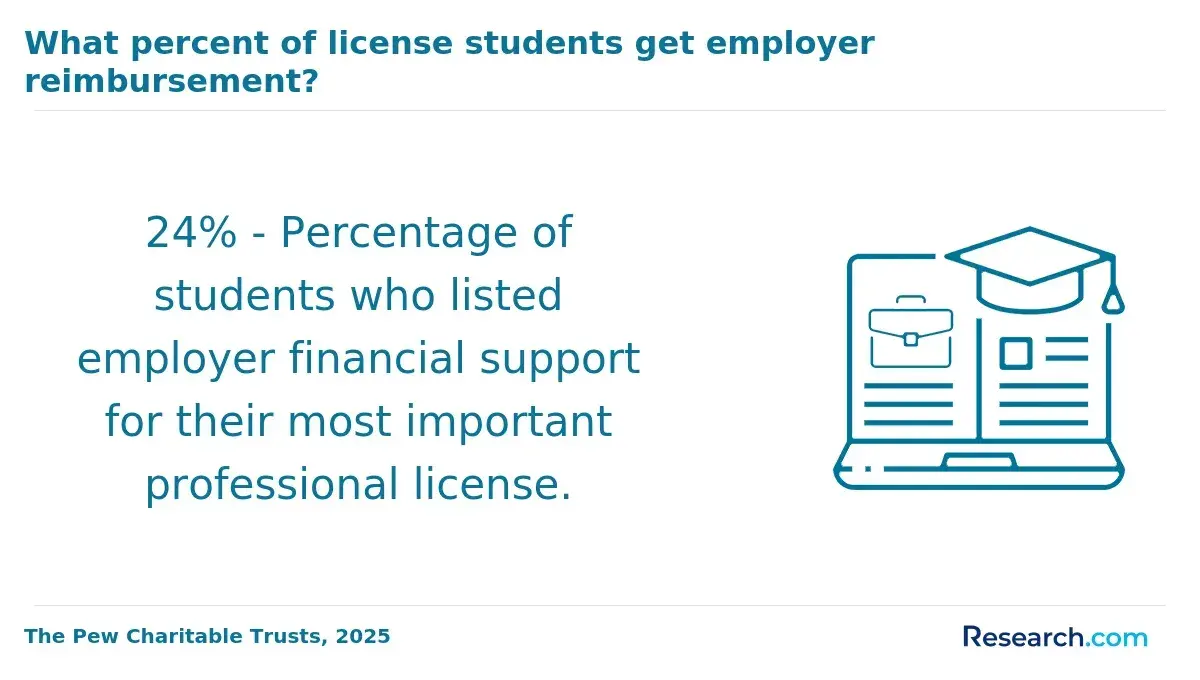
What licensing or certification does your career require?
Licensing and certification are different from earning a degree. A license is usually a legal requirement to practice in a regulated occupation, while a certification is often an industry credential that demonstrates skill or specialization.
Use the table below to understand where extra requirements may appear after or during your degree. Always check your state board, because rules can differ by location and may change over time.
| Career goal | Common requirement beyond the degree | What to confirm before choosing a major |
| Registered nurse | NCLEX-RN and state licensure | Whether the program is state-approved and includes required clinical experiences |
| Public school teacher | State certification exams, student teaching, background checks | Whether the program leads to certification in your intended grade level and subject |
| CPA-track accountant | State CPA exam eligibility, accounting credits, total credit hours, experience requirements | Whether the curriculum meets your state board's accounting and business coursework rules |
| Engineer seeking licensure | FE exam, supervised experience, PE exam in many cases | Whether the degree is ABET-accredited and aligned with licensure pathways |
| Clinical social worker or counselor | Graduate degree, supervised hours, state exam, licensure application | Whether the undergraduate major prepares you for required graduate admissions and fieldwork |
| Cybersecurity or IT specialist | Industry certifications may be preferred by employers | Whether coursework prepares you for tools, labs, and recognized certification exams |
Some students choose advanced study to qualify for leadership, teaching, research, or specialized practice. For example, professionals aiming for senior criminal justice roles may compare an online PhD criminal justice no dissertation pathway with traditional doctoral programs, but they should still verify employer expectations, research requirements, and career relevance before enrolling.
A common mistake is assuming that a certification can replace a degree in every field. In some technology and business roles, certifications can strengthen a resume; in regulated fields, they usually do not replace required degrees, supervised hours, exams, or licenses.
Is an online degree or campus program better for your major?
An online degree can be better if you need flexibility, already have work experience, or can complete internships and labs locally. A campus program may be better if your major depends heavily on specialized equipment, in-person networking, residential clinical placements, studio work, or structured support.
Online learning is now a mainstream option in U.S. higher education, but quality varies. If your main concern is time to completion, reviewing the quickest online degrees can help you identify accelerated formats, though speed should never outweigh accreditation, licensure fit, and career outcomes.
The table below compares online and campus formats by decision factor. Use it to decide which format supports your major rather than assuming one format is always better.
| Decision factor | Online degree may fit better when | Campus program may fit better when |
| Schedule | You work, parent, serve in the military, or need asynchronous courses | You want a fixed weekly schedule and face-to-face accountability |
| Major requirements | The field can be taught through readings, projects, simulations, remote tools, or local placements | The major requires labs, studios, equipment, clinical rotations, or performance-based learning |
| Networking | You are proactive with online career fairs, faculty outreach, LinkedIn, and internships | You want frequent in-person access to faculty, classmates, clubs, labs, and recruiters |
| Licensure | The school confirms in writing that the program meets requirements in your state | The program has local placements and long-standing relationships with state boards or employers |
| Learning style | You are self-directed, comfortable with technology, and able to manage deadlines independently | You learn better through live discussion, immediate feedback, and structured campus resources |
Before choosing an online program for a licensed field, ask where clinicals, internships, student teaching, or labs take place. A program can be online academically but still require in-person experiences that affect your schedule, travel, and total cost.
How long does the degree take, and what does it cost?
Most bachelor's degrees are designed for about four years of full-time study, while associate degrees often take about two years and master's degrees commonly take one to three years depending on the field and enrollment pace. Your actual timeline may be shorter or longer based on transfer credits, placement exams, course availability, program sequencing, and whether you study full time.
Cost should be evaluated as total cost of completion, not just tuition per credit. College Board data for 2024-25 show average published tuition and fees of $11,610 for in-state public four-year institutions and $43,350 for private nonprofit four-year institutions; this gap can change your ROI calculation if two programs lead to similar career outcomes.
If affordability is your top constraint, comparing the most affordable online colleges can be useful, especially if you also verify accreditation, transfer credit acceptance, graduation rates, and whether the program supports your target career.
The table below summarizes typical timelines and cost considerations by degree type. Use it to compare the trade-off between speed, flexibility, and long-term career eligibility.
| Path | Common timeline | Best fit | Cost factors to check |
| Certificate | A few months to about one year | Skill upgrades, entry-level technical training, career changers testing a field | Exam fees, equipment, employer recognition, whether credits apply to a degree |
| Associate degree | About two years full time | Transfer students, technical careers, lower-cost general education | Transfer agreements, lab fees, local placement requirements, advising quality |
| Bachelor's degree | About four years full time | Careers requiring a bachelor's degree, graduate school preparation, broad professional entry | Tuition, fees, housing, books, transfer credits, internship access, time away from work |
| Accelerated bachelor's completion | Often one to three years after transfer credits | Adults with prior credits or associate degrees | Credit transfer limits, course intensity, tuition per term, employer tuition assistance |
| Master's or professional degree | Often one to three years, longer in some professions | Licensure, specialization, leadership, career advancement | Prerequisites, supervised hours, assistantships, employer reimbursement, opportunity cost |
When comparing programs, include the hidden costs that can affect completion. These often matter more than the advertised tuition rate.
- Application, technology, graduation, lab, clinical, background check, and exam fees.
- Books, software, equipment, uniforms, transportation, parking, or residency travel.
- Lost income if the program requires daytime attendance, unpaid clinicals, or reduced work hours.
- Extra semesters caused by prerequisites, course sequencing, failed transfer credits, or limited seat availability.
- Loan interest and repayment obligations if grants, scholarships, employer assistance, or pay-as-you-go options are unavailable.
What salary can you expect in this field?
Salary depends on occupation, industry, geography, experience, credentials, and economic conditions. A major can influence access to certain roles, but it does not guarantee a specific income.
The table below uses BLS May 2024 median pay figures for selected occupations that commonly connect to undergraduate majors. Treat these as labor-market reference points, not promises of what any individual graduate will earn.
| Major or preparation area | Example occupation | BLS median annual pay, May 2024 | How to interpret the number |
| Computer science or software development | Software developers, quality assurance analysts, and testers | $133,080 | Strong pay potential, but hiring often depends on coding skill, projects, internships, and technical interviews |
| Nursing | Registered nurses | $93,600 | Licensure and clinical training are essential, and pay varies by setting, shift, and region |
| Accounting | Accountants and auditors | $81,680 | CPA eligibility, internships, and accounting systems experience can affect advancement |
| Marketing or business analytics | Market research analysts | $76,950 | Data analysis, survey methods, dashboards, and communication skills matter for entry |
| Education | Elementary school teachers, except special education | $63,670 | State certification is usually required, and pay varies by district and contract |
| Social work | Social workers | $61,330 | Advanced licensure and graduate study may be needed for clinical roles |
For ROI, compare expected salary with total debt, completion time, and the likelihood that the program meets required credentials. A lower-cost program with strong accreditation and placement support may be a better choice than a more expensive option with similar career access.
What is the job outlook for careers in this major?
Job outlook helps you estimate whether a field is expanding, stable, or becoming more competitive. It should not be the only factor in choosing a major, but it can help you avoid preparing for a role with limited openings or declining demand.
The table below uses BLS employment projections for 2024-34 for selected occupations. These projections describe expected national employment change and do not guarantee openings in a specific city or employer.
| Career path | Example occupation | BLS projected growth, 2024-34 | What it means for major selection |
| Data and AI-adjacent analytics | Data scientists | 34% | Majors with statistics, programming, databases, and domain knowledge can be useful |
| Healthcare administration | Medical and health services managers | 23% | Health administration, business, public health, and informatics pathways may align well |
| Software and systems development | Software developers, quality assurance analysts, and testers | 15% | Projects, internships, and current technical tools are critical alongside the degree |
| Nursing | Registered nurses | 5% | Licensure-focused programs with clinical placement support are essential |
| Accounting | Accountants and auditors | 5% | Accounting majors should verify CPA eligibility and build analytics skills |
| All occupations | U.S. labor market overall | 3% | Use this as a benchmark when comparing whether a field is growing faster or slower than average |
Current trends point to stronger demand for workers who can combine human judgment with technical tools. AI may automate routine tasks in writing, coding, analysis, customer support, and administration, but it also increases the value of workers who can validate outputs, manage systems, interpret data, communicate with stakeholders, and apply ethical judgment.
Before committing to a major, check job postings in your target location. National growth can look promising, but local opportunities may depend on hospitals, school districts, tech employers, government agencies, manufacturers, or professional-service firms in your region.
Other Things You Should Know About
Yes. Many employers hire for skills, experience, internships, portfolios, and communication ability rather than one exact major. However, licensed fields such as nursing, teaching, counseling, engineering, and accounting may require specific coursework or approved programs.
Salary should be one factor, not the only factor. Compare pay with degree cost, licensing requirements, job duties, stress level, location, and your ability to complete the required coursework successfully.
Start by identifying your target job and checking which credits still apply. You may be able to add a minor, certificate, internship, elective sequence, or graduate prerequisite plan instead of changing majors completely.
A career-specific major is usually better for regulated professions with strict requirements. A flexible major can work well for fields like business, communications, policy, technology, and nonprofit work if you build strong skills and career evidence.
References
- Learnsic https://learnsic.com/blog/how-long-does-it-take-to-get-a-bachelors-degree
- Online vs. On-Campus: Which Mode of Learning Is Best for You? https://www.onlinemastersdegrees.org/student-resources/which-mode-of-learning-is-best/
- Explore Careers And Jobs That Require A Professional License https://www.accreditedschoolsonline.org/resources/jobs-requiring-professional-license/
- Is an Online Degree Different from an On-Campus Degree? - GradLime https://gradlime.com/online-degree-campus-degree-difference/
- How to match your study and career path https://www.hotcoursesabroad.com/study-abroad-info/career-prospects/how-to-map-your-career-and-study-path/
- What Does Accredited Mean and Why Should You Care? https://www.ets.org/grad-school-journey/what-is-accredited.html
- How to Choose a College Major That Truly Fits You and the Future | ScholarshipOwl https://scholarshipowl.com/blog/featured/choose-a-college-major-that-truly-fits-you/
- What Licenses Can Earn You the Most Money? https://www.businessnewsdaily.com/2492-occupations-requiring-licenses.html
- Should You Include Relevant Coursework on Your Resume? https://candor.co/articles/interview-prep/how-to-include-relevant-coursework-resume