2027 How Employers Are Changing Hiring Criteria

Co-Founder and Chief Data Scientist
Employers are rethinking what "qualified" means: degrees still matter, but skills, evidence of work, and adaptability now carry more weight. BLS 2024 data shows workers with a bachelor's degree had median weekly earnings of $1,543, compared with $1,099 for associate degree holders, so education still affects opportunity and pay.
This guide is for students, career changers, and job seekers deciding between degrees, certificates, bootcamps, or experience-based paths. You'll learn how hiring criteria are shifting and how to choose credentials that match real employer expectations.
Key Things You Should Know
- Employers are moving toward skills-first screening, but many still use degrees as a risk-reduction signal for roles involving regulation, advanced analysis, leadership tracks, or specialized technical knowledge.
- Education ROI depends on role fit: BLS 2024 data shows median weekly earnings of $1,543 for bachelor's degree holders and $1,099 for associate degree holders, but outcomes vary by field, employer, location, and experience.
- The strongest candidates now combine a recognized credential, job-relevant skills, measurable projects, and ATS-friendly language that mirrors the target job description.
How are employers changing hiring criteria for degrees, skills, and experience today?
Employers are changing hiring criteria by separating "proof of ability" from "proof of seat time." In the past, a degree often served as a broad proxy for persistence, writing ability, technical exposure, and workplace readiness. Now, more employers are asking whether a candidate can demonstrate the specific skills needed for the role, whether those skills came from a degree, certificate, bootcamp, military training, apprenticeship, portfolio, or prior job.
This does not mean degrees are disappearing. It means the degree is increasingly evaluated alongside evidence: projects, internships, certifications, assessments, work samples, referrals, and practical experience.
A bachelor's degree can still matter strongly in engineering, accounting, nursing, education, data science, finance, and management pipelines. But for many business, technology, operations, sales, creative, and support roles, employers may be more open to candidates who can show credible alternatives.
The most important change is that hiring criteria are becoming more specific. Instead of saying "college degree preferred" and leaving the rest vague, employers increasingly define the tools, competencies, work behaviors, and outcomes they want. That shift benefits candidates who can translate their education into job-ready evidence.
The table below summarizes how hiring criteria are changing and what each shift means when you are choosing an education or training path.
| Hiring criterion | Traditional approach | Current direction | What it means for candidates |
| Degree requirements | Used as a default screen for many professional roles | Still important, but more roles allow equivalent experience or credentials | Choose a degree when it is required, preferred for advancement, or tied to licensure |
| Experience | Often measured by years in similar roles | More emphasis on relevant projects, internships, apprenticeships, and applied work | Build evidence early instead of waiting until graduation |
| Skills | Listed broadly, such as communication or computer skills | Defined through tools, tasks, outcomes, and competencies | Match your resume and portfolio to the exact skills in target job postings |
| Credentials | Degrees carried the most weight | Certificates, licenses, badges, and vendor certifications can strengthen applications | Use short credentials to fill skill gaps, not to replace required qualifications |
| Screening | Human review after basic resume filters | Applicant tracking systems and AI-assisted tools influence visibility | Use clear job-title language, measurable achievements, and standard section headings |
The practical takeaway is simple: do not choose a program based only on its name. Choose it based on the jobs it prepares you for, the evidence you will graduate with, and whether employers in that field recognize the credential.
Are employers still requiring college degrees, or accepting skills-based alternatives?
Employers are still requiring college degrees in many fields, especially where licensing, liability, technical depth, or advancement pathways depend on formal education. However, they are more willing than before to consider skills-based alternatives for roles where performance can be demonstrated through portfolios, assessments, prior work, or industry credentials.
Skills-based hiring means evaluating candidates by what they can do rather than only by where they studied or how long they spent in school. It can include work samples, technical tests, structured interviews, apprenticeships, military experience, certificates, or documented project outcomes. Still, "degree not required" does not always mean "education not valued." Many employers use alternative credentials as additional evidence, not as a complete substitute for foundational education.
A degree tends to make more sense when the target role requires broad theory, regulated practice, graduate school preparation, or long-term career mobility. A certificate or experience-first path may make more sense when the role is tool-based, portfolio-driven, or open to demonstrated competency. Students comparing options can start by reviewing labor-market-aligned lists of best college majors for the future, then checking whether the specific jobs they want actually require a degree.
The table below compares common education paths by employer perception and best-fit use case.
| Path | How employers often view it | Best fit | Main limitation |
| Bachelor's degree | Strong general signal of preparation, persistence, and field knowledge | Professional roles, leadership tracks, graduate school, regulated fields | Higher cost and longer timeline than short credentials |
| Associate degree | Practical credential for technical, healthcare, business, and transfer pathways | Entry-level skilled roles or affordable path toward a bachelor's degree | May limit advancement in roles where a bachelor's degree is preferred |
| Certificate | Focused evidence of a specific skill or tool | Upskilling, career pivots, adding specialization to a degree | Quality and recognition vary widely by provider |
| Bootcamp | Intensive applied training, especially in technology and digital skills | Portfolio-driven fields such as coding, UX, analytics, or cybersecurity support | Not a substitute for degrees in roles requiring deep theory or accreditation |
| Apprenticeship | Work-based training with direct employer relevance | Skilled trades, healthcare support, IT support, advanced manufacturing | Availability depends heavily on region and employer partnerships |
A common mistake is assuming that removing degree requirements from a job posting makes the role easier to get. It may only widen the applicant pool. To compete, non-degree candidates still need strong evidence: relevant experience, a portfolio, references, certifications, or a record of measurable results.
What skills and competencies do employers prioritize most in hiring decisions now?
Employers now prioritize a blend of technical skills, human skills, and learning agility. Technical skills help candidates perform the tasks of the job; human skills help them work effectively with teams, clients, and managers; learning agility shows they can adapt as tools and business needs change.
For students and career changers, the most useful way to think about skills is by evidence. A resume that says "strong communication skills" is weaker than one that says "presented monthly performance reports to department leaders" or "wrote customer onboarding guides that reduced repeat support questions." Employers are looking for proof, not just claims.
The following skill categories matter across many hiring decisions because they connect directly to workplace performance.
- Applied technical skills: software tools, data analysis, coding, clinical procedures, financial modeling, equipment use, research methods, or other role-specific tasks.
- Communication: writing clearly, explaining complex information, presenting findings, documenting work, and adapting tone to different audiences.
- Problem solving: diagnosing issues, comparing options, testing solutions, and making decisions with incomplete information.
- Digital and AI literacy: understanding how to use workplace technology responsibly, evaluate outputs, protect data, and improve productivity without overreliance on automation.
- Collaboration and accountability: meeting deadlines, working across functions, responding to feedback, and owning results.
BLS employment projections released in 2024 show total U.S. employment is projected to increase by 6.7 million jobs from 2023 to 2033. That broad growth does not mean every field will expand equally, but it does show why adaptable skill sets matter: candidates are competing in a labor market where demand is shifting toward healthcare, technology, business services, and roles that combine technical fluency with judgment.
The strongest strategy is to identify the top skills in five to ten job postings for your target role, then build proof for each one. That proof can come from coursework, labs, internships, freelance work, volunteer projects, simulations, capstones, or prior jobs.
How do changing hiring criteria affect which degree or training programs you should choose?
Changing hiring criteria should make you more selective about education. Instead of asking, "Which program sounds impressive?" ask, "Which program gives me the clearest path to the jobs I want?" The right choice depends on whether your target roles require a degree, prefer one, or mainly require demonstrable skills.
Cost also matters because the value of a credential depends partly on what you pay for it. College Board 2024 data lists average published tuition and fees for 2024-25 at $11,610 for in-state students at public four-year institutions and $43,350 at private nonprofit four-year institutions. These are sticker prices rather than net prices after aid, but they highlight why students should compare total cost, financial aid, transfer credit, and likely career outcomes before enrolling.
Use the following decision sequence before choosing a degree, certificate, bootcamp, or graduate program.
- Identify three to five target job titles and collect real job postings from employers you would actually consider.
- Separate required qualifications from preferred qualifications, paying close attention to degree level, licensure, tools, experience, and certifications.
- Check whether the program includes projects, internships, clinicals, practicums, employer partnerships, or portfolio-building assignments.
- Compare total cost, including tuition, fees, books, technology, commuting, childcare, lost work time, and financing costs.
- Ask the school for job placement methods, career support, graduate outcomes, transfer policies, and whether credits apply toward future degrees.
- Choose the lowest-risk path that meets employer requirements and gives you credible evidence of skills.
If you are early in your education journey, a broad major with strong labor-market relevance may be a better choice than a narrow credential that limits flexibility. If you already have a degree, a targeted certificate or graduate credential may be more efficient. If you need an affordable first credential, comparing community college options and easy associate degrees can help you understand which shorter programs may fit your schedule while still supporting career goals.
A major red flag is choosing a program because it is fast without confirming that employers value it. Speed is useful only when the credential is recognized, the curriculum is current, and the program gives you evidence you can use in hiring.
How are online programs, bootcamps, and certificates viewed compared with traditional campus degrees?
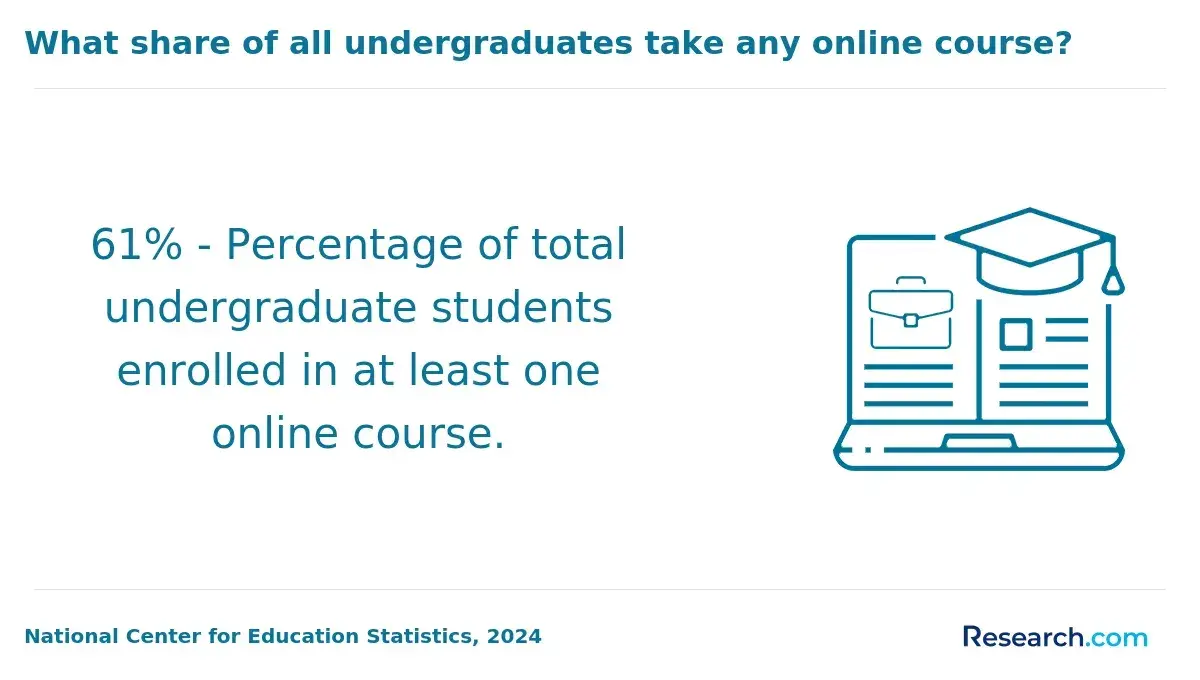
Online programs, bootcamps, and certificates are no longer automatically viewed as second-tier options, but employer acceptance depends on quality, relevance, and proof of learning. Many employers care less about the delivery format and more about whether the provider is credible, the curriculum matches the job, and the candidate can demonstrate competence.
Online degrees from accredited institutions are often viewed similarly to campus degrees when the transcript and credential come from the same recognized school. Bootcamps and certificates can be valuable for focused skills, especially in technology, analytics, project management, marketing, design, healthcare support, and business operations. However, they work best when they supplement experience or a degree rather than make unsupported promises about immediate career change.
The comparison below shows when each format is likely to make sense.
| Education format | Strength | Best for | Risk to check |
| Online degree | Flexible access to a formal credential | Working adults, parents, military students, rural learners, career advancers | Accreditation, student support, proctored assessments, clinical or licensure requirements |
| Campus degree | Face-to-face instruction, labs, networking, and campus recruiting | Students who benefit from structure, facilities, or in-person mentoring | Higher living or commuting costs and less schedule flexibility |
| Bootcamp | Intensive, project-based training for specific job skills | Career changers targeting portfolio-driven roles | Employer recognition, placement claims, financing terms, and admissions selectivity |
| Professional certificate | Short, focused proof of skill or specialization | Upskilling, promotion preparation, filling resume gaps | Whether the certificate is known in the target industry |
For many career changers, the smartest path is a stackable approach: keep or earn a recognized degree if the role values it, then add targeted certificates online to demonstrate current tools and skills. This reduces the risk of relying on one credential to do all the work.
Be cautious with any provider that promises a job, advertises unrealistic salary outcomes, hides total cost, pressures you to enroll immediately, or refuses to share completion and placement information. A credible program should make it easy to understand what you will learn, how you will be assessed, and how the credential is recognized.
How do employers evaluate accreditation, program quality, and nontraditional education providers?
Employers evaluate education quality through several signals: accreditation, institutional reputation, curriculum relevance, faculty or instructor expertise, hands-on learning, assessment rigor, and evidence that graduates can perform. Accreditation is especially important because it affects credit transfer, financial aid eligibility, licensure pathways, graduate school admission, and employer trust.
In the U.S., institutional accreditation from an agency recognized by the U.S. Department of Education or the Council for Higher Education Accreditation is a key baseline for colleges and universities. Programmatic accreditation may also matter in fields such as nursing, education, counseling, engineering, business, public health, and allied health. Requirements vary by profession and state, so students should verify rules with the relevant licensing board before enrolling.
Nontraditional providers are evaluated differently. Since many bootcamps, vendor academies, and private training companies are not traditional colleges, employers may look more closely at curriculum, instructor background, employer partnerships, project quality, alumni outcomes, and whether the credential maps to known tools or certifications.
Before enrolling, ask these questions to avoid quality and recognition problems.
- Is the institution accredited, and is the accreditor recognized by a reliable U.S. authority?
- Does the specific program need programmatic accreditation for licensure, certification, or employer acceptance?
- Will credits transfer to other institutions or count toward a higher degree?
- What projects, labs, practicums, clinicals, internships, or capstones will prove job readiness?
- Who teaches the courses, and do instructors have current field experience?
- What career services are included, and are placement claims clearly documented?
- What is the total cost, refund policy, financing structure, and consequence of withdrawing?
A common mistake is assuming that a school's general reputation automatically applies to every program it offers. Program-level quality matters. A well-known university can have a weak program in a particular area, while a less famous institution may have strong employer partnerships in a regional labor market.
What hiring trends are shaping entry-level roles, internships, and early-career opportunities?
Entry-level hiring is changing because employers want new workers who can contribute faster. That affects internships, cooperative education, apprenticeships, campus recruiting, and first professional jobs. Many "entry-level" postings still ask for experience, but the definition of experience is broadening to include internships, class projects, research, student leadership, volunteer work, and part-time jobs with transferable responsibilities.
NACE's Job Outlook 2025 report, released in 2024, found employers planned to increase hiring for the college Class of 2025 compared with the prior class. That is encouraging for students, but it does not remove competition. It means students who can show applied experience, professionalism, and role-specific skills are better positioned than students relying only on a diploma.
Early-career candidates should understand how different opportunities function in the hiring pipeline.
| Opportunity | What it signals to employers | Best use | Common limitation |
| Internship | Exposure to professional work and ability to learn in a real organization | Testing a career path and building references | Access can be competitive and sometimes unpaid or low paid |
| Co-op | Extended applied work tied to academic study | Engineering, technology, business, and applied sciences | May lengthen time to graduation |
| Apprenticeship | Structured work-based training with employer involvement | Skilled trades, IT support, manufacturing, healthcare support | Availability depends on location and employer demand |
| Capstone or portfolio project | Ability to complete a realistic deliverable | Data, design, software, marketing, policy, research, and business roles | Needs clear documentation and measurable outcomes |
| Student job or volunteer role | Reliability, customer service, leadership, and transferable skills | Students without formal internships | Requires careful resume framing to connect duties to target roles |
Students considering advanced study should be especially careful. A master's degree can help when it is tied to a field that rewards specialized knowledge, licensure, leadership preparation, or career switching. Comparing the most in demand master's degrees can help you distinguish programs with clear labor-market use from degrees that may add cost without improving your target opportunities.
The biggest early-career mistake is waiting until senior year to think about employability. Build a resume from the first semester: join relevant projects, talk to faculty, use career services, document coursework, and pursue internships or applied experiences before graduation.
How do applicant tracking systems and AI tools influence which qualifications get noticed?
Applicant tracking systems, often called ATS platforms, help employers collect, sort, search, and manage applications. AI-assisted hiring tools may also support resume screening, candidate matching, interview scheduling, assessments, or recruiter workflows. These systems do not replace every human decision, but they influence which applications are easiest to find, review, and compare.
The practical issue is visibility. A qualified candidate can be overlooked if a resume uses unusual job titles, unclear formatting, missing keywords, or vague descriptions that do not match the employer's language. This is especially important for students and career changers whose experience may not look traditional at first glance.
Use these steps to make your qualifications easier for both software and recruiters to understand.
- Use standard resume headings such as Education, Experience, Projects, Certifications, Skills, and Volunteer Experience.
- Mirror important language from the job posting when it accurately describes your background, especially tools, credentials, job functions, and technical skills.
- Write achievements with context and outcomes, such as what you improved, built, analyzed, supported, reduced, increased, or delivered.
- Put the most relevant qualifications near the top of the resume rather than hiding them in unrelated sections.
- Avoid graphics, complex columns, text boxes, and unusual file formats unless the employer specifically requests them.
- Customize your resume for each target role instead of sending one general version to every employer.
AI screening also raises fairness and accuracy concerns. Some tools may rank candidates based on patterns that do not fully reflect potential, especially for career changers, veterans, caregivers returning to work, first-generation students, or people with nontraditional education. That is why referrals, portfolios, networking, and direct outreach still matter.
A common mistake is stuffing a resume with keywords the candidate cannot explain. If a tool, method, or credential appears on your resume, be ready to discuss how you used it and what result it produced.
How can students and career changers align resumes, portfolios, and credentials with new hiring expectations?
Students and career changers can align with new hiring expectations by building a clear evidence package. That package should answer four employer questions: Can you do the work? Have you practiced in realistic settings? Do you understand the field? Can you learn and communicate well?
Your resume, portfolio, LinkedIn profile, interview stories, and credentials should tell the same story. If your education is traditional, show how it produced applied skills. If your path is nontraditional, show why the training is credible and how your projects prove readiness.
Follow this practical sequence to make your qualifications more employer-ready.
- Choose a target role before choosing resume content, because a strong resume is specific rather than comprehensive.
- Create a skills inventory from job postings and mark each skill as proven, partially proven, or missing.
- Build two or three portfolio examples that reflect real workplace tasks, such as reports, dashboards, code repositories, case analyses, lesson plans, campaign plans, lab documentation, or process improvements.
- Translate coursework into outcomes by naming the tools used, the problem solved, and the deliverable created.
- Add credentials strategically, prioritizing those requested in job postings or recognized by employers in the field.
- Prepare interview stories using specific situations, actions, and results rather than general claims about motivation.
- Ask mentors, instructors, supervisors, or industry contacts to review your materials against real job descriptions.
For advanced learners, doctoral or professional credentials should be chosen only when they support a clear goal, such as academia, research leadership, executive practice, clinical advancement, or specialized consulting. Some working professionals explore flexible doctoral formats, including options described as the easiest PhD without dissertation, but convenience should never outweigh accreditation, faculty quality, research expectations, and employer relevance.
The best portfolio is not necessarily the flashiest. It is the one that makes your fit obvious. A hiring manager should be able to see the problem, your role, the tools or methods used, and the result without needing a long explanation.
Which industries are leading the shift in hiring criteria, and what does that mean for job outlook?
The shift in hiring criteria is strongest in industries where skills change quickly, talent shortages are persistent, or job performance can be assessed through direct evidence. Technology, healthcare, advanced manufacturing, logistics, financial services, professional services, public sector operations, and skilled trades are all reshaping how they evaluate candidates.
Technology employers often emphasize portfolios, coding assessments, cloud platforms, cybersecurity skills, data tools, and problem-solving ability.
Healthcare employers still rely heavily on accredited education and licensure, but they also value clinical experience, patient communication, technology use, and specialized certifications. Manufacturing and logistics employers increasingly need workers who can use automation, robotics, quality systems, and data-driven processes. Business and professional services employers often look for analytical ability, communication, client readiness, and digital fluency.
The table below shows how hiring shifts differ by industry and what job seekers should prioritize.
| Industry | Hiring criteria changing most | Credential strategy | Job outlook implication |
| Technology | Tool proficiency, portfolios, cloud, cybersecurity, data, AI literacy | Degree plus projects, certificates, bootcamps, or vendor credentials depending on role | Strong opportunities in specialized roles, but competition is high for entry-level positions |
| Healthcare | Licensure, clinical readiness, patient communication, digital health tools | Accredited degree or certificate aligned with state and employer requirements | Demand is supported by aging populations and care needs, but requirements are strict |
| Advanced manufacturing | Automation, robotics, safety, quality control, equipment diagnostics | Associate degree, apprenticeship, technical certificate, or employer training | Good fit for candidates who want applied technical work without a traditional office path |
| Business and finance | Analytics, compliance, communication, software fluency, client service | Bachelor's degree often preferred; certificates can add specialization | Advancement may depend on both performance and formal credentials |
| Education and public service | Licensure, digital instruction, data use, communication, community engagement | Accredited degree and state-approved preparation where required | Stable demand in many areas, but requirements vary by state and role |
BLS 2024 wage data shows the median annual wage for computer and information technology occupations was $105,990 in May 2024, which helps explain why many candidates are attracted to technology pathways. However, high median pay does not mean every short course leads to a high-paying job. Entry-level competition, experience expectations, employer location, and specialization all affect outcomes.
The decision-support lesson is to match the credential to the industry's risk level. If mistakes can affect safety, licensure, public trust, or regulatory compliance, formal education will usually matter more. If the work is project-based and outputs are easy to evaluate, portfolios and skills-based evidence may carry more weight.
Other Things You Should Know About
Some employers are dropping degree requirements for selected roles, but degrees remain important in licensed, technical, analytical, and leadership-track jobs. The safest approach is to check actual job postings in your target field before assuming a degree is optional.
A certificate can help when it teaches a skill employers request and you can prove that skill through projects or experience. It is less likely to be enough by itself for roles that require a degree, license, or significant supervised practice.
Choose a degree when your target role requires broad education, licensure, graduate study, or long-term advancement. Consider a bootcamp when the role is portfolio-driven, the provider has credible outcomes, and you need focused training in a shorter time frame.
The biggest mistake is listing credentials without showing evidence of ability. Employers increasingly want to see what you can do, so connect each degree, certificate, job, or project to specific skills and measurable results.
References
- Top Hiring Trends for 2026: What Job Seekers Need to Know https://bravotech.com/hiring-trends/
- Employers Reconsider Education Requirements and Required Skills | Visier https://www.visier.com/blog/education-requirements-hiring-required-skills/
- What role does AI play in Applicant Tracking System? https://www.mokahr.io/myblog/ai-role-in-applicant-tracking-system/
- Quality Assurance: Best Practices in Accreditation and Certification https://insights.ehl.edu/quality-assurance-accreditation-certification
- 17 Recruiting Trends That Are Shaping 2025 https://www.netsuite.com/portal/resource/articles/human-resources/recruiting-trends.shtml
- Understanding the Role of Accrediting Agencies in Ensuring Quality Education - Swiss School of Business Research https://ssbr-edu.ch/accreditation/
- Why Employer Alignment Matters More Than "Best Practices" https://www.jobscan.co/blog/employer-centric-resume-coaching/
- What Skills Employers Look For In 2026 | Nesco Resource https://www.nescoresource.com/resources/top-skills-employers-look-for-when-hiring
- When employers drop degree requirements, here's what happens https://standtogether.org/stories/future-of-work/employers-are-removing-degree-requirements-heres-why
- Accreditation as a Strategic Driver of Alignment Across Higher Education and Industry https://acbspjournal.org/2026/05/22/accreditation-as-a-strategic-driver-of-alignment-across-higher-education-and-industry/