2027 What Can You Do With a Sociology Degree?

Co-Founder and Chief Data Scientist
A sociology degree is useful when you want a career built around understanding people, institutions, inequality, data, and social change. The choice matters because employers increasingly value research, communication, and human-behavior insight alongside technology skills.
According to the U. S. Bureau of Labor Statistics, sociologists had a median annual wage of $101,770 in May 2024, but many sociology graduates work in adjacent roles with different pay ranges. This guide helps students, career changers, and parents compare jobs, degree options, costs, licensure issues, and next steps.
Key Things You Should Know
- A sociology degree can lead to work in human services, government, research, policy, education, HR, marketing, criminal justice, and nonprofit management, but clinical social work and counseling usually require graduate education and state licensure.
- Salary outcomes vary widely by role: BLS May 2024 data lists sociologists at a median annual wage of $101,770, while related paths such as market research analyst, HR specialist, and social and community service manager have different education and experience expectations.
- The strongest programs usually combine social theory with statistics, research methods, writing, internships, and applied concentrations such as criminology, health, inequality, public policy, or data analysis.
What can you do with a sociology degree?
A sociology degree studies how people behave in groups and how institutions shape everyday life. Students learn to analyze social patterns, conduct research, interpret data, evaluate policy, and communicate findings to different audiences. That mix makes the degree flexible, especially for careers where employers need people who can understand communities, customers, workers, clients, or public systems.
The most important thing to know is that "sociology career" does not mean only becoming a sociologist. Many graduates use the degree as a foundation for applied roles in public service, business, education, advocacy, and research. A bachelor's degree can qualify you for many entry-level roles, while higher-level research, university teaching, clinical practice, and advanced policy jobs often require a master's degree or doctorate.
The table below summarizes common directions for sociology majors. Use it to compare which paths fit your interests, work style, and likely education requirements.
| Career direction | Typical work | Common education level | Best fit for students who like |
| Human services | Case coordination, client intake, community referrals, program support | Bachelor's for entry-level; master's for licensed roles | Direct service, advocacy, helping families or communities |
| Research and analytics | Survey design, data collection, reporting, program evaluation | Bachelor's for assistant roles; graduate degree for advanced research | Statistics, writing, evidence-based decisions |
| Government and policy | Public program support, policy analysis, compliance, community outreach | Bachelor's or master's depending on responsibility | Civic systems, law, public budgets, social policy |
| Business and HR | Recruiting, employee relations, workplace research, DEI support, consumer insights | Bachelor's for many roles | Organizations, people management, communication |
| Criminal justice | Probation support, reentry programs, victim advocacy, corrections-related services | Bachelor's for many roles; specialized training may apply | Law, behavior, rehabilitation, public safety |
If you are still comparing majors, sociology can be a practical option when paired with internships and quantitative skills. Students who want to compare earnings across fields may also review the best bachelor's degrees to understand how sociology compares with more technical or professionally licensed majors.
Which jobs can sociology majors get right away?
With a bachelor's degree in sociology, the most realistic first jobs are usually support, coordination, assistant, analyst, or trainee roles. These positions let you apply interviewing, writing, research, cultural awareness, and problem-solving skills while building experience for advancement.
The entry-level jobs below are common starting points because they value a sociology background without usually requiring a graduate degree. Exact qualifications vary by employer, state, and whether the role involves regulated services.
- Case manager or case aide: Helps clients access housing, food, healthcare, employment, or family support services under agency guidelines.
- Community outreach coordinator: Builds relationships with local organizations, organizes events, and communicates program information to target populations.
- Research assistant: Collects data, codes survey responses, prepares literature reviews, and supports reports for universities, nonprofits, agencies, or private firms.
- Human resources assistant or recruiting coordinator: Supports hiring, onboarding, employee records, and workplace communication.
- Probation or reentry program assistant: Supports supervision, referrals, documentation, and rehabilitation services in justice-related settings.
- Program coordinator: Tracks participation, schedules services, prepares reports, and helps evaluate nonprofit or public-sector programs.
- Market research assistant: Helps gather customer data, interpret trends, and prepare findings for business decisions.
To make a sociology degree more job-ready, build a portfolio before graduation. Employers respond well to evidence that you can turn coursework into useful work products, such as a survey report, interview project, policy memo, data visualization, grant proposal draft, or internship evaluation summary.
A common mistake is graduating with only general coursework and no applied experience. Before your final year, try to complete the following steps in order:
- Choose a concentration or theme, such as criminology, health, work and organizations, family, inequality, or research methods.
- Complete at least one statistics or data analysis course that uses software employers recognize.
- Find an internship, service-learning placement, campus research job, or volunteer role connected to your target field.
- Ask a professor or supervisor for feedback on a writing sample you can use professionally.
- Track job postings early so you can match your electives and experience to real requirements.
What are the highest-paying sociology degree careers?
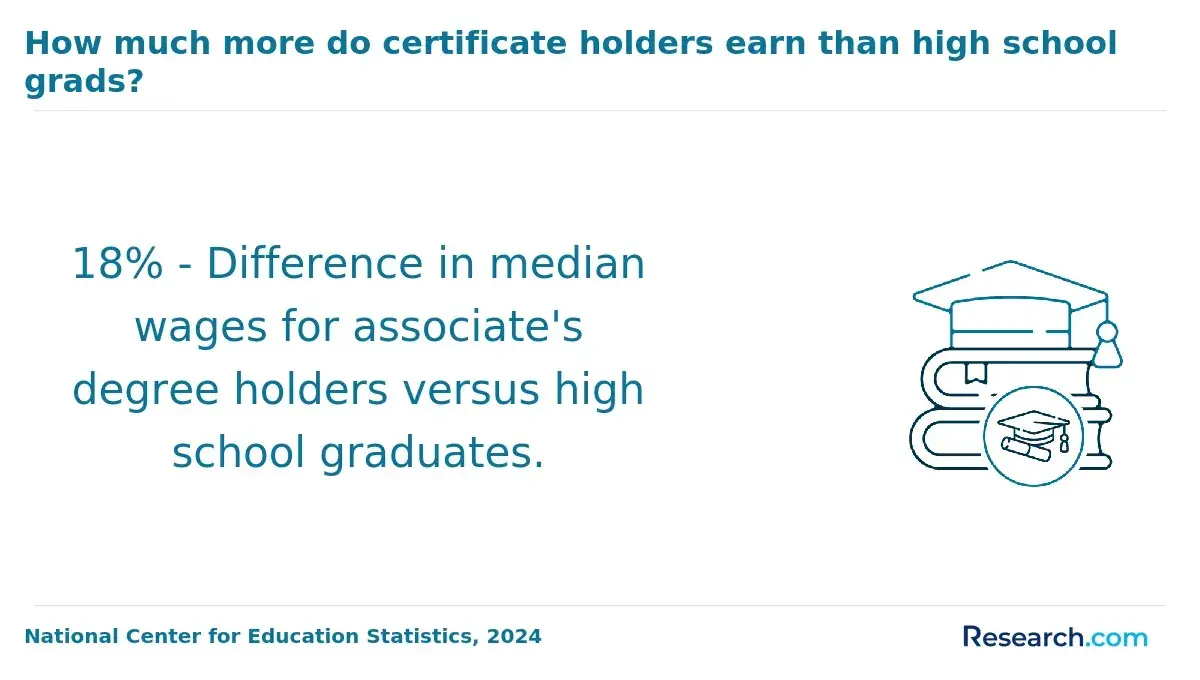
The highest-paying options for sociology graduates are often not labeled "sociologist." Pay tends to rise when sociology is combined with advanced research skills, management responsibility, technical data skills, public policy expertise, or graduate education. BLS May 2024 wage data is useful for comparison, but it describes occupations, not guaranteed outcomes for individual majors.
The table below compares higher-paying or advancement-oriented roles that can connect to sociology training. Use it to identify where additional education, experience, or technical skills may be worth the investment.
| Role | How sociology helps | Typical education or experience | Salary context |
| Sociologist | Applies social theory and research methods to institutions, behavior, and population patterns | Often master's or PhD for research roles | BLS reported a median annual wage of $101,770 in May 2024 |
| Social and community service manager | Uses program evaluation, community knowledge, and staff coordination | Bachelor's plus experience; master's may help | Pay often increases with budget, staff, and agency responsibility |
| Market research analyst | Uses survey design, behavior analysis, and data interpretation | Bachelor's for many roles; analytics skills important | Stronger prospects when paired with statistics and visualization tools |
| Human resources specialist or manager track | Applies knowledge of organizations, culture, bias, communication, and conflict | Bachelor's for specialist roles; experience for management | Management roles usually require proven workplace experience |
| Urban or regional planner | Connects community needs, demographic change, housing, and policy | Master's commonly preferred or required | Best fit for students interested in cities, transportation, and land use |
For students who do not want a full graduate degree immediately, targeted credentials can help bridge the gap between sociology and better-paying applied roles. Shorter certificate programs in data analytics, project management, HR, grant writing, or nonprofit management may be useful when they match real job postings in your region.
Do sociology careers require licensure or certification?
Most sociology jobs do not require a state license. Research assistant, policy associate, HR specialist, outreach coordinator, program coordinator, and many nonprofit roles are generally employer-regulated rather than license-regulated. However, the rules change when a job involves clinical counseling, independent social work practice, school-based services, or certain criminal justice and public safety functions.
The table below separates roles where licensure is usually not required from roles where you should verify state rules before choosing a program. This matters because the wrong degree can delay or block entry into regulated professions.
| Career goal | Is licensure usually required? | What to check before enrolling |
| Research, policy, HR, marketing, nonprofit program roles | Usually no state license | Employer requirements, internships, software skills, writing samples |
| Licensed clinical social worker | Yes, state licensure is required | CSWE-accredited MSW pathway, supervised hours, state exam rules |
| Professional counselor or therapist | Yes, state licensure is required | Counseling program accreditation, practicum hours, state board rules |
| School social worker or school counselor | Often yes, depending on state and role | Education department requirements and placement rules |
| Probation, corrections, or law enforcement roles | Varies by agency and state | Background checks, academy training, physical requirements, civil service exams |
Certification can still be valuable even when it is not legally required. For example, quick credentials in data tools, mediation, grant writing, project management, or HR can help show job-specific competence. If you need a fast skills add-on rather than a second degree, compare quick certifications carefully and prioritize those requested in actual job descriptions.
A major red flag is any school or program that suggests a sociology bachelor's degree alone qualifies you for independent therapy or clinical practice. It does not. If your goal is counseling, social work licensure, or clinical practice, contact your state licensing board before enrolling.
What should you study in a sociology program?
A strong sociology program should give you more than broad social awareness. It should train you to ask researchable questions, evaluate evidence, understand institutions, work with diverse populations, and communicate findings clearly. The most career-ready students usually combine theory with applied methods and field experience.
Look for a curriculum that balances foundational sociology with practical skill development. The following course areas matter because they connect directly to common sociology career paths:
- Social theory: Helps you understand major explanations for inequality, institutions, identity, power, and social change.
- Research methods: Teaches interviewing, observation, surveys, ethics, sampling, and study design.
- Statistics or quantitative analysis: Builds the evidence skills needed for research, policy, business, and graduate school.
- Social inequality: Examines race, class, gender, disability, migration, and other systems that shape opportunity.
- Organizations and work: Supports careers in HR, management, labor relations, and workplace culture.
- Criminology or deviance: Fits students interested in justice systems, victim services, reentry, or public safety.
- Health, family, education, or urban sociology: Helps students target human services, policy, schools, community planning, or public health-related work.
- Internship or capstone: Turns coursework into a practical project, professional reference, and portfolio piece.
AI and automation make methods training more important, not less. Tools can summarize text, detect patterns, and speed up analysis, but employers still need people who can design ethical research, interpret context, spot bias, and explain what findings mean for real communities.
If your program offers electives, choose them backward from your target job. A student aiming for market research should prioritize statistics, survey design, and data visualization. A student aiming for social services should prioritize human behavior, inequality, public policy, and internships with client-serving agencies.
How do online and campus sociology degrees compare?
Online and campus sociology degrees can both be legitimate if they come from accredited institutions and provide strong academic support. The better choice depends on your schedule, learning style, need for local networking, transfer credits, and career goals.
The table below compares the trade-offs that matter most. Use it to decide which format fits your life rather than assuming one format is automatically better.
| Factor | Online sociology degree | Campus sociology degree |
| Flexibility | Often better for working adults, parents, military students, and commuters | Better for students who want a fixed schedule and in-person structure |
| Networking | Can be strong if the program offers virtual career events, faculty access, and local placements | Often easier through campus clubs, research labs, and local internships |
| Internships | May require students to find approved placements near home | May have established local agency and employer relationships |
| Cost control | Can reduce housing or commuting costs, but fees vary | May offer campus resources but can add housing, parking, and relocation costs |
| Learning fit | Works best for self-directed students who manage deadlines well | Works best for students who benefit from face-to-face discussion and routine |
Students using federal aid should verify that an online school is institutionally accredited and eligible for Title IV aid. A good starting point is comparing FAFSA approved online colleges, then confirming the specific sociology program's transfer, internship, and graduation requirements.
A common mistake is choosing an online program only because it is convenient. Ask whether courses include live interaction, faculty feedback, career services, internship support, and research training. Convenience matters, but weak support can make it harder to finish and harder to turn the degree into a job.
What are the admission requirements for sociology programs?
Admission requirements depend on degree level and school selectivity. Bachelor's programs usually focus on high school completion, transcripts, placement requirements, and transfer credit review. Graduate programs usually look for academic preparation, writing ability, research interest, recommendations, and fit with faculty or program strengths.
The table below gives a practical overview of what applicants are commonly asked to provide. Always check the school's current admissions page because requirements can change by institution and applicant type.
| Program level | Common admission requirements | Decision factors to compare |
| Associate degree | High school diploma or equivalent, placement process, application form | Transfer agreements, cost, online availability, advising |
| Bachelor's degree | High school transcript or transfer transcript, application, possible essay, minimum GPA rules for transfers | Major requirements, internship access, statistics courses, graduation rate |
| Master's degree | Bachelor's degree, transcripts, statement of purpose, recommendations, writing sample, possible prerequisite courses | Thesis vs. applied track, research methods depth, assistantships, career outcomes |
| Doctoral degree | Bachelor's or master's degree, research statement, writing sample, recommendations, faculty fit, possible interview | Funding, faculty research areas, placement history, methodology training |
If your grades are uneven, strengthen your application with a clear purpose. Admissions committees often respond well to applicants who can explain why sociology fits their goals, what populations or institutions they want to study, and how they have prepared through work, volunteering, research, or community involvement.
Transfer students should pay close attention to credit acceptance. Losing credits can add semesters and cost, even when tuition looks affordable. Before enrolling, ask for a written transfer evaluation showing which credits apply to general education, major requirements, electives, and total graduation credits.
How long does a sociology degree take and cost?
A sociology degree can take two to seven or more years depending on the level, enrollment intensity, transfer credits, and whether graduate study is involved. Cost depends on tuition, fees, books, housing, transportation, technology, lost work time, and financial aid. College Board's 2024 pricing data lists average published tuition and fees for in-state public four-year students at $11,610 for the 2024-25 academic year, which shows why residency and institution type can strongly affect total cost.
The table below compares common timelines and cost factors. Use it as a planning tool, not as a price quote, because schools set their own rates and aid packages.
| Degree level | Typical full-time length | Cost factors to compare | Best use |
| Associate degree in sociology or social science | About 2 years | Community college tuition, transfer agreements, fees, books | Lower-cost start before transferring to a bachelor's program |
| Bachelor's degree in sociology | About 4 years | Tuition, residency status, housing, transfer credits, aid eligibility | Entry-level roles and preparation for graduate school |
| Master's degree in sociology or related field | About 1 to 2 years | Graduate tuition, assistantships, thesis requirements, work schedule | Advanced research, policy, teaching, analytics, or management preparation |
| PhD in sociology | Often 5 or more years | Funding package, stipend, health insurance, teaching load, time to completion | University teaching, advanced research, specialized policy work |
To estimate return on investment, compare the total net price with the job you are actually targeting. A low-cost program with weak advising may not be the best value, while a more expensive program may be risky if it requires high debt without improving internships, research experience, or career access.
Use this checklist before committing financially:
- Calculate total cost after grants, scholarships, employer aid, and transfer credits, not just advertised tuition.
- Ask whether internships, field placements, or capstone courses carry extra fees.
- Compare graduation timelines for full-time, part-time, and transfer students.
- Review job postings in your target area to see whether a bachelor's degree is enough or graduate study is expected.
- Limit borrowing when the target career is service-oriented and likely to start at modest pay.
What jobs do sociology graduates get in government and nonprofits?
Government and nonprofit employers often value sociology graduates because the work centers on communities, public systems, data, equity, and program outcomes. These sectors can be especially appealing if you want mission-driven work, but pay, hiring timelines, and promotion systems vary widely.
The table below highlights roles where sociology training is commonly relevant. It also shows what employers may expect beyond the degree.
| Role | Common setting | What you may do | Helpful preparation |
| Program coordinator | Nonprofits, public agencies, foundations | Coordinate services, track participation, support reports, communicate with partners | Internship, spreadsheet skills, grant or evaluation exposure |
| Policy assistant | Local, state, or federal offices; advocacy groups | Research issues, summarize legislation, prepare briefs, support public meetings | Policy writing, statistics, public administration coursework |
| Community outreach specialist | Health agencies, housing groups, social service organizations | Build trust, organize events, explain services, collect community feedback | Language skills, cultural competence, field experience |
| Victim advocate | Courts, shelters, crisis centers, justice agencies | Support clients, explain processes, coordinate referrals, document services | Trauma-informed training, crisis response exposure, supervised experience |
| Reentry or diversion program staff | Justice agencies, nonprofits, corrections partners | Help participants access housing, work, counseling, and compliance support | Criminology coursework, case documentation, local resource knowledge |
Government hiring may involve civil service exams, background checks, veterans' preference rules, or long application timelines. Nonprofits may move faster but expect staff to handle several responsibilities at once. In both sectors, strong writing and reliable documentation are often just as important as passion for the mission.
Students interested in senior criminal justice research, policy, or academic roles may eventually consider doctoral study. Some learners researching flexible doctorate formats compare options such as an online PhD criminal justice no dissertation, but they should verify accreditation, curriculum rigor, and whether the degree fits their intended career path.
How do you choose an accredited sociology program?
Accreditation is the first quality check. In the U.S., students should look for institutional accreditation from an agency recognized by the U.S. Department of Education or the Council for Higher Education Accreditation. Sociology itself does not typically require a specialized programmatic accreditor, but related licensed paths may require specific accreditation at the graduate level, such as social work or counseling accreditation.
A good sociology program should fit your career goal, budget, schedule, and academic needs. Before you apply, compare programs using evidence rather than marketing claims.
- Confirm institutional accreditation through official accreditor or federal databases, not only the school's homepage.
- Check whether the curriculum includes research methods, statistics, writing-intensive courses, and applied electives.
- Ask how online students access advising, tutoring, library support, faculty office hours, and career services.
- Review internship options and whether the department helps students find placements.
- Look for transparent net price information, transfer policies, graduation requirements, and course rotation schedules.
- Ask what recent graduates do after completing the program, but treat salary claims cautiously unless the school explains its data source and sample size.
- Make sure the program matches licensure goals if you plan to become a licensed social worker, counselor, or school-based practitioner.
Common red flags include vague accreditation language, pressure to enroll immediately, unclear transfer rules, missing faculty information, limited student support, and promises of specific salaries. A trustworthy program should be able to explain exactly what you will study, how long it usually takes, what support is available, and how the degree connects to realistic career paths.
The best final choice is usually the program that gives you the strongest combination of affordability, completion support, applied experience, and alignment with your target job. Rankings can be useful, but they should not replace a direct review of curriculum, cost, accreditation, and outcomes.
Other Things You Should Know About
A sociology degree can be worth it if you use it intentionally. It is strongest when paired with internships, statistics, research methods, writing samples, and a clear career direction. It may be less practical for students who want a directly licensed profession unless they plan for graduate school.
A sociology bachelor's degree may help you qualify for some entry-level human services jobs, but licensed social work usually requires a social work degree, supervised experience, and state licensure. Requirements vary by state and license level.
Not always. Many graduates work in entry-level roles in nonprofits, HR, research support, government, and community services with a bachelor's degree. Graduate school is more important for advanced research, university teaching, clinical practice, policy leadership, and some planning or management roles.
Useful skills include statistics, survey design, interviewing, data visualization, policy writing, grant writing, project coordination, spreadsheet analysis, and professional communication. Employers also value internship experience and the ability to explain social issues using evidence rather than opinion.
References
- Best Sociology Degree Jobs: 12+ Career Paths for 2026 | Extern https://www.extern.com/post/sociology-degree-jobs-career-guide
- Sociology Careers https://www.affordablecollegesonline.org/college-resource-center/careers-for-sociology-majors/
- Admission Requirements https://www.ualberta.ca/en/sociology/graduate-programs/admission-requirements.html
- Applied Sociology Careers and Pay https://sociologyatwork.org/2025/07/05/applied-sociology-careers-pay/
- 2025 Most Affordable Online Sociology Degrees https://www.onlineu.com/most-affordable-colleges/sociology-degrees
- Accredited Online Sociology Degree Programs https://www.accreditedonlinecolleges.org/sociology/
- 10 Job Opportunities for Sociology Majors (and How to Land One) | The Muse https://www.themuse.com/advice/sociology-degree-major-jobs-careers
- The Commission on the Accreditation of Programs in Applied and Clinical Sociology https://www.sociologycommission.org/about_accr.shtml