2027 How to Change Career Direction After Choosing the Wrong Major

Co-Founder and Chief Data Scientist
Realizing your major may not match your future can feel expensive, but it does not have to derail your career. The U. S. Bureau of Labor Statistics projects the economy will add about 6.7 million jobs from 2023 to 2033, which means many growing fields remain open to people who retrain strategically.
This guide is for students, recent graduates, and working adults who want a practical pivot plan. You will learn how to assess your options, compare degrees and certificates, control costs, and turn your current education into an advantage.
Key Things You Should Know
- You usually do not need to "start over"; employers often care about skills, experience, portfolios, certifications, internships, and licenses as much as the exact major.
- Cost should shape the pivot: College Board's 2024 data shows published tuition and fees averaged $4,050 at public two-year colleges, $11,610 for in-state public four-year colleges, and $43,350 at private nonprofit four-year colleges for 2024-25.
- Use labor-market evidence before retraining: BLS 2024 projections show strong growth in areas such as data science, software development, healthcare management, and nursing, but salary and access vary by location, credentials, and experience.
How can you change career direction after realizing you chose the wrong major?
Changing career direction after choosing the wrong major starts with separating the degree you earned, or are earning, from the work you want to do next. A major is a signal of academic preparation, not a permanent career sentence. The smartest pivot keeps useful credits, adds targeted skills, and tests the new field before you commit to another expensive program.
A practical career-change plan should move from diagnosis to low-risk experimentation before you enroll in anything new. Use this sequence to avoid replacing one rushed decision with another.
- Define the problem clearly: decide whether you dislike the major's coursework, the careers it usually leads to, the salary outlook, the work environment, or the identity attached to the field.
- Identify two or three realistic target careers, then compare their entry requirements, daily tasks, salary ranges, licensing rules, and hiring patterns.
- Map what you already have: credits, writing ability, quantitative skills, research experience, leadership, customer service, technical tools, internships, military training, or work history.
- Close only the most important gaps first through one course, certificate, project, volunteer role, internship, apprenticeship, or entry-level job.
- Update your resume and LinkedIn profile around the new target role, using transferable achievements instead of apologizing for your major.
- Talk with people doing the work before committing to a full degree, especially if the new path involves licensure, clinical hours, student teaching, or graduate admission.
AI and automation make this process more urgent but also more flexible. Employers increasingly look for applied skill evidence, such as analytics projects, software portfolios, healthcare prerequisites, business certifications, or writing samples. That trend can help career changers, but it also means you should verify which skills are truly used in the target job rather than chasing every new tool.
What are the first steps to assess whether your major truly limits your career options?
Your major may feel limiting because you are only seeing the most obvious career path attached to it. Before changing schools or programs, assess whether the barrier is academic, credential-based, financial, or simply informational. Some careers require a specific degree or license, while many others are open to graduates from varied backgrounds.
The table below separates flexible fields from credential-restricted ones. This distinction matters because it determines whether you need a new degree, a short bridge program, or just better positioning.
| Career goal type | How much the major matters | Common examples | What usually matters more |
| Flexible professional roles | Moderate to low | Marketing, sales, recruiting, operations, customer success, project coordination | Internships, communication skills, software tools, industry knowledge, measurable achievements |
| Skill-based technical roles | Moderate | Data analytics, web development, UX research, cybersecurity support | Portfolio, certifications, projects, coding or analytics tools, practical experience |
| Credential-sensitive roles | High | Accounting, engineering, teaching, nursing, counseling, social work | Accredited coursework, exams, clinical or supervised hours, state licensure |
| Graduate-entry professions | Variable | Law, medicine, physician assistant studies, physical therapy, public health | Prerequisites, GPA, entrance exams, experience, recommendations, admissions competitiveness |
To decide whether your major truly blocks you, review job postings for your target role and highlight the requirements that appear repeatedly. If postings say "degree in business, communications, psychology, or related field," your current major may be acceptable. If they name an accredited degree, license, or state certification, you may need a formal academic pathway.
Watch for a common mistake: assuming a disappointing internship or one difficult class proves the whole field is wrong for you. A major can contain several career tracks, and the work environment may matter more than the subject. For example, a biology major who dislikes lab work might enjoy health administration, medical sales, regulatory affairs, public health, or clinical research coordination.
How do you identify new career paths that match your skills, interests, and values?
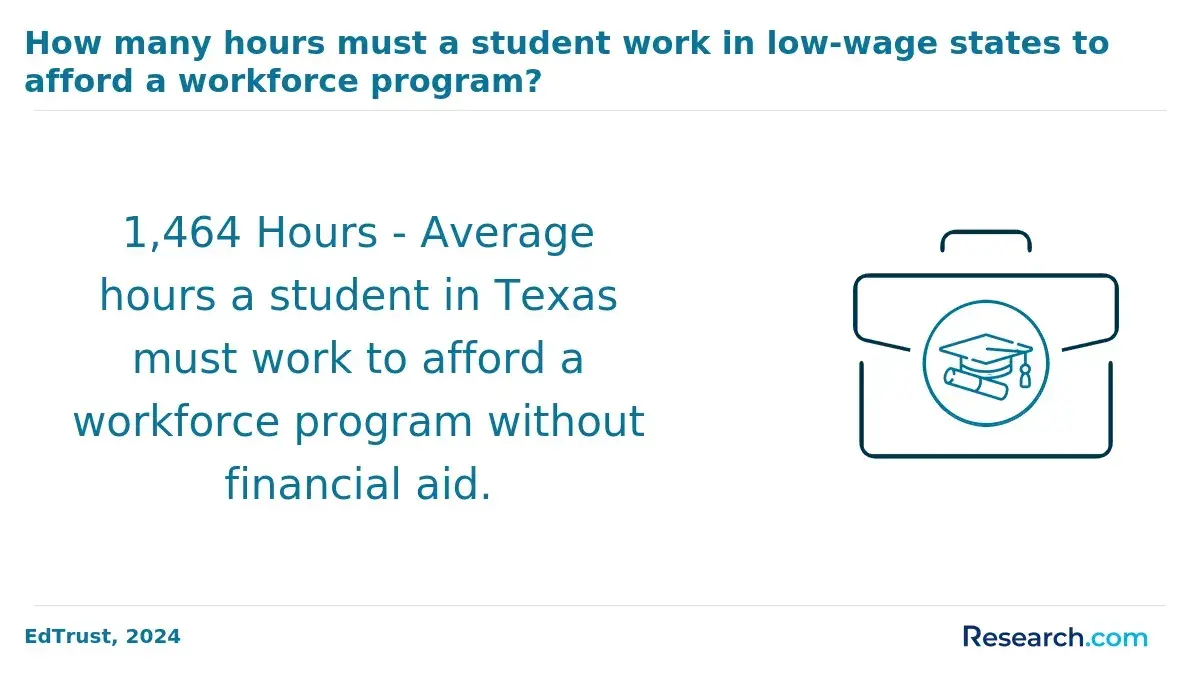
Identifying a better career direction requires more than asking what sounds interesting. A good fit usually sits at the intersection of your strengths, preferred work style, values, financial needs, and tolerance for additional training. You are looking for a career path you can enter realistically, not just one that looks attractive from the outside.
Start with a short evidence-gathering process. These steps help you turn vague dissatisfaction into a focused shortlist.
- List tasks you reliably enjoy, such as explaining, analyzing, organizing, designing, persuading, helping, troubleshooting, writing, or managing details.
- List tasks you want to avoid, especially if they appear daily in your current major's typical careers.
- Choose your nonnegotiables, such as remote work, predictable schedule, high earning ceiling, mission-driven work, licensure stability, geographic flexibility, or low debt.
- Compare your current skills with job postings for three target roles and mark each requirement as already met, learnable in under six months, or requiring formal education.
- Run a low-risk test through an informational interview, job shadow, freelance project, course, campus club, volunteer role, or part-time job.
The table below gives examples of how different interests can translate into career paths without assuming the original major is useless.
| If you like | Possible pivot fields | Useful proof of fit | Training intensity |
| Solving structured problems | Data analytics, accounting, supply chain, quality assurance | Spreadsheet models, SQL projects, process-improvement examples | Low to moderate unless licensure is required |
| Helping people directly | Healthcare support, counseling pathways, human services, advising | Volunteer work, client-facing experience, prerequisite courses | Moderate to high for licensed roles |
| Writing and explaining ideas | Technical writing, content strategy, communications, policy analysis | Writing samples, research briefs, published work, editing experience | Low to moderate |
| Technology and systems | Cybersecurity, IT support, software development, product operations | Certifications, GitHub portfolio, help desk experience, lab projects | Low to high depending on role |
| Leadership and coordination | Project management, operations, nonprofit administration, event management | Team projects, scheduling budgets, leadership roles, internship outcomes | Low to moderate |
Do not choose a new field only because it appears "safe." A stable occupation can still be a poor fit if the daily work conflicts with your energy, values, or strengths. The best pivot is one you can sustain long enough to build experience.
What degree, certificate, or training options support a pivot into a new field?
The right training option depends on the gap between your current background and your target career. A second bachelor's degree is sometimes necessary, but it is often not the first or cheapest solution. Many career changers can use certificates, prerequisites, portfolio projects, graduate certificates, licensure programs, or employer-funded training instead.
The table below compares common education options for people changing direction after choosing the wrong major. Use it to match the credential to the career requirement rather than the emotion of wanting a fresh start.
| Option | Best fit | Typical time commitment | Main advantage | Main limitation |
| Individual prerequisite courses | Graduate programs, nursing, allied health, teacher preparation, accounting eligibility | One term to two years | Targets missing requirements without repeating a full degree | May not qualify for full financial aid if taken outside a degree program |
| Undergraduate certificate | Career changers needing defined skills in business, IT, analytics, healthcare administration, or paralegal studies | A few months to one year | Short and focused | Employer recognition varies by field and school |
| Associate degree | Technical, healthcare, IT, and skilled professional pathways | About two years full time | Often lower cost and career-focused | May not be enough for roles requiring a bachelor's degree |
| Second bachelor's degree | Fields that require specific undergraduate preparation, such as engineering, accounting, computer science, or some health pathways | One to three years depending on transfer credits | Provides a recognized academic reset | Can be costly if many credits do not transfer |
| Master's degree or bridge program | Career changers with a completed bachelor's degree moving into teaching, counseling, public health, analytics, business, or healthcare leadership | One to three years | Can reposition you at a higher credential level | Admissions prerequisites and debt risk require careful review |
| Bootcamp or industry certification | Software, cybersecurity, cloud, project management, digital marketing, or IT support | Weeks to months | Fast skill development | Quality and employer recognition vary widely |
For advanced career pivots, doctoral education only makes sense when the target role genuinely requires research training, university teaching, advanced clinical preparation, or executive-level expertise. If that is your situation, compare cheap online PhD programs carefully by accreditation, faculty fit, dissertation support, and total cost rather than tuition alone.
A common mistake is choosing the longest credential because it feels more legitimate. A certificate plus internship may outperform a second degree for some business or technology roles, while a licensed healthcare role may require a very specific accredited program no matter how talented you are. Let the job requirement decide the training route.
How do online programs compare with campus-based options for career changers?
Online programs can be especially useful for career changers because they let you keep working, care for family, or complete prerequisites without relocating. Campus-based programs may be better when the field depends on labs, clinical placements, studio work, equipment, networking, or supervised practice. The right format depends less on prestige and more on whether the program can deliver the experiences your target career requires.
The comparison below highlights practical differences that matter when you are retraining while managing cost, time, and risk.
| Factor | Online programs | Campus-based programs | Best choice depends on |
| Schedule flexibility | Often stronger, especially asynchronous courses | Usually more fixed | Work hours, caregiving, military moves, and commute limits |
| Hands-on learning | Strong in fields that use digital tools; limited for lab-heavy programs unless local placements are arranged | Often stronger for labs, studios, clinics, and in-person equipment | Whether the target career requires supervised physical practice |
| Networking | Can be strong if the program has live sessions, cohorts, career services, and employer projects | Often easier through campus events and local employer relationships | Your ability to build relationships intentionally |
| Transfer access | May be convenient for adult learners with prior credits | May be simpler if you stay within a state university or community college system | Credit evaluation policies and residency requirements |
| Licensure alignment | Must be checked carefully by state | Often clearer for local licensure pathways | State board rules and placement availability |
Online learning is not automatically easier. It requires self-management, consistent technology access, and comfort asking for help remotely. For people who move frequently or manage family obligations, specialized resources such as online colleges for military spouses can help narrow the search to programs built for portability and support.
Before choosing an online program for a licensed field, ask whether it meets requirements in your state, how clinical or field placements are arranged, and what happens if you move before finishing. For non-licensed fields, ask about employer projects, portfolio development, career coaching, and alumni outcomes in your target role.
How can you leverage transferable skills and your existing degree in a new career?
Your existing degree is not wasted if you can translate it into employer language. Transferable skills are abilities developed in one context that create value in another, such as research, writing, data interpretation, collaboration, public speaking, problem-solving, empathy, or project coordination. The goal is to show how your background solves the employer's problem.
Use the following conversion process to make your current major relevant to the new path. This is especially important if your resume seems unrelated at first glance.
- Replace course titles with competencies: "completed sociology coursework" becomes "analyzed survey data and wrote evidence-based reports."
- Quantify projects where possible, such as number of participants surveyed, budget managed, events organized, pages edited, datasets cleaned, or customers served.
- Create a bridge story that explains your pivot in one sentence: "My psychology background trained me to understand user behavior, and I am applying that foundation to UX research."
- Add one targeted proof point, such as a certificate, portfolio project, internship, volunteer role, or freelance assignment.
- Customize resume sections by target role so the most relevant skills appear before unrelated coursework.
Different majors can support different pivots when framed correctly. A humanities major may have strong writing and analysis skills for communications, law-adjacent work, policy, or user research. A science major may pivot into healthcare operations, clinical research, environmental compliance, or technical sales. A business major may redirect into analytics, HR, logistics, finance, or entrepreneurship.
The biggest mistake is presenting your background as a problem the employer must overlook. Instead, present it as a foundation plus a focused upgrade. Employers are more likely to take your pivot seriously when your story, skills, and evidence all point in the same direction.
What admission, time-to-completion, and cost factors matter when re-training for a new career?
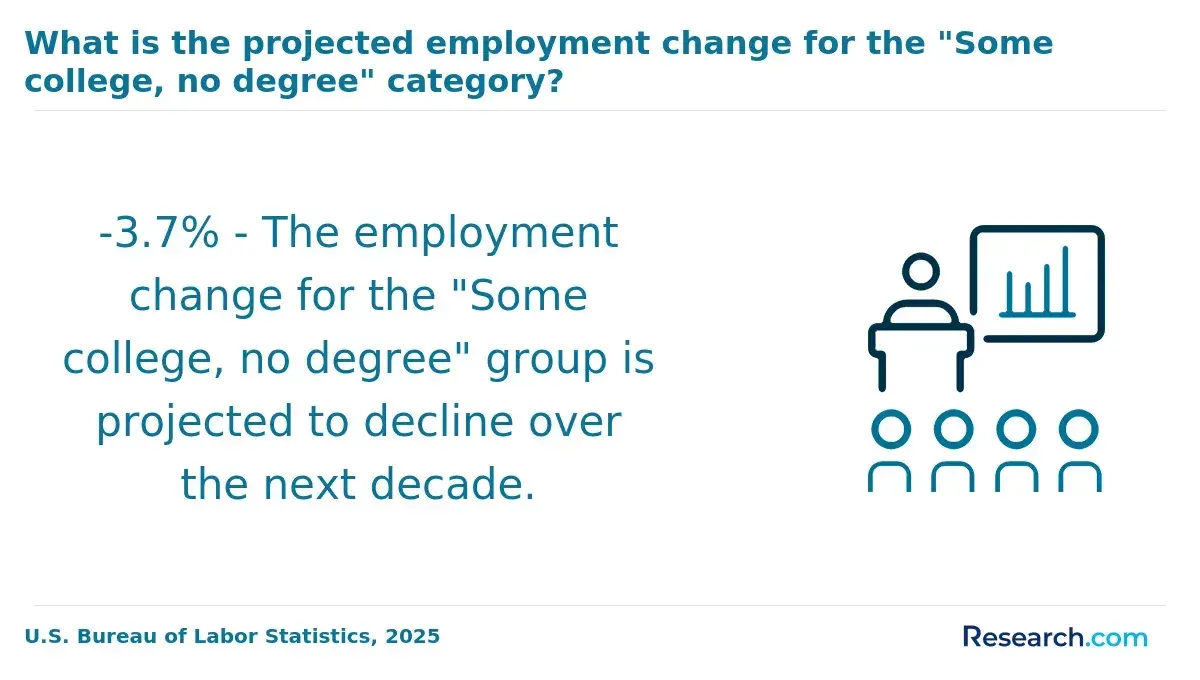
Time and cost can determine whether a career pivot is sustainable. College Board's 2024 Trends in College Pricing shows how sharply sticker prices vary by sector, with average published tuition and fees for 2024-25 far lower at public two-year colleges than at private nonprofit four-year institutions. That does not mean the cheapest option is always best, but it does mean you should compare total cost before committing.
The table below summarizes cost and completion factors that commonly affect career changers. These factors matter because a low tuition rate can become expensive if credits do not transfer or the program delays employment.
| Factor | Why it matters | What to compare |
| Transfer credits | Accepted credits can shorten completion time and reduce tuition | Maximum transfer allowance, course equivalencies, residency requirements |
| Prerequisites | Missing courses can add terms before admission or graduation | Required science, math, accounting, education, or technology courses |
| Program length | Longer programs may delay full-time earnings | Full-time, part-time, accelerated, evening, and summer options |
| Total cost of attendance | Tuition is only one part of the financial decision | Fees, books, software, equipment, transportation, childcare, lost wages |
| Financial aid eligibility | A second degree or non-degree coursework may have different aid rules | Federal aid, state grants, employer tuition assistance, scholarships, payment plans |
| Placement requirements | Clinical, student teaching, internship, or practicum hours can affect work schedules | Location, scheduling, supervision, background checks, immunizations, liability coverage |
When researching affordability, do not stop at advertised tuition. Resources that explain what is the cheapest online college can be useful starting points, but your best-value option is the one that accepts your credits, fits your schedule, supports your target career, and avoids unnecessary repeat coursework.
Admissions factors also matter. Career-change programs may require a minimum GPA, prerequisite grades, entrance exams, background checks, portfolios, interviews, or work experience. If your academic record is uneven, ask whether recent prerequisite performance, professional experience, or a probationary admission route can strengthen your application.
How do you evaluate accredited programs and reputable schools for a career change?
Accreditation is one of the most important protections when retraining. Institutional accreditation affects credit transfer, federal financial aid eligibility, graduate admission, and employer trust. Programmatic accreditation may also be required in fields such as nursing, education, counseling, social work, engineering, public health, and many allied health areas.
The table below shows what to verify before enrolling. This is not just a paperwork exercise; choosing the wrong program can leave you with credits that do not transfer or a credential that does not qualify you for the role you want.
| What to verify | Why it matters | Red flag |
| Institutional accreditation | Supports financial aid access, credit transfer, and general legitimacy | The school avoids naming its recognized accreditor or uses vague claims like "fully approved" |
| Programmatic accreditation | May be required for licensure or employer acceptance | The program says accreditation is "in process" but cannot explain consequences for students |
| State authorization | Online programs must be allowed to serve students in your state | The school cannot confirm whether it can enroll you where you live |
| Licensure alignment | Some careers require state-specific coursework, exams, or supervised hours | The program will not state whether it meets requirements in your state |
| Career outcomes | Placement, exam pass rates, and employer partnerships help you evaluate risk | Outcomes are missing, outdated, exaggerated, or based only on selected testimonials |
| Credit transfer policy | Prior credits can reduce cost and time | You must enroll before receiving a meaningful credit evaluation |
Ask admissions staff specific questions and save written answers. Important questions include whether your prior credits apply, whether the program prepares students for your state's licensing exam, how internships are arranged, what career services are available to online students, and what happens if you pause enrollment.
A common mistake is relying only on rankings, advertising, or a fast admissions process. A reputable school should be transparent about accreditation, cost, completion requirements, outcomes, and limitations. If an advisor pressures you to enroll before you can compare options, treat that as a warning sign.
What salaries, job outlook, and growth potential can you expect when switching fields?
Salary and job outlook should inform your pivot, but they should not be the only reasons you choose a new field. BLS May 2024 wage data reports a national median annual wage of $49,500 across all occupations, so roles above that level may offer stronger earning potential, but actual pay depends on region, experience, industry, credentials, and labor demand.
The table below gives examples of career paths often considered by people changing direction. These figures are national medians or BLS projections, so use them as comparison points rather than personal salary predictions.
| Career path | Typical entry route for career changers | Median annual wage or growth signal | What to check before pivoting |
| Data scientist | Analytics coursework, statistics, programming, portfolio, sometimes graduate study | BLS lists a May 2024 median annual wage of $112,590 and projects 36% growth from 2023 to 2033 | Math comfort, portfolio quality, industry domain knowledge |
| Software developer | Computer science degree, second bachelor's, bootcamp plus portfolio, or self-directed projects | BLS lists a May 2024 median annual wage of $133,080 and projects 17% growth from 2023 to 2033 | Coding ability, project depth, hiring competition, AI-assisted development expectations |
| Registered nurse | Accredited nursing program, clinical hours, NCLEX-RN eligibility | BLS lists a May 2024 median annual wage of $93,600 and projects 6% growth from 2023 to 2033 | State licensure, clinical schedule, physical and emotional demands |
| Market research analyst | Business, statistics, psychology, communications, or analytics background | BLS lists a May 2024 median annual wage of $76,950 and projects 8% growth from 2023 to 2033 | Survey methods, data visualization, writing, business judgment |
| Human resources specialist | Business, psychology, communications, or HR certificate | BLS lists a May 2024 median annual wage of $72,910 and projects 8% growth from 2023 to 2033 | Employment law basics, interpersonal judgment, HR systems |
| Medical and health services manager | Healthcare administration, business, nursing background, or graduate study | BLS lists a May 2024 median annual wage of $117,960 and projects 29% growth from 2023 to 2033 | Healthcare experience, leadership readiness, compliance knowledge |
High-paying fields can be attractive, but do not ignore the ramp-up. Some paths require several years of prerequisites, clinical hours, or junior-level experience before reaching stronger earnings. If income is a major driver, compare pathways with resources on highest paying jobs, then weigh salary against time, debt, work conditions, and likelihood of completion.
AI is changing several career paths at once. It may automate routine tasks in writing, coding, analysis, and administration, but it also increases demand for workers who can supervise tools, interpret outputs, manage data, communicate with stakeholders, and apply ethical judgment. Career changers should build tool fluency without assuming AI skills alone replace core professional competence.
When is it better to finish your current major versus starting a new academic path?
Finishing your current major is often better when you are close to graduation, your target career accepts any bachelor's degree, or the remaining cost is lower than starting over. Starting a new academic path makes more sense when the desired career legally or practically requires a different credential, when you are early enough to switch without major credit loss, or when continuing would create debt for a degree you are unlikely to use.
The table below can help you compare the two choices. Use it to focus on future outcomes instead of guilt about past decisions.
| Situation | Finishing the current major may be smarter when | Changing academic paths may be smarter when |
| You are within one year of graduation | The degree can qualify you for general professional roles or graduate admission | The target career requires prerequisites you cannot complete after graduation efficiently |
| You are in the first half of the program | Most credits apply to a related major or minor | You can switch with limited credit loss and stronger motivation |
| You want a licensed career | Your current degree can serve as the foundation for a graduate-entry licensure program | Your current program will not meet required coursework, clinical hours, or accreditation standards |
| You are worried about debt | Finishing is cheaper than restarting and opens entry-level work | A shorter, lower-cost credential leads more directly to employability |
| Your GPA is a concern | Remaining courses give you a realistic chance to improve your record | The program mismatch is causing ongoing poor performance and loss of momentum |
If you want a faster reset, compare career-focused options before assuming another bachelor's degree is required. Some students find that easy associate degrees that pay well provide a more practical route into technical, healthcare, or business-support roles, especially when time and affordability matter.
Before making the final decision, calculate three scenarios: finish and pivot through experience, finish and add a certificate or graduate program, or switch now. Include tuition, lost wages, transfer credits, financial aid, licensing timelines, and realistic entry-level salaries. The best choice is not the one that erases the wrong major; it is the one that creates the strongest next step with the least avoidable risk.
Other Things You Should Know About
Yes, if the job does not require a specific licensed or accredited degree. Many employers value skills, internships, projects, communication ability, and work experience. Your task is to connect your degree to the employer's needs and fill any clear skill gaps.
Finish if you are close to graduation and the degree can still support your target career. Switch if you are early in the program, the new field requires specific coursework, or continuing would add debt without improving your options.
Sometimes. Certificates can work well in fields where employers value demonstrable skills, such as analytics, IT support, project management, HR, or digital marketing. They are usually not enough for careers requiring state licensure, clinical training, or an accredited degree.
Keep the explanation positive and brief. Focus on what you learned, why the new path fits your strengths, and what you have done to prepare. Employers do not need a long apology; they need evidence that your pivot is intentional and credible.
References
- 6 Signs That Now Is the Right Time to Finish Your Degree https://www.umassglobal.edu/blog-news/6-signs-now-right-time-finish-your-degree
- Certifications for Career Changer https://udallas.edu/academics/colleges-schools/college-of-business/executive-education/career-change/index.php
- Career change through professional retraining https://www.ipag.edu/en/reconversion-professionnelle
- College vs. Career Path: How to Choose the Right Post-Graduation Direction https://www.projectnext.org/college-vs-career-path-how-to-choose-the-right-post-graduation-direction
- Is Retraining Worth It? The Real Cost and Reward of Change https://www.accesstraininguk.co.uk/news/post/2025/11/07/is-retraining-worth-it-the-real-cost-and-reward-of-change
- How to identify and leverage transferable skills for a career change - OP Technology https://www.oliverparks.com/technology/how-to-identify-and-leverage-transferable-skills-for-a-career-change/
- Leverage Skills for Successful Career Transition https://gocrackit.com/leverage-skills-for-successful-career-transition/
- CourseCareers https://coursecareers.com/blog-posts/college-vs-online-career-training
- Soon-to-be College Graduates: What to do When You’ve Chosen the Wrong Major - Jobacle.com https://jobacle.com/blog/soon-to-be-college-graduates-what-to-do-when-youve-chosen-the-wrong-major.html
- Top Schools With the Best Career Services https://futureofwork.pepelwerk.com/en/blog/top-schools-with-the-best-career-services