2027 How to Explain a Nonlinear Career Path

Co-Founder and Chief Data Scientist
A nonlinear career path can look confusing on paper, but it can become a strength when you explain the logic behind your choices. This matters because employers and admissions committees increasingly evaluate skills, adaptability, and evidence of growth-not just job titles.
The U. S. Bureau of Labor Statistics reported that workers with a bachelor's degree had median weekly earnings of $1,543 in 2024, showing why education and career strategy still affect opportunity. This guide helps career changers, returning students, veterans, caregivers, and professionals with pivots turn a varied background into a clear decision-ready story.
Key Things You Should Know
- A nonlinear career path is best explained as a pattern of transferable skills, measurable outcomes, and intentional choices rather than as a series of unrelated jobs.
- Use current labor-market evidence before investing in a degree or credential; BLS May 2024 wage data shows the median annual wage for all U.S. occupations was $49,500, but target roles vary widely.
- Education choices should match the next role's requirements: certificates can support quick pivots, associate or bachelor's degrees can fill foundation gaps, and graduate programs are most useful when required for advancement or licensure.
What is a nonlinear career path, and how is it different from a traditional career ladder?
A nonlinear career path is a work history that does not move in one straight line from entry-level to senior-level roles within a single field. It may include career changes, lateral moves, entrepreneurship, military service, caregiving breaks, part-time work, contract projects, sabbaticals, or a return to school.
A traditional career ladder is easier for reviewers to scan because each step usually signals a predictable increase in responsibility: assistant, specialist, manager, director. A nonlinear path requires more explanation because the reader needs to understand why each move matters. The goal is not to hide the path; it is to show the pattern underneath it.
The table below compares the two models so you can see what employers and admissions committees may infer from each type of history. This is useful because the same experience can appear unfocused or strategic depending on how it is framed.
| Career model | Common pattern | What reviewers may notice | Best way to frame it |
| Traditional ladder | Promotion within one function or industry | Depth, continuity, increasing authority | Emphasize scope, leadership, and performance growth |
| Nonlinear path | Moves across functions, industries, roles, or education levels | Adaptability, breadth, possible lack of focus | Connect each move to a central skill theme or long-term goal |
| Hybrid path | Mostly linear growth with one or two pivots | Specialization plus flexibility | Explain the pivot as a response to opportunity, market demand, or skill expansion |
A nonlinear career is not automatically a disadvantage. It can be especially valuable in roles that require cross-functional thinking, communication, client service, operations, technology adoption, training, project coordination, or leadership in changing environments. The risk is that reviewers may not connect the dots unless you do it for them.
How can you clearly explain a nonlinear career path to employers and admissions committees?
The clearest explanation has three parts: where you started, what changed, and why the next step makes sense. Employers want to know whether you can solve their problem; admissions committees want to know whether your background supports your academic goal. In both cases, your story should be concise, evidence-based, and forward-looking.
Use this sequence when writing a resume summary, cover letter, personal statement, interview answer, or graduate school application:
- Identify the central theme that links your experience, such as customer insight, operations improvement, teaching, analytics, healthcare service, or business development.
- Choose two or three proof points that show results, such as revenue supported, teams trained, systems improved, clients retained, or projects delivered.
- Explain the pivot in practical terms, such as a new market need, a skill you developed, a personal responsibility, or a long-term professional goal.
- Connect your past experience to the target role or program requirements using the same language found in the job posting or admissions criteria.
- End with what you are prepared to contribute next, not with an apology for having a nontraditional background.
A strong explanation might sound like this: "My background spans retail operations, employee training, and data reporting. While the roles changed, the consistent thread has been improving how teams use information to make better decisions. I am now pursuing business analytics roles because I have already used reporting tools to reduce scheduling errors and improve inventory planning, and I want to apply those skills in a more technical environment."
If your next step involves graduate study, avoid choosing a program only because it looks easy to enter. A better approach is to compare admissions flexibility with curriculum fit, outcomes, and support services.
How do you identify and present transferable skills across a nonlinear work history?
Transferable skills are abilities that remain useful across industries, job titles, and work settings. They are the backbone of a nonlinear career narrative because they help reviewers see continuity even when your roles look different.
Start by separating tasks from skills. "Handled customer complaints" is a task; "conflict resolution, service recovery, and communication under pressure" are transferable skills. The table below shows how varied experiences can translate into career-ready language.
| Past experience | Transferable skill category | How it can be presented | Relevant future roles |
| Hospitality or retail work | Client service and operations | Managed high-volume interactions, resolved problems, coordinated workflow | Customer success, sales operations, healthcare administration, HR |
| Teaching, tutoring, or training | Communication and learning design | Explained complex ideas, assessed progress, adapted materials for different audiences | Instructional design, corporate training, academic advising, management |
| Military service | Leadership and execution | Coordinated teams, followed compliance procedures, managed risk in structured environments | Project management, logistics, public safety, operations |
| Caregiving or family management | Planning and resource coordination | Handled scheduling, budgeting, advocacy, documentation, and crisis response | Healthcare support, case coordination, nonprofit services, administration |
| Freelance or self-employment | Business ownership and initiative | Managed clients, budgets, deadlines, marketing, and service delivery | Marketing, consulting, entrepreneurship, account management |
After identifying transferable skills, make them visible in your resume and applications. Do not assume the reviewer will translate your background for you.
- Use a resume summary that names your target field and the transferable strengths that support it.
- Group older or mixed experience under headings such as "Relevant Experience," "Additional Experience," or "Project Experience."
- Replace vague descriptions with outcome language, such as "trained 12 new hires" or "reduced missed deadlines by standardizing team checklists."
- Keep technical skills separate from soft skills so hiring systems and human reviewers can find both quickly.
One common mistake is listing every past responsibility equally. A nonlinear resume should be selective. The more varied your history is, the more important it becomes to highlight only the experiences that support your next move.
What education or training pathways best support a nonlinear career trajectory?
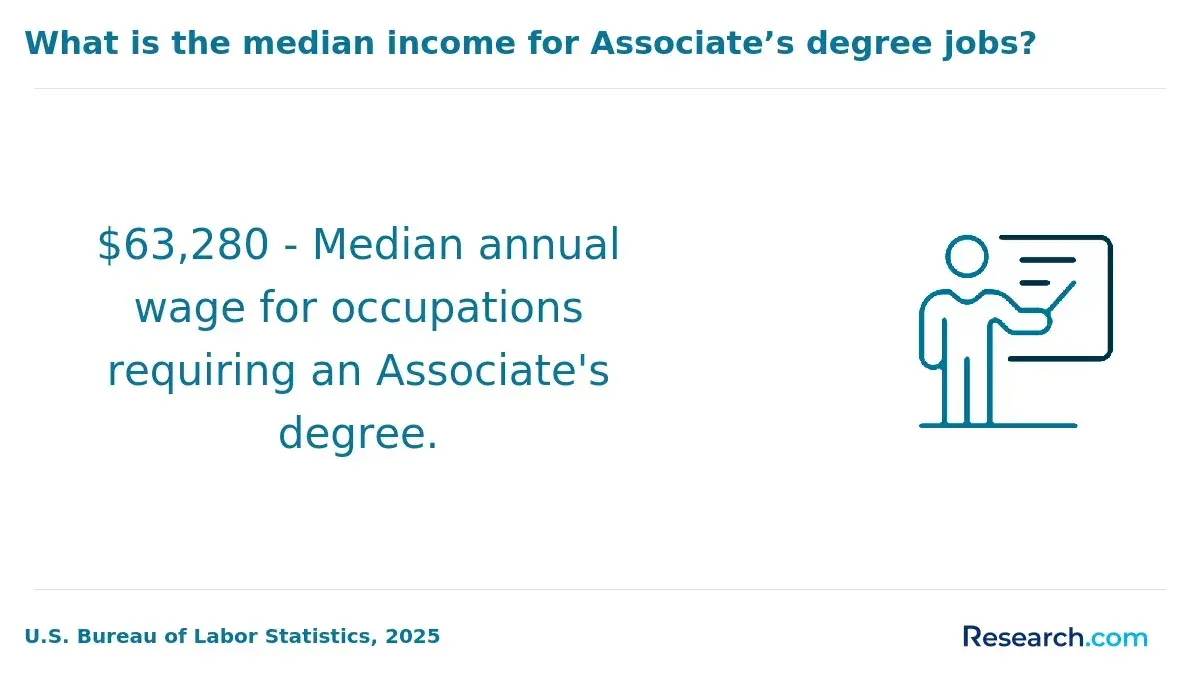
The best education pathway depends on the gap between your current background and your target role. A certificate may be enough if you already have a degree and need a technical skill. An associate degree may make sense if you want an affordable foundation or a licensed technical role. A bachelor's or master's degree may be necessary when employers, licensing boards, or advancement paths require it.
Cost matters because nonlinear learners are often balancing school with work, caregiving, or a career reset. College Board data for 2024-25 reported average published tuition and fees of $4,050 at public two-year in-district colleges, $11,610 at public four-year in-state institutions, and $43,350 at private nonprofit four-year institutions. Those figures do not include every cost, but they show why program type and transfer strategy can strongly affect return on investment.
The table below summarizes common education options and when each one tends to fit a nonlinear career plan. Use it to narrow choices before speaking with admissions advisors.
| Pathway | Typical fit | Time commitment | Main trade-off |
| Short certificate or bootcamp | Skill refresh, technical pivot, portfolio building | Weeks to months | Fast and focused, but may not replace a degree when one is required |
| Associate degree | Affordable foundation, career reentry, technical or healthcare pathway | About two years full time | Lower cost, but some advancement paths may still require a bachelor's degree |
| Bachelor's degree completion | Adults with prior credits, military credits, or some college experience | Varies by transfer credit | Broad employer recognition, but requires careful cost and credit review |
| Master's degree | Career advancement, leadership shift, specialized professional role | Often one to three years | Can strengthen credibility, but ROI depends heavily on field and employer demand |
| Industry certification | Defined skill standard in IT, project management, HR, finance, or healthcare | Weeks to months plus exam preparation | Recognized by employers, but value varies by industry and experience level |
If you are rebuilding from the foundation up, reviewing the best associate degrees can help you compare accessible programs, but the smartest choice is the one that connects to a specific career outcome, transfer pathway, or licensure requirement.
Before enrolling, ask whether the program accepts prior learning, military training, professional certifications, or transfer credits. For nonlinear learners, credit for prior experience can reduce both time and cost.
How should you address career gaps, pivots, and sabbaticals on your resume and applications?
Career gaps and pivots are common, but silence can create doubt. The best strategy is to be brief, honest, and focused on readiness. You do not need to overshare personal details; you do need to show that the gap does not prevent you from succeeding now.
Use different formats depending on what happened and how relevant the period is to your next step:
- For caregiving, use a concise explanation such as "Family caregiving leave" and emphasize any continuing education, volunteer work, or skills maintained during that time.
- For layoffs, state the business context briefly and move quickly to what you did afterward, such as contract work, training, networking, or certification preparation.
- For sabbaticals, explain the purpose if it supports your story, such as travel, recovery, research, relocation, or professional reassessment.
- For major pivots, highlight the decision point and the preparation that made the move intentional rather than impulsive.
A resume gap can be addressed in a single line if it is not central to the role. For example: "Career break for family caregiving, 2022-2024; completed coursework in accounting and maintained volunteer bookkeeping responsibilities." This tells the truth, gives context, and redirects attention to capability.
Admissions committees may read gaps differently from employers. They often want evidence that you can handle academic work now. If you have been out of school for a long time, recent coursework, a certificate, a strong statement of purpose, or a professional recommendation can help show readiness.
Avoid these common mistakes: inventing consulting work to cover a gap, apologizing repeatedly, providing excessive personal detail, or using a functional resume that hides chronology completely. A hybrid resume is usually better because it highlights skills while still giving reviewers a clear timeline.
How do online degree programs compare to campus-based options for nonlinear career changers?
Online programs can be a strong fit for nonlinear career changers because they often allow students to keep working, manage family responsibilities, and study from outside commuting distance. Campus-based programs can be better when the field depends on labs, clinical placements, local networking, studio work, or structured face-to-face support.
The decision is not simply online versus campus. The real question is which format gives you the support, credibility, schedule, and hands-on experience required for your next role. The table below compares the practical differences.
| Factor | Online programs | Campus-based programs | Best fit |
| Schedule flexibility | Often stronger for working adults and caregivers | Often more fixed around class times | Online if work continuity is essential |
| Networking | Depends on virtual events, cohorts, advising, and alumni access | Often easier through in-person events and local employer ties | Campus if local industry relationships are critical |
| Hands-on requirements | May require local placements, intensives, or approved sites | Often built into labs, clinics, or studios | Campus or hybrid for lab-heavy fields |
| Cost control | Can reduce commuting and relocation costs | May include campus fees, housing, or transportation costs | Online if total cost is the main constraint |
| Self-management | Requires strong time management and independent learning | Provides more built-in structure | Campus if accountability and routine are needed |
For adults trying to change direction without pausing income, lists of the most affordable online colleges for working adults can be a practical starting point, especially when paired with accreditation checks, transfer-credit review, and career-services questions.
Be cautious with programs that advertise speed but provide limited advising, unclear transfer policies, or weak placement support. A fast online program is useful only if it leads to a credential that employers, graduate schools, or licensing boards will recognize.
What role do accreditation, licensing, and industry certifications play in nonlinear careers?
Accreditation, licensing, and certifications can help a nonlinear candidate prove credibility. They are especially important when your work history does not follow the expected route into a field. However, they do different things and should not be treated as interchangeable.
Institutional accreditation confirms that a school meets recognized quality standards. Programmatic accreditation may be required or preferred in fields such as nursing, counseling, social work, education, engineering, business, and allied health. Licensing is a legal requirement set by a state board or regulator. Industry certification is usually awarded by a professional organization or vendor and may signal job-ready knowledge.
The table below clarifies what each credential-related term means and why it matters before you commit time or money.
| Requirement type | Who controls it | Why it matters | Common risk |
| Institutional accreditation | Recognized accrediting agencies | Affects credit transfer, graduate admission, and federal financial aid eligibility | Choosing a school whose credits are difficult to transfer |
| Programmatic accreditation | Field-specific accrediting bodies | May be required for licensure, clinical placement, or employer preference | Assuming institutional accreditation is enough for a licensed field |
| State licensure | State licensing boards | Legally required for many healthcare, education, counseling, and public-safety roles | Enrolling in a program that does not meet your state's requirements |
| Industry certification | Professional associations or vendors | Can validate specific skills in IT, HR, project management, finance, and trades | Paying for a certification that target employers do not value |
If you are considering graduate study after several pivots, do not focus only on accessible admissions. Resources on the easiest master's programs to get into may help you identify flexible options, but licensure alignment, accreditation, clinical requirements, and employer recognition should come first in regulated fields.
A practical rule is to verify requirements backward. Start with the job title or license you want, check the state board or employer requirements, identify acceptable credentials, and only then compare schools.
How can you research salary ranges and job outlook when your career path is nonlinear?
Salary research is harder for nonlinear careers because your past title may not match your future role. Instead of asking what your current background is "worth," research the compensation and outlook for the occupation you are targeting, then adjust for your location, experience, credential level, and industry.
BLS May 2024 data reported a median annual wage of $49,500 for all U.S. occupations. Use that figure only as a baseline; many career-change targets sit above or below it depending on education, licensing, technical skill, and regional demand.
The table below gives examples of how target-role research can be more useful than relying on past job titles. These figures are national medians, so local labor markets and employer requirements may differ.
| Target role | Useful background for nonlinear candidates | Median annual wage, May 2024 | Outlook context |
| Human resources specialist | Training, administration, customer service, payroll, operations | $72,910 | Demand is tied to hiring, compliance, and workforce management needs |
| Management analyst | Operations, project coordination, business ownership, process improvement | $101,190 | Employers often value evidence of problem-solving across settings |
| Information security analyst | IT support, military technical work, compliance, risk management | $124,910 | Cybersecurity roles often require current technical skills and trusted credentials |
| Registered nurse | Caregiving, healthcare support, science coursework, patient service | $93,600 | Licensure and approved clinical education are essential |
If earnings potential is a major driver of your pivot, compare roles by required education, licensing barriers, work conditions, and realistic entry points-not just salary. Guides on what career makes the most money can help you explore high-paying fields, but the best choice should also fit your strengths and tolerance for additional training.
To research outlook responsibly, use more than one source. BLS is useful for national wages and projections; state labor departments can show regional demand; job postings reveal current employer language; alumni outcomes and program career reports can show whether a school has relevant employer connections.
How do you evaluate whether a degree program aligns with a flexible, nonlinear career plan?
A degree program aligns with a nonlinear career plan when it recognizes prior experience, fills specific skill gaps, and supports more than one possible next step. Flexibility should not mean vague. The program should still connect to identifiable roles, credentials, or advancement pathways.
Before applying, evaluate the program from the perspective of your next decision point: employment, promotion, licensure, graduate school, or entrepreneurship. The following questions help you compare options without relying only on rankings or marketing claims.
- Does the curriculum match the skills listed in current job postings for your target role?
- Will the school evaluate transfer credits, prior learning, military training, or professional certifications before you commit?
- Is the program accredited in a way that supports transfer, financial aid, graduate admission, or licensure?
- Are internships, practicums, capstones, portfolios, or employer projects available to help you prove recent experience?
- Can you complete the program part time, online, in the evening, or in an accelerated format without undermining learning quality?
- What career services are available for adult learners, career changers, and students with nontraditional resumes?
If you need a bachelor's degree mainly to remove a credential barrier, resources on the easiest bachelor degree to get can help you identify accessible formats, but you should still verify curriculum relevance, credit transfer, cost, and employer recognition.
Be careful with programs that promise broad career flexibility but provide no clear examples of outcomes. A flexible program should give you options, not leave you with an unclear story. Look for evidence such as alumni roles, employer partnerships, capstone topics, licensure pass information where relevant, and transparent cost estimates.
What strategies help you build a coherent long-term narrative for a nonlinear career path?
A coherent narrative turns a varied background into a purposeful professional identity. It does not mean pretending every decision was planned in advance. It means explaining what you learned, how your skills evolved, and why your next step is logical.
Build your long-term narrative around a short positioning statement. This statement should name your target direction, your strongest evidence, and the value you bring because of-not despite-your varied background.
Use these strategies to keep your story consistent across resumes, interviews, applications, and networking conversations:
- Create a one-sentence theme, such as "I help organizations improve service operations through training, data, and process design."
- Choose three anchor examples from different points in your history that prove the theme across settings.
- Translate old job titles into current-market language without exaggerating responsibilities.
- Update your LinkedIn profile, resume summary, portfolio, and application essays so they use the same target role and skill keywords.
- Prepare a brief explanation for each pivot that focuses on growth, market fit, or responsibility rather than frustration.
- Show recent proof of readiness through coursework, certifications, projects, volunteer work, freelance assignments, or measurable achievements.
The strongest nonlinear narratives are specific. "I am adaptable" is weaker than "I have repeatedly moved into unfamiliar service environments, learned the operating model quickly, and improved team workflow." Specificity helps reviewers trust the story.
Also watch for red flags. A narrative can lose credibility if it changes for every audience, overemphasizes personal reinvention without evidence, blames past employers, or jumps to expensive education before confirming role requirements. Your next step should be ambitious, but it should also be supported by market research and a realistic plan.
Other Things You Should Know About
No. A nonlinear career path is not bad if you explain it clearly. Employers may see it as evidence of adaptability, cross-functional experience, and resilience when your resume connects past roles to the target job.
A fully functional resume can make recruiters suspicious because it hides chronology. A hybrid resume is usually better because it highlights relevant skills while still showing a clear work timeline.
Use a short answer that covers your reason for changing direction, the skills that carry over, and the preparation you completed for the new role. Focus on readiness and contribution rather than dissatisfaction with past work.
Not always. You may need a degree for licensed or credential-sensitive fields, but certificates, projects, portfolios, or targeted coursework may be enough for some pivots. Check job postings and licensing rules before enrolling.
References
- Will a career break look bad on my resume? How to address it. - SEEK https://au.seek.com/career-advice/article/will-a-career-break-look-bad-on-my-resume
- Linear vs. Nonlinear Career Paths https://www.corporatecomplianceinsights.com/linear-vs-nonlinear-career-paths/
- Embracing a Nonlinear Career Path: A Journey of Growth and Adaptability https://insight.ieeeusa.org/articles/embracing-a-nonlinear-career-path/
- Salary Finder | CareerOneStop https://www.careeronestop.org/Toolkit/Wages/find-salary.aspx
- Non-linear career paths: How can employers adapt? https://www.hcamag.com/ca/news/general/non-linear-career-paths-how-can-employers-adapt/567288
- How Organizations Can Support Nonlinear Careers https://zingrecruiting.com/supporting-nonlinear-careers/
- Are Nonlinear Career Paths the New Normal? 5 Ways You Can Support Employees While Benefiting Your Company https://www.fisherphillips.com/en/insights/insights/nonlinear-career-paths-the-new-normal
- The better path? Non-linear careers https://www.volarisgroup.com/acquired-knowledge/the-better-path-non-linear-careers/
- The Truth About A Non Linear Career Path —and How to Own Yours https://thehappymondays.co/blog/truth-about-non-linear-career-path/
- Beyond Recognition: How Accreditation Impacts Career Mobility and Leadership Credibility - Acacia https://acacia.edu/blog/beyond-recognition-how-accreditation-impacts-career-mobility-and-leadership-credibility/