2027 Networking vs GPA: What Matters More for Landing a Job?

Co-Founder and Chief Data Scientist
You are deciding where to spend limited time: raising your GPA, meeting people, or building proof you can do the job. That choice matters because the labor market still rewards education, but employers increasingly screen for skills, referrals, internships, and work samples.
The U.S. Bureau of Labor Statistics reported that workers with a bachelor's degree had a 2.5% unemployment rate in 2024, showing that college still helps-but not every student benefits equally. This guide helps students, recent graduates, and career changers decide how to balance grades, networking, and experience.
Key Things You Should Know
- Networking usually matters more after you meet the employer's academic threshold; GPA is most important when companies, graduate programs, or licensed fields use it as an early screening tool.
- For many entry-level roles, internships, projects, referrals, and interview performance can outweigh a modest GPA because they show job readiness more directly.
- BLS 2024 data shows bachelor's degree holders had a 2.5% unemployment rate, but that advantage depends heavily on major, experience, skills, location, and access to career networks.
Does networking or GPA matter more for landing your first job after college?
For landing your first job after college, networking often matters more than GPA once your grades are "good enough" for the role. GPA is a signal of discipline, learning ability, and academic consistency. Networking is a pathway to information, referrals, hidden opportunities, mentoring, and interview access. The strongest applicants usually combine both with evidence of skills.
A practical way to think about the decision is this: GPA helps you avoid being screened out, while networking helps you get noticed. If an employer requires a 3.0 GPA for a rotational program, falling below that threshold can hurt. But if a job posting does not mention GPA, a referral, internship, portfolio, or strong interview can carry more weight than a transcript.
The table below summarizes how each factor usually functions in an entry-level hiring process. Use it to decide where your next hour of effort is likely to produce the best return:
| Factor | What it proves to employers | Where it matters most | Main limitation |
| GPA | Academic consistency, test performance, and ability to complete structured work | Graduate school, internships, finance programs, consulting, engineering, accounting, and some government pipelines | It does not prove workplace judgment, teamwork, communication, or applied skill by itself |
| Networking | Professional credibility, initiative, access to referrals, and understanding of the field | Most business, tech, media, nonprofit, startup, sales, design, and operations roles | It works best when backed by skills, preparation, and professional follow-through |
| Internships and projects | Ability to perform tasks similar to the job | Nearly every entry-level career path | Quality matters more than quantity; shallow experience may not help much |
| Skills and certifications | Readiness to use tools, methods, and technical knowledge required in the role | Technology, analytics, healthcare support, marketing, cybersecurity, and operations | Credentials must match employer needs and should not replace real practice |
Students should not treat networking as "using people." Effective networking means learning from professionals, asking thoughtful questions, sharing your goals clearly, and following up respectfully. It is a career skill, not a shortcut.
How do employers in different industries weigh GPA versus professional connections?
Employers weigh GPA and professional connections differently depending on how much risk they associate with entry-level hiring. In highly structured fields, GPA can serve as a simple comparison tool. In relationship-driven or skill-demonstration fields, employers may care more about who can vouch for you and what you have already built or done.
AI is also changing this balance. Applicant tracking systems, skills assessments, automated resume screening, and large applicant pools make it harder to rely only on online applications. A professional connection can help your resume reach a human, but it will not compensate for missing core qualifications.
The comparison below shows common patterns by industry. It is not a universal rule, because individual employers, regions, and roles vary:
| Industry or field | Typical GPA importance | Typical networking importance | What students should prioritize |
| Investment banking and management consulting | High, especially for campus recruiting and competitive analyst programs | Very high, especially for informational interviews and referrals | Maintain a strong GPA, join relevant clubs, practice cases or technical interviews, and build alumni relationships early |
| Accounting | Moderate to high, especially for internships and CPA-track hiring | High, especially through campus recruiting and firm events | Meet GPA thresholds, attend employer events, and plan for CPA eligibility if relevant |
| Engineering | Moderate to high for early-career roles and internships | Moderate, but strong project referrals help | Balance grades with labs, design teams, internships, and technical portfolios |
| Software and data roles | Variable; some employers care, many focus on skills tests and projects | High because referrals can help in crowded applicant pools | Build projects, contribute to code or data work, prepare for technical interviews, and meet practitioners |
| Marketing, sales, communications, and media | Usually lower unless the employer has a formal program | Very high because hiring often depends on trust, samples, and fit | Create a portfolio, gain client or campaign experience, and build relationships with alumni and local employers |
| Healthcare, education, and licensed professions | High when admission, licensure, or clinical placement depends on academic performance | Moderate to high for placements, references, and local hiring | Protect grades, understand licensing rules, and build supervisor relationships during field experiences |
If your goal is a flexible career in remote-friendly fields, review degree paths that align with work from home degrees and then evaluate whether each program offers employer-connected projects, internships, or alumni access. Remote work makes networking more important, not less, because fewer informal workplace interactions happen automatically.
In which careers and degree paths is a high GPA still critical for hiring?
A high GPA is still critical when grades affect access to the next gate: admission, licensure, internships, scholarships, fellowships, security-sensitive work, or competitive training programs. In these paths, networking can help you learn and compete, but it usually cannot erase weak academic eligibility.
GPA matters most when employers or schools use it as a risk-control measure. This is common when the work requires technical precision, ethical judgment, safety, or readiness for advanced study. Students aiming for these paths should treat grades as part of professional preparation, not just school performance.
The following careers and degree paths often place more weight on GPA than the average entry-level job. Requirements vary, so students should confirm expectations with specific schools, employers, licensing boards, or professional associations:
- Medical, dental, veterinary, pharmacy, and physician assistant pathways, where prerequisite grades and science GPA can influence admission competitiveness.
- Law school and graduate programs, where GPA often affects admission, merit aid, and competitiveness alongside test scores, writing, and recommendations.
- Engineering, architecture, and actuarial pathways, where technical coursework and quantitative performance can affect internship and early-career options.
- Accounting and finance programs, especially CPA-track, audit, tax, investment banking, and leadership development pipelines that may set GPA cutoffs.
- Teaching, nursing, counseling, and other licensed fields, where program progression, clinical placement, or certification rules may include academic standards.
- Research-intensive careers, where faculty recommendations, lab performance, and academic achievement can influence assistantships and graduate placements.
Students in these fields should not ignore networking. Faculty mentors, clinical supervisors, alumni, and professional associations can help you understand admissions strategy, choose electives, identify internships, and avoid mistakes. But if your target path publishes minimum academic requirements, your first job is to meet them.
How can college students strategically build a professional network while earning their degree?
College students should build a professional network before they need a job. The best networking starts as career exploration: learning what different roles actually involve, which skills employers value, and how people entered the field. That makes your applications sharper and your decisions less random.
A strong student networking plan should be simple enough to repeat every week. The steps below help you build real professional relationships without sounding transactional:
- Choose a target direction, such as data analysis, public accounting, UX design, healthcare administration, teaching, or sales, even if you revise it later.
- Identify 10 people connected to that direction, including alumni, professors, internship supervisors, student organization speakers, family contacts, and local professionals.
- Ask for short informational conversations focused on learning, not asking for a job immediately.
- Prepare three specific questions about skills, entry-level hiring, common mistakes, and what the person wishes they had done earlier.
- Follow up with a brief thank-you message and one update later, such as completing a project, applying for an internship, or using their advice.
- Track contacts in a spreadsheet with names, roles, dates, advice, and next steps so relationships do not disappear after one conversation.
Common mistakes include contacting people only during senior year, sending generic messages, asking for referrals before establishing credibility, and failing to follow up. A better approach is to make networking part of your academic routine: one conversation, event, or follow-up each week.
Students in online programs should be especially intentional. If you are comparing online options, ask whether programs include live faculty access, employer panels, project-based courses, alumni groups, and career coaching-not just flexible scheduling.
What role do internships, projects, and campus involvement play compared to GPA and networking?
Internships, projects, and campus involvement often bridge the gap between GPA and networking. They create proof. A student with a 3.9 GPA but no examples of applied work may struggle in interviews, while a student with a lower GPA and strong internship results may have clearer evidence of job readiness.
The National Association of Colleges and Employers has continued to report employer interest in internship experience and career readiness competencies such as communication, teamwork, critical thinking, and professionalism. For students, the takeaway is practical: grades help show potential, but experience shows how you use that potential in real settings.
These activities matter because they turn vague claims into evidence. Use the list below to decide which experiences are worth prioritizing:
- Internships are most valuable when they involve real responsibilities, measurable outcomes, supervisor feedback, and work that connects to your target role.
- Projects are strongest when they solve a clear problem, use tools common in the field, and can be shown in a portfolio, presentation, GitHub profile, writing sample, case study, or design file.
- Campus involvement helps most when you hold responsibility, such as managing a budget, leading events, mentoring students, coordinating volunteers, conducting research, or representing an organization.
- Part-time jobs can be career assets when you translate them into transferable skills such as customer communication, scheduling, conflict resolution, data entry, sales, training, or operations.
- Faculty research, capstones, and clinical experiences can carry significant weight when supervisors can describe your reliability, judgment, and technical growth.
The key is relevance. A long list of activities is less persuasive than a small number of experiences that clearly connect to the job you want. When possible, quantify your work without exaggerating: number of users supported, budget size, reports created, clients served, events coordinated, or process improvements completed.
How do online and campus-based programs differ in networking opportunities and career support?
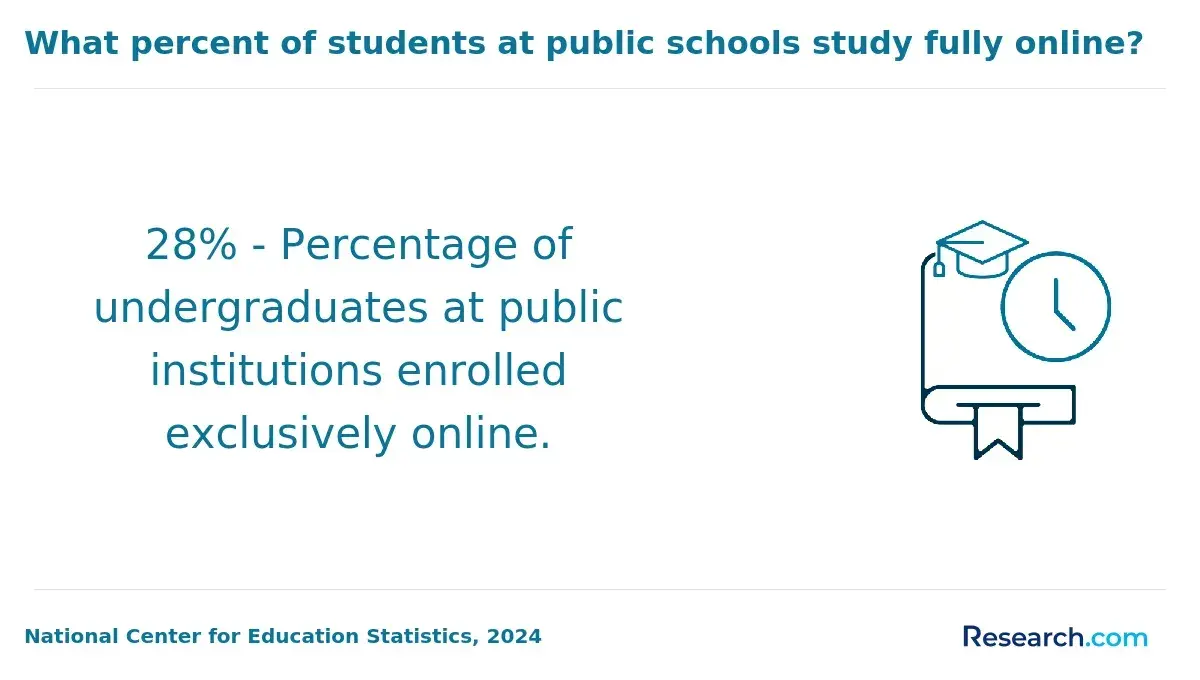
Online and campus-based programs can both lead to strong networks, but the networking experience is different. Campus programs often make relationship-building easier through physical proximity, student organizations, employer visits, and informal conversations. Online programs can be just as career-focused when they intentionally build live interaction, alumni access, and employer-connected assignments into the student experience.
Students comparing formats should avoid assuming that campus automatically means better networking or that online automatically means weaker career support. The better question is whether the program creates structured opportunities to meet faculty, peers, alumni, and employers.
The table below compares common networking and career-support features by format. Use it when evaluating programs, especially if you are balancing work, family, cost, and location:
| Feature | Campus-based programs | Online programs | What to ask before enrolling |
| Peer networking | Often easier through clubs, residence life, labs, and campus events | Depends on live classes, discussion quality, group projects, and cohort design | Are students grouped into cohorts, teams, or professional communities? |
| Faculty access | Office hours and informal contact may be easier | Can be strong if faculty offer live sessions, feedback, and advising | How often can students meet faculty live? |
| Employer recruiting | May include career fairs, campus interviews, and local employer visits | May include virtual fairs, employer webinars, and national job boards | Which employers recruited students from this program recently? |
| Internships and projects | Often tied to local employers and campus departments | May be flexible for working adults or remote projects | Does the school help online students find internships in their location? |
| Career services | Often available in person and online | Quality varies widely across institutions | Are resume reviews, mock interviews, and alumni events available to online students? |
If you prefer online study, start with accredited and student-support-focused options such as non profit online colleges, then compare career services, alumni access, completion support, and total cost. Institution type alone does not determine ROI, but transparency and student support matter.
How can students with a low GPA use networking to stay competitive in the job market?
A low GPA does not end your career options, but it does change your strategy. You need to reduce employer uncertainty by giving them better evidence: referrals, work samples, certifications, internships, strong references, and a clear explanation of your improvement. Networking helps because it gives you a chance to be evaluated as a whole person rather than a number.
The goal is not to hide your GPA dishonestly. The goal is to lead with stronger evidence when the employer does not require GPA disclosure. If an application asks for GPA, be accurate. If it does not, focus your resume on skills, experience, projects, and measurable results.
Students with a low GPA can stay competitive by using a focused recovery plan. These steps are most useful when repeated consistently over several months:
- Identify whether your target employers require a GPA; if they do, search for adjacent roles, smaller employers, contract roles, or internships that evaluate skills more directly.
- Build a portfolio or project that mirrors the work you want, such as a data dashboard, campaign analysis, lesson plan, policy memo, app prototype, lab report, or operations improvement.
- Ask professors, supervisors, or project leads for references that speak to reliability, growth, technical ability, and professionalism.
- Use informational interviews to learn which employers are more flexible about GPA and which skills they screen for first.
- Prepare a brief, accountable explanation if asked about grades, focusing on what changed and what evidence now shows your readiness.
- Consider targeted coursework, certificates, or retaken prerequisites when the low GPA affects eligibility for graduate school or licensure.
Common red flags include blaming professors, overexplaining personal details, pretending grades never matter, or applying only to elite programs with strict cutoffs. A better strategy is to widen your employer list, prove competence through work, and use networking to reach hiring managers who value demonstrated ability.
What is the impact of alumni networks and career services on long-term salary and promotions?
Alumni networks and career services can affect both first jobs and long-term mobility. A strong alumni network gives students access to role models, referrals, industry knowledge, and informal mentoring. Career services can help students translate coursework into resumes, prepare for interviews, find internships, and understand salary negotiation.
Long-term salary and promotion outcomes depend on many factors, including major, employer, region, performance, graduate education, and economic conditions. Still, networks matter because many promotions and career moves come through reputation, internal sponsors, former coworkers, and professional communities-not just public job postings.
BLS 2024 earnings data shows that workers with a bachelor's degree had median weekly earnings of $1,543. That figure should not be read as a promise for any individual graduate; rather, it shows why students should treat college as a career-building ecosystem, not just a collection of classes.
Career services are most valuable when students use them early. Waiting until the final semester limits your options because internship deadlines, employer events, and alumni mentoring opportunities may have passed.
Graduate education can also expand networks, especially when a program includes cohort learning, faculty mentoring, applied projects, and employer partnerships. If you are considering a faster advanced credential, compare quality and career fit carefully before choosing a 6-month master's degree online, because speed should not replace accreditation, rigor, or relevance to your target field.
How should students decide whether to focus more on grades, networking, or skill-building?
Students should decide whether to focus more on grades, networking, or skill-building based on their target career, current risk factors, and time horizon. The right answer is not the same for a pre-med student, a software developer, a public relations major, and an accounting student.
Use this decision framework to choose your weekly priorities:
- Focus more on GPA if your target path has published GPA cutoffs, prerequisite grade requirements, competitive graduate admissions, scholarships, licensure progression, or structured campus recruiting.
- Focus more on networking if your target field hires through referrals, portfolios, local employer relationships, alumni introductions, internships, or informal opportunity pipelines.
- Focus more on skill-building if employers ask for tools, software, writing samples, design work, coding tests, lab methods, clinical competencies, sales results, or certifications.
- Balance all three if you are unsure of your career direction; maintain a respectable GPA, complete one relevant project, and speak with professionals before committing to a path.
- Shift priorities each semester based on evidence, such as internship responses, advisor feedback, employer requirements, grades in major courses, and interview performance.
Cost also matters. Rising education costs make career alignment more important because students need to understand whether a program connects to realistic job paths. If your main goal is employment return, compare majors and formats associated with online degrees that pay well, but evaluate each option by accreditation, curriculum quality, employer demand, transfer credit, and support services-not salary claims alone.
A useful rule is the "minimum plus differentiator" approach. Meet the minimum GPA or credential expectation for your field, then build a differentiator through networking, internships, projects, certifications, leadership, or research. That is usually more effective than trying to maximize one factor while ignoring the others.
What practical steps help you combine GPA, networking, and skills into a strong career plan?
The strongest career plan combines GPA, networking, and skills into a visible pattern of readiness. Employers want to see that you can learn, communicate, solve problems, and adapt. Your plan should make those qualities easy to recognize on your resume, LinkedIn profile, portfolio, interviews, and references.
The following steps help turn academic work into a practical job-search system. They are especially useful for students in their first two years, but seniors and recent graduates can still use them to organize a stronger search:
- Define one primary career target and one backup target so your courses, projects, and networking conversations have direction.
- Research five job postings in your target field and list the repeated skills, tools, credentials, and experience requirements.
- Meet the academic standard for your path, including GPA thresholds, prerequisite grades, licensure rules, or graduate admissions expectations where applicable.
- Complete one substantial proof-of-skill project each semester and save evidence such as reports, presentations, code, designs, writing samples, or supervisor feedback.
- Schedule recurring networking actions, such as one informational interview, alumni message, employer event, or faculty conversation each week.
- Use career services before you need a job by getting resume reviews, mock interviews, internship leads, salary guidance, and application feedback.
- Track outcomes from applications and interviews so you know whether the problem is qualifications, resume presentation, networking reach, or interview performance.
- Review your plan every semester and adjust based on grades, employer feedback, internship results, and changing career interests.
Students who need a faster path should still be careful. An accelerated bachelor's degree online can make sense for motivated learners with transfer credits, clear career goals, and time to handle compressed coursework, but it may be a poor fit if speed leaves no room for internships, projects, networking, or academic recovery.
The biggest mistake is treating GPA, networking, and skills as separate goals. They should reinforce each other: coursework gives you knowledge, projects prove it, networking helps you learn where it applies, and experience turns it into career momentum.
Other Things You Should Know About
A 3.0 GPA is often good enough for many entry-level jobs, especially when you also have internships, projects, leadership, or referrals. Some competitive programs may expect higher GPAs, so check employer requirements before assuming.
Include your GPA if it is strong, required by the employer, or helpful for your field. If it is modest and not requested, you can usually use resume space for experience, skills, projects, and achievements instead.
Networking can help you find opportunities and get advice, but it does not fully replace experience. If you lack an internship, build relevant projects, volunteer work, part-time job experience, research, or freelance work that demonstrates similar skills.
Some employers verify GPA through transcripts or background checks, especially for internships, rotational programs, finance, consulting, engineering, government, and regulated fields. Always report your GPA accurately if asked.
References
- Why Networking Matters More Than GPA in Certain Industries | Social Life Magazine https://sociallifemagazine.com/the-archive/why-networking-matters-more-than-gpa-in-certain-industries/
- Is the Education System Too Focused on Grades Rather Than Self Development and Discovery? https://www.huffingtonpost.co.uk/maria-keogh/education-system_b_8241982.html
- 5 Tips to Build a Professional Network in College https://www.ensign.edu/5-tips-to-build-a-professional-network-in-college
- Level Up Your Career with Strategic Networking - CPA Atlantic School https://cpaatlantic.ca/blog/level-up-your-career-with-strategic-networking/
- The Benefits of Corporate Alumni Networks - PeoplePath https://peoplepath.com/blog/the-benefits-of-corporate-alumni-networks-for-small-organizations/
- How can students create a professional network? https://students.brooklyn.edu/knowledge-base/how-can-students-create-a-professional-network/
- Building Professional Networks for College Students https://wheelingrise.org/2025/05/24/building-professional-networks-for-college-students/
- Does GPA matter after graduation? https://talk.collegeconfidential.com/t/does-gpa-matter-after-graduation/2054711