2027 What Can You Do With a Political Science Degree?

Co-Founder and Chief Data Scientist
A political science degree can lead to careers in government, law, policy, advocacy, research, campaigns, business, and communications-but the smartest path depends on your target role. The U. S. Bureau of Labor Statistics reported a $139,380 median annual wage for political scientists in May 2024, but many related roles pay less and require different credentials.
This guide helps prospective students, career changers, and recent graduates compare degree levels, job options, costs, online formats, and next steps before investing time and money.
Key Things You Should Know
- A political science degree is most directly aligned with policy, government, law, public affairs, campaign, research, and advocacy careers, but many roles require internships, writing samples, data skills, graduate study, or legal training to become competitive.
- Salary potential varies widely: BLS May 2024 data lists political scientists at a $139,380 median annual wage, while related roles such as paralegals, public relations specialists, market research analysts, and social service managers have different pay ranges and advancement paths.
- The degree is usually worth considering if you build practical experience early; it is riskier if you choose a program without checking accreditation, total cost, transfer policies, internship access, and career outcomes.
What careers can you pursue with a political science degree?
Political science is the study of government, power, public policy, law, political behavior, international relations, and civic institutions. Because the major teaches research, writing, argumentation, data interpretation, and public problem-solving, graduates can work in several sectors rather than one fixed occupation.
The best career fit depends on whether you want to analyze policy, influence public opinion, manage programs, support legal work, serve in government, or move toward graduate or professional school. The table below compares common paths so you can see how the same degree can lead to different day-to-day work.
| Career path | Typical responsibilities | Common entry point | When it fits best |
| Policy analyst or research assistant | Review legislation, analyze public programs, summarize evidence, prepare memos, and support policy recommendations | Bachelor's degree plus internship, research project, or data skills; master's often preferred for advancement | You enjoy evidence-based writing, statistics, public issues, and long-form analysis |
| Government affairs or legislative aide | Track bills, prepare briefings, meet constituents, manage schedules, and support elected officials or agencies | Bachelor's degree plus campaign, internship, or Capitol office experience | You want direct exposure to government and can handle fast-moving political environments |
| Campaign or political organizing staff | Coordinate volunteers, manage outreach, analyze voter data, plan events, and communicate campaign messages | Campaign volunteering, field organizer role, student government, or advocacy experience | You are comfortable with deadlines, public contact, irregular hours, and issue-based work |
| Legal support or pre-law pathway | Conduct legal research support, organize documents, draft summaries, and prepare for law school or paralegal work | Bachelor's degree; paralegal certificate may help; law degree required to practice as an attorney | You are interested in law but want to test the field before committing to law school |
| Public relations or communications | Write press releases, manage messaging, monitor public opinion, support media relations, and advise organizations | Bachelor's degree plus writing portfolio, media experience, or internship | You like writing for public audiences and translating complex issues into clear messages |
| Nonprofit or advocacy program work | Coordinate programs, support grants, mobilize communities, research issues, and evaluate impact | Bachelor's degree plus volunteer, service, or community engagement experience | You want mission-driven work and are comfortable balancing policy goals with practical program delivery |
A common mistake is assuming "political science job" means only elected office or political campaigns. In practice, many graduates use the degree in courts, city agencies, consulting firms, research organizations, think tanks, nonprofits, higher education, journalism-adjacent roles, and corporate public affairs.
Is a political science degree worth it for jobs and salary potential?
A political science degree can be worth it when it is paired with a clear career strategy. The major is especially useful for students who want a broad liberal arts foundation with strong writing, research, civic, legal, and analytical training. It is less ideal for students who want a direct technical occupation immediately after graduation unless they add marketable skills such as data analysis, budgeting, GIS, legal research, grant writing, or digital communications.
Salary outcomes depend more on role, location, graduate education, and experience than on the major alone. For example, BLS May 2024 data shows a high median wage for political scientists, but many entry-level graduates start in assistant, coordinator, analyst, or program roles before reaching senior policy or management positions.
The degree tends to make the most financial sense under the following conditions. These points can help you judge whether the investment matches your goals rather than relying only on rankings or broad salary averages.
- You plan to build experience while enrolled through internships, campaign work, research assistantships, legal clinics, public service programs, or student government.
- You choose electives that add job-ready tools, such as statistics, public budgeting, data visualization, survey research, constitutional law, economics, geographic information systems, or policy evaluation.
- You understand whether your target career requires graduate school, law school, a security clearance, a portfolio, or specialized certification.
- You compare total program cost, not just tuition, and estimate whether expected entry-level roles can support repayment if you borrow.
If your goal is a strong return on a bachelor's degree without immediate graduate school, compare political science with other best bachelor degrees that may lead more directly to technical or high-wage entry-level roles. Political science may still be the better fit if you value public-sector work, law, policy, communications, or civic leadership, but the trade-off should be intentional.
Students should avoid treating salary statistics as guarantees. A political science graduate working as a federal analyst, a local nonprofit coordinator, a campaign staffer, and a corporate public affairs associate may have very different earnings, work schedules, benefits, and advancement timelines.
What political science jobs are in highest demand and what is the job outlook?
Demand for political science graduates is strongest in roles that combine policy knowledge with practical skills: writing for decision-makers, analyzing data, managing programs, communicating with stakeholders, and understanding regulation. Traditional political scientist jobs are relatively specialized, so many graduates pursue adjacent occupations with broader hiring markets.
The table below summarizes selected U.S. occupations that commonly fit political science graduates or related graduate pathways. Use it as a labor-market snapshot, not as a promise of outcomes for any one degree holder.
| Occupation | BLS median annual wage, May 2024 | Typical degree expectation | Job outlook context |
| Political scientist | $139,380 | Master's degree or PhD often preferred for research roles | Specialized field with competition for think tank, federal, and academic-style research jobs |
| Lawyer | $151,160 | JD and state bar admission required | Political science is a common pre-law major, but law school cost and licensing requirements are major considerations |
| Market research analyst | $76,950 | Bachelor's degree; quantitative and survey skills help | Useful path for graduates who like public opinion, polling, campaign analytics, or consumer behavior |
| Public relations specialist | $69,780 | Bachelor's degree plus writing and media skills | Relevant for public affairs, advocacy, government communication, and issue campaigns |
| Paralegal or legal assistant | $61,010 | Associate or bachelor's degree; certificate may help | Good law-related entry point before deciding on law school |
| Social and community service manager | $78,240 | Bachelor's degree; master's may help for leadership | Fits graduates interested in nonprofit, civic, public health, or community programs |
Several current trends affect hiring. Public agencies and nonprofits increasingly expect applicants to be comfortable with data dashboards, spreadsheets, public records, grant metrics, and digital communication. Campaigns and advocacy organizations also use voter files, social media analytics, text outreach, and AI-assisted drafting tools, but employers still need people who can verify facts, understand ethics, and write persuasively for real communities.
To improve employability, students should treat the degree as a platform rather than a complete career package. A practical plan often includes the following steps.
- Choose a career cluster early, such as law, public policy, campaigns, international affairs, nonprofit management, public administration, or communications.
- Complete at least one internship or applied project before graduation, ideally with a government office, legal organization, campaign, nonprofit, or research center.
- Build a portfolio with policy memos, research papers, op-eds, data visualizations, grant drafts, or legislative summaries.
- Learn tools that match your target role, such as Excel, statistical software, GIS, constituent relationship management systems, or basic survey platforms.
- Ask alumni and employers which entry-level titles they actually hire for, because "policy analyst" may not be the first job title available to new graduates.
What types of political science degrees are available and how do they differ?
Political science degrees are available from associate through doctoral levels. Each level serves a different purpose, so the right choice depends on whether you want an entry-level foundation, a bachelor's credential, advanced policy expertise, academic research training, or preparation for law or public administration.
The table below compares degree types by purpose and typical career use. It can help you avoid overpaying for a credential that is either too broad or more advanced than your current goal requires.
| Degree type | Typical length | Best for | Common next step |
| Associate degree in political science or liberal arts | About 2 years full time | Students planning to transfer to a bachelor's program while lowering initial costs | Transfer to a four-year college, ideally with an articulation agreement |
| Bachelor's degree in political science | About 4 years full time | Entry-level public affairs, legal support, government, nonprofit, communications, campaign, and business roles | Work experience, law school, MPA, MPP, MA, or specialized certificate |
| Master's in political science, public policy, or public administration | Often 1 to 2 years full time | Students seeking analytical, leadership, research, or public-sector advancement roles | Policy analyst, public manager, research role, advocacy leadership, or doctoral study |
| PhD in political science | Often 5 or more years | Academic research, university teaching, advanced methodology, and specialized research careers | Faculty, research institute, government research, or data-intensive policy roles |
| JD with political science background | Usually 3 years after bachelor's degree | Students who want to practice law, litigate, advise clients, or work in legal policy | Bar exam and state licensure |
A bachelor's degree is usually the main entry point for broad political science careers. A master's degree becomes more valuable when you want advanced policy analysis, public administration leadership, international affairs specialization, or research-heavy work. Students comparing flexible graduate options may want to look at an online master's degree, especially if they are already working in government, nonprofit, legal, or public affairs roles.
One red flag is choosing a graduate program before confirming what credential your target employers actually prefer. For some students, two years of work experience plus a focused certificate may be more useful than immediately entering a master's program; for others, a master's is the credential that unlocks analyst or leadership roles.
What courses and skills do you learn in a political science major?
A political science major usually combines theory, institutions, law, research methods, and applied policy topics. Programs vary, but most require students to understand U.S. government, comparative politics, international relations, political theory, and research design.
The courses below are common because they build the foundation employers and graduate schools expect. They also help students discover whether they prefer legal reasoning, public management, global affairs, campaigns, or quantitative analysis.
- American government and constitutional systems, including Congress, the presidency, courts, federalism, civil liberties, and civil rights.
- Comparative politics, which examines political systems, parties, institutions, democratization, and governance across countries.
- International relations, including diplomacy, conflict, international organizations, security, trade, and global political economy.
- Political theory, which explores justice, democracy, authority, rights, citizenship, and the philosophical foundations of public life.
- Public policy and public administration, including agenda setting, program evaluation, budgeting, regulation, and implementation.
- Research methods, statistics, polling, survey design, qualitative analysis, and interpretation of political data.
- Campaigns, elections, public opinion, media, interest groups, and political communication.
- Capstone seminars, internships, honors theses, or applied policy projects that produce portfolio-ready work.
The most employable graduates can translate coursework into workplace skills. Employers often value concise writing, source evaluation, ethical judgment, stakeholder communication, meeting facilitation, public speaking, and the ability to explain complex issues to nonexperts.
Students should also develop technical and professional skills that are not always required in the major but matter in hiring. Prioritize spreadsheet analysis, basic statistics, public records research, presentation design, grant or memo writing, and familiarity with policy databases. If you are interested in campaigns or public opinion, add survey methods and data visualization; if you are interested in law, add legal writing and logic-heavy courses.
How do online political science programs compare with on-campus options?
Online political science programs can be academically comparable to on-campus programs when they are offered by accredited institutions, taught by qualified faculty, and include strong advising, library access, writing support, and career services. The main difference is not the subject matter; it is how students access networking, internships, classroom discussion, and accountability.
The table below compares online and on-campus formats from a decision-making perspective. Use it to match the program format to your schedule, learning style, and career needs.
| Factor | Online political science program | On-campus political science program |
| Flexibility | Better for working adults, caregivers, military students, and students far from campus | Better for students who want a structured weekly routine and in-person access |
| Networking | Depends on virtual events, faculty outreach, alumni access, and local internships | Often easier through campus organizations, guest speakers, and face-to-face faculty relationships |
| Internships | May require students to find local or remote placements | May be easier if the campus is near a state capital, courthouse, city hall, or policy hub |
| Discussion-based learning | Works well when courses include live seminars, feedback, and structured debate | Strong fit for students who learn through in-person discussion and immediate interaction |
| Cost structure | May reduce relocation and commuting costs, but technology and distance fees may apply | May include higher housing, transportation, parking, or campus-based costs |
Online programs make the most sense when you need flexibility and can be proactive about networking. On-campus programs may be better if you are early in your career, want intensive mentoring, or plan to use campus organizations and local political institutions for experience.
Before enrolling online, ask specific questions about internships, synchronous class expectations, faculty access, transfer credits, and career services. If cost is the main reason you are considering online study, compare affordable online master's programs carefully because the lowest tuition rate is not always the lowest total cost after fees, books, and time-to-completion are included.
A common mistake is assuming online means easier. Strong online political science courses still require heavy reading, discussion, writing, research, and revision. The better question is whether the format gives you enough structure and support to finish successfully.
What are typical admission requirements for political science bachelor's and master's programs?
Admission requirements vary by school, degree level, selectivity, and whether the program is offered through a traditional campus, adult-completion pathway, or graduate school. Political science programs usually do not require a specialized undergraduate background for admission, but strong reading, writing, and analytical ability matter.
The table below summarizes common requirements for bachelor's and master's programs. Always confirm details with each institution because test policies, GPA expectations, and prerequisite rules can change.
| Requirement | Bachelor's program | Master's program |
| Academic record | High school diploma or equivalent; transfer students submit college transcripts | Bachelor's degree from an accredited institution; some programs prefer social science coursework |
| GPA | Minimum varies by institution; selective schools review rigor and grades closely | Minimum varies, often with holistic review for work experience and writing strength |
| Test scores | Many colleges are test-optional, but policies vary | GRE may be optional, waived, or required depending on the program |
| Writing materials | Application essay may be required | Statement of purpose, writing sample, policy memo, or research paper may be requested |
| Recommendations | Sometimes required, especially at selective institutions | Often required from professors, supervisors, or professional contacts |
| Experience | Not usually required, but civic, debate, service, or leadership experience can help | Internships, public service, research, military, nonprofit, or government experience may strengthen the application |
Applicants can improve their chances by showing a clear academic and career direction. For bachelor's programs, that may mean strong writing, civic engagement, debate, Model UN, student government, service learning, or community involvement. For master's programs, admissions committees often look for evidence that the applicant can handle graduate-level reading, writing, and analysis.
Before applying, take these practical steps to avoid delays or poor-fit programs.
- Check whether the school accepts transfer credits, dual enrollment, AP, CLEP, military credit, or prior college coursework.
- Review whether the curriculum includes your preferred concentration, such as public policy, law, international relations, public administration, political theory, or quantitative methods.
- Ask whether online students and campus students receive the same advising, faculty access, and career support.
- Prepare a writing sample that shows clear argument, evidence, citation discipline, and revision quality.
- Contact the department before applying if you are changing fields and need to know whether prerequisite coursework is expected.
How long does it take to earn a political science degree and what does it cost?
A full-time bachelor's degree in political science typically takes about four years, while an associate degree takes about two years and many master's programs take one to two years. Timelines can be shorter or longer depending on transfer credits, course availability, enrollment intensity, internship requirements, thesis options, and whether the student attends part time.
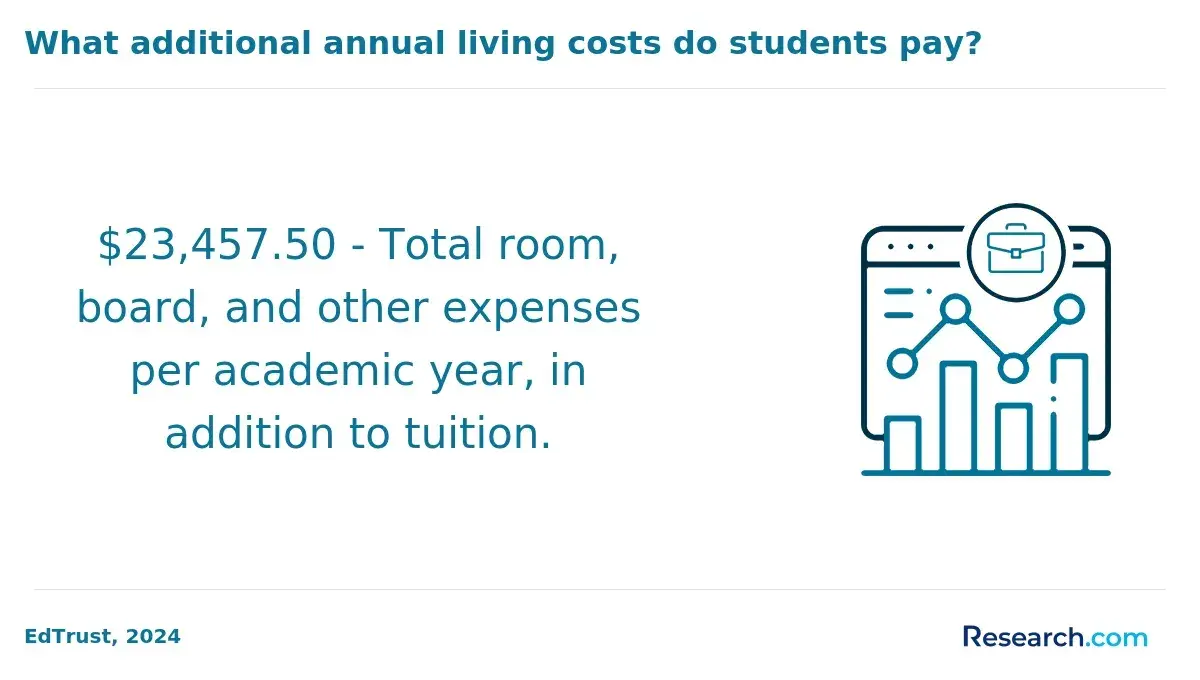
Cost varies substantially by institution type, residency, format, and living arrangements. College Board's 2024 published price data lists average tuition and fees of $11,610 for in-state students at public four-year colleges, $30,780 for out-of-state students at public four-year colleges, and $43,350 at private nonprofit four-year colleges for the 2024-25 academic year.
These figures help frame the decision, but your net cost may be lower after grants, scholarships, employer aid, or transfer credit.
The table below shows major cost drivers that students often overlook. Understanding these factors can prevent a program that looks affordable from becoming expensive over time.
| Cost factor | Why it matters | How to evaluate it |
| Tuition and mandatory fees | Fees can materially increase the listed tuition price | Ask for a full cost-of-attendance estimate, not only per-credit tuition |
| Residency status | Public universities often charge different rates for in-state and out-of-state students | Confirm residency rules before assuming you qualify for in-state tuition |
| Transfer credits | Accepted credits can reduce both cost and time | Request a formal transfer evaluation before enrolling |
| Course availability | Delayed required courses can add semesters | Ask how often core courses and concentrations are offered |
| Internship location | Unpaid or low-paid internships may create transportation or housing costs | Ask whether remote, local, paid, or credit-bearing internships are available |
| Books and technology | Online and research-heavy courses may require software, databases, or equipment | Review technology fees, laptop requirements, and textbook policies |
Students who want to reduce time-to-degree should consider transfer pathways, summer courses, credit for prior learning, and accelerated formats. Research accelerated options carefully; 1-year degree programs can be useful for some students with prior credits, but they may be intense and may not suit students who need extensive internship time or academic support.
To control costs, compare net price, graduation timeline, aid renewal rules, internship requirements, and career support together. The cheapest program is not always the best value if it lacks advising, delays required courses, or offers limited access to relevant experience.
How can you choose an accredited, reputable political science program in the U.S.?
Accreditation is one of the most important quality checks when choosing a political science program. In the U.S., students should look for institutional accreditation from an accreditor recognized by the U.S. Department of Education or the Council for Higher Education Accreditation.
Political science itself does not usually have a required programmatic accreditor, so institutional accreditation carries special importance for credit transfer, graduate school eligibility, and federal financial aid.
Reputation should be evaluated through evidence, not name recognition alone. A reputable political science program should have qualified faculty, a coherent curriculum, research and writing expectations, internship access, career advising, alumni outcomes, and transparent cost information.
Use the following checklist when comparing programs. These questions are designed to reveal fit and quality beyond marketing language.
- Is the institution accredited by a recognized accrediting agency, and is the accreditation current?
- Does the curriculum include the subfield you care about, such as public policy, law, international relations, comparative politics, political theory, or public administration?
- Are internships, undergraduate research, Washington or state-capital semesters, simulations, or applied policy projects available?
- Do faculty members have expertise in your area of interest, and do students have access to advising or mentoring?
- What career services are available specifically for government, law, nonprofit, public affairs, or policy careers?
- How many credits will transfer, and will transferred courses count toward major requirements or only electives?
- What is the total cost after fees, living expenses, books, and expected time-to-completion?
- Are outcome claims specific, verifiable, and relevant to political science students, or are they broad claims for the whole institution?
Red flags include unclear accreditation status, pressure to enroll quickly, vague career claims, limited faculty information, poor transfer transparency, and no clear internship or advising structure. Be especially cautious if a school emphasizes speed but cannot explain how students build research, writing, and career experience.
The best program is not necessarily the highest-ranked or most expensive one. It is the program that aligns curriculum, cost, location or online access, experiential learning, and career support with your actual goal.
Do political science careers require additional licenses, certifications, or graduate degrees?
Most political science careers do not require a license, but several related career paths do require additional credentials, graduate education, or employer-specific screening. Requirements vary by state, employer, and role, so students should identify credential needs before choosing electives or graduate programs.
The table below explains common add-ons and when they matter. This distinction is important because a political science degree can prepare you academically for a field without completing all legal or professional requirements for that field.
| Career goal | Additional requirement | What to know before committing |
| Attorney | JD degree and bar admission in the relevant state | Political science can support pre-law preparation, but it does not authorize legal practice |
| Paralegal | Certificate may be preferred or required by some employers, though rules vary | A certificate can help if your bachelor's program has limited legal coursework |
| Public school teacher | State teacher licensure or certification | Political science alone is usually not enough for public K-12 teaching roles |
| Urban or regional planner | Master's degree may be preferred; certification may help after experience | Planning roles often require GIS, land-use, public meeting, and environmental policy skills |
| Federal or defense-related analyst | Security clearance may be required for some roles | Clearance depends on employer need and background review, not only education |
| Policy analyst or public manager | Master's degree may be preferred for senior roles | MPP, MPA, MA, or specialized analytics training can strengthen advancement options |
Graduate school can be valuable, but it should solve a specific problem: qualifying for a role, gaining analytical depth, changing fields, building a professional network, or advancing into leadership. A master's in public policy may emphasize economics and policy analysis, while a master's in public administration may focus more on management, budgeting, and implementation.
Working adults who already have relevant experience may prefer flexible or outcomes-based formats. A competency-based master's degree may appeal to students who can progress by demonstrating mastery, but it is important to confirm accreditation, employer recognition, faculty support, and whether the format fits your learning style.
The biggest mistake is delaying career planning until after graduation. If you want law school, prepare for the LSAT and legal internships early. If you want policy analysis, take statistics and economics. If you want campaigns, build field and data experience. If you want public administration, seek budgeting, program, or agency exposure.
Other Things You Should Know About
You can pursue entry-level roles in government, campaigns, nonprofit organizations, legal support, public relations, public affairs, research assistance, and program coordination. Your options improve when you add internships, writing samples, data skills, or a focused concentration.
Yes, political science can be a strong pre-law major because it develops reading, writing, argumentation, constitutional knowledge, and public policy awareness. However, law schools do not require a specific major, so GPA, LSAT or admission test policies, writing ability, and experience also matter.
Not always. Many graduates start with a bachelor's degree in government, nonprofit, campaign, legal support, or communications roles. A master's degree is more useful for advanced policy analysis, public administration leadership, research-intensive work, or specialized international affairs roles.
It can be respected if it comes from an accredited institution and provides rigorous coursework, faculty access, writing feedback, and career support. Employers usually care more about accreditation, skills, experience, and work quality than whether the coursework was online or on campus.
References
- Colleges with Strong Political Science Programs https://toptieradmissions.com/strong-political-science/
- 10 Top Degrees for a Career in Politics: Explore Your Best Options https://www.degreesforgood.org/features/degrees-for-a-career-in-politics/
- Political Science Degree Jobs: 12+ Career Paths (2026) | Extern https://www.extern.com/post/political-science-degree-jobs-career-guide
- Admission Requirements https://www.ualberta.ca/en/political-science/graduate-programs/admission-requirements.html
- Who can do a Masters in Political Science? https://www.esce.fr/en/faq-all-the-answers-to-your-questions/who-can-do-a-masters-degree-in-political-science/