2027 Salary by Major: What Students Should Know

Co-Founder and Chief Data Scientist
Choosing a major is partly an academic decision and partly a financial one. The Bureau of Labor Statistics reported 2024 median usual weekly earnings of $1,543 for workers with a bachelor's degree, but pay varies widely by field, occupation, location, and credential level.
This guide is for students, parents, transfer students, and working adults comparing majors by salary potential. You will learn which fields tend to pay more, where demand is strongest, what credentials may be required, and how to evaluate cost, accreditation, and return on investment before enrolling.
Key Things You Should Know
- Majors tied to engineering, computer science, data analytics, finance, nursing, and specialized health fields often show the strongest salary potential because they connect to occupations with high demand, technical skill requirements, or licensure barriers.
- The average bachelor's-degree worker earned median usual weekly earnings of $1,543 in 2024, according to BLS data, so students should compare a major's likely career path against that baseline rather than relying on broad reputation.
- Salary by major is not guaranteed; net price, debt, accreditation, internship access, geography, graduate school requirements, and employer demand can change the return on investment substantially.
What are the highest-paying majors by salary potential?
Salary by major measures the earning potential usually associated with a field of study, but it is most useful when connected to specific occupations. A computer science major, for example, may lead to software development, cybersecurity, data science, product management, or technical consulting, each with different pay ranges and hiring standards.
The table below uses U.S. Bureau of Labor Statistics May 2024 occupational wage data to show how high-paying majors often connect to common career outcomes. These are occupational medians, not promises for every graduate, but they help students compare fields with stronger salary ceilings.
| Major or major group | Common career paths | Relevant May 2024 median pay | What the salary signal means |
| Computer science, software engineering, artificial intelligence, data science | Software developer, data scientist, computer and information research scientist | Software developers: $133,080; data scientists: $112,590 | Strong pay is tied to scalable technical skills, AI adoption, cloud systems, and demand for data-driven products. |
| Computer, electrical, chemical, and petroleum engineering | Computer hardware engineer, electrical engineer, chemical engineer, petroleum engineer | Computer hardware engineers: $155,020; chemical engineers: $121,860 | Engineering salaries tend to rise when the major provides quantitative training and direct preparation for technical roles. |
| Statistics, applied mathematics, actuarial science | Actuary, statistician, operations research analyst | Actuaries: $125,770; statisticians: $104,110 | These majors can pay well when paired with programming, modeling, risk analysis, or industry-specific credentials. |
| Finance, economics, accounting, business analytics | Financial analyst, financial manager, accountant, management analyst | Financial managers: $161,700; accountants and auditors: $81,680 | Business majors vary widely; salary potential is usually strongest when the degree leads to analytical, regulated, or managerial work. |
| Nursing, health sciences, pre-professional health majors | Registered nurse, nurse practitioner, physician assistant, healthcare administrator | Registered nurses: $93,600; nurse practitioners: $129,210 | Health majors can offer strong employment stability, especially when they lead to licensure or advanced clinical credentials. |
| Construction management, architecture-related technology | Construction manager, cost estimator, project coordinator | Construction managers: $106,980 | Pay depends heavily on field experience, project scale, safety knowledge, and management responsibility. |
Students comparing university majors should look beyond the name of the major and ask what occupations graduates actually enter. A high-paying field on paper may not produce strong outcomes if the program lacks employer connections, internships, labs, portfolio opportunities, or preparation for required exams.
How does salary by major compare to average college graduate pay?
The average college graduate pay benchmark is helpful because it gives students a baseline for judging whether a major's expected earnings justify the cost. BLS reported 2024 median usual weekly earnings of $1,543 for workers with a bachelor's degree, which is about $80,236 if multiplied across 52 weeks. That figure includes workers across many ages and experience levels, so new graduates should not treat it as an entry-level salary guarantee.
The comparison below shows how students can interpret salary by major relative to the bachelor's-degree benchmark. It is designed to support decision-making, not to rank personal value or academic difficulty.
| Salary position relative to the bachelor's benchmark | Examples of majors often in this category | How to interpret the comparison |
| Often above the benchmark | Computer science, engineering, nursing, actuarial science, data analytics, some finance tracks | These majors usually connect to technical, licensed, or high-demand roles, but competition and skill proof still matter. |
| Often near the benchmark | Accounting, business administration, public health, communications with analytics, supply chain management | Outcomes may be strong when students add internships, industry software skills, certifications, or a focused career track. |
| Often below the benchmark at entry level but with growth paths | Education, social work, arts, humanities, some life sciences roles without graduate study | These fields may still be worthwhile, but students should plan for licensure, graduate school, public-sector pay scales, or alternative career paths. |
The main lesson is that "salary by major" is a starting point, not the final answer. A student choosing psychology, biology, English, history, or sociology can still build a strong career, but the path may require clearer planning around graduate school, internships, analytics skills, teaching credentials, healthcare prerequisites, or business applications.
Which majors have the strongest job outlook and demand?
The strongest job outlook usually appears where employer demand is broad, replacement needs are high, or the work cannot be easily automated. Healthcare, data, cybersecurity, engineering, accounting, logistics, and education-related fields remain important because they support essential services, infrastructure, compliance, and technology operations.
The following table summarizes majors with strong demand signals and explains why the outlook matters for students. Demand does not automatically mean high salary, but it can improve job stability, internship availability, and geographic flexibility.
| Major area | Demand signal | Why it matters for students |
| Nursing and allied health | BLS May 2024 data show registered nursing as one of the largest professional healthcare occupations, with median pay of $93,600. | Large employment markets can create more entry points, but students must verify clinical placement quality and state licensure preparation. |
| Computer science, cybersecurity, and data analytics | Employers continue to need workers who can secure systems, build software, manage data, and evaluate AI tools. | Students should build portfolios, complete internships, and learn current tools rather than relying only on course titles. |
| Engineering and construction management | Infrastructure, energy, manufacturing, and advanced technology projects require technical and project-management talent. | Accreditation, labs, cooperative education, and engineering fundamentals can affect access to higher-quality roles. |
| Accounting, finance, and business analytics | Organizations need workers who understand reporting, compliance, risk, budgeting, and data-informed decisions. | Salary potential improves when students combine business knowledge with Excel, SQL, ERP systems, auditing, or CPA eligibility planning. |
| Education, special education, and social services | Many communities report ongoing needs for teachers, counselors, and support professionals. | These majors may be mission-driven and stable, but pay is often tied to public budgets, state licensure, and graduate-credit rules. |
AI is changing the demand picture rather than simply eliminating majors. Students in business, communications, design, computer science, engineering, and health fields should expect employers to value AI literacy, data interpretation, ethical judgment, and the ability to use tools responsibly. A major becomes more marketable when students can show how they solve problems with current technology.
Which majors lead to the highest-paying careers?
Some majors lead directly to well-paid bachelor's-level roles, while others serve as a foundation for graduate or professional careers. The highest-paying careers often require more than a major: licensure, residency, graduate school, supervised experience, or management responsibility can be the real gateway to top earnings.
The table below separates the undergraduate major from the career destination so students can see whether the path requires additional education. BLS May 2024 median pay is used to show national occupational salary context.
| High-paying career | Common undergraduate preparation | Typical additional requirement | May 2024 median pay |
| Physician or surgeon | Biology, chemistry, neuroscience, public health, or another pre-med path | Medical school, residency, and state licensure | At least $239,200 for many physician categories |
| Nurse anesthetist | Nursing | Graduate nursing program, clinical experience, certification, and licensure | $223,210 |
| Computer and information systems manager | Computer science, information systems, engineering, or business analytics | Experience plus leadership responsibility; some roles prefer a master's degree | $171,200 |
| Architectural or engineering manager | Engineering or architecture-related field | Professional experience; some roles require licensure or a graduate degree | $167,740 |
| Lawyer | Political science, economics, philosophy, English, history, business, or any rigorous pre-law major | Juris Doctor degree, bar exam, and state licensure | $151,160 |
| Pharmacist | Biology, chemistry, health sciences, or pre-pharmacy | Doctor of Pharmacy degree and state licensure | $137,480 |
Students should be careful not to confuse a pre-professional major with the career itself. A biology major may be excellent preparation for medicine, dentistry, pharmacy, research, or biotech, but the bachelor's degree alone does not automatically lead to physician-level pay. The smarter approach is to map the entire credential path before choosing the major.
What degree levels affect earnings by major?
Degree level can change earnings by major because some fields reward advanced credentials more than others. BLS 2024 data show median usual weekly earnings of $1,840 for workers with a master's degree compared with $1,543 for workers with a bachelor's degree, but the payoff depends on the field, debt, and whether the credential is required for advancement.
The table below shows when each degree level usually makes sense. Use it to avoid overpaying for credentials that employers in your target field may not require.
| Degree level | When it can make sense | When to be cautious |
| Certificate or short-term credential | You need a focused skill such as coding, bookkeeping, project management basics, medical assisting, or a software tool. | Be cautious if the credential is not recognized by employers or does not transfer into a degree. |
| Associate degree | You want a lower-cost start, a transfer pathway, or a technical career in healthcare, IT, engineering technology, or skilled applied fields. | Check whether credits transfer cleanly into a bachelor's program before enrolling. |
| Bachelor's degree | You need broad access to professional roles in business, engineering, computer science, education, healthcare, social sciences, or liberal arts careers. | Do not assume all bachelor's programs in the same major have the same employer outcomes. |
| Master's degree | Your field rewards specialization, leadership preparation, clinical practice, analytics, counseling, education administration, or advanced technical expertise. | A master's degree with weak employer demand or high debt can reduce ROI. |
| Professional or doctoral degree | You are pursuing law, medicine, pharmacy, physical therapy, advanced research, psychology practice, or other licensed professions. | These paths can be costly and lengthy, so admissions odds, debt, residency rules, and licensing outcomes matter. |
If your main goal is finishing a recognized credential at a lower cost, comparing the cheapest easiest online degree options may help, but "easy" should never mean unaccredited, irrelevant, or disconnected from your target career. The best low-friction option is one that is affordable, legitimate, transferable, and aligned with your labor-market goal.
How do online and campus programs affect career outcomes?
Online and campus programs can both lead to strong career outcomes when they are accredited, rigorous, and connected to employers. The format matters less than whether the program provides the right curriculum, faculty support, hands-on practice, career services, and, when needed, clinical or field placements.
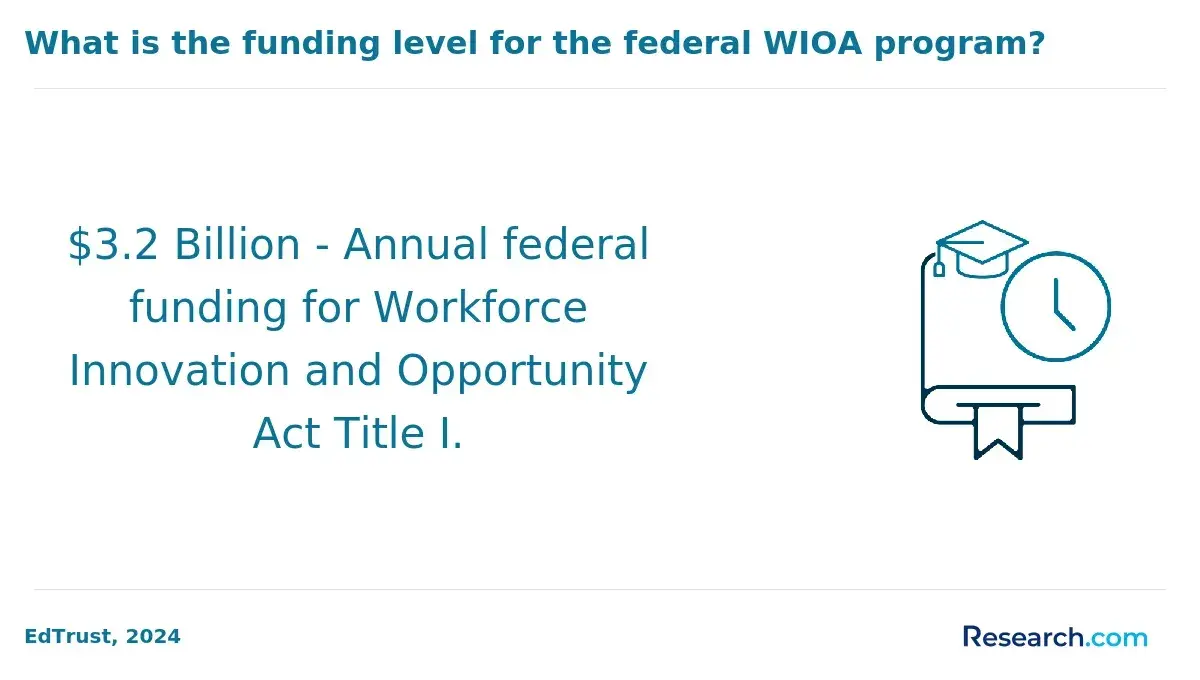
NCES distance education data published in recent federal reporting show that online learning remains a major part of U.S. higher education, especially for adult and part-time students. That trend means employers are increasingly familiar with online degrees, but students still need to evaluate program quality carefully.
| Program format | Best fit | Career-outcome advantage | Possible trade-off |
| Fully online | Working adults, parents, military students, rural students, and self-directed learners | Flexibility can help students keep earning while studying. | Some majors require in-person labs, clinical rotations, student teaching, or proctored exams. |
| Hybrid | Students who need flexibility but also benefit from occasional campus or lab access | Balances convenience with hands-on learning and local networking. | Travel requirements can create scheduling or cost issues. |
| On campus | Recent high school graduates, lab-heavy majors, residential learners, and students seeking frequent in-person support | Can provide easier access to labs, clubs, research, internships, and peer networks. | Housing, commuting, and schedule rigidity can raise total cost. |
Students researching online degrees for working adults should ask whether the program offers asynchronous classes, transfer-credit evaluation, prior learning credit, evening support, and career coaching. A fast online program can be valuable, but only if the pace is realistic and the credential is respected.
What accreditation should students check before choosing a program?
Accreditation is one of the most important checks before choosing a major or program because it affects credit transfer, federal financial aid eligibility, graduate admissions, employer recognition, and licensure preparation. Students should verify both institutional accreditation and any specialized programmatic accreditation required in their field.
The table below explains common accreditation categories and why each matters. Requirements vary by occupation and state, so students should confirm details with the school, the accreditor, and the relevant licensing board.
| Accreditation type | Examples of fields where it matters | Why students should check it |
| Institutional accreditation | All degree programs | It is the baseline quality and eligibility check for most federal aid, credit transfer, and graduate school review. |
| ABET accreditation | Engineering, engineering technology, computing, applied science | It can affect engineering licensure pathways and employer confidence in technical preparation. |
| AACSB, ACBSP, or IACBE accreditation | Business, accounting, finance, analytics, management | It can indicate business-school quality, although employer outcomes and CPA eligibility should also be reviewed. |
| CCNE or ACEN accreditation | Nursing | It can affect licensure eligibility, graduate nursing admissions, and employer acceptance. |
| CAEP or state approval | Teacher preparation | It helps determine whether graduates can pursue state teaching licensure. |
| CSWE accreditation | Social work | It is commonly important for social work licensure and advanced standing in MSW programs. |
Students comparing non profit universities in USA should remember that public, private nonprofit, and private for-profit institutions can differ in mission and governance, but institution type alone does not determine ROI. Accreditation, net price, completion rates, transfer policies, and career outcomes matter more than labels.
Before applying, students should complete a short verification process. This is especially important for online, accelerated, out-of-state, and licensure-focused programs.
- Confirm institutional accreditation through official school disclosures and recognized accreditation databases.
- Check whether the specific major has programmatic accreditation if the career field expects it.
- Ask whether the program meets licensure or certification requirements in your state.
- Review whether credits transfer to public universities, graduate schools, or professional programs.
- Request written answers from admissions or advising staff before paying deposits or enrolling.
What licenses or certifications do some majors require?
Some majors require licenses or certifications before graduates can work in the target occupation. This is common in healthcare, education, accounting, counseling, engineering, law, and public safety. Requirements can vary by state, so students should never assume that a program approved in one state automatically qualifies them elsewhere.
The table below highlights common examples where the major is only one part of the credential pathway. Students should use it to identify whether they need exams, supervised hours, graduate education, or state approval.
| Major or pathway | Common career goal | License or certification issue to verify |
| Nursing | Registered nurse or advanced practice nurse | NCLEX eligibility, state board approval, clinical placement access, and graduate certification for advanced roles. |
| Education | Teacher | State-approved teacher preparation, student teaching, content exams, background checks, and renewal requirements. |
| Accounting | CPA-track accountant or auditor | State CPA education-hour rules, accounting course requirements, exam eligibility, and experience requirements. |
| Engineering | Professional engineer | ABET alignment, Fundamentals of Engineering exam, supervised experience, and Professional Engineer exam rules. |
| Social work or counseling | Licensed social worker, counselor, or therapist | Accredited degree, supervised clinical hours, state exams, and scope-of-practice rules. |
| Law | Attorney | Law school requirements, bar exam eligibility, character and fitness review, and state-specific rules. |
To avoid a costly mismatch, students should take these steps before enrolling in any licensure-oriented major:
- Identify the exact job title you want, not just the general field.
- Find the licensing board or certification body that controls eligibility for that role.
- Ask the school in writing whether its program satisfies requirements in your state.
- Confirm whether online, hybrid, or out-of-state placements are accepted.
- Check exam pass rates, placement support, and supervised-hour arrangements when available.
How much do majors differ in program cost and return on investment?
Majors differ in ROI because programs vary in tuition, required materials, time to completion, unpaid placements, graduate school needs, and salary outcomes. College Board's 2024 pricing data reported average published tuition and fees of $11,610 for in-state public four-year institutions and $43,350 for private nonprofit four-year institutions for the 2024-25 academic year, before grants and scholarships. That gap shows why net price matters more than sticker price.
The table below summarizes cost factors students should compare across majors. It focuses on the expenses that most often change the true cost of earning a degree.
| Cost factor | Majors most affected | Why it affects ROI |
| Program length | Engineering, architecture, education, health professions, transfer-heavy programs | Extra semesters can add tuition, fees, housing, and lost earnings. |
| Lab, equipment, and software fees | Engineering, design, media production, health sciences, computer science | Required tools can increase cost even when tuition looks affordable. |
| Clinical, fieldwork, or student teaching requirements | Nursing, education, social work, counseling, allied health | Unpaid or scheduled placements can reduce work hours and increase transportation costs. |
| Graduate school dependency | Pre-med, psychology, biology research, law, counseling, physical therapy | The bachelor's degree may be only the first stage of the career investment. |
| Transfer-credit acceptance | All majors, especially adult-completion and online programs | Lost credits can raise cost and delay graduation. |
Students comparing cheap online degrees should calculate total cost, not tuition alone. A lower-tuition program may be less affordable if it rejects transfer credits, requires repeated courses, offers weak advising, or does not prepare students for the intended job market.
A practical ROI review should include both numbers and fit. Before committing, compare these items side by side across at least three programs:
- Net price after grants, scholarships, employer tuition assistance, and transfer credits.
- Expected time to completion based on your actual course load, not the fastest advertised schedule.
- Typical career paths for graduates from that program, not only national salary averages for the major.
- Licensure, certification, graduate school, or exam costs required after the bachelor's degree.
- Internship, clinical placement, career services, alumni network, and employer partnerships.
Common red flags include choosing a major only because it sounds high-paying, ignoring accreditation, assuming all credits will transfer, overlooking unpaid fieldwork, and borrowing based on best-case salary assumptions. A safer decision uses conservative salary expectations and prioritizes completion, quality, and career alignment.
What factors besides major affect starting salary and growth?
Major matters, but it is not the only driver of salary. Two students in the same major can see different outcomes because of experience, geography, industry, technical skills, networking, employer type, graduate credentials, and economic timing. Salary by major should be treated as a planning tool, not a prediction.
The factors below often explain why actual starting salary and long-term growth differ from published averages. Reviewing them can help students build a stronger plan before graduation.
- Location: Wages often rise in high-cost metro areas, but housing, taxes, commuting, and competition can reduce the real advantage.
- Internships and cooperative education: Paid work experience can make a graduate more competitive than coursework alone, especially in engineering, business, technology, and healthcare administration.
- Industry choice: A statistics major in insurance, finance, government, tech, or healthcare analytics may see different pay and advancement paths.
- Skill stack: Combining a major with tools such as Python, SQL, CAD, Tableau, Excel modeling, cloud platforms, electronic health records, or AI-assisted workflows can improve employability.
- Licensure and certification: CPA eligibility, nursing licensure, teaching certification, security credentials, and engineering exams can affect access to regulated or higher-responsibility roles.
- School support: Career coaching, employer partnerships, alumni networks, research opportunities, and interview preparation can influence early outcomes.
- Graduate school decisions: Advanced degrees can help in some fields, but they can also add debt if the credential is not required or valued by employers.
Students can improve their salary outlook by making career preparation part of the degree plan. A strong approach is to choose a target role by the second year, meet with career services early, complete at least one relevant internship or project, build a portfolio when appropriate, and track job postings to see which skills employers repeatedly request.
A common mistake is waiting until senior year to ask what the major is "good for." A better strategy is to reverse-engineer the path: start with job titles, identify required skills and credentials, choose courses and electives that match, and use internships or projects to prove readiness.
Other Things You Should Know About Career Planning
Majors in computer science, engineering, data science, actuarial science, finance, nursing, and specialized health pathways often have high salary potential. The best choice depends on the specific occupation, required credentials, school quality, and your ability to build relevant experience.
No. Salary by major is an estimate based on common career paths and labor-market data. Actual pay depends on location, employer, internships, skills, licensure, graduate education, and economic conditions.
No. Pay matters, but fit matters too. A high-paying major may not be worth it if you dislike the work, cannot complete the prerequisites, or need expensive graduate school for the career you actually want.
Many employers accept online degrees when they come from accredited institutions and the program prepares students well. For licensed fields, students should confirm that the online program meets state requirements for exams, clinical placements, or supervised practice.
References
- Impact of Online Education on Career Growth https://www.ukstudyonline.com/impact-of-online-education-on-career-growth/
- Career earnings by college major - The Hamilton Project https://www.hamiltonproject.org/data/career-earnings-by-college-major/
- The Effect of Academic Major and Occupation on Lifetime Earnings - Data Science https://www.tamus.edu/data-science/2023/10/01/the-effect-of-academic-major-and-occupation-on-lifetime-earnings/
- The 16 highest-paying college majors 5 years after graduation https://www.cnbc.com/2026/02/21/highest-paying-college-majors.html
- Explore Careers And Jobs That Require A Professional License https://www.accreditedschoolsonline.org/resources/jobs-requiring-professional-license/
- College Graduate Salaries: 2025 Projections | Bankrate https://www.bankrate.com/loans/student-loans/average-college-graduate-salary/
- Highest Paying Majors https://www.collegeadvisor.com/resources/highest-paying-majors/
- Is College Worth it? | Return on Investment Analysis of College Degree https://educationdata.org/college-degree-ro