2027 How to Build a Career Roadmap From College to First Job

Co-Founder and Chief Data Scientist
Choosing a major, college, and first job path is a high-stakes decision because each choice affects cost, time, skills, and employability. BLS 2024 data shows workers with a bachelor's degree had median weekly earnings of $1,543, compared with $930 for high school graduates, which makes planning early financially meaningful.
This guide is for students, parents, transfer students, and adult learners who want a clear roadmap from college to career. You will learn how to assess fit, compare programs, build experience, manage costs, and target entry-level roles more confidently.
Key Things You Should Know
- A strong college-to-first-job roadmap connects four decisions: career fit, major or credential, experience-building, and job-market evidence such as BLS wage and growth data.
- Cost planning matters early: College Board's 2024 pricing data lists average published tuition and fees at $11,610 for in-state public four-year colleges and $43,350 for private nonprofit four-year colleges.
- Employers increasingly value proof of skills, so internships, projects, portfolios, certifications, and campus leadership should be planned alongside coursework, not added only during senior year.
How do you create a step-by-step career roadmap from college to first job?
A career roadmap is a practical plan that links your college choices to a realistic first job. It should show what you are aiming for, what you need to learn, how you will prove your skills, and when you will apply for internships, scholarships, certifications, and full-time roles.
The best roadmap is specific enough to guide weekly decisions but flexible enough to change when you learn more about yourself or the job market. Use the sequence below as a working plan rather than a one-time exercise.
- Define two or three target career families, such as healthcare, business analytics, education, engineering, information technology, public service, or media.
- Map each career family to possible majors, minors, certificates, or transfer pathways, then check whether the role requires licensure, graduate school, or specific prerequisites.
- Compare labor-market evidence, including typical responsibilities, median pay benchmarks, projected demand, geographic concentration, and employer expectations.
- Choose a primary academic path and one backup path that shares overlapping coursework so you can switch without losing too many credits.
- Build a semester-by-semester experience plan that includes career center visits, faculty conversations, projects, clubs, volunteering, internships, and networking.
- Create a skills checklist for your target entry-level role, then gather evidence through class assignments, GitHub repositories, writing samples, clinical hours, lab work, case competitions, or supervised fieldwork.
- Review your roadmap at least once per semester using grades, cost, motivation, internship feedback, and new career information as decision points.
- Start the full-time job search before your final year or final semester, especially in fields with structured recruiting timelines such as accounting, consulting, engineering, nursing, and technology.
A common mistake is treating the major as the roadmap. A major is only one part of the plan; your experience, skills, location, network, and ability to explain your value often determine how competitive you are for the first job.
What self-assessment steps help you choose the right major and career path?
Self-assessment helps you avoid choosing a major only because it sounds prestigious, pays well, or pleases someone else. The goal is to identify where your interests, strengths, constraints, and labor-market realities overlap.
Start by separating preference from evidence. Many students say they like a career after seeing only the public-facing version of it, but day-to-day work may involve documentation, customer service, data entry, shift schedules, compliance rules, or repetitive problem-solving.
- List the subjects, problems, and activities that hold your attention even when they are difficult, not just the classes where you earn easy grades.
- Identify your work-style preferences, including whether you prefer independent work, team projects, public speaking, hands-on tasks, writing, data analysis, caregiving, sales, or structured routines.
- Write down constraints that affect your path, such as commute time, caregiving responsibilities, budget, health needs, work schedule, transfer credits, or the need to study part time.
- Use low-risk tests before committing, such as introductory courses, job shadowing, informational interviews, volunteering, student organizations, or short projects.
- Compare your self-assessment with real job postings to see whether the daily tasks and required skills still appeal to you.
For adult learners and caregivers, the right roadmap may depend as much on flexibility as on academic interest. Students balancing family responsibilities can also explore online courses for stay at home moms to understand how program format, pacing, and support services affect completion.
Red flags include choosing a major only because it is popular, ignoring weak performance in required gateway courses, or assuming that interest alone will overcome a poor fit with the daily work. A better approach is to test the path early, keep a backup option, and choose electives that preserve flexibility.
How do you research and evaluate potential careers, roles, and industries while in college?
Career research should answer three questions: What would I actually do, what would I need to qualify, and what would the labor market reward? The answer is rarely found in one source, so combine official data, employer postings, alumni outcomes, and direct conversations with people in the field.
The table below summarizes the kinds of information to compare when evaluating possible careers. It is not a ranking; it is a decision tool for narrowing broad interests into realistic college and job-search plans.
| Career research factor | What to compare | Why it matters |
| Daily responsibilities | Job descriptions, internship duties, alumni interviews, and shadowing notes | A role can sound attractive until you see the routine tasks, pace, documentation, or client interaction involved. |
| Required education | Degree level, major requirements, prerequisites, clinical hours, student teaching, lab work, or portfolio expectations | Some careers are accessible with a bachelor's degree, while others require licensure, graduate study, or specialized training. |
| Skill expectations | Software tools, writing, quantitative skills, communication, technical methods, or regulated procedures | Employers often screen for applied skills, not just major titles. |
| Hiring industries | Private companies, public agencies, schools, hospitals, nonprofits, labs, startups, or consulting firms | The same major can lead to different work cultures, schedules, salaries, and advancement paths. |
| Geography | Local employer concentration, remote-work availability, state licensing rules, and regional wages | A strong career path in one region may have fewer entry-level openings in another. |
| Technology exposure | AI tools, automation, cybersecurity needs, analytics platforms, electronic records, or design software | Technology is changing entry-level work, so students need adaptable digital skills and evidence of applied learning. |
AI and automation are especially important to research because they are reshaping entry-level tasks. For example, routine writing, coding, scheduling, customer support, and data-cleaning work may be partly automated, while roles requiring judgment, domain expertise, compliance awareness, client communication, and complex problem-solving may place greater value on human oversight.
Salary should be part of the research, but it should not be the only factor. If compensation is a major priority, compare labor-market evidence with resources on the highest paying majors, then check whether the required courses and day-to-day work match your strengths.
What education, skills, and experience do you need for your target entry-level job?
Your target entry-level job determines what education, skills, and experience you need. A student aiming for registered nursing, elementary education, software development, accounting, or marketing should not build the same roadmap, even if all paths begin with a bachelor's degree.
The table below shows how entry-level preparation often differs by career path. Use it to identify whether your plan needs licensure, a portfolio, fieldwork, technical tools, or employer-recognized experience.
| Target path | Typical education route | Skills employers or licensing bodies often expect | Experience that strengthens the first-job profile |
| Business, finance, or accounting | Bachelor's degree in business, accounting, finance, economics, or related field | Excel, financial analysis, reporting, communication, ethics, and attention to detail | Internships, case competitions, student investment funds, tax clinics, or part-time office roles |
| Technology or data | Bachelor's degree in computer science, information systems, data analytics, or a related field; some roles consider strong portfolios | Programming, databases, statistics, cloud tools, cybersecurity basics, version control, and problem-solving | GitHub projects, hackathons, internships, open-source work, labs, or technical certifications |
| Healthcare | Accredited program aligned with the occupation, often including clinical or supervised practice requirements | Patient care, documentation, safety protocols, anatomy, ethics, communication, and state-specific licensure preparation | Clinical placements, healthcare volunteering, simulation labs, certifications, or patient-facing work |
| Education | Teacher preparation program that meets state licensure requirements | Instructional planning, classroom management, assessment, child development, and state testing requirements | Student teaching, tutoring, classroom observation, youth programs, or education-related volunteering |
| Marketing, communications, or design | Bachelor's degree in marketing, communication, journalism, design, or related field; portfolio often matters | Writing, analytics, design tools, campaign planning, audience research, presentation, and editing | Portfolio projects, student media, internships, freelance work, campus campaigns, or nonprofit projects |
Do not assume every entry-level job requires graduate school. In many fields, it is smarter to earn a bachelor's degree, work for a few years, and then decide whether an advanced credential is worth the cost. For advancement later, a flexible option such as a competency-based master's degree may make sense for experienced professionals who can demonstrate existing skills.
A practical skills plan should include both technical and transferable skills. Technical skills help you qualify for specific roles, while transferable skills such as writing, teamwork, ethical judgment, project management, and professional communication help you succeed across industries.
How do online, hybrid, and campus-based programs differ for career preparation?
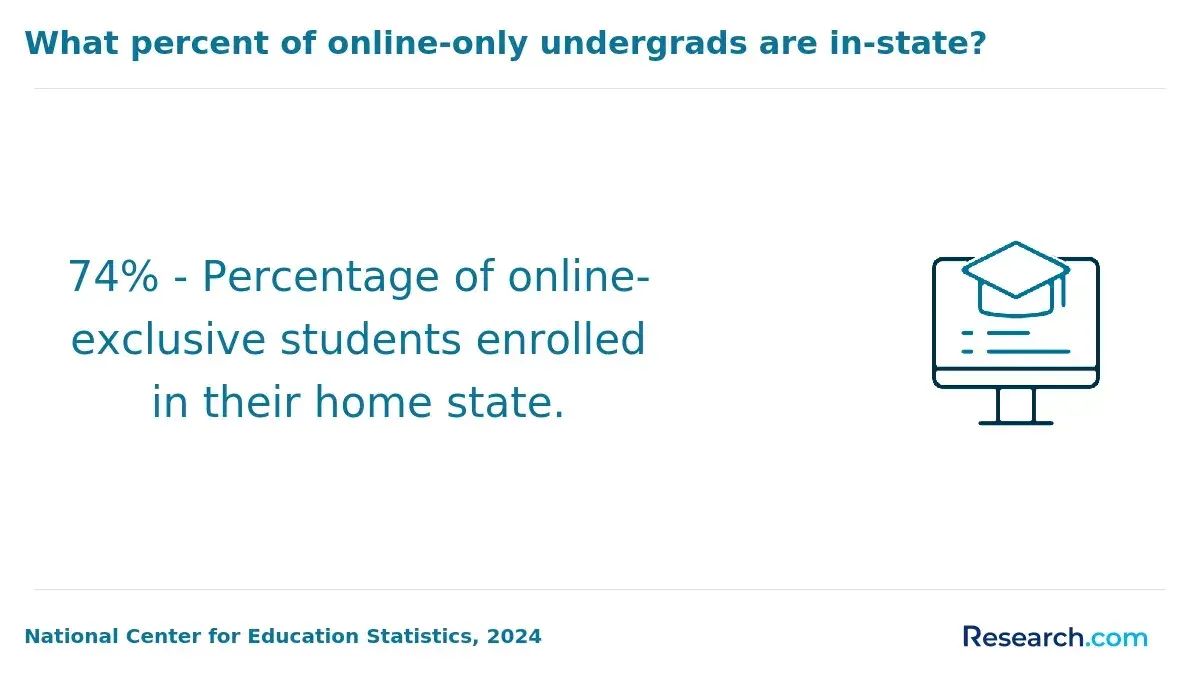
Online, hybrid, and campus-based programs can all support a strong career roadmap, but they prepare students differently. The best format depends on your schedule, learning style, need for hands-on training, access to employers, and whether your field requires in-person clinical, lab, studio, or teaching experiences.
The table below compares common program formats from a career-preparation perspective. Use it to identify what you may gain or lose with each option before enrolling.
| Program format | Best fit | Career-preparation strengths | Potential trade-offs |
| Online | Working adults, caregivers, military-connected students, commuters, and students who need schedule flexibility | Flexible pacing, access to programs beyond the local area, digital collaboration practice, and potential savings on commuting or housing | May require extra effort to build relationships, find local internships, access labs, or verify licensure alignment in your state |
| Hybrid | Students who want flexibility but still need in-person labs, networking, advising, or supervised practice | Balances online coursework with campus access, hands-on learning, and structured peer interaction | May still require commuting, fixed meeting times, or local availability for required experiences |
| Campus-based | Traditional full-time students, students needing structure, and majors with extensive labs, studios, clinicals, or campus recruiting | Direct access to faculty, facilities, clubs, career fairs, alumni events, labs, and peer networks | Can involve higher housing, transportation, and opportunity costs, especially for students who cannot work full time |
Online learning is not automatically easier or less rigorous. Strong online programs provide career advising, employer connections, tutoring, library access, internship support, and clear communication about hands-on requirements. If your main goal is career mobility, compare program outcomes and explore online programs that pay well only after checking accreditation and fit with your target role.
The biggest mistake is choosing format before choosing the career goal. For example, a fully online program may work well for business, information technology, or communication fields, but it may not satisfy all requirements for occupations that need supervised clinical hours, labs, field placements, or state licensure.
How do you compare accredited colleges and programs for long-term career outcomes?
Accreditation is a quality-control signal showing that a college or program has been reviewed by an outside accrediting body. For students, accreditation affects transfer credits, federal financial aid eligibility, employer recognition, graduate school admission, and, in some fields, licensure eligibility.
When comparing colleges, look beyond brand name and advertised tuition. A lower-cost program can be a poor value if credits do not transfer, graduation support is weak, or the program does not meet licensing requirements for your state.
- Confirm institutional accreditation through the school's official materials and recognized accreditation databases.
- Check programmatic accreditation when it matters for your field, such as nursing, education, engineering, counseling, social work, business, or allied health.
- Ask whether the program meets licensure or certification requirements in the state where you plan to work.
- Compare retention, graduation, transfer, and career outcome information, but remember that outcomes vary by student background, major, region, and local labor demand.
- Review career services, internship support, employer partnerships, alumni networks, and access to faculty advising.
- Ask how many credits will transfer before you enroll, and get the answer in writing when possible.
The table below highlights common red flags when evaluating colleges and programs. It can help you avoid decisions that look convenient at first but create problems later.
| Red flag | Why it matters | Better alternative |
| The school is vague about accreditation | Accreditation affects financial aid, transfer, employer recognition, and licensure pathways. | Verify accreditation before applying or paying deposits. |
| Admissions promises a specific job or salary | No college can guarantee employment or earnings because outcomes depend on many factors. | Ask for documented outcome data and compare it with independent labor-market sources. |
| Licensure information is unclear | State rules vary, and the wrong program can delay or block entry into regulated careers. | Contact the licensing board or review state authorization disclosures. |
| Transfer policies are confusing | Lost credits can increase cost and time to degree. | Request a formal transfer credit evaluation. |
| Career support is limited to resume templates | Students often need employer access, interview practice, internship guidance, and networking support. | Ask about career fairs, employer partners, internship placement, and alumni mentoring. |
Do not rely only on rankings. Rankings can be useful for awareness, but your best-fit program is the one that aligns accreditation, cost, schedule, academic support, experience opportunities, and career outcomes with your specific goal.
What internships, projects, and campus activities build a strong college-to-career profile?
Employers often use experience as evidence that a student can apply classroom learning in real settings. Internships are valuable, but they are not the only way to build a strong college-to-career profile.
A strong profile usually combines supervised experience, visible work products, leadership, and reflection. Plan these activities over several semesters so you are not trying to build your resume all at once during your final year.
- Complete at least one internship, co-op, clinical placement, field experience, practicum, research assistantship, or supervised project related to your target role.
- Build a portfolio that fits your field, such as code samples, writing clips, design work, lab reports, case analyses, lesson plans, data dashboards, or campaign results.
- Join one or two campus organizations connected to your career goal, then seek meaningful responsibility rather than passive membership.
- Use class projects strategically by choosing topics, datasets, clients, or problems that match the jobs you want after graduation.
- Develop references by building professional relationships with faculty, supervisors, advisors, and internship managers before you need recommendation letters.
- Practice explaining your experience using results, constraints, tools, and lessons learned rather than simply listing tasks.
For students without access to paid internships, alternatives can still be valuable. Community projects, undergraduate research, volunteering, freelancing, campus jobs, tutoring, simulation labs, and student competitions can all demonstrate skill when they are relevant and well documented.
A common mistake is collecting unrelated activities without a clear story. Recruiters should be able to understand the direction of your profile within a few seconds: the problems you can solve, the tools you can use, and the type of workplace where you are likely to contribute.
How do you plan for program length, tuition, and total cost of your degree?
Program length and total cost affect your career roadmap because they determine how much time you spend out of the full-time workforce and how much debt you may carry into your first job. Tuition is only one part of the calculation.
College Board's 2024 data lists average published tuition and fees for 2024-25 at $11,610 for in-state public four-year institutions, $30,780 for out-of-state public four-year institutions, and $43,350 for private nonprofit four-year institutions. These published prices do not always equal what students pay after grants, scholarships, and institutional aid, but they are useful for comparing broad cost differences.
The table below shows major cost factors to include when comparing programs. Looking at total cost helps you avoid choosing the cheapest tuition option while missing expenses that affect affordability.
| Cost factor | What to include | Why it affects the roadmap |
| Tuition and fees | Per-credit costs, semester fees, technology fees, lab fees, and program fees | These costs determine the baseline price before aid. |
| Books and supplies | Textbooks, software, equipment, uniforms, tools, testing materials, or art supplies | Some majors have higher required materials than others. |
| Housing and food | Residence hall costs, rent, meal plans, groceries, and utilities | Living costs can exceed tuition for some students. |
| Transportation | Commuting, parking, public transit, vehicle costs, or travel to clinical sites | Hybrid and campus programs may require recurring travel expenses. |
| Time to completion | Full-time versus part-time enrollment, transfer credits, course availability, and prerequisite sequencing | Extra semesters can increase both direct costs and lost earnings. |
| Financing costs | Loan interest, repayment timeline, and whether debt is federal or private | Borrowing can change the real cost of a degree after graduation. |
Students trying to reduce time in school can compare transfer pathways, summer courses, credit for prior learning, dual enrollment, and accelerated options. A fast track bachelor degree may be useful for motivated students with clear goals, but it can be too intense for those who need to work long hours or complete demanding labs and clinicals.
Before enrolling, estimate your likely net price, not just advertised tuition. Ask each school for financial aid details, transfer credit evaluations, scholarship renewal rules, program fees, and the typical course sequence needed to graduate on time.
What are typical starting salaries and job outlooks for common entry-level career paths?
Starting salaries vary by role, region, employer size, internship experience, major, and local demand. Because precise starting pay can be difficult to compare across all employers, BLS median wage data is best used as a benchmark rather than a promise of what a new graduate will earn.
The table below uses BLS 2024 wage and employment outlook data for common career paths. The median wage reflects workers across experience levels, so entry-level offers may be lower, but the figures help you compare broad opportunity and demand.
| Career path | Common entry-level roles | BLS 2024 median pay benchmark | BLS projected growth, 2024-2034 |
| Software and technology | Junior software developer, QA analyst, IT analyst, data technician | $133,080 for software developers | Much faster than average for software development roles |
| Accounting and finance | Staff accountant, audit associate, financial analyst assistant, credit analyst | $81,680 for accountants and auditors | About as fast as average |
| Healthcare | Registered nurse, healthcare coordinator, clinical support role, public health assistant | $93,600 for registered nurses | Faster than average |
| Marketing and analytics | Marketing coordinator, market research assistant, social media analyst, sales analyst | $76,950 for market research analysts | Faster than average |
| Education | Elementary teacher, instructional aide, youth program coordinator, education assistant | $62,310 for elementary school teachers, except special education | Little or no change nationally |
| Design and communication | Graphic designer, content assistant, communications coordinator, production assistant | $61,300 for graphic designers | Slower than average |
Use salary data with caution. A national median does not reflect your city, employer, internship history, portfolio quality, licensure status, negotiation, or willingness to relocate. It also does not capture non-salary factors such as benefits, schedule stability, union coverage, tuition reimbursement, remote-work flexibility, or career advancement.
Job outlook should also be interpreted carefully. A fast-growing occupation can still be competitive if many graduates target the same role, while a slower-growing field may still offer stable local opportunities because of retirements, turnover, or public-sector hiring cycles.
How do licensing, certification, and professional exams fit into your career roadmap?
Licensing, certification, and professional exams matter when a field requires legal permission to practice or when employers use credentials to screen candidates. They should be added to your roadmap early because they can affect your major, course sequence, internship choices, exam timing, and state eligibility.
The table below summarizes how credentials fit into several common career paths. Requirements vary by state, employer, and credentialing body, so always verify details before choosing a program.
| Career area | Credential consideration | When to plan for it |
| Nursing and allied health | State licensure, approved program completion, clinical hours, and national or state exams may be required. | Before enrolling, because the program must meet clinical and licensure standards. |
| Teaching | State teacher certification usually requires an approved preparation program, student teaching, exams, and background checks. | During major selection, because not every education-related degree leads to licensure. |
| Accounting | CPA eligibility often requires specific accounting coursework and, in many states, additional credits beyond a bachelor's degree. | By sophomore or junior year, so elective and graduate-credit planning is realistic. |
| Information technology | Vendor or industry certifications may support entry-level roles in cybersecurity, cloud, networking, or technical support. | After foundational coursework, when certification aligns with target job postings. |
| Project management, HR, or analytics | Some certifications require experience, while others are designed for early-career candidates. | After researching employer preferences and eligibility rules. |
Students should avoid paying for certifications simply because they sound impressive. A credential is useful when it is required, repeatedly appears in job postings, builds a skill you can demonstrate, or helps you qualify for a specific role.
For regulated careers, the safest approach is to verify requirements from the state licensing board, the college program, and the credentialing organization. Keep records of course descriptions, field hours, exam attempts, and approvals because documentation can matter when applying for licensure or moving across states.
Other Things You Should Know About
Start during your first year or before transferring, but expect to revise the roadmap each semester. Early planning helps you choose prerequisites, control costs, apply for internships on time, and avoid discovering licensure or experience requirements too late.
Choose broad courses that satisfy general education and preserve options while you test interests through advising, job shadowing, student clubs, short projects, and informational interviews. Avoid locking into an expensive or highly sequenced program until you understand the work and requirements.
Neither factor should stand alone. A smart choice balances employability, cost, academic fit, work-style fit, and realistic salary expectations. High pay may not be worth it if you dislike the work or struggle with required courses, while passion alone may not justify high debt.
Build proof of ability before graduation. Complete relevant internships or projects, develop a portfolio, practice interviews, learn tools used in your field, build references, and tailor your resume to specific job descriptions instead of sending the same version everywhere.
References
- Cost of College by Country [2025]: Average Tuition Fees https://educationdata.org/average-cost-of-college-by-country
- Advance Your Career with Expert Finance Courses https://360business-partners.com/en/blog/the-role-of-professional-certifications-in-enhancing-your-cv-and-career-growth
- Careers advice https://targetjobs.co.uk/careers-advice
- 10 High-Paying Entry-Level Jobs and How to Find Them https://www.jobtest.org/learn/high-paying-entry-level-jobs
- Student Profile Building | Extracurriculars, Internships & More https://www.brighterprep.com/student-profile-building-for-college-applications
- What Entry Level Workers Make In Different Fields | Symmetry https://www.symmetry.com/payroll-tax-insights/what-entry-level-workers-make-in-different-fields
- Intern & Entry Level Careers https://corporate.target.com/careers/career-areas/intern-entry-level
- 44 Certifications in Demand in the 2024 Job Market | International Association of Career Coaches | IACC https://www.iacareercoaches.org/post/certifications-in-demand
- Estimate your college cost | USAGov https://www.usa.gov/estimate-college-cost