2027 How to Choose a Career if You Want Job Stability

Co-Founder and Chief Data Scientist
Choosing a career for job stability means looking beyond "what pays well" and asking which roles are likely to keep hiring through economic shifts, automation, and changing employer needs. The U.S. Bureau of Labor Statistics projects total employment to grow by about 5.2 million jobs from 2024 to 2034, with healthcare and social assistance expected to add the most jobs.
This guide is for students, career changers, and working adults who want a practical way to compare secure career paths, education options, costs, and long-term risks before committing time and money.
Key Things You Should Know
- Job stability usually comes from a mix of steady demand, transferable skills, regulation or licensing barriers, and work that remains necessary even during downturns; healthcare, skilled trades, education, public safety, accounting, cybersecurity, and essential business operations often rank well on these factors.
- Recent BLS projections show overall U.S. employment growing 3.1% from 2024 to 2034, so a "stable" career should be judged against both national growth and local hiring conditions rather than popularity alone.
- The safest education choice is usually an accredited, affordable program that directly matches the occupation's licensing, certification, internship, or employer requirements; avoid programs that are expensive, unaccredited, or vague about outcomes.
What does "job stability" mean and which careers historically offer the most security?
Job stability means the likelihood that a career will continue to offer employment opportunities, predictable income, and advancement options over time. It does not mean a job can never be eliminated. A stable career can still be affected by layoffs, regional downturns, technology, funding changes, or employer-specific decisions.
The most secure careers tend to share several traits: they solve essential problems, require specialized training, serve aging or growing populations, meet legal or regulatory needs, or support core business operations. For example, nurses, electricians, accountants, teachers, and cybersecurity professionals work in very different environments, but all support needs that rarely disappear completely.
This table compares broad career areas that have historically offered stronger stability signals. Use it as a starting point, not as a guarantee, because local demand and your credentials matter as much as the field itself.
| Career area | Why it can be stable | Common roles | Main risk to check |
| Healthcare | Demand is tied to aging populations, chronic care, hospitals, clinics, and community health services. | Registered nurse, medical assistant, radiologic technologist, health services manager | Licensure rules, shift demands, burnout, and clinical placement availability |
| Skilled trades | Homes, utilities, transportation systems, and commercial buildings require installation, repair, and maintenance. | Electrician, HVAC technician, plumber, industrial maintenance technician | Physical demands, apprenticeship access, cyclical construction markets |
| Education and public services | Schools, local governments, and public agencies need trained workers even when private hiring slows. | Teacher, special education aide, social worker, public safety worker | State funding, certification requirements, regional shortages or oversupply |
| Accounting and compliance | Organizations must manage taxes, audits, payroll, reporting, and regulatory obligations. | Accountant, auditor, payroll specialist, compliance analyst | Automation of routine tasks and higher expectations for analytics skills |
| Technology infrastructure and security | Organizations depend on secure networks, cloud systems, data protection, and software maintenance. | Information security analyst, systems administrator, software developer | Rapid skill obsolescence and stronger competition for entry-level roles |
Some careers feel stable because they are familiar, but familiarity is not enough. A clerical role may exist in many industries, yet routine administrative tasks can be vulnerable to automation or consolidation. A more stable choice is usually a role where your skill set is difficult to replace, required by regulation, or directly tied to revenue, safety, health, infrastructure, or compliance.
How can I evaluate whether a specific career path is likely to stay in demand?
To evaluate a specific career path, look for evidence from multiple angles: national projections, local openings, salary trends, credential requirements, employer demand, and vulnerability to automation. A career with high national growth may still be weak in your area, while a modest-growth occupation may be very secure locally because of retirements or persistent shortages.
A practical evaluation process should help you compare careers before choosing a degree or certificate. Work through these steps in order so you do not overvalue a single metric like salary or job growth.
- Check national outlook using BLS Occupational Outlook Handbook projections, especially projected growth, replacement openings, and typical entry requirements.
- Search local job boards for the exact job title and note how many postings require experience, licensure, a degree, certifications, or specific software skills.
- Compare entry-level and mid-career job descriptions to see whether the field offers advancement or traps workers in low-wage roles.
- Review whether the work is essential, regulated, hard to automate, or tied to healthcare, infrastructure, public services, finance, logistics, or cybersecurity.
- Talk to people already working in the field and ask what caused layoffs, turnover, or promotions in their workplace.
Pay special attention to the difference between job growth and job openings. Growth measures new jobs, while openings also include workers leaving the occupation. A career can have average growth but many openings because of retirements, turnover, or required staffing levels.
Current technology trends make this evaluation more important. AI can reduce demand for repetitive writing, data entry, scheduling, and basic analysis, but it can also increase demand for workers who manage systems, interpret results, handle clients, provide care, repair equipment, or make regulated decisions. The key question is not "Will AI affect this job?" but "Will AI make skilled workers in this job more valuable or less necessary?"
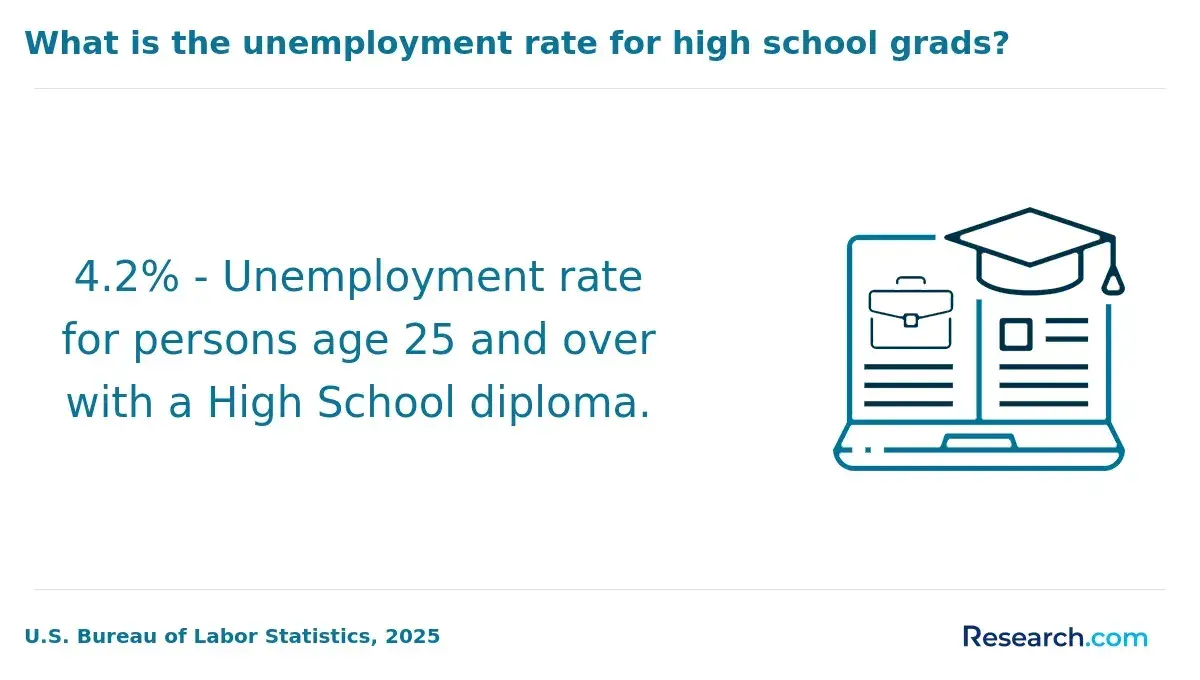
Which degrees and training programs most often lead to stable, recession-resistant jobs?
Degrees and training programs that often lead to stable jobs are usually tied to clear occupations. The strongest options have a direct connection between the credential, the job title, and the employer's hiring requirements. Programs with vague outcomes can still be useful, but they require more careful planning.
The table below summarizes education paths that commonly support recession-resistant or essential careers. It focuses on the relationship between training and work outcomes so you can compare options before enrolling.
| Education path | Typical credential | Stable career targets | Best fit |
| Healthcare clinical programs | Certificate, associate degree, bachelor's degree, graduate degree | Medical assistant, registered nurse, radiologic technologist, nurse practitioner | Students comfortable with science, patient care, licensing exams, and clinical hours |
| Skilled trades and technical training | Certificate, diploma, apprenticeship, associate degree | Electrician, HVAC technician, industrial maintenance worker, welder | Hands-on learners who want practical training and may prefer earning while learning |
| Education and human services | Bachelor's degree, master's degree, state-approved certification | Teacher, school counselor, social worker, special education professional | Students who want mission-driven work and are willing to meet state credential rules |
| Business, accounting, and analytics | Associate, bachelor's, master's, CPA preparation, certificates | Bookkeeper, accountant, auditor, financial analyst, compliance specialist | Detail-oriented students who want transferable skills across industries |
| Cybersecurity and IT infrastructure | Certificate, associate, bachelor's, industry certifications | Help desk specialist, systems administrator, cybersecurity analyst, cloud support specialist | Students willing to keep learning as tools, threats, and platforms change |
If your goal is stability with the shortest path possible, certificates and associate degrees can be strong choices in healthcare support, trades, IT support, and logistics. If your goal is advancement, supervision, licensure, or higher long-term mobility, a bachelor's or graduate degree may be worth considering.
For working adults who need a flexible starting point, a carefully chosen the cheapest easiest online degree can make sense when it is accredited, affordable, and aligned with a real job path rather than selected only because it looks simple.
A common mistake is choosing the fastest program without checking whether employers accept it. A short certificate is useful when it leads to a recognized credential, clinical eligibility, apprenticeship entry, or a specific technical skill. It is risky when the school cannot explain what jobs graduates are prepared to pursue.
How do I choose between online and campus programs when I'm prioritizing job stability?
Online and campus programs can both lead to stable careers, but the better choice depends on the field, your schedule, and whether the program includes hands-on training. Online learning is often strongest for business, IT, accounting, healthcare administration, education theory, and degree completion. Campus or hybrid formats are often necessary for lab sciences, clinical healthcare, trades, and programs with supervised practice.
The table below compares the formats from a job-stability perspective. The goal is to choose the format that helps you complete the credential and meet employer or licensing expectations.
| Program format | Advantages for stability-focused students | Trade-offs to consider | Best for |
| Fully online | Flexible scheduling, easier to continue working, broader school choice | May not include labs, clinicals, apprenticeships, or local networking | Business, IT, accounting, healthcare administration, general education, degree completion |
| Hybrid | Combines flexibility with in-person labs, simulations, or supervised practice | Requires commuting on set days and may have limited local placement options | Nursing prerequisites, allied health, teacher preparation, counseling, technical programs |
| Campus-based | Direct access to labs, faculty, equipment, career fairs, and local employers | Less schedule flexibility and possibly higher housing or commuting costs | Trades, lab-heavy healthcare, engineering technology, programs with intensive practice requirements |
Students comparing flexible options should look at accredited online colleges alongside local community colleges and public universities, because the lowest-risk choice is often the one that combines affordability, transferability, and employer recognition.
Before choosing an online program for a licensed profession, verify that it meets requirements in the state where you plan to work. This is especially important for teaching, nursing, counseling, social work, and allied health. A program can be accredited and still fail to meet a specific state board's rules.
What role do accreditation and program quality play in long-term career security?
Accreditation and program quality directly affect long-term career security because they influence transfer credits, financial aid eligibility, licensure, graduate school admission, and employer trust. Accreditation is not just a formality; it is one of the main ways students can reduce the risk of paying for a credential that does not work in the labor market.
There are two levels to check. Institutional accreditation applies to the college or university as a whole. Programmatic accreditation applies to specific programs in fields such as nursing, education, counseling, social work, engineering technology, business, and allied health.
Use this checklist before enrolling, especially if the career requires licensure or certification. These checks can prevent costly mistakes that are difficult to fix later:
- Confirm the school is institutionally accredited by an agency recognized by the U.S. Department of Education or the Council for Higher Education Accreditation.
- Check whether the specific program has the programmatic accreditation required or preferred for your target career.
- Ask whether graduates are eligible for state licensing exams, certification exams, student teaching, clinical placements, or supervised practice.
- Review completion rates, job placement information, certification pass rates, and transfer policies when available.
- Be cautious if admissions staff pressure you to enroll quickly, avoid direct answers about licensure, or promise employment outcomes.
Program quality also shows up in practical details: experienced faculty, current equipment, employer partnerships, internship support, exam preparation, and career services. A cheaper program can be a smart choice, but only if it meets the requirements of your intended field.
If you are pursuing graduate education for advancement rather than entry-level work, compare an affordable master degree with employer tuition assistance, public university options, and part-time study so the credential improves your security without creating unnecessary debt.
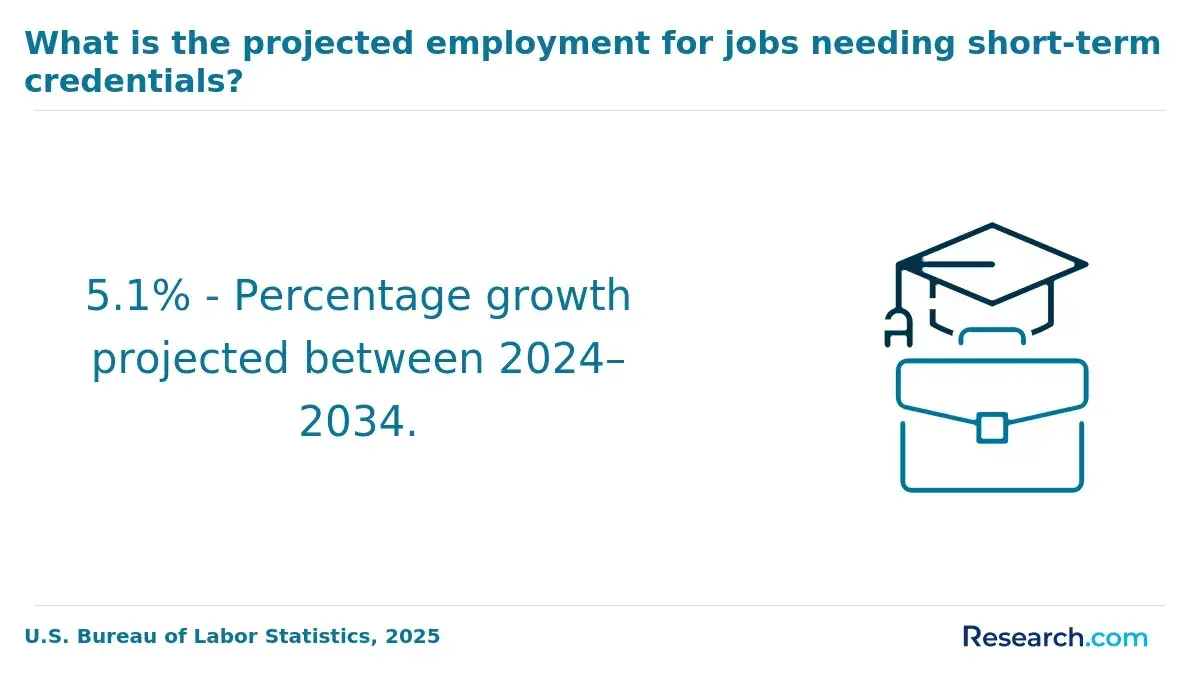
How can I use salary data, benefits, and total compensation to assess a stable career?
A stable career is not only about having a job; it is also about whether the compensation supports your life and whether the field offers benefits, predictable hours, advancement, and resilience during downturns. Salary data is useful, but it should be interpreted carefully because pay varies by region, experience, credentials, union status, industry, and employer size.
The BLS reported a median annual wage of $49,500 for all U.S. occupations in May 2024. When you evaluate a career, compare its median wage with that benchmark, but also consider whether the entry-level wage is enough while you gain experience.
The table below uses May 2024 BLS median wage data for selected occupations often considered stable. It is meant to provide salary context, not to predict what any individual will earn.
| Occupation | May 2024 median annual wage | Stability signal | Compensation factor to examine |
| Registered nurse | $93,600 | Healthcare staffing needs across hospitals, clinics, long-term care, and community settings | Shift differentials, overtime, union contracts, and burnout risk |
| Accountant or auditor | $81,680 | Ongoing need for tax, audit, payroll, reporting, and compliance work | CPA eligibility, busy-season hours, and automation of routine bookkeeping |
| Electrician | $62,350 | Infrastructure, construction, maintenance, and energy-related demand | Apprenticeship wages, union status, licensing, and physical demands |
| Elementary school teacher, except special education | $64,020 | Public education staffing needs and state certification systems | State salary schedules, pension rules, classroom demands, and local budgets |
| Information security analyst | $124,910 | Cybersecurity needs across finance, healthcare, government, and technology | Experience requirements, certifications, on-call work, and skill refresh cycles |
Total compensation can change the real value of a stable job. A public-sector role with moderate salary may offer strong health insurance, retirement benefits, paid leave, and predictable advancement. A private-sector role may offer higher pay but less security, fewer benefits, or more layoff exposure.
When comparing offers or career paths, look beyond the headline salary. The most important compensation factors are often hidden in the details:
- Health insurance premiums, deductibles, and dependent coverage
- Retirement contributions, pension eligibility, or employer match
- Paid leave, sick time, holidays, and schedule predictability
- Overtime rules, shift differentials, bonuses, or commission dependence
- Promotion pathways, salary steps, and requirements for raises
- Risk of unpaid internships, unpaid clinical hours, or required continuing education costs
A common mistake is choosing the highest median salary without considering the path required to reach it. A field with strong mid-career pay may require years of low-paid training, unpaid experience, licensing exams, or geographic relocation. Build your decision around realistic first jobs, not only long-term averages.
What are the typical education, licensing, and certification requirements for secure professions?
Secure professions often have formal entry requirements because employers, regulators, or clients need proof of competence. These requirements can protect job stability by limiting unqualified competition, but they can also add time, cost, and risk if you choose the wrong program.
The table below outlines common requirements in stable career categories. Requirements vary by state and employer, so always verify details with the relevant licensing board, certification body, apprenticeship sponsor, or HR department.
| Career category | Typical education requirement | Licensing or certification considerations | Entry-level path |
| Registered nursing | Associate Degree in Nursing or Bachelor of Science in Nursing | NCLEX-RN and state nursing board approval | Staff nurse, residency program, clinic nurse, long-term care nurse |
| Skilled trades | Apprenticeship, trade school, certificate, or associate degree | State or local licensing may apply for electricians, plumbers, and HVAC workers | Apprentice, helper, technician trainee |
| Teaching | Bachelor's degree and state-approved teacher preparation | State certification exams, background checks, and student teaching are common | Classroom teacher, substitute teacher, instructional aide while completing requirements |
| Accounting | Associate or bachelor's degree; CPA roles require additional education in many states | CPA licensure varies by state and usually requires exam and experience components | Bookkeeper, staff accountant, tax associate, audit associate |
| Cybersecurity and IT | Certificate, associate, bachelor's degree, or experience-based pathway | Industry certifications may be preferred, especially for security, cloud, and networking roles | Help desk, IT support, junior analyst, systems support |
If you already have work experience, you may not need to start over with a full degree. Some adults can combine transfer credits, certifications, employer-sponsored training, and prior learning assessment to shorten the route to a stable role.
Older adults returning to school may also want to compare flexible, career-aligned options such as a one-year degree for seniors when the program supports a realistic goal such as healthcare administration, accounting support, IT support, or nonprofit management.
The biggest red flag is a program that says it "prepares you for" a licensed career but does not clearly state whether graduates are eligible for the required exam or supervised practice. If the school cannot answer that question in writing, keep researching.
How long do career-focused programs for stable jobs take, and what do they cost?
The time and cost of career-focused programs vary widely. Shorter programs can reduce opportunity cost, but they may lead to lower starting wages or fewer advancement options. Longer programs can open doors to licensed or professional roles, but they increase tuition, living expenses, and the risk of borrowing too much.
According to College Board's 2024 Trends in College Pricing and Student Aid, published tuition and fees for in-district students at public two-year colleges averaged $4,050 for the 2024-25 academic year. That makes community colleges a common low-cost starting point for stable careers, especially when credits transfer or lead directly to an occupation.
The table below summarizes typical timelines and cost considerations. Actual costs depend on state residency, school type, transfer credits, financial aid, books, tools, clinical fees, exam fees, and whether you can keep working.
| Program type | Typical time to complete | Common career targets | Cost issues to compare |
| Short certificate | A few months to 1 year | Medical assisting, phlebotomy, IT support, bookkeeping, welding fundamentals | Exam fees, tools, uniforms, employer recognition, whether credits transfer |
| Apprenticeship | Often 2 to 5 years depending on trade | Electrician, plumber, HVAC, industrial trades | Paid training structure, union or sponsor rules, tools, licensing timeline |
| Associate degree | About 2 years full time | Registered nursing, radiologic technology, accounting support, network administration | Clinical placements, transfer agreements, lab fees, part-time availability |
| Bachelor's degree | About 4 years full time; less with transfer credits | Teaching, accounting, cybersecurity, health administration, engineering technology | Tuition by institution, internship access, state certification, debt load |
| Master's degree | Often 1 to 3 years depending on format | School counseling, nurse practitioner, management, social work, data or cybersecurity leadership | Licensure eligibility, employer tuition support, online flexibility, salary lift needed to justify cost |
Cost should be evaluated as total cost, not tuition alone. For many career programs, the extra expenses can be meaningful.
- Books, supplies, software, uniforms, tools, lab fees, and background checks
- Certification, licensing, fingerprinting, and exam preparation fees
- Transportation, parking, childcare, and reduced work hours during clinicals or student teaching
- Interest on student loans and the risk of delaying full-time income
- Fees for retaking courses, exams, or clinical components if progression rules are strict
Graduate school can improve stability when it qualifies you for advancement, licensure, or leadership roles, but it should not be chosen casually. If you want a flexible route, compare the easiest online masters options only after confirming that the degree supports a concrete career outcome and is not simply the quickest credential available.
How can I research job outlook, growth projections, and unemployment rates for potential careers?
Researching job outlook is one of the most important steps in choosing a stable career. Use national data to understand broad trends, then verify demand in your region because hiring conditions can differ sharply by state, metro area, and industry.
The BLS 2024-2034 projections show total U.S. employment growing 3.1%, so careers projected above that level may have a stronger growth signal. However, growth is only one part of stability; replacement openings, licensing barriers, public funding, and local employer demand also matter.
Use this research sequence to build a realistic picture before choosing a program. It is especially helpful when comparing two or three career paths that all seem attractive:
- Start with the BLS Occupational Outlook Handbook to check projected growth, median pay, typical education, work environment, and similar occupations.
- Review state labor market information for regional employment projections and wage estimates.
- Search job postings within commuting distance or remote-work eligibility and record repeated requirements.
- Compare entry-level postings with mid-level postings to identify the skills needed for advancement.
- Look for employer concentration; a town with one major hospital, factory, or government agency may offer opportunity but also concentration risk.
- Ask schools for recent placement data, licensing exam pass rates, clinical placement availability, and employer partners.
Do not rely only on "fastest-growing jobs" lists. Some fast-growing occupations are small, meaning a high growth rate may not translate into many openings. Others require advanced credentials, security clearance, relocation, or years of experience before the work becomes accessible.
Unemployment rates can also help, but they should be interpreted carefully. A low unemployment rate in a field may reflect strong demand, but it may also reflect a small or highly credentialed workforce. A high unemployment rate may signal weak demand, seasonal work, or a mismatch between training programs and employer needs.
What strategies help build long-term job security beyond choosing a stable field?
Choosing a stable field is only the first step. Long-term job security depends on how you build your skills, reputation, network, and adaptability after entering the field. Even stable occupations change, and workers who keep learning are usually better positioned than those who rely only on an initial credential.
These strategies can help you turn a stable career choice into a durable career plan. They are practical habits that apply across healthcare, trades, education, business, public service, and technology.
- Build a core skill plus a specialty, such as nursing plus wound care, accounting plus tax, IT support plus cybersecurity, or teaching plus special education.
- Keep credentials current and track renewal deadlines, continuing education, state rules, and employer-required training.
- Learn the technology used in your field instead of avoiding it; workers who can use new tools responsibly are often more resilient.
- Develop communication, documentation, problem-solving, and client-service skills because these are harder to automate and valuable in almost every stable profession.
- Maintain a professional network through supervisors, instructors, clinical preceptors, apprenticeship sponsors, alumni, and industry associations.
- Review your career market once a year by checking job postings, salary ranges, certifications, and emerging skill requirements.
It is also wise to avoid common career-planning mistakes. Many people choose a path because it is familiar, nearby, or recommended by someone else, then discover too late that the credential is not enough for the job they want.
| Common mistake | Why it hurts stability | Better approach |
| Choosing a program before choosing a target occupation | The credential may not match employer requirements. | Start with job postings and licensing rules, then choose the program. |
| Ignoring local labor market demand | National growth may not translate into nearby jobs. | Check state projections and local postings before enrolling. |
| Focusing only on tuition | Fees, lost wages, tools, exams, and loan interest can change affordability. | Calculate total cost and compare it with realistic entry-level pay. |
| Assuming online programs always meet licensure rules | Some states require specific clinical, practicum, or approved-program components. | Verify state eligibility in writing before committing. |
| Depending on one employer or one narrow skill | Layoffs or technology changes can create sudden risk. | Build transferable skills and maintain options across employers. |
The best career choice is rarely the one with the highest salary, shortest training, or most impressive title. It is the one that fits your strengths, meets real labor-market demand, has an affordable education path, and gives you room to adapt as the economy changes.
Other Things You Should Know About Career Planning
Healthcare is often one of the strongest stability choices because demand is tied to aging, illness, preventive care, and essential services. However, skilled trades, education, accounting, public service, utilities, and cybersecurity can also be stable depending on your location and credentials.
Use both, but do not treat salary as the only measure. A stable career should offer enough pay, reasonable education costs, benefits, advancement options, and demand in your region. A high-paying job with weak local demand or heavy debt may be less secure than a moderate-paying licensed role with steady openings.
Online degrees can be a good choice for stable careers in business, accounting, IT, healthcare administration, education, and degree-completion pathways. For licensed or hands-on fields, confirm that the program includes required labs, clinicals, student teaching, internships, or state-approved placements.
Look at the tasks, not just the job title. Careers built around routine data entry, simple content production, or repetitive processing may face more disruption. Careers involving care, repair, regulation, judgment, complex problem-solving, human trust, or physical work are generally harder to replace fully, though AI may still change how the work is done.
References
- Key Indicators in Compensation Salary Pay Benchmarking https://www.venconresearch.com/inisght/key-indicators-in-compensation-benchmarking
- Compensation 101: Build a salary benchmarking process for competitive, consistent, and market-aligned pay https://www.imercer.com/articleinsights/comp-101-salary-benchmarking-methodology
- CourseCareers https://coursecareers.com/
- Beyond the Degree: External Accreditation's Impact on Your Career https://learnful.ie/articles/beyond-the-degree-external-accreditations-impact-on-your-career/
- How to Benchmark Salaries with Real-Time Compensation Data https://inop.ai/how-to-benchmark-salaries-with-real-time-compensation-data/
- Explore Careers And Jobs That Require A Professional License https://www.accreditedschoolsonline.org/resources/jobs-requiring-professional-license/