2027 Career Planning for First-Generation Students

Co-Founder and Chief Data Scientist
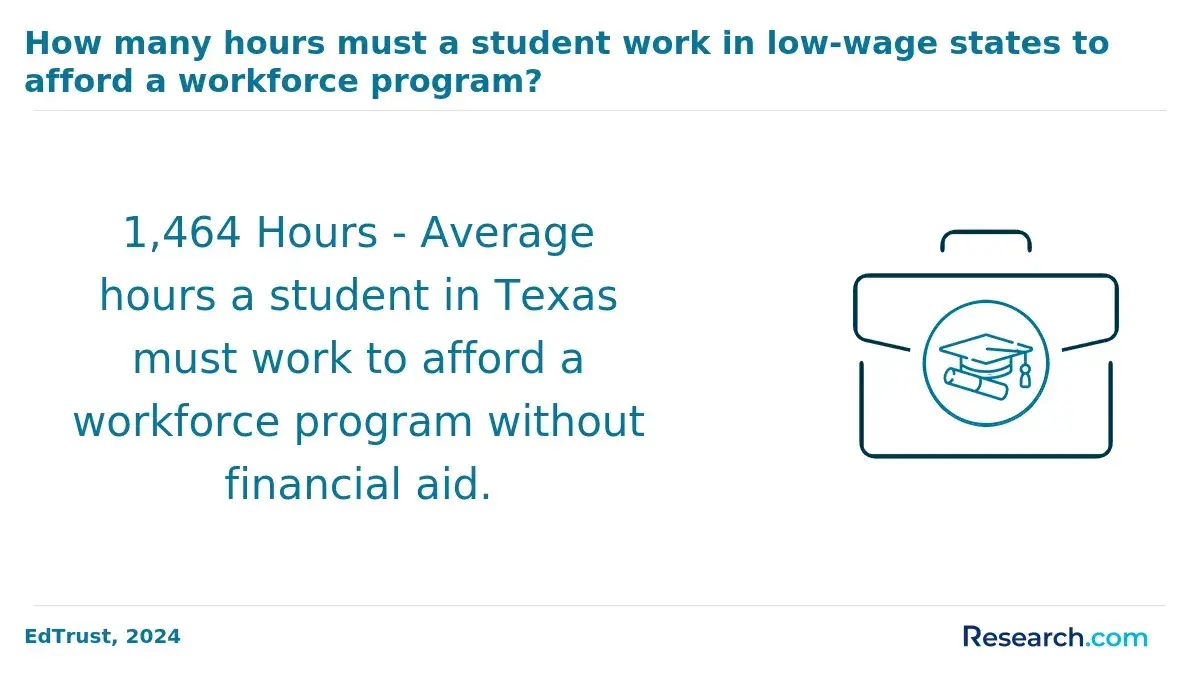
Choosing a career without family experience in college can make every decision feel higher stakes, from selecting a major to negotiating a first offer. College Board's 2024 pricing data shows average published tuition and fees reached $11,610 for in-state public four-year colleges and $43,350 for private nonprofit four-year colleges, so career planning is also a financial decision.
This guide is for first-generation students who want a practical path from college to work, including how to choose options, use campus resources, gain experience, compare salary data, and avoid costly mistakes.
Key Things You Should Know
- Career planning should connect interests, skills, degree requirements, cost, work experience, and labor market demand before a student commits to a major or graduate program.
- The U.S. Bureau of Labor Statistics projects total employment to grow 4% from 2023 to 2033, but growth varies widely by occupation, so students should compare job outlook by field instead of assuming every degree has the same return.
- Published college prices in 2024-25 range from about $11,610 for in-state public four-year tuition and fees to $43,350 at private nonprofit four-year colleges, making financial aid, transfer credits, internships, and starting salaries central to career decisions.
What is career planning for first-generation students?
Career planning for first-generation students is the process of turning college choices into realistic career options while accounting for information gaps, cost pressure, family responsibilities, and limited access to professional networks. A first-generation student is commonly understood as a student whose parents or guardians did not complete a bachelor's degree, though definitions can vary by college, scholarship program, or research study.
Good planning is not the same as choosing one perfect job early. It means building a flexible roadmap: what to study, what experience to gain, which skills to prove, how to pay for the path, and when a graduate degree or credential is worth considering. For some students, that may mean starting with a bachelor's degree and internships; for others, it may mean a community college transfer plan, a certificate, an apprenticeship, or later graduate study, including flexible options such as online PhD programs if an advanced academic or leadership role eventually requires doctoral training.
The table below shows how common career planning decisions differ. Use it to identify the decision you are actually making, not just the job title you hope to reach.
| Decision area | What to compare | Why it matters for first-generation students |
| Major or program | Required courses, graduation timeline, accreditation, and related occupations | A major that delays graduation or does not match a target field can increase debt and reduce momentum. |
| Work experience | Internships, campus jobs, research roles, volunteering, apprenticeships, and part-time work | Experience helps employers see skills that may not be obvious from coursework alone. |
| Cost and aid | Net price, grants, work-study, loan amounts, transfer credits, and commuting costs | The lowest tuition is not always the lowest total cost if credits do not transfer or support is weak. |
| Career outcome | Median pay, job growth, location, licensing rules, and advancement path | Students can avoid choosing a path based only on prestige or family expectations. |
One common mistake is waiting until senior year to visit the career center. A better approach is to treat career planning as a four-year process, beginning with exploration and moving toward targeted experience, applications, and negotiation.
How do first-generation students choose a career path?
First-generation students choose a career path best when they combine self-assessment with evidence. Interests matter, but so do required credentials, work conditions, location, salary range, debt, and whether the field offers entry-level opportunities without unpaid experience.
A practical way to start is to compare career options using the same criteria each time. The steps below help students move from broad interests to a short list of realistic paths.
- List three to five fields that match your strengths, values, and preferred work environment, such as healthcare, business, education, technology, public service, or skilled trades.
- Identify the minimum credential for entry-level roles in each field, including whether a license, certification, portfolio, security clearance, or graduate degree is commonly required.
- Check labor market data from the U.S. Bureau of Labor Statistics, state workforce agencies, and employer job postings to compare pay, projected demand, and required skills.
- Estimate the full cost of each path, including tuition, fees, transportation, equipment, unpaid time, exam fees, and the income you may give up while studying.
- Test the path before committing through an introductory course, job shadowing, informational interview, campus job, internship, volunteer role, or short project.
When comparing majors, students should avoid assuming that the highest-paying field is automatically the best fit. Resources on highest paying degrees can help you identify strong earning fields, but the smartest choice also depends on your academic preparation, tolerance for risk, preferred lifestyle, and willingness to pursue advanced training.
The table below summarizes how different paths may fit different students. It is not a ranking; it is a decision guide.
| Path | Best fit | Potential trade-off |
| Career-focused bachelor's degree | Students targeting fields such as accounting, nursing, engineering, computer science, education, or social work | Some programs have strict prerequisites, clinical hours, portfolio requirements, or licensure exams. |
| Liberal arts or broad major | Students who want flexibility for business, public service, communication, law, policy, or graduate school | Students may need internships, writing samples, technical skills, or networking to make outcomes clear to employers. |
| Certificate or associate degree | Students seeking faster entry into healthcare, IT support, advanced manufacturing, logistics, or skilled technical roles | Advancement may require later bachelor's completion or employer-sponsored training. |
| Graduate or professional school | Students pursuing licensed, research, clinical, legal, academic, or advanced leadership roles | Cost and time can be substantial, so students should verify that the target role truly requires the degree. |
A useful rule is to choose a path that has at least two good outcomes: a primary career goal and a backup route using the same degree or skills. That flexibility matters when the economy changes, family needs shift, or a student discovers a better fit after gaining experience.
What support resources help first-generation students plan careers?
The strongest career plans are rarely built alone. First-generation students should intentionally use people and offices that translate college systems into concrete steps: which courses to take, how to find paid experience, how to apply for aid, and how to speak with employers.
The most useful resources usually fall into a few categories. Students should ask each office not just what services exist, but what deadlines, eligibility rules, and hidden requirements they need to know.
- Career center: Resume reviews, interview practice, job fairs, employer information sessions, internship boards, salary tools, and alumni contacts.
- Academic advisor: Degree maps, course sequencing, transfer credits, prerequisite planning, and graduation timeline checks.
- Financial aid office: FAFSA guidance, scholarships, grants, work-study, emergency aid, loan counseling, and satisfactory academic progress rules.
- First-generation student program: Peer mentoring, workshops, community-building events, resource navigation, and referrals to campus support.
- Faculty and department staff: Research opportunities, recommendation letters, graduate school advice, industry contacts, and field-specific expectations.
- Student success or tutoring center: Writing support, study skills, math help, time management coaching, and academic recovery plans.
Cost is a major reason to ask early questions. Students applying broadly may reduce upfront barriers by looking for free online college applications, especially when comparing transfer, online, or adult-friendly programs.
Red flags include advisors who cannot explain transfer credit rules, programs that advertise outcomes without career data, and offices that send students to multiple departments without clear next steps. If that happens, ask for written confirmation, names of decision-makers, and deadlines in an email so you have a record.
How do internships and work experience help first-generation students?
Internships and work experience help first-generation students convert potential into evidence. Employers often use experience to judge reliability, communication, problem-solving, and familiarity with workplace expectations. For students who do not have family members in professional roles, experience also reveals what jobs are actually like day to day.
Not every valuable experience has the word "internship" in the title. The table below explains how different types of experience can support different goals.
| Experience type | What it proves to employers | Best use case |
| Paid internship | Industry exposure, applied skills, professional communication, and readiness for entry-level work | Students targeting competitive corporate, technical, policy, media, or healthcare-adjacent roles |
| Campus job | Reliability, customer service, teamwork, time management, and leadership potential | Students who need income while building transferable skills |
| Research assistant role | Data collection, analysis, writing, discipline knowledge, and faculty mentorship | Students considering graduate school, healthcare, policy, science, or academic careers |
| Volunteer or service role | Community engagement, initiative, empathy, and mission alignment | Students entering education, nonprofit, public health, social services, or public administration |
| Portfolio project | Technical ability, creativity, problem-solving, and self-direction | Students in technology, design, marketing, writing, analytics, or communications |
Students with family, military, caregiving, or relocation responsibilities may need flexible formats. For example, comparing an online school for military spouses can be relevant for first-generation learners who need portable programs and remote-friendly career services.
To make experience count, students should document results while they are still in the role. The following actions turn a job or internship into resume evidence.
- Track measurable work, such as number of clients served, reports completed, events supported, tickets resolved, patients assisted, or campaigns created.
- Save nonconfidential work samples, such as presentations, writing samples, dashboards, code repositories, lesson plans, or design files.
- Ask supervisors for feedback before the role ends, including which skills were strongest and what would help you qualify for the next role.
- Connect with coworkers on professional platforms and ask whether they would be comfortable serving as a reference later.
A common mistake is rejecting part-time or campus work because it does not seem prestigious. If you describe the work in terms of skills, outcomes, and responsibility, many experiences can support a strong first professional application.
How do first-generation students build a professional network?
Networking means building genuine professional relationships, not asking strangers for favors. For first-generation students, networking is especially valuable because it can make hidden information visible: which employers hire beginners, what skills matter, what salaries are realistic, and which mistakes to avoid.
The best network includes both strong ties and weak ties. Strong ties are people who know you well, such as faculty, supervisors, classmates, and mentors. Weak ties are acquaintances who may connect you to new information, such as alumni, guest speakers, recruiters, and professional association members.
Students can start with a simple outreach process that does not feel forced. Use the steps below to make networking specific and respectful.
- Identify one field, employer, or role you want to learn about before contacting anyone.
- Find people through alumni directories, campus events, LinkedIn, faculty referrals, student organizations, local nonprofits, or professional associations.
- Send a short message that explains who you are, what you are studying, and one specific question you hope to ask.
- Request a 15- to 20-minute informational conversation rather than asking directly for a job.
- Prepare three questions about daily work, hiring expectations, entry-level roles, and advice for students with your background.
- Send a thank-you note and record what you learned so you can follow up later with an update.
A practical first message could be: "Hello, I'm a first-generation business student at State University exploring supply chain roles. I saw that you work in logistics, and I'd be grateful for 15 minutes to ask how students can prepare for entry-level analyst positions."
Networking red flags include mass messaging, asking for referrals before building trust, and treating one person's opinion as universal truth. Use each conversation as one data point, then compare what you hear across several people and job postings.
What skills should first-generation students highlight to employers?
First-generation students often underestimate skills they developed through school, work, family responsibilities, community leadership, or navigating college systems independently. Employers care about whether a candidate can solve problems, learn quickly, communicate clearly, and follow through under pressure.
Current hiring trends make skill evidence more important. AI tools are changing entry-level work in writing, coding, data analysis, customer service, and administration, so students should show both technical adaptability and human judgment. The strongest candidates can explain how they use tools responsibly, verify information, protect privacy, and communicate decisions.
The table below connects common first-generation experiences to employer-friendly skill language. Use it to translate lived experience into resume and interview evidence.
| Experience | Skill to highlight | How to frame it |
| Working while in school | Time management and reliability | Balanced work hours, coursework, deadlines, and customer or team responsibilities. |
| Helping family navigate forms, bills, translation, or appointments | Communication and problem-solving | Explained complex information, organized documents, and followed up with institutions. |
| Leading a club or community project | Leadership and coordination | Planned events, delegated tasks, managed conflict, and worked toward a shared goal. |
| Completing research, labs, or class projects | Analysis and attention to detail | Collected information, evaluated evidence, produced findings, and revised based on feedback. |
| Learning new software or AI tools | Digital fluency | Used technology to improve productivity while checking accuracy and ethical use. |
Students should also build role-specific skills. A marketing student may need analytics and content tools; a nursing student may need patient communication and clinical documentation; an accounting student may need spreadsheet, tax, and audit basics; an IT student may need troubleshooting, networking, cybersecurity, or cloud fundamentals.
The mistake to avoid is listing soft skills without proof. Instead of saying "hardworking," describe a result: "Maintained a 20-hour work schedule while completing full-time coursework and training two new team members."
How do first-generation students write a strong resume and cover letter?
A strong resume helps an employer quickly see what role you want, what skills you offer, and what evidence supports your fit. A cover letter should not repeat the resume; it should connect your experience to the employer's problem and explain why you are applying.
Many first-generation students make the resume too modest. If you worked, cared for family, led peers, learned software, completed projects, or solved problems, that experience can belong on the resume when it is relevant to the job.
Use this resume structure when applying for internships or entry-level roles. Adjust the order based on what is strongest for the specific job.
- Contact information: Name, city and state, phone, professional email, and relevant portfolio or LinkedIn profile if appropriate.
- Education: School, degree, major, graduation date or expected date, honors, relevant coursework, and certifications when useful.
- Experience: Paid work, internships, campus jobs, volunteer roles, research, military experience, caregiving-related transferable skills, or leadership roles.
- Projects: Class, research, technical, writing, design, consulting, community, or data projects that show applied ability.
- Skills: Software, languages, lab techniques, data tools, certifications, technical methods, or job-specific competencies.
For each bullet, use action, context, and result. A weak bullet says, "Responsible for customer service." A stronger bullet says, "Resolved customer questions during high-volume shifts while training two new staff members on checkout procedures."
A cover letter can follow a simple three-part structure. First, name the role and why it fits your goal. Second, highlight two qualifications with evidence. Third, explain what you would contribute and thank the reader. Avoid oversharing personal hardship; focus on strengths, preparation, and fit.
Before submitting, students should check file names, grammar, job-specific keywords, and whether the resume is one page unless the field expects more. A common mistake is using the same resume for every application instead of tailoring the top skills and bullets to the posting.
How do first-generation students prepare for job interviews?
Interview preparation is partly about confidence, but mostly about evidence. Employers want to know whether you understand the role, can explain your experience clearly, and will respond professionally to challenges.
Students should prepare for three types of questions: background questions, behavioral questions, and role-specific questions. Behavioral questions often begin with "Tell me about a time when..." and are best answered with a short story that includes the situation, action, and result.
The preparation steps below help students avoid vague answers and reduce interview anxiety.
- Read the job description and identify the top five skills the employer repeats or emphasizes.
- Prepare one story for teamwork, conflict, leadership, problem-solving, learning quickly, and handling pressure.
- Research the organization's mission, services, recent news, customers, competitors, or community role.
- Practice answering out loud with a career coach, mentor, friend, or recording tool so you can hear unclear points.
- Prepare two thoughtful questions, such as how success is measured in the role or what training is available for new hires.
- Plan logistics, including interview format, time zone, travel, clothing, technology, notes, and names of interviewers.
For virtual interviews, test your camera, sound, lighting, and internet connection. Keep notes nearby, but do not read answers word for word. For in-person interviews, arrive early, bring copies of your resume, and treat everyone you meet professionally.
One common mistake is apologizing for being first-generation or for not knowing workplace norms. It is better to say, "I'm excited to learn quickly, and here is an example of when I successfully adapted to a new environment." That framing turns uncertainty into readiness.
How can first-generation students compare salary and job outlook?
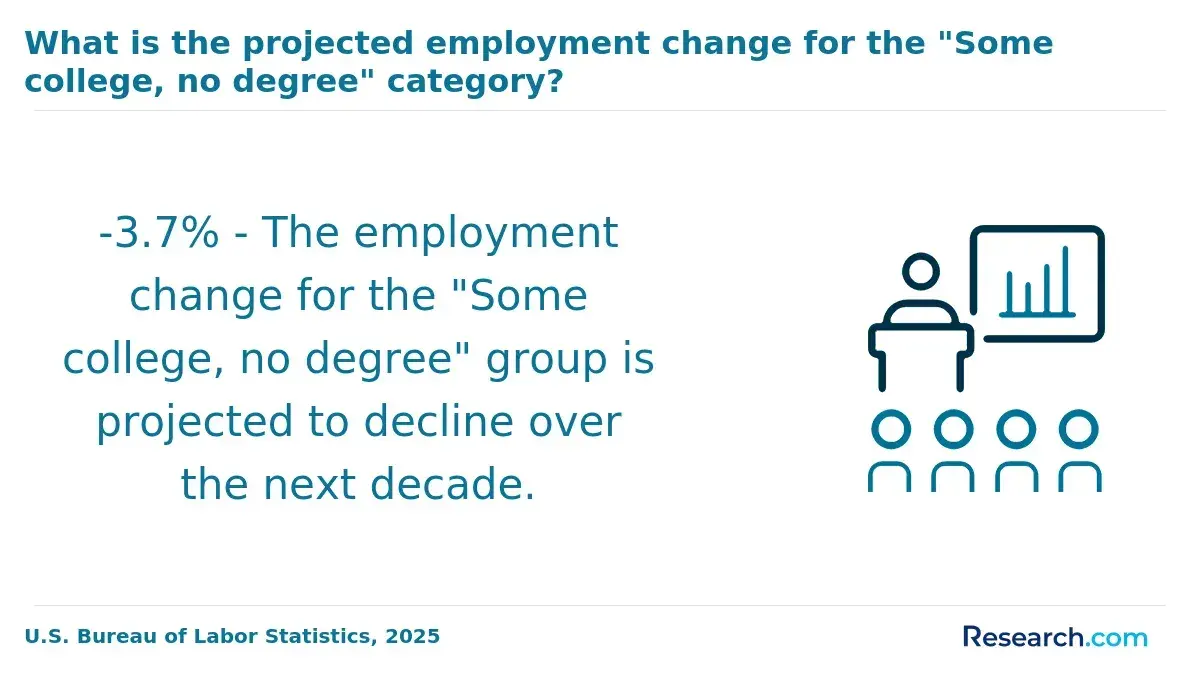
Salary and job outlook should be used as decision tools, not promises. The U.S. Bureau of Labor Statistics reported a median annual wage of $49,500 for all occupations in May 2024, which gives students a national baseline for comparing career fields. Local wages, industry, union status, licensure, experience, and cost of living can change what a salary actually means.
Job outlook matters because a high salary is less helpful if entry-level openings are rare or concentrated in locations where you cannot work. BLS projections published for 2023 to 2033 estimate total employment growth of 4%, but some fields are expected to grow faster while others may decline or change due to automation, outsourcing, regulation, or consumer demand.
Students considering graduate education should compare expected income with total program cost, not just prestige. If a master's degree is required or strongly preferred for advancement, lists of the cheapest masters online can help start a cost comparison, but students should still verify accreditation, employer recognition, field placement rates, and licensure alignment.
The table below explains which data points to compare before choosing a major, certificate, or graduate program. These categories help students avoid relying on a single salary number.
| Data point | What it tells you | Limitation |
| Median wage | The midpoint of pay for workers in an occupation | It does not show starting pay or regional cost of living. |
| Entry-level wage or lower percentile | What newer workers may see early in the field | It can vary widely by employer, location, and prior experience. |
| Projected growth | Whether employment is expected to expand or contract | Growth rates do not show how competitive openings will be. |
| Number of annual openings | How many roles may need workers due to growth and replacement | Openings may be concentrated in specific states, industries, or shifts. |
| Credential requirement | Whether a degree, license, exam, or certification is expected | Employer preferences can exceed minimum requirements. |
A smart comparison includes three numbers: likely starting pay, total education cost, and time to completion. If a path requires unpaid internships, relocation, graduate school, or licensing exams, include those costs before deciding whether the route is realistic.
How do first-generation students negotiate a job offer confidently?
Negotiating a job offer can feel uncomfortable, especially if you are the first in your family to enter a professional workplace. Negotiation is not being ungrateful; it is a standard business conversation about compensation, responsibilities, and fit.
Before negotiating, students should understand the full offer. Salary is important, but benefits can affect real value. Health insurance, retirement contributions, paid time off, tuition support, schedule flexibility, relocation assistance, remote work, professional development, and promotion timelines all matter.
Use the following process to negotiate respectfully and with evidence.
- Thank the employer and express enthusiasm before asking for time to review the offer.
- Research salary ranges using BLS data, state wage tools, employer postings, alumni insight, and cost-of-living information.
- Decide your target, acceptable minimum, and walk-away point before the conversation.
- Prepare a short case based on role fit, relevant experience, skills, internship results, certifications, or competing market data.
- Ask clearly and professionally, such as "Based on the responsibilities and my experience with data reporting, is there flexibility to move the salary closer to $X?"
- If salary is fixed, ask about signing bonus, start date, relocation support, remote days, professional development funds, or an earlier performance review.
- Get the final agreement in writing before accepting.
Students should avoid accepting immediately because they feel pressure, but they should also respect deadlines. If an employer says an offer expires quickly, ask for the deadline in writing and whether an extension is possible.
A red flag is an employer that refuses to explain benefits, discourages written documentation, pressures you to accept on the spot, or makes the offer sound like a favor. A fair employer may not meet every request, but the conversation should remain professional and transparent.
Other Things You Should Know About
They can, but they do not have to. It is usually most effective to mention being first-generation when it supports a strength, such as resilience, initiative, leadership, or commitment to learning, rather than as the main reason to be hired.
Ideally, career planning starts in the first year of college or before transfer. Early planning helps students choose courses, reduce unnecessary credits, find internships, build references, and avoid discovering too late that a career requires specific prerequisites.
The best choice usually connects interest with evidence. A practical major can be a poor fit if the student dislikes the work, while a passion major may need internships, technical skills, or a clear portfolio to improve job prospects.
Students can explain the path using concrete details: required degree, expected timeline, cost, likely entry-level roles, salary range, and backup options. A mentor, advisor, or career counselor can also help translate the plan into clear terms for family conversations.
References
- How Career Services Can Support First-Generation Students - uConnect https://www.gouconnect.com/career-everywhere/how-career-services-can-support-first-generation-students/
- Salary Negotiation for Students and New Grads https://www.careeros.com/resources/salary-negotiation-for-students-and-new-grads
- How to Prepare for Your First Job Interview https://www.secs.ac.in/blog/how-to-prepare-for-your-first-job-interview
- First-Gen College Students https://my.willamette.edu/site/careers/identity-specific/first-gen
- Our Opportunity https://www.firstgenforward.org/our-opportunity
- How to Network During College as a First-Gen Student - Making Waves Academy https://makingwavesacademy.org/how-to-network-college-first-gen-student/
- NALP | First Gen Graduates of Color Face Largest Entry-Level Employment Gaps https://www.nalp.org/1225research
- What First-Generation Students Need for Career Development https://www.higheredtoday.org/2025/05/29/what-first-generation-students-need-for-career-development/
- Interview Tips for Teens: How to Be First Job Ready https://www.bgca.org/news-stories/2024/August/interview-tips-for-teens-how-to-be-first-job-ready/