2027 How to Use Career Services in College

Co-Founder and Chief Data Scientist
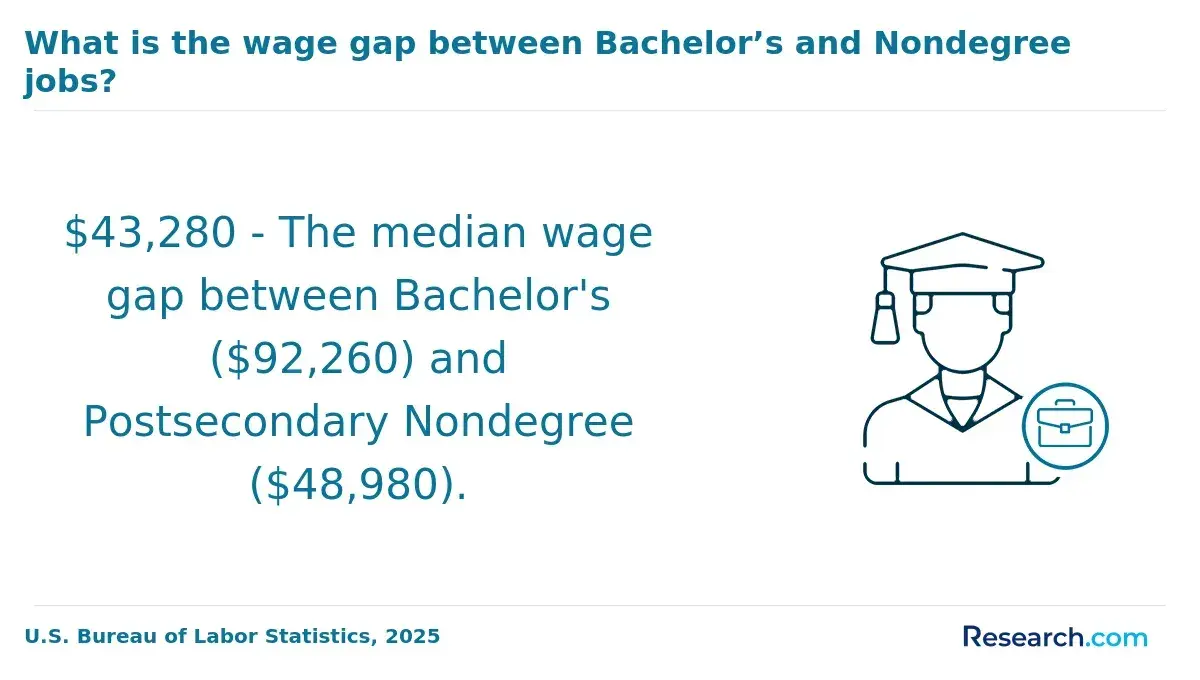
Career services can turn college from a set of classes into a career plan. That matters because BLS 2024 data show workers age 25 and older with a bachelor's degree had median weekly earnings of $1,543, compared with $930 for those with only a high school diploma.
This guide is for students, parents, transfer students, online learners, and recent graduates who want better outcomes from college. You will learn what career centers offer, when to use them, what to ask, and how to avoid missing opportunities.
Key Things You Should Know
- Career services are most useful before senior year because internships, networking, major exploration, and employer events often begin in the first two years of college.
- NACE's Job Outlook 2025 reported that employers planned to hire 7.3% more new college graduates than in the prior cycle, but students still need targeted resumes, interview practice, and employer connections to compete well.
- Compare colleges by outcomes. Ask for career outcomes, internship access, employer partnerships, alumni support, and whether online or commuter students receive the same services as residential students.
What are college career services?
College career services are campus-based or online offices that help students connect academic choices with employment, internships, graduate school, and long-term career planning. They are not placement agencies and usually cannot promise a job, but they can help you build a stronger strategy, avoid common job-search mistakes, and access opportunities you might not find on public job boards.
Most career centers support students across three big decisions: what to study, how to gain experience, and how to transition into work or further education. The table below shows how common services connect to practical student needs.
| Career service area | What it usually includes | Why it matters |
| Career exploration | Interest assessments, major-to-career advising, labor market discussions | Helps students choose a direction before spending time and money on unrelated courses |
| Job-search preparation | Resume reviews, cover letters, LinkedIn guidance, mock interviews | Improves how students present skills to employers and applicant tracking systems |
| Employer connections | Career fairs, internship postings, on-campus interviews, employer panels | Gives students structured access to recruiters and alumni hiring networks |
| Graduate school support | Application planning, personal statements, recommendation strategy | Helps students decide whether another degree is necessary and how to apply well |
The best way to think about career services is as a decision-support hub. The office helps you test whether a major, internship, industry, graduate degree, or entry-level job matches your goals before you commit fully.
How do you use career services effectively?
To use career services effectively, treat the office like an ongoing coach rather than a last-minute resume editor. The strongest results usually come from repeated visits, clear goals, and follow-through after each appointment.
Use this sequence to turn career services into a practical plan instead of a one-time meeting:
- Book an appointment early and bring your current resume, transcript, work history, and a short list of career interests, even if they are unfinished.
- Ask for help connecting your major to job titles, industries, internship paths, and skills employers commonly request.
- Create a target list of roles and employers, then ask which campus job boards, fairs, alumni groups, or faculty contacts can help you reach them.
- Schedule a resume review before applying, a mock interview before employer conversations, and a follow-up appointment after rejections or interviews.
- Track applications, contacts, deadlines, and feedback so your advisor can help you spot patterns and improve your strategy.
If you are still choosing a major, career services can help you compare labor market fit with your academic interests. It can also be useful to review resources such as the top 10 best majors for the future while remembering that the "best" major depends on your strengths, cost, location, and willingness to pursue internships or graduate study.
A common mistake is waiting until the final semester and asking, "What job can I get?" A better question is, "What evidence do I need this year to become a stronger candidate?" That evidence might include a project portfolio, internship, leadership role, technical certificate, research experience, or stronger interview answers.
What career service resources do colleges offer?
College career centers vary, but most offer a mix of advising, tools, events, and employer access. Some services are available only to enrolled students, while others remain open to alumni for a limited time or for life, depending on the institution.
The table below summarizes the resources students should look for when evaluating or using a career center. It also clarifies which resources are most valuable at different points in college.
| Resource | Best fit | What to check |
| One-on-one career advising | Students choosing majors, changing goals, or planning a job search | Availability, advisor specialization, appointment wait times |
| Resume and cover letter reviews | Students applying for internships, campus jobs, graduate programs, or full-time roles | Whether reviews are done by trained staff, peer advisors, or automated tools |
| Mock interviews | Students preparing for internships, competitive programs, or employer interviews | Industry-specific practice, recorded feedback, behavioral and technical formats |
| Career fairs and employer events | Students ready to meet recruiters or learn about industries | Employer quality, major relevance, virtual access, follow-up support |
| Job and internship platforms | Students searching for vetted openings connected to the school | Posting volume, employer screening, alumni access, remote opportunities |
| Career assessments | Students unsure about interests, skills, or work environments | Whether results are interpreted by an advisor rather than used alone |
Some career centers also help students identify short-term credentials that add practical skills to a degree. If you are comparing skill-building options, reviewing online certificate programs that pay well can help you ask better questions about cost, employer recognition, and whether a certificate complements your major.
When should you start using career services?
You should start using career services during your first year, even if you do not know what career you want. Early use gives you time to explore options, test interests through low-risk experiences, and build the qualifications employers expect by graduation.
The right focus changes as you move through college. Use the following timeline as a planning guide, then adjust it based on your major, transfer status, work schedule, and whether your field requires licensure or graduate school.
- First year: Complete a career assessment, discuss possible majors, attend at least one employer or alumni event, and build a basic resume that includes coursework, jobs, volunteering, and campus involvement.
- Sophomore year: Pursue informational interviews, apply for early internships or research roles, strengthen technical or communication skills, and confirm whether your major supports your target career.
- Junior year: Apply for internships, practice interviews, attend targeted career fairs, build a portfolio if relevant, and start comparing employers or graduate programs.
- Senior year: Refine your job-search strategy, request references, prepare for salary conversations, track applications, and use alumni networks before graduation.
- After graduation: Ask about alumni services, job-search coaching, career changes, graduate school applications, or support for a delayed employment search.
Students in two-year programs should use career services just as early. If you are pursuing an online associate's degree, ask whether the school supports transfer planning, local employer connections, remote advising, and career pathways that lead directly to employment.
The biggest red flag is assuming career planning can wait until you have more clarity. In practice, clarity often comes from conversations, internships, projects, and employer exposure-not from thinking alone.
How do career services help with resumes and interviews?
Career services help with resumes and interviews by translating your college experience into evidence employers can understand. That includes coursework, campus jobs, labs, group projects, volunteering, leadership roles, and internships.
Resume support is especially useful because many students undersell their experience or describe responsibilities instead of results. A career advisor can help you tailor your resume for a specific role, use stronger action verbs, include relevant keywords, and remove unrelated details that distract from your qualifications.
For interviews, career services usually focus on practice and feedback. This matters because strong answers are not memorized scripts; they are concise stories that connect your skills to the employer's needs.
Bring these materials to a resume or interview appointment so the session produces specific feedback:
- A target job or internship description so the advisor can compare your materials with actual employer requirements.
- Your current resume, even if it is rough, because it gives the advisor a starting point for revision.
- A list of projects, jobs, classes, tools, and accomplishments you might not know how to phrase yet.
- Questions you struggle to answer, such as "Tell me about yourself," "Why this role?" or "Describe a time you handled conflict."
AI tools can speed up drafts, but they can also create vague resumes that sound like everyone else's. Career services can help you use AI responsibly by checking accuracy, adding measurable context, and making sure your materials still sound like you.
How can career services help you find internships and jobs?
Career services can help you find internships and jobs by giving you access to school-approved postings, employer events, recruiter contacts, alumni connections, and search strategies tailored to your field. The office cannot remove competition, but it can help you apply earlier, target better openings, and follow up more effectively.
This support is especially valuable because the entry-level labor market changes quickly. NACE's Job Outlook 2025 reported that employers planned to increase hiring for the new graduate class by 7.3%, which is encouraging but still requires students to show relevant skills, experience, and professionalism.
Use career services to build a search plan that balances quality and volume. The goal is not to apply randomly to hundreds of postings; it is to apply consistently to roles that match your skills while improving your materials based on feedback.
A strong internship or job-search plan usually includes the following steps:
- Define target roles by job title, industry, location, work format, and required skills.
- Review postings with a career advisor to identify qualification gaps and realistic entry points.
- Attend employer events before deadlines so you can ask informed questions and make recruiter contacts.
- Customize resumes and cover letters for high-priority roles rather than sending the same version everywhere.
- Follow up after interviews, track responses, and revise your approach when you are not getting callbacks.
Common mistakes include applying only to famous companies, ignoring small and mid-sized employers, missing fall recruiting deadlines, and treating internships as optional. In many fields, internships are the bridge between classroom learning and a credible full-time application.
What networking support do career services provide?
Career services provide networking support by helping students meet alumni, employers, faculty partners, and professionals in fields they are considering. Good networking is not asking strangers for jobs; it is building informed conversations that help you learn, get advice, and become visible before opportunities open.
Many students avoid networking because it feels awkward or transactional. Career centers can make it more structured through alumni databases, career panels, mentoring programs, employer information sessions, and templates for outreach messages.
Use these practical networking moves when you are not sure where to start:
- Ask career services whether your college has an alumni mentoring platform or searchable alumni directory.
- Attend one employer event only to learn and ask questions before you start applying widely.
- Prepare a 30-second introduction that includes your major, interest area, and the kind of experience you are exploring.
- Request informational interviews with alumni in roles you are considering, and keep the conversation focused on advice rather than job requests.
- Send a short thank-you message after each conversation and record what you learned for future applications.
Networking is especially helpful for students without family connections in a target field. It can reveal hidden expectations, such as which software tools matter, which internships are respected, or whether a graduate degree is truly needed for advancement.
How do career services support graduate school applications?
Career services can support graduate school applications by helping students decide whether graduate study is necessary, financially reasonable, and aligned with career goals. This is important because graduate school can be valuable in fields such as counseling, law, medicine, academic research, public policy, education, and some technical specialties, but it is not the best answer for every uncertain senior.
A career advisor can help you compare employment now, graduate school now, or graduate school later after gaining experience. That comparison should include admissions requirements, opportunity cost, debt, licensure rules, expected career outcomes, and whether employers in your field value work experience more than another credential.
Graduate school support often includes several pieces that students underestimate:
- Clarifying whether the target career requires a master's, doctoral, professional, or licensure-track degree.
- Building an application timeline for entrance exams, recommendation letters, transcripts, essays, and funding deadlines.
- Reviewing personal statements for focus, evidence, fit, and professional tone.
- Helping students ask faculty for strong recommendations with enough notice and supporting materials.
- Discussing alternatives such as employment, fellowships, certificates, post-baccalaureate programs, or employer-funded education.
The key decision is not simply "Can I get admitted?" It is "Will this program move me closer to a specific outcome at a cost and timeline I can justify?" Career services can help you pressure-test that decision before you apply.
How do online and campus career services compare?
Online and campus career services can both be effective, but they work differently. Campus services may offer more in-person employer contact, while online services may provide greater scheduling flexibility, recorded workshops, virtual advising, and remote-friendly job-search tools.
The best option depends on how you learn, where you live, and whether you need local employer access or flexible support. The table below compares the main differences students should consider.
| Feature | Campus career services | Online career services |
| Advising access | Often includes in-person appointments and drop-in hours | Usually relies on video meetings, chat, email, or asynchronous reviews |
| Employer events | May include career fairs, on-campus interviews, and local recruiter visits | May include virtual fairs, webinars, remote employer panels, and national postings |
| Best fit | Students who can attend events, want local networks, or prefer face-to-face coaching | Working adults, remote learners, caregivers, military students, and students far from campus |
| Possible limitation | Events may be harder for commuters or working students to attend | Networking can require more initiative if the school has weak virtual employer engagement |
If cost is a major factor, career services should be part of your value comparison, not an afterthought. Students comparing the lowest cost online bachelor's degree options should ask whether lower tuition still includes career advising, internship support, alumni access, and employer-connected job platforms.
A strong online career center should not simply post generic articles. Look for live advising, resume feedback, mock interviews, virtual employer events, and support that matches your time zone and work schedule.
How do you choose a college with strong career services?
To choose a college with strong career services, look beyond marketing language and ask for evidence. A college that says it is "career-focused" should be able to explain who hires its students, how internships work, what support is available by major, and how outcomes are measured.
The table below highlights the most important factors to compare before enrolling or transferring. These are especially useful for students weighing cost, flexibility, and career return on investment.
| Factor to compare | Strong sign | Red flag |
| Career outcomes | The school publishes clear employment, graduate school, or continuing education outcomes by program when available | Only broad success claims are offered with no explanation of methodology or response rates |
| Internship access | Programs explain how students find internships, clinicals, co-ops, practicums, or field placements | Students are expected to find required experience alone with little support |
| Employer engagement | Career fairs, employer panels, advisory boards, and recruiting events align with student majors | Employer events are infrequent or unrelated to the programs being promoted |
| Support for different learners | Online, adult, transfer, commuter, first-generation, and alumni students can access services | Career support is mostly designed for full-time residential students |
| Advisor quality | Students can meet trained advisors and receive industry-relevant feedback | Support is limited to automated tools or generic templates |
Students with barriers to employment should ask even more specific questions about advising, employer partnerships, and disclosure strategy. For example, learners researching degrees for felons should confirm whether a program leads to careers with licensing or background-check restrictions before enrolling.
Before choosing a school, ask admissions and career services the same questions and compare the answers. If admissions promises strong career outcomes but the career center cannot describe actual services, employer relationships, or student access, that gap deserves attention.
Other Things You Should Know About Career Planning
Many colleges offer alumni career support, but access varies. Some provide lifetime services, while others limit appointments, job boards, or coaching after graduation. Ask about alumni access before you need it.
Career services can help you prepare, find leads, meet employers, and improve your applications, but they do not guarantee employment. Your results still depend on experience, skills, timing, location, and the competitiveness of your field.
A good pattern is at least once each academic year, plus extra visits before internships, interviews, career fairs, graduate school applications, or a major change. Students in competitive fields may benefit from more frequent check-ins.
Bring your resume if you have one, a list of majors or careers you are considering, relevant job or internship postings, and questions about your goals. You do not need a perfect plan before scheduling a visit.
References
- How Career Services Can Partner with Admissions in a Graduate Business School - uConnect https://www.gouconnect.com/career-everywhere/how-career-services-can-partner-with-admissions-in-a-graduate-business-school/
- 4 Tips for a Successful Year in Career Services https://www.symplicity.com/blog/4-tips-for-a-successful-year-in-career-services
- Best Colleges for Career Services https://www.princetonreview.com/college-rankings/
- Why Universities Must Rethink Career Services for Online Students https://writesea.com/blog/why-universities-must-rethink-career-services-for-online-students/
- Building a Career Network in 5 Easy Steps https://pathwise.io/career-support-network/
- What Is Career Services For? https://www.jobscan.co/blog/what-is-career-services-for-getting-jobs-or-lifelong-learning/
- How To Use Career Centers To Advance Your Career https://www.learnhowtobecome.org/career-resource-center/making-the-most-of-career-centers/