2027 Career Planning Checklist for Students

Co-Founder and Chief Data Scientist
Choosing a career path means weighing interests, tuition, job demand, credentials, and lifestyle before you invest years of study. BLS projections published in 2024 show total U. S. employment is projected to grow 4.0% from 2023 to 2033, but opportunities vary widely by field.
This guide is for high school students, college students, transfer students, and working adults returning to school. You will learn how to assess fit, compare programs, estimate costs, verify quality, and create a practical timeline so your education choices support realistic career goals.
Key Things You Should Know
- Start with fit before major: compare interests, skills, values, and lifestyle needs against actual tasks, required education, and labor-market demand before committing to a program.
- Use current U.S. data: BLS projections published in 2024 show total employment is projected to grow 4.0% from 2023 to 2033, but growth varies sharply by occupation.
- Check cost and aid early: the federal Pell Grant maximum is $7,395 for 2025-26, while the 2024-25 undergraduate Direct Loan rate is 6.53%, so borrowing decisions should be part of career planning.
What are the essential steps in a student career planning checklist?
A student career planning checklist is a structured decision tool that helps you move from "I have interests" to "I know what education, experience, and credentials I need." It should connect personal fit, labor-market evidence, program quality, affordability, and a realistic timeline.
The strongest checklist starts broad, then narrows. Do not choose a major only because it sounds interesting or a job only because it pays well. Use the steps below to turn a general idea into a plan you can test and revise.
- Clarify your interests, strengths, values, preferred work setting, and non-negotiables such as schedule, location, mobility, and income needs.
- Identify several career options instead of only one target job, because related occupations may require different levels of education, licensing, or experience.
- Research day-to-day duties, median pay, projected demand, advancement paths, and risks such as automation, physical demands, or irregular schedules.
- Map each career to the education or training required, including certificates, associate degrees, bachelor's degrees, graduate programs, apprenticeships, exams, or state licenses.
- Compare colleges or training providers by accreditation, curriculum, faculty, student support, transfer policies, graduation outcomes, employer connections, and licensure alignment.
- Estimate the total cost of attendance, likely financial aid, work options, debt, time to completion, and the opportunity cost of studying full time or part time.
- Build experience through internships, clinicals, research, volunteering, part-time work, student organizations, portfolio projects, or industry-recognized credentials.
- Create a semester-by-semester or year-by-year timeline with milestones for coursework, applications, tests, networking, resumes, interviews, and backup plans.
Career planning is not a one-time decision. It is a cycle: learn, test, compare, adjust, and commit more deeply only after you have evidence that the path fits your goals.
The table below summarizes the major decision points students usually face. Use it to see where your current planning may be strong and where you still need more information.
| Planning area | What it helps you decide | Common risk if ignored |
| Self-assessment | Which careers fit your interests, strengths, and values | Choosing a major that feels interesting but does not match the work |
| Career research | Whether a role has realistic pay, demand, and advancement potential | Relying on stereotypes or social media impressions of a job |
| Education mapping | Which degree, certificate, or training route is actually required | Overpaying for a credential that is not necessary or choosing one that is insufficient |
| Program evaluation | Whether a school is credible, affordable, and aligned with your goal | Enrolling in a program with weak outcomes or poor transfer value |
| Experience building | How to become employable before graduation | Graduating with coursework but little proof of workplace readiness |
| Timeline planning | When to apply, test, network, graduate, and enter the job market | Missing prerequisites, application deadlines, or licensing steps |
How do I assess my interests, skills, and values to choose a career path?
Career fit has three parts: what you enjoy, what you can become good at, and what kind of work life you want. A career can look attractive from the outside but still be a poor fit if the daily tasks, stress level, schedule, or required training conflict with your values.
Start by separating interests from skills. Interests are topics or activities that naturally attract your attention, while skills are abilities you can demonstrate or improve. Values are the conditions that make work sustainable for you, such as stability, creativity, autonomy, income growth, service, teamwork, or flexible scheduling.
Use the following process to assess fit before choosing a major or program. It works best when you write down evidence instead of relying on quick impressions.
- List five activities or subjects that consistently hold your attention, then note whether you enjoy learning about them, doing them, teaching them, solving problems in them, or helping others with them.
- Identify skills you already use well, including writing, math, coding, organizing, explaining, persuading, caregiving, designing, troubleshooting, researching, or leading.
- Ask teachers, supervisors, coaches, or mentors what strengths they see in you, because outside feedback can reveal abilities you underestimate.
- Rank your work values, such as income potential, job security, flexibility, mission, prestige, independence, teamwork, creativity, or geographic mobility.
- Compare your list with real job descriptions and remove careers where the daily tasks do not match the kind of work you want to do most days.
- Test your assumptions through a short project, job shadow, informational interview, volunteer role, class assignment, or entry-level job before committing to a long degree path.
A common mistake is treating passion as the only criterion. Passion matters, but a sustainable career also needs labor-market demand, tolerable training costs, realistic entry requirements, and work conditions you can handle over time.
AI and automation also make self-assessment more important. Routine tasks are increasingly supported by software, so students should look for careers where they can build durable human skills: judgment, communication, ethical reasoning, creativity, management, hands-on technical ability, and relationship-based service.
A strong-fit career usually passes several checks at the same time. Look for evidence that the work is interesting, the training is realistic, and the lifestyle is acceptable.
How can I research careers, salaries, and job outlook for different occupations?
Good career research compares duties, pay, job outlook, education requirements, work settings, and advancement options. Salary alone is not enough because earnings vary by region, industry, employer, credentials, experience, and economic conditions.
The U.S. Bureau of Labor Statistics remains one of the most useful starting points because it publishes occupational profiles, median wage estimates, typical entry-level education, and national job outlook information. According to BLS employment projections published in 2024, the economy is expected to add about 6.7 million jobs from 2023 to 2033. For students, the key lesson is not that every field is growing; it is that choosing a path requires occupation-specific research.
The table below shows the types of sources students should compare. The goal is to avoid relying on a single ranking, influencer video, or anecdote.
| Source type | Best use | Limitation to remember |
| BLS Occupational Outlook Handbook | National duties, education requirements, median pay, and projected job growth | National medians may not reflect your state, city, or preferred industry |
| State labor-market websites | Local demand, regional wages, and in-state occupation trends | Categories may not match every modern job title exactly |
| College career outcomes pages | Graduate employment patterns, internship pipelines, and employer connections | Methods vary by school, so compare definitions carefully |
| Job postings | Current employer expectations for skills, software, credentials, and experience | Postings can overstate requirements or mix several roles into one description |
| Informational interviews | Realistic insight into daily work, culture, stress, and advancement | One person's experience may not represent the whole field |
When reviewing salary data, focus on ranges and context. A median salary means half of workers in that occupation earn more and half earn less; it does not predict what a new graduate will earn. Entry-level pay may be lower, while specialized credentials, high-demand locations, or years of experience may raise earning potential.
Use this research sequence when comparing careers with similar appeal. It keeps you from choosing a path based only on income or only on interest.
- Write down three to five target occupations, including at least one backup option that uses similar skills.
- Compare typical duties and remove any job where the daily work is clearly unappealing.
- Check typical education requirements and identify whether a certificate, associate degree, bachelor's degree, graduate degree, apprenticeship, or license is common.
- Review national and state wage data, then compare it with cost of living and expected student debt.
- Read job postings in your preferred location to see which skills, software, exams, and experience employers request most often.
- Talk to at least two people in the field and ask what they wish they had known before entering it.
A red flag is choosing a career because it appears on a "best jobs" list without checking whether you can meet the training requirements or tolerate the work environment. Rankings can be useful, but your decision should be based on fit, evidence, cost, and access to opportunity.
What education and training do I need for my target career?
Education requirements vary widely by career. Some roles require a short certificate or apprenticeship, while others require a bachelor's degree, graduate degree, supervised clinical hours, professional exams, or state licensure. The smartest path is the one that meets employer or licensing expectations without adding unnecessary cost or time.
Before selecting a major, compare the credential level that employers actually request. Students exploring fields with strong earning potential and personal interest can also review examples of majors that make money and are fun, but the best choice still depends on your skills, program quality, and career target.
The table below compares common education routes. Use it to understand which option may match your goal before you commit to a program.
| Education route | Typical fit | Career planning consideration |
| Short-term certificate | Students entering a technical, administrative, healthcare support, IT, or skilled trade role | Best when employers recognize the credential and it leads directly to entry-level work |
| Apprenticeship | Students who want paid, hands-on training in trades or technical fields | Strong option when licensing or union pathways value supervised work experience |
| Associate degree | Students seeking transfer, healthcare roles, technical careers, or lower-cost entry into college | Transfer agreements and program accreditation are especially important |
| Bachelor's degree | Students targeting professional, managerial, technical, education, business, or graduate-school pathways | Major selection, internships, and career outcomes can affect return on investment |
| Graduate degree | Students entering fields that require advanced practice, research, counseling, law, medicine, leadership, or specialization | Worth evaluating only after confirming the degree is required or clearly valued for advancement |
| Professional certification | Students or workers proving specific skills in IT, project management, finance, healthcare, HR, or trades | Most useful when paired with experience and recognized by employers in the target field |
Do not assume the longest or most expensive credential is the best. For example, some technology jobs may value portfolios, certifications, internships, and practical skills alongside or, in some cases, more than a specific degree. In contrast, nursing, teaching, counseling, accounting, engineering, and many healthcare roles may have strict program, exam, or licensure requirements.
Use this checklist to map training requirements accurately. It can prevent undertraining, overtraining, or enrolling in a program that does not support your target role.
- Search job postings for your target role and record the minimum and preferred education requirements.
- Check whether your state requires a license, approved program, exam, supervised hours, or background check.
- Ask admissions offices which careers the program is designed for and which careers require additional education after graduation.
- Compare whether employers ask for a degree title, a specific major, a certification, a portfolio, clinical hours, or work experience.
- Confirm whether credits transfer if you start at a community college or certificate program and later pursue a bachelor's degree.
- Estimate the full timeline, including prerequisites, application cycles, internships, clinical placements, exams, and job search time.
A common mistake is choosing a degree first and researching the career later. Reverse the order: start with the occupation, identify the credential needed, then choose the program that gets you there efficiently.
How do I choose between online and campus-based degree programs?
Online and campus-based programs can both be high quality when they are accredited, well-supported, and aligned with your career goal. The right format depends on your schedule, learning style, need for hands-on training, access to transportation, and whether your target field requires labs, clinicals, student teaching, studio work, or supervised placements.
Online learning can be especially useful for students balancing employment, caregiving, military service, or commuting barriers. If flexibility is your main concern, compare formats carefully and look at online degree programs for working adults that may offer shorter terms, asynchronous classes, or generous transfer-credit policies.
The table below compares the two formats on decision factors that matter most. Use it to identify which learning environment is more likely to help you finish, not just enroll.
| Factor | Online program | Campus-based program |
| Schedule flexibility | Often stronger for working students, caregivers, and students outside commuting range | Often structured around fixed class times and campus schedules |
| Hands-on learning | May require local labs, intensives, clinicals, or practicums depending on the field | Often easier for lab, studio, performance, clinical, or equipment-based coursework |
| Networking | Can be strong when programs offer active advising, virtual events, and employer connections | Often easier through in-person clubs, faculty access, campus jobs, and local recruiting |
| Self-discipline required | Usually high because students manage more independent study time | Still important, but campus routines can provide more external structure |
| Relocation and commuting | May reduce transportation and housing disruption | May require commuting, moving, parking, or campus housing costs |
| Career fit | Works best when online delivery matches employer and licensure expectations | Works best when in-person facilities, labs, or local placements are central to training |
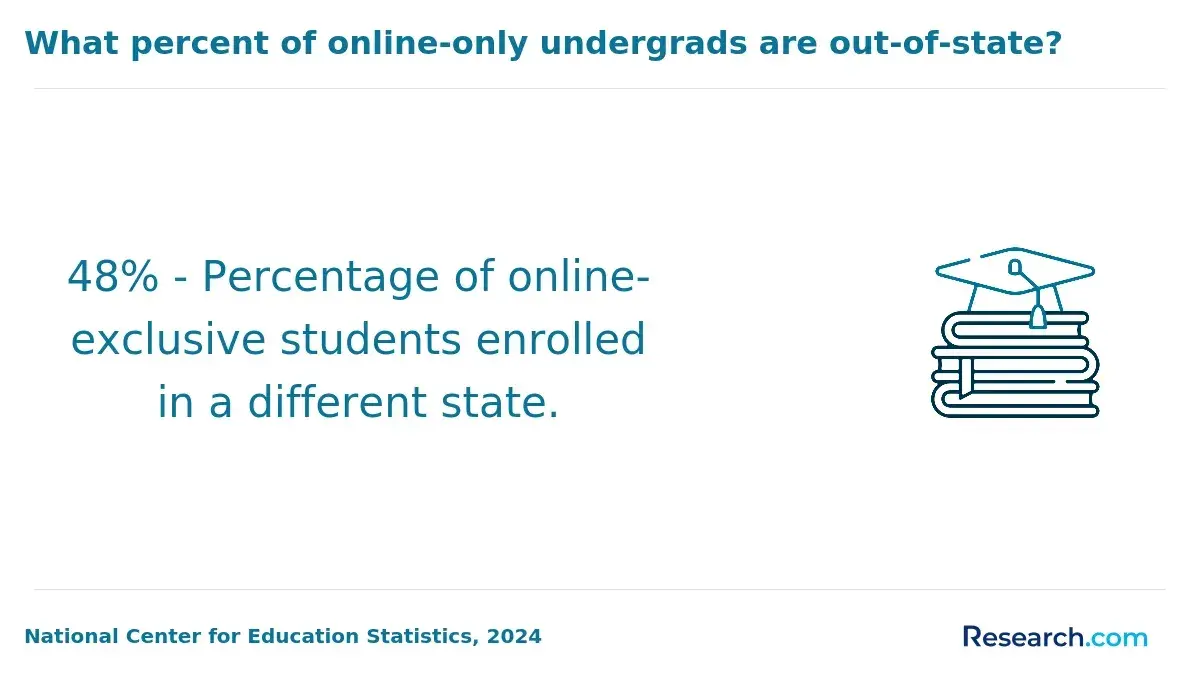
According to the National Center for Education Statistics, distance education remains a major part of U.S. higher education after its pandemic-era expansion, which means students now have more legitimate online options than in the past. The practical challenge is quality control: online format alone does not tell you whether a program has strong teaching, support, or career outcomes.
Ask these questions before choosing an online program. They help you identify whether flexibility comes with enough structure to succeed.
- Is the institution accredited by an agency recognized by the U.S. Department of Education or the Council for Higher Education Accreditation?
- Are classes asynchronous, synchronous, hybrid, or competency-based, and does that format match how you learn best?
- Does the program require in-person labs, clinicals, practicums, proctored exams, internships, or campus visits?
- Are online students eligible for the same advising, tutoring, library access, disability services, career support, and financial aid guidance as campus students?
- What are the graduation, retention, transfer, licensure exam, and employment outcomes for students in your program or department?
- Will your state accept the program for licensure if you are entering teaching, nursing, counseling, social work, or another regulated field?
A red flag is a program that markets speed and convenience but gives vague answers about accreditation, faculty access, outcomes, or licensure alignment. Flexibility is valuable only if the credential will be recognized by employers or licensing boards.
How can I evaluate accreditation and program quality at U.S. colleges?
Accreditation is a quality review process that affects financial aid eligibility, credit transfer, graduate school admission, employer recognition, and licensure eligibility. In the U.S., students should verify that an institution is accredited by an agency recognized by the U.S. Department of Education or the Council for Higher Education Accreditation.
Institutional accreditation reviews the college as a whole. Programmatic accreditation reviews a specific field, such as nursing, engineering, social work, education, business, counseling, or allied health. For some careers, programmatic accreditation is essential because state boards or employers may require graduation from an approved program.
Students using service-related benefits should also evaluate support services, credit for military training, deployment policies, and benefit counseling. A specialized military online college comparison can be useful when military status affects tuition, scheduling, advising, or transfer planning.
Use the following quality checks before applying or enrolling. They help you separate legitimate flexibility from weak academic value.
- Confirm institutional accreditation in the U.S. Department of Education Database of Accredited Postsecondary Institutions and Programs.
- Check whether your field requires programmatic accreditation or state approval for licensure, certification, clinical practice, student teaching, or supervised training.
- Review program curriculum to see whether courses match employer expectations and include current tools, software, labs, casework, or field experience.
- Ask about faculty qualifications, student-to-advisor access, tutoring, career services, internship coordination, and support for online or transfer students.
- Compare retention, graduation, transfer, licensure exam, and job-placement information, but ask how each number is defined and which student group it describes.
- Look for transparent total cost information, refund policies, credit-transfer rules, and academic calendars before committing.
Program quality is not determined by prestige alone. A less famous public university, community college, or online program may be a better fit than a highly ranked institution if it is accredited, affordable, supportive, and aligned with your career target.
The table below identifies common quality indicators and what they usually mean for a student's decision. It is not a ranking system; it is a way to organize evidence.
| Quality indicator | Why it matters | Red flag |
| Recognized institutional accreditation | Supports federal aid eligibility, transfer value, and baseline academic credibility | The school cannot clearly identify its recognized accreditor |
| Programmatic accreditation or approval | May be required for licensure, exams, clinical practice, or employer acceptance | The program says approval is "pending" but students need it to qualify for a license |
| Transparent outcomes | Helps students evaluate completion, employment, transfer, and exam performance | Outcomes are missing, outdated, or described without definitions |
| Student support | Advising, tutoring, accessibility, and career help can affect persistence | Support is available only during limited hours or not offered to online students |
| Career alignment | Curriculum, internships, labs, and projects should match the target field | Courses are broad but do not build the specific skills employers request |
| Transfer and credit policies | Clear policies can reduce repeated coursework and total cost | The school will not provide a transfer evaluation until after enrollment |
What admission requirements, costs, and financial aid factors should I plan for?
Admissions and affordability planning should happen together. A program is not truly accessible if you can get in but cannot afford to complete it, and a low tuition price can still become expensive if credits do not transfer, required fees are high, or the program takes longer than expected.
Common admission requirements include an application, transcripts, GPA minimums, placement tests, essays, recommendations, prerequisite courses, resumes, auditions, portfolios, interviews, or background checks. Selective programs in nursing, education, engineering, allied health, and graduate study may also require prerequisite grades, entrance exams, clinical clearance, or documented experience.
Financial aid depends on your eligibility, school participation, enrollment status, cost of attendance, dependency status, and aid deadlines. If keeping cost low is a priority, compare cheap online colleges that accept FAFSA while still verifying accreditation, program fit, transfer rules, and career outcomes.
College Board's 2024 Trends in College Pricing reported that average published tuition and fees for 2024-25 were $11,610 for in-state students at public four-year colleges and $43,350 at private nonprofit four-year colleges. These are published prices, not necessarily net prices after grants and scholarships, so students should compare financial aid offers rather than assume the sticker price is final.
The table below summarizes cost categories students often underestimate. Review all of them before deciding whether a program is affordable.
| Cost factor | Why it affects your budget | What to compare |
| Tuition and mandatory fees | Usually the largest billed academic cost | Per-credit price, full-time price, and fees by program |
| Books, software, and supplies | Can be significant in technical, healthcare, design, and lab-based programs | Required materials, subscriptions, kits, uniforms, and equipment |
| Housing and food | Can exceed tuition at some institutions | Campus housing, commuting, family housing, and local rent |
| Transportation | Affects campus, hybrid, clinical, internship, and commuting students | Gas, parking, transit, travel to placements, and relocation |
| Program-specific requirements | Some fields require testing, background checks, insurance, uniforms, or clinical fees | All required costs before graduation, not just first-term expenses |
| Time to completion | Extra semesters can increase tuition and delay full-time earnings | Credit load, prerequisite sequences, transfer credits, and course availability |
Use this affordability checklist before accepting admission. It will help you compare offers on real cost rather than marketing language.
- Complete the FAFSA as early as possible and check whether your state, school, or scholarship programs require separate forms or earlier deadlines.
- Compare net price after grants and scholarships, not only published tuition.
- Ask whether scholarships are renewable and what GPA, credit load, or major requirements you must maintain.
- Calculate borrowing under federal loan limits before considering private loans, because federal loans generally include borrower protections that private loans may not offer.
- Check whether transfer credits, credit for prior learning, AP, IB, CLEP, military training, or employer training can reduce total credits needed.
- Estimate whether part-time work will help or harm completion based on course intensity, commute time, family responsibilities, and required internships or clinicals.
A common mistake is choosing the lowest tuition without checking total cost and completion risk. A slightly higher-cost program with strong transfer acceptance, predictable course availability, and better advising may cost less in the long run if it helps you finish on time.
How do I build experience through internships, volunteering, and part-time work?
Experience turns academic preparation into employability. Employers often want evidence that you can communicate, solve problems, show up reliably, use relevant tools, and apply classroom knowledge in real settings. Internships are valuable, but they are not the only option.
According to the National Association of Colleges and Employers' 2024 recruiting research, employers continue to rate internship experience and applied skills as important hiring signals. For students, this means experience should be planned early instead of postponed until the final semester.
Build experience in layers. Start with low-barrier exploration, then move toward roles that more closely resemble your target occupation.
- In your first stage, use volunteering, student clubs, class projects, job shadowing, informational interviews, or short online projects to test interest.
- In your middle stage, pursue part-time work, campus employment, research assistant roles, service learning, labs, clinics, practicums, or portfolio assignments related to your field.
- In your advanced stage, target internships, co-ops, apprenticeships, clinical placements, student teaching, freelance projects, capstone work, or supervised field experience.
- After each experience, document your responsibilities, tools used, measurable results, supervisor feedback, and skills gained so you can update your resume and interview examples.
Not all experience has to be paid to be useful, but unpaid work has opportunity costs. If you need income, look for roles that combine financial support with skill-building, such as tutoring, help desk work, caregiving, lab assistance, administrative support, peer mentoring, or entry-level roles in your target industry.
The table below compares experience options by their typical value. Use it to choose activities that match your current stage.
| Experience type | Best for | Evidence it can produce |
| Volunteering | Exploring service, healthcare, education, nonprofit, public safety, or community work | Commitment, communication, empathy, reliability, and exposure to real settings |
| Part-time work | Building workplace habits while earning income | Customer service, teamwork, attendance, problem-solving, and supervisor references |
| Internship | Applying academic learning in a field-specific environment | Industry tasks, professional references, portfolio items, and job-search examples |
| Research or lab work | Preparing for STEM, healthcare, social science, graduate school, or technical roles | Data skills, methods, documentation, analysis, and faculty mentorship |
| Portfolio project | Showing ability in design, writing, analytics, software, media, marketing, or engineering | Work samples that can be reviewed by employers or clients |
| Clinical, practicum, or student teaching | Meeting supervised practice expectations in regulated fields | Required hours, professional evaluation, and readiness for licensure steps |
Students often make the mistake of listing duties without showing outcomes. Instead of saying you "helped with social media," describe the audience, tools, content type, schedule, and result when you can do so accurately. If you cannot measure results, describe the skill or responsibility clearly.
Students with limited experience should not wait for a perfect internship. Start with accessible opportunities that build proof of reliability and skill.
- Ask professors, advisors, coaches, and campus offices about research, tutoring, event support, labs, or peer leadership roles.
- Search local nonprofits, libraries, hospitals, schools, municipal offices, and community organizations for volunteer or part-time roles.
- Use class projects to create portfolio samples, case studies, writing samples, designs, analyses, lesson plans, or code repositories.
- Join student organizations connected to your major and volunteer for responsibilities that produce evidence, such as budgeting, outreach, planning, design, or reporting.
- Request informational interviews and ask professionals what entry-level experience they consider credible.
What licenses, certifications, or exams might my chosen career require?
Licenses, certifications, and exams are not the same. A license is usually a legal requirement to practice in a state-regulated profession. A certification is often a professional credential that demonstrates competence in a skill or field. An exam may be part of earning a license, certification, admission, or placement.
Requirements vary by state, employer, and occupation. For example, teachers, nurses, counselors, social workers, electricians, accountants, real estate agents, and many allied health professionals often face state-specific requirements. Technology, project management, HR, finance, and cybersecurity roles may value certifications even when they are not legally required.
The table below explains common credential categories. Use it to identify what you need to verify for your specific career.
| Credential type | Common examples | Why it matters |
| State license | Nursing, teaching, counseling, social work, real estate, trades, cosmetology | May be legally required before independent practice |
| Professional certification | CompTIA, SHRM, PMP, medical assisting, coding, cloud, cybersecurity, financial credentials | Can signal specialized skills or help meet employer preferences |
| Board or national exam | NCLEX, Praxis, CPA Exam, ASWB exams, NCE, certification exams | Often required after completing approved education or supervised experience |
| Graduate or admission test | GRE, LSAT, MCAT, GMAT, TEAS, HESI | May affect admission to selective programs, though some schools are test-optional |
| Background or clearance requirement | Fingerprinting, immunizations, drug screening, child-abuse clearance, clinical documentation | Often required for healthcare, education, public safety, and field placements |
Credential requirements can change, so verify them directly with the state licensing board, professional association, school program office, or employer before enrolling. Do not rely only on a program brochure, because a school may prepare students for a broad field but not meet every state's requirements.
Follow these steps if your target career may require a license or certification. They can help you avoid completing coursework that does not qualify you for the next step.
- Identify the exact job title and state where you plan to work, because requirements may differ across states and roles.
- Find the official licensing board or certification body and review education, exam, supervised-hour, background-check, and renewal requirements.
- Ask the school whether the program meets requirements in your state and request the answer in writing when possible.
- Check pass rates, clinical placement availability, supervised-hour support, and exam preparation resources.
- Estimate credential costs, including exam fees, study materials, background checks, applications, continuing education, and renewal fees.
- Create a timeline for prerequisites, graduation, exam registration, supervised practice, and license approval so you do not miss hiring cycles.
A major red flag is any program that says licensure is the student's responsibility but does not clearly disclose whether the curriculum meets state requirements. Responsibility may legally rest with the student, but a quality program should provide transparent licensure information.
How do I create a timeline and goals for my academic and career journey?
A career timeline turns a large goal into smaller decisions with deadlines. It should include academic milestones, financial aid dates, experience-building plans, application periods, credential steps, and backup options. Without a timeline, students often discover missing prerequisites or testing requirements too late.
Start with your target outcome and work backward. If you want to become a registered nurse, teacher, software developer, accountant, counselor, electrician, analyst, designer, or physician assistant, identify the first job or next education step you need, then map the requirements by semester or year.
If cost control is part of your timeline, compare transfer-friendly and affordable online colleges early rather than after you have already earned credits that may not apply. Planning for transfer, credit load, and program length can reduce wasted time.
The table below shows a sample planning timeline. Adjust it based on whether you are in high school, community college, a bachelor's program, graduate school, military service, or the workforce.
| Stage | Primary focus | Typical milestone |
| Exploration stage | Interests, values, skills, and broad career options | Shortlist three to five career paths with evidence for each |
| Program planning stage | Education requirements, accreditation, admissions, costs, and aid | Select target programs and identify deadlines, prerequisites, and funding options |
| Skill-building stage | Courses, projects, technical skills, writing, communication, and workplace habits | Build a resume, portfolio, transcript strength, or practical skill record |
| Experience stage | Internships, volunteering, part-time work, clinicals, research, or field placements | Complete at least one experience that supports your target role |
| Credential stage | Licensure, certification, exams, applications, and supervised requirements | Register for required exams or submit credential applications on schedule |
| Transition stage | Job search, graduate applications, networking, interviewing, and backup plans | Apply for roles or programs with tailored materials and references ready |
Use SMART goals, but make them flexible. A useful goal is specific, measurable, achievable, relevant, and time-bound, yet still allows revision when you learn new information.
Here is a practical goal-setting sequence for students. It helps you connect long-term plans with weekly action.
- Write one long-term career goal and one backup goal that uses similar skills or coursework.
- Break the long-term goal into education, experience, financial, and credential milestones.
- Assign each milestone a deadline based on school calendars, FAFSA dates, admission cycles, testing windows, and internship recruiting seasons.
- Schedule one career-building action each week, such as contacting an advisor, revising a resume, attending a career event, applying for aid, or researching a license.
- Review your plan at the end of each term and adjust based on grades, cost, motivation, new interests, job-market evidence, and feedback from mentors.
- Create a risk plan for obstacles such as not being admitted to a selective program, losing financial aid eligibility, needing to work more hours, or changing majors.
Common timeline mistakes include waiting too long to meet an advisor, assuming every course is offered every term, missing financial aid deadlines, delaying internship applications, and ignoring prerequisite sequences. A good plan reduces surprises, but it should not trap you in a path that no longer fits.
Other Things You Should Know About
Students can start as early as high school, but it is never too late. The key is to begin before making expensive commitments, such as choosing a major, transferring schools, borrowing heavily, or applying to a selective program.
Start with three to five possible paths instead of forcing one decision. Compare duties, education requirements, costs, job outlook, and experience options, then test your choices through classes, projects, volunteering, shadowing, or part-time work.
Salary should be part of the decision, but not the only factor. A high-paying field may be a poor fit if you dislike the work, cannot meet the training requirements, or would need to take on debt that does not match realistic entry-level earnings.
Review your plan at least once each term or semester. Update it when you change interests, complete a major course, receive grades, gain work experience, learn new salary or licensure information, or face a financial aid or transfer decision.
References
- Occupational Outlook Handbook https://careerengagement.tulane.edu/resources/occupational-outlook-handbook/
- Volunteering as Work Experience: How to Add It to Your Resume https://hostelhoff.com/blog/volunteering-as-work-experience-how-to-add-volunteer-work-to-your-resume/
- Careers - Our Talent Acquisition Process | Target Australia https://www.target.com.au/company/careers/our-recruitment-process
- 60 Career Development Goals Examples: 30 Short-Term & 30 Long-Term Goals https://www.qooper.io/blog/career-development-goals-examples
- Online Degree vs. Campus Degree: Which Is Right for You? https://www.grantapprovals.com/blog/online-degree-vs-campus.html
- How Do Colleges Determine Your Financial Aid? https://www.mefa.org/article/how-do-colleges-determine-your-financial-aid/
- Growth & Development https://corporate.target.com/careers/growth-and-development
- Work Experience vs. Volunteering: The Ultimate Guide to Building Your Strongest Application https://www.deltainstitute.co/blog-delta-institute/work-experience-vs-volunteering-the-ultimate-guide-to-building-your-strongest-application
- Interest Assessment | CareerOneStop https://www.careeronestop.org/Toolkit/Careers/interest-assessment.aspx
- How to Develop Career Goals | University of Phoenix https://www.phoenix.edu/blog/how-to-develop-career-goals.html