2027 Nicu Nurse Schooling Years: Career Guide for Students and Graduates

Co-Founder and Chief Data Scientist
Choosing the NICU nurse path means comparing time, cost, clinical training, and licensure before you enroll. The decision matters because the U. S. Bureau of Labor Statistics projects registered nurse employment to grow 6% from 2023 to 2033, faster than the average for all occupations. This guide is for high school students, career changers, nursing students, and graduates who want neonatal intensive care work. You will learn the schooling timeline, degree options, certifications, online versus campus trade-offs, job paths, and salary context so you can choose a practical route.
Key Things You Should Know
- Most future NICU nurses need 2 to 4 years of nursing school: an ADN can take about 2 years after prerequisites, while a BSN usually takes 4 years and is often preferred by children's hospitals and higher-acuity NICUs.
- After graduation, new nurses must pass the NCLEX-RN and earn state RN licensure; many NICU employers then provide 3 to 6 months of unit orientation or a nurse residency before independent neonatal assignments.
- For salary context, the May 2024 BLS median annual wage for registered nurses was $93,600, but NICU pay varies by state, hospital type, shift differentials, experience, and specialty certification.
What does a NICU nurse do?
A NICU nurse is a registered nurse who cares for premature newborns, critically ill infants, and babies who need intensive monitoring after birth. "NICU" stands for neonatal intensive care unit, and the work combines bedside nursing, family education, emergency response, medication safety, infection prevention, and close collaboration with neonatologists, respiratory therapists, lactation consultants, pharmacists, and social workers.
NICU nurses usually work in hospital units that are classified by acuity. Level II nurseries care for babies with moderate needs, while Level III and Level IV NICUs care for very premature, medically fragile, or surgically complex newborns. The higher the acuity, the more employers tend to value BSN preparation, pediatric or neonatal experience, and specialty certifications.
The daily work can include several responsibilities that are emotionally meaningful but clinically demanding. These duties are important to understand before choosing the career because NICU nursing is not only "working with babies"; it is intensive care nursing for patients who may weigh only a few pounds.
- Monitoring vital signs, oxygen saturation, feeding tolerance, blood glucose, temperature regulation, and neurologic changes.
- Administering medications, IV fluids, parenteral nutrition, blood products, and respiratory support according to provider orders and hospital protocols.
- Using incubators, radiant warmers, ventilators, infusion pumps, feeding tubes, central lines, and electronic health record systems.
- Teaching parents how to participate in care, understand alarms, prepare for discharge, and recognize warning signs at home.
- Responding to emergencies such as apnea, bradycardia, sepsis concerns, respiratory distress, or rapid clinical deterioration.
Technology is changing the role, but it is not replacing the nurse's judgment. Modern NICUs use continuous monitoring, barcode medication administration, smart pumps, and data-driven early warning tools; however, nurses still interpret subtle changes, communicate with families, and escalate concerns when a baby's condition changes.
How many years of schooling does a NICU nurse need?
The short answer is that a NICU nurse typically needs about 2 to 4 years of nursing school, plus the time required to pass the NCLEX-RN, obtain a state RN license, and complete employer-based NICU training. A two-year associate degree can qualify you for RN licensure, but a four-year BSN is often the stronger long-term option if you want access to competitive children's hospitals, magnet-designated hospitals, leadership roles, or graduate study.
The table below compares the most common timelines. Use it to match your current education level with a realistic path rather than assuming every NICU nurse follows the same route.
| Path | Typical schooling time | Best fit | Key trade-off |
| ADN to RN | About 2 years after prerequisites | Students who need a faster, often lower-cost route to RN licensure | Some NICU employers prefer or require a BSN, especially in high-acuity units |
| Traditional BSN | About 4 years | First-time college students who want the broadest hospital options | Usually takes longer and may cost more than an ADN route |
| Accelerated BSN | About 12 to 24 months after a prior bachelor's degree | Career changers who already completed college-level prerequisites | Fast pace can limit the ability to work during school |
| RN-to-BSN | About 1 to 2 years after RN licensure | ADN-prepared nurses who want better mobility or employer-preferred credentials | Requires balancing work, school, and clinical or practicum expectations |
| BSN to neonatal nurse practitioner | Often 2 to 4 additional years | Experienced NICU nurses who want advanced practice responsibilities | Requires graduate admission, advanced clinical training, and advanced certification |
In practical terms, the fastest realistic route is usually an ADN followed by RN licensure and a NICU job or residency. The most flexible route is usually a BSN because it keeps graduate school, management, transport, educator, and advanced practice options open.
What degree do NICU nurses need?
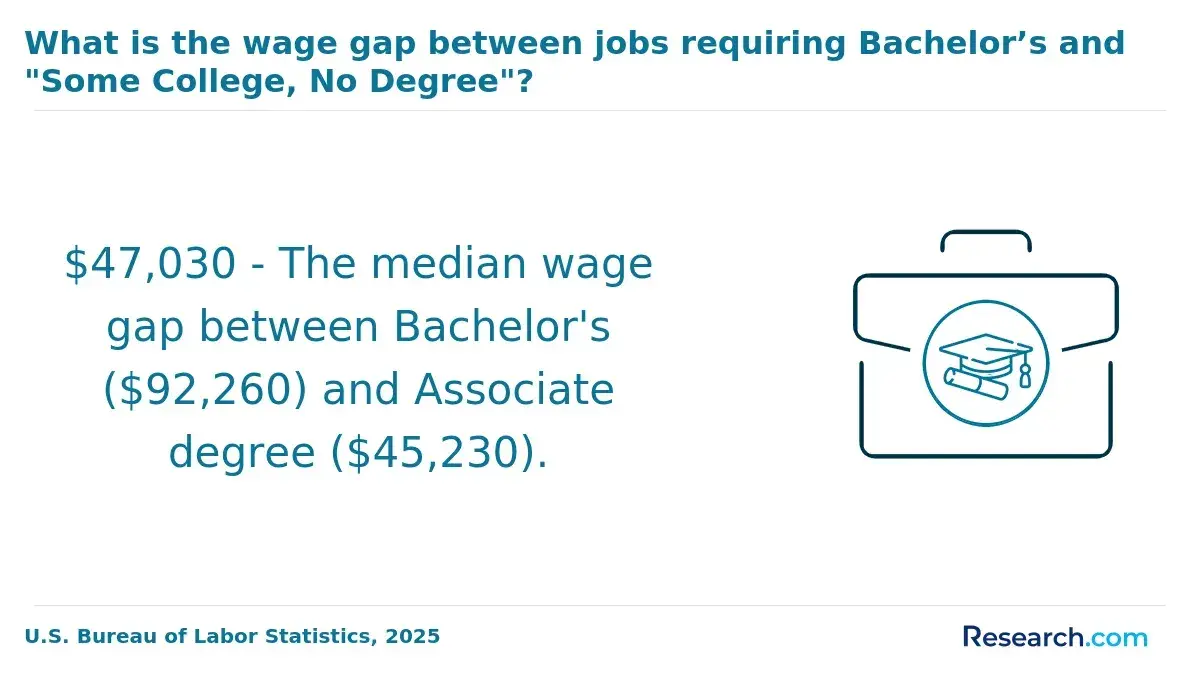
NICU nurses need to become registered nurses, so the required degree is an accredited ADN or BSN that qualifies graduates for the NCLEX-RN. In many states, either degree can meet licensure requirements, but the hiring market is not always the same as the licensing minimum. Hospitals with higher-acuity NICUs may screen more favorably for BSN-prepared applicants, especially when new graduates have no pediatric or neonatal experience.
Cost should be part of the degree decision, not an afterthought. The College Board's 2024 data placed average published tuition and fees for in-state students at public four-year colleges at $11,610 for 2024-25, before housing, books, transportation, and clinical expenses. That figure helps explain why some students start with a community college ADN and later complete a BSN while working.
Here is a practical way to think about the degree choice before you apply. The right option depends on your budget, academic record, local hiring market, and whether you may want graduate school later.
- Choose an ADN if you need the most direct route to RN licensure, have strong local community college options, and are willing to complete a BSN later if your employer expects it.
- Choose a traditional BSN if you are starting college for the first time, want stronger access to competitive hospitals, and can manage the longer timeline.
- Choose an accelerated BSN if you already hold a bachelor's degree, can handle an intensive schedule, and have completed required science prerequisites.
- Choose an RN-to-BSN if you are already licensed as an RN and want to improve mobility without repeating the full undergraduate nursing path.
Students thinking beyond bedside NICU work should also understand the graduate pathway. Neonatal nurse practitioners usually need graduate preparation after RN experience, and some students compare an online master option only after confirming that the program includes the required advanced clinical placements and meets state board expectations.
Which nursing programs prepare you for NICU work?
The best nursing program for NICU preparation is not always the program with the flashiest simulation lab or the shortest timeline. It is the program that is accredited, NCLEX-eligible, clinically rigorous, transparent about outcomes, and connected to hospitals where students can gain pediatric, maternity, or neonatal exposure.
When comparing programs, focus on the features that directly affect licensure and employability. These factors matter more than general reputation because a nursing degree must lead to state board eligibility and real clinical readiness.
- Accreditation from a recognized nursing accreditor, commonly ACEN or CCNE, plus approval from the state board of nursing.
- NCLEX-RN pass rates that are current, clearly reported, and comparable with state averages.
- Clinical rotations in maternity, pediatrics, acute care, community health, and medical-surgical nursing.
- Simulation experiences that include neonatal assessment, medication calculations, respiratory distress, sepsis response, and family communication.
- Hospital partnerships, nurse residency pipelines, or capstone placements that may help students enter children's hospitals or NICU-adjacent units.
Common mistakes can delay licensure or limit job options. Avoid enrolling before checking whether the program is approved by your state board of nursing, assuming that "online" means clinicals are optional, ignoring total program cost, or choosing the shortest program without asking about NCLEX outcomes and clinical placement support.
Students with a criminal record should be especially careful because nursing programs, clinical sites, and state boards may require background checks. If this concern applies to you, reviewing guidance on degrees felons can get can help you prepare better questions for admissions offices and licensing boards before investing in prerequisites.
How do online and campus nursing programs compare?
Online and campus nursing programs can both lead to RN advancement, but prelicensure nursing is never fully online because students must complete supervised labs, simulations, and in-person clinical rotations. The main difference is where the classroom learning happens and how much flexibility the program gives you around work, commuting, and family responsibilities.
The table below summarizes the real decision points. It can help you avoid the common mistake of choosing a format based only on convenience instead of licensure fit and clinical quality.
| Factor | Online or hybrid nursing program | Campus nursing program |
| Best use case | RN-to-BSN, some prerequisites, theory courses, and some graduate coursework | Prelicensure ADN or BSN students who need frequent lab and clinical access |
| Clinical training | Still requires approved in-person clinical or practicum experiences | Usually coordinated through local hospitals and faculty-supervised sites |
| Flexibility | Often better for working RNs or adult learners | Usually more structured, which can help students who need routine support |
| Risk to check | Whether the program can place students in approved clinical sites in your state | Whether commuting, schedule blocks, and clinical site distance are manageable |
| NICU preparation | Strongest when used for RN-to-BSN or graduate advancement after RN experience | Strong for students who need hands-on fundamentals before NCLEX-RN |
If you already hold RN licensure, online education may be a smart way to complete a BSN or prepare for graduate study while continuing to work. If you are not yet an RN, be skeptical of any program that appears to promise a fully online route to bedside nursing without clearly explaining labs, clinicals, state authorization, and licensure eligibility.
What admission requirements do nursing schools usually ask for?
Nursing school admissions vary by institution, but most programs are selective because clinical seats are limited and patient safety expectations are high. Admissions committees usually look for evidence that you can handle science-heavy coursework, professional behavior, and the pace of clinical learning.
Before applying, review requirements in the exact order schools evaluate them. Missing one prerequisite or test deadline can push your start date back by a semester or a full year.
- Complete prerequisite courses such as anatomy and physiology, microbiology, chemistry, statistics, psychology, English composition, and human development if required.
- Meet the minimum GPA and science GPA thresholds, understanding that competitive admitted students may exceed the minimum.
- Take required entrance exams if the school uses the TEAS, HESI A2, or another assessment.
- Submit transcripts, immunization records, CPR documentation, background check authorization, drug screening, and clinical compliance paperwork.
- Prepare for interviews, essays, or professional references if the program uses holistic review.
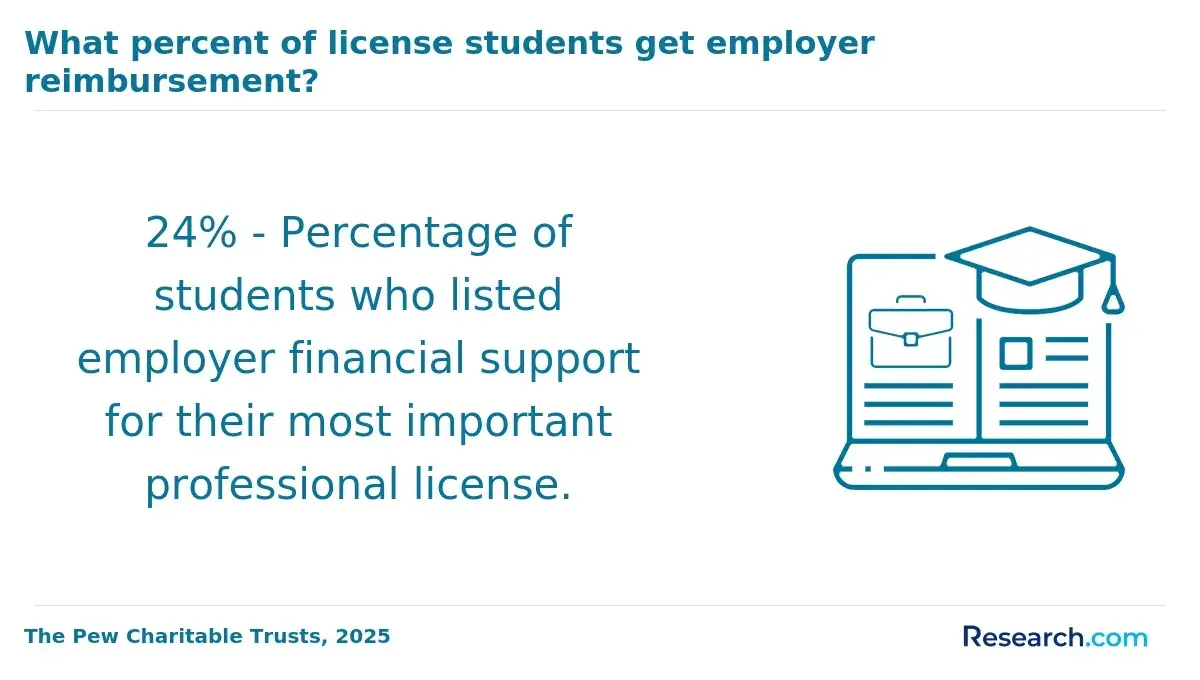
Financing should be reviewed before you accept a seat. Beyond tuition, nursing students often pay for uniforms, health screenings, liability insurance, supplies, testing platforms, transportation, parking, and licensing fees. If you may continue into graduate nursing later, comparing a cheapest masters program list can also help you think early about long-term education costs rather than focusing only on the first credential.
How long does NICU nurse training take after graduation?
After graduation, NICU nurse training continues through licensure, onboarding, supervised practice, and continuing education. Nursing school teaches generalist RN competencies; the NICU adds neonatal physiology, respiratory support, medication dosing for tiny patients, developmental care, family-centered communication, and emergency response for fragile newborns.
The table below gives a realistic post-graduation timeline. Actual timing varies by state board processing, NCLEX scheduling, employer hiring cycles, and whether the hospital offers a dedicated NICU new graduate residency.
| Stage | Typical timeframe | What happens |
| NCLEX-RN preparation and exam | Several weeks to a few months | Graduate applies to the state board, receives authorization to test, takes the NCLEX-RN, and completes licensing steps |
| Hospital onboarding | Several days to several weeks | Employee orientation, policies, electronic health record training, safety modules, and unit expectations |
| NICU orientation or residency | Often 3 to 6 months | Precepted shifts, skill validation, neonatal assessments, equipment training, and gradual patient assignment progression |
| Early independent practice | First 1 to 2 years | Development of stronger clinical judgment, confidence with emergencies, and readiness for higher-acuity assignments |
| Specialty certification eligibility | Often after substantial practice experience | Nurses may pursue neonatal specialty certification once they meet experience-hour requirements |
A smart first-year plan is to prioritize learning over prestige. A Level II nursery with strong preceptors may be better than a Level IV NICU that cannot support new graduates well. Ask hiring managers about nurse-patient ratios, length of orientation, preceptor consistency, simulation training, and how quickly new nurses are assigned high-acuity patients.
What certifications and licenses are required for NICU nurses?
NICU nurses must hold an active RN license in the state where they practice, or a multistate license if eligible under the Nurse Licensure Compact and accepted by the employer. The license is required; most specialty certifications are not legally required for entry-level NICU practice, but employers may require or strongly prefer certain credentials after hire.
Certifications show focused competence and may support advancement, charge nurse roles, transport teams, or higher-acuity assignments. Requirements can change, so always verify details with the certifying body and your employer.
- NCLEX-RN and state RN license: required to practice as a registered nurse.
- Basic Life Support: commonly required for hospital nurses.
- Neonatal Resuscitation Program: commonly required or expected for NICU nurses because it focuses on newborn stabilization and resuscitation.
- S.T.A.B.L.E.: often used for neonatal stabilization education, especially around sugar, temperature, airway, blood pressure, lab work, and emotional support.
- RNC-NIC or CCRN Neonatal: specialty credentials for experienced neonatal nurses who meet practice requirements and pass an exam.
Some nurses build stackable credentials through continuing education before or after entering the NICU. If you are comparing short, career-focused learning options, a guide to certificates I can get online can help you distinguish professional development from credentials that actually affect nursing licensure or NICU hiring.
What jobs can NICU nurses qualify for?
NICU experience can lead to several bedside and non-bedside roles, but most start with registered nurse practice in a hospital. Early-career nurses may enter directly into a NICU residency, start in postpartum or pediatrics, work in a special care nursery, or move from adult critical care after developing strong assessment and emergency response skills.
The table below shows common roles connected to NICU nursing. It is useful because "NICU nurse" can be an entry specialty, a long-term bedside career, or the foundation for advanced practice.
| Role | Typical preparation | Common responsibilities |
| Level II nursery nurse | RN license; ADN or BSN depending on employer | Care for moderately ill or recovering newborns who need monitoring, feeding support, or oxygen therapy |
| Level III or IV NICU nurse | RN license; BSN often preferred; specialty training | Care for very premature or critically ill newborns requiring intensive monitoring, ventilators, central lines, or complex therapies |
| NICU transport nurse | Experienced NICU RN; additional emergency and transport training | Stabilize and transport critically ill newborns between facilities |
| NICU charge nurse | Experienced NICU RN; leadership readiness | Coordinate staffing, assignments, admissions, discharges, and emergency escalation |
| Neonatal nurse practitioner | BSN, RN experience, graduate degree, advanced certification | Assess, diagnose, manage, and coordinate advanced care for high-risk newborns under state scope-of-practice rules |
| Clinical educator or nurse specialist role | Experienced RN; often BSN or graduate education | Train staff, develop protocols, support quality improvement, and improve neonatal care practices |
If your long-term goal is advanced practice, leadership, education, or informatics, plan your schooling with that endpoint in mind. Many nurses later compare the most in demand master's degrees to understand how graduate credentials can connect to broader healthcare leadership and specialized clinical roles.
How much do NICU nurses earn and what is the job outlook?
NICU nurses are registered nurses, so national RN salary and outlook data provide the most reliable benchmark. The BLS reported a May 2024 median annual wage of $93,600 for registered nurses, but NICU compensation can be higher or lower depending on location, hospital system, union contracts, night or weekend differentials, experience, certification, and whether the role is staff, travel, transport, or advanced practice.
Job outlook is also generally tied to the RN labor market. BLS projections show 6% employment growth for registered nurses from 2023 to 2033, which suggests steady demand, but not every hospital hires new graduates directly into the NICU. Competitive units may prefer candidates with BSN preparation, strong clinical references, pediatric experience, or completion of a formal nurse residency.
The strongest ROI usually comes from matching your education cost to your target role. A lower-cost ADN may be sensible if your local hospitals hire ADN-prepared NICU nurses and offer tuition support for BSN completion. A BSN may be worth the added time if you want more employer flexibility, graduate school options, or access to children's hospitals that use BSN-preferred hiring.
Before enrolling, ask schools and employers practical questions that connect the degree to actual NICU opportunities. This helps you avoid assuming that any nursing program will automatically lead to the unit you want.
- What percentage of recent graduates passed the NCLEX-RN on the first attempt?
- Do students complete maternity, pediatric, or neonatal clinical experiences, and where?
- Which local hospitals hire the program's graduates into NICU residencies or pediatric pathways?
- Does the school provide clinical placement support, or must students find their own sites?
- What is the total cost after fees, supplies, transportation, testing, and lost work time?
- Do partner hospitals offer tuition reimbursement for RN-to-BSN or graduate study?
Other Things You Should Know About
Yes, an accredited ADN can qualify you for the NCLEX-RN and state RN licensure. However, some NICU employers prefer or require a BSN, so check local hospital hiring requirements before choosing the ADN route.
It can be competitive because NICU seats require intensive precepting and strong clinical support. New graduates improve their chances by applying to nurse residency programs, earning strong clinical references, showing interest in maternal-child health, and being open to related units such as postpartum, pediatrics, or special care nursery.
No, bedside NICU nurses do not need a master's degree. A graduate degree is usually needed for advanced roles such as neonatal nurse practitioner, clinical nurse specialist, educator, or certain leadership positions.
The fastest route is usually completing an accredited ADN program, passing the NCLEX-RN, earning RN licensure, and applying to NICU new graduate residencies. The faster path may limit some employer options, so compare it with a BSN route before enrolling.
References
- Nursing School Requirements and Prerequisites: What to Know https://www.carerev.com/blog/nursing-school-requirements-and-prerequisites-a-guide-for-aspiring-nursing-students
- What Is Neonatal Nursing? https://nann.org/about/what-is-neonatal-nursing/
- How to Become a Neonatal Nurse – Nursing Education https://nursingeducation.org/careers/neonatal-intensive-care-nurse/how-to-become/
- NICU nurse https://www.randstad.com.au/job-profiles/nicu-nurse/
- What Does a NICU Nurse Do? | Neonatal Nursing Explained https://www.css.edu/about/blog/are-you-cut-out-to-be-a-neonatal-nurse-find-out-what-it-takes/
- CCRN (Neonatal) – Direct Care Eligibility Pathway https://www.aacn.org/certification/get-certified/ccrn-neo
- Neonatal Nursing: How to Become a NICU Nurse - Marian https://onlineabsn.marian.edu/blog/neonatal-nursing/
- Neonatal Intensive Care Nurse (NICU): Career Guide, Salary, Certifications & More | Trusted Health https://www.trustedhealth.com/nursing-specialties-guide/neonatal-intensive-care-nurse-nicu
- How To Become a Neonatal Nurse (Education & 2025 Salary) https://www.allnursingschools.com/specialties/neonatal-nursing/
- How to Become a NICU Nurse: Schooling and Requirements | Host Healthcare https://www.hosthealthcare.com/blog/guide-to-nicu-nurse-schooling/