2027 Career List: Career Guide for Students and Graduates

Co-Founder and Chief Data Scientist
Choosing a career is harder when tuition is rising, AI is changing entry-level work, and employers are asking for both credentials and practical skills. BLS data released in 2025 shows the median annual wage for all U. S. occupations was $49,500 in May 2024, but pay varies sharply by field, training level, and location. This guide is for students, recent graduates, and career changers who need a clear way to compare paths, programs, costs, timelines, accreditation, salaries, and next steps before committing time and money.
Key Things You Should Know
- BLS May 2024 wage data shows the U.S. median annual wage across all occupations was $49,500, so career choice, credential level, and industry can meaningfully affect earning potential.
- College Board 2024-25 data shows published tuition and fees averaged $4,050 at public two-year colleges, $11,610 for in-state public four-year colleges, and $43,350 at private nonprofit four-year colleges, before aid and living costs.
- The safest career plan matches four factors: target job requirements, accredited training, realistic total cost, and evidence of employer demand in the student's state or intended industry.
What is a career guide for students and graduates?
A career guide for students and graduates is a decision tool that connects education choices with real job outcomes. It explains what different careers involve, which credentials are commonly expected, how long training may take, what costs to compare, and which risks to check before enrolling in a program.
The main goal is not to pick the "best" career in the abstract. The smarter goal is to identify a path that fits your strengths, budget, timeline, work preferences, and local labor market. A strong career plan should answer three questions: what job you want, what credential the job usually requires, and whether the expected outcome is worth the cost.
Students can use this simple sequence to move from broad interest to practical decision. Each step reduces the risk of choosing a major or program that does not match the career they actually want.
- Choose two or three career fields that match your interests, strengths, and preferred work setting.
- Check job descriptions from employers to identify required degrees, skills, experience, certifications, and licenses.
- Compare accredited programs by cost, completion time, transfer credit, internship access, and graduate outcomes.
- Estimate return on investment by comparing total cost with entry-level salaries, advancement paths, and geographic demand.
- Build experience before graduation through internships, projects, clinical hours, apprenticeships, student employment, or volunteer work.
A common mistake is starting with a school instead of a job target. A well-known college may still be a poor fit if its program does not prepare students for the license, portfolio, clinical experience, or technical skill set required in the field.
What career paths can students and graduates pursue?
Students and graduates can pursue many career paths, but most options fall into a few practical categories: professional careers that usually require a bachelor's degree or higher, technical careers that may start with certificates or associate degrees, licensed careers with state requirements, and flexible careers built around digital skills or client work. Students interested in flexible, high-return paths can also compare online degrees that pay well when evaluating majors.
The table below summarizes common career directions and the kind of student each path may fit. Use it as a starting point, not as a substitute for checking actual employer postings in your target city or state.
| Career path | Common roles | Best fit | Main trade-off |
| Technology and data | Software developer, data analyst, cybersecurity analyst, IT support specialist | Students who like problem-solving, systems, coding, analytics, or troubleshooting | Skills change quickly, so portfolios and continuous learning matter as much as the degree |
| Health care | Registered nurse, medical assistant, radiologic technologist, health services manager | Students who want direct service, stable demand, and structured advancement | Many roles require clinical placements, licensure, background checks, and schedule flexibility |
| Business and finance | Accountant, financial analyst, HR specialist, operations manager, marketing analyst | Students who like numbers, planning, communication, sales, or organizational work | Entry-level competition can be strong, so internships and software skills are valuable |
| Education and social services | Teacher, school counselor, social worker, case manager, nonprofit program coordinator | Students motivated by teaching, advocacy, counseling, and community impact | Licensure, graduate study, and public-sector pay structures can vary by state |
| Skilled trades and technical work | Electrician, HVAC technician, welder, automotive technician, construction manager | Students who prefer hands-on work and shorter training routes | Physical demands, apprenticeship availability, and licensing rules differ by region |
| Creative and communication careers | UX designer, content strategist, public relations specialist, video editor, graphic designer | Students who enjoy storytelling, design, research, media, and audience engagement | Portfolios, freelance experience, and networking often influence hiring decisions |
AI is reshaping several entry-level jobs, especially in writing, coding, customer support, analytics, and administrative work. That does not mean students should avoid these fields; it means they should build skills that are harder to automate, such as judgment, domain knowledge, client communication, ethical reasoning, project management, and the ability to use AI tools responsibly.
What degree or training do different careers require?
Different careers require different levels of education, and the right choice depends on the job target. A certificate may be enough for some technical roles, while nursing, teaching, engineering, accounting, counseling, and law-related careers may require specific degrees, supervised experience, exams, or state approval.
The table below compares common credential levels. It can help students avoid overpaying for a credential that is not required or choosing a short program that will not qualify them for the job they want.
| Credential or training route | Typical purpose | Common career examples | When it makes sense |
| Career certificate | Builds targeted job skills in a shorter format | Medical billing, web development, HVAC, bookkeeping, phlebotomy | Best for entry-level skills, career changes, or adding a narrow technical competency |
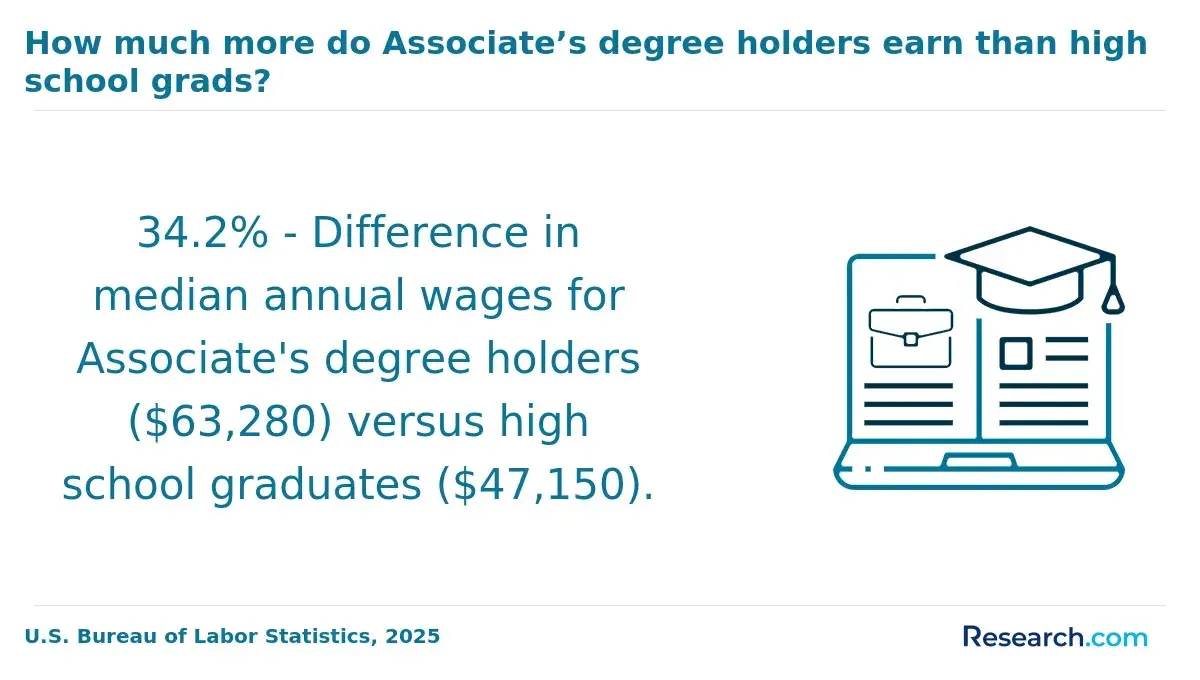
| Associate degree | Combines general education with career or transfer preparation | Registered nursing, paralegal studies, radiologic technology, IT support | Best for lower-cost entry, transfer planning, or applied technical fields |
| Bachelor's degree | Prepares students for professional roles and broader advancement | Business, computer science, education, engineering, psychology, public health | Best when employers commonly require a four-year degree or when graduate school is likely |
| Master's degree | Builds advanced expertise or meets professional requirements | Counseling, social work, analytics, education leadership, physician assistant studies | Best when the credential is required for licensure, promotion, or a specialized role |
| Apprenticeship | Combines paid work with structured technical training | Electrician, plumber, machinist, lineworker, some manufacturing roles | Best for students who want earn-and-learn training and skilled trade credentials |
| Professional doctorate or first professional degree | Prepares graduates for highly regulated professions | Physician, pharmacist, lawyer, dentist, physical therapist | Best only when the career legally or professionally requires it |
Students who want a flexible path should compare format, difficulty, support, and career fit rather than assuming one major is automatically easy. If speed and flexibility matter, reviewing the easiest degree to get online can be useful, but the final choice should still match employer expectations.
One red flag is choosing a short certificate for a licensed profession without confirming whether the certificate meets state requirements. For example, a health care or education program may advertise career preparation but still not qualify students for licensure in every state.
How do online and campus programs compare?
Online and campus programs can both be strong choices when they are accredited, well-supported, and aligned with the student's career goal. The better format depends on your schedule, learning style, need for hands-on training, and access to internships or clinical placements.
The table below compares online and campus study across decision factors that affect completion, cost, and career preparation. Students should use these differences to ask sharper questions before enrolling.
| Factor | Online programs | Campus programs | Best choice depends on |
| Schedule | Often more flexible, especially asynchronous courses | More fixed class times and commuting requirements | Work schedule, family responsibilities, and self-discipline |
| Hands-on learning | May require local labs, practicums, intensives, or clinical placements | Labs, studios, clinics, and workshops may be easier to access | Whether the career requires equipment, supervision, or direct practice |
| Networking | Requires intentional use of virtual events, faculty contact, and online communities | More natural access to campus events, clubs, and local employer visits | How much the student needs in-person mentoring and peer connection |
| Cost | May reduce commuting, housing, and schedule-related costs | May provide more campus resources included in fees | Total cost after aid, not tuition alone |
| Career services | Quality varies; strong programs offer virtual advising and employer connections | May offer local internship pipelines and in-person career fairs | Whether services are specific to the student's field and location |
Online study can be a strong option for business, technology, public administration, psychology, communications, and many completion degrees. Campus or hybrid study may be better for students who need labs, studios, clinical supervision, licensure preparation, or a structured learning environment.
A common mistake is assuming online means easier. In reality, online programs often require stronger time management because students must keep up without the built-in rhythm of campus attendance.
What accreditation should students look for?
Accreditation is a quality review process used to evaluate colleges and certain programs. For students, it matters because it can affect federal financial aid eligibility, transfer credit, graduate school admission, employer recognition, and licensure eligibility.
Students should understand two main types of accreditation. Institutional accreditation applies to the college or university as a whole, while programmatic accreditation applies to a specific program, department, or professional school.
The table below shows examples of when programmatic accreditation may matter. Requirements vary, so students should confirm the rules for their state and intended profession before enrolling.
| Field | Why accreditation matters | Examples of what to verify |
| Nursing | May affect licensure eligibility, employer preference, and graduate study | State board approval, clinical placement process, NCLEX preparation |
| Teaching | Teacher licensure depends on state-approved preparation routes | State approval, student teaching requirements, certification exam preparation |
| Counseling and social work | Graduate programs may need recognized accreditation for licensure pathways | Supervised hours, exam eligibility, state licensure alignment |
| Engineering and computing | Some employers and licensure routes prefer or require specialized accreditation | Program outcomes, lab access, internship support |
| Business and accounting | Not always required, but may signal quality and affect CPA preparation | CPA course requirements, accounting credit hours, employer partnerships |
Before applying, students should take these practical steps to reduce risk. The goal is to verify accreditation independently rather than relying only on marketing language.
- Search the school in the U.S. Department of Education's recognized accreditation database.
- Check whether the specific program has programmatic accreditation or state approval if the career requires it.
- Ask whether credits transfer to public universities or graduate programs in the same field.
- Confirm that online, hybrid, and branch-campus versions of the program have the same approvals.
- For licensed careers, contact the state licensing board or review its approved-program list.
A major red flag is vague wording such as "accredited curriculum" without naming the accreditor or approval body. Students should also be cautious if admissions staff cannot clearly explain licensure eligibility in writing.
What admission requirements do most programs ask for?
Admission requirements vary by school, credential level, and major. Open-admission community colleges may require placement steps rather than competitive review, while selective universities and graduate programs may evaluate grades, prerequisites, essays, recommendations, exams, interviews, or work experience.
The table below summarizes common requirements by program level. It helps students prepare early and avoid delays caused by missing transcripts, prerequisite courses, or application materials.
| Program level | Common requirements | What students should prepare |
| Certificate | High school diploma or equivalent, placement assessment, basic skills requirements | Proof of graduation, career goals, schedule availability |
| Associate degree | High school transcript, placement process, immunization records for some campuses | Transfer plan, math and English placement, financial aid forms |
| Bachelor's degree | Transcript, GPA review, test scores when required, essay, activities, recommendations | Major prerequisites, application deadlines, scholarship materials |
| Graduate degree | Bachelor's degree, minimum GPA, statement of purpose, resume, recommendations, prerequisites | Professional goals, relevant experience, writing samples or portfolio if required |
| Licensed or clinical program | Prerequisite coursework, background check, drug screening, immunizations, interview, clinical availability | State requirements, clinical placement rules, transportation plan |
Students applying to competitive majors should ask whether admission to the college also means admission to the major. Nursing, engineering, education, business, and some health science programs may require a second application after prerequisites are completed.
To strengthen an application, focus on fit and readiness rather than trying to sound impressive. Admissions reviewers often look for evidence that the student understands the field, can complete the program, and has a realistic plan for using the credential.
How long do programs usually take to finish?
Program length depends on credential level, enrollment status, transfer credit, prerequisites, and whether the field requires clinical hours, student teaching, apprenticeship hours, or supervised practice. Full-time students may finish faster, but part-time study may be more realistic for students who work or care for family.
The table below gives typical completion ranges. Actual timelines can change if students switch majors, repeat courses, wait for clinical placements, or attend part time.
| Program type | Typical full-time length | Common reasons it takes longer |
| Short certificate | A few months to one year | Course availability, externship scheduling, state exam preparation |
| Associate degree | About two years | Developmental coursework, part-time enrollment, limited clinical seats |
| Bachelor's degree | About four years | Changing majors, transfer credit loss, prerequisite sequences |
| Master's degree | About one to three years | Capstone, thesis, practicum, work schedule, cohort pacing |
| Doctoral or professional degree | Several years after the bachelor's degree | Clinical rotations, residency, dissertation, licensing exams |
Students trying to shorten the timeline should look for programs with generous transfer policies, prior learning assessment, summer courses, competency-based options, and clear prerequisite maps. Graduate students comparing speed and cost can review options such as the quickest cheapest masters degree, but they should still confirm accreditation and employer recognition.
The biggest timeline mistake is enrolling before understanding course sequencing. If a required class is offered only once a year, missing it can delay graduation even when the total credit count looks manageable.
What costs should students expect for this path?
Students should estimate total cost, not just tuition. Total cost can include fees, books, supplies, software, equipment, commuting, housing, childcare, health insurance, unpaid clinical time, exam fees, and lost work hours. College Board 2024-25 data shows published tuition and fees vary widely by institution type, which means the same career goal may have very different price tags depending on the route.
For a quick cost baseline, students can compare these published tuition and fee averages before subtracting grants, scholarships, or employer aid.
- Public two-year in-district colleges: $4,050 for published tuition and fees in 2024-25.
- Public four-year in-state colleges: $11,610 for published tuition and fees in 2024-25.
- Private nonprofit four-year colleges: $43,350 for published tuition and fees in 2024-25.
Lower tuition does not automatically mean better value, and higher tuition does not automatically mean stronger outcomes. Students should compare net price after aid, graduation rates, transfer success, licensure pass rates when relevant, internship access, and the salary range for realistic entry-level roles.
Students who want a lower-cost starting point may consider community college pathways, transfer agreements, or the easiest associate degrees if those options still align with their career goals. An associate degree can be a smart first step when credits transfer cleanly or when the target role does not require a bachelor's degree.
To reduce cost risk, students should request a written cost estimate and ask these questions before enrolling. The answers can reveal hidden expenses that are not obvious on a tuition page.
- What is the estimated total cost through graduation, including fees, books, supplies, and required equipment?
- How much institutional aid is renewable, and what GPA or credit load is required to keep it?
- Will all prior credits transfer into the major, or only as electives?
- Are internships, clinical placements, background checks, uniforms, travel, or exam fees extra?
- What percentage of students complete the program and enter jobs related to the field?
What jobs and salaries can graduates expect?
Jobs and salaries depend on occupation, education, experience, industry, state, metro area, and employer type. BLS May 2024 data is useful because it shows national medians, but students should treat those figures as reference points rather than promises about individual outcomes.
The table below lists selected careers students often consider, along with BLS May 2024 median annual wage data. Use it to compare broad earning potential, then check local job postings to see what entry-level roles actually require.
| Career | Common education route | BLS May 2024 median annual wage | Important context |
| Software developer | Bachelor's degree or strong technical portfolio | $133,080 | Employers often test coding ability and project experience, not just degree completion |
| Registered nurse | Associate or bachelor's degree in nursing plus licensure | $93,600 | Clinical training, state licensure, shifts, and specialty area affect opportunities |
| Accountant or auditor | Bachelor's degree; CPA path may require additional credits | $81,680 | Public accounting, corporate finance, government, and tax roles differ in workload and advancement |
| Market research analyst | Bachelor's degree in business, statistics, marketing, or related field | $76,950 | Data tools, communication skills, and industry knowledge can influence hiring |
| Electrician | Apprenticeship or technical training plus state requirements | $62,350 | Licensing, union access, overtime, and local construction demand affect income |
| Elementary school teacher | Bachelor's degree and state teacher certification | $63,680 | Pay scales, benefits, and shortage areas vary significantly by district and state |
Remote work is another factor in career planning. Students who want location flexibility should compare majors that build digital, analytical, communication, and management skills; a helpful starting point is reviewing the best degrees for work from home jobs.
The strongest graduates usually combine a credential with evidence of skill. Depending on the field, that evidence may include a portfolio, internship, clinical evaluation, apprenticeship hours, GitHub projects, writing samples, lab competencies, sales results, research experience, or professional references.
What certifications or licenses may be required?
Certifications and licenses are not the same. A license is usually a legal requirement to practice in a regulated occupation, often issued by a state board. A certification is typically a professional credential that demonstrates skill or knowledge, though employers may strongly prefer it for certain roles.
The table below shows examples of credentials students may encounter. Always verify requirements with the state board, professional association, or employer because rules can change and may differ by location.
| Field | Possible license or certification | Why it matters |
| Nursing | RN license after completing an approved program and passing the NCLEX-RN | Required to practice as a registered nurse |
| Teaching | State teacher certification or licensure | Required for most public school teaching roles |
| Accounting | Certified Public Accountant credential | Important for public accounting and some senior finance roles |
| Information technology | CompTIA, Cisco, cloud, cybersecurity, or vendor certifications | Can validate technical skills, especially for entry-level or specialized roles |
| Skilled trades | State or local trade license, apprenticeship credential, OSHA safety training | May be required for independent practice, jobsite access, or advancement |
| Counseling and social work | State professional license after graduate education and supervised hours | Required for many clinical and independent practice roles |
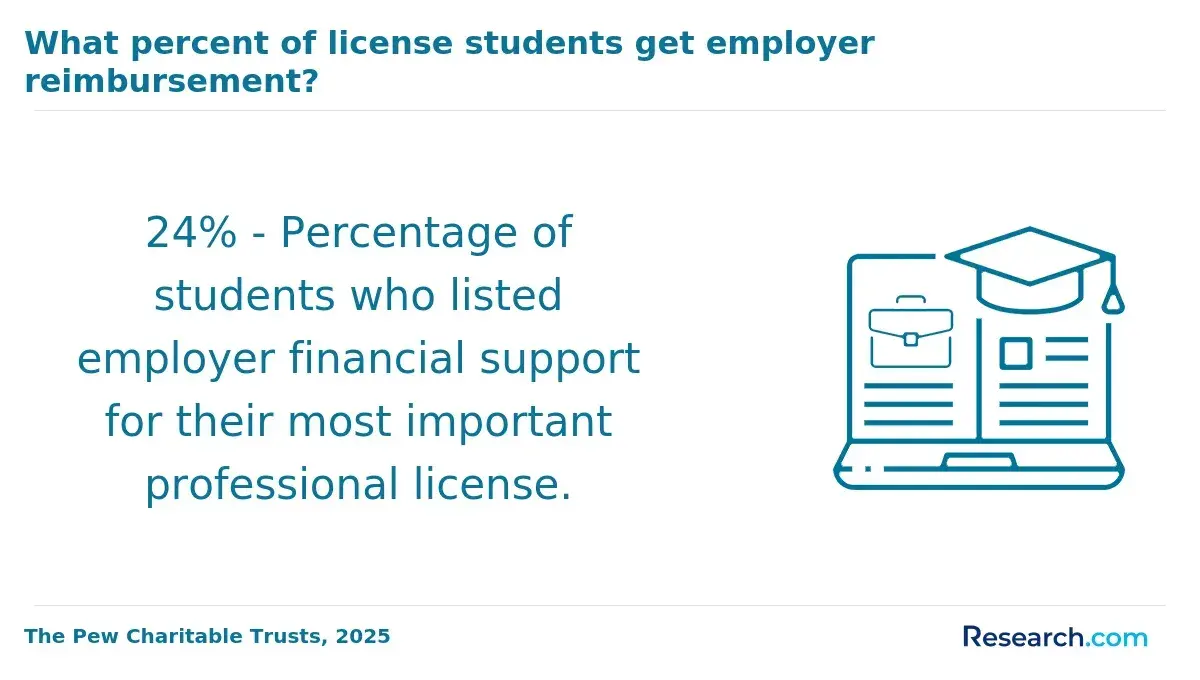
Students should plan for certification or licensing costs early. Exam fees, background checks, continuing education, supervision, and renewal fees can add to the total cost of a career path.
A common mistake is assuming a national online program automatically meets every state's licensing rules. Before enrolling, students should ask the school for written confirmation of whether the program meets educational requirements in the state where they plan to work.
Other Things You Should Know About
The best starting point is a broad, transferable field such as business, health care, technology, education, communications, or skilled trades. Undecided students should take introductory courses, complete career assessments, review job postings, and choose programs that preserve transfer options.
A degree can be worth it when it is required for the target role, comes from an accredited institution, has a manageable total cost, and leads to realistic employment options. It is less attractive when students borrow heavily for a program with weak completion, transfer, licensure, or job-placement outcomes.
Students should balance both. A high-paying career may be unsustainable if the work does not fit the student's strengths or lifestyle, while a passion-driven path may create stress if the pay cannot support financial goals. The strongest choice usually combines interest, ability, demand, and realistic cost.
Graduates can improve their chances by building experience before and after graduation. Useful steps include internships, apprenticeships, freelance projects, certifications, networking, career fairs, strong resumes, interview practice, and a portfolio or work sample when the field values demonstrated skills.
References
- Graduate School Application Timeline https://www.princetonreview.com/grad-school-advice/application-timeline
- How much to save for college https://www.savingforcollege.com/article/how-much-to-save-for-college
- How to Choose the Best Career to Study: A Practical Guide for Future Students https://urbeuniversity.edu/blog/how-to-choose-the-best-career-to-study-a-practical-guide-for-future-students
- StudentSpace - How Much Do Studies in Poland Cost? Explaining Tuition Prices and Fees https://www.studentspace.pl/en/blog/post/how-much-do-studies-in-poland-cost-explaining-tuition-prices-and-fees
- List of Careers and Job Titles: https://www.mymajors.com/career-list/
- I have a degree, now what? https://targetjobs.co.uk/careers-advice/career-ideas/i-have-degree-now-what
- How Much Does it Cost to Study Abroad in 2025? | Go Overseas https://www.gooverseas.com/blog/cost-to-study-abroad
- Best Career Options After Graduation: Top High-Paying Paths https://www.flashfirejobs.com/blog/best-career-options-after-graduation
- New grads expect to earn over $100K right after college, on average—these are the top fields to achieve that https://www.cnbc.com/2025/04/23/career-fields-where-new-grads-can-command-a-100000-starting-salary.html
- Graduate Program Requirements: Your Roadmap to Grad School https://bemoacademicconsulting.com/blog/graduate-program-requirements