2027 How to Build Career Skills While You're Still in School

Co-Founder and Chief Data Scientist
Students are often told to "get experience, " but it is not always clear how to do that before graduation. The stakes are real. BLS 2024 data show bachelor's degree holders age 25 and older had median weekly earnings of $1,543 and a 2.5% unemployment rate, but employers still look for applied skills, not just credentials.
This guide is for high school, college, and graduate students who want to turn school into career preparation. You will learn which experiences matter, how to choose them, and how to prove your skills when applying for jobs.
Key Things You Should Know
- BLS 2024 data show bachelor's degree holders age 25 and older had median weekly earnings of $1,543, but early career outcomes still vary by major, experience, location, and industry.
- The strongest student career profile usually combines three elements: applied coursework, supervised work experience such as internships or campus jobs, and documented proof through resumes, portfolios, certifications, or project samples.
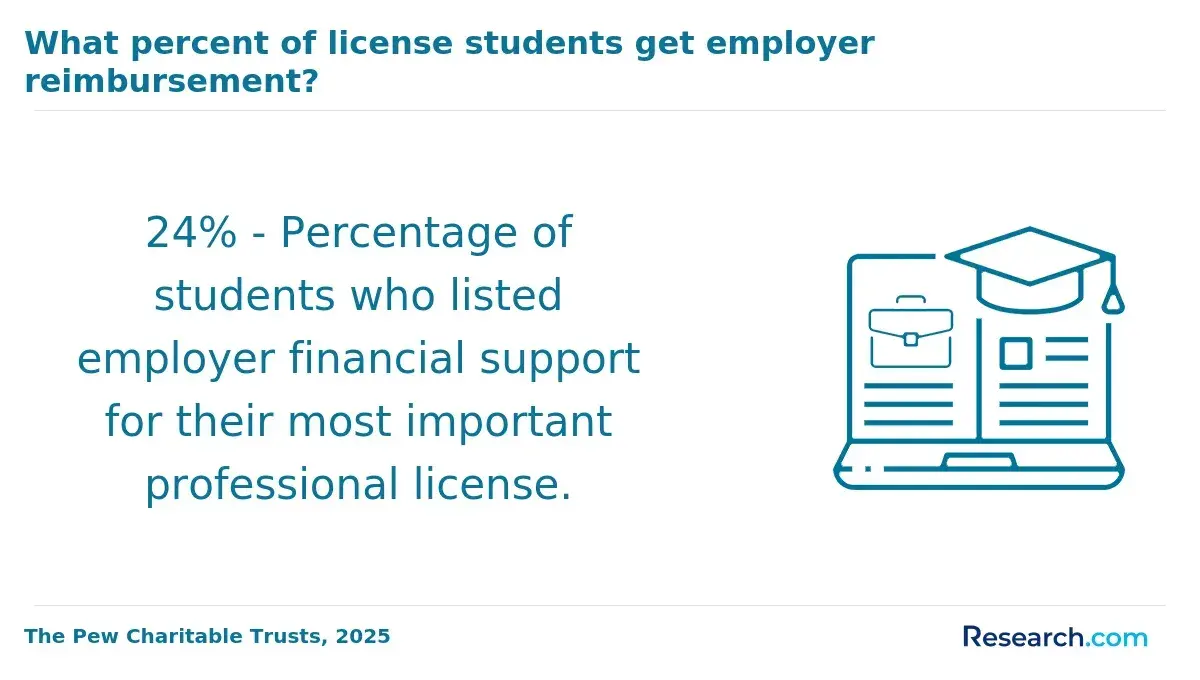
- College Board 2024 figures place average published tuition and fees at $11,610 for in-state public four-year colleges and $43,350 for private nonprofit four-year colleges, so students should use school time deliberately to build skills that improve career fit and return on investment.
How can you start building career skills through your coursework and class projects?
You can start building career skills through coursework by treating classes as evidence of what you can do, not just requirements to finish. A career skill is any ability that helps you perform work tasks: analyzing data, writing for a specific audience, managing deadlines, solving technical problems, presenting ideas, using professional software, or collaborating with a team.
The key is to connect each course to a real job function. A marketing class can produce a campaign brief, a statistics class can produce a data dashboard, an English class can produce professional writing samples, and an engineering class can produce a design prototype. These projects become stronger when they include a clear problem, your process, tools used, measurable results, and a short reflection on what you learned.
The table below shows how common class activities can translate into career-ready evidence. Use it to identify which assignments are worth saving, revising, and adding to a portfolio or resume.
| School activity | Career skill developed | Evidence you can save | Best fit for |
| Research paper | Information literacy, synthesis, written communication | Executive summary, annotated bibliography, final paper excerpt | Policy, communications, education, law, business |
| Group project | Teamwork, project coordination, conflict resolution | Project plan, presentation slides, peer feedback, final deliverable | Management, healthcare, technology, nonprofit work |
| Lab or technical assignment | Experiment design, troubleshooting, documentation | Lab report, code repository, prototype notes, test results | STEM, health sciences, data, manufacturing |
| Case study | Problem-solving, business judgment, recommendation writing | One-page recommendation memo or slide deck | Consulting, finance, operations, public administration |
| Capstone project | Applied research, client communication, presentation | Final report, portfolio page, recorded presentation, outcome summary | Most professional and technical fields |
To make coursework more career-relevant, focus on assignments that resemble the work you want to do after graduation. A student interested in cybersecurity, for example, should save technical documentation and risk assessments; a future teacher should preserve lesson plans and classroom observation reflections.
Use this process near the beginning of each term so you are not trying to reconstruct your accomplishments months later:
- Read each syllabus and identify two assignments that could become professional work samples.
- Ask the instructor whether you can choose a topic, client problem, dataset, or case that matches your career interests.
- Save drafts, feedback, rubrics, and final versions so you can show improvement, not just the finished product.
- Rewrite academic work into employer-friendly formats such as briefs, dashboards, memos, slide decks, or portfolio summaries.
- Track tools used, such as Excel, Python, Canva, AutoCAD, SPSS, Tableau, Adobe Creative Cloud, or industry-specific platforms.
A common mistake is assuming only major-specific classes matter. General education courses can build transferable skills that employers value, especially writing, quantitative reasoning, ethical judgment, intercultural communication, and public speaking. If a class teaches you to explain complex information clearly, it can support almost any career path.
What are the most effective ways to gain experience through internships, co-ops, and micro-internships?
Internships, co-ops, and micro-internships are among the most direct ways to gain experience because they put you in a workplace with real expectations. The main difference is duration and intensity: internships are usually short-term, co-ops are longer and often full-time, and micro-internships are brief project-based assignments that may last days or weeks.
NACE's 2024 internship research continues to show that employers use internships as a major early-talent pipeline. For students, that means an internship is not only a learning experience; it can also be an extended interview, a reference source, and a way to test whether a career field actually fits.
The table below compares common work-based learning options so you can choose the format that fits your schedule, finances, and academic plan.
| Experience type | Typical structure | Main advantage | Trade-off | Best for |
| Internship | Part-time during school or full-time during summer | Recognizable to employers and often aligned with entry-level hiring | Competitive applications and variable pay | Students exploring a specific field before graduation |
| Co-op | Full-time paid work term integrated into an academic program | Deep experience and stronger employer relationships | May extend time to graduation | Engineering, technology, business, and applied science students |
| Micro-internship | Short project completed remotely or locally | Flexible way to build experience quickly | Less exposure to workplace culture than longer roles | Students with limited time, commuters, and career changers |
| Externship or job shadow | Short observation-based experience | Helps clarify career fit before committing | Usually limited hands-on responsibility | Students deciding between several career paths |
To get more value from any work-based experience, aim for responsibilities that create measurable results. Employers do not expect students to know everything, but they do want to see learning agility, reliability, communication, and evidence that you contributed.
Before accepting an opportunity, ask practical questions that reveal whether the role will build usable skills:
- What projects will I own or support during the internship or co-op?
- Who will supervise me, and how often will I receive feedback?
- Which tools, systems, or professional methods will I learn?
- Will I be able to use non-confidential work samples in a portfolio?
- Is the position paid, for credit, or both, and what costs will I need to cover?
- How have previous interns or co-op students moved into full-time roles?
Students often make the mistake of applying only to famous companies. Brand-name employers can be valuable, but smaller organizations may offer broader responsibilities, closer mentoring, and faster skill growth. A local nonprofit, startup, school district, clinic, lab, or municipal office can be a strong choice if the work is supervised and relevant.
How can part-time jobs, work-study, and campus employment build real-world job skills?
Part-time jobs, work-study roles, and campus employment can build real-world job skills even when they are not directly tied to your major. Employers often value evidence that you showed up consistently, handled customers or clients, solved problems under pressure, managed time, and balanced school with work.
Federal Work-Study and campus jobs may be especially useful because supervisors are usually accustomed to student schedules. The best roles are not always the highest-paying ones; they are the roles that let you practice communication, responsibility, technology use, leadership, or service in a way you can explain on a resume.
Different student jobs build different strengths. The table below can help you recognize the professional value of common roles that students sometimes underestimate.
| Student job | Skills commonly developed | How to describe the value professionally |
| Library assistant | Research support, organization, user service, database use | Supported information access and assisted users with research tools and resources |
| Resident assistant | Conflict resolution, crisis response, event planning, peer leadership | Managed community standards, supported student well-being, and coordinated programs |
| Dining or retail worker | Customer service, cash handling, teamwork, time management | Served high-volume customers while maintaining accuracy and service quality |
| Tutor or teaching assistant | Instruction, communication, subject mastery, feedback | Explained complex concepts and supported student learning outcomes |
| Campus office assistant | Administrative systems, scheduling, confidentiality, professional communication | Handled records, coordinated appointments, and supported office operations |
To turn a student job into career evidence, track your responsibilities and outcomes while the details are fresh. Even simple metrics can help, as long as they are truthful and not exaggerated.
Use these tactics to make part-time work more valuable:
- Ask your supervisor for one new responsibility each term, such as training peers, handling a system, creating a checklist, or leading a small project.
- Keep a private record of accomplishments, including events supported, customers served, reports created, schedules managed, or tools learned.
- Translate job duties into skills language on your resume instead of listing tasks only.
- Request a LinkedIn recommendation or reference after a successful semester, not years later.
- Look for internal promotions, because moving from assistant to lead or supervisor shows growth.
If you are starting at a lower-cost institution or exploring transfer pathways, community college can also be a practical place to build employable skills through tutoring centers, labs, student services, and local employer partnerships. Students comparing nontraditional starting points may find resources such as Barbados Community College useful when thinking about accessible degree routes, though U.S. students should always verify local accreditation and transfer rules.
Which technical and soft skills should students prioritize for today's job market?
Students should prioritize a balanced mix of technical skills, soft skills, and career management skills. Technical skills help you perform field-specific tasks, while soft skills help you work with people, manage ambiguity, and communicate results. Career management skills help you search, network, interview, negotiate, and keep learning after graduation.
AI and automation are changing what "career-ready" means. Students do not necessarily need to become AI engineers, but they should understand how digital tools affect their field, how to verify AI-generated information, and how to use technology ethically. In many entry-level roles, employers increasingly expect graduates to be comfortable learning new platforms quickly.
The table below groups priority skills by career value. Use it to identify gaps rather than trying to learn every tool at once.
| Skill category | Examples | Why it matters | How students can show it |
| Communication | Writing, presenting, listening, audience adaptation | Nearly every role requires explaining ideas clearly to coworkers, clients, patients, or customers | Presentations, writing samples, meeting notes, peer feedback |
| Analytical thinking | Data interpretation, research, logic, evidence-based decisions | Employers need workers who can solve problems, not just follow instructions | Case studies, lab reports, dashboards, research briefs |
| Digital fluency | Spreadsheets, databases, collaboration tools, AI literacy, cybersecurity basics | Technology is embedded in business, healthcare, education, government, and creative work | Tool lists, certificates, project screenshots, workflow summaries |
| Teamwork and leadership | Collaboration, delegation, feedback, conflict management | Entry-level employees often work across teams before they manage formally | Group projects, club leadership, supervisor evaluations |
| Professional judgment | Ethics, confidentiality, reliability, cultural awareness | Employers trust workers who make sound decisions when rules are not perfectly clear | Reflections, supervisor references, scenario-based interview examples |
The smartest approach is to build a T-shaped profile: broad transferable skills across communication, teamwork, and problem-solving, plus deeper technical ability in one area. For example, a psychology major might add data analysis, a biology major might add regulatory documentation, and a business major might add CRM or financial modeling experience.
Students should avoid the mistake of collecting random certificates without a plan. A short course in SQL, Excel, project management, CPR, Google Analytics, bookkeeping, or medical terminology can be useful if it matches your target role. It is less useful if you cannot explain how it supports your goals.
Use this priority test before spending time or money on a skill:
- Find five entry-level job postings in your target field.
- Highlight repeated tools, tasks, and soft skills across those postings.
- Compare the list with your current coursework, job experience, and projects.
- Choose one technical skill and one communication or leadership skill to strengthen this term.
- Create a work sample that proves the skill instead of only listing it on your resume.
How can student clubs, leadership roles, and volunteer work strengthen your professional profile?
Student clubs, leadership roles, and volunteer work strengthen your professional profile by giving you practice in responsibility, collaboration, planning, and service. These experiences are especially valuable when you have limited paid work experience or when your major does not include many applied projects.
Leadership does not always mean being president of an organization. Employers also value students who manage budgets, plan events, recruit volunteers, lead committees, coordinate social media, mentor peers, organize service projects, or solve logistical problems. The goal is to show initiative and follow-through.
To make extracurricular experience more career-relevant, choose roles that align with the kind of work you want to do. A future healthcare worker might volunteer in patient support or public health education, while a future software developer might contribute to a coding club project or hackathon team.
These activities can produce strong resume evidence when you document them carefully:
- Club officer roles that include budgeting, event planning, recruitment, or member communication.
- Volunteer projects with measurable service outputs, such as workshops delivered, materials created, or community partners supported.
- Peer mentoring, tutoring, orientation leadership, or ambassador roles that show communication and responsibility.
- Competitions, conferences, research symposia, hackathons, performances, or publications that show discipline-specific achievement.
- Service-learning projects connected to a course, especially when they involve a real client or community problem.
The main risk is overcommitment. A long list of shallow memberships usually matters less than two or three meaningful roles with clear contributions. If your grades, health, or work responsibilities are suffering, choose fewer activities and aim for deeper impact.
When describing leadership or volunteer work, focus on the problem, your action, and the result. For example, "helped with club events" is weaker than "coordinated three employer speaker events by managing outreach, room reservations, and attendee communication." Specificity makes the experience credible.
How do online programs compare to campus-based options for developing career skills?
Online programs and campus-based options can both develop career skills, but they do so differently. Online learning often builds self-direction, written communication, digital collaboration, and schedule discipline. Campus-based learning may offer easier access to labs, in-person clubs, local recruiting, and face-to-face networking.
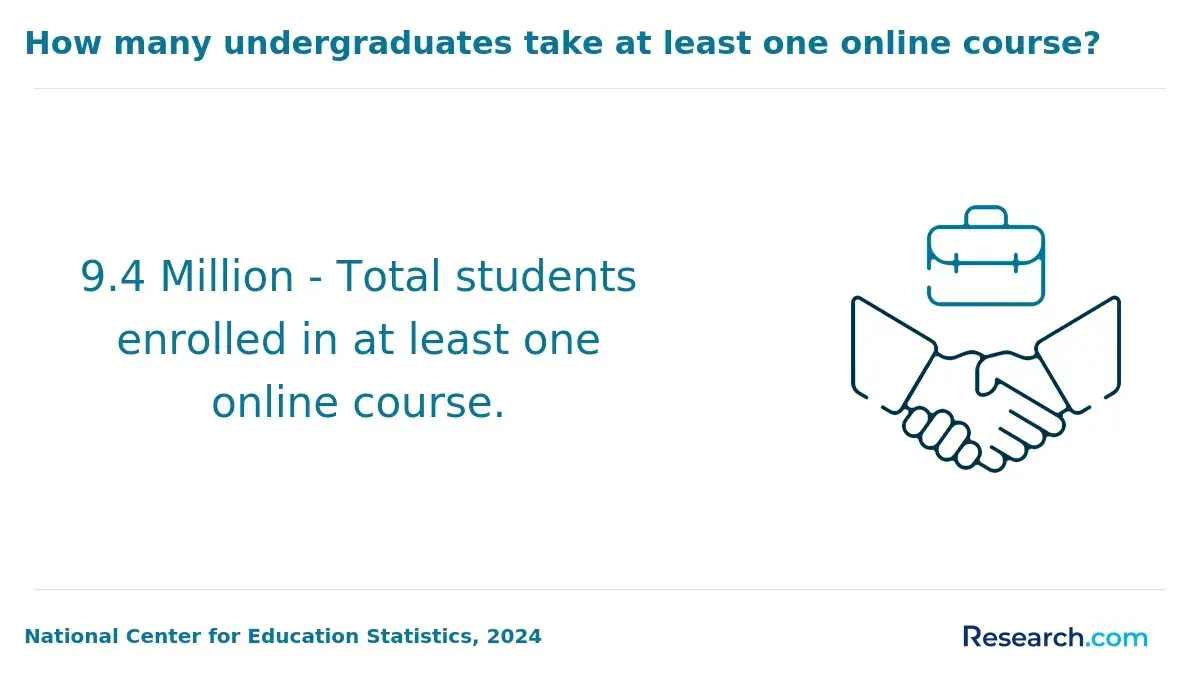
According to NCES data released in 2024, distance education remains a major part of U.S. higher education, even after emergency pandemic shifts faded. For students, this means online learning is no longer unusual, but quality still depends on program design, faculty support, accreditation, and access to applied experiences.
The table below compares online and campus-based learning from a career skill perspective. Use it to decide which format better fits your goals, not just your schedule.
| Format | Career skill strengths | Potential limitations | Best fit |
| Fully online | Self-management, digital communication, remote collaboration, written documentation | May require extra effort to find internships, labs, networking, or hands-on practice | Working students, caregivers, military students, rural students, self-directed learners |
| Campus-based | In-person networking, lab access, clubs, campus recruiting, spontaneous mentoring | Less flexible and may involve commuting or housing costs | Students who benefit from structure, facilities, and face-to-face support |
| Hybrid | Combination of flexibility and in-person practice | Schedules can be complicated if campus visits are required | Students who need flexibility but also want labs, residencies, or local networking |
| Competency-based | Progress based on demonstrated mastery | Requires strong self-pacing and careful employer recognition checks | Experienced learners who can document prior knowledge |
Online programs can be especially practical for students seeking flexible credentials before transferring or moving into a bachelor's program. If you are comparing shorter credentials, associate pathways, or flexible entry points, a guide to 2-year online degrees can help you understand how online formats may fit early career planning.
To build career skills in an online program, you need to be more intentional about visibility. Remote students should attend virtual office hours, join online student organizations, ask faculty about research or project opportunities, and use career services early.
Before enrolling in an online or hybrid program, check these career-readiness features:
- Accreditation status and whether credits transfer to your intended next degree.
- Internship, practicum, clinical, lab, or field placement support, if your field requires it.
- Access to career coaching, mock interviews, employer events, and alumni networks.
- Use of current software, simulations, remote collaboration tools, or industry platforms.
- Clear information about tuition, fees, technology requirements, and required campus visits.
A common mistake is choosing an online program only because it is fast. Speed can be helpful, but a program that lacks accreditation, employer recognition, faculty access, or applied projects may not support your long-term goals.
How should you use college career services and mentoring to prepare for the workforce?
College career services and mentoring can help you turn scattered school experiences into a coherent professional plan. Career centers often provide resume reviews, mock interviews, job boards, internship connections, career fairs, salary tools, graduate school advising, and alumni networking.
The mistake many students make is waiting until senior year. Career preparation works best when it starts early, because you need time to test interests, revise your resume, build references, and recover from rejected applications. A first-year student does not need a perfect plan, but they should begin exploring.
Use career services differently depending on where you are in school. The sequence below provides a practical timeline:
- In your first year, take a career assessment, attend one employer event, and create a basic resume that includes coursework, jobs, and activities.
- In your second year, meet with a career advisor to identify target roles, required skills, and internship timelines.
- In your third year, complete at least one internship, research project, clinical exposure, co-op, or substantial portfolio project.
- In your final year, schedule mock interviews, request references, tailor applications, and compare job offers or graduate school options carefully.
- If you are in graduate school, use mentoring to clarify specialization, publication, licensing, leadership, or industry transition goals.
Mentors can come from faculty, supervisors, alumni, professional associations, community organizations, or family networks. The best mentors do not simply "give you a job"; they help you understand expectations, avoid mistakes, and make better decisions about opportunities.
If you are planning for advanced study, career advisors can also help you compare program length, research expectations, and professional outcomes. For example, students who want advanced credentials with shorter timelines may research options such as the best 1-year PhD programs online, while still confirming accreditation, workload, and employer relevance.
When meeting with a mentor or career advisor, bring specific questions. "What should I do with my life?" is hard to answer; "Which experience would make me more competitive for entry-level analyst roles?" leads to better guidance.
What is the best way to choose accredited programs that support your long-term career goals?
Choosing accredited programs that support your long-term career goals requires more than comparing tuition or rankings. Accreditation is a quality assurance process in which an outside body evaluates whether a school or program meets defined standards. In the U.S., institutional accreditation affects credit transfer, federal financial aid eligibility, graduate school recognition, and employer confidence.
Programmatic accreditation may also matter in fields such as nursing, education, counseling, engineering, social work, business, public health, and allied health. Requirements vary by state and profession, so students should verify whether a program meets licensing or certification rules before enrolling.
The table below summarizes major program selection factors. It is designed to help you compare options based on career fit rather than reputation alone.
| Factor | Why it matters | What to verify |
| Institutional accreditation | Supports financial aid eligibility, credit transfer, and degree recognition | Accreditor listed by the U.S. Department of Education or CHEA-recognized sources |
| Programmatic accreditation | May be required or preferred for licensure and specialized employment | Whether the specific program, not just the school, is accredited |
| Curriculum alignment | Courses should match target roles and skill requirements | Required courses, electives, labs, projects, clinicals, or capstones |
| Career outcomes | Helps assess whether graduates pursue roles similar to your goals | Job placement data, licensure pass rates, employer partners, alumni examples |
| Total cost | Tuition is only part of the investment | Fees, books, travel, housing, technology, lost wages, and time to completion |
Cost deserves careful attention because published tuition is not the same as your net price. College Board's 2024 Trends in College Pricing report lists average published tuition and fees at $11,610 for in-state students at public four-year institutions, but grants, scholarships, transfer credits, living costs, and time to degree can change the true cost significantly.
Before choosing a program, ask questions that connect education directly to career outcomes:
- Is the institution accredited, and is my specific program accredited if my field expects it?
- Will the program meet licensure, certification, or graduate school requirements in my state?
- How many credits will transfer if I change schools or continue to a higher degree?
- What internships, clinicals, fieldwork, labs, simulations, or capstone projects are built into the curriculum?
- What career services are available to online, commuter, transfer, and part-time students?
- What is the total estimated cost after aid, fees, supplies, travel, and time away from work?
Students considering advanced credentials should also compare dissertation, capstone, residency, and research requirements. Some professional pathways may align with doctoral programs without dissertation, but the right choice depends on field norms, accreditation, and whether the credential supports your intended role.
Red flags include unclear accreditation language, pressure to enroll immediately, vague job placement claims, credits that rarely transfer, missing licensure disclosures, and promises of guaranteed salaries. A trustworthy program should be willing to explain costs, requirements, outcomes, and limitations in plain language.
How can you document your skills with resumes, portfolios, and certifications while in school?
Documenting your skills while in school is what turns experience into opportunity. A resume tells employers what you have done, a portfolio shows examples, and certifications can verify specific knowledge or tool use. Together, they help you compete even if you have not yet held a full-time professional role.
Your documentation should answer three questions: What can you do, how do you know, and where is the evidence? A student who says "strong communication skills" sounds generic; a student who links a policy brief, presentation, tutoring experience, and supervisor reference is more convincing.
The table below compares common ways to document skills. Use it to decide which evidence fits your target field.
| Documentation type | What it proves | Best used for | Limitations |
| Resume | Experience, education, skills, accomplishments | Nearly all job, internship, scholarship, and graduate school applications | Brief format limits detail |
| Portfolio | Quality of work and applied ability | Design, writing, data, coding, teaching, marketing, research, media, technical fields | Must avoid confidential or copyrighted material |
| Certification | Knowledge of a tool, method, safety requirement, or professional standard | IT, healthcare support, business, project management, analytics, trades, education support | Value depends on employer recognition and relevance |
| LinkedIn profile | Professional identity, network, recommendations, public work history | Networking, internships, informational interviews, recruiter discovery | Needs regular updating and careful privacy choices |
| Reference list | Credibility from supervisors, faculty, or mentors | Final hiring stages, scholarships, graduate school, fellowships | References must know your work well enough to speak specifically |
Build your documentation gradually so you are not rushing before an application deadline. The strongest materials are specific, current, and tailored to the role.
Follow this practical documentation routine each semester:
- Save two or three strong work samples from classes, jobs, clubs, internships, or volunteer roles.
- Rewrite at least one resume bullet using action, context, and result.
- Update your skills list with tools, methods, software, languages, or lab techniques you actually used.
- Ask one instructor, supervisor, or mentor whether they would be comfortable serving as a future reference.
- Review your online presence for professionalism, consistency, and privacy.
- Remove or revise outdated work samples that no longer represent your best ability.
If you plan to continue into graduate or professional education, documentation can also help you compare programs and prepare applications.
Do not inflate your skills. If you used Python in one assignment, say that you completed an introductory Python analysis rather than claiming advanced proficiency. Honest specificity builds trust and helps you avoid interviews where you cannot support your claims.
How do early career skill-building efforts affect salary growth and job outlook after graduation?
Early career skill-building can affect salary growth and job outlook by helping students enter the labor market with clearer goals, stronger evidence, and better fit. It does not guarantee a high salary, but it can improve the quality of applications, interviews, and first-job decisions.
BLS May 2024 wage data show the median annual wage for all U.S. occupations was $49,500, while many professional roles requiring specialized education, technical skill, or experience had higher medians. This does not mean every graduate will earn more immediately; it means students should connect their education and experiences to occupations with realistic demand and advancement paths.
The table below provides salary and outlook context for broad career areas. These figures should be used as labor-market reference points, not promises of individual outcomes.
| Career area | Examples of student skill-building activities | Salary context from BLS May 2024 data | What affects outcomes |
| Computer and mathematical roles | Coding projects, data analysis, cybersecurity labs, internships, GitHub portfolio | Median annual wage for computer and mathematical occupations was $105,990 | Technical depth, portfolio quality, internships, location, industry, interview performance |
| Business and financial roles | Case competitions, Excel modeling, accounting projects, analytics internships | Median annual wage for business and financial occupations was $80,920 | Major, certifications, internship experience, quantitative skills, employer type |
| Education, training, and library roles | Tutoring, classroom observation, lesson planning, youth programs | Median annual wage for education, training, and library occupations was $59,220 | Licensure, state pay scales, grade level, district, graduate credentials |
| Healthcare support and practitioner pathways | Clinical volunteering, certifications, lab experience, patient service roles | Wages vary widely between support roles and licensed practitioner roles | Licensure, degree level, clinical hours, state rules, specialization |
| Arts, media, and communications | Portfolio projects, campus media, freelance work, internships, campaign samples | Pay varies significantly by role, employer, market, and portfolio strength | Network, portfolio, technical tools, industry, geography, freelance versus staff work |
Major choice also influences long-term earnings, although it should not be the only factor. Students comparing academic paths can use resources on what majors make the most money as one input, while also considering interests, strengths, graduate school plans, cost, licensure, and job satisfaction.
Skill-building efforts can support salary growth in several practical ways. They help you qualify for better internships, negotiate from a stronger position, avoid underemployment, and move faster from entry-level tasks to specialized responsibilities.
To connect school experiences with better early career outcomes, focus on actions that compound over time:
- Choose a target job family by the middle of your program so your projects, electives, and internships point in the same direction.
- Build at least one strong work sample that matches the tasks listed in entry-level job postings.
- Develop one technical skill that differentiates you within your major, such as data analysis, grant writing, lab methods, CAD, CRM systems, or instructional technology.
- Seek feedback from supervisors and faculty, then revise your work instead of treating assignments as finished after grading.
- Track outcomes honestly so you can discuss impact in interviews without exaggeration.
The biggest mistake is assuming the degree alone will explain your value. A degree may open doors, but your projects, work habits, references, internships, and communication skills often determine how confidently you can walk through them.
Other Things You Should Know About Career Planning
The fastest approach is to combine a career-relevant class project with a supervised experience such as an internship, campus job, volunteer role, or micro-internship. Then document the result in a resume bullet or portfolio sample.
Yes, student jobs can count if you describe the skills and responsibilities clearly. Customer service, scheduling, training, tutoring, office support, conflict resolution, and leadership can all be relevant to entry-level roles.
Prioritize internships when you need workplace experience, references, and career exploration. Choose certifications when job postings in your target field repeatedly ask for a specific tool, safety credential, software platform, or technical skill.
Start in your first year if possible. Early visits can help you explore majors, identify skill gaps, plan internships, and avoid waiting until graduation to build a resume, network, and portfolio.
References
- How can I integrate Career Readiness into my Academic Course? https://employees.brooklyn.edu/base/integrate-career-readiness/
- Technical Skills vs. Soft Skills: What Should Students Focus on for Career Success? - Fund for Education https://www.fundforeducation.at/en/technical-skills-vs-soft-skills-what-should-students-focus-on-for-career-success
- 5 ways to maximize your internship/co-op - Puerto Rico Professionals Development Group https://prpdg.org/5-ways-to-maximize-your-internship-co-op/
- Beyond the Resume: Using a Portfolio to Showcase Your Skills and Experience https://careerengagement.tulane.edu/blog/2023/08/07/beyond-the-resume-using-a-portfolio-to-showcase-your-skills-and-experience/
- Career Mentoring for College Students: Building Career-Ready Graduates https://www.qooper.io/blog/career-mentoring-for-college-students
- What are Soft Skills and why they Matter in today’s Job Market | BSBI https://www.berlinsbi.com/blog/why-soft-skills-matter-in-todays-job-market