2027 How to Choose a Career Based on Salary and Job Outlook

Co-Founder and Chief Data Scientist
Choosing a career based on salary alone can backfire if the field is shrinking, expensive to enter, or poorly matched to your strengths. The U.S. Bureau of Labor Statistics reported a median annual wage of $49,500 for all workers in May 2024, but many high-demand careers sit far above or below that benchmark depending on education, location, and industry.
This guide is for students, career changers, parents, and working adults who want a practical way to compare pay, job growth, training requirements, and long-term stability before committing time and money.
Key Things You Should Know
- Use salary and job outlook together; a high median wage is stronger when paired with above-average projected employment growth, stable demand, and reasonable education costs.
- According to BLS May 2024 wage data, careers such as software developer, nurse practitioner, physician assistant, data scientist, and information security analyst commonly exceed $100,000 in median annual pay, but they require different levels of training and licensure.
- The best career choice is not always the highest-paid option; it is the path where projected demand, total compensation, credential requirements, debt risk, work conditions, and personal fit align.
How can salary data and job outlook help you choose a long-term career path?
Salary data shows what workers in a role typically earn, while job outlook estimates whether employers are expected to need more people in that occupation. Used together, they help you avoid two common mistakes: choosing a job that pays well but has limited openings, or choosing a fast-growing job that does not pay enough to justify the required education or lifestyle trade-offs.
Start by comparing three numbers: median annual wage, projected employment growth, and typical entry-level education. The median wage is more useful than an "average" because it is less distorted by unusually high earners. Job outlook is useful because it points to broad demand, but it should not be read as a personal guarantee of employment.
If you are still choosing an academic path, resources on the best college majors can help you connect fields of study with earnings potential, employability, and graduate school options.
The table below shows how to interpret salary and outlook together. It is not a ranking; it is a decision framework for understanding what the data means before you choose a degree, certificate, or career path:
| Career signal | What it tells you | How to use it |
| High salary and strong growth | The field may offer both earning power and expanding demand. | Compare education cost, admissions difficulty, and licensing requirements before committing. |
| High salary and slow growth | The field may be lucrative but competitive, specialized, or sensitive to economic cycles. | Look for internships, networks, advanced credentials, or geographic markets with stronger hiring. |
| Moderate salary and strong growth | The field may provide stability, faster entry, or advancement potential. | Check whether experience, certifications, overtime, or management roles can raise total compensation. |
| Low salary and weak growth | The path may carry higher financial risk if training is expensive. | Consider adjacent roles with better pay, transferable skills, or shorter training routes. |
A practical rule is to evaluate careers in terms of return on effort, not just return on tuition. A job requiring six years of education may still be worth it if pay, stability, and advancement are strong; a short program may be risky if wages are low and advancement is limited.
Which U.S. careers currently offer the best pay and strongest job growth?
The strongest U.S. career options usually combine above-median pay, clear employer demand, and skill requirements that are difficult to replace quickly. Healthcare, technology, data, cybersecurity, energy, and management roles currently stand out because they are tied to demographic change, digital infrastructure, regulation, and business productivity.
The table below uses BLS May 2024 median wage data and 2024-2034 employment projections where available. These figures describe occupations nationally, so actual pay can vary by state, city, employer, experience, union status, and industry:
| Career | Typical role focus | 2024 median annual wage | Projected growth, 2024-2034 | Typical entry path |
| Software developer | Designs, builds, tests, and improves applications and systems. | $133,080 | 15% | Bachelor's degree or equivalent portfolio and experience |
| Information security analyst | Protects systems, monitors threats, and responds to cyber incidents. | $124,910 | 29% | Bachelor's degree plus security experience or certifications |
| Data scientist | Analyzes data, builds models, and supports business or research decisions. | $112,590 | 34% | Bachelor's or master's degree in analytics, statistics, computer science, or related field |
| Nurse practitioner | Diagnoses, treats, prescribes, and manages patient care within state scope-of-practice rules. | $129,210 | 40% | RN license plus graduate nursing degree and certification |
| Physician assistant | Examines, diagnoses, treats, and supports medical teams under state practice rules. | $133,260 | 20% | Accredited PA master's program and licensure |
| Medical and health services manager | Manages healthcare operations, staff, budgets, compliance, and quality improvement. | $117,960 | 23% | Bachelor's degree; master's often helpful for advancement |
| Wind turbine service technician | Installs, inspects, maintains, and repairs wind turbines. | $62,580 | 50% | Postsecondary certificate, technical training, and safety preparation |
High-growth trade and technical roles can be strong choices even when median pay is lower than healthcare or technology roles because the training period may be shorter and less expensive. Conversely, high-paying clinical careers can offer excellent long-term prospects but may require competitive admissions, extensive supervised training, and state-specific licensure.
When comparing "best" careers, focus on fit as well as numbers. A cybersecurity role may pay well but involve pressure, on-call work, and constant upskilling. A nurse practitioner role may offer strong demand but requires comfort with patient care, clinical responsibility, and licensing rules. The right career is the one whose daily work you can sustain.
How do you compare salary ranges, benefits, and total compensation across career options?
Salary is only one part of compensation. Total compensation includes base pay, bonuses, commissions, overtime, health insurance, retirement contributions, paid leave, tuition support, stock compensation, professional development, and schedule flexibility. Two jobs with the same salary can have very different financial value once benefits and work hours are included.
To compare career options fairly, separate guaranteed compensation from variable compensation. A role with a lower base salary but strong retirement matching, predictable hours, and tuition reimbursement may be more valuable than a higher-paying job with weak benefits and heavy unpaid overtime.
Use this checklist when comparing offers, job postings, or career paths. It helps you translate "salary" into real household and career value:
- Compare base pay using the same time period, such as annual salary or hourly wage multiplied by realistic weekly hours.
- Ask whether bonuses, commissions, or stock compensation are common, discretionary, or tied to difficult performance targets.
- Estimate the value of health insurance premiums, retirement matching, paid leave, tuition reimbursement, and licensing support.
- Check whether overtime is paid, expected, seasonal, or built into the culture of the occupation.
- Account for commuting, relocation, equipment, uniforms, exam fees, continuing education, childcare, and schedule instability.
- Compare pay by region because a higher salary in a high-cost city may not improve purchasing power.
The table below summarizes common compensation differences by career type. Use it to avoid comparing only headline salaries:
| Career type | Compensation features to examine | Common trade-off |
| Technology roles | Base salary, bonuses, equity, remote flexibility, continuing education support | Fast skill changes can require constant learning and portfolio updates. |
| Healthcare roles | Shift differentials, overtime, benefits, loan repayment options, licensure support | Schedules may include nights, weekends, emotional labor, or clinical liability. |
| Skilled trades | Hourly wages, overtime, union benefits, apprenticeship pay progression | Physical demands, travel, weather exposure, or injury risk may affect long-term fit. |
| Business and management roles | Bonuses, profit sharing, retirement contributions, advancement pathways | Pay may depend heavily on industry performance and leadership responsibility. |
| Sales roles | Commission structure, draw policies, quotas, territory quality | Income can be high but variable and stressful if targets are aggressive. |
A common red flag is choosing a career based on top-earner salaries from social media or job ads. Instead, use median wage data, review entry-level postings, and ask people in the field what first-year compensation actually looks like.
How do you research job outlook, industry demand, and automation risk for different careers?
Job outlook research helps you understand whether a career is likely to have enough openings when you finish training. The strongest research combines federal labor data, local employer demand, industry trends, job postings, and conversations with people already working in the field.
Automation and AI should be part of this research, but they should not be treated as a simple "safe" or "unsafe" label. The most resilient careers often involve judgment, accountability, human interaction, regulated decision-making, physical work in changing environments, or complex problem-solving. AI is more likely to reshape tasks than erase entire occupations at once.
Follow this sequence to research outlook and automation risk without overreacting to headlines:
- Check national employment projections to see whether the occupation is expected to grow, shrink, or remain stable.
- Review job postings in your target region and note recurring skills, software tools, credentials, and experience requirements.
- Look at industry drivers such as healthcare demand, cloud adoption, infrastructure spending, aging populations, cybersecurity threats, or clean energy investment.
- Identify which tasks are routine, rules-based, or easily automated and which tasks require judgment, trust, physical presence, or regulated expertise.
- Talk with at least three working professionals or program alumni to learn whether entry-level hiring is realistic in your area.
- Compare the occupation with adjacent roles in case your first choice has limited openings or heavy competition.
The table below shows how technology risk can differ across fields. It is designed to help you ask better questions, not to predict the future with certainty.
| Career area | Technology effect | What to look for |
| Software and data | AI can automate some coding, reporting, and documentation tasks. | Roles that combine technical skill with architecture, security, domain knowledge, or stakeholder communication may be more durable. |
| Healthcare | AI can assist with documentation, triage, imaging, and workflow support. | Patient-facing, licensed, and judgment-heavy roles usually still require human accountability. |
| Administrative support | Scheduling, data entry, and routine reporting are more exposed to automation. | Advancement may require project coordination, compliance knowledge, customer service, or specialized software skills. |
| Skilled trades | Digital tools can improve diagnostics, planning, and monitoring. | Hands-on installation, repair, safety judgment, and field troubleshooting remain important. |
| Creative and marketing roles | AI can generate drafts, images, and campaign variations. | Strategy, brand judgment, analytics, client communication, and creative direction become more valuable. |
One mistake to avoid is assuming that a fast-growing occupation will be easy to enter. Some high-growth roles still require internships, licensure, security clearance, strong portfolios, or graduate education. Always compare outlook with the actual entry requirements in your target market.
What education, degrees, or training are required for high-salary, high-demand careers?
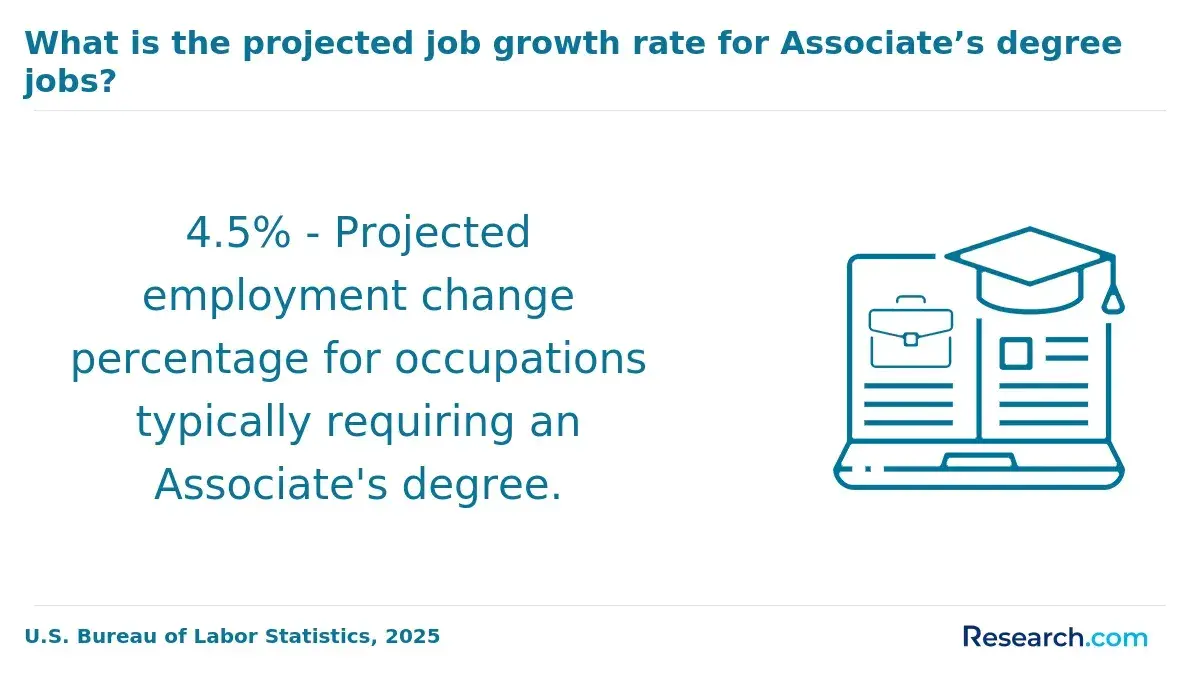
Education requirements vary widely across high-salary and high-demand careers. Some roles require state licensure and graduate degrees, while others are accessible through associate degrees, apprenticeships, certificates, military training, or strong portfolios. The best route depends on the occupation's rules, employer expectations, your timeline, and how much debt you can reasonably manage.
Shorter credentials can make sense when they lead to a clearly defined job, transfer into a higher degree later, or qualify you for paid experience. For example, some students explore 1-year associate degree programs or accelerated associate pathways when they want a faster route into healthcare support, business, IT, or technical roles, but they should still verify accreditation, transferability, and employer recognition.
The table below compares common education routes by the kinds of careers they usually support. It can help you decide whether you need a degree, a license, a certification, or a staged pathway:
| Education route | Typical timeline | Career examples | Best fit |
| Certificate or diploma | Several months to about 1 year | Medical assistant, HVAC technician, coding support, IT support | Learners who want faster entry and a specific occupational skill. |
| Apprenticeship | Often 2 to 5 years with paid training | Electrician, plumber, construction trades, advanced manufacturing | People who prefer earning while learning and hands-on work. |
| Associate degree | About 2 years full time | Registered nurse, radiologic technologist, paralegal, network support | Students seeking a lower-cost credential that may transfer into a bachelor's degree. |
| Bachelor's degree | About 4 years full time | Software developer, financial analyst, engineer, teacher, healthcare administrator | Careers where employers expect broader academic preparation or promotion potential. |
| Master's or professional degree | Usually 1 to 4 years after a bachelor's degree | Nurse practitioner, physician assistant, data scientist, therapist, advanced manager | Licensed, advanced, or specialized roles with higher responsibility and stronger salary potential. |
Before enrolling, confirm the credential actually matches the job title you want. A common mistake is choosing a general program because it sounds flexible, then discovering that employers require a specific clinical, technical, education, or licensure-approved pathway.
Also compare opportunity cost. If one path requires full-time study with limited work hours, the true cost includes lost income as well as tuition. If another path lets you work while studying, it may take longer but reduce debt pressure.
How do licensing, certifications, and professional credentials affect salary and advancement?
Licensing, certifications, and professional credentials can affect whether you are legally allowed to work, whether employers consider you qualified, and how quickly you can advance. The key distinction is that a license is usually government-regulated, while a certification is typically awarded by a professional organization, vendor, or industry body.
Licensing matters most in fields where public safety, health, finance, engineering, education, or legal standards are involved. Requirements can vary by state, so you should verify them with the relevant licensing board before choosing a program, especially if you plan to study online or move after graduation.
The table below explains how different credentials influence career mobility and pay potential. It also shows why the cheapest or fastest program is not always the safest choice:
| Credential type | Examples | How it affects salary and advancement | Main caution |
| State license | RN, teacher license, CPA license, professional engineer license, clinical counseling license | May be required for legal practice and can unlock higher-responsibility roles. | Requirements vary by state and may include approved education, exams, supervised hours, and background checks. |
| Professional certification | Project management, HR, coding, cybersecurity, financial planning credentials | Can signal specialized skill and support promotion or career change. | Employer recognition varies, so check job postings before paying for exams. |
| Vendor certification | Cloud, networking, database, analytics, or software platform credentials | Can help in technical hiring when paired with projects or experience. | Credentials may need renewal and can lose value if technology changes. |
| Graduate credential | Master's degree, post-master's certificate, professional doctorate | Can qualify candidates for advanced practice, leadership, or specialized roles. | Debt risk is higher if the credential is not required or strongly rewarded in the target field. |
To decide whether a credential is worth it, review current job postings for your target role. If most postings require or strongly prefer the credential, it may be important. If only training providers mention it, be cautious.
Common red flags include programs that promise licensure without explaining state requirements, certifications with unclear employer recognition, and credentials that require expensive renewal but do not clearly improve job access or advancement.
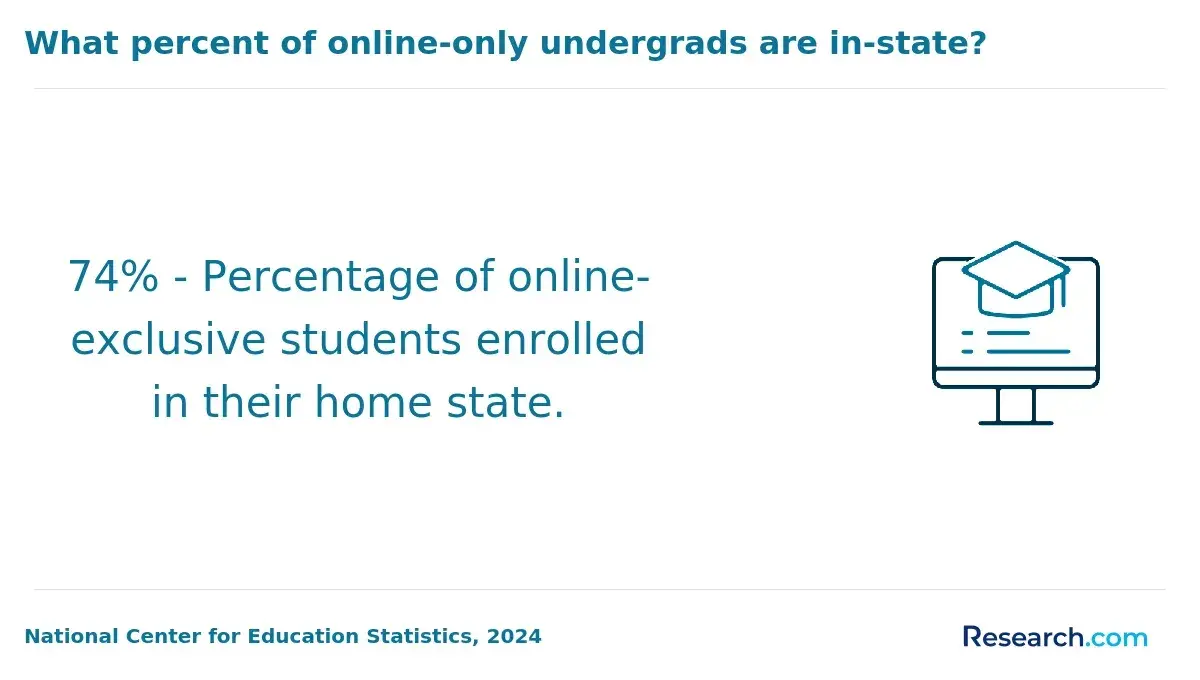
How should you weigh online vs campus programs when planning for specific career outcomes?
Online and campus programs can both lead to strong career outcomes, but the better format depends on the field. Online learning often works well for business, technology, education, healthcare administration, and degree completion. Campus or hybrid formats may be better for laboratory sciences, clinical training, skilled trades, performing arts, and programs requiring supervised hands-on practice.
Students seeking flexible entry routes sometimes compare options such as the easiest online associates degree, but "easy" should not mean low-quality. A program is a good fit when it is accredited, affordable, aligned with your career goal, and realistic for your schedule.
The table below compares online and campus study by career-planning factors. Use it to match the learning format to the job outcome you want:
| Factor | Online program | Campus program |
| Schedule flexibility | Often stronger for working adults, caregivers, and career changers. | Usually more structured and may require fixed class times. |
| Hands-on training | May require local practicums, labs, internships, or short residencies. | Often easier to coordinate for labs, studios, clinics, and equipment-based training. |
| Networking | Can be strong if the program offers live sessions, projects, alumni access, and career services. | May offer more informal networking through campus events, faculty contact, and local employers. |
| Licensure alignment | Must be checked carefully across state lines. | Often designed around the school's state, but out-of-state mobility still requires review. |
| Cost control | May reduce relocation and commuting costs. | May provide access to campus jobs, labs, local internships, or in-state tuition. |
Ask admissions advisors specific outcome questions before enrolling. Useful questions include whether the program meets licensure requirements in your state, whether online students receive the same career services, how clinical placements are arranged, and what percentage of students complete the program on time.
A common mistake is assuming employers automatically prefer campus degrees. In many fields, employers care more about accreditation, skills, experience, portfolio quality, and licensure eligibility than delivery format. However, for hands-on or regulated occupations, the program must provide the required supervised experience.
How do program accreditation and school quality impact career options, salary, and mobility?
Accreditation is one of the most important quality checks in career planning. Institutional accreditation affects credit transfer, federal financial aid eligibility, graduate school admission, and employer confidence. Programmatic accreditation can be essential in fields such as nursing, education, counseling, engineering, business, public health, and allied health.
School quality also affects career outcomes through advising, employer partnerships, internship access, graduation rates, faculty expertise, licensure exam preparation, and alumni networks. Institution type alone does not determine quality or return on investment; public, private nonprofit, and private for-profit schools can vary widely in cost, support, selectivity, and outcomes.
The table below shows which quality signals matter most when a degree or credential is tied to a specific career outcome:
| Quality factor | Why it matters | What to verify |
| Institutional accreditation | Supports financial aid access, transfer credit, and broad academic recognition. | Confirm the accreditor is recognized by the U.S. Department of Education or CHEA. |
| Programmatic accreditation | May be required for licensure exams, clinical placements, or professional recognition. | Check the accrediting body required in your field and state. |
| Licensure exam outcomes | Shows whether the program prepares students for required professional exams. | Ask for recent pass rates and compare them with state or national benchmarks where available. |
| Completion and retention | Low completion may signal cost, support, or fit problems. | Review public outcome data and ask how the school supports struggling students. |
| Career services and employer ties | Internships, practicums, and employer relationships can improve entry into the field. | Ask which employers recruit students and whether support is available to online learners. |
Do not rely only on rankings. Rankings may reflect reputation, selectivity, or research activity rather than affordability, licensure alignment, transfer friendliness, or job placement in your region.
Before committing, confirm that credits can transfer, the credential is accepted by employers, and the program meets requirements in the state where you plan to work. This is especially important for licensed careers and online programs serving students across multiple states.
What tools and resources can you use to analyze lifetime earning potential by career?
Lifetime earning potential is the difference between what a career may help you earn over time and what it costs to enter and stay in that career. It includes tuition, fees, debt, interest, unpaid training time, certification renewal, career breaks, promotion potential, and the likelihood that your skills remain useful.
For graduate study, the ROI question is especially important because tuition and opportunity cost can rise quickly. Adults comparing options such as the quickest cheapest master's degree should still verify whether the degree is valued in the target occupation and whether acceleration reduces support, networking, or internship access.
Use several tools rather than one source. Each source answers a different question, and none can predict your individual outcome perfectly:
- Use BLS Occupational Employment and Wage Statistics to compare national and regional median pay for specific occupations.
- Use BLS employment projections to compare expected job growth and typical education requirements.
- Use state labor market dashboards to see whether your target career is hiring in the region where you plan to live.
- Use college outcome tools and institutional disclosures to review completion, debt, earnings, and loan repayment patterns where available.
- Use job boards to identify real employer requirements, recurring skills, remote-work availability, and entry-level competition.
- Use informational interviews to check whether the official career path matches how people actually get hired.
The table below summarizes the main cost and earning variables to include in a career ROI estimate. It is designed to help you build a realistic comparison rather than chase a single salary number:
| ROI variable | Why it matters | Example question to ask |
| Program cost | Tuition, fees, books, technology, and commuting affect debt risk. | What is the total cost to complete, not just cost per credit? |
| Time to completion | Longer programs may delay full-time earnings. | Can I work while studying, and will that extend the timeline? |
| Entry-level pay | First-job salary determines how quickly you can manage debt. | What do local entry-level postings actually offer? |
| Advancement ceiling | Some fields reward experience, specialization, or management more than others. | What roles are realistic after 3 to 5 years? |
| Credential maintenance | Licenses and certifications may require renewals and continuing education. | Who pays for renewal, exams, and required training? |
| Geographic mobility | Some credentials transfer easily; others are state-specific. | Will I need extra exams or supervised hours if I move? |
Be cautious with earnings claims from schools or influencers. Good ROI analysis uses conservative assumptions, local job data, and a backup plan in case you need more time to land the target role.
How can you balance salary, job stability, and personal interests when selecting a career?
A smart career choice balances three questions: Can this path support the life you want financially? Is there enough demand to make employment realistic? Can you tolerate or enjoy the daily work enough to keep improving? If one of these answers is weak, the career may become difficult to sustain even if it looks good on paper.
Career stage matters. A recent high school graduate, a parent returning to school, a midcareer worker, and a retiree seeking flexible work may all make different choices. For example, guides to the best degrees for older adults can be useful for learners who value flexibility, low debt, and meaningful work as much as maximum earnings.
Use the following decision process to narrow your options. It turns broad career research into a short list you can act on:
- Set a minimum acceptable income based on your location, household needs, debt tolerance, and lifestyle goals.
- Choose 3 to 5 careers that meet or come close to that income target and have stable or growing demand.
- Write down the required education, licensing, experience, and total estimated cost for each path.
- Compare the daily work, schedule, stress level, physical demands, and values fit of each option.
- Interview workers, alumni, faculty, or hiring managers to test your assumptions.
- Pick one primary path and one adjacent backup path that uses similar skills or coursework.
The table below shows common career-planning mistakes and better alternatives. These red flags are especially important when a program requires debt, relocation, or years of training.
| Common mistake | Why it is risky | Better approach |
| Choosing the highest salary without checking job outlook | High pay may come with limited openings or intense competition. | Compare wage data with projected growth and local postings. |
| Ignoring accreditation or licensure | You may finish a program that does not qualify you for the job you want. | Verify requirements with the school, employer postings, and state licensing board. |
| Assuming online programs are automatically easier | Flexible programs can still require discipline, labs, practicums, or synchronous work. | Ask about workload, placement support, and completion expectations. |
| Looking only at tuition | Fees, supplies, lost income, interest, and exam costs can change affordability. | Calculate total cost to completion and expected first-year earnings. |
| Believing salary outcomes are guaranteed | Pay depends on location, experience, employer, market timing, and performance. | Use median wages as benchmarks, not promises. |
The best final choice should feel evidence-based, not impulsive. If two paths are close, choose the one with stronger transferability: skills such as communication, data analysis, patient care, project management, troubleshooting, compliance, leadership, and technical literacy can carry you into adjacent roles if the market changes.
Other Things You Should Know About
There is no single best career for everyone. Strong current options often include healthcare, technology, cybersecurity, data, and certain skilled trades because many combine solid pay with projected demand. The best choice depends on your education budget, timeline, location, strengths, and willingness to meet licensing or technical requirements.
No. High pay is important, but it should be weighed against job growth, debt risk, work conditions, stress, schedule, licensing rules, and personal fit. A career that pays slightly less but offers stability, advancement, and sustainable daily work may be the better long-term choice.
Job outlook projections are useful for spotting broad labor market trends, but they are not guarantees. They can change with technology, regulation, economic conditions, and regional demand. Use them with wage data, local job postings, employer conversations, and program outcomes.
No. Some high-paying careers require bachelor's or graduate degrees, especially in healthcare, engineering, analytics, and licensed professions. Others may be accessible through apprenticeships, associate degrees, technical certificates, military experience, certifications, or strong portfolios. The right credential depends on the specific occupation and employer expectations.
References
- Finding Your Ideal Career: Balancing Passion, Skills, and Income for Long-Term Success – Sara Shadabi https://sarashadabi.com/finding-your-ideal-career-balancing-passion-skills-and-income-for-long-term-success/
- Artificial intelligence and the future of work: Disruptions and opportunities https://unric.org/en/ai-and-the-future-of-work-disruptions-and-opportunitie/
- Online vs in-person study: which one is right for you? https://www.ube.ac.uk/whats-happening/articles/online-vs-in-person-learning/
- Explore Your Possibilities with Career Dreamer - Grow with Google https://grow.google/career-dreamer
- Make More - Start by Knowing your Lifetime Earning Number — ProjectSkillsMentor | ProjectSkills Mentor https://projectskillsmentor.com/mentoring/build-your-lifetime-earnings-strategies-that-work
- What is Job Outlook? Complete Career Handbook - Hr Simple https://hrsimple.com/what-is-job-outlook-complete-career-handbook/
- Beyond Recognition: How Accreditation Impacts Career Mobility and Leadership Credibility - Acacia https://acacia.edu/blog/beyond-recognition-how-accreditation-impacts-career-mobility-and-leadership-credibility/
- How Accreditation Impacts Student Success and Employability https://ukeducationbridge.co.uk/how-accreditation-impacts-student-success-and-employability/